
Research article · 2021 · Full text
International Journal of Veterinary Sciences and Animal HusbandryEffects of ethanol extract of Afrostyrax lepidophyllus seeds on reproductive parameters and oxidative stress markers in male guinea pigs (Cavia porcellus) exposed to Paraquat
Volume 6(4) · Pages 26–33 · DOI: 10.22271/veterinary.2021.v6.i4a.363 ↗
Research areasParaquat toxicity studies and treatments
Abstract
Author-writtenParaquat is a contact herbicide, particularly effective for weeds control. This study aimed at evaluating the effects of ethanol extract of Afrostyrax lepidophyllus (EEAL) seeds on reproductive toxicity and oxidative stress caused by paraquat in male Guinea pigs. 60 male guinea pigs were randomly assigned to 6 treatment groups (n = 8) which orally received varied concentration of solutions for 115 days. Group 1 (G1) received distilled water; group 2 (G2) was given 4 mg kg-1 of body weight of paraquat (PQ), group 3 (G3) received 4 mg kg-1 bw of PQ and 100 mg kg-1 bw of Vitamin C (Vit C) while groups 4, 5 and 6 were co-treated with PQ (4 mg kg-1) plus EEAL at doses of 50, 100 and 200 mg kg-1 bw respectively. Serum testosterone, total cholesterol, the reaction time, sexual organ weights, sperm count, motility and anomalies (minors and majors), spermatozoa with entire plasma membrane, testicular malondialdehyde (MDA) level, superoxide dismutase (SOD), catalase (CAT) and total peroxidases activities were assessed. Result showed that the co-administration of paraquat and EEAL significantly (p
Summary
Source-checkedPlain-language reading of the full paper, prepared with AI and checked against the text. Each point links to the authors' own words.
Why it matters
- Paraquat is a widely used contact herbicide for weed control, but it is highly toxic to humans and animals. View evidence ↗
- Paraquat exposure can lead to reproductive toxicity, including reduced sperm quality and lower serum testosterone levels. View evidence ↗
- Afrostyrax lepidophyllus is a plant found in Tropical Africa whose seed extracts have shown promising pharmacological properties. View evidence ↗
The question
- The study aimed to evaluate whether ethanol extract of Afrostyrax lepidophyllus (EEAL) seeds could mitigate reproductive toxicity and oxidative stress caused by paraquat in male guinea pigs. View evidence ↗
What they did
- Sixty male guinea pigs were divided into six groups of 10; one control group received distilled water, while five groups received 4 mg/kg of paraquat for 115 days. View evidence ↗
- Treatment groups included a Vitamin C control (100 mg/kg) and three EEAL dose groups (50, 100, and 200 mg/kg) co-administered with paraquat. View evidence ↗
What they found
- Paraquat significantly decreased serum testosterone, but co-administration of EEAL at all doses significantly increased it compared to the paraquat-only and Vitamin C groups. View evidence ↗
- Paraquat increased serum total cholesterol, but this was significantly reduced in animals treated with Vitamin C or 100 mg/kg of EEAL. View evidence ↗
- Paraquat significantly reduced sperm mobility, count, and plasma membrane integrity, but these parameters were significantly improved by EEAL or Vitamin C. View evidence ↗
- Paraquat increased the percentage of minor sperm anomalies, which was significantly reduced by Vitamin C or a 50 mg/kg dose of EEAL. View evidence ↗
- There were no significant differences in breeding performance (litter size, kid weight, fertility rate) among the treatment groups. View evidence ↗
What it means
- The authors conclude that the ethanolic extract of Afrostyrax lepidophyllus seeds alleviates paraquat-induced oxidative stress and reproductive toxicity in male guinea pigs. View evidence ↗
- The authors suggest that this plant is a potential source of bioactive compounds for treating toxicity and oxidative stress. View evidence ↗
Visual summary
2 visualsIllustrations explain the paper; charts are replotted from the paper's own table values.
Controls / DW (n = 8) and Controls and Ethanolics extracts of... and more: Mobility (%) vs Number/tails of... vs Spermatozoa with IPM (%)
Replotted from Table 2 (page 5) of the original paper. Every bar is the paper's own table value.
View source evidence ↗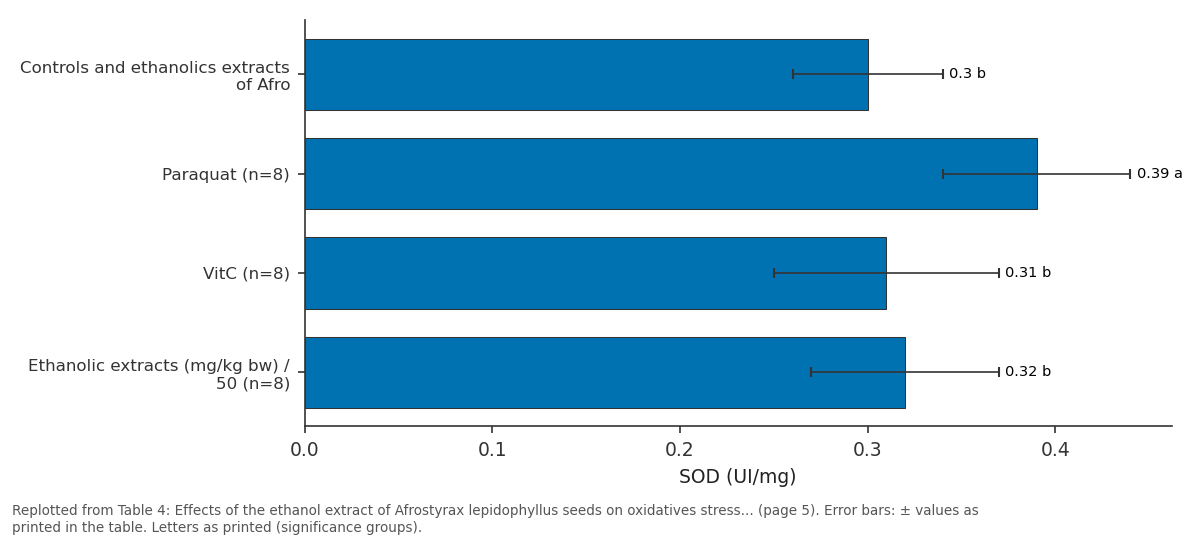
SOD (UI/mg): Controls and ethanolics... vs Paraquat (n=8) vs VitC (n=8) vs Ethanolic extracts...
Replotted from Table 4 (page 5) of the original paper. Every bar is the paper's own table value.
View source evidence ↗Figures & tables
From the original paper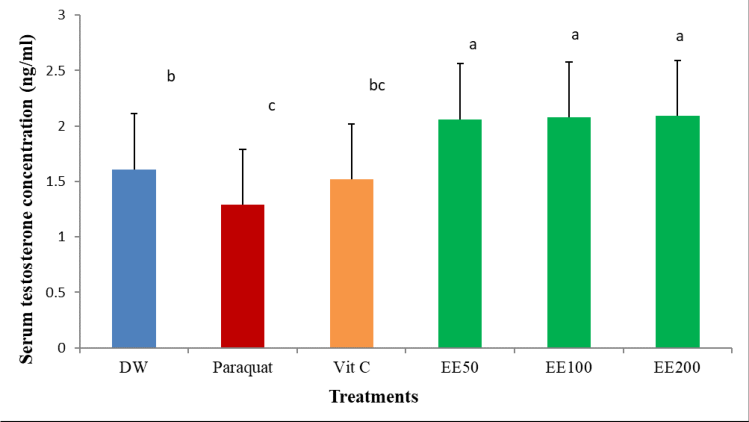 Figure 1
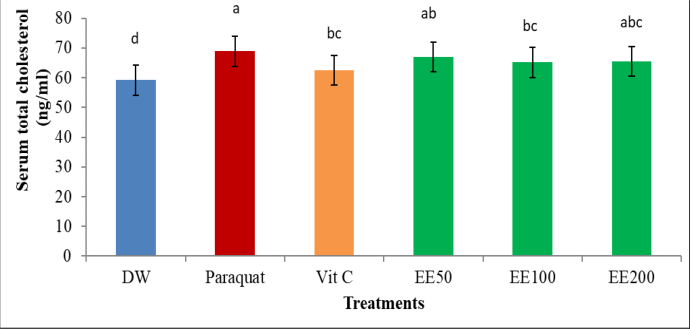 Figure 2
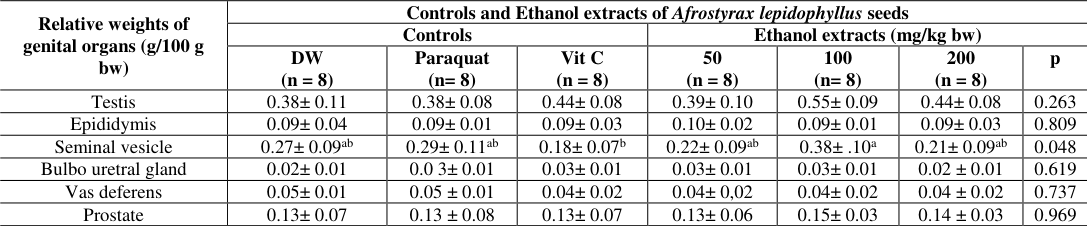 Table 1
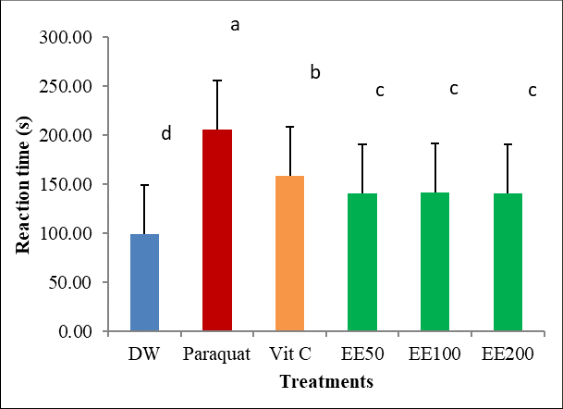 Figure 3
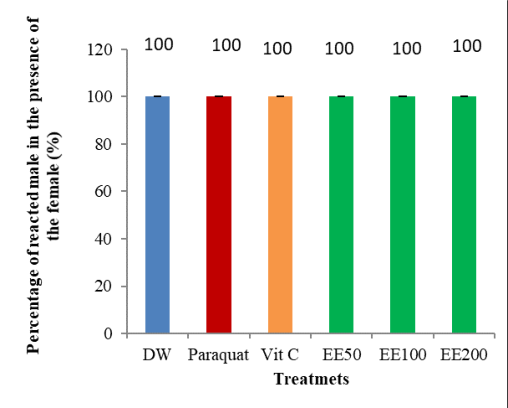 Figure 3
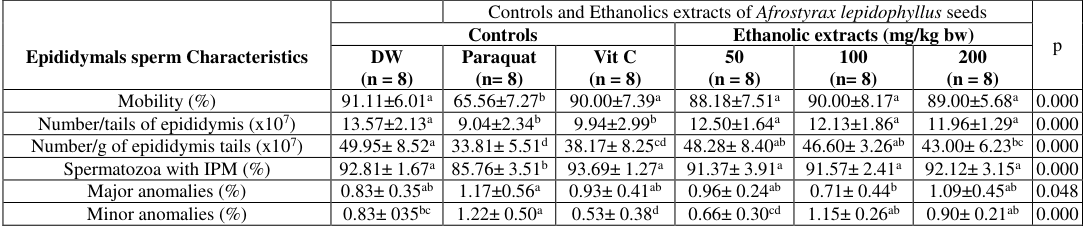 Table 2
 Table 3
 Table 4
Introduction
Paraquat is a contact herbicide, particularly effective for weeds control [1] . However it is extremely toxic to those who use it [2] . It is one of the most widely used herbicides in the world, sold in more than 120 countries [1] . It is used mainly in the tropics, where weeds growth is extremely fast and makes manual weeding techniques very inefficient, or even the use of a large number of other phytosanitary products [2] . It is used in floriculture and in certain woodlots to weed or prepare the soil for a hundred crops of cereals (corn, wheat, barley, rye, rice, etc.), soybeans, potatoes, fruits (apple, orange, banana), plants intended for the manufacture of beverages (coffee, tea, cocoa) and crops such as that of cotton, oil palm, sugar cane and rubber [3] . However, paraquat is extremely toxic to humans and animals in many aspects [4] . The number of patients worldwide who had been poisoned by paraquat was over 650,000 in 2016 [5] , and is predicted to exceed 1 million by 2025 [6] . In animal reproduction, many studies demonstrated the toxicity of paraquat [7] . Suggested that paraquat changes the chromatin configuration in mouse oocytes and deteriorates the embryonic development potential, by affecting the transcriptional activity of oocytes. Paraquat can transform the hypothalamic-pituitary-gonadal axis to affect the reproductive function in Japanese quails [8] .
Male rats were given paraquat by oral administration for a short time, which could retard the regeneration of Leydig cells from stem/progenitor Leydig cells, decrease the production of testosterone, and block the spermatogenesis [9] . In addition, paraquat can reduce the in vitro fertilization outcomes from oxidative stress [10,11] . Oral administration of paraquat caused significant reductions in sperm parameters (count, mobility and morphology), sera testosterone levels, as well as marked alterations in the testicular histoarchitecture [12,13] . Natural plant products have been used to enhance male fertility and management of some physiological disorders [14] . This is because they are rich in many natural antioxidants like phenols, flavonoids, terpenoids, tannins and xanthons. Also, they are easily accessible, cheap and relatively safe [15] . Afrostyrax lepidophyllus is a plant of the Huaceae family and is commonly found in Equatorial and Tropical Africa [16,17,18] . This plant is used in Congo as an antiseptic and in traditional medicine for the treatment of gastroenteric diseases [19] . In the Central African Republic and in Cameroon, the seeds of this plant are traditionally used as a spice. Moreover, pharmacological studies have been carried out by several researchers and have shown that the extracts of seeds of Afrostyrax lepidophyllus possess very interesting properties. [20] demonstrated antifungal activity and identified Afrostyraxthioside A, Afrostyraxthioside B and Afrostyraxthioside C [21] . showed that seed extracts possess antioxidant properties [22] . Reported that the essential oil of Afrostyrax lepidophyllus seeds reduces free radicals. Total pholyphenols, flavonoids, tannins and anthocyanins were also quantified in the work of [18] . The IC50 (inhibitory concentration which reduces free radicals by 50%) of the antioxidant activity of their extracts are respectively of the order of 3890.5±4.3 (cyclohexane extract), 3313.8±3.5 (dicloromethane extract), 1872.8±1.0 (ethyl acetate extract) and 248.4±0.1 (methanol extract) mg/L [18] . However, the effects of Afrostyrax lepidophyllus seeds against paraquatinduced reproductive toxicity in male animals have not been reported so far. Hence the objective of this study was to evaluate the effects of the ethanol extract of Afrostyrax lepidophyllus seeds on reproductive parameters and oxidative stress in male guinea pig exposed to paraquat.
Materials and Methods
Materials and Methods
Animals and lodging
Sixty adult male guinea pigs (Cavia porcellus) aged 4 months and averagely weighing 370.31 ± 39.43 g, reared at the Teaching and Research Farm of the University of Dschang were used. The lodges were equipped with feeders and drinkers. Their floors were covered with white woodchip litter, replaced every 7 days.
Feeding, pesticide, vitamin C and plant material
During the whole trial, animals received drinking water, fresh pre-wilted forage (Pennisetum purpureum) and provender ad libitum. The studied pesticide was paraquat, commercially named Almoxone super. It is a dark green solution containing 276 g of paraquat and 200 g of paraquat ions per liter, produced by Agro one. In guinea pigs, the oral LD50 is 20-40 mg/kg bw. Vitamin C was obtained from commercial sources (Shalina, Nariman point, Mumbai, India. A/Em/At: Plot No. E-2, M.I.D.C. Jejuri; Tal: Purandar. Dist: Pune, Maharashtra, India). Dried seeds of Afrostyrax lepidophyllus were bought at the Dschang market, they were pulped and then grinded at the mill. The obtained powder was used for extractions, using 5 liters of ethanol for 1 kilogram of powder. The filtrate was dried in the rotary evaporator at 70 °C to obtain ethanol extract of Afrostyrax lepidophyllus seeds.
Experimental design
The animals were randomly distributed into 6 groups (G1, G2, G3, G4, G5 and G6) of 10 animals each, comparable in body weight. During 115 days, animals of G1 were given distilled water orally (1 ml/kg bw), while the other groups (G2-G6) received 4 mg/kg of body weight (bw) of paraquat. In addition, G3 received 100 mg kg -1 of vitamin C; while G4, G5 and G6 received respectively 50, 100 and 200 mg/kg bw of ethanol extract of Afrostyrax lepidophyllus seeds, dissolved in 1 ml of distilled water. The animal's body weight was recorded weekly and the doses of pesticide and ethanol extract adjusted accordingly.
Studied parameters and data collection 2.4.1 Serum testosterone and total cholesterol concentrations
Blood was collected by cardiac puncture and put into test tubes free from anticoagulant. 8 hours later, serum was collected and distributed in labeled microtubes, then stored at -20°C for the dosage. The serum concentrations of total cholesterol and testosterone were determined using CHRONOLAB kit (Barcelona, Spain) and Omega Diagnostic ELISA kit (Scotland, England) respectively.
Reaction time and percentage of males reacting in the presence of a female
A week prior to the breeding, a female was presented to each of the experimental males. The stopwatch was started as soon as the male and female were placed together and stopped when a reaction from the male was observed (attempt to mount). The time recorded was considered as the reaction time. The maximum waiting time was 5 minutes. The proportion of males that reacted in the presence of a female was then calculated in each group, using the following formula:
Sexual organs weight and sperm characteristics
At the end of the trial, animals were anesthetised using ether vapour and then dissected. The testes, epididymides, vas deferens, and sex accessory glands were removed, freed from fat and weighed using a scale of capacity 160 g and precision 10 -3 g. The cauda epididymides were then minced in 5 ml of 0.9% NaCl solution (at 37 °C) for sperm count, mobility, plasma membrane integrity and morphology evaluation. A drop of the obtained solution was placed on a slide and observed under the microscope, and a mobility score was attributed according to [23] , using a scale from 0 to 5. The sperm count was done using the Thoma haemocytometer, while sperm morphological abnormalities (small and big heads, coiled tails) and the integrity of the plasma membrane were evaluated using an eosin-nigrosin solution and the hypoosmotic test [24] respectively.
Oxidative stress indicators
A 15% (W/V) homogenate was prepared using a testis of each animal. Thus, a testis was crushed in cold 0.9% NaCl followed by a centrifugation (3000 rpm, 30 min) and the supernatant was used for biochemical analyses. The determination of malondialdehyde concentration was done by the thiobarbituric acid method [25] , while the superoxide dismustase activity was evaluated according to [26] . The catalase (CAT) activity was assessed using the chromic acetate method as described by [27] and the total peroxydases (POX) activity was determined by the potassium iodate method [28] .
Statistical analysis
Results were expressed as mean ± standard deviation. Differences among groups were assessed using one way ANOVA, followed by the Duncan's test at 5% significance. All the analyses were performed using the SPSS 20.0 software.
Results
Results
Blood Testosterone Concentration
The serum testosterone concentration decreased significantly (p<0.05) in guinea pigs treated with paraquat only compared to the control receiving distilled water (Figure 1). The coadministration of vitamin C to paraquat exposed animals did not significantly (p>0.05) repair the serum testosterone concentration. But, the ethanol extract of Afrostyrax lepidophyllus at all doses let to a significant (p<0.05) increase in testosterone concentration, with reference to distilled water, paraquat and paraquat+vitamin C groups (Figure 1). to paraquat induced a significant (p<0.05) in the reaction time, yet not at the level of control animals receiving distilled water(Figure 3A). All the treatments were comparable (p>0.05) for the percentages of reaction in the presence of female (Figure 3B).
Sexual organs weight
Table 1 presents the effects of ethanol extract of Afrostyrax lepidophyllus seeds on the relative weights of genital organs in male guinea pigs exposed to paraquat. Globally, treatments were comparable (p>0.05) for the weights of sexual organs.
| Relative weights of genital organs (g/100 g bw) | Controls and Ethanol extracts of Afrostyrax lepidophyllus seeds | — | — | — | — | — | — |
|---|---|---|---|---|---|---|---|
| Controls | Ethanol extracts (mg/kg bw) | ||||||
| DW (n = 8) | Paraquat (n= 8) | Vit C (n = 8) | 50 (n = 8) | 100 (n= 8) | 200 (n = 8) | p | |
| Testis | 0.38± 0.11 | 0.38± 0.08 | 0.44± 0.08 | 0.39± 0.10 | 0.55± 0.09 | 0.44± 0.08 | 0.263 |
| Epididymis | 0.09± 0.04 | 0.09± 0.01 | 0.09± 0.03 | 0.10± 0.02 | 0.09± 0.01 | 0.09± 0.03 | 0.809 |
| Seminal vesicle | 0.27± 0.09ab | 0.29± 0.11ab | 0.18± 0.07b | 0.22± 0.09ab | 0.38± .10a | 0.21± 0.09ab | 0.048 |
| Bulbo uretral gland | 0.02± 0.01 | 0.0 3± 0.01 | 0.03± 0.01 | 0.03± 0.01 | 0.03± 0.01 | 0.02 ± 0.01 | 0.619 |
| Vas deferens | 0.05± 0.01 | 0.05 ± 0.01 | 0.04± 0.02 | 0.04± 0,02 | 0.04± 0.02 | 0.04 ± 0.02 | 0.737 |
| Prostate | 0.13± 0.07 | 0.13 ± 0.08 | 0.13± 0.07 | 0.13± 0.06 | 0.15± 0.03 | 0.14 ± 0.03 | 0.969 |
Table text extracted from the original PDF; superscript letters are shown inline. The original table image is below.
View original table image
Characteristics of cauda epididymis sperm
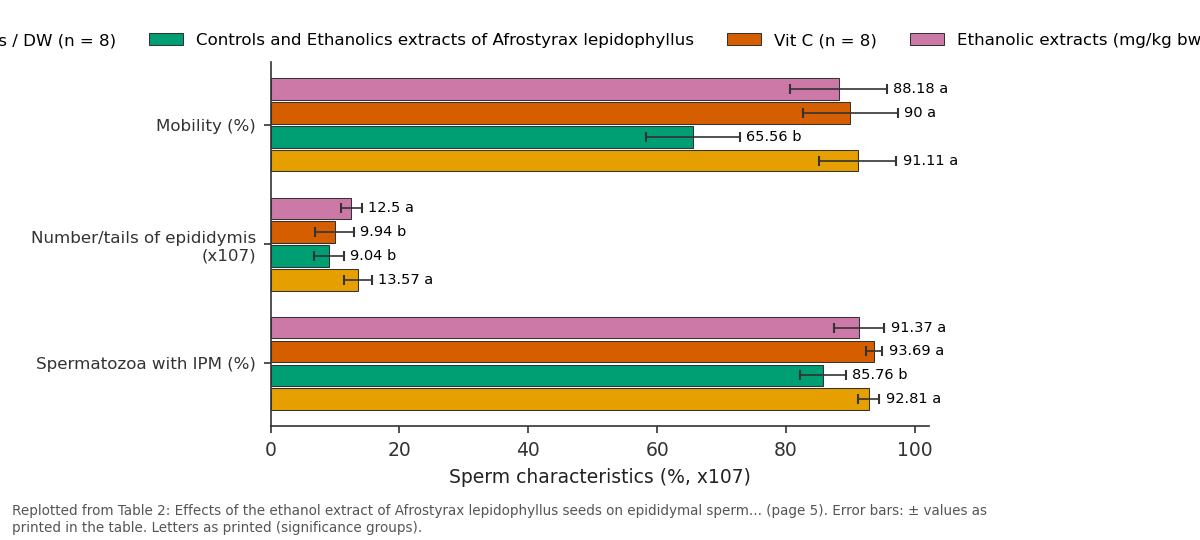
The mobility of sperm, the sperm number/tails of epididymis, the sperm number/g of epididymal tails and the percentage of spermatozoa with integrated plasma membrane decreased significantly (p<0.05) in guinea pigs exposed to paraquat only compared to the control receiving distilled water. These same characteristics increased significantly (p<0.05) in guinea pigs submitted to paraquat and treated with ethanol extract of Afrostyrax lepidophyllus seeds or vitamin C referring to males receiving paraquat only. The percentage of major spermatozoa anomalies (big and small head) increased insignificantly (p>0.05) in guinea pigs exposed to paraquat only, compared to distilled water-treated animals. The administration of vitamin C and ethanol extract of Afrostyrax lepidophyllus seeds led to a decrease in this characteristic, but the difference was significant (p<0.05) only with male receiving 100 mg kg -1 bw of ethanol extract of Afrostyrax lepidophyllus seeds. The percentage of minor anomalies (spermatozoa with coiled and double tails) increased significantly (p<0.05) in paraquat control compared to the control receiving distilled water. The administration of vitamin C or 50 mg/kg bw of extract to guinea pigs exposed to paraquat induced a significant (p<0.05) in this characteristic with reference to animals given paraquat only.
Breeding performance
Table 3 presents the effect of ethanol extract of Afrostyrax lepidophyllus (p>0.05) seeds on breeding performance in male guinea pigs exposed to paraquat. Globally, treatments were comparable (p>0.05) for the breeding performance.
| Breeding performances | Controls and ethanolics extracts of Afrostyrax lepidophyllus seeds | — | — | — | — | — | p |
|---|---|---|---|---|---|---|---|
| Controls | Ethanolic extract (mg/kg bw) | ||||||
| DW (n = 8) | Paraquat (n= 8) | Vit C (n = 8) | 50 (n = 8) | 100 (n= 8) | 200 (n = 8) | ||
| Litter size at parturition | 1.67±1.16 | 1.00±0.00 | 1.33±0.58 | 1.00±0.00 | 1.60±0.55 | 1.33±0.58 | 0.694 |
| Kid weight (g) | 71.33±3.22 | 56.50±3.54 | 70.67±1.16 | 63.00±7.00 | 58.20±12.07 | 60.33±11.59 | 0.229 |
| Kid viability rate (%) | 100.00± 0.00 | 100.00± 0.00 | 66.67± 57.74 | 100.00± 0.00 | 80.00± 44.72 | 100.00± 0 00 | 0.720 |
| Fertility rate (%) | 75.00± 50.00 | 66.67±57.74 | 75.00± 50.00 | 60.00± 54.77 | 83.33± 40.83 | 75.00±50.00 | 0.923 |
Table text extracted from the original PDF; superscript letters are shown inline. The original table image is below.
View original table image
Oxidative stress indicators
The testicular activities of superoxide dismutase (SOD), catalase (CAT) and total peroxydases (POX) and concentration of malondialdehyde (MDA) (Table 4) decreased significantly (p<0.05) in guinea pigs exposed only to paraquat compared to the control receiving distilled water.
| Oxidatives stress indicators | Controls and ethanolics extracts of Afrostyrax lepidophyllus seeds | — | — | — | — | — | — |
|---|---|---|---|---|---|---|---|
| Controls | Ethanolic extracts (mg/kg bw) | p | |||||
| DW (n=8) | Paraquat (n=8) | VitC (n=8) | 50 (n=8) | 100 (n=8) | 200 (n=8) | ||
| SOD (UI/mg) | 0.30 ±0.04b | 0.39 ±0.05a | 0.31 ±0.06b | 0.32 ±0.05b | 0.31 ±0.07b | 0.29 ±0.07b | 0.009 |
| Catalase (UI/mg) | 1.24± 0.19c | 2.05 ±0.45a | 1.47 ±0.27bc | 1,60 ±0.29b | 1.58 ±0.36b | 1.44 ±0.24bc | 0.000 |
| MDA (nM/mg) | 1.48± 0.17c | 2.22 ±0.26a | 1.76 ±0.25b | 1.79 ±0.36b | 1.56 ±0.21bc | 1.72 ±0.22b | 0.000 |
| POX (µM/mg) | 32.52 ±5.20bc | 39.06 ±4.05a | 35.03 ±3.99b | 34.09 ±4.49bc | 33.31 ±4.98bc | 30.52 ±3.65c | 0.002 |
| TTP (mg/ml) | 2.20 ±0.17 | 2.13 ±0.12 | 2.29 ±0.23 | 2.31 ±0.25 | 2.17 ±0.17 | 2.29 ±0.34 | 0.418 |
Table text extracted from the original PDF; superscript letters are shown inline. The original table image is below.
View original table image
These same indicators decreased significantly (p<0.05) in animals submitted to paraquat and treated with vitamin C or ethanol extract of Afrostyrax lepidophyllus seeds referring to those submitted to paraquat only. The concentration of testicular total proteins (TTP) was comparable (p>0.05) among the different treatments.
Discussion
Exposure of animals to pesticides is detrimental to their reproductive potential [29,30,7,13] . Results of this study showed that the serum testosterone concentration increased significantly in guinea pigs exposed to paraquat and treated with ethanol extract of Afrostyrax lepidophyllus compared to the control submitted to paraquat only. The higher testosterone levels and decrease reaction time (libido) observed in groups that received a co-administration of paraquat and different doses of ethanol extract of Afrostyrax lepidophyllus seed might be as a result of the photochemical present in Afrostyrax lepidophyllus seed extract especially pholyphenols, flavonoids, tannins, glucosids, saponins, steroids and anthocyanins [31,17,18] . This result is in agreement with the work of [32] in male albino wistar rats which received the co-administration of paraquat (20 mg/kg of body weight) and ethanol extract of Afromomum melegueta at 200 and 400 mg/kg of body weight for four weeks. The cholesterol being the precursor of testosterone, its increase in animals treated with ethanol extract might have resulted in an increase in testosterone and consequently that of libido. The lower testosterone levels observed in paraquat group might be as a result of the deleterious effect of paraquat which produces volumes of free radicals [12] that react with macromolecules causing damages to various organs including the testis and also inhibits biochemical activities such as enzymes and hormones synthesis [33,9] . The characteristics of epididymal sperm such as mobility, count, viability of sperm and morphology increased in guinea pigs submitted to paraquat and treated ethanol extracts of Afrostyrax lepidophyllus. This result is in agreement with the study of [34] in guinea pigs orally exposed to cypermethrin (137.5 mg/kg of body weight) and treated with ethanol extract of Bersama engleriana at 100 and 200 mg/kg bw and [30] in guinea pigs orally exposed to acetamiprid at 80 mg/kg bw and treated with extract of Mangifera indica for 90 days. This could be due not only to the antioxidant compounds present in the Afrostyrax lepidophyllus seeds (polyphenols, flavonoids and tannins), but also to the androgenic properties of molecules such as steroids and saponins. In fact, androgens have been reported to be important modulators of male sexual behavior including libido and spermatogenesis [35] . Also, the antioxidant molecules might have protected the structure and function of the testes leading to the increase of androgens concentration and thus their effects on the spermatogenesis. The administration of Afrostyrax lepidophyllus seeds markedly protected against the adverse effects of paraquat by normalizing the sperm count, mobility and plasma membrane integrity and decreasing the percentage of minor and major anomalies of spermatozoa. The decrease of its concentration might explain the decrease of breeding performances such as litter size at parturition, kid weight and fertility rate [29,7] . The decrease in testicular concentration of malondialdehyde and activities of superoxide dismutase, catalase and total peroxydases in guinea pigs exposed to paraquat and treated with ethanol extract of Afrostyrax lepidophyllus seeds in the present study is similar to the observations of [36] in mice exposed to 13.8 mg/kg bw of cypermethrin and 150 or 300 mg/kg bw of Cedrelopsis grevei, [37] on Japanese quail orally exposed to 75 mg/kg bw of Antouka Super (insectide) and treated with 100 or 200 mg/kg bw of Persea Americana for 60 days and the work of [38] in adult mice co-administratered 5 mg/kg of paraquat and 200 mg/kg bw of crocin (CCN) by intraperitoneal route for 35 days. This might be as a result of the action of antioxidant compounds contained in the ethanolic extract of Afrostyrax lepidophyllus seeds. The antioxidant molecules could have neutralized free radicals or inhibited enzymes responsible of their production such as aldose reductase, lipoxygenase and phospholipase [39] resulting in cytoprotection against paraquat induced oxidative stress. Indeed, phenolic compounds found in Afrostyrax lepidophyllus directly contribute to antioxidative actions as they are regarded to be the most important antioxidative components [40,41,43] . Such molecules and their actions can prevent the cell membrane lipid peroxidation, thereby reducing the MDA concentration and antioxidant enzymes (SOD, CAT and peroxidases activities [42] .
Conclusion
Results from this study showed that ethanolic extract of Afrostyrax lepidophyllus seeds can alleviated the toxic effects of paraquat on the reproductive system and oxidative stress inmale guinea pigs. This plant can be a source of bioactive compounds with anti-toxicity potential and against oxidative stress exposure.
Ethical Approval
Ethical Approval
Figures and tables from the paper
| Epididymals sperm Characteristics | — | Controls and Ethanolics extracts of Afrostyrax lepidophyllus seeds | — | — | — | — | p |
|---|---|---|---|---|---|---|---|
| Controls | Ethanolic extracts (mg/kg bw) | ||||||
| DW (n = 8) | Paraquat (n= 8) | Vit C (n = 8) | 50 (n = 8) | 100 (n= 8) | 200 (n = 8) | ||
| Mobility (%) | 91.11±6.01a | 65.56±7.27b | 90.00±7.39a | 88.18±7.51a | 90.00±8.17a | 89.00±5.68a | 0.000 |
| Number/tails of epididymis (x107) | 13.57±2.13a | 9.04±2.34b | 9.94±2.99b | 12.50±1.64a | 12.13±1.86a | 11.96±1.29a | 0.000 |
| Number/g of epididymis tails (x107) | 49.95± 8.52a | 33.81± 5.51d | 38.17± 8.25cd | 48.28± 8.40ab | 46.60± 3.26ab | 43.00± 6.23bc | 0.000 |
| Spermatozoa with IPM (%) | 92.81± 1.67a | 85.76± 3.51b | 93.69± 1.27a | 91.37± 3.91a | 91.57± 2.41a | 92.12± 3.15a | 0.000 |
| Major anomalies (%) | 0.83± 0.35ab | 1.17±0.56a | 0.93± 0.41ab | 0.96± 0.24ab | 0.71± 0.44b | 1.09±0.45ab | 0.048 |
| Minor anomalies (%) | 0.83± 035bc | 1.22± 0.50a | 0.53± 0.38d | 0.66± 0.30cd | 1.15± 0.26ab | 0.90± 0.21ab | 0.000 |
Table text extracted from the original PDF; superscript letters are shown inline. The original table image is below.
View original table image
References
38 in the original paper- Dinis-Oliveira RJ, Duarte JA, Sanchez-Navarro A. Paraquat poisonings: mechanisms of lung toxicity, clinical features, and treatment. Critical Reviews in Toxicology 2008;38:13-71.
- Nuber S, Tadros D, Fields J. Environmental neurotoxic challenge of conditional alpha-synuclein transgenic mice predicts a dopaminergic olfactory-striatal interplay in early PD. Acta Neuropathologica 2014;127:477-94.
- Gawarammana IB, Buckley NA. Medical management of paraquat ingestion. British Journal of Clinical Pharmacology 2011;72:745-57.
- Kumar M, Padula MP, Davey P, Pernice M, Jiang Z, Sablok G et al. Proteome Analysis reveals extensive light stress-response reprogramming in the seagrass Zostera muelleri (Alismatales. zosteraceae) metabolism. Front. Plant Sci 2016;7:2023. doi: 10.3389/fpls.2016.02023
- Nunes ME, Muller TE, Braga MM, Fontana BD, Quadros VA, Marins A et al. Chronic treatment with paraquat induces brain injury, changes in antioxidant defenses system, and modulates behavioral functions in Zebrafish. Mol. Neurobiol 2017;54:3925-3934. doi: 10.1007/s12035-016-9919-x
- Ding YW, Zhao GJ, Li XL, Hong GL, Li MF, Qiu QM et al. SIRT1 exerts protective effects against paraquatinduced injury in mouse type II alveolar epithelial cells by deacetylating NRF2 in vitro. Int. J. Mol. Med 2016;37:1049-1058. doi: 10.3892/ijmm.2503
- Sun Y-L, Wang X-L, Yang L-L, Ge Z-J, Zhao Y, Luo SM, et al. Paraquat Reduces the Female Fertility by Impairing the Oocyte Maturation in Mice. Front. Cell Dev. Biol 2021. | https://doi.org/10.3389/fcell.2020.631104
- Soni R, Haldar C, Chaturvedi CM. Paraquat induced impaired reproductive function and modulation of retinal and extra-retinal photoreceptors in Japanese quail (Coturnix coturnix japonica). Comp. Biochem. Physiol. C Toxicol. Pharmacol 2019;224:108568. doi: 10.1016/j.cbpc.2019.108568
- Li H, Zhu Q, Wang S, Huang T, Li X, Ni C, et al. Paraquat exposure delays stem/progenitor Leydig cell regeneration in the adult rat testis. Chemosphere 231:6071. doi: 10.1016/j.chemosphere.2019.05.104
- Pang YW, Jiang XL, Wang YC, Wang YY, Hao HS, Zhao SJ, et al. Melatonin protects against paraquatinduced damage during in vitro maturation of bovine oocytes. J. Pineal Res 2019;66:e12532. doi: 10.1111/jpi.12532
- Kamali FS, Shahrooz R, Najafi GHR, Razi M. Ameliorative effect of crocin on sperm parameters and in vitro fertilization in mice under oxidative stress induced by paraquat. Intern. J Fertil. Steril 2020;13:307-314. doi: 10.22074/ijfs.2020.5617
- Boufack JL, Guiekep NAJ, Nantia AE, Vemo BN, Kenfack A, Menkem B, et al. Reproductive Toxicity of Paraquat in Male Guinea Pig (Cavia porcellus). AJRAVS 2021;7(2):15-24. Article no. AJRAVS.65383.
- Ofoego UC, Eze ED, Nweke EO, Obiesie IJ, Mbagwu IS, Okafor EC, et al. AlliumCepa (Onion) Extract Enhances and Protects Testicular Function and Architecture against Paraquat Induced Oxidative Damage. Int. J. Life Sci. International Journal of Veterinary Sciences and Animal Husbandry http://www.veterinarypaper.com Pharma Res 2021.11(1):194-203.
- Nantia AE, Moundipa FP, Monsees KT, et al. Medicinal plants as potential male anti infertility agents: A review. Basic Clin Androl 2009;19(3):148-158.
- Sharif MDM, Banik GR. Status and utilization of medicinal plants in Rangamati of Bangladesh. Res J Agric Biol Sci 2006;2(6):268-273.
- Cronquist A. An Integrated System of Classification of Flowering Plants; Columbia University Press: New York 1981, 396-397.
- Moukette BM, Constant AP, Prosper CNB, Vicky JAM, Eustace B, Jeanne YN. Afrostyrax lepidophyllus extracts exhibit in vitro free radical scavenging, antioxidant potential and protective properties against liver enzymes ion mediated oxidative damage. BMC Res Notes 2015. https ://doi.org/10.1186/s1310 4-015-1304-8
- Namkona AF, Bolevane OSF, Moustapha F, Worowounga X, Ngaissona P, Koane JN, et al. Biological activities and phytochemical analysis of extracts Afrostyrax lepidophyllus Mildbr. seeds. The Journal of Phytopharmacology 2017;6(2):102-106. www.phytopharmajournal.com
- Ngono NA. Ph.D. Thesis, Université de Reims Champagne-Ardenne, n_212. Contribution a` l'étude des propriétés antifongiques et analyse phytochimique de cinq plantes médicinales camerounaises 1999.
- Agbor GA, Oben JE, Ngogang JY, Xinxing C, Vinson JA. Antioxidant Capacity of Some Herbs/Spices from Cameroon: A Comparative Study of Two Methods. J Agric. Food Chem 2005;53:6819-6824.
- Fogang HPD, Maggi F, Tapondjou LA, Womeni HM, Papa F, Quassinti L, et al. In vitro Biological Activities of Seed Essential Oils from the Cameroonian Spices Afrostyrax lepidophyllus Mildbr. and Scorodophloeus zenkeri Harms Rich in Sulfur-Containing Compounds. Chemistry & Biodiversity 2014;11(1):161-169.
- Baril G, Chemineau P, Cognie Y, Guerin Y, Leboeuf B, Orgeur P, et al. Manuel de formation pour l'insémination artificielle chez les ovins et les caprins. FAO. Station de la physiologie de la reproduction institut national de la recherche agronomique (INRA) 1993;83:125.
- Kumi-Diaka J. Subjecting canine semen to the hypoosmotic test. Theriogenology 1993;39(6):12791289.
- Nilsson UA, Olsson LI, Carlin G, Bylund-Fellenius AC. Inhibition of lipid peroxidation by spin labels. The Journal of Biological Chemistry 1989;264:11131-11135.
- Misra HP, Fridovich I. The generation of superoxide radical during the autoxidation of hemoglobin. The Journal of Biological Chemistry 1972.247:6960-6962.
- Kodjio N, Atsafack SS, Njateng GSS, Sokoudjou JB, Kuiate J-R, Gatsing G. Antioxidant effect of aqueous extract of Curcuma longa rhizomes (Zingiberaceae) in the typhoid fever induced in Wistar rats model. Journal of Advances in Medical and Pharmaceutical Sciences 2016;7(3):1-13.
- Kenfack A, Nantia AE, Ngoula F, Guiekep NAJ, Kamtchouing P, Tchoumboue J. Post Exposure Effects of Propoxur (Agricultural Pesticide) on Male Fertility in Wistar Rat. Iranian Journal of Toxicology 2018;12(3).
- Guiekep NAJ, Kenfack A, Ngoula F, Vemo BN, Nguemmeugne KS, Tedonkeng PE. Attenuating effects of Mangifera indica leaves ethanolic extract against acetamiprid induced reproductive toxicity in male guinea pigs. Journal Homepage: vrf.iranjournals.ir. Veterinary Research Forum 2019;10(3):187-192. Doi: 10.30466/vrf.2019.95154.2292.
- Ngane AN, Marie L, Seraphin D, Landreau A, Richomme P. Three 1-thio-β-d-glucopyranosides from the seeds of Afrostyrax lepidophyllus Mildbr. Carbohydr Res 2003;341(17):2799-2802.
- Ofoego UC, Ekwujuru EU, Ireka MI, Ofoego AN. Ameliorative effect of Aframomum melegueta (alligator pepper) against paraquat induced testicular damage. World Journal of Pharmaceutical Research 2020;
- Ofoego UC, Ekwujuru EU, Nwakamma A, Mbagwu IS, Anibeze CIP. "Protective and ameliorating effects of Methanolic seed extract of Mucuna pruriens on paraquat induced testicular damage. Advances in Life Science and Technology 2018;63:8-16.
- Vemo BN, Kenfack A, Ngoula F, Akono NE, Ngaleu NCC, Guiekep NAJ et al. Toxicity and reproductive parameters impairment of cypermethrin in male Guinea pig (Cavia porcellus). Turkish Journal of AgricultureFood Science and Technology 2018;6(2):130-135.
- Ahangarpour A, Oroojan AA, Heydari H. Effect of hydro-alcoholic extract of Dorema aucheri on serum levels of testosterone, FSH and sperm count in nicotinamide STZ-induced diabetic rat models. J Adv Med Biomed Res 2013;21(87):22-31.
- Mossa AH, Heikal TM, Belaiba M, Raoelison EG, Ferhout H, Bouajila J. Antioxidant activity and hepatoprotective potential of Cedrelopsis grevei on cypermethrin induced oxidative stress and liver damage in male mice. BMC, Complementary and Alternative Medicine 2015;15(251):1-10. DOI: 10.1186/s12906-0150740-2.
- Ngoumtsop VH, Ngoula F, Ngouateu KOB, Kenfack A, Nguemmogne TG, Mutwedu V et al. Oxidative Damage and reproductive toxicity associated with Antouka Super® in male Japanese quail (Coturnix coturnix japonica): The protective effects of hydroethanolic leaves extract of Persea americana. Annual Research and Review in Biology 2017;14(1):1-12.
- Kamali FS, Shahrooz R, Golamreza N, Mazdak R. Ameliorative effects of crocin on paraquat-induced oxidative stress in testisof adult mice: An experimental study. International Journal of Reproductive Bio Medicine. 2019;17:11, https://doi.org/10.18502/ijrm.v17i10.5490.
- Benavente-Garcia O, Castillo J, Marin FR, Ortuno A, Del-Rio JA. Uses and properties of Citrus flavonoids. Journal of Agricultural and Food Chemistry 1997;45:4505-4515. DOI: 10.1021/jf970373s.
- Wang YP, Yang L, Chen X, Ye TT, Zhong B, Liu RJ, et al. Major latex protein-like protein 43 (MLP43) functions as a positive regulator during abscisic acid responses and confers drought tolerance in Arabidopsis thaliana. J Exp Botany 2016;67:421-34. Doi: 10.1093/jxb/erv477.