
Research article · 2018 · Full text
International Journal of Advanced Biochemistry ResearchA study on association of serum uric acid in hypertensive patients
Volume 2(1) · Pages 60–62 · DOI: 10.33545/26174693.2018.v2.i1a.142 ↗
Research areasGout, Hyperuricemia, Uric Acid
Abstract
Author-writtenBackground: Uric acid is the end product of purine metabolism. Metabolic disorders of uric acid are associated with many disease states. Substantial evidence suggests the possible role of uric acid as a mediator of high blood pressure. Elevated uric acid is closely associated with new onset essential hypertension in adolescents and prehypertension; and urate-lowering agents can significantly improve these early stages of hypertension. Uric acid also influences salt sensitivity of blood pressure through two phases. Local renin-angiotensin-aldosterone system activation initiates renal damage, arteriolopathy, and endothelium dysfunction, which is followed by the dysregulation of sodium homeostasis, thereby leading to increased salt sensitivity. In this review we summarize the available evidence to contribute to a better understanding of the casual relationship between uric acid and early or intermediate stages of hypertension. We hope our review can contribute to the prevention of hypertension or provide new insights into a treatment that would slow the progression of hypertension.
Summary
Source-checkedPlain-language reading of the full paper, prepared with AI and checked against the text. Each point links to the authors' own words.
Why it matters
- Uric acid is the final product of purine metabolism, and its metabolic disorders are linked to various disease states. View evidence ↗
- There is significant evidence suggesting that uric acid may act as a mediator for high blood pressure. View evidence ↗
- Hypertension is a critical public health issue because it significantly raises the risk of stroke, myocardial infarction, and end-stage renal disease. View evidence ↗
The question
- The study aimed to investigate the association between serum uric acid levels and blood pressure in patients with hypertension at a tertiary hospital. View evidence ↗
What they did
- This was a prospective, comparative, observational study conducted over one year (July 2016 to June 2017) at the Kanachur Institute of Medical Sciences in Mangalore. View evidence ↗
- The study included 100 hypertensive patients and 100 age- and gender-matched normotensive controls. View evidence ↗
- Blood pressure was measured using a Philips digital machine on the left arm of subjects who had rested for at least 10 minutes in a sitting position. View evidence ↗
- Venous blood samples were collected after a fast of 12 hours or more to measure serum uric acid, renal function, TSH, blood sugar, and serum lipids. View evidence ↗
What they found
- The hypertensive group had a significantly higher mean systolic blood pressure (155.35 ± 18.51 mm Hg) compared to the normotensive group (131.38 ± 14.91 mm Hg), with p < 0.0001. View evidence ↗
- The mean diastolic blood pressure was significantly higher in the hypertensive group (96.12 ± 7.11 mm Hg) than in the normotensive group (83.92 ± 6.01 mm Hg), with p < 0.0001. View evidence ↗
- Serum uric acid levels were significantly higher in hypertensive patients (6.43 ± 2.11 mg/dL) compared to normotensive subjects (6.01 ± 1.93 mg/dL), with p < 0.0001. View evidence ↗
- The hypertensive group showed significantly higher HDL levels (52.28 ± 15.78 mg/dL) than the normotensive group (43.34 ± 15.2 mg/dL), with p = 0.045. View evidence ↗
What it means
- The authors conclude that estimating serum uric acid levels at the time of hypertension diagnosis is advisable to help manage and prevent complications. View evidence ↗
- The study's cross-sectional design prevents conclusions about causality, and the small sample size limited the statistical power of the analysis. View evidence ↗
Visual summary
3 visualsIllustrations explain the paper; charts are replotted from the paper's own table values.
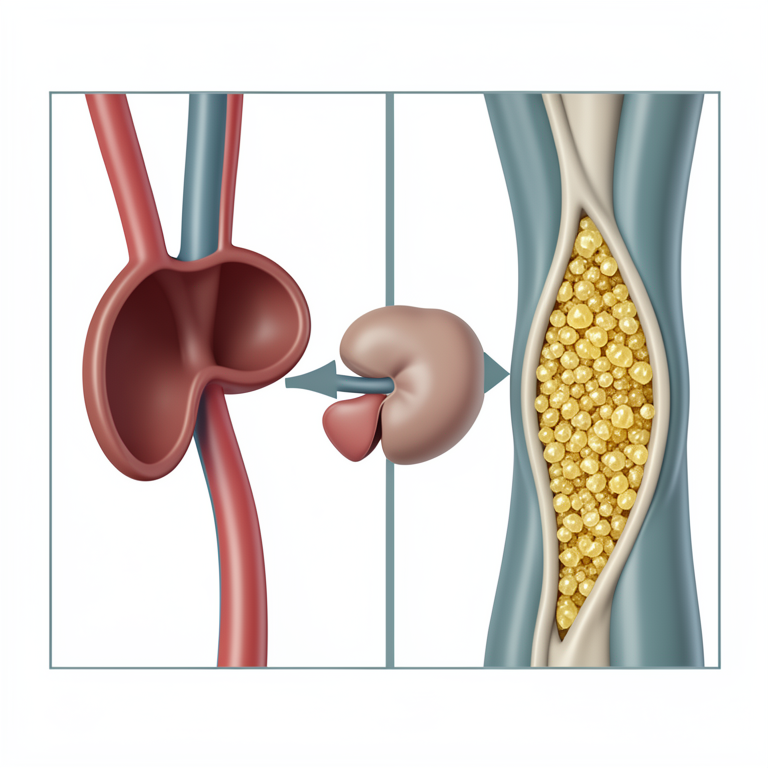
Association of Uric Acid and Blood Pressure
AI-generated conceptual illustration (human blood vessels and kidneys). It explains the idea and does not show study data.
View source evidence ↗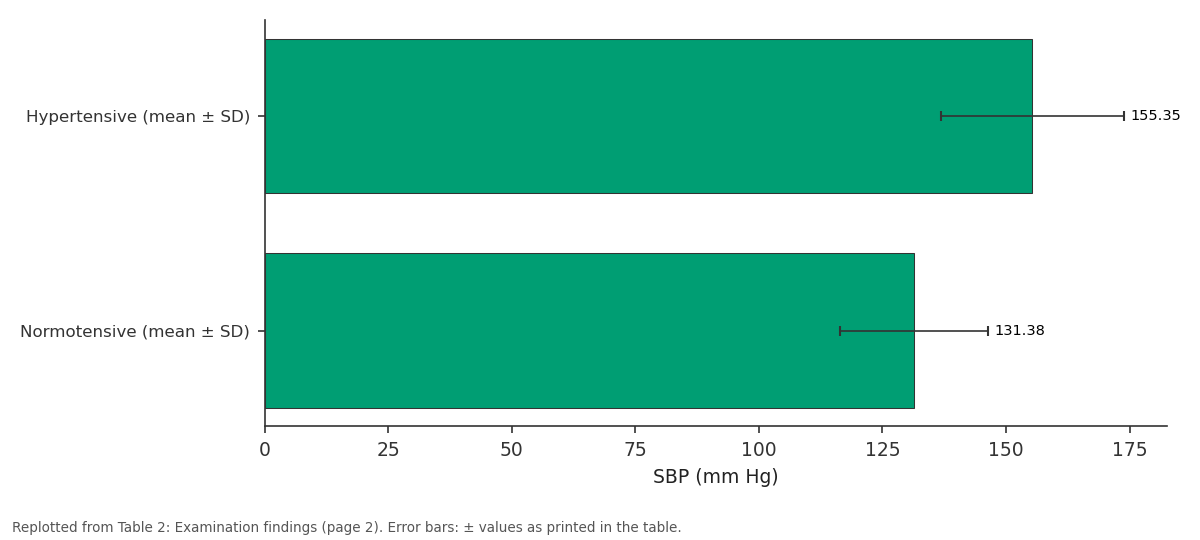
SBP (mm Hg): Hypertensive (mean ± SD) vs Normotensive (mean ± SD)
Replotted from Table 2 (page 2) of the original paper. Every bar is the paper's own table value.
View source evidence ↗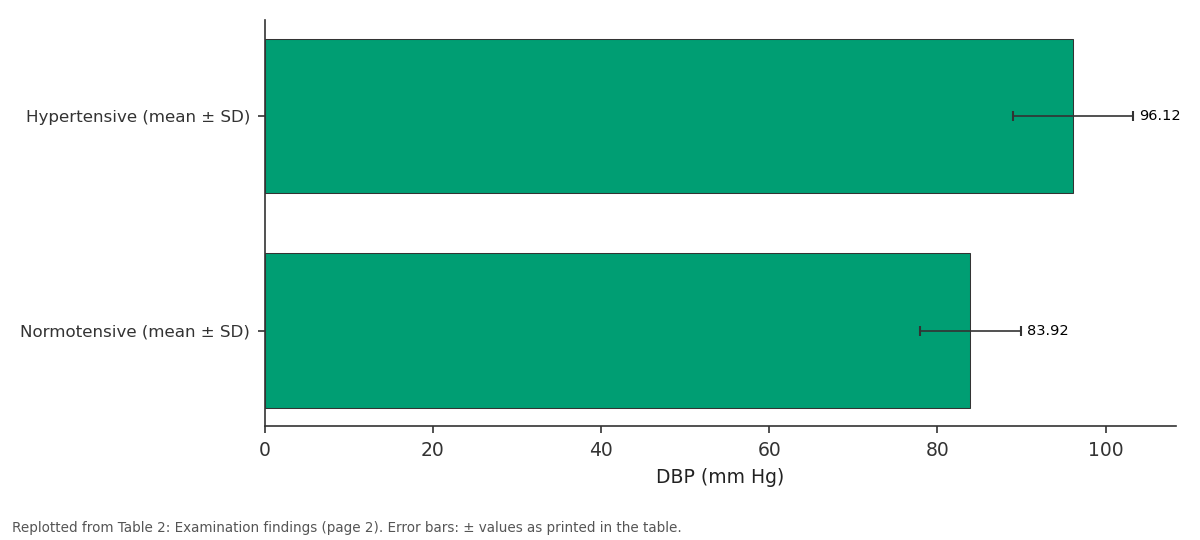
DBP (mm Hg): Hypertensive (mean ± SD) vs Normotensive (mean ± SD)
Replotted from Table 2 (page 2) of the original paper. Every bar is the paper's own table value.
View source evidence ↗Figures & tables
From the original paper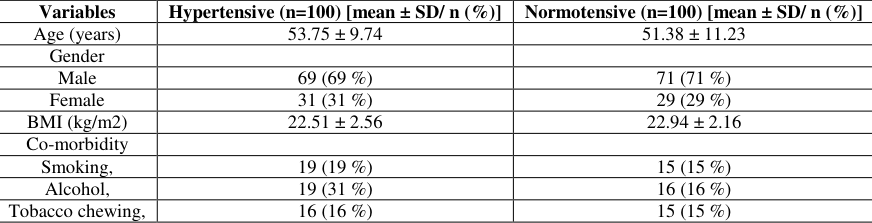 Table 1
 Table 2
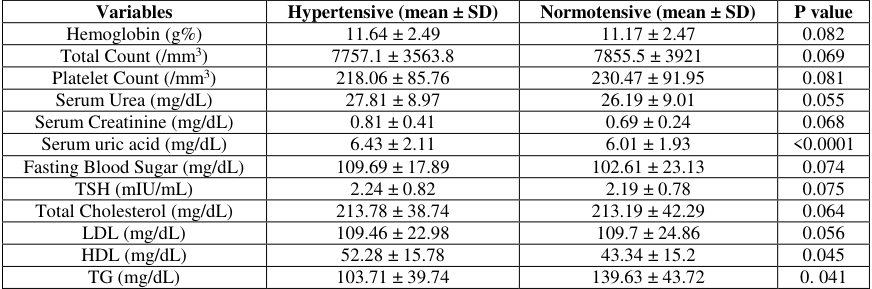 Table 3
Introduction
Uric acid is the end product of purine metabolism. Metabolic disorders of uric acid are associated with many disease states. Substantial evidence suggests the possible role of uric acid as a mediator of high blood pressure. Elevated uric acid is closely associated with new onset essential hypertension in adolescents and prehypertension; and urate-lowering agents can significantly improve these early stages of hypertension. Uric acid also influences salt sensitivity of blood pressure through two phases. Local renin-angiotensin-aldosterone system activation initiates renal damage, arteriolopathy, and endothelium dysfunction, which is followed by the dysregulation of sodium homeostasis, thereby leading to increased salt sensitivity. In this review we summarize the available evidence to contribute to a better understanding of the casual relationship between uric acid and early or intermediate stages of hypertension. We hope our review can contribute to the prevention of hypertension or provide new insights into a treatment that would slow the progression of hypertension. Hypertension is an increasing important medical and public health issue. Hypertension markedly increases the risk for myocardial infarction, stroke, congestive heart failure, peripheral vascular disease and end stage renal disease. Various risk factors for development of hypertension, both modifiable and non-modifiable, have been identified to aid in its prevention and management. In recent years, various studies have shown serum uric acid (SUA) levels to be an independent predictor for developing hypertension [1] . Uric Acid (UA) is a heterocyclic compound whose concentration in the body depends upon the balance between purine breakdown and rate of urate excretion [1] . Plasma uric acid is a circulating marker of oxidative damage in a variety of pathological conditions such as ischemic liver injury, hyperlipidemia, chronic heart disease, atherosclerosis, ischemic reperfusion injury, and diabetes [2] . The serum uric level depends on gender, lifestyle, meals, and previous use of diuretics [3] . Uric acid exerts a pro-inflammatory effect on endothelial cells which may be associated with MetS risk factors such as elevated triglyceride (TG) levels, hypertension and insulin resistance [4] . Moreover, in recent years, elevated SUA levels in adults have been suggested as CVD risk factors in some studies [5,6] . Present study was aimed to study of association of serum uric acid and blood pressure in hypertensive patients at a tertiary hospital.
Material and methods
Present study was prospective, comparative, observational study, conducted under department of Biochemistry, at Kanachur Institute of Medical Sciences, Mangalore. Study duration was of 1 year (July 2016 to June 2017).
Inclusion criteria
Cases -Subjects of either gender, age >18 years, diagnosed as hypertensive (first time) were enrolled in this study during a regular routine health check-up at general medicine OPDs. Controls -Age & gender matched normotensives subjects at general medicine OPDs.
Exclusion criteria
Individuals having pre-existing hypertension Individuals having a known history of gout and cardiac or severe renal diseases Subjects who were already under medication for antihyperuricemic Subjects who were not willing to participate Study protocol was informed to all subjects and written informed consent was obtained from them prior to enrolment in the study. General information such as name, age, gender, previous medical history was noted in CRF. General & systemic examination findings along with Body mass index (BMI) [body weight in kgs divided by (height in m) 2 ] was noted in CRF. Blood pressure (BP) was measured by trained professionals using a digital BP machine (Philips) on the left arm in a sitting position after at least 10 minutes of rest. Three recordings of blood pressure as systolic and diastolic blood pressure (SBP and DBP) has been taken after a minimum of 5 minutes of rest to avoid any possible effects of anxiety and with an interval of 5 minutes. Hypertension was defined as per JNC -7 classification of hypertension [7] . The venous blood samples were obtained after an overnight fasting (≥12hrs) for estimation of complete blood counts, renal function tests (Serum Urea, Serum Creatinine & Serum uric acid), Thyroid-stimulating hormone (TSH), random blood sugar and serum lipids: total cholesterol (TC), triglycerides (TG), low-density lipoprotein cholesterol (LDL-C), and high-density lipoprotein cholesterol (HDL-C), The values were determined calorimetrically using commercially available diagnostic kits using an autoanalyser. Hyperuricemia was defined as SUA levels >416.4 _mol/L (7.0 mg/dL) in men and >356.9 _mol/L (6.0 mg/dL) in women. Data was collected and compiled using Microsoft Excel, analysed using SPSS 23.0 version. Frequency, percentage, means and standard deviations (SD) was calculated for the continuous variables, while ratios and proportions were calculated for the categorical variables. Pearson's correlation coefficient test was performed to assess the interrelationships between baseline variables and SUA concentrations. Difference of proportions between qualitative variables were tested using chi-square test or Fisher exact test as applicable. P value less than 0.5 was considered as statistically significant.
Results
Results
Discussion
In study by Chanchal S et al. [7] mean serum uric acid level in group A (Essential Hypertension) was significantly higher than group B (normotensive cases) (6.56 ± 0.76, 4.91 ± 0.97 mg/dl, p<0.001 respectively). 37.33% of patients had hyperuricaemia in group A as compared to 14% in group B (p<0.01, OR=3.66) indicating that a hyperuricaemic individual has 3.66 times more risk of developing Essential Hypertension as compared to the one with lower value of serum uric acid. Serum uric acid could be useful as a potential indicator for early risk detection of development of EHT. Sujeet Raina et al. [8] studied 50 newly diagnosed cases of essential hypertension and 50 age and sex matched normotensive healthy volunteer. Prevalence of hyperuricemia was 24% among the cases and 6% among the controls (p<0.05). Odds ratio was 4.9 (CI=1.3 to 18.8). The mean SUA was significantly higher in the cases (5.5±1.7 mg/dl) than in the controls (4.9±1.1 mg/dl; p<0.05). Odds ratio in male hyperuricemic hypertensive versus hyperuricemic normotensive was 6 (CI=1.0 to 33.2) and 4.46 (CI=0.4 to 42.5) among female hyperuricemic hypertensive versus hyperuricemic normotensives. Despite the clinical and epidemiological evidence, many authorities do not consider an elevated uric acid to be a true cardiovascular risk factor, because patients with hyperuricemia often have other well-established risk factors for cardiovascular disease, such as hypertension, renal disease, obesity, dyslipidemia, and insulin resistance. At the tissue level, chronic exposure to increased UA promotes vascular changes leading to renal ischemia and stimulation of renin-angiotensin system and development of insulin resistance, hypertriglyceridemia, and hepatic steatosis through pro-oxidative mechanisms. Therefore, early screening of UA levels is advisable to prevent and manage complications of elevated levels of SUA [9] . Present study limitations were a cross-sectional study, did not permit us to make any inference on the causal relationship between uric acid and hypertension. Secondly, the limited sample size also limited the power of the analysis. A further study designed as a prospective randomized follow up study with a larger sample size would be required to substantiate the results of the present study.
Conclusion
Estimation of SUA levels is advisable at the diagnosis of hypertension in order to diagnose, prevent and manage complications of elevated levels of hypertension
Figures and tables from the paper
| Variables | Hypertensive (n=100) [mean ± SD/ n (%)] | Normotensive (n=100) [mean ± SD/ n (%)] |
|---|---|---|
| Age (years) | 53.75 ± 9.74 | 51.38 ± 11.23 |
| Gender | ||
| Male | 69 (69 %) | 71 (71 %) |
| Female | 31 (31 %) | 29 (29 %) |
| BMI (kg/m2) | 22.51 ± 2.56 | 22.94 ± 2.16 |
| Co-morbidity | ||
| Smoking, | 19 (19 %) | 15 (15 %) |
| Alcohol, | 19 (31 %) | 16 (16 %) |
| Tobacco chewing, | 16 (16 %) | 15 (15 %) |
Table text extracted from the original PDF; superscript letters are shown inline. The original table image is below.
View original table image
| Variables | Hypertensive (mean ± SD) | Normotensive (mean ± SD) | P value |
|---|---|---|---|
| Pulse rate (/min) | 81.35 ± 11.54 | 80.61 ± 10.97 | 0.089 |
| Respiratory rate (/min) | 18.96 ± 3.01 | 19.09 ± 2.91 | 0.086 |
| SBP (mm Hg) | 155.35 ± 18.51 | 131.38 ± 14.91 | <0.0001 |
| DBP (mm Hg) | 96.12 ± 7.11 | 83.92 ± 6.01 | <0.0001 |
Table text extracted from the original PDF; superscript letters are shown inline. The original table image is below.
View original table image
| Variables | Hypertensive (mean ± SD) | Normotensive (mean ± SD) | P value |
|---|---|---|---|
| Hemoglobin (g%) | 11.64 ± 2.49 | 11.17 ± 2.47 | 0.082 |
| Total Count (/mm3) | 7757.1 ± 3563.8 | 7855.5 ± 3921 | 0.069 |
| Platelet Count (/mm3) | 218.06 ± 85.76 | 230.47 ± 91.95 | 0.081 |
| Serum Urea (mg/dL) | 27.81 ± 8.97 | 26.19 ± 9.01 | 0.055 |
| Serum Creatinine (mg/dL) | 0.81 ± 0.41 | 0.69 ± 0.24 | 0.068 |
| Serum uric acid (mg/dL) | 6.43 ± 2.11 | 6.01 ± 1.93 | <0.0001 |
| Fasting Blood Sugar (mg/dL) | 109.69 ± 17.89 | 102.61 ± 23.13 | 0.074 |
| TSH (mIU/mL) | 2.24 ± 0.82 | 2.19 ± 0.78 | 0.075 |
| Total Cholesterol (mg/dL) | 213.78 ± 38.74 | 213.19 ± 42.29 | 0.064 |
| LDL (mg/dL) | 109.46 ± 22.98 | 109.7 ± 24.86 | 0.056 |
| HDL (mg/dL) | 52.28 ± 15.78 | 43.34 ± 15.2 | 0.045 |
| TG (mg/dL) | 103.71 ± 39.74 | 139.63 ± 43.72 | 0. 041 |
Table text extracted from the original PDF; superscript letters are shown inline. The original table image is below.
View original table image
References
9 in the original paper- Singh V, Gomez V, Swamy S. Approach to a Case of Hyperuricemia. Ind J Aerospace Med. 2010;54(1):40-6.
- Lyngdoh T, Marques-Vidal P, Paccad F, Preisig M, Waeber G, Bochud M, et al. Elevated serum uric acid is associated with high circulating inflammatory cytokines in the population based Colaus study. PLoS One. 2011;6:19901.
- Gavin AR, Struthers AD. Hyperuricemia and adverse outcomes in cardiovascular disease: Potential for therapeutic intervention. Am J Cardiovasc Drugs 2003;3:309-14.
- Yang T, Chu CH, Bai CH, You SL, Chou YC, Hwang LC, et al. Uric acid concentration as a risk marker for blood pressure progression and incident hypertension: a Chinese cohort study. Metabolism. 2012;61(12):174755.
- Niskanen L, Laaksonen DE, Nyyssonen K, et al. SUA level as a risk factor for cardiovascular and all-cause mortality in middle-aged men: a prospective cohort study. Arch Intern Med. 2004;164:1546-51.
- Iwashima Y, Horio T, Kamide K, Rakugi H, Ogihara T, Kawano Y. Uric Acid, Left Ventricular Mass Index, and Risk of Cardiovascular Disease in Essential ypertension. Hypertension. 2006;47:195-202.
- Chanchal Shrivastav, Manjinder Kaur, Suhalka ML, Suman Sharma, Abhijit Basu, Hyperuricaemia: A Potential Indicator to Diagnose the Risk of Essential Hypertension, Journal of Clinical and Diagnostic Research. 2016 Mar;10(3):CC01-CC03.
- Sujeet Raina, Vishnu Kumar Agarwal, Dhiraj Kapoor, Kailash Nath Sharma, Yadav RS. Hypertension as Determinant of Hyperuricemia: A Case Control Study from the Sub-Himalayan Region in North India, Journal of The Association of Physicians of India. 2018, 66.
- Viazzi F, Bonino B, Ratto E, Desideri G, Pontremoli R. Hyperuricemia, diabetes and hypertension. G Ital Nefrol. 2015;32(62).