
Research article · 2021 · Full text
International Journal of Advanced Biochemistry ResearchEffect of sewage sludge application on growth and photosynthetic pigments in vetiver grass (Vetiveria zizanioides L. Nash)
Volume 5(2) · Pages 48–53 · DOI: 10.33545/26174693.2021.v5.i2a.115 ↗
Research areasAllelopathy and phytotoxic interactionsSeed Germination and PhysiologyPlant Parasitism and Resistance
Abstract
Author-writtenThe study was conducted to evaluate the effect of sewage sludge application on growth and photosynthetic pigments in vetiver grass. Vetiver plants were grown in poly-ethylene U-V stabilized grow bags (24 X 24 X 40) for a period of three months (90 days), where the soil treated with different sewage sludge concentrations (0, 25, 50 and 75%). Physico-chemical characterization of sewage sludge showed that it was slightly acidic with significant concentrations of heavy metals (Cd, Cr, Cu, Pb and Zn), nutrients and mineral ions. Results showed that there were no apparent symptoms of toxicity on the morphology (leaf color, plant height and number of leaves) of the sludge amended vetiver plants. It has been observed that 25% sludge concentration has a favorable effect on the growth and photosynthetic pigments of plants. But at 50 and 75% sludge concentration, photosynthetic pigments such as chlorophylls and Pheophytin content showed a gradual decline with increase in sludge concentration while the carotenoid content was increased gradually. Even though compared to control plants sludge amendment increased the total wet biomass production in all the experimental plants with a gradual increase with increase in sludge concentration. This study proves that use of sewage sludge as an amendment will improve the growth and biomass production in vetiver plants up to 25% of the total soil. But even at this concentration carotenoid content was high and it may be due to defense mechanisms induced in response to heavy metal stress. The study, therefore, suggests that even though the sewage sludge is highly enriched with various nutrients, considering the heavy metal content, the fertilizer application of sewage sludge is dangerous, because the risk of environmental contamination is very high. The study pointed out that the vetiver plants growing in sludge amended area have potentially developed the defense strategy to combat against heavy metal toxicity. Therefore, the highly tolerant vetiver plants (Vetiveria zizanioides, L. Nash) may be used for phytoremediation purposes.
Summary
Source-checkedPlain-language reading of the full paper, prepared with AI and checked against the text. Each point links to the authors' own words.
Why it matters
- Municipal sewage sludge, also known as bio-solids, is a semi-solid byproduct resulting from the treatment of municipal or industrial wastewater. View evidence ↗
- Sewage sludge often contains a mixture of toxic substances, including heavy metals and pathogens, which can pose risks if used as fertilizer. View evidence ↗
- Vetiver grass (Vetiveria zizanioides L. Nash) is a fast-growing, highly tolerant plant known for its effectiveness in phytoremediation. View evidence ↗
The question
- The study aimed to evaluate the phytotoxicity of sewage sludge by measuring its impact on the growth parameters and photosynthetic pigment concentrations of vetiver plants. View evidence ↗
What they did
- Vetiver plants were grown in five different soil mixtures containing sewage sludge concentrations of 0% (control), 25%, 50%, 75%, and 100%. View evidence ↗
- The experimental plants were maintained under controlled conditions for a total period of 90 days. View evidence ↗
- Morphological growth parameters, including plant height, number of leaves, and leaf color intensity, were assessed via visual examination. View evidence ↗
- The concentrations of total chlorophylls, pheophytin, and carotenoids in the leaves were measured using a UV-VIS Spectrophotometer following Arnon's procedure. View evidence ↗
What they found
- There were no significant changes in leaf color (which remained dark green) or plant height when comparing sludge-treated plants to the control group. View evidence ↗
- Total chlorophyll content peaked at 7.38±0.02 mg/g FW with 25% sludge application and reached its minimum of 5.92±0.01 mg/g FW at 100% sludge application. View evidence ↗
- Carotenoid content increased with higher sludge concentrations, ranging from 0.098±0.02 mg/g FW in control plants to 0.109±0.04 mg/g FW in the 100% sludge group. View evidence ↗
- A sewage sludge concentration of 25% was found to have a favorable effect on the growth and biomass production of vetiver plants. View evidence ↗
- The increase in carotenoid content is interpreted as a defense mechanism against oxidative damage and reactive oxygen species (ROS) induced by heavy metal stress. View evidence ↗
What it means
- The authors conclude that using sewage sludge as fertilizer is dangerous due to the high risk of environmental contamination from heavy metals. View evidence ↗
- Because vetiver plants can tolerate heavy metal toxicity, the authors recommend their use for phytoremediation purposes. View evidence ↗
Visual summary
2 visualsIllustrations explain the paper; charts are replotted from the paper's own table values.
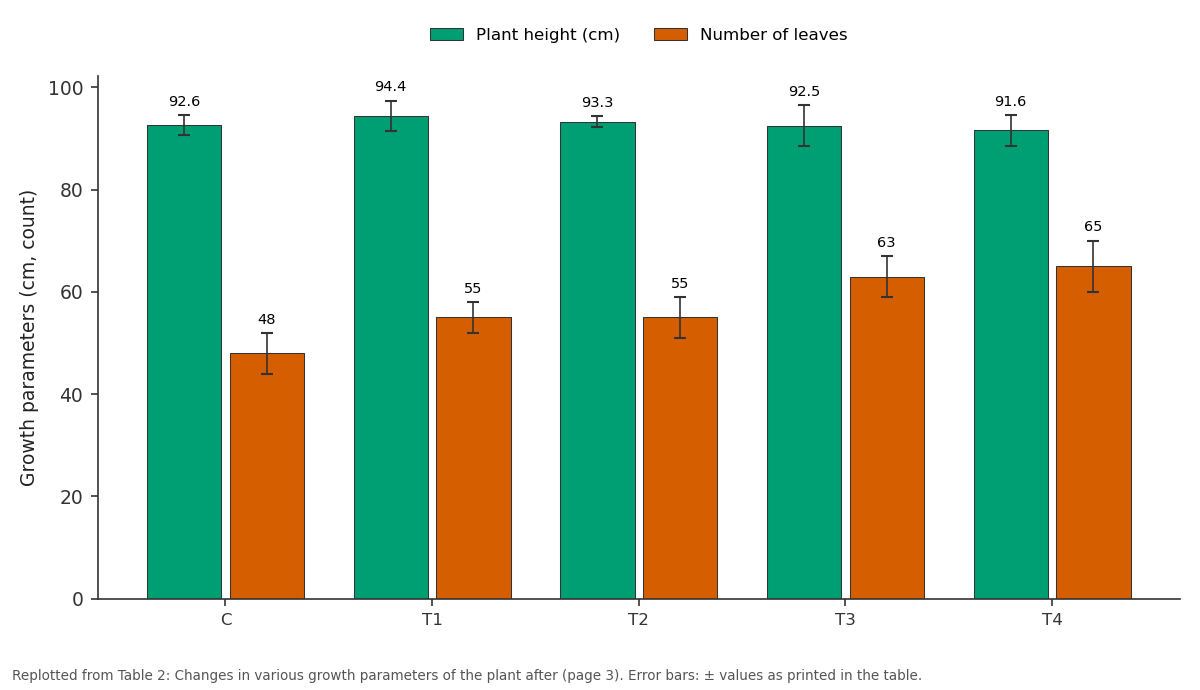
Plant height (cm) and Number of leaves: C vs T1 vs T2 vs T3 vs T4
Replotted from Table 2 (page 3) of the original paper. Every bar is the paper's own table value.
View source evidence ↗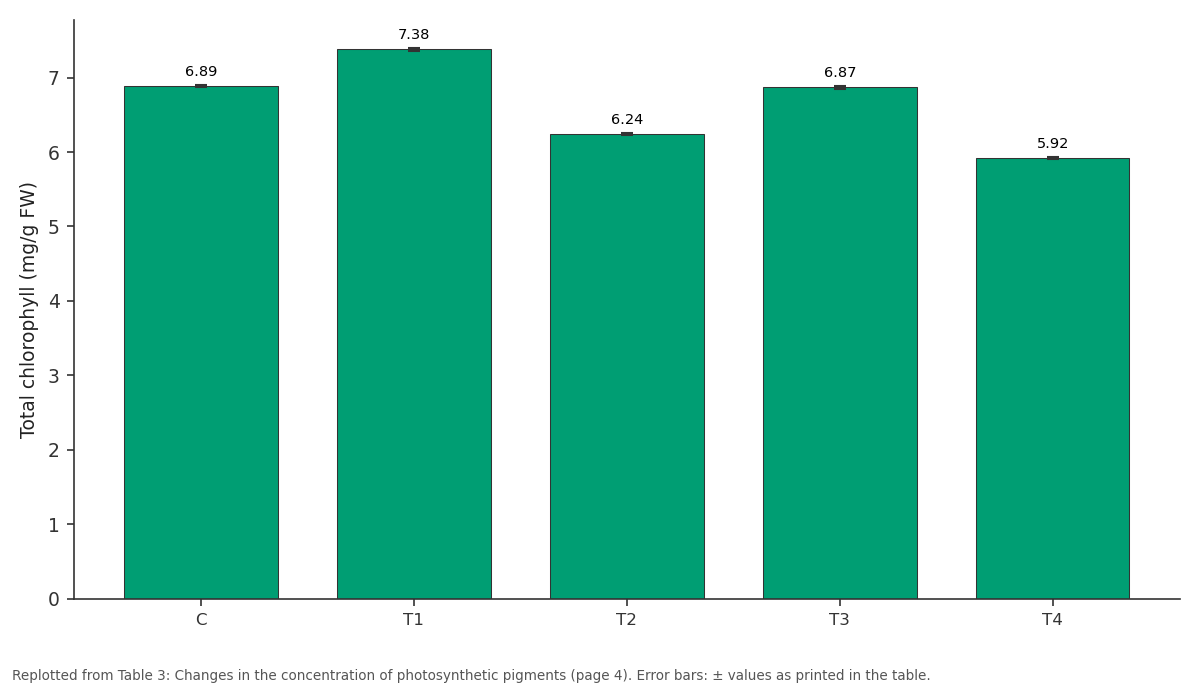
Parameters / Total chlorophyll (mg/g FW): C vs T1 vs T2 vs T3 vs T4
Replotted from Table 3 (page 4) of the original paper. Every bar is the paper's own table value.
View source evidence ↗Figures & tables
From the original paper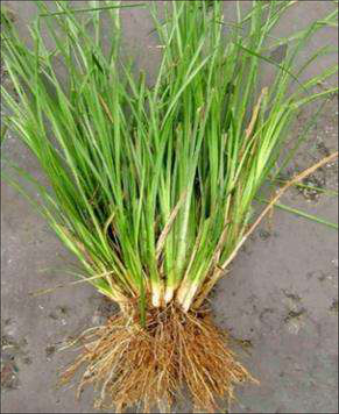 Figure 1
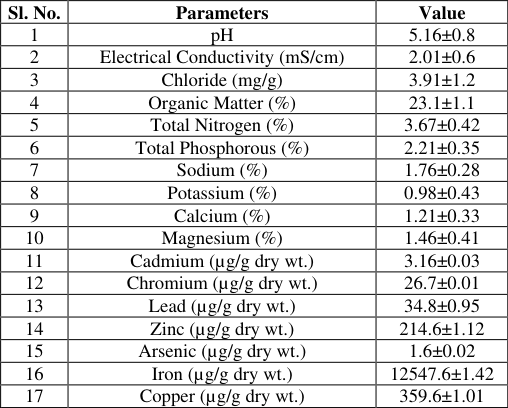 Table 1
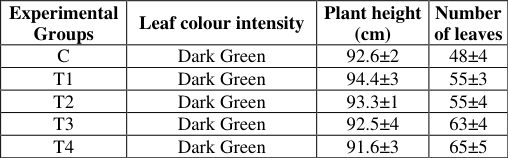 Table 2
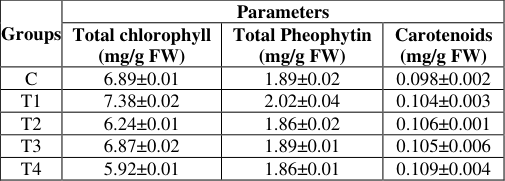 Table 3
Introduction
Sewage is untreated municipal waste in the water that has been generated from urban, suburban or even from industrial sources or it is the used water from homes, medical facilities, street run-off and businesses coming out after washing, bathing, and flushing toilets. Municipal sewage sludge or "bio-solids" are the leftover or byproduct of sewage or municipal wastewater treatment (Kwarciak-Kozłowska, 2019) [19] or it is the semi-solid ingredient that is eliminated as a result of sewage treatment (Kumar and Chopra, 2016) [18] . Due to the regular increase of population, urbanization, industrialization etc. generation of sewage and sewage sludge is firstly increasing worldwide. So proper management of this organic waste or bio-solids is of great importance today. Once the sewage water is treated, the left-over sludge is then dried and disposed. Commonly used disposal approaches for municipal sewage sludge management are reuse and final disposal. Reuse of sewage sludge including use as landfill (landscaping), as fertilizer to agricultural cropland, or marketed as "biosolid compost" for agricultural needs. As sewage water is the waste enriched in water, comprises entirety that is drained into the sewer system and therefore the sewage sludge is the crude form of all these wastes in dry form. Therefore, the sludge is a mixture of toxic compounds including PCBs, flame retardants, heavy metals, nano-materials, hormones, dangerous pathogens and endocrine disrupters, which are applied to our food as fertilizers during their cultivation and many of which are carcinogens.
The non-biodegradable toxic chemicals accumulate in the soil and are taken up by plants, enter into the food chain and finally putting human health at risk. Plethora of evidences suggests the impact of sewage sludge application as fertilizer to various crop plants has been studied and reported that sewage application favourable affected germination percentage, growth, metabolic activities and yield, but the concentration of heavy metals, which have hazardous effects on human and animal health (Turkmen et al., 2001 [32,33,25,26,6,17] . It has been reported that due to risk of contamination of heavy metal content sewage sludge amendment in soil may not be a good option (Alghobar et al., 2014; Poykio et al., 2019) [2,22] . Heavy metals can inhibit photosynthesis at structural and metabolic levels (Ahmad and Prasad, 2011) [1] . Sludge amendment has positive response towards a certain level but an excess absorption of metal by plants may results in growth reduction, inhibition of respiration and abnormalities in cell division (Dai et al., 2006; Singh and Agarwal, 2007; Bakshi et al., 2019) [10,8,27,28] . The degree of injury caused by toxic metals can be assessed by effect concentration levels and it will depend on metal availability and the interaction of metals with the soil factors (Singh and Kalamdhad, 2011) [24] . The impact of various toxins including the toxic metals on plant varies according to the characteristics of plant species. Some species of plants were found as hyper accumulators and some others are as avoiders or excluders. The majority of the plants directly consumes it and remain stunted or resulting into poor production and other qualities. However, all those plants suffer from some sort of phytotoxic effects, and are evident from chlorosis and pigment concentrations (Gu et al., 2013) [16] . So, the present study aims to find out the impact of sewage sludge application by measuring the degree of phytotoxicity through assessing the growth parameters and pigment concentrations in the exposed vetiver plants.
Materials and Methods
Materials and Methods
Plant materials
The experimental plants selected for the study was Vetiver grass (Vetiveria zizanioides L. Nash) or Chrysopogon zizanioides L. Roberty (Family: Poaceae/Graminae) is commonly known as Khus grass is a perennial grass of Indian origin. In Kerala the plant is popular as Ramacham, a common aromatic medicinal plant (Swapna et al., 2011) [30] . It is a fast growing, highly tolerant grass (to extreme heat, pH, flood, draught, temperature etc.) well known by the effectiveness in phytoremediation over the past several years in several countries including India (Dhanya and Jaya, 2013; Badejo et al., 2018; Darajeh et al., 2019) [12,7,11] . For the experimental study, Vetiver plants [Vetiveria zizanioides (L.) Nash] is procured from the Herbal Garden -Aromatic and Medicinal Plants Research Station (Kerala Agricultural University), Odakkali, Ernakulam, Kerala (Figure 1).
Sewage sludge
Sewage sludge (SS) is the left-over, semi-solid by-product of sewage treatment of industrial or municipal wastewater. For the experimental study, the raw sewage sludge was collected from Muttathara Sewage Treatment Plant, Thiruvananthapuram, the capital city of Kerala.
Experimental Design
The study was performed in poly-ethylene U-V stabilized grow bags of size 24 X 24 X 40 cm. The collected sewage sludge was further air-dried, crushed to pass a 2 mm sieve, and used for the preparation of potting mixture. The airdried sludge was mixed with garden soil to have five sludgesoil mixtures with sludge representing 0 (Control, C), 25 (T1), 50 (T2), 75 (T3) and 100% (T4) and are filled with 5 Kgs of mixture respectively in labelled grow bags and are subjected to various physico-chemical as well as heavy metal content before starting the experiment. The vetiver plants are removed from the propagating soil and surface sterilized with distilled water to remove any adhering soil and dried in air. Then the tops and roots of the vetiver sprouts were pruned to 10 cm and 5 cm respectively. Two clumps were planted in each grow bag and are maintained under controlled condition for a period of three months (90 days) for experimental studies. All the plants were watered daily with sufficient amounts (500 mL) of tap water. After the study period the plants are uprooted carefully and cleaned with distilled water, the plant parts (leaves and roots) are subjected to find out the changes in various growth parameters and photosynthetic pigments following standard procedures.
Methodology
In order to find out the impact of sewage sludge application on growth and photosynthetic pigments in Vetiver grass (Vetiveria zizanioides L. Nash), various growth parameters (morphological) such as leaf color intensity, plant height and number of leaves of the plants were assessed by visual examination, recorded and compared with the control plants.
Analysis of Photosynthetic
Pigments: Total Chlorophylls, Carotenoids and Pheophytin content in Leaves Changes in the concentration of total chlorophylls, pheophytin and carotenoid content in the plant leaves were determined by following the procedure given by of Arnon (1949) [5] . Pigments were extracted from 1g of fresh leaves in 10mL 80% acetone by grinding to fine pulp with pestle and mortar and kept overnight at 4 ºC. Then the samples were centrifuged at 3000 rpm for about 15 minutes and the supernatant was decanted. Then made up to 10 mL with 80% acetone and measured the absorbance at 480, 510, 645, 663, 665 and 666 nm wavelength using a UV-VIS Spectrophotometer (model 118, Systronics, India). The concentration of chlorophylls, pheophytin and carotenoid contents in sample was calculated and expressed in mg/g fresh weight (FW).
Sewage sludge analysis
Chemical characteristics as well as heavy metal content of sludge samples were performed by following the standard procedures. All the chemicals and bio-chemicals used for the analysis are of analytical grade.
Results
In-order to conduct the study, various chemical and heavy metal characterization of the sludge samples are carried out in the laboratory and are tabulated (Table 1). The results show that sludge samples showed slightly acidic pH (5.16±0.8) with low electrical conductivity (2.01±0.6 mS/cm). The chloride content of sludge sample was 3.91± 1.2 mg/g. The organic matter content of sewage sludge used for the study was 23.1±1.1%. On a dry weight basis, sewage sludge contains an average of 3.67±0.42% total nitrogen, 2.21±0.35% total phosphorous, 1.76±0.28% sodium, 0.98±0.43% potassium, 1.21±0.33% calcium and 1.46±0.41% Magnesium.
| Sl. No. | Parameters | Value |
|---|---|---|
| 1 | pH | 5.16±0.8 |
| 2 | Electrical Conductivity (mS/cm) | 2.01±0.6 |
| 3 | Chloride (mg/g) | 3.91±1.2 |
| 4 | Organic Matter (%) | 23.1±1.1 |
| 5 | Total Nitrogen (%) | 3.67±0.42 |
| 6 | Total Phosphorous (%) | 2.21±0.35 |
| 7 | Sodium (%) | 1.76±0.28 |
| 8 | Potassium (%) | 0.98±0.43 |
| 9 | Calcium (%) | 1.21±0.33 |
| 10 | Magnesium (%) | 1.46±0.41 |
| 11 | Cadmium (µg/g dry wt.) | 3.16±0.03 |
| 12 | Chromium (µg/g dry wt.) | 26.7±0.01 |
| 13 | Lead (µg/g dry wt.) | 34.8±0.95 |
| 14 | Zinc (µg/g dry wt.) | 214.6±1.12 |
| 15 | Arsenic (µg/g dry wt.) | 1.6±0.02 |
| 16 | Iron (µg/g dry wt.) | 12547.6±1.42 |
| 17 | Copper (µg/g dry wt.) | 359.6±1.01 |
Table text extracted from the original PDF; superscript letters are shown inline. The original table image is below.
View original table image
Heavy metal analysis of sewage sludge revealed that the sludge contained copious amounts of various toxic heavy metals. Sludge contained 3.16±0.03 µg Cd/g dry wt., 26.7±0.01 µg Cr/g dry wt., 34.8±0.95 µg Pb/g dry wt., 214.6±1.12 µg Zn/g dry wt., 1.6±0.02 µg As/g dry wt., 12547.6±1.42 µg Fe/g dry wt., and 359.6±1.01 µgCu/g dry wt. The heavy metal content in the sludge is in the order: Fe > Cu > Zn > Pb>Cr > Cd > As.
Effect of Sewage sludge application on photosynthetic pigments
Pigments are molecules that absorbs light and has a colour. Photosynthetic pigments are those with the ability to absorb energy from sunlight and make it available to the photosynthetic apparatus. In terrestrial plants, there are mainly two groups of photosynthetic pigments, the chlorophylls and the carotenoids (Gross, 1991) [15] . Changes in the concentration of total chlorophylls, total pheophytin and total carotenoids in both sewage sludge amended, and control vetiver plants are shown in Table 3.
The total foliar chlorophyll content in vetiver plants after 3 months was ranged from 5.92±0.01 mg/g FW to 7.38±0.02 mg/g FW. Maximum chlorophyll content (7.38±0.02 mg/g FW) was observed in T1 group, which was treated with 25% sewage sludge. Whereas minimum chlorophyll content (5.92±0.01 mg/g FW) was observed in the leaves of T4 group plants which was treated with 100% sewage sludge. Total pheophytin content in the experimental plants after 3 months was ranged from 1.86±0.02 mg/g FW to 2.02±0.04 mg/g FW. Minimum concentration was found in T4 plants and maximum pheophytin content was observed in T1 plants treated with 25% of sewage sludge. Total carotenoid content in the experimental plants after 3 months of study ranged from a minimum value of 0.098±0.02 mg/g FW to a maximum value of 0.109±0.04 mg/g FW. That is minimum value was observed in control plants and the maximum was recorded in T4 plants treated with 100% sewage sludge.
Discussion
In the present study impact of sewage sludge application on the growth and photosynthetic pigments in vetiver plants was evaluated. For the experiment, sludge analysis was carried out as a first step, because the characteristics determines the type of application of sewage sludge for various management options. Various important sludge characteristics include: pH, organic carbon and matter, pathogens, total solids, volatile solids, nutrients, heavy metals, organic chemicals, and hazardous pollutants. Nutrients in sewage sludge, such as nitrogen, phosphorus, potassium etc. are essential for plant growth and endow sewage sludge with its fertilizing properties (Anonymous, 1997) [3] . Analysis showed that sewage sludge was rich in all most all the chemical constituents. High concentration of nutrients such as nitrogen, phosphorous, sodium, potassium, calcium, and magnesium in the sewage sludge make it suitable for agricultural needs as a fertilizer on one hand, and high concentration of heavy metals make a serious threat to the environment on the other hand. So, this study is appropriate to find out the fertilizer use of sewage sludge as a proper management option. Analysis of the effect of sewage sludge amendment on the growth parameters of vetiver plants revealed that even if the sludge was rich in high concentrations of various heavy metals, sludge amendment has no significant visible negative impact on the morphological parameters such as leaf colour intensity, plant height and number of leaves.
Because of the presence of high nutrient content in sludge the plants to absorb more nutrients and thereby the plants counter balanced or hindrance the effect of heavy metals to a notable degree. It was also observed that at 25% sludge concentration all the morphological parameters showed a significant improvement compared to all other concentrations. Therefore, the study proved that 25% sludge concentration has a favourable effect on the growth and biomass production in vetiver plants. Singh and Agarwal (2010) [25,26] reported that sewage sludge application increased the shoot length, leaf area, total biomass in Vigna radiata, L. Studies by Li-ping et al.
(2010) [20] reported that the application of sewage sludge increased the growth, number of leaves etc in B. microphylla seedlings leaves, but at higher concentration, overall performance was decreased. The study recommended that the dosage of sewage sludge for B. microphylla seedlings should be lower than 30 t. hm-2.
According to Dhanya G et al. (2013) [12] , sewage sludge application promotes the number of leaves per plant (NLP); plant height (PH in cm); root diameter (RD) and tubercle production (TP ton/ha) in radish (Raphanus sativus L.) and recommended that 25 and 50 tons/ha gave the best results for the parameters assessed. As per Eid et al. (2017) [13] , sewage sludge application positively influenced the growth parameters of spinach up to 40 g kg -1 . Analysis of the effect of sludge amendment on the photosynthetic pigment showed that sludge amendment has only a little impact over concentration of total chlorophylls and pheophytin in the experimental plants and it was not significant (p>0.05). But at 25% sludge concentration both the pigments in all the experimental plant groups were increased. According to Antolín et al. (2010) [4] application of sewage sludge improves growth, photosynthesis and antioxidant activities in alfalfa plants.
In the case of carotenoid content, it was observed that concentration was increased with increase in the sludge concentration. Increased production of carotenoids is an indication of stress induced ROS production and plants protective mechanism against oxidative damage. As an antioxidant, they scavenge free radicals to inhibit oxidative damage and quench triplet sensitizer (3Chl*) and excited chlorophyll (Chl*) molecule to prevent the formation of oxygen free radical to protect the photosynthetic apparatus.
Carotenoids are essential components of the photosynthetic apparatus in a wide range of organisms which participate in the adaptation of plastids to changing environmental conditions and prevent photo-oxidative damage of the photosynthetic apparatus by detoxifying ROS. The application of sewage sludge as a fertilizer to sunflower plants increased the carotenoid content may be due to defense mechanisms induced in response to heavy metal stress (Belhaj et al., 2016) [9] . Carotenoids contain a chain of isoprene residues bearing numerous conjugated double bonds which allows easy energy uptake from excited molecules and dissipation of excess energy as heat (Sharma et al., 2012) [23] . Thereby the plants can reduce the negative effect of ROS. Carotenoids are essential components of the photosynthetic apparatus in a wide range of plants. Studies by Singh and Agarwal, (2010) [25,26] reported that sewage sludge amendment increased the enzymatic and non-enzymatic activities in palak (Beta vulgaris). According to Gajewska et al. (2007) [14] carotenoid is an important non-enzymatic antioxidant belonging to the group of lipophilic antioxidants and are able to detoxify various forms of ROS during abiotic stress (heavy metal stress). Accumulation of carotenoids in the cells of exposed plants is a common mechanism to scavenge the generated free radicals. Studies by Pandhair and Sekhon (2006) [21] also pointed out that during various environmental as well as anthropogenic stresses like heavy metal stress the cellular arsenal for scavenging ROS and toxic oxygen free radicals are ascorbate, glutathione, tocopherol, carotenoids, polyphenols, alkaloids etc. will have an enhanced activity and accumulation. According to Swapna et al., (2015) [29] even in hyper accumulator and hyper tolerant plant species as in other organisms, higher concentrations of toxic chemicals and heavy metals can severely impair central metabolic processes. Belhaj et al.
(2016) [9] pointed out that, sewage sludge amendment increased root and shoot length, leaves number, biomass, and antioxidant activities of sunflower. So, the study proved that the use of sewage sludge as an amendment will improve the growth, biomass production, total chlorophylls, pheophytin and carotenoid content in vetiver plants up to 25% of the total soil. At the same time, the study revealed that even if sewage sludge amendment positively influenced the growth, biomass production and chlorophyll content in exposed plants, the presence of heavy metals induced oxidative stress to the vetiver plants. Higher concentration of carotenoids is an indication of heavy metal induced oxidative stress.
Conclusion
The present study suggests that the sewage sludge amendment to soil at an application rate of 25% has a favourable effect on the growth, biomass production and piment concentration in vetiver plants due to the good soil fertilizer value of the sewage sludge and the positive response with respect to nutritional quality. But considering the heavy metal content, the fertilizer application of sewage sludge is dangerous, because the risk of environmental contamination is very high. The study pointed out that the vetiver plants growing in sludge amended area have potentially developed efficient defense strategy to combat against excess of ROS as a result of heavy metal induced oxidative stress. Results strongly suggested that vetiver plants have the ability to tolerate heavy metal toxicity to a better level and therefore, the highly tolerant vetiver plants (Vetiveria zizanioides, L. Nash) may be used effectively for phytoremediation purposes.
Acknowledgement
AcknowledgementsThe authors acknowledge the financial support granted for this work by the Kerala State Council for Science Technology and Environment (KSCSTE), Thiruvananthapuram, Kerala.
Figures and tables from the paper
| Experimental Groups | Leaf colour intensity | Plant height (cm) | Number of leaves |
|---|---|---|---|
| C | Dark Green | 92.6±2 | 48±4 |
| T1 | Dark Green | 94.4±3 | 55±3 |
| T2 | Dark Green | 93.3±1 | 55±4 |
| T3 | Dark Green | 92.5±4 | 63±4 |
| T4 | Dark Green | 91.6±3 | 65±5 |
Table text extracted from the original PDF; superscript letters are shown inline. The original table image is below.
View original table image
References
29 in the original paper- Alghobar MA, Ramachandra L, Suresha S. Effect of sewage water irrigation on soil properties and evaluation of the accumulation of elements in Grass crop in Mysore city, Karnataka, India. American Journal of Environmental Protection. 2014;3(5):283-91.
- Anonymous. Land Application of Biosolids: Process Design Manual (1 st ed.). Routledge; 1997. https://doi.org/10.1201/9780203749593. 310p.
- Antolín MC, Muro I, Sánchez-Díaz M. Application of sewage sludge improves growth, photosynthesis and antioxidant activities of nodulated alfalfa plants under drought c: onditions. Environmental and Experimental Botany. 2010;68(1):75-82.
- Arnon PI. Copper enzymes in isolated chloroplasts. Polyphenol oxidase in Beta vulgaris. Plant Physiology. 1949;24(1):1-15.
- Ayari F, Hamdi H, Jedidi N, Gharbi N, Kossai R. Heavy metal distribution in soil and plant in municipal solid waste compost amended plots. International Journal of Environmental Science & Technology. 2010;7(3):465-72.
- Badejo AA, Omole DO, Ndambuki JM. Municipal wastewater management using Vetiveria zizanioides planted in vertical flow constructed wetland. Applied Water Science. 2018;8(4):1-6.
- Bakshi M, Liné C, Bedolla DE, Stein RJ, Kaegi R, Sarret G, et al. Assessing the impacts of sewage sludge amendment containing nano-TiO2 on tomato plants: A life cycle study. Journal of hazardous materials. 2019;369:191-198.
- Belhaj D, Elloumi N, Jerbi B, Zouari M, Abdallah FB, Ayadi H, et al. Effects of sewage sludge fertilizer on heavy metal accumulation and consequent responses of sunflower (Helianthus annuus). Environmental Science and Pollution Research. 2016;23(20):20168-77.
- Dai JY, Ling CH, Zhao JF, Na MA. Characteristics of sewage sludge and distribution of heavy metal in plants with amendment of sewage sludge. Journal of Environmental Sciences. 2006;18(6):1094-100.
- Darajeh N, Truong P, Rezania S, Alizadeh H, Leung DW. Effectiveness of vetiver grass versus other plants for phytoremediation of contaminated water. Journal of Environmental Treatment Techniques. 2019;7(3):485500.
- Dhanya G, Jaya DS. Pollutant removal in wastewater by Vetiver grass in constructed wetland system. International Journal of Engineering. 2013;2(12):13611368.
- Eid EM, El-Bebany AF, Alrumman SA, Hesham AE, Taher MA, Fawy KF. Effects of different sewage sludge applications on heavy metal accumulation, growth and yield of spinach (Spinacia oleracea L.). International Journal of Phytoremediation. 2017;19(4):340-7.
- Gajewska E, Skłodowska M. Effect of nickel on ROS content and antioxidative enzyme activities in wheat leaves. BioMetals. 2007;20(1):27-36.
- Gu C, Bai Y, Tao T, Chen G, Shan Y. Effect of sewage sludge amendment on heavy metal uptake and yield of ryegrass seedling in a mudflat soil. Journal of Environmental Quality. 2013;42(2):421-8.
- Kumar V, Chopra AK, Kumar A. A review on sewage sludge (Biosolids) a resource for sustainable agriculture. Archives of Agriculture and Environmental Science. 2017;2(4):340-7.
- Kumar V, Chopra AK. Agronomical performance of high yielding cultivar of eggplant (Solanum melongena L.) grown in sewage sludge amended soil. Research in Agriculture. 2016;1(1):1-24.
- Li-ping B, Jin-hong S, Tao X, Ya-ping F. Effects of sewage sludge application on leaf photosynthesis and plant growth of Buxus microphylla. Yingyong Shengtai Xuebao. 2010;21(4):1026-1030.
- Pandhair V, Sekhon BS. Reactive oxygen species and antioxidants in plants: an overview. Journal of plant Biochemistry and Biotechnology. 2006;15(2):71-8.
- Pöykiö R, Watkins G, Dahl O. Characterisation of municipal sewage sludge as a soil improver and a fertilizer product. Ecological Chemistry and Engineering. 2019;26(3):547-57.
- Sharma P, Jha AB, Dubey RS, Pessarakli M. Reactive oxygen species, oxidative damage, and antioxidative defense mechanism in plants under stressful conditions. Journal of botany. 2012;2012:1-26.
- Singh J, Kalamdhad AS. Effects of heavy metals on soil, plants, human health and aquatic life. Int J Res Chem Environ. 2011;1(2):15-21.
- Singh RP, Agrawal M. Biochemical and physiological responses of rice (Oryza sativa L.) grown on different sewage sludge amendments rates. Bulletin of environmental contamination and toxicology. 2010;84(5):606-12.
- Singh RP, Agrawal M. Effect of different sewage sludge applications on growth and yield of Vigna radiata L. field crop: Metal uptake by plant. Ecological Engineering. 2010;36(7):969-72.
- Singh RP, Agrawal M. Effects of sewage sludge amendment on heavy metal accumulation and consequent responses of Beta vulgaris plants. Chemosphere. 2007;67(11):2229-40.
- Singh RP, Agrawal M. Effects of sewage sludge amendment on heavy metal accumulation and consequent responses of Beta vulgaris plants. Chemosphere. 2007;67(11):2229-40.
- Swapna KS, Salim N, Chandra R, Puthur JT. Structural changes in response to bioaccumulation of iron and mercury in Chromolaena odorata (L.) King & Robins. Environmental monitoring and assessment. 2015;187(9):1-0.
- Swapna MM, Prakashkumar R, Anoop KP, Manju CN, Rajith NP. A review on the medicinal and edible aspects of aquatic and wetland plants of India. Journal of medicinal plants research. 2011;5(33):7163-76.
- Turkmen O, Sensoy, A and Sirka M, Oürkmen Ö, Şensoy S, Çirka M. The effect of sewage sludge on the emergence and seedling growth in cucumber. Yuzuncu Yıl University Journal of Agricultural Sciences. 2001;11(1):1-4.
- Zeid IM, Abou El Ghate HM. Effect of sewage water on growth, metabolism and yield of bean. Journal of Biological Sciences. 2007;7(1):34-40.
Cited by 2
From OpenAlex, OpenCitations and reference lists read by Scinovex
- Comparative Effects of Non-Composted and Composted Sewage Sludge from Wastewater Treatment Plants on the Physiological and Antioxidative Responses of Maize ↗
Dávid Kaczur, Makoena Joyce Moloi, Seyed Mohammad Nasir Mousavi, Brigitta Tóth · Plants · 2025
This study evaluated the physiological and antioxidative responses of maize to non-composted (NCSS) and composted sewage sludge (CSS) from Debrecen and Kecskemét, applied at 25%, 50%, and 75% (m/m) concentrations. Measurements were taken 21 and 35 days after sowing (DAS). Debrecen NCSS significantly enhanced plant height at all concentrations and at both sampling times, while higher doses of Kecskemét NCSS…
❝ 3PDF - Biological Wastewater Sludge Enhances Physiological and Biochemical Performance of Urban Landscape Trees ↗
Damla ÇAPAN MUSTAFAOĞLU, Zeynep Ceylan, Deniz Tiryaki, Ökkeş Atıcı · Journal of soil science and plant nutrition · 2025
❝ 0