
Research article · 2022 · Full text
International Journal of Statistics and Applied MathematicsOscillatory electro-hydrodynamic (EHD) fluid flow through a microchannel in the presence of radiative heat and a magnetic field
Volume 7(3) · Pages 155–166 · DOI: 10.22271/maths.2022.v7.i3b.836 ↗
Research areasNanofluid Flow and Heat TransferFluid Dynamics and Turbulent FlowsSolar Thermal and Photovoltaic Systems
Abstract
Author-writtenIn this article, we investigated the oscillatory flow of an electo-hydrodynamic fluid flow through a channel with a radiative heat and magnetic field. The momentum equation, energy equation, and lipid concentration equation were used to represent the problem under consideration. The dimensionless equations were reduced to ordinary differential equations using the oscillatory perturbation parameters after the partial differential equations were scaled to be dimensionless. The ordinary differential equations are directly solved.We obtained some governing parameters during the analysis of the solution, such as thermal Grashof number, nanoparticles Grashof number, Reynolds number, wave number, radiation absorption parameter, thermophoresis parameter, electroosmotic parameter, and Schmidt number, respectively. The study was conducted to investigate the effects of the aforementioned parameters on the various flow profiles, and the results showed that the Grashof number, electroosmotic, and thermophoresis caused the fluid velocity to increase after varying them within a specific range, whereas the Brownian parameter, Reynolds number, and wave number caused the velocity to decrease. The thermophoresis and electroosmotic parameter values, on the other hand, raise the temperature of the fluid. Finally, we were able to develop a coupled system of mathematical models that represent electro-hydrodynamic fluid flow through a channel, solve it, and obtain exact solutions for the velocity profile, temperature profile, and lipid concentration profile.
Summary
Source-checkedPlain-language reading of the full paper, prepared with AI and checked against the text. Each point links to the authors' own words.
Why it matters
- Electro-osmotic flow (EOF) occurs when an external electric field drives fluid through conduits like microchannels, which is useful for micro-energy systems and liquid chromatography. View evidence ↗
- Nanofluids are used because they offer better thermophysical properties, such as improved thermal conductivity and diffusivity, compared to standard fluids. View evidence ↗
The question
- The study aims to investigate the oscillatory flow of an electro-hydrodynamic fluid through a channel subject to a magnetic field and radiative heat. View evidence ↗
What they did
- The researchers used momentum, energy, and lipid concentration equations to mathematically model the fluid flow. View evidence ↗
- Partial differential equations were scaled to be dimensionless and then reduced to ordinary differential equations using oscillatory perturbation parameters. View evidence ↗
- The problem was solved using analytical methods and numerical simulations performed with Wolfram Mathematica version 12. View evidence ↗
What they found
- An increase in the Brownian parameter results in a decrease in the velocity of the fluid. View evidence ↗
- The fluid temperature increases as the nanoparticles Grashof number increases. View evidence ↗
- An increase in the Schmidt number causes the fluid temperature to decrease. View evidence ↗
What it means
- The authors concluded that they successfully developed and solved a coupled system of mathematical models to determine exact profiles for velocity, temperature, and lipid concentration. View evidence ↗
Visual summary
1 visualsIllustrations explain the paper; they do not show study data.
Conceptual Model of EHD Flow
AI-generated conceptual illustration (electro-hydrodynamic fluid in a glass microchannel). It explains the idea and does not show study data.
View source evidence ↗Figures & tables
From the original paper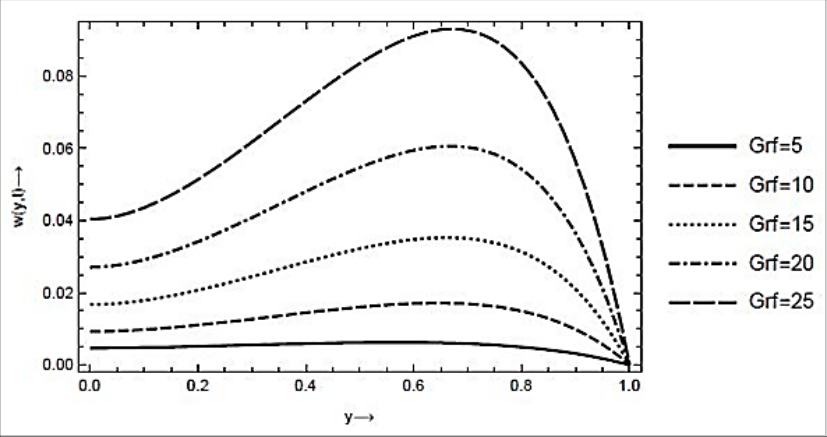 Figure 1
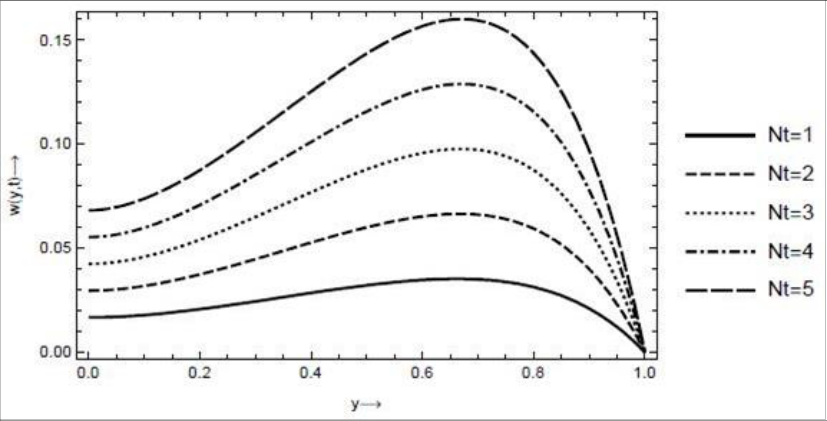 Figure 2
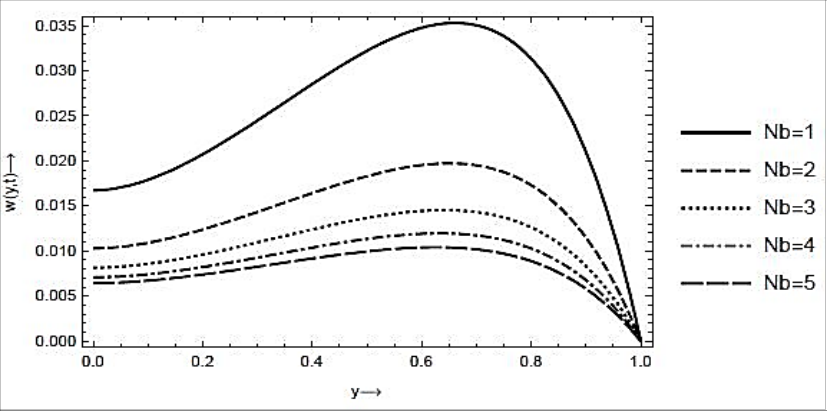 Figure 3
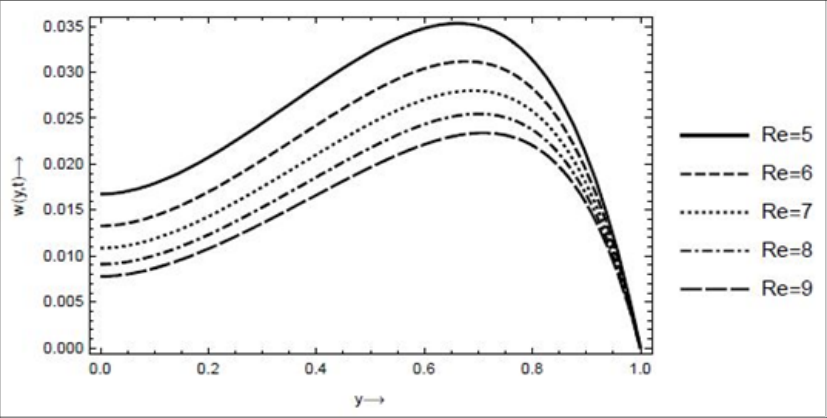 Figure 4
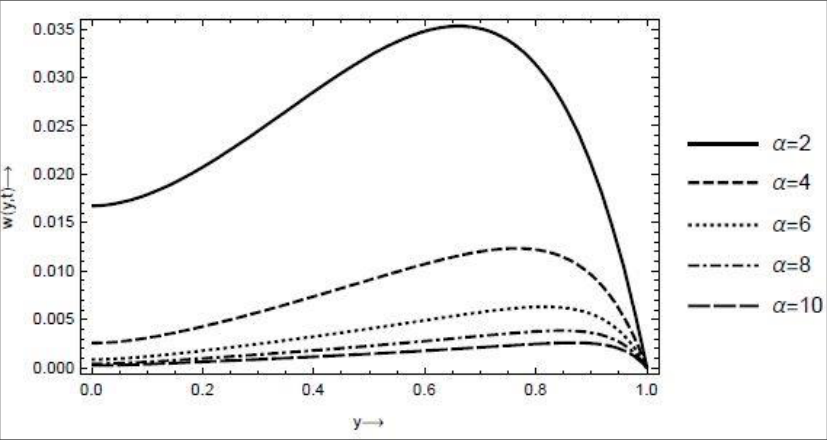 Figure 5
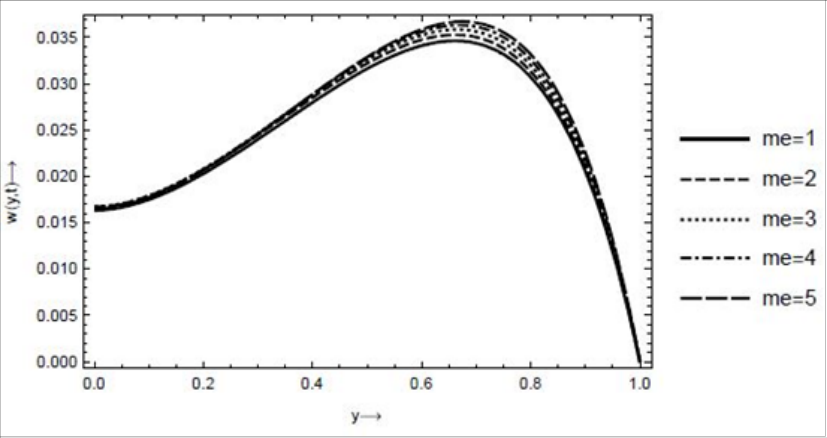 Figure 6
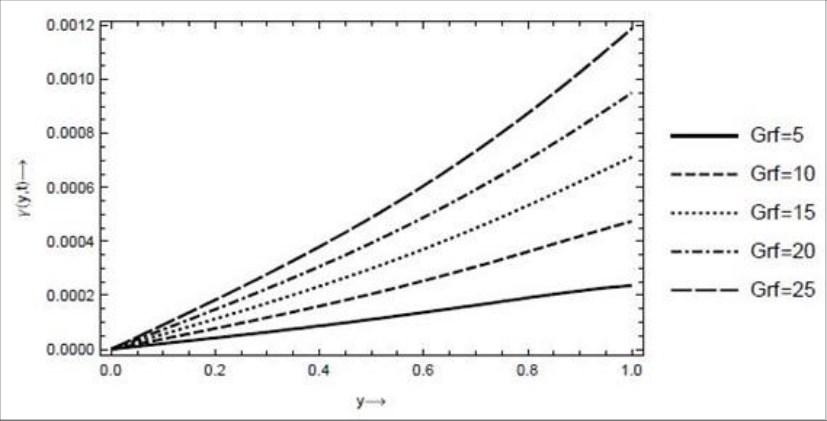 Figure 7
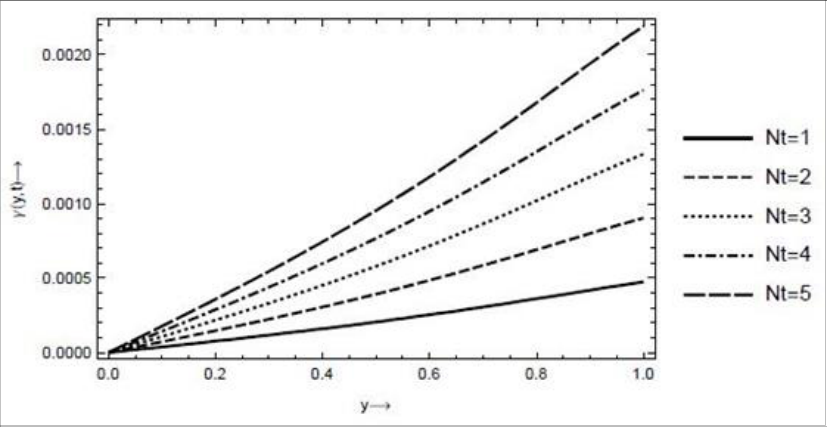 Figure 8
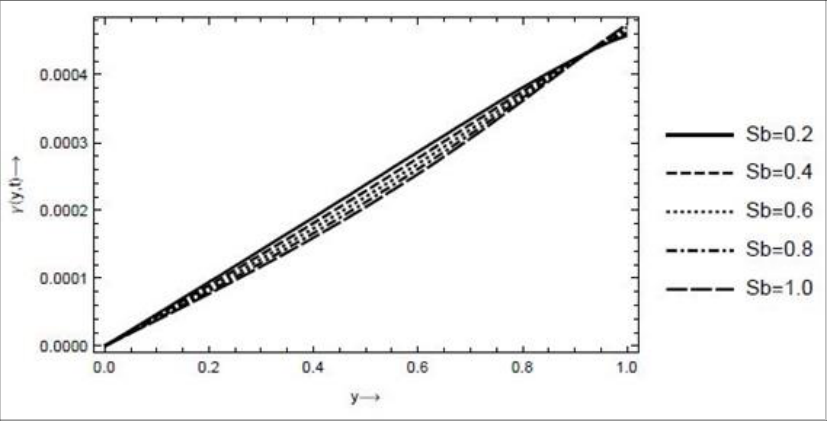 Figure 9
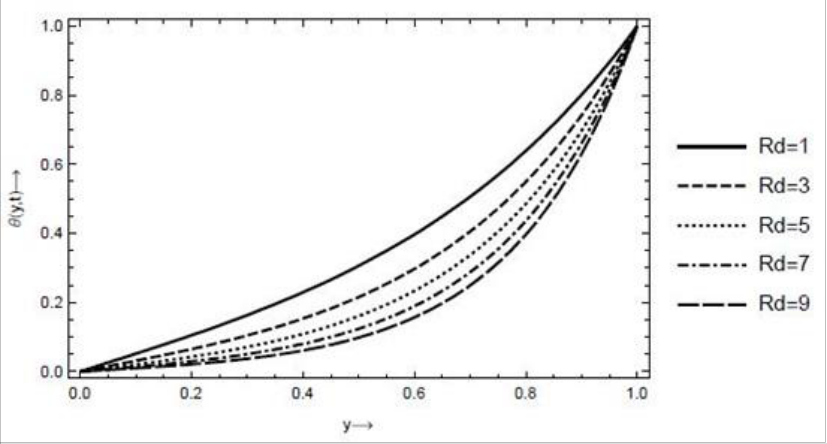 Figure 10
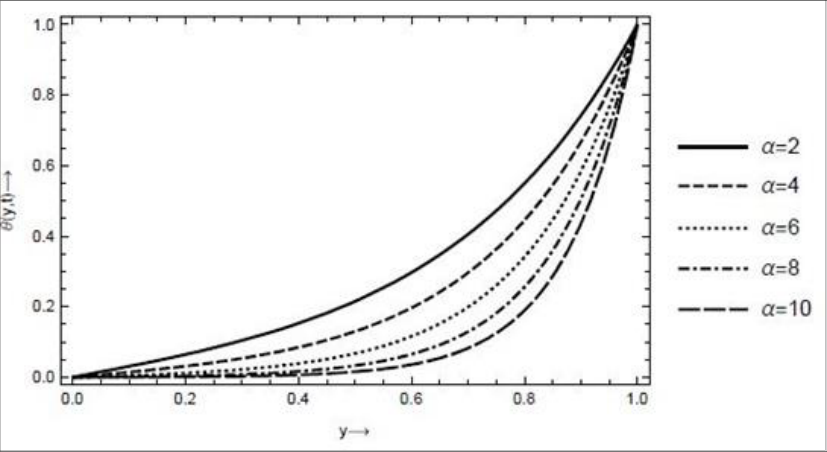 Figure 11
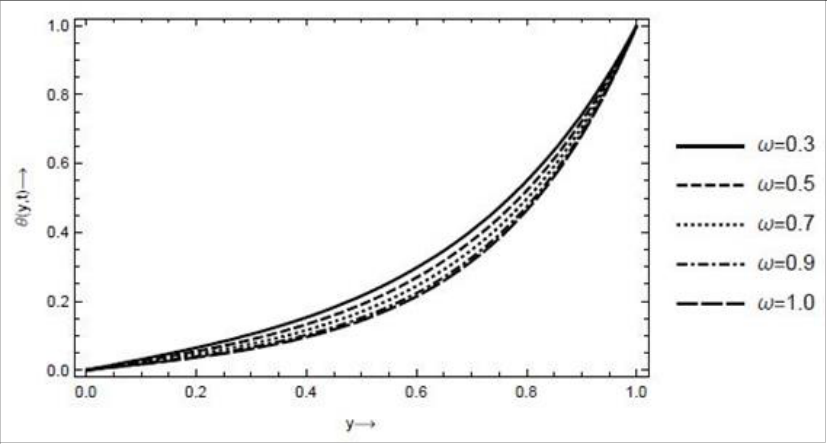 Figure 12
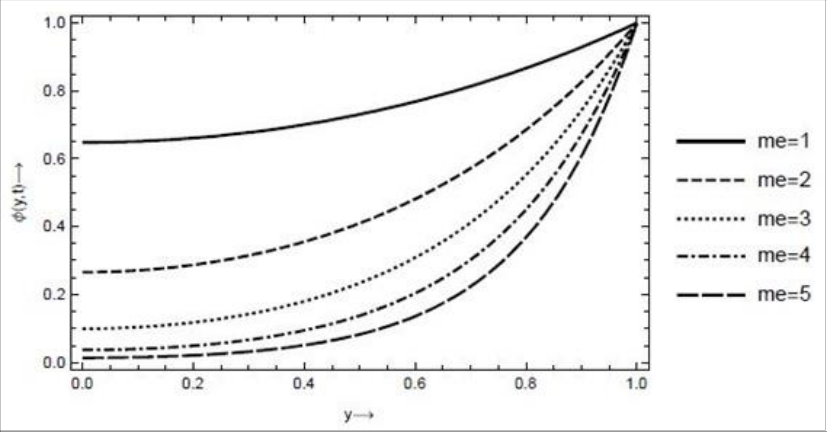 Figure 13
Introduction
According to Resuss, an electrokinetic phenomenon, also known as electroosmosis or electroosmotic flow (EOF), is defined as the flow of fluid in any conduit (e.g., microchannel, capillary tube) under the influence of an external electric field (1809) [1] . Micro-flow injection analysis, micro-liquid chromatography, and micro-energy systems all benefit from EOF. Other authors' research is included below. Patankar et al. 1998 [2] studied the electro-osmotic flow through a microchannel. Yang et al. 2021 [3] investigated EOF in microfluidics. Tang et al. 2009 [4] investigated the EOF in the context of a power-law model. Miller et al. 2001 [5] predicted EOF using a carbon nanotube membrane later on. Nanofluids have been found to have improved thermophysical properties (thermal conductivity, thermal diffusivity, and the viscosity of the convective heat transport coefficient) when compared to conventional fluids. Nano-liquid elements have shown colossal potential applications in many fields. The endoscopic effect of nanofluids in peristalsis was dissected by Akbar et al. 2011 [6] . Noreen 2013 [7] explored nanofluids under initiated attractive fields and blended convection. Moreover, Tripathi et al. 2014 [8] contemplated the peristaltic movement of nanofluid. Reddy et al. (2015) [9] suggested the peristaltic stream of nanofluid through objection dividers. Ebaid et al. 2018 [10] inspected the peristaltic movement of nanofluid under convective circumstances. Shao et al. 2016 [11] read up a reference answer for twofold dispersion convection. Twofold diffusive convection is a liquid element peculiarity that describes a type of convection driven if at the point when the temperature contrast is held consistent, warm dispersion delivers a focused inclination. Taking into account the wide uses of twofold diffusive convection, it was concentrated in a nano-fluidic stream model with peristaltic siphoning. Huppert et al. 1981 [12] examined the utilization of twofold dispersion convection. Essentially, Bég et al. 2011 [13] depicted the peristaltic siphoning of nano-liquids through twofold diffusive convection. Kefayati 2014 [14] made sense of twofold dispersion convection for pseudoplastic liquids. The peristaltic movement of the MHD course through twofold diffusive convection was concentrated by Rout 2014 et al. [15] Unstable electrokinetic transport through peristaltic microchannels was concentrated by Tripathi et al. 2016 [16] Tripathi et al. 2017 [17] investigated the peristaltic movement of the couple-stress liquid through the microchannel. In Prakash et al. 2018 [18] they analyzed the peristaltic movement of Williamson ionic nanofluid in the tightened microchannel. Tripathi et al. 2018 [19] likewise concentrated on the blood stream balanced by electroosmosis. Additionally, Tripathi et al. 2018 [20] concentrated on the consolidated impact of electroosmosis and peristalsis through the microchannel. Likewise, Tripathi et al. 2018 [21] uncovered the peristaltic transport of nanofluids with a light impact by means of a microchannel. The effect of intensity and mass on the joined impact of electroosmosis and peristalsis was concentrated by Waheed et al. 2019 [22] . Noreen et al. 2019 [23] examined the impact of intensity on EOF through peristaltic siphoning. In another review, Noreen et al. 2019 [24] suggested the vehicle of MHD nanofluid through the peristaltic microchannel. Entropy age in peristaltically prompted microchannels is a quickly arising area of interest. The investigation of entropy within the framework is important because it aids in tracing the sources of available energy. Various sources of irreversibility include intensity course through the limited temperature slope, convective intensity move characteristics, and consistency and dissemination impacts. Entropy can be limited to save energy quality for the ideal plan of any warm framework. As of now, the examination subject of limiting entropy age has acquired unique status among researchers around the world. Restricted examinations have researched the entropy creation in electro-osmotically prompted peristaltic microchannels. Kefayati 2016 [25] made sense of entropy creation for non-Newtonian nanofluids through a permeable depression. Kefayati 2016 [26] has likewise portrayed entropy creation and twofold diffusive convection for power-regulation liquids. In the previously mentioned referenced works, nobody has had the option to take a gander at them in an oscillatory stream and concoct a consequence of some kind or another. Accordingly, the ongoing examination expects to fill this hole. The discoveries of the current investigation can be utilized for clinical purposes like cell treatment, drug conveyance frameworks, pharmaco-dynamic siphons, and molecule filtration. Likewise, to extend how we might interpret thermosolutal convection, unique consideration was paid to concentrating on entropy age.
Mathematical Formulation
The microchannel is restricted by some growth at the upper wall of the channel caused by cholesterol, which causes a periodic wave at a velocity along the axial direction of the channel. The temperature and the nanoparticles at the lower part of the channel are taken as respectively. According to Mohan and Satheesh 2016 [27] , the mathematical representation of the geometry at the upper wall is expressed is:
Mathematical Models
The models governing the physical problem electro-hydrodynamic (EHD) flow of nanofluid through a restricted microchannel with radiative heat following, Bunonyo and Amos 2021 [28] and Noreen et al. 2019 [23,24] are:
The Poisson-Boltzmann equation according to Tripathi et al. 2017 [17] is
The transformational and the dimensionless parameters are:
Using equation ( 6) in simplifying equations ( 1)-( 5), we have the following:
Applying Debye-Huckel linearization approximation according to Prakash and Tripathi (2018) [18] and equation ( 6), then equation (5) becomes:
Equations ( 8)-( 11) are subject to the following boundary conditions:
Method of Solution
Let us assume that the flow is oscillatory in the channel, following Bunonyo and Amos (2020) [29] , we present the solution to be the form:
Solving equation ( 14), we have
Solving equation ( 19) using the boundary condition in equation ( 18), we have
Solving equation ( 16), we have
Rd Pr Differentiate equation ( 21) twice and substitute the result into equation (17), which is
The homogenous and particular solutions of equation ( 22) are
So, the solution to equation ( 22) is
Solving equation ( 25) using the boundary conditions in equation ( 18), we have 20), ( 21) and ( 26) into equation ( 15), we have:
The velocity prolife is obtained after substituting equation ( 29) into equation ( 13), we have
The nanoparticles concentration is obtained after substituting equation ( 13) into equation ( 26), we have
The temperature profile is obtained after substituting equation ( 21) into equation ( 13), we have
The electric potential distribution is obtained after substituting equation ( 20) into equation ( 13
The effect of thermophoresis parameter on velocity profile, with 0
The effect of Brownian motion parameter on velocity profile, with 0
Conclusion
The study was carried out to investigate the oscillatory flow of an electro-hydrodynamic (EHD) fluid flow through a microchannel with radiative heat and magnetic field by representing the problem mathematically. The analytical solutions were analyzed and simulation was done using Wolfram Mathematica, focusing on varying the pertinent parameters, and the results were revealed as follows:
1. The thermal Grashof number, electroosmotic and thermophoresis values increase the fluid velocity. 2. The fluid velocity decreases as the Brownian parameter increases.
Reynolds number and wave number increases cause a
decrease in fluid velocity. 4. An increase in nanoparticles, the Grashof number, increases the fluid temperature. 5. Thermophoresis increased and caused an increase in fluid temperature. 6. The Schmidt number increase decreases the fluid temperature. 7. The electroosmotic value increase caused the lipid concentration in the fluid to increase.
Figures and tables from the paper
References
29 in the original paper- Reuss FF. Charge-induced flow. Proceedings of the Imperial Society of Naturalists of Moscow. 1809;1809(3):327-344.
- Patankar NA, Hu HH. Numerical simulation of electroosmotic flow. Analytical Chemistry. 1998;70(9):1870-1881.
- Yang RJ, Fu LM, Lin YC. Electroosmotic flow in microchannels. Journal of colloid and interface science. 2001;239(1):98-105.
- Tang GH, Li XF, He YL, Tao WQ. Electroosmotic flow of non-Newtonian fluid in microchannels. Journal of Non-Newtonian Fluid Mechanics. 2009;157(1-2):133137.
- Miller SA, Young VY, Martin CR. Electroosmotic flow in template-prepared carbon nanotube membranes. Journal of the American Chemical Society. 2001;123(49):12335-12342.
- Akbar NS, Nadeem S. Endoscopic effects on peristaltic flow of a nanofluid. Communications in Theoretical Physics. 2011;56(4):761.
- Noreen S. Mixed convection peristaltic flow of third order Nano fluid with an induced magnetic field. Plos One. 2013;8(11):e78770.
- Tripathi D, Bég OA. A study on peristaltic flow of nanofluids: Application in drug delivery systems. International Journal of Heat and Mass Transfer. 2014 Mar 1;70:61-70.
- Reddy MG, Reddy KV. Influence of Joule heating on MHD peristaltic flow of ananofluid with compliant walls. Procedia Engineering. 2015 Jan 1;127:1002-1009.
- Ebaid A, Aly EH. Additional results for the peristaltic transport of viscous nanofluid in an asymmetric channel with effects of the convective conditions. National Academy Science Letters. 2018;41(1):59-63.
- Shao Q, Fahs M, Younes A, Makradi A, Mara T. A new benchmark reference solution for double-diffusive convection in a heterogeneous porous medium. Numerical Heat Transfer, Part B: Fundamentals. 2016;70(5):373-392.
- Huppert HE, Turner JS. Double-diffusive convection. Journal of Fluid Mechanics. 1981 May;106:299-329.
- Bég OA, Tripathi D. Mathematical simulation of peristaltic pumping with double-diffusive convection in nanofluids: a bio-nano-engineering model. Proceedings of the Institution of Mechanical Engineers, Part N: Journal of Nano engineering and Nanosystems. 2011;225(3):99-114.
- Kefayati GR. Double-diffusive mixed convection of pseudoplastic fluids in a two sided lid-driven cavity using FDLBM. Journal of the Taiwan Institute of Chemical Engineers. 2014;45(5):2122-2139.
- Rout BR, Parida SK, Pattanayak HB. Effect of radiation and chemical reaction on natural convective MHD flow through a porous medium with double diffusion. Journal of Engineering Thermophysics. 2014;23(1):5365.
- Tripathi D, Mulchandani J, Jhalani S. Electrokinetic transport in unsteady flow through peristaltic microchannel. In AIP Conference Proceedings. AIP Publishing LLC. 2016;1724(1):020043.
- Tripathi D, Yadav A, Anwar Bég O. Electro-osmotic flow of couple stress fluidsinamicro-channel propagated by peristalsis. The European Physical Journal Plus. 2017;132(4):1-13.
- Prakash J, Tripathi D. Electroosmotic flow of Williamson ionic nanoliquids in a tapered microfluidic channel in presence of thermal radiation and peristalsis. Journal of Molecular Liquids. 2018 Apr 15;256:352-371.
- Tripathi D, Yadav A, Bég OA, Kumar R. Study of microvascular non-Newtonian blood flow modulated by electroosmosis. Microvascular Research. 2018 May 1;117:28-36.
- Tripathi D, Jhorar R, Anwar Bég O, Shaw S. Electroosmosis modulated peristaltic biorheological flow through an asymmetric microchannel: mathematical model. Meccanica. 2018;53(8):2079-2090.
- Tripathi D, Sharma A, Bég OA. Joule heating and buoyancy effects in electro-osmotic peristaltic transport of aqueous nanofluids through a microchannel with complex wave propagation. Advanced Powder Technology. 2018;29(3):639-653.
- Waheed S, Noreen S, Hussanan A. Study of heat and mass transfer in electroosmotic flow of third order fluid through peristaltic microchannels. Applied Sciences. 2019;9(10):2164.
- Noreen S, Tripathi D. Heat transfer analysis on electroosmotic flow via peristaltic pumping in non-Darcy porous medium. Thermal Science and Engineering Progress. 2019 Jun 1;11:254-262.
- Noreen S, Waheed S, Hussanan A. Peristaltic motion of MHD nanofluid in an asymmetric micro-channel with Joule heating, wall flexibility and different zeta potential. Boundary Value Problems. 2019 Dec;2019(1):1-23.
- Kefayati GHR. Heat transfer and entropy generation of natural convection on non-Newtonian nanofluids in a porous cavity. Powder technology. 2016 Oct 1;299:127149.
- Kefayati GR. Simulation of double diffusive natural convection and entropy generation of power-law fluids in an inclined porous cavity with Soret and Dufour effects (Part II: Entropy generation). International Journal of Heat and Mass Transfer. 2016 Mar 1;94:582-624.
- Mohan CG, Satheesh A. The numerical simulation of double-diffusive mixed convection flow in a lid-driven porous cavity with magneto hydrodynamic effect. Arabian Journal for Science and Engineering. 2016 May;41(5):1867-1882.
- Bunonyo KW, Eli IC. Oscillatory Flow of LDL-C and Blood Fluid through a Slanted Channel with Heat within the Sight of Magnetic Field. European Journal of Applied Physics. 2021 Oct 11;3(5):37-44.
- Bunonyo KW, Amos E. Lipid Concentration Effect on Blood Flow through an Inclined Arterial Channel with Magnetic Field. Mathematical Modelling and Applications. 2020;5(3):129.