
Research article · 2022 · Full text
International Journal of Veterinary Sciences and Animal HusbandryOpen reduction and internal fixation by intramedullary pinning of humerus fracture in a house sparrow (Passer domesticus) and subsequent release: A case report
Volume 7(1) · Pages 43–45 · DOI: 10.22271/veterinary.2022.v7.i1a.403 ↗
Research areasAvian ecology and behaviorBird parasitology and diseasesBone fractures and treatments
Abstract
Author-writtenAvian fracture surgery is quite distinct from mammalian fracture surgery. Avian bones are brittle and prone to fragmentation or shattering upon impact, and long bones lack sufficient soft tissue and muscle support. We present a successful case of an open reduction and internal fixation of a humerus fracture in a house sparrow using intramedullary pinning. The male house sparrow was found with a drooping wing, bleeding from a wound on the medial aspect of his right arm, and a complete compound fracture of his right humerus. It was decided to correct the fracture surgically via open reduction and internal fixation. Postoperative physiotherapy included PROM (passive range of motion) exercises with wing flexion and extension. Intramedullary pinning using a hypodermic needle resulted in excellent fracture immobilisation. The bird recovered completely and regained its normal flight ability.
Summary
Source-checkedPlain-language reading of the full paper, prepared with AI and checked against the text. Each point links to the authors' own words.
Why it matters
- Bird bones are fragile and easily shatter upon impact, and their long bones lack the muscle and soft tissue support found in mammals. View evidence ↗
- To facilitate flight, birds have evolved lightweight bones with thin, brittle outer layers and wide marrow cavities. View evidence ↗
- Maintaining the original length of bones is essential for a bird's balance and its ability to fly. View evidence ↗
The question
- The study aims to demonstrate the successful use of open reduction and internal fixation via intramedullary pinning to treat a humerus fracture in a house sparrow. View evidence ↗
What they did
- The bird presented with a drooping right wing and blood on the medial arm; radiographs confirmed a complete midshaft fracture of the right humerus. View evidence ↗
- Anaesthesia was achieved using isoflurane, with a 2% flow rate for induction and 0.5% for maintenance. View evidence ↗
- The fracture was treated with retrograde pinning using a size 21 hypodermic needle, and the site was closed with 5-0 PGA sutures. View evidence ↗
- Postoperative care included enrofloxacin (15 mg/kg PO for 5 days), meloxicam (0.1 mg/kg PO for 5 days), and Vitamin B (0.1 ml/kg IM for 3 days). View evidence ↗
- The rehabilitation process included passive range of motion (PROM) exercises involving wing flexion and extension. View evidence ↗
What they found
- Radiographs showed complete bone healing by the 18th day after surgery, allowing for the removal of the pin. View evidence ↗
- Following a successful assessment of its wing use and flight ability, the sparrow was released back into the wild. View evidence ↗
- The bird achieved a full recovery and regained normal flight capabilities. View evidence ↗
What it means
- The authors conclude that a hypodermic needle of the correct size is an effective tool for the fixation of humerus fractures in birds. View evidence ↗
- The authors state that successful recovery requires a combination of surgery, postoperative care, physiotherapy, and appropriate husbandry. View evidence ↗
Visual summary
1 visualsIllustrations explain the paper; they do not show study data.
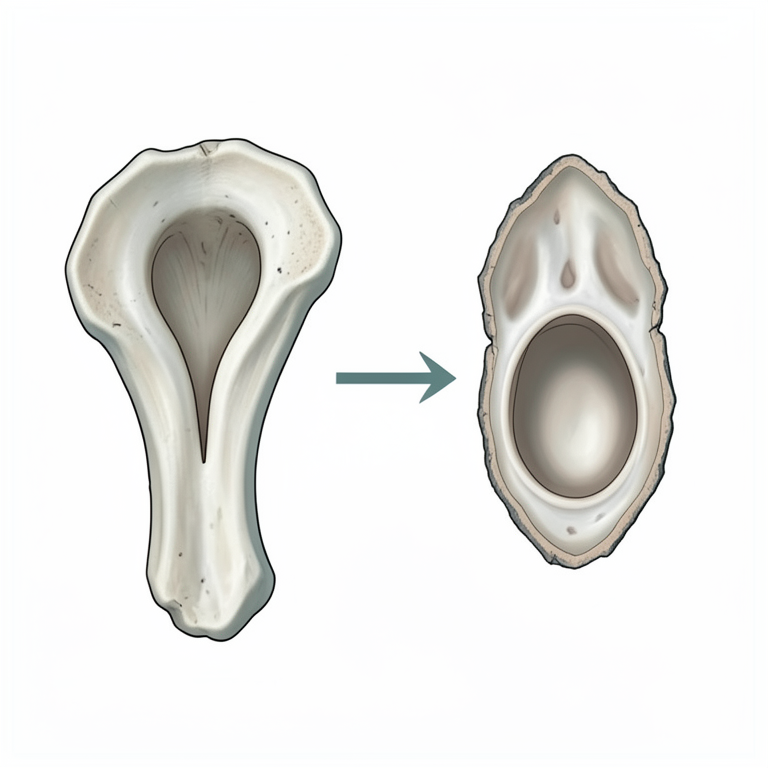
Avian Bone Structure
AI-generated conceptual illustration (house sparrow (Passer domesticus) humerus bone and a mammalian humerus bone). It explains the idea and does not show study data.
View source evidence ↗Figures & tables
From the original paper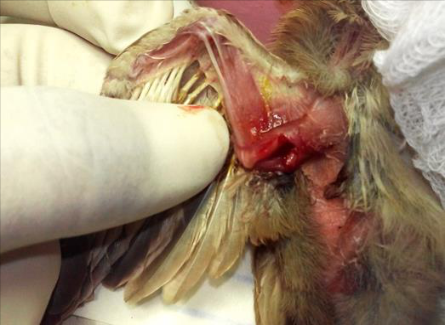 Figure 1
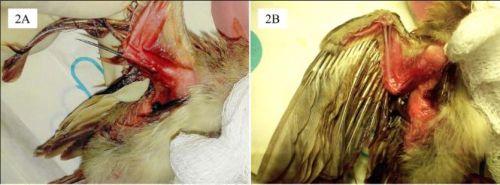 Figure 2
Introduction
Veterinary surgeons frequently face substantial difficulties when it comes to fracture treatment in birds. Avian surgery is quite dissimilar to mammalian surgery (Bennett & Kuzma, 1992; Carrasco et al., 2017) [1,4] . Without a fundamental understanding of anatomy and physiology, it becomes impossible to comprehend the pathophysiology of disease and the impact of treatment on the patient (Doneley, 2018) [8] . Bones perform two critical functions: they support the muscular system structurally and they act as a storage for calcium and phosphate (Clarke, 2008; Doherty et al., 2015) [5,7] . Due to the demand for a flight, birds have evolved bones that are lightweight but strong in aerodynamics (Dumont, 2010) [9] . They feature thin brittle cortices and broad medullas that may be pneumatic in some species and specific bones. This characteristic makes it difficult to employ implants that completely fill the extensive medullary canals without putting undue strain on the damaged bone (Darrow & Bennett, 2021; Harcourt-Brown, 2002) [6,11] . Avian bones are prone to fragmentation or shattering upon impact, and long bones in birds' distal extremities lack soft tissue and adequate muscle support and are merely covered by tendons and skin. Fragments can become dislodged from the soft tissues and blood supplies that surround them (Bennett & Kuzma, 1992) [1] . These conditions all contribute to an increased prevalence of open, comminuted fractures. The majority of pioneering work in avian orthopaedics has been conducted on raptors utilizing small mammal methodologies (Redig, 1986) [20] , hence in avian orthopaedics, the classical objectives of healing are the same to those in mammalian orthopaedics: 1) rigorous fixation, 2) proper opposition, 3) asepsis, and 4) prompt restoration of function (Bennett & Kuzma, 1992; Jalila, 2002; Westfall et al., 1979) [1,12,22] . It is particularly critical to preserving the length of the bones in birds due to the animal's balance and the unique mechanics of flying (Dumont, 2010; Westfall et al., 1979) [9,22] . Other difficulties include small patient sizes, sparse soft tissue covering distal extremities, and fractures near joints, frequently resulting in decreased joint mobility (MacCoy, 1992) [15] .
History and clinical signs
An injured adult male house sparrow (Passer domesticus) was presented at 11:15 AM on 03 rd April 2021 by an urban wildlife rescuer at Vet beyond Basics, a specialty veterinary clinic in Nagpur, Maharashtra. Rightwing was seen to be drooping on initial observation. On physical examination, blood was noted on the right arm's medial aspect. Further clinical examination indicated that the right humerus had a complete midshaft fracture which was confirmed radiographically. Based on the clinical look of the wound and the bird's condition, it was determined that the injury was recent, less than 24 hr old. Early clinical diagnosis and management can significantly improve the likelihood of recovery and further rehabilitation, albeit the severity of the injury at the time of admission also plays a role (Molony et al., 2007) [17] .
Materials and Methods
The initial examination was kept to a minimum as the bird was in shock and pain. Oxygen supplementation, thermoregulation, and analgesia were provided immediately to stabilize the bird. A more thorough examination was conducted when the bird had been anaesthetized (Figure 1). Since the nature of the injury was precarious, it was decided to opt for surgical correction of the fracture by open reduction and internal fixation. Meloxicam @ 0.1 mg/kg was injected intramuscularly as an analgesic and anti-inflammatory (Carpenter & Marion, 2017) [3] . Isoflurane was utilised at a flow rate of 2% for mask induction and 0.5 percent for maintenance in the anaesthetic procedure. The surgical site was prepared, meticulously cleaned and was aseptically produced by plucking feathers and cleaning in weak betadine solution. The skin and muscles were separated by undermining. Retrograde pinning was performed with a size 21 hypodermic needle (Figure 2A). 5-0 PGA sutures were placed in a basic interrupted pattern to appose the muscles, ligaments, subcutaneous tissues, and the skin separately. Dressing with betadine solution was performed, followed by insertion of a figure of eight body bandage to immobilise the wing. Antibiotic Inj. Enrofloxacin @ 15 mg/kg PO for 5 days, painkiller Inj. Meloxicam @ 0.1 mg/kg PO for 5 days, and multivitamin Inj. Vitamin B @ 0.1 ml/kg IM for 3 days were administered postoperatively (Carpenter & Marion, 2017) [3] . Oral calcium supplementation was done for 1 week post-op. Physiotherapy was performed by administering PROM (passive range of motion) exercises with wing flexion and extension (Kim et al., 2018) [14] while each dressing on alternate days. The bird was kept in a small, ventilated cage with a static perch at the height of 4 in. Prior to initiating physiotherapy for wild birds, it is vital to recognise uncomfortable behaviours in these patients (Goldberg, 2019) [10] . The enclosure was inside a thermoregulated room with minimal disturbances. A photoperiod of 12 h light and 12 h dark cycle was provided to maintain a healthy circadian rhythm. Circadian rhythms are more synchronised in birds than in mammals, and they function as a timing reference for many biological activities critical for survival (Rani & Kumar, 2013; Singh, 2022) [19,21] . House sparrows are habitat generalists but favor agricultural grains, particularly millet Panicum miliaceum (Whelan et al., 2015) [23] . The bird was given a diet of seed mix comprising of Nyjer seed, oat, small sunflower seed, yellow millet, barnyard millet, and finger millet. On alternate days, calcium supplement (trade name: Cal-Care) and multivitamin supplement (trade name: Vita Boost) were administered mixed in water as indicated. Fresh water was always available in a clean bowl and was changed daily. The cage was spot cleaned daily and disinfected once a week. Spot cleaning was done when the bird was taken out for treatment.
Once the wound healed, the sparrow was shifted to a larger enclosure of dimensions 10 x 10 x 8 f. Perches were kept at different heights, and food was given on the floor to encourage flying practice inside the cage. Incidental disturbances, while passing by the enclosure and entering to clean and feed, acted as behavioral stressors that further encouraged the bird to fly. On the 18 th post-operative day, complete healing of the bone was observed radiographically, and the pin was removed, and the bird recovered entirely. After a thorough assessment of its flight and wing use, the bird was released back to the location of its rescue.
Results and Discussion
The bird recovered completely and regained the ability to fly normally. The surgical outcome demonstrated that an appropriately sized hypodermic needle can be utilised efficiently to fixate a humerus fracture. Initial stress management was crucial, as was the focus on components of assessment and treatment that would improve its immediate welfare and survival chances. Because a seriously injured bird is likely in shock at this point, it is essential to minimise needless handling. Both stress and shock can impair the immune system, making the bird more prone to disease and delayed wound healing (Mander et al., 2003) [16] . The avian clinician must be willing to think laterally and evaluate each case individually, considering the fracture's specific characteristics, as well as the species' and individual's nature, behavior, and intended outcome. The goal should be to achieve an outcome that is as near to the original functioning anatomy as possible (Calvo Carrasco, 2019) [2] . Along with surgery and postoperative management, it is vital to incorporate physiotherapy and proper captive husbandry. Physiotherapy should begin soon following surgery and should be continued until the patient achieves maximum performance. Traditionally, patients were immobilised postoperatively using restricted caging and cooptation, which frequently resulted in decreased limb extension, discomfort on movement, and contracture. Early intervention with physiotherapy can aid in the restoration, maintenance, and promotion of optimal function in certain conditions (Ponder, 2011) [18] .
Conclusion
Urbanization subjects avian wildlife to a variety of environmental stressors, many of which end in clinical admission and hospitalization (Janssen et al., 2020) [13] . Orthopedic ailments, particularly fractures, are a frequent occurrence in avian practice. Recent advancements in orthopaedic treatments that have been thoroughly evaluated in mammals have been extrapolated to avian orthopaedic procedures with or without modification (Calvo Carrasco, 2019) [2] . Fractures treated with biomechanically sound fixation and adequate attention to soft tissue will have the best chance of healing functionally. Intramedullary pinning with a hypodermic needle resulted in excellent immobilization during fracture healing, and the sparrow was successfully rehabilitated back into nature after making a complete recovery.
Figures and tables from the paper
References
16 in the original paper- Bennett RA, Kuzma AB. Fracture Management in Birds. Journal of Zoo and Wildlife Medicine. 1992;23(1):5-38.
- Calvo Carrasco D. Fracture Management in Avian Species. Veterinary Clinics of North America: Exotic Animal Practice. 2019;22(2):223-238. https://doi.org/10.1016/j.cvex.2019.02.002
- Carrasco DC, Shimizu NS, Forbes NA. Review and advances in avian Orthopaedic surgery: Part 1introduction. Companion Animal. 2017;22(2):104-108. https://doi.org/10.12968/coan.2017.22.2.104
- Clarke B. Normal Bone Anatomy and Physiology. Clinical Journal of the American Society of Nephrology. 2008;3(3):S131-S139. https://doi.org/10.2215/CJN.04151206
- Doherty AH, Ghalambor CK, Donahue SW. Evolutionary Physiology of Bone: Bone Metabolism in Changing Environments. Physiology. 2015;30(1):17-29. https://doi.org/10.1152/physiol.00022.2014
- Dumont ER. Bone density and the lightweight skeletons of birds. Proceedings of the Royal Society B: Biological Sciences. 2010;277(1691):2193-2198. https://doi.org/10.1098/rspb.2010.0117
- Goldberg ME. A walk on the wild side: A review of physiotherapy for exotics and zoo animals. Veterinary Nursing Journal. 2019;34(2):33-47. https://doi.org/10.1080/17415349.2018.1529547
- Harcourt-Brown NH. Orthopedic conditions that affect the avian pelvic limb. Veterinary Clinics of North America: Exotic Animal Practice. 2002;5(1):49-81. https://doi.org/10.1016/S1094-9194(03)00046-X
- Janssen K, Marsland C, Barreto MO, Charalambous R, Narayan E. Identifying the Stressors Impacting Rescued Avian Wildlife. Animals. 2020;10(9):1500. https://doi.org/10.3390/ani10091500
- Kim T, Jeong H-H, Choi D, Yun S, Kwon Y-S. Successful Treatment of Ulna Fracture in a Small Raptor. Journal of Veterinary Clinics. 2018;35(6):266-268. https://doi.org/10.17555/jvc.2018.12.35.6.266
- MacCoy DM. Treatment of Fractures in Avian Species. Veterinary Clinics of North America: Small Animal Practice. 1992;22(1):225-238. https://doi.org/10.1016/S0195-5616(92)50016-X
- Molony S, Baker P, Garland L, Cuthill I, Harris S. Factors that can be used to predict release rates for wildlife casualties, 2007;16(3):361-367.
- Rani S, Kumar V. Avian circannual systems: Persistence and sex differences. General and Comparative Endocrinology. 2013;190:61-67. https://doi.org/10.1016/j.ygcen.2013.04.013
- Singh G. Circadian rhythms in different photoperiod (12L: 12 D) and (8L: 16D) in passerine finches. Avian Biology Research. 2022;15(2):68-72. https://doi.org/10.1177/17581559221075982
- Westfall ML, Egger EL, Westfall ML, Egger EL. The Management of Long Bone Fractures in Birds. 1979;41(2):81-87.
- Whelan C, Brown J, Hank A. Diet Preference in the House Sparrow Passer domesticus: Hooked on Millet? Bird Study. 2015;62(4):569-573. https://doi.org/10.1080/00063657.2015.1089838