
Research article · 2022 · Full text
International Journal of Advanced Biochemistry ResearchBiochemical factors associated with breast cancer in Bangladeshi women
Volume 6(1) · Pages 51–54 · DOI: 10.33545/26174693.2022.v6.i1a.84 ↗
Research areasCancer, Lipids, and MetabolismCancer Risks and Factors
Abstract
Author-writtenBreast cancer is the commonest malignancy and principal cause of women death. It is more common after menopause. The women are more likely to have biologically aggressive breast cancer, such as higher-grade tumors and more lymph node involvement, thus resulting in a poor prognosis, which results in increased mortality rates. In the study thirty diagnosed breast cancer patients and thirty controls are selected. The information regarding all patients is taken in a data sheet. The breast cancer women are received chemotherapy treatment. The study reveals no significant difference (p>0.05) in RBS (Random Blood Sugar), serum cholesterol and serum estrogen level in the case and control group. ESR (Erythrocyte Sedimentation Rate), serum calcium, HDL (High Density Lipoprotein), LDL (Low Density Lipoprotein) and serum progesterone levels show significant difference (p
Summary
Source-checkedPlain-language reading of the full paper, prepared with AI and checked against the text. Each point links to the authors' own words.
Why it matters
- Breast cancer is the most frequent cancer among women and the second most common cancer overall. View evidence ↗
- In Bangladesh, the rate of breast cancer is approximately 8.5%. View evidence ↗
- About 70% of cancer deaths happen in low and middle income countries, where late-stage presentation and limited access to diagnosis and treatment are common. View evidence ↗
The question
- The study aims to determine and compare the levels of several biochemical parameters, including ESR, RBS, serum calcium, cholesterol, HDL, LDL, estrogen, and progesterone, between breast cancer patients and a control group. View evidence ↗
What they did
- The research was conducted at Rajshahi Medical College Hospital in collaboration with New Haven Diagnostic Centre in Rajshahi, Bangladesh. View evidence ↗
- Blood samples of 5 ml were collected from the ante-cubital vein of each participant using aseptic precautions. View evidence ↗
- Data analysis was performed using SPSS for Windows version 16.0. View evidence ↗
What they found
- Serum calcium levels were significantly lower in breast cancer patients (4.43±3.2 mg/dl) compared to the control group (8.92±0.7 mg/dl), with p < 0.05. View evidence ↗
- Serum HDL levels were significantly higher in breast cancer patients (59.67±56.6 mg/dl) than in the control group (43.63±6.05 mg/dl), with p < 0.05. View evidence ↗
- Serum LDL levels were significantly lower in breast cancer patients (97.9±51.4 mg/dl) compared to the control group (110.63±45.6 mg/dl), with p < 0.05. View evidence ↗
- Serum progesterone levels showed a significant difference (p < 0.05), being lower in breast cancer patients (4.6±5.6 ng/ml) than in controls (6.63±8.5 ng/ml). View evidence ↗
- No significant differences (p > 0.05) were found between the case and control groups for Random Blood Sugar (RBS), serum cholesterol, or serum estradiol levels. View evidence ↗
- In premenopausal women, those in the 31-50 age group were more vulnerable to cancer (47.6% in the 31-40 and 47.6% in the 41-50 brackets), whereas the control group was most concentrated in the 31-40 age group (50%). View evidence ↗
What it means
- The authors conclude that monitoring biochemical parameters can be an effective tool in the management plan for breast cancer patients to help improve survival rates. View evidence ↗
Visual summary
2 visualsIllustrations explain the paper; charts are replotted from the paper's own table values.
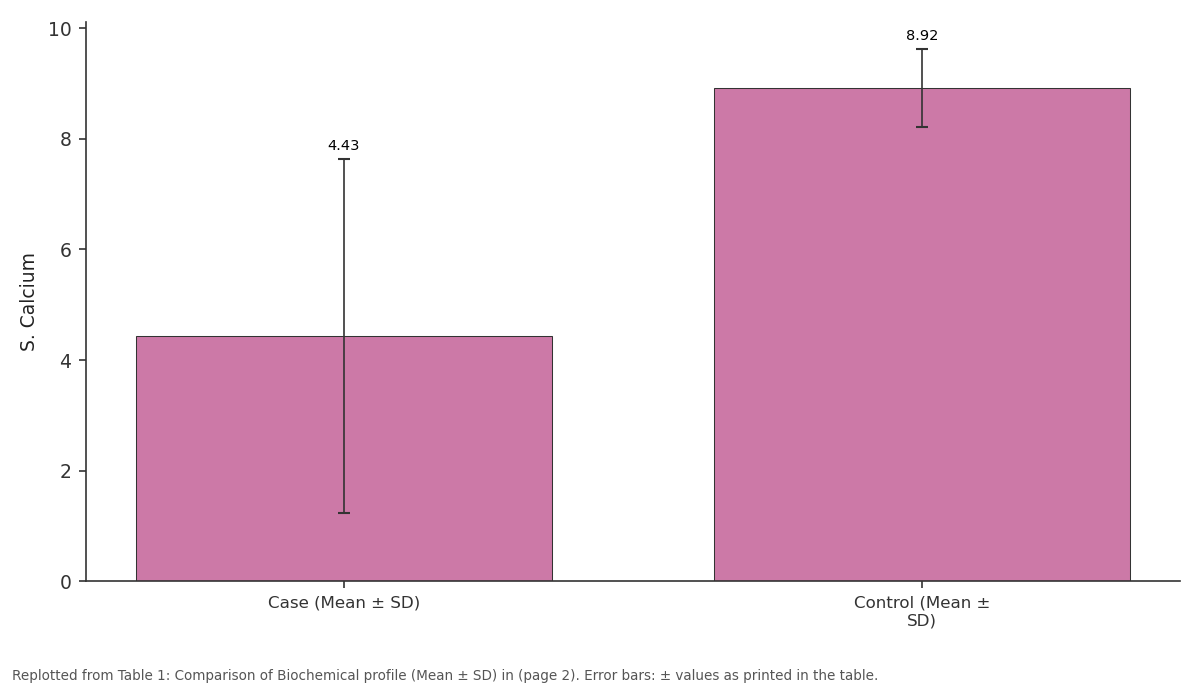
S. Calcium: Case (Mean ± SD) vs Control (Mean ± SD)
Replotted from Table 1 (page 2) of the original paper. Every bar is the paper's own table value.
View source evidence ↗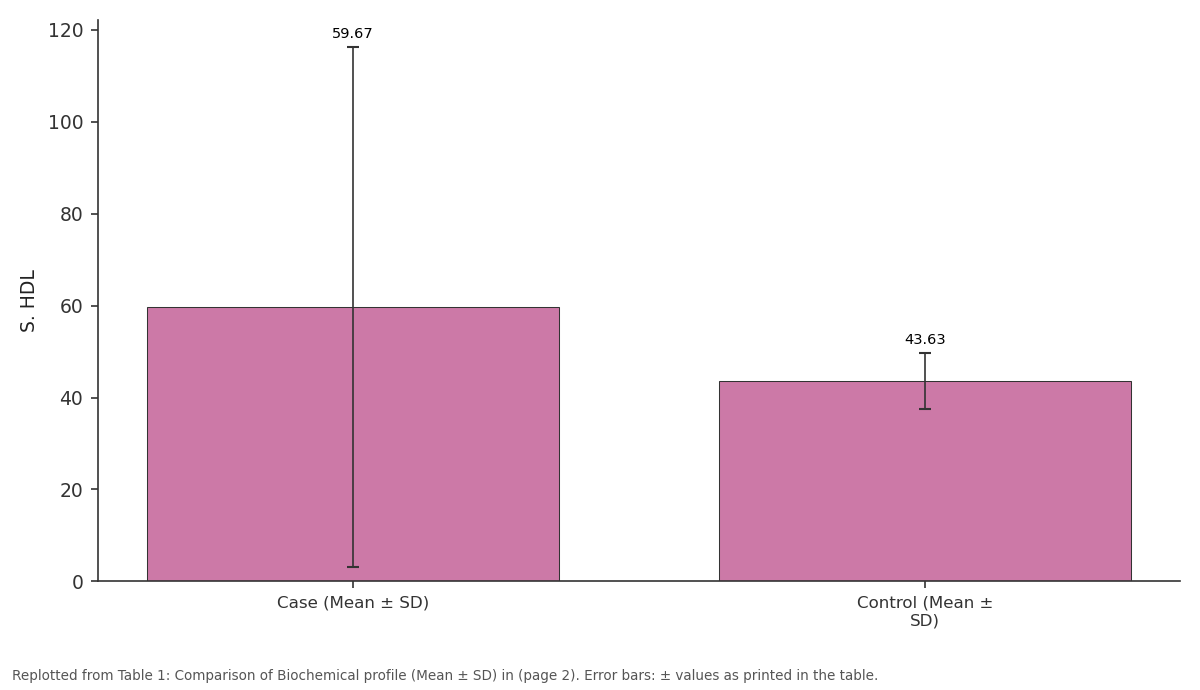
S. HDL: Case (Mean ± SD) vs Control (Mean ± SD)
Replotted from Table 1 (page 2) of the original paper. Every bar is the paper's own table value.
View source evidence ↗Figures & tables
From the original paper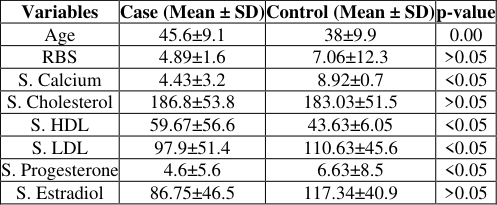 Table 1
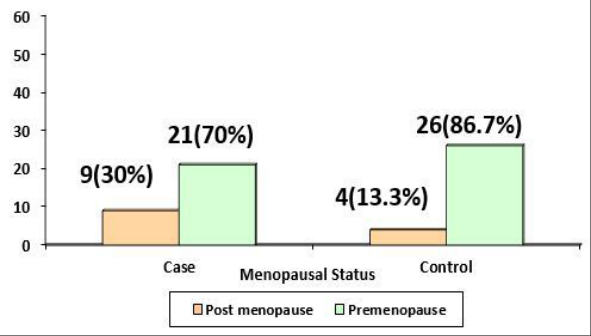 Figure 1
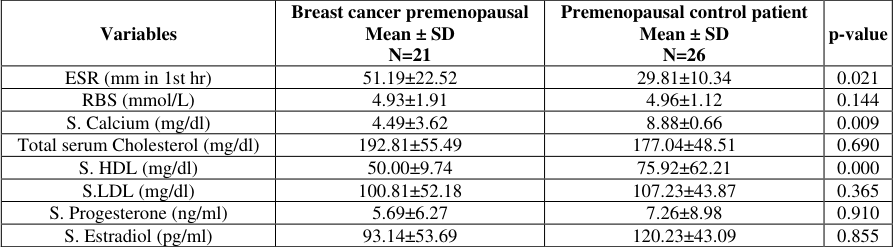 Table 2
 Table 3
Introduction
Breast cancer is the foremost commonly happening cancer in women and overall second most common cancer. There are over 2 million new cases in 2018 [1] . Breast cancer starts from different parts of the breast. Usually arise in the ducts of breast that carry milk to the nipple (call ductal cancer). Some start in the glands that make breast milk (lobular cancers). There are also other types of breast cancer that are less common [2] . In Bangladesh, breast cancer rate is about 8.5% [3] . Major risks factor are closely related to this cancer are tobacco use, alcohol consumption, unhealthy diet and physical inactivity [4] . Breast cancer has no boundaries with age, race, religion and socioeconomic status, [5] . Inherited gene mutations (in BRCA1, BRCA2, and other breast cancer susceptibility genes), account for 5% to 10% of breast cancer cases [1] . The risk of breast cancer increases in advancing age, young women can also develop the condition. Nearly one third of women with breast cancer are diagnosed prior to menopause, and around 7% of breast cancers are diagnosed before the age of 40. Only nearby 1% of breast cancers occur before the age of 30 [6] . Approximately, 70% of deaths from cancer occur in low and middle income countries. Late stage presentation and inaccessible diagnosis and treatment are common. The economic effect of cancer is important and is raising [4] . It is assessed that nearly one half of the cases and over one-half of the cancer deaths in the world will occur in Asia in the year 2018, in part because close to 60% of the global population resides there [1] . In 2020, half a million of women died due to breast cancer in low & middle income countries. This situation is projected to get worse [7] . In most high income countries five years survival rates exceeds 80% after diagnosis. In comparison with India it is 66% and just 40% in South Africa. Unavailable or unaffordable breast cancer services result premature deaths and increase expenditures. For these, it leads to social disruption, impoverishment, family instability and orphaned children and also threatens economic growth [8] .
International Journal of Advanced Biochemistry Research Scientists in various IARC (International Agency for Research on Cancer) are studying the most effective methods of preventing breast cancer at the population level. They are searching the hindrance of early diagnosis and proper treatment [7] . The time interactions between the first exposure with the health system and the initiation of breast cancer treatment can be declined by prompt diagnosis of breast cancer [8] . The present papers deals with the determination of level of ESR, RBS and Serum calcium, total cholesterol, HDL, LDL, estrogen, progesterone in breast cancer patients compared to control individual. These biochemical parameters will effectively helpful for the diagnosed breast cancer patients involving regular health checkup, know the prognosis of the patients & the ultimate aim to improve the survival rate.
Materials and Methods
This study was carried out in Rajshahi Medical College Hospital, Rajshahi, Bangladesh in collaboration with New Haven Diagnostic Centre, Rajshahi. Ethical approval was taken from the Institutional Animal, Medical Ethics, Biosafety and Biosecurity Committee (IAMEBBC) of the Institute of Biological Sciences (IBSc), Rajshahi University. Thirty female breast cancer patients confirmed by clinical examination and histopathology report. Thirty female control patients participated in the study after exclusion of the disease by history and clinical examination. A questionnaire was used to collect information's from breast cancer patients and control group. The written consent was taken from the patients and control before included into the study.
Collection of blood sample
With all aseptic precautions 5 ml venous blood was collected from ante-cubital vein of each study subjects in a disposable syringe. The needle was removed and blood was immediately transferred to a clean dry plain tube. The blood was allowed to clot. The sample was centrifuged and the serum was collected in an eppendof tube, which was appropriately labeled and preserved (4 to 8 °C in refrigerator). The serum of all study subjects was collected and used for measurement of biochemical parameters. All these biochemical parameters analyzed in semi auto analyzer. The data was analyzed using Statistical Package for the Social Science (SPSS) for windows version 16.0.
Laboratory procedure
Laboratory procedure
Calculation of
Serum LDL-cholesterol level using Friedewald formula.
Results
The results of the measured different biochemical parameters in the research were listed below for breast cancer patients and control. The menopausal status of the women is shown in Fig1.
They were divided into two groups, premenopausal and post-menopausal women. In cancer patient, twenty-one (70%) women were pre menopause and nine women (30%)
were post menopause. Twenty-six (86.7%) women were pre menopause and four (13.3%) women were post menopause in control patient. There is a strong association between the study and control groups where p=0.011.
Discussion
The study shows a statistically significant elevation of ESR level in breast cancer patients. Different types of cancer including breast shows poor prognosis with high ESR level [9] . Random blood sugar level shows no significant difference. The levels are within normal range in subjects.
There is no significant association between diabetes mellitus and breast cancer illustrates in some study reports [10,11] . An individual begins treatment for cancer contribute to the occurrence of an adverse events depends on level of glycemic control. The patients may develop infections, hospitalized during treatment and the chemotherapy treatment needs to reduce or stop [12] . The findings of serum calcium level show statistically significant differences. They develop hypocalcaemia. A case report indicated that metastasis to the parathyroid glands caused relative hypoparathyroidism, resulting in hypocalcaemia [13] . Serum total cholesterol level in breast cancer patients and control groups shows no significant difference. The ranges are within normal limit in these groups. The results of serum total cholesterol levels are not significantly increased [14] . The HDL (High Density Lipoprotein) levels are significantly increased in breast cancer patients. In a study shows increased HDL-C level significantly [15] . The HDL-C level before and after chemotherapy is increased in patients shown by an investigator [16] . Low Density Lipoprotein level shows a significant difference. The levels are within normal range. The LDL-C cholesterol levels significantly decreased in patients [17] and in pre-and postmenopausal women treated with chemotherapy [18] . The concentration of serum progesterone levels shows significant difference in between case & control patients. The serum progesterone levels are significantly increased in both group, but the levels are more increased in the control group. In operable breast cancer, at the time of excision, a raised level of progesterone is associated with improved prognosis [19] . In a case-cohort study, there is a 16% increased risk of breast cancer is associated with elevated progesterone level in post-menopausal women [20] . The serum estradiol level shows no significant difference between case & control patients. The levels are within normal range compared to controls. Serum estradiol levels decrease in premenopausal patients who receive adjuvant chemotherapy [21] . Serum estradiol levels are unchanged in post-menopausal breast cancer patients [22] .
Conclusion
The present study has shown significant differences in the biochemical factors in breast cancer patients compared to the control group. Among the study population, 70% of women are premenopausal. The breast cancer patients received chemotherapy treatment. Breast cancer has high cure rates when detected early and treated according to best practices. The biochemical parameters in breast cancer patients will prove to be effective in the management plan of breast cancer patients & improves their survival rates.
Grant information:
Grant information:
Figures and tables from the paper
| Variables | Case (Mean ± SD) | Control (Mean ± SD) | p-value |
|---|---|---|---|
| Age | 45.6±9.1 | 38±9.9 | 0.00 |
| RBS | 4.89±1.6 | 7.06±12.3 | >0.05 |
| S. Calcium | 4.43±3.2 | 8.92±0.7 | <0.05 |
| S. Cholesterol | 186.8±53.8 | 183.03±51.5 | >0.05 |
| S. HDL | 59.67±56.6 | 43.63±6.05 | <0.05 |
| S. LDL | 97.9±51.4 | 110.63±45.6 | <0.05 |
| S. Progesterone | 4.6±5.6 | 6.63±8.5 | <0.05 |
| S. Estradiol | 86.75±46.5 | 117.34±40.9 | >0.05 |
Table text extracted from the original PDF; superscript letters are shown inline. The original table image is below.
View original table image
| Age group | Group | — | Total | p-value |
|---|---|---|---|---|
| Breast cancer premenopausal | Premenopausal Control patient | |||
| 20-30 Years | 1(4.8%) | 9(34.6%) | 10(21.3%) | P=0.011 df=2 |
| 31-40 Years | 10(47.6%) | 13(50.0%) | 23(48.9%) | |
| 41-50 Years | 10(47.6%) | 4(15.4%) | 14(29.8%) | |
| Total | 21(100.0%) | 26(100.0%) | 47(100.0%) |
Table text extracted from the original PDF; superscript letters are shown inline. The original table image is below.
View original table image
References
17 in the original paper- Bray F, Ferlay J, Soerjomataram S. Global cancer statistics 2018: GLOBOCAN estimates of incidence and mortality worldwide for 36 cancers in 185 countries. A Cancer Journal for Clinicians. 2018;68(6):394-424. DOI: 10.3322/caac.21492. https://www.cancer.org/cancer/breastcancer/about/what-is-breast-cancer.html
- Johnson BS, Shepard S, Torgeson T, Johnson A, McMurray M, Vassar M. Using Google Trends and Twitter for prostate cancer awareness: a comparative analysis of prostate cancer awareness month and breast cancer awareness month. Cureus. 2021, 13(2). https://www.iarc.who.int/featurednews/ breast-cancerawareness-month-2021.
- WHO. New global breast cancer initiative highlights renewed commitment to improve survival. c2021. https://www.who.int/news/item/08-03-2021-newglobal-breast-cancer-initiative-highlights-renewedcommitment-to-improve-survival.
- Eboreime O, Atoe K, Idemudia JO. Erythrocyte sedimentation rate and c-reactive protein levels in breast cancer patients in Benin City, Nigeria IOSR. Journal of Dental and Medical Sciences (IOSR-JDMS). 2015;14(6)III:116-119.
- Cleveland RJ, North KE, Stevens J. The association of diabetes with breast cancer incidence and mortality in the Long Island Breast Cancer Study Project. Cancer Causes Control. 2012;23(7):1193-203. DOI: 10.1007/s10552-012-9989-7.
- Yu ZG, Jia CX, Geng CZ. Risk factors related to female breast cancer in regions of Northeast China: A 1:3 matched case-control population-based study. Chinese Medical Journal (Engl). 2012;125(5):733-740. https://www.ncbi.nlm.nih.gov/pubmed/22490565.
- Hershey DS, Hession S. Chemotherapy and glycemic control in patients with type 2 diabetes and cancer: a comparative case analysis. Asia-Pacific Journal of Oncology Nursing. 2017;4(3):224-232. DOI: 10.4103/apjon.apjon_22_17.
- Watanabe T, Adachi I, Kimura S. A case of advanced breast cancer associated with hypocalcemia. Japanese Journal of Clinical Oncology. 1983;13(2):441-448.
- Laisupasin P, Thompat W, Sukarayodhin S, Sornprom A, Sudjaroen Y. Comparison of serum lipid profiles between normal controls and breast cancer patients. Journal of Laboratory Physicians. 2013;5(01):38-41. DOI: 10.4103/0974-2727.115934.
- Peela JR, Jarari AM, El Saiety SO. The Relationship between Serum Lipids and Breast Cancer in Libya. Biochem Anal Biochem. 2012;1(6):1-3. DOI:10.4172/2161-1009.1000117.
- Hamoode RH, Al-ani MQ, Arrak F. Turkey alteration in serum lipid profile levels in Iraqi women with Breast Cancer before and after Chemotherapy. Asian Journal of Pharmaceutical and Clinical Research. 2018;11(5):230-232. DOI:10.22159/ajpcr.2018.v11i5.24423
- Pandeya DR, Rajbhandari A, Nepal M. Comparative Study of Serum Lipid Profiles in Nepalese Cancer Patients Attending a Tertiary Care Hospital. Asian Pacific Journal of Cancer Prevention. 2018;19(2):491495. DOI: 10.22034/APJCP.2018.19.2.491.
- Rzymowska J. Effect of cytotoxic chemotherapy on serum lipid levels in breast cancer patients. Pathobiology. 1999;67(3):129-132. DOI: 10.1159/000028062.
- Mohr PE, Wang DY, Gregory WM. Serum progesterone and prognosis in operable breast cancer. British Journal of Cancer. 1996;73(12):1552-1555.
- Doug BT, Diana BC, Buist SM, Cauley JA. Association of circulating progesterone with breast cancer risk among postmenopausal women. JAMA Newt Open. 2020;3(4):e203645. DOI: 10.1001/jamanetworkopen.2020.3645.
- Bicakli DH, Varol U, Degirmenci M. Adjuvant chemotherapy may contribute to an increased risk for metabolic syndrome in patients with breast cancer. Journal of Oncology Pharmacy Practice. 2016 Feb;22(1):46-53. DOI:10.1177/1078155214551315
- Fredslund SO, Gravholt CH, Laursen BE. Key metabolic parameters change significantly in early breast cancer survivors: An explorative PILOT study. Journal of Translational Medicine. 2019;17(1):1-3. DOI: 10.1186/s12967-019-1850-2
Cited by 8
From OpenAlex, OpenCitations and reference lists read by Scinovex
- Curcumin as a therapeutic agent in cancer: Progress, mechanism, and clinical prospects ↗
Chirag Dhanani, Chandani G. Halpani · Journal of Advances in Microbiology Research · 2025
Curcumin, a polyphenolic molecule extracted from Curcuma longa, has emerged as a promising adjuvant and therapeutic agent in cancer treatment, demonstrating anti-inflammatory, antiproliferative, and immunomodulatory properties across several malignancies. This review carefully analyzes current progress in curcumin research, clarifies the molecular processes underlying its anticancer effects, assesses therapeutic outcomes in particular cancer types, and addresses problems in clinical translation and…
❝ 1PDF - A few shot learning approach to classify breast histology images ↗
Louai Zaiter · International Journal of Computing and Artificial Intelligence · 2025
Breast cancer screening starts with clinical evaluation and if an abnormality is detected the patient might undergo a tissue biopsy. Then, a pathologist take stained tissue samples from suspected breast areas. The tissue gets analysed under a microscope and a diagnosis gets established. This study introduces a few shot learning approach to classify breast histology images. We use a pre-trained
- Evaluation of Immunoglobulin G (IGG), Immunoglobulin M (IGM), and Total Antioxidant Capacity (TAC) levels in breast cancer patients in Kirkuk ↗
S. A. Younis, Sayran Sattar Saleh · Journal of Research in Chemistry · 2025
Breast cancer is the most commonly diagnosed life-threatening cancer in women and remains the leading cause of cancer-related mortality among them. It is the second most common cause of cancer deaths in women worldwide. In Iraq, breast cancer is the most prevalent malignancy among females, accounting for approximately one-third of all registered female cancer cases, as reported by the latest
- Knowledge and practices on breast self-examination among teenagers: A cross-sectional study ↗
Ghada Noura Abdullah Saad Atlassi, Noura Abdurahman Hashim, Abeer Yousif Khairi, Narjas Alradhi, Heba M. Mohammed · International Journal of Advance Research in Medical Surgical Nursing · 2025
Breast cancer is the most commonly diagnosed cancer in women worldwide, accounting for approximately 24.5% of all new cancer cases annually [1]. This highlights the significant public health burden of breast cancer. Early detection is crucial in improving survival rates, and Breast Self-Examination (BSE) plays an essential role in early identification, especially for younger women. BSE helps individuals become familiar
- Identifying breast cancer recurrence risk factors via Bayesian elastic net quantile regression ↗
Zainab S Alsaadi · Journal of Mathematical Problems Equations and Statistics · 2025
This study investigates the use of Bayesian Elastic Net Quantile Regression (BENQReg) for identifying recurrence risk factors in breast cancer patients. Unlike traditional regression models that estimate average effects, BENQReg captures how predictor influence varies across different quantiles of the recurrence-free survival distribution. The model integrates an asymmetric Laplace likelihood with elastic net regularization in a hierarchical Bayesian framework, enabling
- Cattle hormones and human health: A risk assessment review ↗
Ramesh Kataria · Journal of Entomology and Zoology Studies · 2025
The extensive use of various hormones in cattle production, including trenbolone acetate, zeranol, oestradiol, progesterone, testosterone, melengestrol acetate, and recombinant bovine growth hormone (rBGH), has increased milk and meat yields, but has also caused major worries about the safety of these substances for humans and the environment. Meat and dairy products include hormone residues that may affect the endocrine system,
- Enhancing cancer survival rate predictions through longitudinal data analysis and advanced feature engineering ↗
Golghate Ashish Anil, Manav A. Thakur · International Journal of Cloud Computing and Database Management · 2025
This study focuses on enhancing cancer survival rate predictions by utilizing longitudinal data analysis combined with advanced feature engineering techniques. Cancer prognosis is inherently complex due to the dynamic nature of disease progression and the variation in individual patient responses to treatments. By analyzing time-series clinical data, such as patient demographics, tumor characteristics, treatment history, and response indicators over time,
- A study to assess the knowledge, attitude and practices on cervical cancer among women aged between 13 years to 60 years in selected urban community, Mumbai ↗
Maj Nagalakshmi Yeruva · International Journal of Advance Research in Community Health Nursing · 2025
Background: Cervical Cancer is the second most common cancer among women in the world leading to 90% deaths in low and middle income countries. It primarily caused by persistent infection with high-risk Human Papillomavirus (HPV), remains a significant global health concern. Fortunately, it is also one of the most preventable and treatable forms of cancer, especially when diagnosed early. Research
❝ 0Found by Scinovex