
Research article · 2022 · Full text
International Journal of Veterinary Sciences and Animal HusbandryErythrocytic indices of broilers treated with turmeric paste
Volume 7(2) · Pages 25–27 · DOI: 10.22271/veterinary.2022.v7.i2a.410 ↗
Research areasPhytochemicals and Medicinal PlantsDiverse Scientific Research Studies
Abstract
Author-writtenHematological indices of broilers treated with turmeric paste (TP) were assessed to determine whether the supplement, TP is safe or not. Hematological indices (PCV, HB, RBC, WBC, MCV, MCH, and MCHC) are indicators of physiological status of animals and are used to monitor health or diagnose diseases. Sixty (60) day old broilers were randomly allocated into 2 groups namely group A: treated with 0.5g/kg of turmeric paste and group B: untreated. There were significant differences in means of RBC (3.36; 3-30), WBC (200.33; 205.82), Platelets (198.44; 205.22) and MCHC (221. 88; 228.77) between the TP treated group and the untreated (control) group respectively. The means of RBC were significantly higher (p
Summary
Source-checkedPlain-language reading of the full paper, prepared with AI and checked against the text. Each point links to the authors' own words.
Why it matters
- Hematological indices serve as critical indicators of an animal's physiological status and are used for health monitoring and disease diagnosis. View evidence ↗
- Turmeric rhizome (Curcuma longa) is known to influence the growth performance of poultry. View evidence ↗
- Turmeric powder has poor absorption, with 40-85% of an oral dose passing through the gastrointestinal tract unchanged. View evidence ↗
- Combining turmeric with black pepper can increase turmeric's bioavailability by 154% compared to using turmeric alone. View evidence ↗
The question
- The study aimed to determine if turmeric paste (TP) is a safe supplement for broilers by assessing their hematological indices. View evidence ↗
What they did
- The experiment used 60 day-old broiler chicks, vaccinated against Gumboro and Newcastle diseases, divided into two groups of 30. View evidence ↗
- The treatment group received 0.5 g/kg of turmeric paste orally from day two until 35 days of age, while the control group received no treatment. View evidence ↗
- The turmeric paste was formulated using 60g turmeric powder, 2 cups of water, 1-2 teaspoons of black pepper, and 70 ml of extra virgin olive oil. View evidence ↗
- Blood samples were collected from the wing veins of ten birds per group at the end of the experiment. View evidence ↗
What they found
- Packed cell volume (PCV), hemoglobin (HB), and mean corpuscular hemoglobin (MCH) were higher in the treated group, but these differences were not statistically significant. View evidence ↗
- All measured hematological values for the treated broilers remained within the established normal reference ranges. View evidence ↗
What it means
- The authors conclude that turmeric paste is safe for broiler consumption and does not negatively impact their health status. View evidence ↗
Visual summary
2 visualsIllustrations explain the paper; charts are replotted from the paper's own table values.
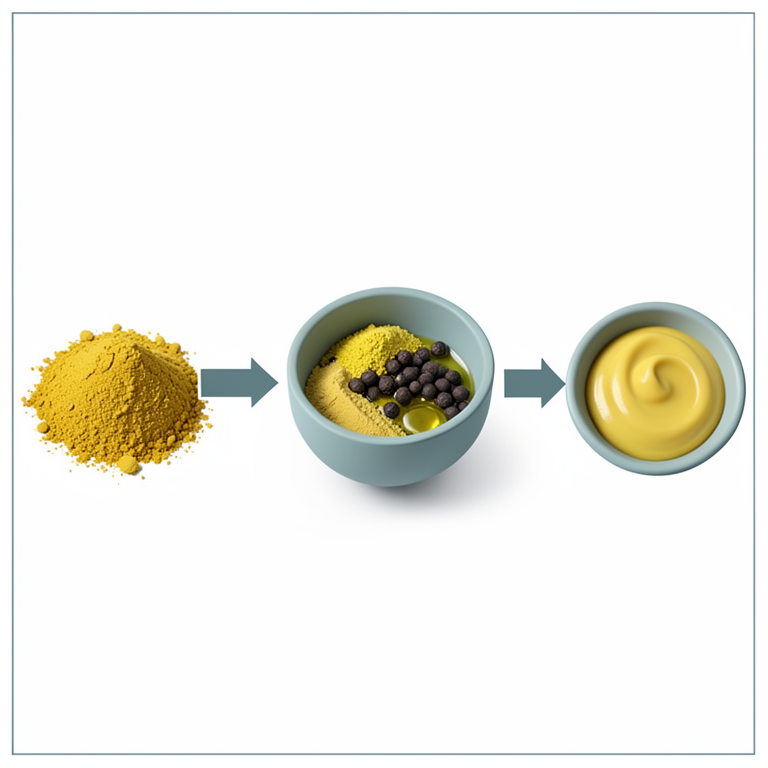
Turmeric Paste Formulation Logic
AI-generated conceptual illustration (turmeric powder, black pepper, and olive oil). It explains the idea and does not show study data.
View source evidence ↗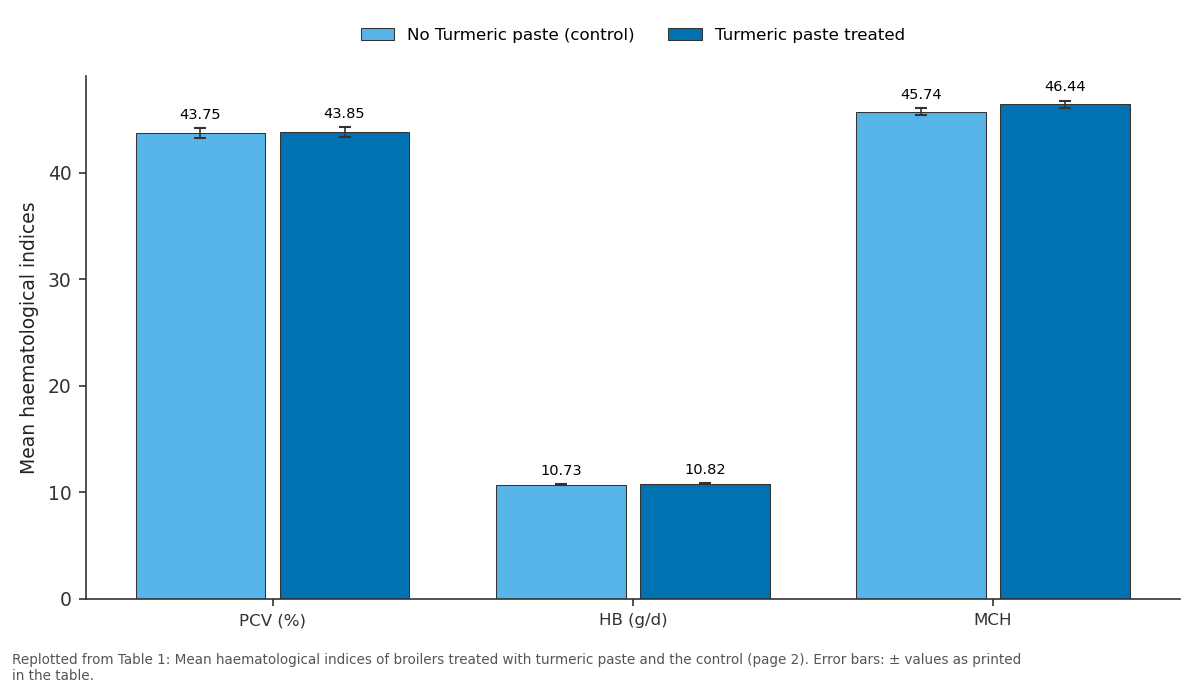
No Turmeric paste (control) and Turmeric paste treated: PCV (%) vs HB (g/d) vs MCH
Replotted from Table 1 (page 2) of the original paper. Every bar is the paper's own table value.
View source evidence ↗Figures & tables
From the original paper Table 1
Introduction
Hemogram is a group of medical laboratory tests/analysis that gives information on the cells in an animal's or a person's blood [1] . It can be used to monitor health or diagnose diseases. Hematology is the scientific study/analysis of the nature, functions, and diseases of the blood and shows pertinent information for diagnosis and disease in animals [2] . Hematological parameters are good indicators of the physiological status of animals and changes in them are valuable in assessing the response of such animals to various physiological situations [3] . Also, it is very useful in animal production as it is used to determine the health status, metabolic diseases, nutritional deficiencies and welfare of animals [4] . Incidence of diseases and malnutrition are diagnosed from the normal reference values of various haematological parameters measured based on the case under investigated. It is reported that aromatic plants which are those plants that contain aromatic compounds mainly essential oils that are volatile at room temperature [5] may increase feed intake and may enhance secretion of endogenous digestive enzymes [6] . Turmeric rhizome (Curcuma longa) which is an aromatic tropical plant of the Zingiberaceae family, has an influence on growth performance in poultry. Curcumin is the active ingredient of Curcuma longa, and is widely used in Eastern societies [7] . Some studies have shown the health effects of turmeric such as anti-inflammatory [8] and antioxidant effects [9] . Furthermore, the use of turmeric in broiler diets has been shown to have antimicrobial activity on E. coli and coliform bacteria [10] . It is effective against protozoan parasites such as coccidiosis [11] . However, pharmacokinetic studies of Curcuma longa in animals demonstrated that about 40-85% of an oral dose of turmeric powder (curcumin) goes through the gastrointestinal tract unchanged [12,13] . Black Pepper is a flowering vine that belongs to the family: Piperaceae, genus: piper, and specie: nigrum, rich in glutathione peroxidase and glucose-6-phosphate dehydrogenase [14] . Its antioxidant property has been shown [15] . It is naturally considered to be a hot, pungent herb that stimulates the digestive tract, by enhancing the secretion of fluids and circulation of blood in the gastrointestinal tract and so increases the absorption of selenium, vitamin B complex, curcmin (Tumeric), Beta carotene and other nutrients [16] .
Piperine is the most active constituent of black Pepper and has been found to support the absorption of other herbs, curcumins found in Turmeric specifically. One study found that combining Turmeric and Black Pepper increased the bioavailability of Turmeric by 154% versus Turmeric alone [17] , Piperine supports the inter-cellular permeability and uptake of curcumins [18] . Due to the poor absorption of turmeric powder in the gastrointestinal tract, the powder was turned into paste to enhance its absorption through the gastrointestinal tract of broilers. Turmeric paste is a mixture of turmeric powder (curcumin), black pepper (piperine) and oil in semi-solid form [11] . Hence, this study is to assess the health status of broilers treated with turmeric paste through their hematological indices.
Materials and Method Experimental design
This research was carried out at the poultry unit of the research farm of the College of Veterinary Medicine, Michael Okpara University of Agriculture, Umudike, Abia State, Nigeria. Sixty (60) day old broiler chicks vaccinated against Newcastle and Gumboro diseases were randomly assigned into two groups of 30 chicks each and reared in deep litter system. The group (A) was not treated with turmeric paste and this serves as the control while group (B) was treated with turmeric paste per os at 0.5 g/kg body weight from day two till the 5th week of their lives which is till they are 35 days old.
Preparation of turmeric paste
The turmeric paste was prepared with freshly prepared turmeric powder, freshly ground black pepper, water and virgin olive oil at the ratio of 60g of turmeric: 2 cups of water: 1 to 2 teaspoon of black pepper: 70 ml of extra virgin olive oil [19] , With this measurement, the mixture of tumeric and water were cooked for 10 minutes. Olive oil and black pepper were added at the end of the cooking. The golden paste was allowed to cool and appropriate dosages were calculated and given to the birds. It was stored in the refrigerator throughout the period of the experiment [11] .
Sample collection/ analytical measurements
The birds were weighed weekly and at the end of the experiment, blood was collected through the wing veins using disposables syringes and needles from sampled birds (ten birds per treatment group). The blood samples (5 mls/ bird) were collected into sample bottles with di-potassium salt of ethylene diamine tetra acetic acid (EDTA) which served as anticoagulants for haematological analyses. Hematological parameters were estimated using standard procedures as described by [20] for hemoglobin, red blood cells (RBC), packed cell volume (PCV), white blood cells (WBC) and platelets contents. The mean corpuscular haemoglobin and mean corpuscular volume were determined using appropriate formulae as described by [21] .
Statistical analysis
The data collected were analysed using SPSS version 20 statistical package. All data were expressed as Means ± Standard Error of Means (S.E.M). Students 't' test was used to compare the two groups which are turmeric paste and untreated (control). A least significant difference was dictated at 5% significance level.
Results and Discussion
The mean haematological parameters of broilers treated with 0.5g/kg of turmeric paste and the control were shown in Table 1. This result was compared with the normal reference range as reported by [22] . There were significant differences (p<0.05) in means of RBC, WBC, Platelets and MCHC between the treated and untreated groups. The mean RBC of broilers (3.36; 3.30) treated with TP were significantly higher (p<0.05) than the control and this corresponds with the reports of [23] indicating a significant increase in erythrocyte with turmeric meal inclusion in drinking water. Although in this study, turmeric paste was used and given orally. This suggests that turmeric enhances erythropoiesis in broilers. There were higher values/means of PCV, HB and MCH but not statistically significant in treated broilers when compared with the untreated broilers (control). This result is in concordance with the reports by [24] and [23] that the inclusion of turmeric in the feeds of broilers had no significant effect on hematocrit level and on hemoglobin concentration of broilers. These hematological parameters (PCV, HB, and MCH) are used in diagnosing anaemia and polycythemia in young birds [25] and their values were higher in the treated group in this study but they are still within their normal range thus indicating that turmeric paste is safe in broiler production. Means of WBC (200.33), platelets (198.44) and MCHC (221. 88) of broilers treated with TP were significantly lower than the means of broilers not treated with TP (205.82, 205.22, and 228.77) respectively. This result corroborates the reports of [26] whereby white blood cell count reduced markedly after Curcuma longa extract supplementations thus suggesting that this supplement possesses some anti-inflammatory effects. Also, earlier research by [27] showed that treatment with curcumin reduced the proliferation of lymphocytes following the inductive action of interleukin-2 (IL-2). All the haematological values obtained from this study fall within the normal ranges as reported by [22] .
| Haematological parameter | No Turmeric paste (control) | Turmeric paste treated |
|---|---|---|
| PCV (%) | 43.75±0.45 | 43.85±0.45 |
| HB (g/d) | 10.73±0.07 | 10.82±0.07 |
| RBC (x1012) | 3.30±0.02 b | 3.36±0.03 a |
| WBC (x109) | 205.82±1.21 b | 200.33±1.21 a |
| Platelets (x109) | 205.22±9.37 a | 198.44±9.37 b |
| MCV | 113.33±0.44 | 112.34±0.44 |
| MCH | 45.74±0.35 | 46.44±0.35 |
| MCHC | 228.77±1.21 a | 221. 88±1.21 b |
Table text extracted from the original PDF; superscript letters are shown inline. The original table image is below.
View original table image
References
25 in the original paper- Health Direct (August 2018). Full blood count. HealthDirect.gov.au. Archived from the original on 2 April 2019. Retrieved 8 September 2020.
- Blood Tests. Chronic lymphocytic leukaemia (CLL). Cancer Research UK. 18 September 2020. Archived from the original on 23 October 2020. Retrieved 23 October 2020.
- Khan TA, Zafar F. Hematological study in response to varying doses of estrogen in broiler chicken. International Journal of Poultry Science. 2005;4(10):748-751.
- Menon D, Bennett D, Schaefer A, Cheng K. Hematological and Serum biochemical profile of fermiums (Dromaius novaehollandiae) at the onset of their breeding season. Poultry Science. 2013;92(4):935944.
- Brenes A, Roura E. Essential oils in poultry nutrition: main effects and modes of action. Animal feed science and technology. 2010;158(1-211110):1-14.
- Jamroz D, Orda J, Kamel C, Wiliczkiewicz A, Wertelecki T, Skorupinska J. The influence of phylogenetic extracts on performance, nutrient digestibility, carcass characteristics, and gut microbial status in broiler chickens. J Anim. Feed Science. 2003; Jul 15;12(3):583-96.
- Gowda NKS, Ledoux DR, Rottinghaus GE, Bermudez AJ, YC. Antioxidant efficacy of Curcuminoids from turmeric (Curcuma longa L.) powder in broiler chickens fed diets containing aflatoxin Chen. Br. J Nutr. 2009;102:1629-1634.
- Holt PR, Katz S, Kirshoff R. Curcumin therapy in inflammatory bowel disease: a pilot study. Digest. Dis. Sci. 2005;50:2191-2193.
- Karami M, Alimon AR, Sazili AQ, Goh YM, Ivan M. Effects of dietary antioxidants on the quality, fatty acid profile, and lipid oxidation of longissimus muscle in Kacang goat with aging time. Meat Sci. 2011 May 1;88(1):102-8.
- Onyeachonam F, Oriaku U, Okonkwo C. Controlling coccidiosis in broilers using Tumeric paste. International Journal of Veterinary Sciences and Animal Husbandry. 2020;5(4):156-159.
- Wahlström B, Blennow G. A study on the fate of curcumin in the rat. Acta Pharmacol Toxicol (Copenh). 1978;43(2):86-92. DOI: 10.1111/j.1600-0773.1978.tb02240.x
- Ravindranath V, Chandrasekhara N. Metabolism of curcumin-studies with [3H] curcumin. Toxicology. 1981;22(4):337-344. DOI: 10.1016/0300-483x(81)90027-5.
- Akbarian A, Golian A, Kermanshahi H, Gilian A, Moradi S. Influence of Tumeric rhizome and black pepper on blood constituents and performance of broiler chickens. African J Biotechnol. 2012;11(34):8606-8611.
- Gulcin AH, Shah AJ, Ghayur MN, Majeed K. Pharmacological Basis for the use of Turmeric in gastrointestinal and respiratory disorders. Life Sci. 2005 May 13;76(26):3089-105. Pubmed: 15850601.
- Al-Sultan SI, Gameel AA. Effects of black pepper (Piper nigrum), turmeric powder (Curcuma longa) and Coriander seeds (Coriandrum sativum) and their combinations as feed additives on growth performance of broiler chickens. Int. J Poult. Sci. 2003;5:332-338.
- Blanchard K. What Turmeric Might Do For Animals? Emax Health. http://www.emaxhealth.com/1020/whatturmeric-might-do-animal-health, 2014 Nov 1.
- Gaia herbs farm. https://www.gaiaherbs.com/blogs/herbs/black-pepper, 2020.
- Ewuola EO, Egbunike GN. Haematological and serum biochemical response of growing rabbits bucks fed different levels of dietary fumonisin African J Biotech. 2008;7(23):4304-4309.
- Emiola IA, Ojediran TK, Ajayi JA. Biochemical and haematological indices of broiler chickens fed differently processed legume seed meals. Int. Journal of Applied Agricultural and Apicultural Research. 2013;9(1&2):140149.
- Iyaode II, Ibrahim HO, Uwade F, Shittu MW. Haematology and serum biochemistry of broiler strains (Cobbs and Arbor-acre) fed ginger (Zingiber officinale). GSC Biological and Pharmaceutical Sciences. 2020;11(02):320-326.
- Sugiharto S, Isroli E, Widiastuti NS, Prabowo. Effect of turmeric extract on blood parameters, feed efficiency and abdominal fat content in broilers. Journal of the Indonesian Tropical Animal Agriculture. 2011;36(1):2126.
- Emadi M, Kermanshahi H, Maroufyan E. Effect of varying levels of turmeric rhizome powder on some blood parameters of broiler chickens fed corn-soybean meal based diets. International Journal of Poultry Science. 2007 May 1;6(5):345-8.
- Goodwin MA. Packed cell volume reference intervals to aid in the diagnosis of anemia and polycythemia in young broiler chickens. Avian Diseases, 1992 Apr 1:440-3. PMID: 1627113.
- Kamarudin TA, Othman F, Mohd Ramli ES, Md Isa N, Das S. Protective effect of curcumin on experimentally induced arthritic rats: detailed histopathological study of the joints and white blood cell count. EXCLI Journal. 2012;11:226-236.
- Ranjan D, Chen C, Johnston TD, Jeon H, Nagabushan M. Curcumin inhibits mitogen stimulated lymphocyte proliferation, NF kappa B activation and IL-2 signaling. Journal of Surgical Research. 2004 Oct 1;121(2):171-7.