
Research article · 2021 · Full text
International Journal of Agriculture Extension and Social DevelopmentParticipation level of rural women in vegetable cultivation activities in Iraq
Volume 4(2) · Pages 01–05 · DOI: 10.33545/26180723.2021.v4.i1b.94 ↗
Research areasAgricultural Economics and PracticesAgricultural Systems and PracticesLivestock Management and Performance Improvement
Abstract
Author-writtenVegetables are cultivated all over the world, and women do represent an important part of labour force in vegetable production. This study identified the role of rural women in vegetables cultivation. One hundred and forty rural women participating in vegetable cultivation were randomly selected. A list of 3 aspects of vegetable cultivation activities: pre-sowing and sowing, post-sowing, and harvest and post-harvest, covering 20 activities was prepared. About half of the respondents had high participation in vegetable cultivation activities. Pre-sowing and sowing aspect ranked first. Land cleaning, seed treatment, sowing (and replanting) seeds, fertilization, hoeing, hand weeding, harvesting, sorting and grading, and seed storage were the activities in which rural women showed high level of participation. Age, educational level and number of family women who participated in vegetable cultivation were negatively and significantly related to participation, while, years of experience and cultivated area had positive relationship. There is need to increase expertise and skills of rural women in vegetable cultivation activities especially that showed highly participation through an appropriate extension strategy.
Summary
Source-checkedPlain-language reading of the full paper, prepared with AI and checked against the text. Each point links to the authors' own words.
Why it matters
- Women are a critical part of the global food supply, producing 60-80% of the world's food and making up over 50% of the agricultural workforce in developing nations. View evidence ↗
- In Iraq, vegetables are the third most harvested crop category, following grains and fodder crops, and are grown across all provinces. View evidence ↗
- Due to a lack of interest among men, women form a significant portion of Iraq's agricultural workforce; in 2017, 43.7% of women compared to 16.7% of men worked in this sector. View evidence ↗
The question
- The study aimed to determine the extent of rural women's participation in vegetable cultivation and how this participation relates to their socioeconomic characteristics. View evidence ↗
What they did
- The research was conducted in the Babylon province of south-central Iraq. View evidence ↗
- Data was collected from 140 randomly selected women out of a population of 430 families in the Al-Qassim district between October 1 and 20, 2020. View evidence ↗
- The study evaluated 20 specific cultivation activities divided into three phases: pre-sowing/sowing, post-sowing, and harvest/post-harvest. View evidence ↗
- Participation was measured using a 3-point scale (high, medium, low), with total scores for each respondent ranging from 20 to 60. View evidence ↗
What they found
- Over half of the respondents (50.7%) showed a high level of participation in vegetable cultivation, while 34.3% were medium and 15% were low. View evidence ↗
- The pre-sowing and sowing phase had the highest participation level (2.30), followed closely by harvest/post-harvest (2.29) and post-sowing (2.19). View evidence ↗
- Land cleaning was the activity with the highest participation, with 97.1% of women reporting high participation (weighted mean of 2.97). View evidence ↗
- Plowing had the lowest participation, with 97.9% of women reporting low participation (weighted mean of 1.02). View evidence ↗
- Within the harvest and post-harvest phase, harvesting was the most participated activity, with 84.3% of women showing high participation (weighted mean of 2.84). View evidence ↗
- In the post-sowing phase, fertilization was the top activity, with 73.6% of women reporting high participation. View evidence ↗
- Participation levels were significantly and negatively related to the woman's age, education level, and the number of other women in the family participating in cultivation. View evidence ↗
- Participation levels were significantly and positively related to the woman's years of experience and the total area of land cultivated. View evidence ↗
What it means
- The authors conclude that an appropriate extension strategy is necessary to increase the knowledge and skills of rural women in the activities where they already show high participation. View evidence ↗
Visual summary
2 visualsIllustrations explain the paper; charts are replotted from the paper's own table values.
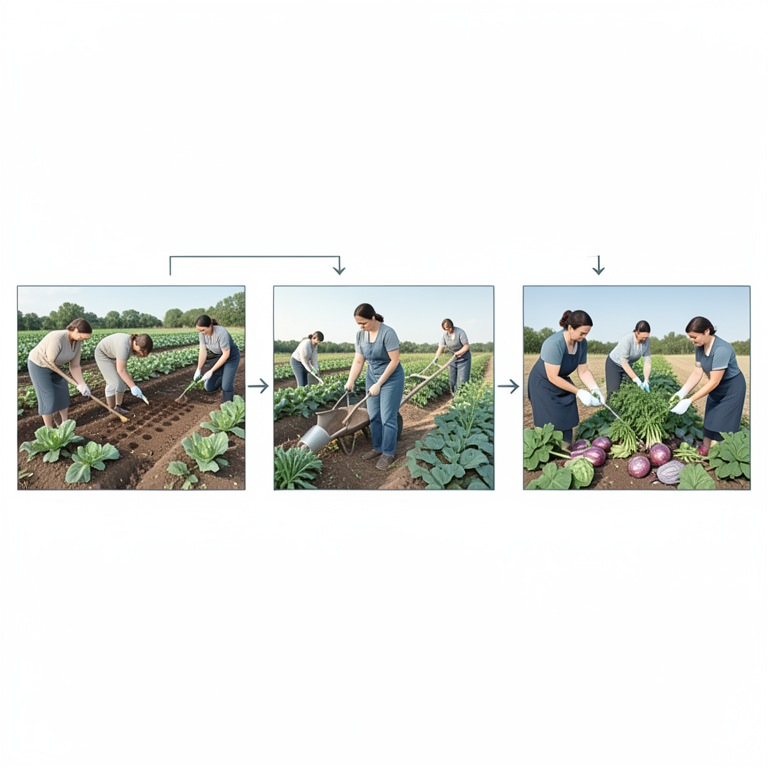
Participation across Cultivation Phases
AI-generated conceptual illustration (Rural Iraqi women in vegetable gardens). It explains the idea and does not show study data.
View source evidence ↗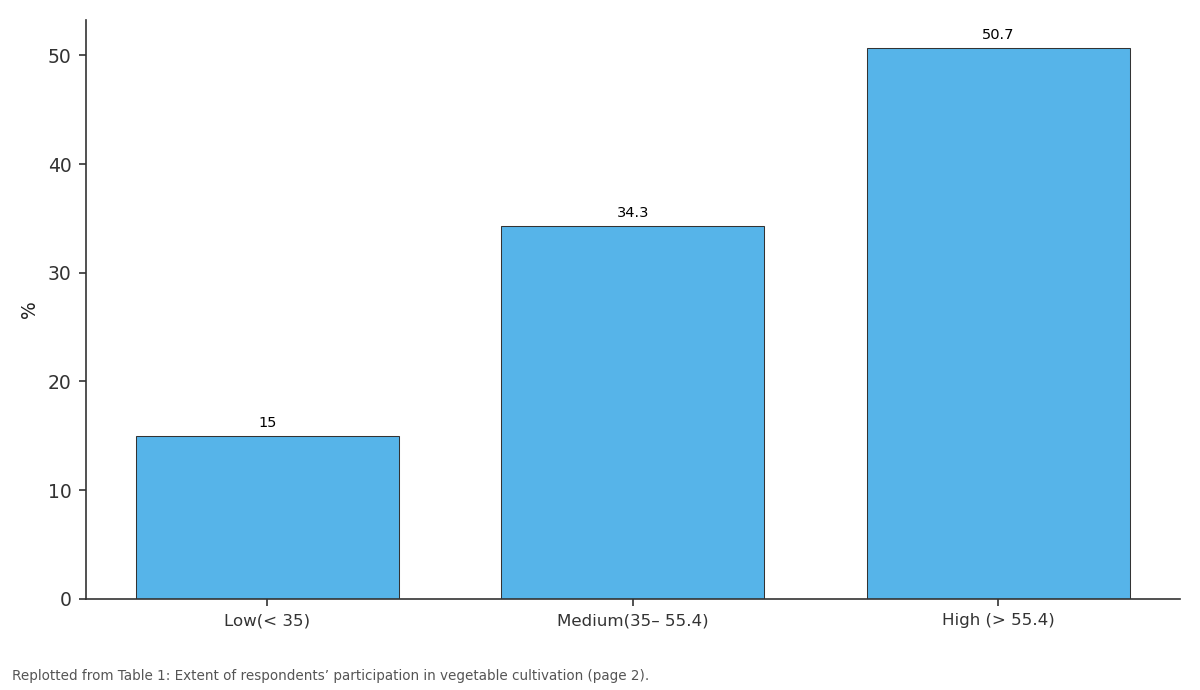
%: Low(< 35) vs Medium(35– 55.4) vs High (> 55.4)
Replotted from Table 1 (page 2) of the original paper. Every bar is the paper's own table value.
View source evidence ↗Figures & tables
From the original paper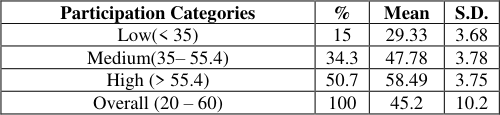 Table 1
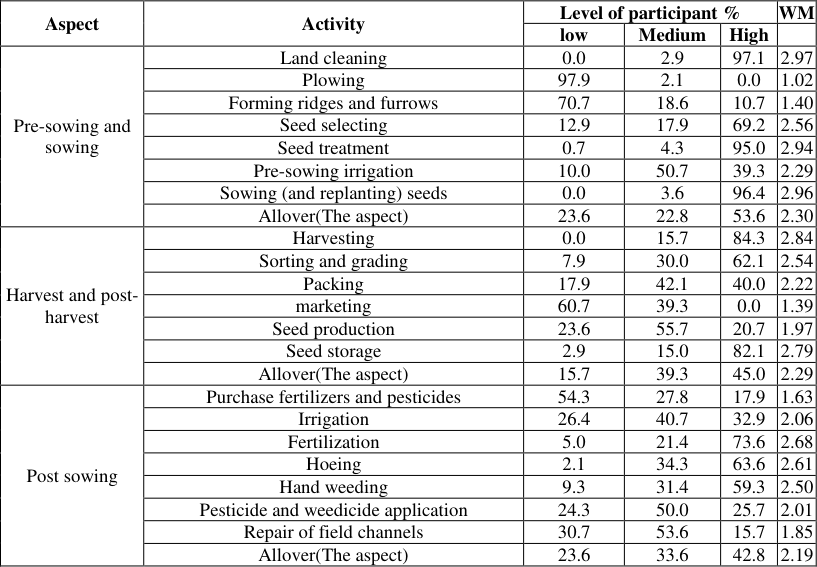 Table 2
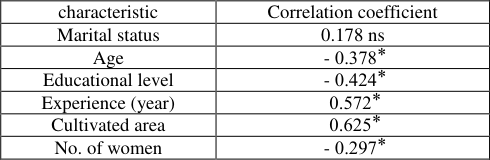 Table 3
Introduction
Women produce 60-80% of the world's food (Doss et al., 2018) [8] , and account above 50% of the agricultural labour force in developing countries (Anonymous, 2019a). Vegetables are cultivated all over the world because their production is profitable. Smallholders account for almost all vegetable production; rural women represent an important part of labour force in vegetable production. The extent of participation of rural women in vegetable cultivation differs from region to region (Pagaria, 2012 [19,10,13,22,14,16,7,15,18,21,9,11] . Assessment of the role of women in vegetable production activities is therefore, important particularly for policy formulation and programs interventions for development of women (Islam et al., 2018) [13] , used in formulating future policies and strategies at the local level to empower women and make them beneficiaries of their labor (Abebe and Mulu, 2017) [1] , through organize women-focused programs to enhance their skills and capacities in better and more profitable vegetables cultivation In Iraq Vegetables are the third most harvested crops after grains and fodder crops, it wildly cultivated in all provinces, the most cultivated vegetable crops are: water melon, tomato, cucumber, melon, okra, green beans, eggplants, and onion (Anonymous, 2018) [4] . Vegetable cultivation suffers from some problems including competition from imported vegetables, low productivity, and water shortage. Males and females participate in all vegetable production activities. But, because of unwillingness of Iraqi men to participate in agriculture, women constitute a high percentage of the agricultural labor force in Iraq. The World Bank argue that, in 2017, 43.7% of Iraqi women and 16.7% of Iraqi men were working in the agricultural sector. (Anonymous, 2019b) [6] . However, participation of Iraqi rural women in vegetable production activities has not been appreciated and monetized to its full capacity, and there have not been any study on the participation of rural women in vegetable cultivation activities in the study area. Considering this fact, the study was undertaken with the following objectives i) Objectives to determine extent of participation of rural women in vegetable cultivation activities, ii) Determine the relationships between participation and socioeconomic characteristics of rural women.
Material and Methods
The study was carried out in Babylon province, centre-south of Iraq, between 32° and 33.25° North latitude and 44°to 45° East longitude. Vegetables (winter and summer) cultivation spreads in the district. Farmers do cultivate: lettuce (Lactuca sativa L.), spinach (Spinacia oleracea L.), green onions (Allium cepa L.), okra (Abelmoschus esculentus L), eggplant (Solanum melongena L.), sweet pepper (Capsicum annuum L.), red onion (Allium cepa L.), cucumber (Cucumis sativa L.),and melon (Cucumis melo L.). The population for this study consisted of 430 families cultivating vegetables in Al-Qassim district. One woman www.extensionjournal.com was chosen from each family. From the 430 women, 140 were selected at random to provide data from 1-20 October, 2020. The instrument used was a 2-part questionnaire. The first part included socio-economic characteristics including marital status, age, education level, years of experience in vegetables cultivation, area cultivated with vegetable crops, and number of family women participating in vegetable cultivation. The second part listed 20 activities in vegetable cultivation grouped into pre-sowing and sowing (7activities), post-sowing (7), and harvest and post-harvest (6) aspects. Content validity of the questionnaire was established by a panel of ten experts in the fields of agricultural extension and vegetable cultivation, four of them proposed an amendment, the instruments were revised based on their comments. A pilot study on 10 women outside the sample was conducted to establish reliability of the instrument; a Cronbach's alpha (a reliability coefficient) of 0.91 was established, that indicating the instrument used was reliable. Participation level in each activity was measured on a 3point scale of high (H) (3), medium (M) (2), low (L) (1); in all-over activities, each respondent was given a score ranging from (20 to 60). Based on mean (M) ±standard deviation (SD), respondents were assigned to categories as follows: low training needs (below M ̶ SD), medium (M±SD), and high (above M+SD). Each activity was given a score ranging from (1 to 3), the 3 main aspects and 20 activities were categorized based on weighted arithmetic mean (WM) for level of participated in it, into: low (1-1.66), medium (1.67-2.33), and high (2.34-3) groups. Data were analysed using frequency, percent, mean, standard deviation (S.D.), weighted arithmetic mean (WM)
Total respondents), and simple correlation.
Results and Discussion
Results and Discussion
Overall participation
The participation score of rural women in vegetable cultivation ranged from (20-60), with a mean of 45.2 and standard deviation of 10.2 which has been presented in Table 1. Analyzing the participation scores reveals that (50.7%) of respondents had high participation in vegetable cultivation activities, 34.3, 15% had medium and low participation respectively. Results shown that (80%) of respondents had high to medium participation in vegetable cultivation activities, half of rural women in study area within high participation category, this indicate the large participation of rural women to vegetable cultivation. While Khatun et al., 2014; [14] Manjari, 2014 [16] , found that majority (60%) of rural women were within medium level category. The average participation score of overall rural women is within medium category, this result is similar to Khatun et al., 2014 [14] . Land cleaning as one of vegetable activities showed highly participate level among high majority of respondents, Kumari and Laxmikant, 2015 [15] , found the same result. Sowing (and replanting) seeds of vegetable cultivated in study area done manually. Rural women showed highly participation in this activity, this is in line of results reported by Manjari, 2014 [16] ; Kumari and Laxmikant, 2015 [15] ; Tripathi et al., 2015 [21] ; Jahan and Khan, 2016 [11] , which indicate that seed sowing activity mostly performed by farm women. Seed treatment is an essential process in vegetable cultivation. It is an activity that does not require muscle effort, so it is more suitable for women, and show highly participated in, this is similar with the findings of Pagaria, 2012 [19] ; Fartyal and Rathore, 2013 [10] ; Manjari, 2014 [16] . There are some farm activities traditionally consider only implemented by men, such as plowing, (Pal and Haldar, 2016) [20] . The high proportion (97.7%) of rural women in study area show low participation in plowing, Jahan and Khan, 2016 [11] ; Kumari and Laxmikant, 2015 [15] ; Manjari, 2014 [16] ; Fartyal and Rathore, 2013 [11] , pointed to low participation too. Plowing done by tractor, women's participation will be through: rental the tractor, delivery of food to field workers at the time of plowing, driving the tractor.
| Participation Categories | % | Mean | S.D. |
|---|---|---|---|
| Low(< 35) | 15 | 29.33 | 3.68 |
| Medium(35– 55.4) | 34.3 | 47.78 | 3.78 |
| High (> 55.4) | 50.7 | 58.49 | 3.75 |
| Overall (20 – 60) | 100 | 45.2 | 10.2 |
Table text extracted from the original PDF; superscript letters are shown inline. The original table image is below.
View original table image
As regard to harvest and post-harvest aspect, (45%) had high level of participation followed by 39. Marketing showed less extent of rural women participation among harvest and post-harvest activities, (60.7%) lowly participate, and ranked sixth (1.39). Vegetable harvesting done manually two or three twice a week, the need for labor in this activity is more than the rest cultivation activities. Majority of respondents highly participate in harvesting, Manjari, 2014 [16] ; Kumari and Laxmikant, 2015 [15] ; Olowa and Olowa, 2015 [18] ; Tripathi et al., 2015 [21] , also pointed to the same result. Sorting and grading of vegetable crops are mainly performed by women (Tripathi et al., 2015) [21] , it is an essential steps of packing and handling. Respondents show high participation in this activity, this finding agrees with that of Manjari, 2014 [16] ; Jahan and Khan, 2016 [11] . Vegetable farmers are often packing their crops in plastic boxes or large nylon sacks. Level of rural women's participation in study area was in the medium category, this is in line of result reported by Hada and Bansal, 2017 [12] . Referring to post-sowing aspect, (42.8% of respondents had high level of participation followed by (33.6%, 23.6%) within medium and low level respectively. fertilization, as vegetable cultivation activity, showed highly participate among (73.6%) of rural women and ranked first. (63.6%) of rural women showed highly participation in hoeing which rank second (2.61). In hand weeding activity fifty-nine of respondents had highly participate which ranked third (2.50).
In order to improve the quantity and quality of vegetable yields, farmers often use more amounts of fertilizer. Vegetable fertilization is done manually in two or three batches throughout the growing season, about three quarters of rural women in area study highly participated in this activity, Pagaria, 2012 [19] ; Manjari, 2014 [16] ; Kumari and Laxmikant, 2015 [15] , pointed to highly women participate in this activity.
Hoeing is one of the important vegetable crop service operations aimed at get rid of weeds and soil aeration; it takes place several times, in the season, as needed. Near sixty-four respondents show highly participation, this is in line of results reported by Kumari and Laxmikant, 2015 [15] ; Jahan and Khan, 2016 [11] .
Weeds reduce vegetables yield and quantity, increase cost production. There is more than one way to resist the weeds. Hand (manual)weeding are the most commonly used and the most successful weeding methods (Kristiansen et al.,2007).In study area about (91%) from respondents show medium to high participate in, Fartyal and Rathore, 2013 [11] ; Manjari, 2014 [16] ; Kumari and Laxmikant, 2015 [15] ; Jahan and Khan, 2016 [11] , pointed to highly participation too.
Irrigation, pesticide and weedicide application, repair of irrigation channels and purchase fertilizers and pesticides, as post-sowing activities, showed less participation among rural women. [17] said, the reason is due to that women having more education feel dishonour to participate in agricultural activities. Increased women family number involved in agricultural work leads to a reduction participation level of each of them. Years of experience in vegetable cultivation and amount of area cultivated with vegetable crops had positive, significant, relationships with participation. Rural women participation in vegetable cultivation activities increased by increasing years of experience, and cultivated area. As the years of experience increase, there is a growing need for women participation in agricultural activities for extension and supervision. While any increase in cultivated area needs more labor.
Conclusion and Recommendations
Half of rural women have a high level of participation in vegetable cultivation activities. Pre-sowing and sowing category had the high participate among rural women. land cleaning, seed treatment, sowing (and replanting) seeds, fertilisation, hoeing, hand weeding, harvesting, sorting and grading and seed storage are the activities in which rural women shown high level of participation. Age, educational level and number of family women participate in vegetable cultivation were negatively, and significantly, related to participation, while, years of experience and cultivated area had positive relationships. An appropriate extension strategy needed to increase knowledge of rural women's in activities shown highly participation.
Figures and tables from the paper
| Aspect | Activity | Level of participant % | — | — | WM |
|---|---|---|---|---|---|
| low | Medium | High | |||
| Pre-sowing and sowing | Land cleaning | 0.0 | 2.9 | 97.1 | 2.97 |
| Plowing | 97.9 | 2.1 | 0.0 | 1.02 | |
| Forming ridges and furrows | 70.7 | 18.6 | 10.7 | 1.40 | |
| Seed selecting | 12.9 | 17.9 | 69.2 | 2.56 | |
| Seed treatment | 0.7 | 4.3 | 95.0 | 2.94 | |
| Pre-sowing irrigation | 10.0 | 50.7 | 39.3 | 2.29 | |
| Sowing (and replanting) seeds | 0.0 | 3.6 | 96.4 | 2.96 | |
| Allover(The aspect) | 23.6 | 22.8 | 53.6 | 2.30 | |
| Harvest and post- harvest | Harvesting | 0.0 | 15.7 | 84.3 | 2.84 |
| Sorting and grading | 7.9 | 30.0 | 62.1 | 2.54 | |
| Packing | 17.9 | 42.1 | 40.0 | 2.22 | |
| marketing | 60.7 | 39.3 | 0.0 | 1.39 | |
| Seed production | 23.6 | 55.7 | 20.7 | 1.97 | |
| Seed storage | 2.9 | 15.0 | 82.1 | 2.79 | |
| Allover(The aspect) | 15.7 | 39.3 | 45.0 | 2.29 | |
| Post sowing | Purchase fertilizers and pesticides | 54.3 | 27.8 | 17.9 | 1.63 |
| Irrigation | 26.4 | 40.7 | 32.9 | 2.06 | |
| Fertilization | 5.0 | 21.4 | 73.6 | 2.68 | |
| Hoeing | 2.1 | 34.3 | 63.6 | 2.61 | |
| Hand weeding | 9.3 | 31.4 | 59.3 | 2.50 | |
| Pesticide and weedicide application | 24.3 | 50.0 | 25.7 | 2.01 | |
| Repair of field channels | 30.7 | 53.6 | 15.7 | 1.85 | |
| Allover(The aspect) | 23.6 | 33.6 | 42.8 | 2.19 |
Table text extracted from the original PDF; superscript letters are shown inline. The original table image is below.
View original table image
| characteristic | Correlation coefficient |
|---|---|
| Marital status | 0.178 ns |
| Age | - 0.378 ⃰ |
| Educational level | - 0.424 ⃰ |
| Experience (year) | 0.572 ⃰ |
| Cultivated area | 0.625 ⃰ |
| No. of women | - 0.297 ⃰ |
Table text extracted from the original PDF; superscript letters are shown inline. The original table image is below.
View original table image
References
20 in the original paper- Abebe T, Mulu D. The role of women in the management and utilization of home garden: The case of Dale District, in Southern Ethiopia. Asian J. Plant Sci. Res 2017;7:41-54. http://www.imedpub.com/asianjournal-of-plant-science-research/archive/ajpskyvolume-7-issue-4-year-2017.htm.
- Ajibola B, Komolafe S, Akangbe J. Constraints faced by women vegetable farmers in Kwara State, Nigeria and its agricultural practices. Jordan Journal of Agricultural Sciences 2015;11:995-1006. https://journals.ju.edu.jo/JJAS/issue/view/452
- Anonymous. Young farmer manifesto. The European Council of Young Farmers. Brussels, Belgium 2015. http://www.ceja.eu/wp-content/uploads/2015/09/CEJAYoung-Farmer-Manifesto.pdf
- Anonymous. Production report of crops and vegetables for year 2017. Central Statistical Organization. Baghdad, Iraq 2018.
- Bargali K, Vibhuti, Shahi C. Contribution of rural women in vegetable cultivation in homegardens of Nainital District, Kumaun Himalaya,India. Curr. Agri. Res 2015;3:91-100. DOI: http://dx.doi.org/10.12944/CARJ.3.2.01.
- Doss C, Meinzen R, Quisumbing A, Theis S. Women in agriculture: Four myths. Global Food Security 2018l16:69-74. https://doi.org/10.1016/j.gfs.2017.10.001
- Dossah B, Mohammed I, Ndahi A. Women in irrigated vegetable production: challenges and opportunities (case study of farmers in Plateau state, Nigeria). European Journal of Physical and Agricultural Sciences 2016;4:26-32. http://www.idpublications.org/ejpas-vol4-no-1-2016/.
- Fartyal S, Rathore S. Vegetable cultivation in Uttarakhand Hills: viewing through a gender lens. Tropical Agricultural Research 2013;24:238-248. DOI: http://doi.org/10.4038/tar.v24i3.8009.
- Jahan N, Khan N. To study the participation of farm women in various agriculture and allied activities. International Journal of Home Science 2016;2:180-186. http://www.homesciencejournal.com/archives/2016/vol 2issue2/PartC/2-2-28.pdf
- Hada V, Bansal V. Participation of rural women in processing and preservation of fruits. International Journal of Science, Environment and Technology 2017;6:33-39. http://www.ijset.net/journal/1506.pdf.
- Islam A, Bashir A and Islam M, 2018. Participation of rural women in activities related to homestead vegetable cultivation at Monirampur upazila under Jessore district. J Bangladesh Agril Univ, 16, 17-22. doi: 10.3329/jbau.v16i1.36475
- Khatun M, Hossain M, Hossain K and Rahman M, 2014. Participation potential of rural women in different homestead farm activities. The Agriculturists, 12, 5767. DOI: http://dx.doi.org/10.3329/agric.v12i1.19581.
- Kumari A, Laxmikant. Participation of rural women in vegetable production. Adv. Res. J. Soc. Sci 2015;6:258260. DOI: 10.15740/HAS/ARJSS/6.2/258-260.
- Manjari B, 2014. Extent of participation of farm women in vegetable cultivation in Guntur district of Andhra Pradesh. Ind. J. Sci. Res. and Tech. 2, 39-42. http://citeseerx.ist.psu.edu/viewdoc/download? doi=10.1.1.679.801&rep=rep1&type=pdf.
- Munmun R, Sarker A, Hoque M, Kabir K. Women's participation in agricultural activities at forest land areas of Bangladesh. Journal of Social Sciences 2015;11:30-38. DOI: 10.3844/jssp.2015.30.38
- Olowa O, and Olowa W, 2015. Gender issues of labour participation in vegetable production in Ikorodu local www.extensionjournal.com government area of Lagos state. Current Research in Agricultural Sciences, 2, 114-122. DOI: 10.18488/journal.68/2015.2.4/68.4.114.122
- Pagaria P. Role of Thar women in vegetable production. Agric. Update 2012;7:153-154.
- Pal S, Haldar S. Participation and role of rural women in decision making related to farm activities: A study in Burdwan district of West Bengal. Economic Affairs, 61, 55-63. DOI: 10.5958/0976-4666.2016.00008.5
- Tripathi P, Babu N, Prustry M. Analysis of participation of women in horticultural activities. Journal of Business Management and Social Sciences Research 2015;4:241-244.
- Zahoor A, Fakher A, Ali S, Sarwar F. Participation of rural women in crop and livestock activities: a case study of Tehsil Tounsa Sharif of southern Punjab (Pakistan). International Journal of Advanced Research in Management and Social Sciences 2013;2:98-121. http://www.garph.co.uk/IJARMSS-vol2-no12.h