
Research article · 2022 · Full text
International Journal of Statistics and Applied MathematicsTumor growth mathematical modeling and application of chemo-immunotherapy and radiotherapy treatments
Volume 7(2) · Pages 123–132 · DOI: 10.22271/maths.2022.v7.i2b.806 ↗
Research areasMathematical Biology Tumor Growth
Abstract
Author-writtenThis research involves three propositions. First, we proposed a model that represents tumor growth caused by carcinogenic substances from an initially diagnosed level; secondly, we proposed several therapeutic models for chemotherapy, immunotherapy, and radiotherapy, respectively, with a steady supply of dosage, with the aim of solving the cell proliferation issue. Thirdly, we modified the tumor growth model where we considered the therapeutic effect on the tumor cell with several interactive terms. The proposed models were solved analytically where tumor cell functions with and without therapeutic effects were obtained. On the other hand, we obtained independent solutions of chemotherapy, immunotherapy, and radiotherapy functions were also obtained, with some pertinent parameters. We developed numerical simulation codes using Wolfram Mathematica software, version 12 to simulate the various functions by varying the pertinent parameters to study their effect on tumor growth and to study each significant level. Numerical simulation was carried out, and it was observed that continuous exposure to radiation could cause pain and normal cell death, thereby supporting the tumor cell proliferation, but the chemotherapeutic and immunotherapeutic drugs help in shrinking the tumor and reducing cell proliferation. The simulated results for the mixed treatment application for all therapies indicate that there is a successful and faster decrease in tumor size by combining the treatment regimes. In conclusion, we have successively proposed and solved mathematical models that represent tumor growth without treatment and with the application of treatment. The models in this article can be used by scientists and oncologists in studying tumor cell proliferation.
Summary
Source-checkedPlain-language reading of the full paper, prepared with AI and checked against the text. Each point links to the authors' own words.
Why it matters
- Cancer is characterized by damaged normal cells that divide through mitosis without dying at the expected rate. View evidence ↗
- The global burden of cancer is significant, with projections from the IARC estimating 26 million new cases and 17 million deaths by 2030. View evidence ↗
- Mathematical modeling is considered an essential tool for understanding the multi-stage process of tumor growth and how it responds to chemotherapy. View evidence ↗
The question
- The research aims to propose new mathematical models to represent tumor growth caused by carcinogens and evaluate the effectiveness of radiotherapy and other treatments in controlling tumor size. View evidence ↗
What they did
- The authors used Wolfram Mathematica software, version 12, to develop numerical simulation codes to study the effect of varying parameters on tumor growth. View evidence ↗
- The mathematical models for tumor proliferation, both with and without treatment, were solved using the direct separation of variables method. View evidence ↗
What they found
- The authors found that increasing the chemotherapeutic drug dose could lead to a slight increase in tumor size, suggesting high levels of cell proliferation. View evidence ↗
- Increasing the dose of radiotherapy (measured in gray) was found to potentially cause an increase in tumor size, which the authors interpret as a drug reaction. View evidence ↗
- Immunotherapeutic drugs were found to be effective in killing tumor cells and reducing overall tumor size. View evidence ↗
- Combining different therapeutic treatments was found to be more effective at inhibiting cell proliferation and reducing tumor size than single treatments. View evidence ↗
What it means
- The authors conclude that their proposed mathematical models can serve as a tool for scientists and oncologists to study tumor cell proliferation. View evidence ↗
Visual summary
3 visualsIllustrations explain the paper; charts are replotted from the paper's own table values.
Synergy of Combined Treatments
AI-generated conceptual illustration (cancerous tumor cells). It explains the idea and does not show study data.
View source evidence ↗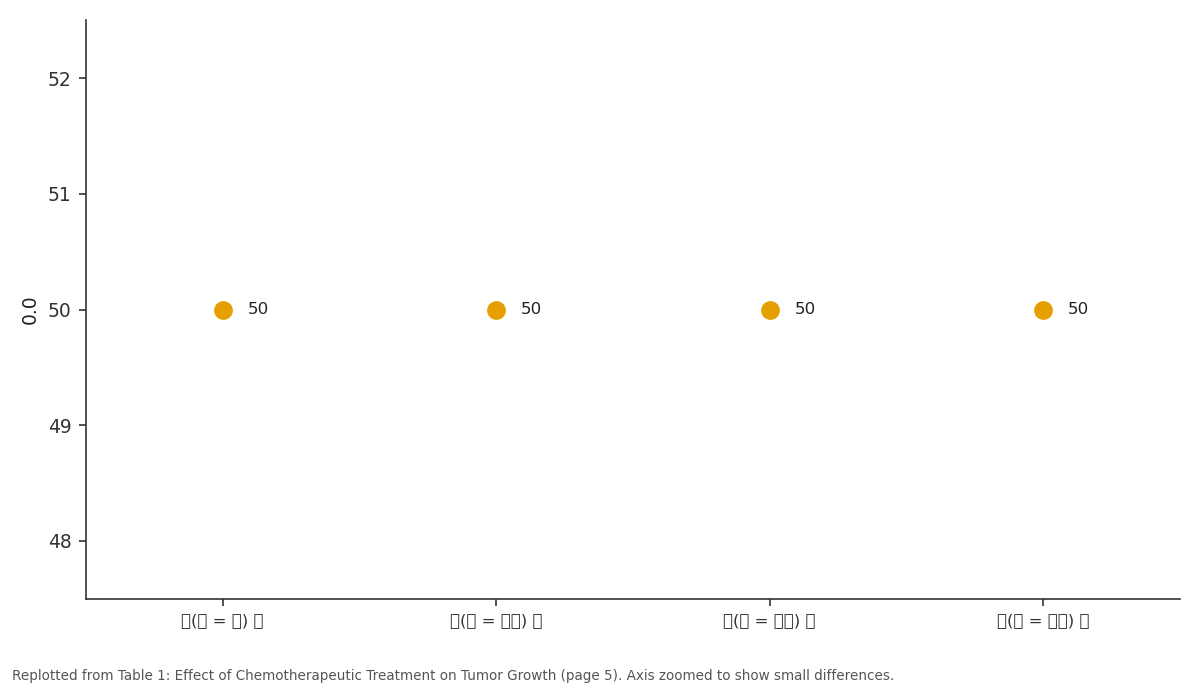
0.0: 𝒚(𝒗 = 𝟓) 𝒎 vs 𝒚(𝒗 = 𝟏𝟎) 𝒎 vs 𝒚(𝒗 = 𝟏𝟓) 𝒎 vs 𝒚(𝒗 = 𝟐𝟎) 𝒎
Replotted from Table 1 (page 5) of the original paper. Every bar is the paper's own table value.
View source evidence ↗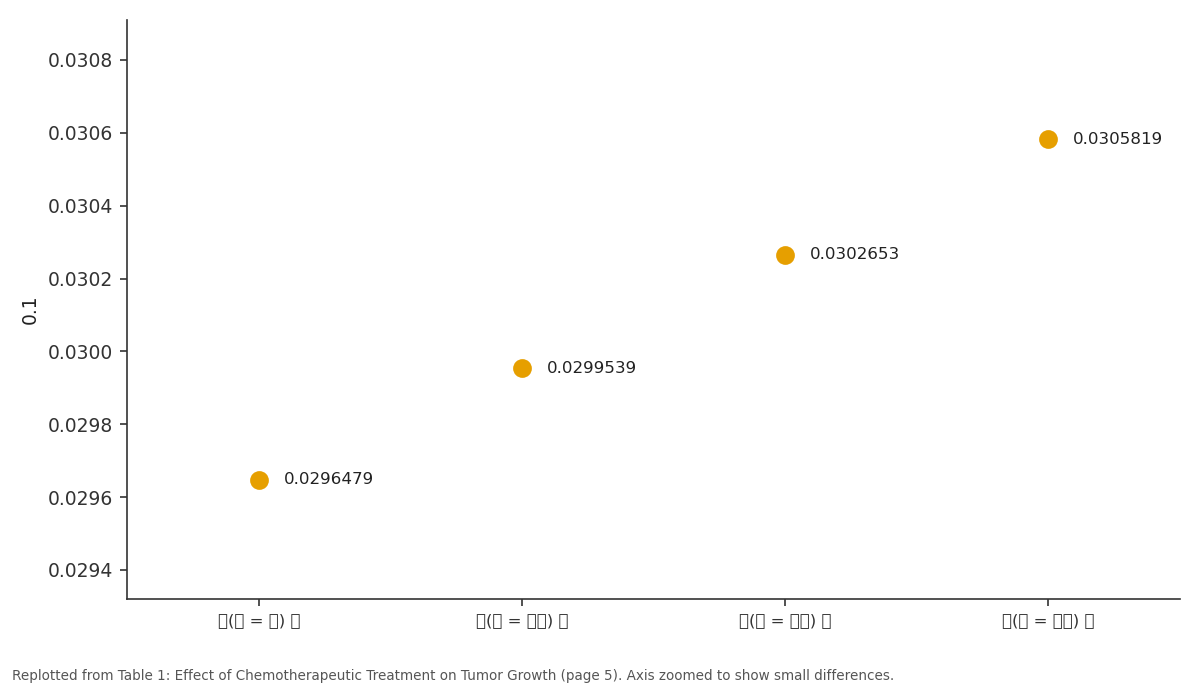
0.1: 𝒚(𝒗 = 𝟓) 𝒎 vs 𝒚(𝒗 = 𝟏𝟎) 𝒎 vs 𝒚(𝒗 = 𝟏𝟓) 𝒎 vs 𝒚(𝒗 = 𝟐𝟎) 𝒎
Replotted from Table 1 (page 5) of the original paper. Every bar is the paper's own table value.
View source evidence ↗Figures & tables
From the original paper Table 1
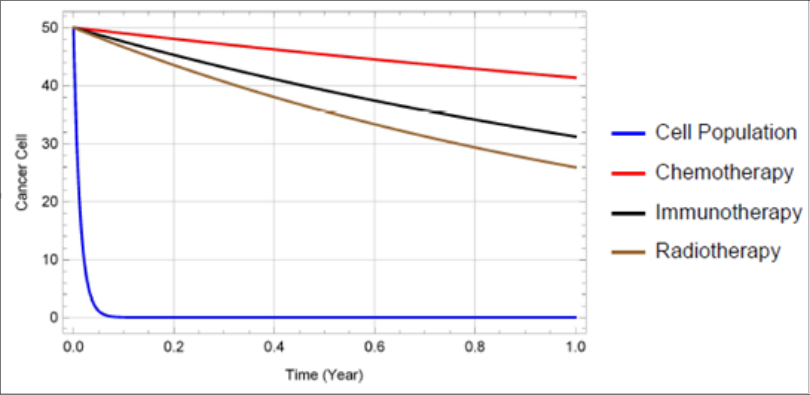 Figure 1
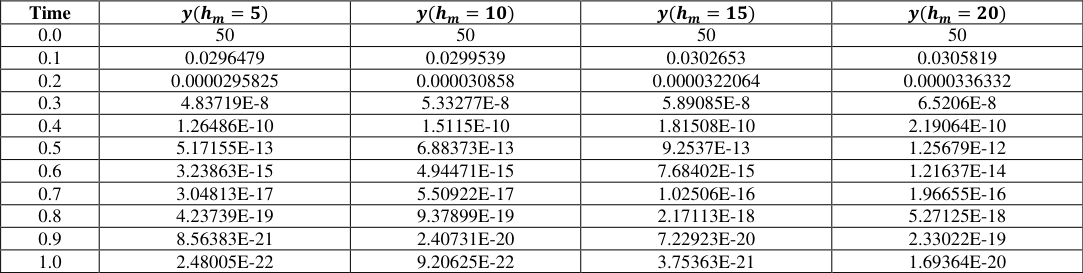 Table 2
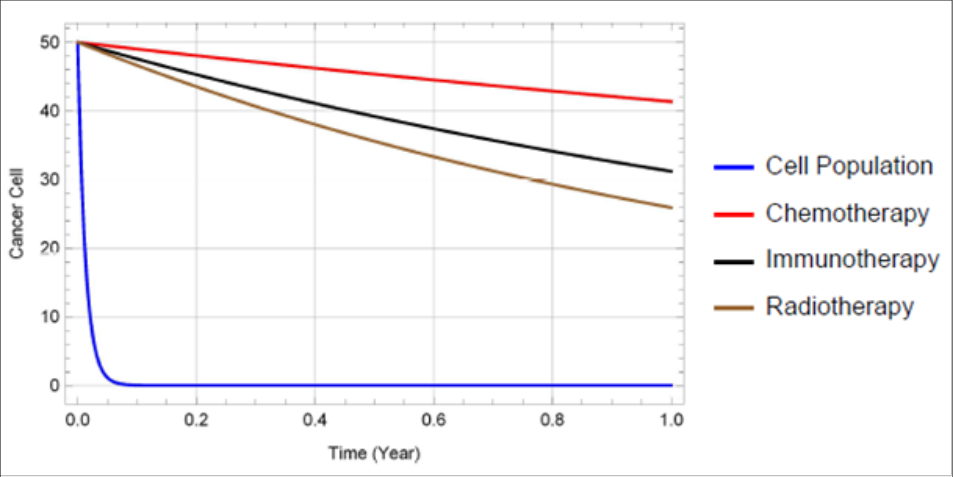 Figure 2
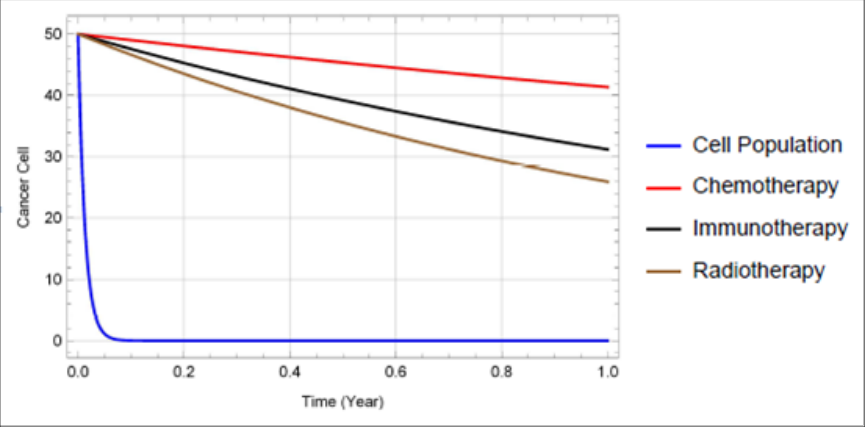 Figure 3
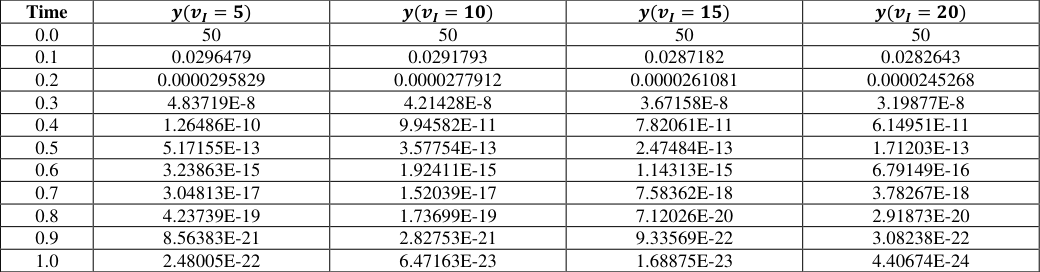 Table 3
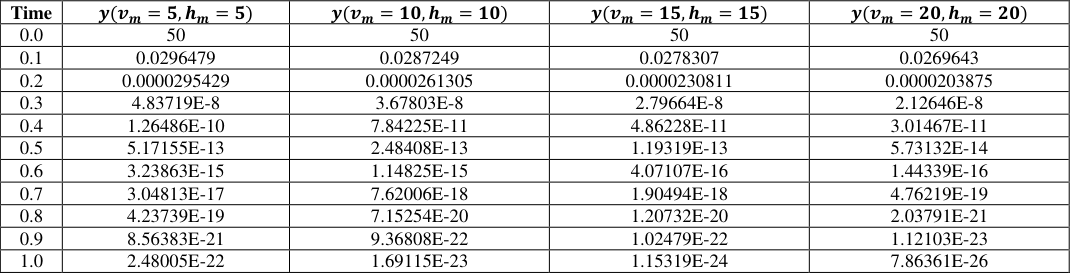 Table 4
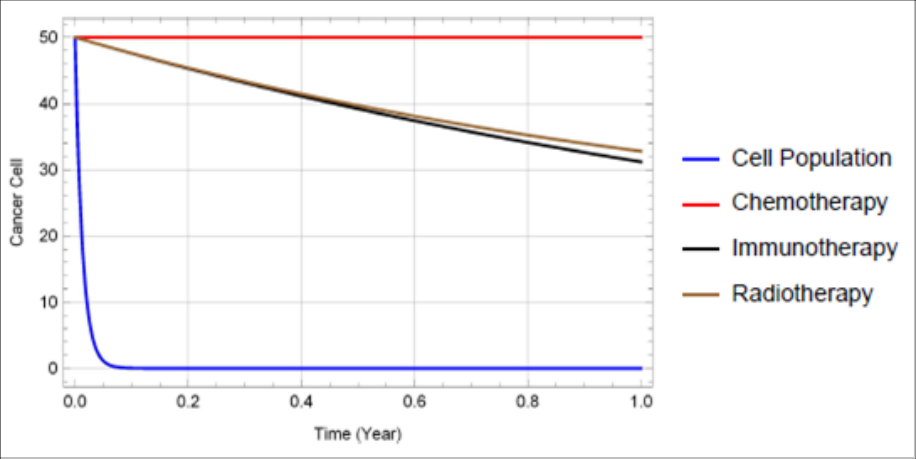 Figure 4
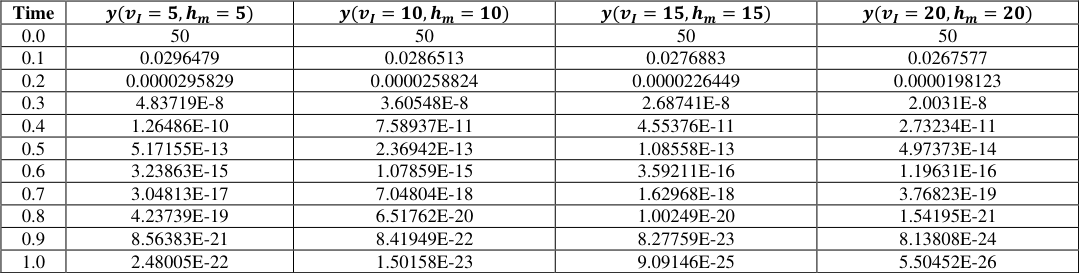 Table 5
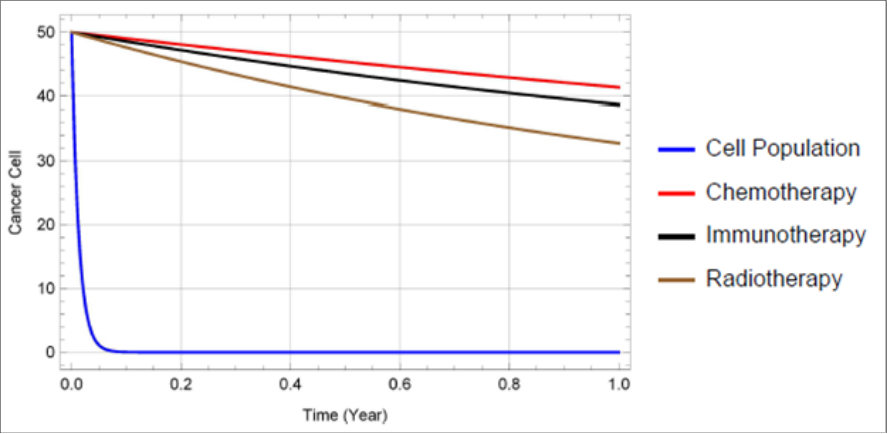 Figure 5
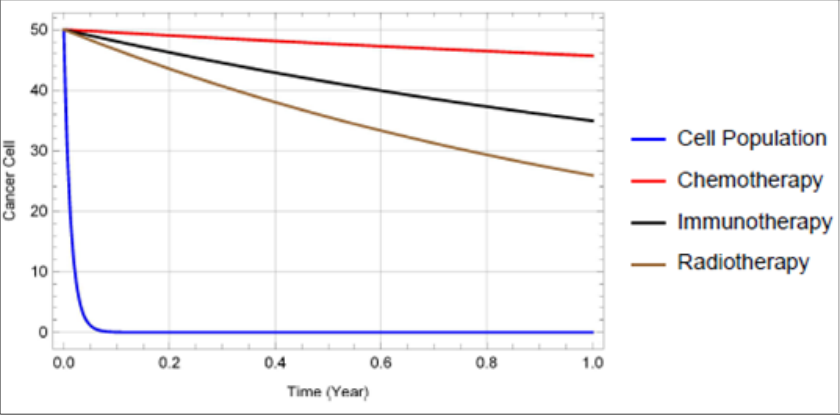 Figure 6
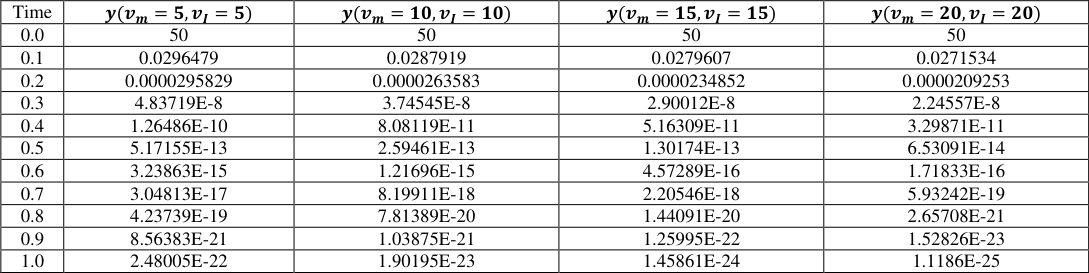 Table 6
Introduction
Cancer is defined as any disease in which normal cells are damaged and do not die as quickly as they divide via mitosis. Carcinogens may increase the risk of cancer by altering cellular metabolism or directly damaging DNA in cells, interfering with biological processes and inducing uncontrolled, malignant division, eventually leading to tumor formation. Severe DNA damage usually results in programmed cell death; however, if the programmed cell death pathway is damaged, the cell cannot prevent itself from becoming a cancer cell. There are numerous naturally occurring carcinogens. Aflatoxin B 1 , a potent, naturally occurring microbial carcinogen produced by the fungus Aspergillus flavus growing on stored grains, nuts, and peanut butter, is an example of a potent, naturally occurring microbial carcinogen. Some viruses, such as hepatitis B and human papilloma virus have been found to cause cancer in humans [1] . According to [2] and [3] , cancer is a complex disease that grows locally and has the ability to spread to other organs in the body. Furthermore, cancer management is a growing concern in an aging population and is becoming increasingly important in developing countries, according to [4] . According to the International Agency for Research on Cancer (IARC), by 2030, there will be approximately 26 million new cancer cases and 17 million cancer deaths worldwide [5] . Any substance, radionuclide, or radiation that promotes carcinogenesis, or the formation of cancer, is referred to as a carcinogen.
This could be because of their ability to damage the genome or disrupt cellular metabolic processes. Several radioactive substances are carcinogens, but their carcinogenic activity is attributed to the radiation they emit, such as gamma rays and alpha particles. Non-radioactive carcinogens include inhaled asbestos, certain dioxins, and tobacco smoke. Although the general public associates carcinogenicity with synthetic chemicals [6] argued that it can occur in both natural and synthetic substances. Radiation therapy (also known as radiotherapy) is a type of cancer treatment in which high doses of radiation are used to kill cancer cells and shrink tumors. Radiation not only kills or slows the growth of cancer cells, but it can also harm healthy cells nearby. Damage to healthy cells can have unintended consequences, such as a breakdown in immune defenses. Radiation is used in low doses in x-rays to see inside your body, as in x-rays of your teeth or broken bones. Radiation therapy, in high doses, kills cancer cells or slows their growth by damaging their DNA. Cancer cells that have had their DNA damaged beyond repair either stop dividing or die [7] . When damaged cells die, the body breaks them down and removes them. Radiation therapy does not immediately kill cancer cells. It can take days or weeks of treatment to damage DNA enough for cancer cells to die. The cancer cells then continue to die for weeks or months after the radiation therapy is finished. In some cases, radiation therapy may be the only option. However, radiation is frequently combined with other cancer treatments such as surgery, chemotherapy, and immunotherapy. Radiation therapy may be administered before, during, or after these other treatments to increase the likelihood that the treatment will be effective [8] . When radiation therapy is administered, it depends on the type of cancer being treated as well as whether the goal of radiation therapy is to treat the cancer or relieve symptoms [9] . Immunotherapy is a type of cancer treatment that stimulates the immune system to fight the disease. The immune system aids the human body in its fight against infections and other diseases. It is made up of white blood cells as well as lymphatic organs and tissues. Immunotherapy falls under the category of biological therapy. Biological therapy is a type of cancer treatment that employs substances derived from living organisms, [10] . Chemotherapy is the application of any drug to the treatment of any disease. Most people, however, associate chemotherapy (or "chemo") with cancer-treatment drugs. It's critical to understand that not all cancer medications and drugs work the same way. Traditional or standard chemo used to be the only type of drug that could treat cancer, but now there are many different types of drugs used to treat cancer, [11] . Chemotherapy is a systemic treatment because the drug travels throughout the body and can kill cancer cells that have spread (metastasized) to areas of the body far from the original (primary) tumor. This distinguishes it from treatments such as surgery and radiation. Radiation therapy targets a specific area of the body in order to kill or damage cancer cells. These types of treatments are known as "local treatments" because they only affect one part of the body [12] . Chemotherapy is commonly administered at regular intervals known as "cycles." A cycle is defined as the administration of one or more drugs on one or more days, followed by a period of several days or weeks without treatment. This allows normal cells to recover from the effects of the drug. Doses may be given a certain number of days in a row, or every other day for a number of days, followed by a period of rest. Some medications work best when administered continuously over a set number of days. Because the entire process involves several stages, mathematical modeling is an essential tool for understanding tumor growth and response to chemotherapy. To systematically relate the initiation of tumor growth, mathematical models are required. Its progression and invasion are responsible for the tumor tissue's and the surrounding environment's heterogeneity. The dependence of the tumor site on time is expressed mathematically in tumor growth modeling. The Malthusian Law: this model is concerned with the tumor's population rather than individual cells. The population growth rate as a function of time is taken into account. When there is no treatment for the tumor, the population grows in an erratic manner. Individual increases, however, are negligible when compared to the total population when the population is very large. In other words, population growth is roughly continuous and, in fact, a differentiable function of time. Given the tumor population, and assuming that the population's rate of change is proportional to the number of individuals in it at any given time, we have a differential equation [13] . The use of mathematical modeling of biological processes to improve quantitative understanding of bio-medical phenomena is common. This quantitative understanding is applicable in both clinical and experimental settings. One important application of modeling exercises is in cancer biology, according to Watanabe 2016 [14] . Many mathematical models have been developed to represent some aspects of cancer [15] and [16] , but to the best of our knowledge, this research is the first to consider a mixed therapeutic treatment involving radiotherapy.
Objectives of the research
The objectives of this research is to propose novelty models that represent tumor growth and cell proliferation caused by carcinogenic agent (substance) and the application of radiotherapy and other therapeutic treatments in reducing or controlling the size of the tumor. Secondly, solve the proposed models analytically with the consideration of the initial concentration of tumor and the application of initial dosage of the therapeutic drugs. Lastly, perform a numerical computation using Wolfram Mathematica software, where the effect of the various therapeutic drugs is to be investigated as singular basis and on mixed combinations.
Mathematical Formulation
We consider the fact that cancerous tumor is triggered by a carcinogenic substance and proliferate and metastasized with a growth rate. The exponential model is the simplest model used to describe tumor [17] . Proposed that tumors grow exponentially with one cell given rise to two cells, these two cells to four cells, and so on. This growth scheme leads to an uncontrolled growth of the tumor cells. In view of Collins work, we propose a mathematical model that represents tumor growth caused by carcinogens, secondly, propose several treatment models for chemotherapy, immunotherapy and radiotherapy respectively and introduce the treatments on the tumor growth model with the aim of reducing the tumor size and controlling cell proliferation. In view of the aforementioned considerations, we divide the propositions into two sections; first the section that deals with tumor growth without treatment and the aspect that deals with the application of the treatments on the tumor growth.
Tumor Growth without Treatment
Tumor Growth without Treatment
Tumor Growth with Application of treatment
Here, we formulate mathematical models for the various therapeutic treatments such as chemotherapy, immunotherapy and radiotherapy, and how these treatments help in reducing the cell proliferation, thereby reducing the tumor size. The treatment models and the modified tumor cells models as follows:
𝑦(𝑡 = 0) = 𝑦 0 , 𝑀(𝑡 = 0) = 𝑀 0 and 𝑅 𝑑 (𝑡 = 0) = 𝑅 0𝑑 , 𝐼(𝑡 = 0) = 𝐼 0
Method of Solution
The method of solution is direct separation of variable for the tumor cells proliferation equation ( 1) without treatment and with therapeutic treatment equations (2-5). In order to study the tumor cell proliferation caused by carcinogenic substance without specific treatment administered, we have to solve equation ( 1), which is: Where, 𝑅 𝑑 (𝑡), 𝑀(𝑡) and 𝐼(𝑡) denote the radiotherapy, chemotherapy and immunotherapy drugs concentrations over time respectively. To investigate chemotherapeutic treatment on the tumor cell proliferation, we solve equation (11), where we have:
We apply the initial tumor cell condition 𝑀(0) = 𝑀 0 in equation (14), which reduces to
In a similar vein, to study the impact of immunotherapeutic drugs on the tumor cell proliferation, we solve equation ( 12) as follows:
We apply the initial tumor cell condition 𝐼(0) = 𝐼 0 in equation (17), which reduces to
Finally, to investigate the effect of radiotherapy on tumor cells proliferation, we solve equation ( 13) as follows:
We apply the initial tumor cell condition 𝑅 𝑑 (0) = 𝑅 𝑑0 in equation ( 20), which reduces to
Integrating both sides of equation ( 23), we have:
Solving the LHS of equation (24), we have:
Taking the exponentials of equation ( 25 )))
Applying the initial condition𝑦(𝑡 = 0) = 𝑦 0 in equation ( 28), we have:
Results
The analytical and simulated results are presented in this section. The simulation was done using Wolfram Mathematica software, version 12, to study the effects of the treatments, on the tumor cell proliferation. Let us recall the models analytical solutions obtained in section 3 above as: ))
Discussion of Results
Having solved the proposed models and presented the results analytically, in tabular form and graphically, we shall discuss each of the results as follows:
In view of the simulation results presented in section 5, it is noticed that chemotherapeutic dosage increase decreases the tumor size thereby reducing the cells proliferation as seen in Fig 1 . But we Table I illustrated that the size of the tumor increases as we increases the dosage of the chemotherapeutic drug. The result is of the view that such drug must have been due to malfunctioning or blood-drug reaction. However, in a tumor size tends to decrease for every dosage of the chemotherapeutic drug dose before decreasing as clearly seen in Table I. Fig 2 showed the effect of radiotherapy dosage in treating the tumor growth, it can be seen that there is a decrease in tumor/cells death for the radiotherapy dose of 5 gray (Gy). However, we noticed a slight increase in tumor growth which is the result of the effect of radiotherapy effect on the normal cells from 0.0296479 to 0.0305819 for the radiotherapy dosage from 5 to 20 grays as depicted in Table II. Fig 3 showed a decrease in tumor size for every increase in the immunotherapeutic drug dose. It is seen in Table 3 that there is a sharp drop in tumor side from the initial size of 50 units to 0.0000295829 for the dose of 5. However, it is seen that there is an increase in size of the tumor, for a decrease in the immunotherapeutic drug is increased as depicted in Fig 3. IV, the table show that the tumor size decreases from 0.0296479 to 0.0269643 after the stable initial sizes. VI.
The Table 6 indicates a decrease on the vertical for every dose and decrease in tumor size for an increase in chemoimmunotherapeutic drug.
Conclusion
In this study, we have been able to formulate a mathematical model representing tumor growth as well as the application of therapeutic treatment in treating and to cure the tumor size. We shall conclude as: a) Increase in chemotherapeutic drug could result to a slight increase in tumor size, and this is an indication that there is high level of tumor cell proliferation. b) Application of radiotherapy in gray (Gy) increase could cause an increase in tumor size and which showed a case of drug reaction and hence such drug has to stop forthwith. c) Immunotherapeutic drug results to a decrease in tumor size, that is a clear indication that immunotherapeutic drug is effectiveness in killing tumor cell and reducing the tumor size. d) The combined therapeutic treatment is more effective because it helps in reducing the tumor size, thereby inhibiting cell proliferation.
Definition of Parameters
Definition of Parameters
Figures and tables from the paper
References
17 in the original paper- Cooper GM, Hausman RE, Hausman RE. The cell: A molecular approach. Washington, DC, USA: ASM press. 2007;4:649656.
- Thun MJ, De Lancey JO, Center MM, Jemal A, Ward EM. The global burden of cancer: priorities for prevention. Carcinogenesis. 2010;31(1):100-110.
- Jemal A, Siegel R, Xu J, Ward E. Cancer statistics, 2010. CA: A cancer journal for clinicians. 2010;60(5):277-300.
- Siegel R, DeSantis C, Virgo K, Stein K, Mariotto A, Smith T, et al. Cancer treatment and survivorship statistics, 2012. CA: A cancer journal for clinicians. 2012;62(4):220-241.
- Ferlay J. Globocan 2008 v1. 2, Cancer incidence and mortality world-wide: IARC Cancer Base No; c2010, p. 10. http://globocan.iarc.
- Ames BN, Gold LS. Paracelsus to parascience: The environmental cancer distraction. Mutation Research/Fundamental and Molecular Mechanisms of Mutagenesis. 2000;447(1):3-13.
- Farayola MF, Shafie S, Siam FM, Khan I. Mathematical modeling of radiotherapy cancer treatment using Caputo fractional derivative. Computer methods and programs in biomedicine. 2020 May 1;188:105306.
- Serre R, Benzekry S, Padovani L, Meille C, André N, Ciccolini J, et al. Mathematical modeling of cancer immunotherapy and its synergy with radiotherapy. Cancer research. 2016;76(17):4931-4940.
- Castiglione F, Piccoli B. Cancer immunotherapy, mathematical modeling and optimal control. Journal of theoretical Biology. 2007;247(4):723-732.
- Kirschner D, Panetta JC. Modeling immunotherapy of the tumor-immune interaction. Journal of mathematical biology. 1998;37(3):235-252.
- Sanga S, Sinek JP, Frieboes HB, Ferrari M, Fruehauf JP, Cristini V. Mathematical modeling of cancer progression and response to chemotherapy. Expert review of anticancer therapy. 2006;6(10):1361-1376.
- Baskar R, Dai J, Wenlong N, Yeo R, Yeoh KW. Biological response of cancer cells to radiation treatment. Frontiers in molecular biosciences. 2014 Nov 17;1:24.
- Yin A, Moes DJA, van Hasselt JG, Swen JJ, Guchelaar HJ. A review of mathematical models for tumor dynamics and treatment resistance evolution of solid tumors. CPT: Pharmacometrics & systems pharmacology. 2019;8(10):720-737.
- Watanabe Y, Dahlman EL, Leder KZ, Hui SK. A mathematical model of tumor growth and its response to single irradiation. Theoretical Biology and Medical Modelling. 2016;13(1):1-20.
- Barillot E, Calzone L, Hupe P, Vert JP, Zinovyev A. Computational systems biology of cancer. Boca Raton, FL: CRC Press, 2013.
- Deisboeck TS, Zhang L, Yoon J, Costa J. In silico cancer modeling: is it ready for prime time?. Nature Clinical Practice Oncology. 2009;6(1):34-42.
- Collins VP. Observation on growth rates of human tumors. Am J Roentgenol. 1956;76:988-1000.
Cited by 10
From OpenAlex, OpenCitations and reference lists read by Scinovex
- Mathematical modeling in radiotherapy for cancer: a comprehensive narrative review ↗
Dandan Zheng, Kiersten Preuss, Michael T. Milano, Xiuxiu He, Lang Gou, Yu Shi et al. · Radiation Oncology · 2025
Mathematical modeling has long been a cornerstone of radiotherapy for cancer, guiding treatment prescription, planning, and delivery through versatile applications. As we enter the era of medical big data, where the integration of molecular, imaging, and clinical data at both the tumor and patient levels could promise more precise and personalized cancer treatment, the role of mathematical modeling has become…
❝ 21PDF - Innovative approaches for cancer treatment, current perspectives and new challenges in bio-spectroscopy core research laboratory of Cancer Research Institute (CRI), California South University (CSU) ↗
Alireza Heidari, Elena Locci, Silvia Raymond · Journal of Research in Chemistry · 2021
❝ 18Found by Scinovex - Mathematical Modeling and Analysis of Tumor Growth Models Integrating Treatment Therapy ↗
Mohsin Kamran, Johari Yap Abdullah, Afaf Syahira Ahmad Satmi, Maya Genisa, Abdul Majeed, Tayyaba Nadeem · Mathematical and Computational Applications · 2025
This study presents a comparative analysis of tumor growth models based on logistic, exponential, and Gompertz formulations. Their response to therapeutic intervention is examined to identify which model shows better behavior with minimal decline of immune cells. The framework incorporates three main cell populations as follows: natural killer cells, cytotoxic T cells, and tumor cells, along with treatment effects. Dynamical…
❝ 8PDF - Radiotherapy effective clonogens model graphical optimization approaching linear quadratic method for head and neck tumors ↗
Francisco Casesnoves · International Journal of Molecular Biology and Biochemistry · 2023
Fowler model for NEffective tumor clonogens number in Biological Effective Dose (BED) algorithms constrained to head and neck cancer is simulated. RT biological models provide with a dose delivery radioprotection optimal minimization of photon-dose deposition while keeping the most efficacious dose to maximize Tumor Control Probability in head and neck tumors. Results comprise the Effective Clonogens model for head and
- Biomechanical modelling of tumor growth with chemotherapeutic treatment: a review ↗
Jiangping Xu, Yun Wang, Héctor Gómez, Xi‐Qiao Feng · Smart Materials and Structures · 2023
Abstract The efficiency of chemotherapy in the treatment of cancer depends on the administration schedule, such as dosage, timing and frequency, and the release control if self-assembled drugs are administered, in addition to the drug transport in the tumor microenvironment. Biomechanical models can help deepen our understanding of drug pharmacokinetics and pharmacodynamics, tumor response and resistance to treatment, as well…
❝ 7PDF - Viability control of chemo-immunotherapy and radiotherapy by set-valued analysis ↗
Amine Moustafid · International Journal of Informatics and Applied Mathematics · 2023
In this paper we set-valued analyze the problem of asymptotic stabilizing the tumor size. A mathematical model of exponential tumor growing caused by carcinogenic substance is considered, with chemotherapy, immunotherapy, and radiotherapy effects. We control the model to be viable in therapeutic domains, and reverse the exponential growing of the tumor size. The obtained controls derive from the derivative cone…
❝ 2PDF - An AI-enabled single-cell approach to analyze the cancer immune microenvironment
Sneha Sheshrao Shrungare, Priyanka Dubé, Ashwini Aher, Sunil Thitame · International Journal of Biology Sciences · 2025
Recent advances in single cell research enable analysis of specific immune cell populations within the cancer-specific tumor microenvironment (TME). Artificial intelligence (AI) has emerged as a key technology, utilizing machine learning and deep learning methodologies, and is capable to analyze single-cell RNA-Seq and domain level data to provide unprecedented insights into immune responses and tumor-immune interactions. The present work utilizes AI-based methods to explore two paths in cancer immunology through single cell transcriptomics and spatial multi-omics to study tumor evolution, imm
- The evolution of immunotherapeutics: Mechanisms, milestones, and the path ahead ↗
S. D. Paul, Rojina Khatun, Sudeshna Sengupta, Malavika Bhattacharya · International Journal of Pharmacognosy and Clinical Research · 2025
The scientific practice of treating diseases via immunomodulation, or immunotherapeutics, has transformed medicine throughout the past 20 years. A variety of therapeutic approaches, including monoclonal antibodies, checkpoint inhibitors, vaccinations, cytokines, and cell-based treatments, are included in immunotherapeutics; as a result, it provides very targeted and frequently less harmful therapy options. The review addresses the contemporary developments in cancer, autoimmune disorders,
- Clinico-epidemiological study of central nervous system tumors at clinical oncology department Tanta University Hospitals ↗
Aliaa Mohammed Merghani, Bahaa Sayed Ibrahim, Nessren Mohammed Sabry, Samar Galal Younes · International journal of oncology research. · 2024
Background: The most common malignant tumor among central nervous system (CNS) tumors is glioblastoma which has the highest mortality rate. On the other hand, meningioma is known as the most common benign tumor. This work aimed to describe the clinico-epidemiological and pathological pattern of all CNS tumors and to evaluate treatment output (Survival details). Methods: This retrospective study was carried
- Mathematical Modelling and Simulation of the Factors Associated with Targeted Cells, Virus-Producing Cells, and Infected Cells ↗
Kubugha Wilcox Bunonyo, Liberty Ebiwareme · Mathematical Modelling and Applications · 2023
Mathematical modeling and simulation of the effective parameters in targeted, virus-producing, and infected cells were carried out. The research involved mathematical models that represent the targeted cell population, the virus-producing cell population, and the infected cell population, respectively. The numerical simulation was carried out using Wolfram Mathematica, version 12, where the pertinent parameters in the various models were varied within…
❝ 0PDF