
Research article · 2022 · Full text
International Journal of Statistics and Applied MathematicsImpact of fuzzy logic and its applications in medicine: A review
Volume 7(2) · Pages 20–27 · DOI: 10.22271/maths.2022.v7.i2a.789 ↗
Research areasDiverse Scientific Research StudiesArtificial Intelligence in Healthcare
Abstract
Author-writtenIn recent years Artificial Intelligence Techniques (AITs) have now highly increased in solving complex and critical problems of more uncertainties that occur in the process of the system. AITs, offer the possibility of designing intelligent mathematical models involving Fuzzy Logic(FL), Artificial Neural Network(ANN), Genetic Algorithm(GA), and as such. In this, Fuzzy set theory is a highly suitable and applicable basis for developing knowledge-based systems in medical fields for diagnosing diseases and predicting risk factors. Fuzzy Logic decides uncertainty, incomplete, vagueness, and flexible structure with the use of intuitive methods. Due to the advent of digitalization in the field of the medical diagnostic process, Fuzzy Logic is highly suitable to make the decisions for diagnosis and treatment of different diseases. This article mainly focuses on a review of the applications of Fuzzy Logic in the Application areas of Medicines like Heart Disease, Asthma, Cold and Flu, Malaria, Parkinson's Disease, Diabetic Disease, Tuberculosis, Breast Cancer, and Covid-19 as well.
Summary
Source-checkedPlain-language reading of the full paper, prepared with AI and checked against the text. Each point links to the authors' own words.
Why it matters
- There is a global increase in patients suffering from diseases, compounded by a shortage of medical specialists in both developed and developing nations. View evidence ↗
- Medical diagnosis is inherently vague because a single symptom can be associated with multiple different diseases. View evidence ↗
- Traditional binary logic (True/False) is often insufficient for real-life medical situations, which typically exist in degrees of measure. View evidence ↗
The question
- The paper aims to review how fuzzy logic is applied across various medical fields, including heart disease, asthma, diabetes, breast cancer, and COVID-19. View evidence ↗
What they did
- The authors used Medline and PubMed to identify and count publications related to fuzzy logic and its specific applications in medicine. View evidence ↗
- The review describes the standard Fuzzy Logic System (FLS) architecture, which consists of a fuzzifier, inference engine, knowledge base, and defuzzifier. View evidence ↗
What they found
- Between 2000 and 2021, there were 6,323 publications on fuzzy logic in general, with 479 of those specifically focused on medicine. View evidence ↗
- Fuzzy logic has been used to create frameworks for determining asthma by establishing specific boundaries for the disease. View evidence ↗
- In a study on coronary illness, the IHDPS program achieved 89% accuracy using a decision tree calculation compared to Naïve Bayes and KNN. View evidence ↗
- Fuzzy logic techniques have been proposed to predict breast cancer risk based on patient age and automatically extracted tumor features. View evidence ↗
- A smart fuzzy inference system was developed in 2021 to detect COVID-19 based on symptoms such as fever, dry cough, and breathing difficulties. View evidence ↗
- Fuzzy logic allows for the quantitative modification of drug dosages for diabetic patients rather than using a common, one-size-fits-all dose. View evidence ↗
What it means
- The authors conclude that fuzzy logic systems provide more accurate results and time-optimal computation in health sciences. View evidence ↗
- Future work includes implementing diagnosis systems as web applications and using data mining to generate fuzzy rules from patient datasets. View evidence ↗
Figures & tables
From the original paper Table 1
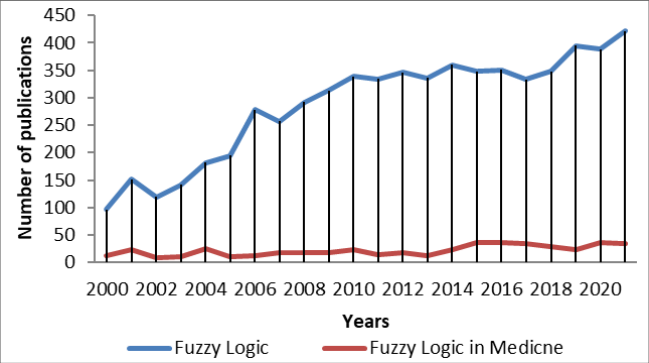 Figure 1
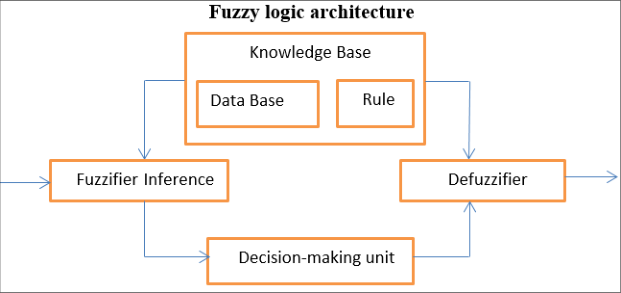 Figure 2
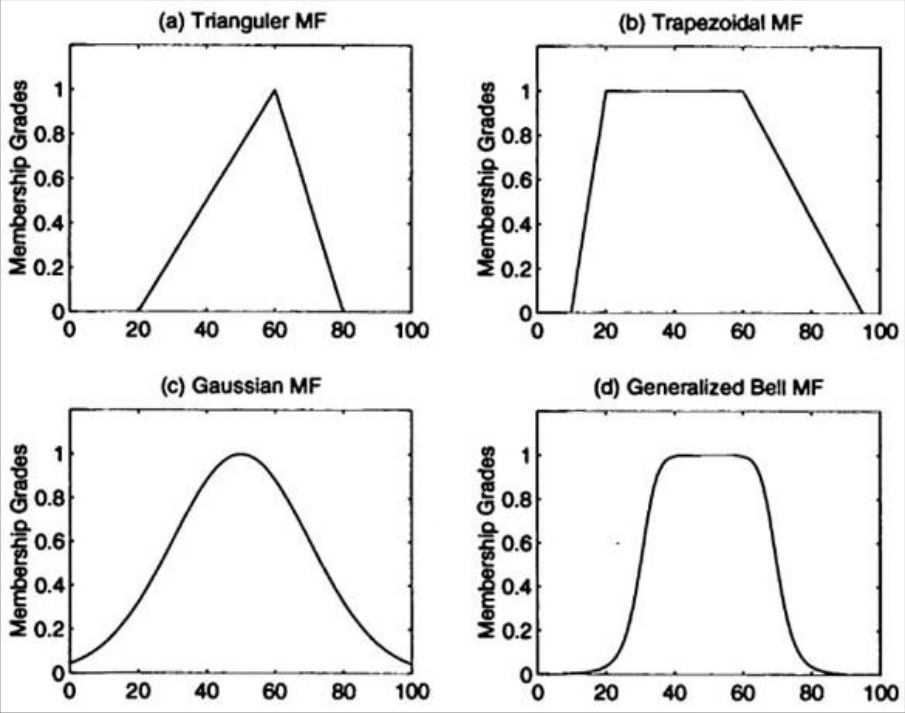 Figure 3
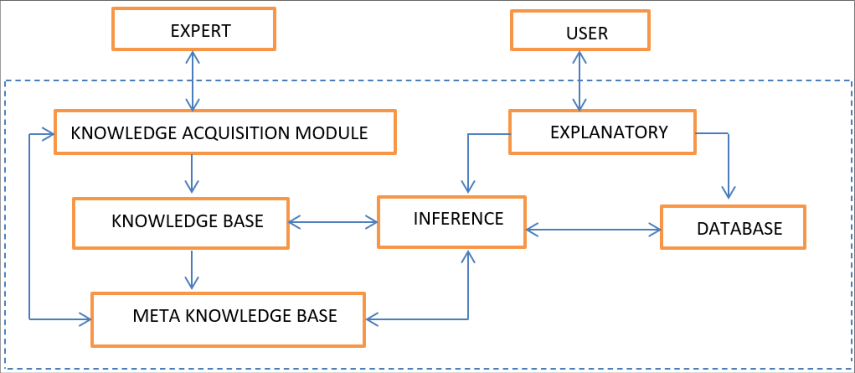 Figure 4
Introduction
World Health Organization (WHO), defined "health as a state of complete physical, mental, and social well-being, and not merely the absence of disease or infirmity". The number of patients suffering from various diseases is increasing due to insufficient medical specialists in the developed and developing countries in the Globe/Universe. Nowadays, most medical diagnosis is carried out with the aid of computer-related technologies and its usage is increasing accordingly. Based on the principles of AI, the systems are designed not only to diagnose but also to prescribe treatments based on such results. One of the most efficient computational methods is Fuzzy Logic. Fuzzy Logic has largely been used in different areas of medical applications. The diagnosed disease involves several levels of vagueness and fuzziness, and it is intrinsic to medicine such as a common symptom inpatient may lead to different diseases, hence fuzziness brings more clarity in the world of medicine. According to Aristotelian logic, for a given proposition or statement only have two logical values such as True/False, Black/White, Yes/No, 1/0 is considered, but in real life situations things are not either, but most of the time the results may be in 0.05, 0.99, 0.90, etc. that is, the range may be in the degree of measure. In health, there is a range of conditions. A person without any disease can have a headache or a stomachache; does it mean they are no longer healthy? Or else, does it measure the health only in terms of serious conditions? Consider an example here that person X has a headache, so X is not healthy; person Y does not have a headache, so Y is healthy? Everybody is healthy to some degree and sick to some degree. If someone only has a headache, we may say they are 99% healthy and 1% sick. Here comes the tolerance of the headache which differs from person to person as bearable headache, normal headache, severe headache, extreme headache these are the linguistic variable that occurs in the Natural Language Process. Recently uncertainty is considered essential for scientific study and Fuzzy Logic is a way to model and deal with it using natural language also it comes under a qualitative approach.
Fuzzy Logic produces more realistic answers by replacing the inflexible options like "Yes/ No" with a current adjustment in the form of degrees as minor, moderate, severe, very severe which are termed as linguistic variables applicable in the process of decision. Since uncertainty is inherent in fields such as medicine, Fuzzy Logic takes into account such uncertainty, Fuzzy Set Theory can be suitable to formalize and deal with the imprecision intrinsic to many biomedical and health-related problems. This article brings out the basic terminologies of Fuzzy Set Theory, Fuzzy Logic, and Membership Functions which highlights its developed applications in the medical field to access nature and analyzes the diseases such as Cancer, Diabetic, Asthma, and Cardiac.
Fuzzy Logic
In the year 1930, Fuzzy Logic was introduced by Jan Lukasiewicz; a polish philosopher by extended the truth values between 0 to 1. Later, Max Black (1937) [37] defines the first Fuzzy Set. In 1965, Lotfi Zadeh [38] rediscovered fuzziness, identified and explored it through terminologies, membership function, and application. According to the flexible structure sure of intuitive methods, Fuzzy Logic is preferred by researchers in the entire field nowadays. This logic has been widely used to interpret uncertain knowledge in the system or process including vague human assessment in problems. Fuzzy Logic is a set of mathematical principles for knowledge representation based on degrees of membership rather than a crisp membership of classical binary logic. Unlike two-valued Boolean Logic, Fuzzy Logic is multivalued and it deals with degrees of membership and degrees of truth. Fuzzy Logic introduces partial truth values occurring in between Yes/No. For Example, to judge the pain and no pain of the patient after surgery, the answer may be less pain, tolerable pain, more pain, slightly paining which is not measured but able to explain orally, and also varies from one patient to another patient based on the metabolic or immune system of an individual body. Here occurs the vagueness and use of fuzzy logic to design a model that coincides with the natural language lead to a qualitative computational approach. Fuzzy logic is an extension of a Boolean logic based on the mathematical concept of the fuzzy set which is the broad view of the classical set theory that describes fuzziness. Fuzzy Logic attempts to model our sense of words, our decision making, and our common sense lags foundation and development of more human intelligent systems. The Fuzzy Logic approach is the need of the hour where more researchers (inter and multidisciplinary) are working on the development of an intelligent machine for the prediction of diseases and their characteristics existing in every corner of the world. In recent days, the application of Fuzzy Logic in Medicine has received much appreciation. Fuzzy Logic produces more realistic answers by replacing the inflexible "Yes/No" with a current adjustment in the form of a "More or Less" and by introducing linguistic shades into the process of decision. Based on the Fuzzy Logic model, several Medical Diagnostic systems have been developed and employed in the diagnosis and treatments of Diabetics, Cancer, HIV's many more. Some of the recent research works of Fuzzy Logic in the area of Medicine is Fuzzy Logic Controller (FLC)used in medical devices as the control unit. A Fuzzy Cognitive Map was used along with an algorithm designed to evaluate the human immune system. Fuzzy Logic is used in data analysis to evaluate the facial expression and human behavior.
Fuzzy Logic in Medicine
In general, the various concepts in medical practices nowadays are tied out with complexity leading to inappropriate analysis traditional approaches is impossible to give exact definitions and symptoms of medical concepts and does interrelationship between the variable exist, without having a clear definition and idea about the boundaries tends to impreciseness, vagueness and more uncertainties. To deal in these situations one of the AIT's Fuzzy Logic is to be applied and with other combination of Neural Network, Machine Learning Algorithm, Genetic Algorithm, and Classification models as well. Following are some of the disease groups which show the applications of Fuzzy Logic. For C-section, appropriate anesthesia dosage to be determined. Able to improve decision-making in radiation therapy for cancer patients. Tumors of central nervous systems can be diagnosed invariably of their size and location.
Instead of common dosage of drugs among Diabetics
Patients can be modified as quantitatively. To access the diagnosis of COVID-19 patients with severe symptoms.
Medline is used to identify the medical publications with Fuzzy Logic. With the help of the primary component of PubMed, the total number of articles that appeared per year is shown in Table : 1. The data from 2000 to 2021 has 6323 publications in Fuzzy Logic and 479 publications in Fuzzy Logic in Medicine.
Fuzzy Logic System
A system that comprises various components with fuzziness is known to be a Fuzzy Logic System (FLS) and consists of four components such as Fuzzifier, Inference Engine, Knowledge Base, and Defuzzifier.
Knowledge Base
The most valuable component of the Fuzzy Logic System is the Knowledge Base composed of a database and rule base. A knowledge base can be constructed either by experts or selflearning algorithms where experts of the proposed system are designed by the Fuzzy-if-then rules, whereas the self-learning algorithm constructs the rule base (ie) train the system and construct the rule base and is expected to solve by the system. Hence it is known to be Neuro-fuzzy systems.
Fuzzifier
The process of a fuzzifier is to transform a crisp object into a fuzzy set for grading the membership function of linguistic variables in fuzzy sets.
Inference
The resultant fuzzy sets from the Fuzzifier are processed in the Inference Engine according to the rules of Rule Base that acts as the processing unit of the Fuzzy Logic System.
Defuzzifier
Using Knowledge Base, the output is received from the Inference Engine which is also a fuzzy set and needs to be transformed into an understandable way and case to realworld applications. A fuzzy output set should be a value, fabricated by considering all the points in the fuzzy output interval.
Fuzzy Set
A fuzzy set is a set with a smooth (UNSHARP) boundary and generalizes the notion of membership from a black and white binary categorization in classical set theory into one that allows partial membership where the membership function is the generalization of the characteristic function of ordinary sets. The notion of membership in fuzzy sets thus develops a matter of degree, which is a number between 0 and 1. A membership degree of 0 represents complete non membership, while a membership degree of 1 represents a complete membership usually; the membership or characteristic function is denoted by the Greek lower case letter µ. Mathematically speaking, a fuzzy set is characterized by a mapping from its universe of discourse into the interval [0, 1]. This mapping is the membership function of the set. A fuzzy set is created to define linguistic variables. In medical science, it is rarely possible to give exact definitions or descriptions of medical concepts and relationships between concepts. In the fuzzy theory, fuzzy set A of universe X is defined by function µ A (x) called the membership function of set A.
For any element x of universe X, membership function µ A (x) equals the degree to which x is an element of set A. this degree, a value between 0 and 1, represents the degree of membership, also called membership value, of element x in set A.
Linguistic Variable
A linguistic variable is like a composition of symbolic variables (a variable whose value is a symbol) and a numeric variable (a variable whose value is a number). An example, the linguistic variable "Diabetes" can be defined as X = Diabetes level, with T(X) = {very low, low, normal, high, very high} and A = [140, 199]. The linguistic value 'normal' is represented by compatibility (membership function). In medical diagnosis, which is strongly influenced by human perception & judgment, in many cases, it is more appropriate to describe the underlying knowledge using linguistic variables than by quantitative descriptions. A linguistic variable is characterized by the quintuple (X, T(X), A, G, and M) where X→ name of the variable, T(X) → term set of X that is the set of its linguistic values., A → a universe of discourse, G → a syntactic rule that generates the terms T (X), M → semantic rule which associates with each linguistic value x its meaning, M (x) Where M (x) denotes a fuzzy set of A.
Fuzzy Membership Function
A Membership Function for a Fuzzy Set A on the universe of discourse X is defined as µ A : X→ [0, 1] where each element of X is mapped to a value between 0 and 1. This value is called membership value or degree of membership, quantifies the grade of Membership of the element in X to the Fuzzy Set A. Here, X is the universal set and A is the Fuzzy Set derived from X. Fuzzy Membership function is the graphical way of visualizing degree of membership of any value in given fuzzy set. In the graph, the X-axis represents the universe of discourse, and Y-axis represents the degree of membership in the range [0.1]. Toolbox includes 11 built-in Membership function types. Some functions are in turn, built from several basic functions viz., piecewise linear functions, the Gaussian distribution function, the sigmoid curve, quadratic and cubic polynomial curve. By convention, all membership functions have the letters 'mf' at the end of their names. The membership functions are formed using straight lines.
Triangular Membership Function
The simplest is the Triangular Membership Function, and it has the function name 'TRIMF'. It is nothing more than a collection of three points forming a triangle. It is defined by its lower limit a, its upper limit c, and the modal value b, so that a<b<c. where the value b-m margin when it is equal to the value m-a. Mathematically express as:
Trapezoidal Membership Function
The Trapezoidal Membership Function, 'TRAPMF', has a flat top and is just a truncated triangle curve. These straight-line membership functions have the advantage of simplicity. It is specified by 4 parameters (a, b, c, d).
Gaussian Membership Function
Two membership functions are built on the Gaussian. A simple Gaussian curve and a two-sided composite of two different Gaussian curves. The two functions are 'GAUSSMF' and 'GAUSS2MF'. (4) where m & σ denote the center and spread of the curve. This is a more natural way of representing the data distribution, but due to mathematical complexity, it is not much used for Fuzzification.
Bell-shaped membership function
Generalized Bell Membership Function is specified by three parameters and has the function name 'GBELLMF'. Gaussian and Bell Membership Functions are popular methods for specifying Fuzzy Sets because of their smoothness and concise notation but they are unable to specify asymmetric membership functions, which are important in certain applications.
Fuzzy Expert System
Fuzzy Logic is a multi-valued logic similar to human thinking and is highly suitable and applicable for the development of Knowledge Base systems especially in the medical findings, diagnosis and treatment selections. An Expert System is a computer-based system that emulates the reasoning process of human experts within the specific domain knowledge. In the 1980's Expert Systems were known as practical devices of the real world problem and become popular with the 5 th generation computer system project in Japan and amplification in the Fuzzy Expert System continued in the 1990s. In the medical field, the decision-making may vary among the medical practitioners in providing treatments with uncertainty and vagueness in the knowledge and information. Based on the increase in the complexity of the system it is a great task to take a particular path of diagnosis without any mistake. Accordingly, an Expert System with a knowledge base with Fuzzy Logic is developed known to be Fuzzy
Fuzzy Logic in Medicine
Fuzzy Logic is one of the major Artificial Intelligence techniques that play a prominent role in the field of medicine due to its effectiveness in treating uncertain and imprecise data of any kind. Fuzzy Logic System is excelling in handling ambiguous and imprecise information prevalent in medical diagnosis. Expert system based on Fuzzy Logic has proved to be of great importance, providing a clear and impressive evaluation report of medical data. Fuzzy Expert System provides a quick and easy means of medical diagnosis even in the absence of a medical practitioner or an expert. Here are some of the major applications of the Fuzzy Logic System, Fuzzy Expert System in the medical field.
Reflection of Fuzzy in Medical Diagnosis Asthma Disease
The prevalence of asthma has been increasing in recent decades, as well as the costs for asthma care. One of the problems related to asthma is that several patients with asthma are either improperly diagnosed or misdiagnosed for having other respiratory diseases such as Chronic Obstructive Pulmonary Disease (COPD), Common Cold, and Acute Bronchitis. Commonly used pulmonary function tests are used to detect asthma and COPD are Spirometry and Impulse Oscillometry System (IOS). Barua et al. 2004 [39] presented a system based on trained Neural Networks that uses the results of measurements performed by IOS for the classification of asthma. Winkler et al. 2009 [40] diagnosed asthma and COPD patients using different measurement methods on IOS. Made a classification of respiratory abnormalities using an adaptive Neuro-Fuzzy Inference System based only on Spiro Metric measurements Zarandi M.H et al. in the year 2010 [20] proposed a framework to determine asthma by allotting boundaries to have Fuzzy Logic. Patra S and Thakur G.S in 2014 by utilizing Neuro-Fuzzy fitting instrument with SOM, LVQ, and BPNN calculations. Badnjevic et al. in 2015 [2] for asthma and constant sickness with MATLAB instrument profiler with various grouping calculations.
Diabetes Disease
Diabetes is a disease in which the body cannot control the amount of sugar (glucose) in the blood. Glucose in the blood gives us the energy when we walk briskly, run for a bus, ride a bike, and for our day-to-day tasks. Glucose in the blood is produced by the liver from the foods we eat. Insulin is shaped by the pancreas, a small organ near the stomach that also conceals important enzymes that help in the digestion of food.
Insulin allows glucose to move the blood into the liver, muscle, and fat cells. Diabetes patients will either don't produce enough insulin (type 1 diabetes) or cannot use insulin properly (type 2 diabetes). In diabetes, glucose in the blood cannot move into cells and stays in the blood. This not only harms the cells that need the glucose for fuel but also harms certain organs and tissues showing high glucose levels. Absorbed and proposed a model to analyze diabetes sickness dependent on PCA and ANFIS strategy with 8 information highlights actualized in MATLAB. Another proposition was given on diabetic neuropathy for diagnosing diabetic illness utilizing ASP programming.
Heart Disease
Heart diseases are branded into distinct types like Congenital Heart Disease, Coronary Heart Disease (CHD), Arrhythmia, Dilated Cardiomyopathy, Heart Failure, Myocardial Infarction (MI), Hypertrophic Cardiomyopathy, and Mitral Regurgitation. Heart Disease involves many risks like gender, age, obesity, high blood pressure, high cholesterol, diabetes, family history, drinking alcohol, and smoking. Apart from these, in this technical and modern world, there are many other threats like working in underemployment industrialization, work overload, physical inactivity, depression, stress, diet/routine changes, and distressed sleepless night that have increased. Several kinds of heart complaints are normal like Stroke, Cardiovascular breakdown, Arrhythmia, Heart Failure, Vein issues, and so forth Fuzzy Logic is constantly developing to identify heart patients all through the world with the assistance of growing new programming based on various boundaries. In addition to this, change in lifestyle, egoism, greed, and the narcissistic approach of people have triggered the occurrence of chronic diseases in patients. Chest pain, faintness, or coolness in arms and legs are some of the symptoms of heart problems. However, controlling blood pressure, eating a well-balanced nutritious diet, regulating exercise regime, limited usage of alcohol, tobacco, smoking, and gazettes can treat illness and failure of the heart. In India, one-fifth of the total deaths occurring from stroke and ischemic heart disease, especially in younger adults according to the World Health Organization. It is a kind of sickness caused because of harm or blockage of veins in the heart influencing fewer supplements and oxygen supply to the heart organ. Sengur has recognizable proof of heart valve with a similar investigation of LDA and ANFIS approach was done in 2008. The entire performance was verified in MATLAB programming for familiar proof of coronary illness. Anbarasi in 2010 [41] proved better outcomes when contrasted with existing programs for coronary illness prospect based on Genetic calculation with effecting dependent on Weka apparatus. In 2011, Soni J et al. [42] created IHDPS programming which indicated 89% exactness with choice tree calculation when contrasted and Naïve Bayes and KNN.
Cancer Disease
In today's world Cancer is a life-threatening disease. More than hundreds of people die every year because of cancer due to the constraint of medical sources and unable to use the existing sources successfully. Patient's death can be reduced by using numerical (quantitative) techniques in the system of Medical. Early precaution is very important for people who have not fallen ill yet with a disease like cancer that has a high mortality rate and expensive treatment. Cancer is developed by the abnormal cell increase and cell growth as a result of DNA damage and cells being out of the program. The earlier cancer is diagnosed, so the treatment would be that successful. Most cancers can be treated and this may include chemotherapy and radiotherapy and/or surgery. The reason for the selection of the Fuzzy Logic model is that the system uses the Fuzzy Logic model enables to provide effective results depending on uncertain verbal knowledge just like the logic of human beings. The growth of abnormal cells that start in one or both lungs is called Lung Cancer a genetic disease that is in 2003, Ravi Jain [43] has made a comparative study and performed four Fuzzy rule generation methods which generate Fuzzy If-Then rules on Breast Cancer. Victor Balanica in 2011 [34] has proposed a Fuzzy Logic technique for the prediction of the risk of Breast Cancer among the patient's age and automatically extracted tumor features. Ahmed Abou Elfetouh Saleh in 2011 [1] developed a Fuzzy decision support system for the identification of cancer risk status in situations of data diversity and imprecision. A Neuro-fuzzy and Fuzzy rule-based Inference system for detection and Diagnosis of Lung Cancer were proposed using a Fuzzy toolbox. The input variables are accepted and outputs are delivered using the Fuzzy Logic toolbox.
COVID-19
In recent years, from Nov-2019 onwards, the globe is facing epidemic or pandemic challenges in the name of COVID-19. Originated from Wuhan and spread in the Chinese during January 2020 till nowadays taking its face as different variances. Apart from the symptoms of Corona Virus such as Fever, Cough, Shortness of Breath. Several factors including the environment affect the spread of COVID-19 during phases-I & II, human-to-human transmission occurs through various routes such as direct transmission, contact transmission, air storm transmission, and other sources. COVID-19 has presented itself as a global pandemic in a short period resulting in a rapid curve shift of infected patients, increasing mortality rates, huge global economic burden, and mobilization of medical resources across the globe. Different countries suffered a lot due to impreciseness and vagueness present in the symptoms of the virus based on the nature of the variant as per the geographical and environmental location, in this Fuzzy Expert System, is the better model for analysis and predicting the result. Maad Shatnawi et al. (2021) [21] proposed a smart Fuzzy Inference System for the rare detection of COVID-19 based on the symptoms including fever, flu, dry cough, cold, breathing difficulties, throat sore and headache. Based on the Gaussian Membership Function designed a model with 13 linguistic Fuzzy Rules can assist the physician in identifying the diseases. COVID-19 and further can be integrated with other identification techniques such as PCR tests and CT scans. Muhamed Kalamuddin Ahamad and Ajay Kumar Bharti (2021) [24] proposed a Fuzzy Rule System which is implemented with MATLAB fuzzy tools for simulation to assess the health condition of the patients and prevention from COVID-19 disease, also validating the identification symptoms by applying the fuzzy rules and an effort to face the situations.
Conclusion
The Fuzzy Logic theory is widely used and applied in the medical field for diagnosis, prediction of diseases, risk analysis, especially for complicated cases such as Heart/Cardiac Diseases, Cancer, Diabetes, Drug Addiction, etc. It is based on natural language and also uses method instead of a specific algorithm and with more advantages such as flexibility in structure, tolerance of impreciseness with known degrees or range. This paper brings out an overview and reflections based on the literature on the Fuzzy Logic in medical applications and gives an insight for further study to build and design different models and methods of diagnosing the diseases with Fuzzy statistical distributions. Fuzzy Logic System makes the computation time-optimal and provides more accurate results in the health science field. In near future, the diagnosis system into a web application to be implemented, and data mining techniques are applied to generate Fuzzy rules from the data set of the patients.
Figures and tables from the paper
| Year | 2000 | 2001 | 2002 | 2003 | 2004 | 2005 | 2006 | 2007 | 2008 | 2009 | 2010 |
|---|---|---|---|---|---|---|---|---|---|---|---|
| Fuzzy Logic | 96 | 151 | 119 | 141 | 182 | 195 | 278 | 257 | 292 | 313 | 339 |
| Fuzzy Logic in Medicine | 12 | 24 | 8 | 11 | 25 | 11 | 13 | 18 | 17 | 17 | 24 |
| Year | 2011 | 2012 | 2013 | 2014 | 2015 | 2016 | 2017 | 2018 | 2019 | 2020 | 2021 |
| Fuzzy Logic | 334 | 346 | 336 | 360 | 348 | 351 | 333 | 348 | 395 | 388 | 421 |
| Fuzzy Logic in Medicine | 15 | 17 | 13 | 24 | 36 | 37 | 35 | 28 | 24 | 36 | 34 |
Table text extracted from the original PDF; superscript letters are shown inline. The original table image is below.
View original table image
References
36 in the original paper- Ahmed Abou Elfetouh Saleh, Sherif Ebrahim Barakat, Ahmed Awad Ebrahim Awad. A Fuzzy Decision Support System for Management of Breast Cancer. (IJACSA) International Journal of Advanced Computer Science and Applications. 2011 March;2(3):34-40 http://ijacsa.thesai.org/
- Almir Badnjevic, Mario Cifrek, Dragan Koruga, Dinko Osmankovic. Neuro-Fuzzy Classification of Asthma and Chronic Obstructive Pulmonary Disease. BMC Medical Informatics and Decision Making. 2015;15(3):1-9.
- Atınç Yılmaz, Kür sat Ayan, Enes Adak. Risk Analysis in Cancer Disease by Using Fuzzy Logic. 978-1-61284968-3/11/$26.00 ©2011 IEEE.
- Angela Torres, Juan Nieto J. Fuzzy Logic in Medicine and Bioinformatics. Journal of Biomedicine and Biotechnology 2006: 1-7 Article ID 91908. https://doi.org/10.1155/JBB/2006/91908.
- Barro S, Marin R. Fuzzy Logic in Medicine, Heidelberg, Germany: Physica, 2002.
- Dr. Uma G, Ramya K. Impact of Fuzzy Logic on Acceptance Sampling Plans: A Review CIIT International Journal of Automation and Autonomous System. 2015;7:07.
- Elena Vlamou, Basil Papadopoulos. Fuzzy Logic Systems and Medical Applications Neuroscience, 2019. https://doi.org/10.3934/Neuroscience.2019.4.266.
- Sakthivel E, Senthamarai Kannan K, Arumugam S. Optimized Evaluation of Students Performances Using Fuzzy Logic. International Journal of Scientific & Engineering Research (IJSER), 2013 Sep;4(9):1128-33.
- Innocent PR, John RI. Computer-aided Fuzzy Medicine Diagnosis. Information Science, 2004 May 17;162(2):81104.
- Greeda J, Mageswari A, Nithya R. A Study on Fuzzy Logic and its applications in Medicine. International Journal of Pure and Applied Mathematics, 2018;119(16):1515-2.
- Awotunde JB, Matiluko OE, Fatai OW. Medical Diagnosis System Using Fuzzy Logic. African Journal of Computing & ICT, 2014;7(2):99-106.
- Jagmohan Kaur, Baljit Khehra S. Fuzzy Logic and Hybrid based Approaches for the Risk of Heart Disease Detection: State-of-the-Art Review: 2021 Aug 2:1-7. https://doi.org/10.1007/s40031-021-00644.
- Karl Boegl, Klaus-Peter Adlassnig, Yoichi Hayashi, Thomas Rothenfluh E, Harald Leitich. Knowledge Acquisition in the Fuzzy Knowledge Representation Framework of a Medical Consultation System. Artificial Intelligence in Medicine. 2004 Jan 1;30(1):1-26.
- Labiga Laban Thomas, Ibrahim Goni, Gideon Daniel Emeje. Fuzzy models applied to medical diagnosis: A Systematic Review. Advances in Networks. 2019 Nov 27;7(2):45. https://doi.org/10.11648/j.net20190702.15
- Latha KC, Madhu B, Ayesha S, Ramya R, Sridhar R, Balasubramanian S. Visualization of Risk In Breast Cancer Using Fuzzy Logic In Matlab Environment. International Journal of Computational Intelligence Techniques, 2013 Jan 1;4(1):114.
- Mahfouf M, Abbod MF, Linkens DA. A Survey of Fuzzy Logic Monitoring and Control Utilisation in Medicine. Artificial Intelligence in Medicine, 2001 Jan 1;21(13):27-42.
- Maad Shatnawi, Anas Shatnawi, Zakarea AlShara, Ghaith Husari. Symptoms-based Fuzzy-Logic Approach for COVID-19 Diagnosis. International Journal of Advanced Computer Science and Applications (IJACSA). 2021;12:4.
- Mehrbakhsh Nilashi, Othman Ibrahim, Hossein Ahmadi, Leila Shahmoradi. A Knowledge-Based System for Breast Cancer Classification Using Fuzzy Logic Method. Telematics and Informatics, 2017 Jul 1;34(4):133-44. http://dx.doi.org/10.1016/j.tele.2017.01.007
- Mir Anamul Hasan, Khaja Md. Sher-E-Alam, Ahsan Raja Chowdhury. Human Disease Diagnosis Using a Fuzzy Expert System. Journal of Computing. 2010 Jun 23.
- Muhammad Kalamuddin Ahamad, Ajay Kumar Bharti. Prevention from COVID-19 in India: Fuzzy Logic Approach. International Conference on Advanced Computing and Innovative Technologies in Engineering (ICACTIE), 2021.
- Nguyen Hoang Phuong, Vladik Kreinovich. Fuzzy logic and its applications in medicine. International Journal of Medical Informatics. 2021;62(920010):165-173.
- Novruz Allahverdi. Design of Fuzzy Expert Systems and Its Applications in Some Medical Areas. International Journal of Applied Mathematics Electronics and Computers, 2014;2(1):1-8.
- Phuong NH, Kreinovich V. Fuzzy Logic and its Applications in Medicine. International Journal of Medical Informatics, 2001 Jul 1;62(2-3):165-73.
- Radha R, Rajagopalan SP. Fuzzy Logic Approach for Diagnosis of Diabetics. Information Technology Journal, 2007;6(1):96-102.
- Ravi Jain, Ajith Abraham. A Comparative Study of Fuzzy Classification Methods on Breast Cancer Data Presented at the 7 th International Work-Conference on Artificial and Natural Neural Networks, IWANN'03, Spain, 2003.
- Symptoms -based Fuzzy Logic Approach for COVID-19 Diagnosis. International Journal of Advanced Computer Science and Applications. 2021; 12(4).
- Tawfik Saeed Zeki, Mohammad Malakooti V, Yousef Ataeipoor, Talayeh Tabibi S. An Expert System for Diabetes Diagnosis American Academic & Scholarly Research Journal Special Issue, 2012 Sep 1;4(5):1.
- Valarmathi S, Ayesha Sulthana, Ramya Rathan, Latha KC, Balasubramanian S, Sridhar R. Prediction of Risk in Breast Cancer using Fuzzy Logic toolbox in MATLAB Environment. International Journal of Current Research. 2012 Sep;4(09):072-9.
- Victor Balanica, Ioan Dumitrache, Mihai Caramihai. William Rae, Charles Herbst. Evaluation of Breast Cancer Risk by Using Fuzzy Logic. Research Gate, 2011;73(1):53-64.
- Zadeh LA. Fuzzy Sets. Intl J Information Control. 1965;8:35-40.
- Black M. Vagueness: an exercise in logical analysis. Philosophy of science. 1937;4(4):427-55.
- Zadeh LA. Electrical engineering at the crossroads. IEEE Transactions on Education. 1965;8(2):30-33.
- Barua M, Nazeran H, Nava P, Granda V, Diong B. Classification of pulmonary diseases based on impulse oscillometric measurements of lung function using neural networks. In: The 26 th Annual International Conference of the IEEE Engineering in Medicine and Biology Society. San Francisco: IEEE; c2004, p.3848-3851. DOI: 10.1109/IEMBS.2004.1404077.
- Winkler I, Háden GP, Ladinig O, Sziller I, Honing H. Newborn infants detect the beat in music. Proceedings of the National Academy of Sciences. 2009;106(7):24682671.
- Anbarasi M, Anupriya E, Iyengar NChSN. Enhanced Prediction of Heart Disease with Feature Subset Selection using Genetic Algorithm. International Journal of Engineering Science and Technology. 2010;2(10):53705376.
- Soni J, Ansari U, Sharma D, Soni S. Predictive data mining for medical diagnosis: An overview of heart disease prediction. International Journal of Computer Applications. 2011;17(8):43-48.
Cited by 14
From OpenAlex, OpenCitations and reference lists read by Scinovex
- A Multimodal Fuzzy Approach in Evaluating Pediatric Chronic Kidney Disease Using Kidney Biomarkers ↗
Cristian Petru Duşa, Valentin Bejan, Marius Pîslaru, Iuliana Magdalena Stârcea, Ionela Lăcrămioara Șerban · Diagnostics · 2024
Chronic kidney disease (CKD) is one of the most important causes of chronic pediatric morbidity and mortality and places an important burden on the medical system. Current diagnosis and progression monitoring techniques have numerous sensitivity and specificity limitations. New biomarkers for monitoring CKD progression have been assessed. Neutrophil gelatinase-associated lipocalin (NGAL) has had some promising results in adults, but in…
❝ 2PDF - Medical Diagnosis Based on Multi-Attribute Group Decision-Making Using Extension Fuzzy Sets, Aggregation Operators and Basic Uncertainty Information Granule ↗
Anastasios I. Dounis, Ioannis Palaiothodoros, A. Panagiotou · Computer Modeling in Engineering & Sciences · 2024
Accurate medical diagnosis, which involves identifying diseases based on patient symptoms, is often hindered by uncertainties in data interpretation and retrieval. Advanced fuzzy set theories have emerged as effective tools t... | Find, read and cite all the research you need on Tech Science Press
❝ 2PDF - Artificial Intelligence in Ayurveda: A Systematic Review (2020-2025) ↗
Srishti Shaumya, R. Mathusoothana S. Kumar · Journal of Ayurveda and Naturopathy · 2025
Background: Ayurveda, the ancient Indian system of medicine, emphasizes personalized holistic care, presenting unique opportunities for integration with Artificial Intelligence (AI). Since 2020, a growing body of research has explored AI applications in Ayurveda, such as diagnostic support, treatment personalization, drug discovery, and digital health. Objectives: To systematically review peer-reviewed literature (2020-2025) on AI applications in Ayurveda across domains like
- A bipolar fuzzy decision-making approach for identifying high-risk age groups of tuberculosis ↗
Ezhilarasan Natarajan, S. Aicevarya Devi, Sundaresan Subramani, Dragan Pamucar, Vladimir Simic, Felix Augustin · Engineering Applications of Artificial Intelligence · 2026
❝ 0 - Review of Medical Diagnosis Systems: From Traditional Techniques to Advanced AI Models ↗
Abir Maali, Achraf Berrajaa, El Arbi Abdellaoui Alaoui, Mostafa Merras · Advances in Science, Technology & Innovation/Advances in science, technology & innovation · 2026
❝ 0 - Homoeopathy meets Machine learning: A systematic review of pattern recognition in patient constitutional types ↗
Mukta Nivedita Bera, Amartya Gupta · International Journal of Homoeopathic Sciences · 2025
Machine Learning (ML) technologies are increasingly being integrated into complementary and alternative medicine, offering new possibilities for personalizing homeopathic treatments. This review examines the current applications of ML algorithms in homeopathic practice, focusing on pattern recognition for constitutional type identification and treatment protocol optimization. Through analysis of recent developments in digital health technologies, artificial intelligence applications in complementary medicine, and
- Application of Soft Computing in Waste Management Technology Development: Calculation of Equipment Capacity and Consumption ↗
József Kovács, Márta Takács, Mónika Garai-Fodor · IEEE International Symposium on Applied Computational Intelligence and Informatics (SACI) · 2025
Analyzing the financial and environmental impacts of technological developments in waste management is crucial for economic sustainability. This paper presents a soft computing method for optimizing performance and consumption in decision-making. Waste management equipment requires performance and consumption data. Waste composition varies by region and season, affecting shredder performance. Soft computing techniques, such as fuzzy logic, manage changing conditions and…
❝ 0 - Ethical consideration & role of AI in Unani system of medicine: An exploration ↗
Shafia, Bushra Siddiqui, Mohd Nauman Saleem, Asif Siddiqui · International Journal of Unani and Integrative Medicine · 2025
Artificial Intelligence (AI) in healthcare refers to applying advanced computational algorithms, machine learning, and data analytics to interpret complex medical data and support clinical decision-making. Ethical considerations include data privacy, algorithm bias, and the need for responsible development and deployment to ensure patient safety and trust in these technologies. The basic principles of Unani medicine include seven principles known as
- Fuzzy sets and fuzzy logic: A review of concepts, trends, and applications ↗
K. Aruna Kumari · International Journal of Physics and Mathematics · 2025
In the mid-20th century fuzzy set theory and fuzzy logic developed by Lotfi A. Zadeh, emerged as powerful tools for modeling and reasoning under uncertainty, imprecision, and vagueness—features commonly encountered in real-world systems. This review provides a comprehensive overview of the theoretical foundations, key developments, and modern applications of fuzzy sets and fuzzy logic. It highlights seminal contributions, such as
- AI-assisted sensor data processing using machine learning and fuzzy logic ↗
János Dávid Balogh, Attila Adamkó · 2025
In today’s world, we are surrounded by smart devices, which we increasingly focus on, while we may pay less attention to our health and sports activities. Smart devices, especially those we wear, can collect a lot of data about us, which might be used to maintain and improve our health. This paper is dedicated to creating an AI assistant that…
❝ 0PDF - The transformative power of artificial intelligence in healthcare ↗
Shanta kumbar · International Journal of Applied Research · 2025
Artificial Intelligence (AI) and its sub-fields, particularly Machine Learning (ML) and Deep Learning (DL), are driving a fundamental paradigm shift across the medical landscape. This report examines the critical applications of AI in healthcare, detailing its usage in diagnostics, drug development, personalized medicine, and surgical assistance. AI is rapidly transforming the healthcare and medical and dental education sectors. with advancements
- 31114 Fuzzy Multifactor Authentication in the Internet of Healthcare Things ↗
Soham Keshav Wagh, P. Gouthaman, Prajwal Thorat, Suresh Sankaranarayanan · De Gruyter eBooks · 2025
IoHT, HIPAA The Internet of healthcare things (IoHT) refers to the network of connected healthcare-related things and has brought about a massive change in the healthcare services delivered today. However, the current evolution of IoHT has also caused security threats to arise with increased intensity, especially related to authentication. The standard methods for multifactor authentication (MFA) are not very efficient…
❝ 0 - Implementation of Fuzzy Logic for Water Quality Monitoring System in Koi Pond ↗
Bevan Pradika Putranto, Hanif Fakhrurroja, Dita Pramesti, Fahreza Anggriantaka, Tsania Rifqa Annisa · International Conference on Data Science and Its Applications (ICoDSA) · 2024
Koi fish are among the most popular fish in the world. This species is very sensitive to the water quality in its habitat. Koi fish are a type of ornamental fish that have a big influence on water quality, thus impacting the growth of the fish. Poor water quality can hinder their growth, and many koi fish farmers face problems…
❝ 0 - A systematic review on advanced techniques for early identification of cardiovascular disease ↗
T Benila Christabel, K. K. Thanammal · International Journal of Engineering in Computer Science · 2024
Cardiovascular disease (CVD) remains the leading cause of mortality worldwide, necessitating the development of advanced techniques for its early identification. This paper reviews the latest methodologies and technologies designed to enhance early detection and diagnosis of CVD, thereby improving patient outcomes. It explores the integration of artificial intelligence (AI) and machine learning (ML) algorithms in analyzing medical imaging and patient