
Research article · 2022 · Full text
International Journal of Advanced Biochemistry ResearchA study of Thyroid dysfunction in patients with chronic kidney disease undergoing maintenance haemodialysis among the patients of tertiary care hospital
Volume 6(1) · Pages 10–12 · DOI: 10.33545/26174693.2022.v6.i1a.78 ↗
Research areasThyroid Disorders and Treatments
Abstract
Author-writtenIntroduction: Thyroid hormones are necessary for the growth and development of the kidney and for the maintenance of water and electrolyte homeostasis. The kidney normally contributes to the clearance of iodine, primarily by glomerular filtration. Thus iodide excretion is diminished in advanced renal failure, leading sequentially to an elevated plasma inorganic iodide concentration and an initial increment in thyroidal iodide uptake. Materials and Methods: The present study was conducted in a tertiary care hospital in Belagavi, Karnataka State. 50 cases that were on regular maintenance hemodialysis treatment were selected and 50 controls were taken for study. Age & sex matched controls with normal renal function and no previous history of thyroid dysfunction was included in the study as controls. The quantitative determination of serum T3, T4 & TSH was done. The assay principle combines a one step enzyme immunoassay sandwich method with a final fluorescent detection (ELFA). Serum urea and creatinine was estimated by urease/glutamate dehydrogenase method and modified. Results: There was a significant difference between the control and study group with respect to serum TSH & T3 levels, serum T4 levels were found to be not statistically significant. The serum TSH level was increased in 8 patients (16%) among those with CKD; the mean serum TSH concentration was 5.49±11.03 in CKD patients which was significantly increased than in controls (3.27±2.06). Serum T3 concentration was less than the normal range in 10 of the 50 (20%) CKD patients, the mean serum total T3 concentration was 1.69±0.67 in CKD patients was significantly lower than that in the control subjects (2.03±1.2). Serum concentration of T4 was less in cases (81.34±23.87) than in controls (101.41±19.12) but the results were statistically not significant (P=0.083). Conclusion: The present study finds thyroid dysfunction to be very common in CKD patients and reveals the significant association between CKD progression and thyroid dysfunction and mean of T3, T4 decreases and TSH increases significantly in cases as compared to controls. The diagnosis of hypothyroidism can be easily missed in Haemodialysis patients. Timely diagnosis and treatment of hypothyroidism may prevent deterioration of the patient’s condition and prolong survival.
Summary
Source-checkedPlain-language reading of the full paper, prepared with AI and checked against the text. Each point links to the authors' own words.
Why it matters
- Thyroid hormones are essential for the proper growth and development of the kidneys, as well as for maintaining electrolyte and water balance. View evidence ↗
- Because kidneys clear iodine via glomerular filtration, advanced renal failure reduces iodide excretion, which can increase plasma inorganic iodide levels and thyroidal iodide uptake. View evidence ↗
- High levels of inorganic iodide in the body may interfere with the pituitary-thyroid axis and peripheral metabolism, potentially blocking the production of thyroid hormones. View evidence ↗
The question
- The study aimed to compare serum levels of T3, T4, and TSH in patients with chronic kidney disease (CKD) undergoing regular maintenance hemodialysis against a control group. View evidence ↗
What they did
- The research was conducted at a tertiary care hospital in Belagavi, Karnataka, involving 50 patients on regular maintenance hemodialysis and 50 controls. View evidence ↗
- The control group consisted of individuals matched for age and sex who had normal renal function and no history of thyroid dysfunction. View evidence ↗
- Serum T3, T4, and TSH were quantitatively measured using an Enzyme linked Immunofluorescence assay (ELFA) based on a one-step enzyme immunoassay sandwich method. View evidence ↗
- Serum creatinine and urea were measured using a modified Jaffe’s alkaline picrate method and a urease/glutamate dehydrogenase method, respectively. View evidence ↗
What they found
- Mean serum TSH was significantly higher in CKD patients (5.49±11.03 mIU/ml) compared to controls (3.27±2.06 mIU/ml), with 16% (8 patients) of the CKD group showing increased levels. View evidence ↗
- Mean serum total T3 was significantly lower in CKD patients (1.69±0.67 nmol/L) than in controls (2.03±1.2 nmol/L), with 20% (10 patients) falling below the normal range. View evidence ↗
- While mean serum T4 was lower in CKD patients (81.34±23.87 nmol/L) than in controls (101.41±19.12 nmol/L), this difference was not statistically significant (P=0.083). View evidence ↗
- Subclinical hypothyroidism was more frequent in patients on maintenance hemodialysis (16%) compared to the control group (0%). View evidence ↗
What it means
- The authors conclude that thyroid dysfunction is common in CKD patients, showing a significant association with CKD progression characterized by decreased T3 and T4 and increased TSH. View evidence ↗
- The authors recommend that patients with CKD on hemodialysis should undergo routine screening for thyroid disorders to prevent deterioration and prolong survival. View evidence ↗
Visual summary
3 visualsIllustrations explain the paper; charts are replotted from the paper's own table values.
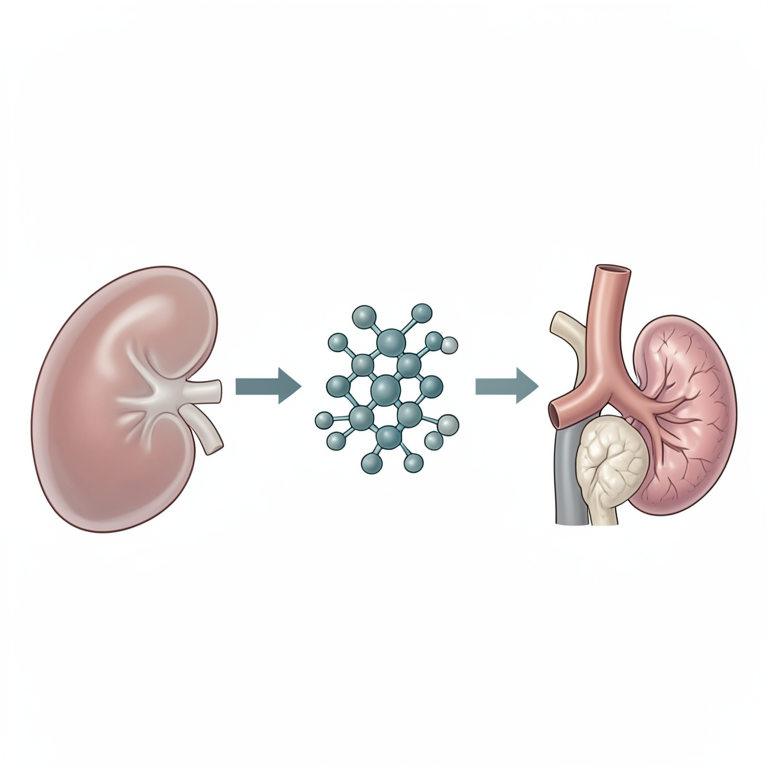
Mechanism of Thyroid Dysfunction in CKD
AI-generated conceptual illustration (Human kidney, pituitary gland, and thyroid gland). It explains the idea and does not show study data.
View source evidence ↗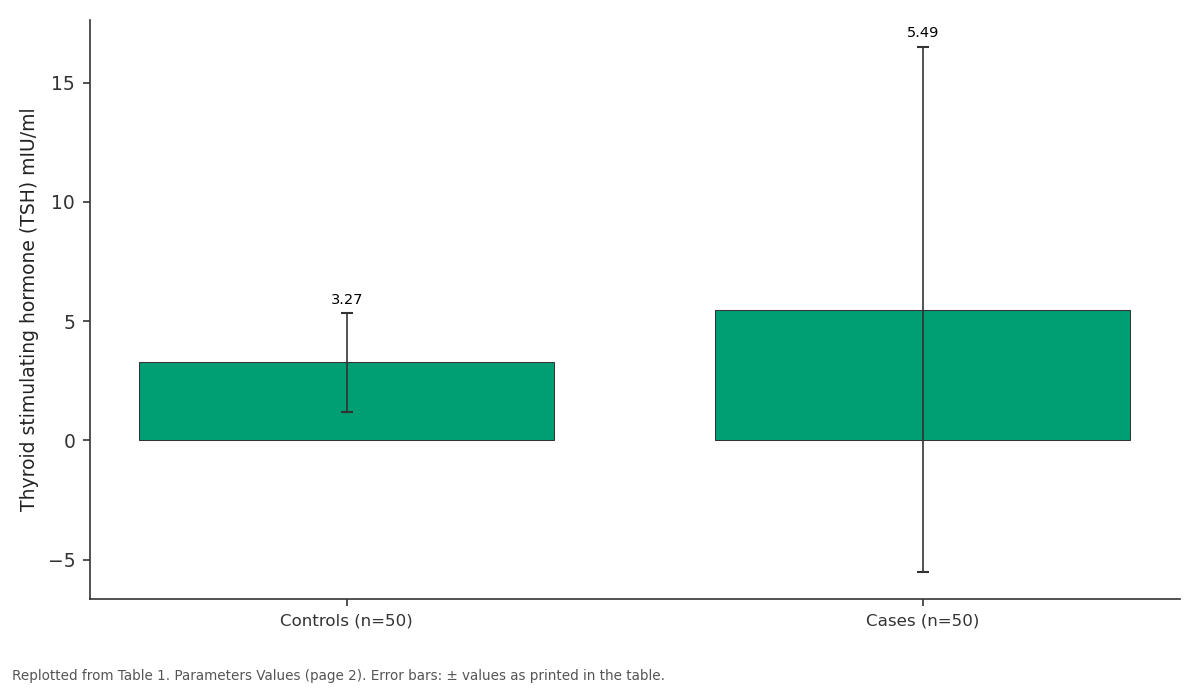
Thyroid stimulating hormone (TSH) mIU/ml: Controls (n=50) vs Cases (n=50)
Replotted from Table 1 (page 2) of the original paper. Every bar is the paper's own table value.
View source evidence ↗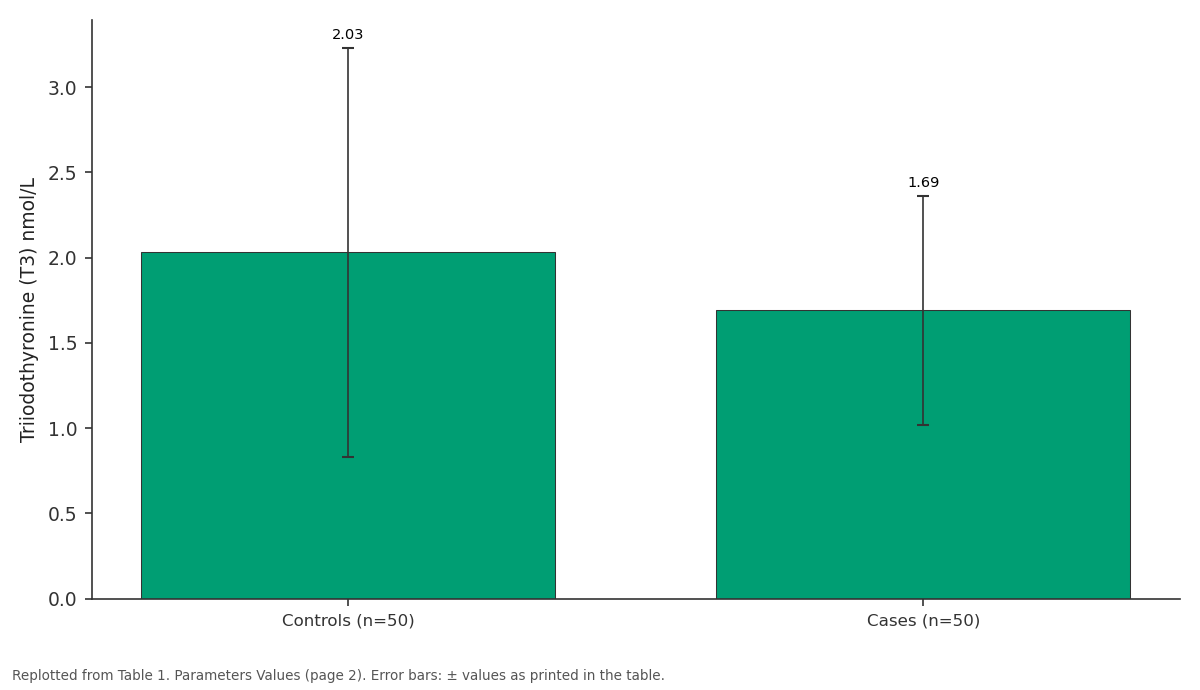
Triiodothyronine (T3) nmol/L: Controls (n=50) vs Cases (n=50)
Replotted from Table 1 (page 2) of the original paper. Every bar is the paper's own table value.
View source evidence ↗Figures & tables
From the original paper Table 1
Introduction
Thyroid hormones are necessary for growth and development of the kidney and for maintenance of water and electrolyte homeostasis. On the other hand, Kidney plays an important role in the metabolism, degradation and excretion of thyroid hormone. Chronic kidney disease (CKD) encompasses a spectrum of different pathophysiology processes associated with abnormal kidney function, and a progressive decline in glomerular filtration rate (GFR) [1,2] . CKD is a clinical syndrome due to irreversible kidney dysfunction leading to excretion, metabolic and synthetic failure culminating into an accumulation of non-protein nitrogenous substances and presenting with various clinical manifestations [3] . According the 2010 Global Burden of Disease study, chronic kidney disease was ranked 18th in the list of causes of total number of deaths worldwide. The kidney normally contributes to the clearance of iodine, primarily by glomerular filtration. Thus iodide excretion is diminished in advanced renal failure, leading sequentially to an elevated plasma inorganic iodide concentration and an initial increment in thyroidal iodide uptake [4] . Increased total body inorganic iodide can potentially block thyroid hormone production by affecting the pituitary-thyroid axis and peripheral metabolism of thyroid hormones. Such changes explain the higher frequency of hypothyroidism in patients with chronic kidney disease. So, Thyroid dysfunction is a commonly seen endocrine abnormality among CKD patients [5] . Prevalence of Thyroid dysfunction in CKD is found to be ranging from 13% in early CKD to 70% in ESRD according to various studies [6][7][8][9] . The relation between thyroid dysfunction and severity of CKD is not clear. Several previous studies depict conflicting results both positive and negative. Thus, there are huge numbers of patients remaining to be diagnosed and/or treated. Hemodialysis (HD) is the removal of certain elements from the blood by virtue of the difference in the rates of their diffusion through a semi permeable membrane by means of a hemodialysis machine or filter. Hemodialysis is the most common method used to treat advanced and permanent kidney failure. Maintenance hemodialysis is hemodialysis carried out at regular intervals to treat chronic renal failure. A number of studies have shown that serum thyroid hormones levels are frequently abnormal in patients on regular maintenance hemodialysis [10] . The prevalence of primary hypothyroidism mainly in the subclinical form increases with decreasing glomerular filtration rate [11] . The present study was planned to compare the status of thyroid hormones, serum total T 3 , T 4 & TSH in CKD patients on regular maintenance hemodialysis irrespective of their stage with that of controls.
Materials and Methods
The present study was conducted in a tertiary care hospital in Belagavi, Karnataka state. 50 cases that were on regular maintenance hemodialysis treatment were selected and 50 controls were taken for study. Age & sex matched controls with normal renal function and no previous history of thyroid dysfunction was included in the study as controls. After taking the consent from cases and controls under strict aseptic precaution venipuncture was done and 3 ml blood was drawn into plane vacutainer and blood was allowed to clot and then centrifuged at 3000 rpm for 3 min to separate the serum, the sample was analyzed within 6 hours. The quantitative determination of serum T 3 , T 4 & TSH was done by Enzyme linked Immunofluorescence assay (Minividas, Biomerieux, Germany). The assay principle combines a one step enzyme immunoassay sandwich method with a final fluorescent detection (ELFA). Serum urea and creatinine was estimated by urease/glutamate dehydrogenase method and modified Jaffe's alkaline picrate method respectively in fully automated analyzer Bio-systems.
Results
Comparison of the measured parameters in healthy controls and CKD patients undergoing maintenance hemodialysis. The present study was aimed at to assess the prevalence of thyroid dysfunction in CKD patients and to determine the correlation between thyroid dysfunction and severity of renal disease. Various studies were conducted about thyroid dysfunction and the severity of CKD and shown different results. In our study, CKD patients only on conservative management were studied. This is because thyroid profile undergoes changes due to dialysis independent of that due to chronic kidney disease. Dialysis also changes the previous serum thyroid hormone status in patients with renal failure.
Various studies have been studied by comparing CKD patients on conservative Management and patients on HD by Ramirez [12] and Kayima et al. [13] Mean TSH levels are high compared to controls, even though in the majority of cases the TSH level still remains within the normal range. Our study shows increased TSH in patients who had low T 3 and T 4 suggesting maintenance of pituitary axis. This is in accordance with the studies conducted by G Avasthi et al & Joseph et al. [14,15] In our study, serum TSH concentration was significantly increased in 8 (16%) of CKD patients, similar findings were observed by Gilles R et al. [16] Any impairment in kidney function leads to disturbed thyroid physiology; all levels of hypothalamic pituitary thyroid axis are involved, including alterations in hormone production, distribution and excretion [17] . There was more frequent subclinical hypothyroidism in patients on maintenance hemodialysis compared to the control group (16% vs. 0%). In some studies there was no significant difference in mean TSH levels in patients on maintenance hemodialysis and healthy controls [18] . In uremia the mean values of both serum T 3 and T 4 were low, this is comparable to various studies done earlier [19] . There are many factors leading to low T 3 and T 4 in patients undergoing Hemodialysis. Due to reduced deiodinase activity, reduced renal excretion and in organic iodide generated by residual deiodinase activity accumulates in CKD, which reduces thyroid hormone synthesis [20] . Many studies demonstrated a low T 4 in CKD patients, primarily because of an impaired protein Binding of T 4 . The accumulation of toxic uremic solutes alters the hypothalamic control of the pituitary gland and the TSH response to thyrotropin releasing hormone is subnormal in these patients. In recent studies, it was shown that, the systemic inflammation and metabolic acidosis might alter the thyroid function in CKD patients [21] . The minor increase in TSH levels (5 to 20 mU/l) observed in about 20% of uremic patients are usually not considered to be reflecting hypothyroidism. Thyroid hormone supplementation should not be initiated without substantial elevation in TSH levels and careful consideration [22] . The clinical features of hypothyroidism are often masked with the uremic state; hence it is necessary to conduct periodic screening of thyroid function in all haemodialysis patients. The early diagnosis and treatment of thyroid disease significantly reduce morbidity and mortality.
Conclusion
The present study finds thyroid dysfunction to be very common in CKD patients and reveals the significant association between CKD progression and thyroid dysfunction and mean of T 3 , T 4 decreases and TSH increases significantly in cases as compared to controls. The diagnosis of hypothyroidism can be easily missed in Haemodialysis patients. Timely diagnosis and treatment of hypothyroidism may prevent deterioration of the patient's condition and prolong survival. The thyroid disorders on Haemodialysis patients are known to be a strong risk factor for cardiovascular disease and predictor of all-cause mortality. The patients with CKD on Haemodialysis should be routinely screened for thyroid disorders.
Figures and tables from the paper
| Parameters | Controls (n=50) | Cases (n=50) | p-value |
|---|---|---|---|
| Triiodothyronine (T3) nmol/L | 2.03±1.2 | 1.69±0.67 | 0.000* |
| Thyroxine (T4) nmol/L | 101.41±19.12 | 81.34±23.87 | 0.083 (statistically not significant) |
| Thyroid stimulating hormone (TSH) mIU/ml | 3.27±2.06 | 5.49±11.03 | 0.010 |
| Urea mg/dl | 18.20±9.7 | 82.20±38.60 | 0.000* |
| Creatinine mg/dl | 0.63±0.5 | 5.47±1.53 | 0.000* |
Table text extracted from the original PDF; superscript letters are shown inline. The original table image is below.
View original table image
References
22 in the original paper- Thalquotra M, Pandey R, Singh J, Agrawal BK, Sodhi KS. Evaluation of thyroid profile in patients with chronic kidney disease. Journal of Pharmaceutical and Biomedical Sciences. 2014;4(2):143-147.
- Bargman JM, SKorecki K. Chronic renal disease. In: Longo DL, Fauci AS, Kasper DL. Harrison's Principles of Internal Medicine, McGraw Hill, London. 2011;2(18):2289-2313.
- Kaptein EM, Quion-Verde H, Chooljian CJ, Tang WW, Friedman PE, Rodriquez HJ, et al. The thyroid in endstage renal disease. Medicine (Baltimore) 1988;67(3):187-197.
- Ramírez G, Jubiz W, Gutch CF, et al. Thyroid abnormalities in renal failure. A study of 53 patients on chronic hemodialysis. Annals of Internal Medicine. 1973;79(4):500-504.
- Carrero JJ, Qureshi AR, Axelsson J, Yilmaz MI, et al. Clinical and biochemical implications of low thyroid hormone levels (Total and free forms) in euthyroid patients with chronic kidney disease. Journal of Internal Medicine. 2007;262(6):690-701.
- Kher V. ESRD in developing countries Nephrology forum. Kidney International. 2002;62(1):350-362.
- Prabahar MR, Chandrasekaran V, Soundararajan P. Epidemic of chronic kidney disease in India-what can be done? Saudi Journal of Kidney Diseases and Transplantation. 2008;19(5):847-853.
- Reddy KS, Shah B, Varghese C, Ramadoss A. Responding to the threat of chronic diseases in India. The Lancet. 2005;366(9498):1744-1749.
- Prajapati P, Singh AP, Bendwal S. Correlation between severity of chronic kidney disease and thyroid dysfunction. Journal of the Indian Medical Association. 2013;111(8):514-516.
- Lukinac L, Kusic Z, Kes P, Nothing-Hus D. Effect of chronic hemodialysis on thyroid function tests in patients with end-stage renal disease. Acta Medica Croatica. 1996;50(2):65-68.
- Chonchol M, Lippi G, Salvagno G, Zoppini G, Michele M, Giovanni T, et al. Prevalence of subclinical hypothyroidism in patients with chronic kidney disease. Clinical Journal of the American Society of Nephrology. 2008;3(5):1296-1300.
- Ramirez G. Thyroid abnormalities in renal failure: A study of 53 patients on chronic dialysis. Annals of Internal Medicine. 1973;79(4):500-504.
- Kayima JK. Thyroid hormones profile in patients with chronic renal failure on conservative management and regular hemodialysis. East African Medical Journal. 1992;69(6):333-336.
- Avasthi G, Malhothra S, Narang APS, Sengupta S. Study of thyroid function on patients of chronic renal failure. Indian Journal of Nephrology. 2001;11:165169.
- Joseph LJ, Desai KB, Mehta HJ, Mehta MN. Measurement of thyrotropin levels using sensitive immuno radiometric assays in patients with chronic renal failure. International Journal of Thyroidology. 1993;5:35-39.
- Gilles R, Den Heijer M, Ross AH, Sweep FC, Hermus AR, Wetzels JF, et al. Thyroid function in patients with proteinuria. The Netherlands Journal of Medicine. 2008;66(11):483-485.
- Lo JC, Chertow GM, Go As, Hsu CY. Increased prevalence of subclinical and clinical hypothyroidism in persons with chronic renal disease. Kidney International. 2005;67(3):1047-1052.
- Hegedus L. Clinical practice; The thyroid nodule. New England Journal of Medicine. 2004;351(17):1764-1771.
- Paqualini T, Zantieifer D, Balzzaretti H, Granillo E, Patricia FD, Ramierz ZJ, et al. Evidence of hypothalamus pituitary thyroid abnormalities in children with end-stage renal disease. Journal of Pediatrics. 1991;118(6):873-878.
- Kaptein EM. Thyroid hormone metabolism and thyroid diseases in chronic renal failure. Endocrine Reviews. EPUB. 1996/02/01. 1996;17(1):45-63. https://doi.org/10.1210/edrv-17-1-45
- Zoccali C, Tripepi G, Cutrupi S, Pizzini P, Mallamaci F. Low triiodothyronine: A new facet of inflammation in end-stage renal disease. Journal of the American Society of Nephrology. 2005;16(9):2789-2795. EPUB 2005/07/22.
- Rodrigues MC, Santos GM, da silva CA, Baxter JD, Webb P, Lomri N, et al. Thyroid hormone transport is disturbed in erythrocytes from patients with chronic renal failure on hemodialysis. Renal Failure. 2004;26(4):461-466.
Cited by 1
From OpenAlex, OpenCitations and reference lists read by Scinovex
- Frequency of Subclinical Hypothyroidsim Among Patients with end Stage Renal Disease on Hemodialysis Presenting to A Tertiary Care Hospital ↗
Wajid Abdullah, Salman Tahir Shafi, Irfan Ahmad, Sana Ashraf · Pakistan Armed Forces Medical Journal · 2023
Objective: Aim of this study was to determine the frequency of subclinical hypothyroidism among patients with end stage renal disease presenting to tertiary care hospital. Study Design: Cross sectional study. Place and Duration of Study: Department of Nephrology, Sharif Medical City Hospital, Lahore. Pakistan, from Mar 2020 toDec 2020. Methodology: A total of 200 cases studied. Informed consent was obtained…
❝ 1PDF