
Research article · 2021 · Full text
International Journal of Agriculture Extension and Social DevelopmentEconomic analysis of fluted pumpkin production by women in AWKA south local government area of Anambra state, Nigeria
Volume 4(2) · Pages 59–64 · DOI: 10.33545/26180723.2021.v4.i2a.101 ↗
Research areasAdvances in Cucurbitaceae Research
Abstract
Author-writtenThe study on economic analysis of fluted pumpkin production by women in Awka South Local Government Area of Anambra State, Nigeria was designed to investigate the socioeconomic characteristics of women in fluted pumpkin production, the profitability of the enterprise, exogenous variables affecting the women’s profit, and the challenges facing women fluted pumpkin farmers in the area. The study applied a multistage sampling technique using a well-structured questionnaire to collect data from a cross-section of 150 women fluted pumpkin farmers in the study area. The study utilized a combination of analytical tools such as descriptive statistics, budgetary method, least square regression model, and 3 points Likert type scale to operationalize the study objectives. The study revealed that the average age, household size, farm size, farming experience, and monthly income were approximately 45 years, 11 persons, 1.3 ha, 13 years, and N31,500.00 respectively. The net farm income from fluted pumpkin production was N42,870.0, the return on investment was 1.66 to show that for every N1 investment, the women will make N1.66. The socioeconomic variables that influence women’s profit were age, level of education, farm size, farming experience, source of labour, and monthly income. They are further challenged by a high cost of labour, poor storage facility, inadequate funding, and problems of land acquisition, high cost of seed, poor yield, pest, and disease among other variables in the study area.
Summary
Source-checkedPlain-language reading of the full paper, prepared with AI and checked against the text. Each point links to the authors' own words.
Why it matters
- Agriculture is a critical sector for the Nigerian economy, providing employment for more than 60% of the population, particularly in rural regions. View evidence ↗
- Fluted pumpkin (Telfaira occidentalis) is a common leafy and seed vegetable in southern Nigeria and is recognized as an important source of micronutrients. View evidence ↗
- Women play a significant but often underrated role in agriculture, contributing approximately 70% of the workforce, with vegetable farming being a common activity. View evidence ↗
The question
- The study aimed to analyze the economics of fluted pumpkin production by women in Awka South LGA, specifically looking at socioeconomic traits, profitability, factors affecting profit, and production challenges. View evidence ↗
What they did
- The researchers used a multi-stage sampling technique to select 150 women fluted pumpkin farmers for the study. View evidence ↗
- Data was collected from the farmers using a structured questionnaire and face-to-face interviews. View evidence ↗
- The analysis employed descriptive statistics, the budgetary method, ordinary least square (OLS) regression, and a three-point Likert scale. View evidence ↗
What they found
- The average profile of the women farmers included an age of 45 years, a household size of 11 persons, a farm size of 1.3 ha, 13 years of experience, and a monthly income of N31,500.00. View evidence ↗
- The enterprise generated a total revenue of N4,287,000.00 and a net farm income of N42,870.0. View evidence ↗
- The return on investment (ROI) was 1.66, meaning that for every N1 invested, the women earned N1.66. View evidence ↗
- Profit was positively and significantly influenced by age, level of education, farming experience, and monthly income. View evidence ↗
- Profit was negatively and significantly affected by smaller farm sizes and the use of hired labor. View evidence ↗
- Women farmers faced several significant challenges (grand mean 2.29), including inadequate funding, high labor and seed costs, land acquisition issues, poor storage, poor yield, and pests/diseases. View evidence ↗
What it means
- The authors conclude that fluted pumpkin production is a profitable enterprise for women in the study area. View evidence ↗
Visual summary
1 visualsIllustrations explain the paper; charts are replotted from the paper's own table values.
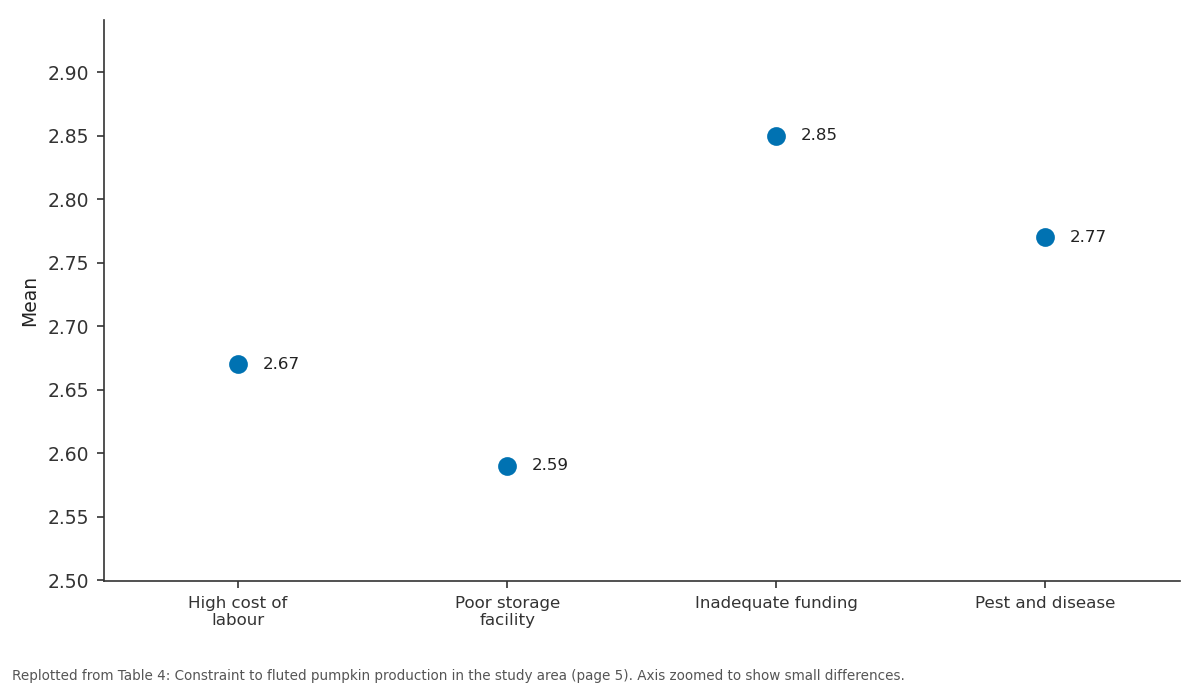
Mean: High cost of labour vs Poor storage facility vs Inadequate funding vs Pest and disease
Replotted from Table 4 (page 5) of the original paper. Every bar is the paper's own table value.
View source evidence ↗Figures & tables
From the original paper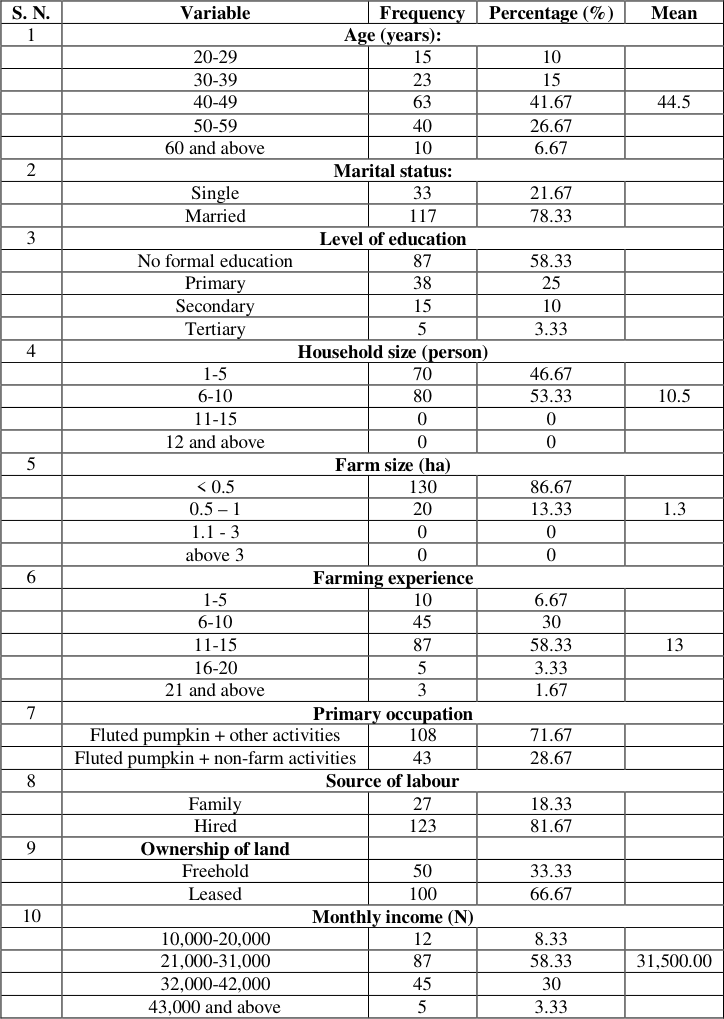 Table 1
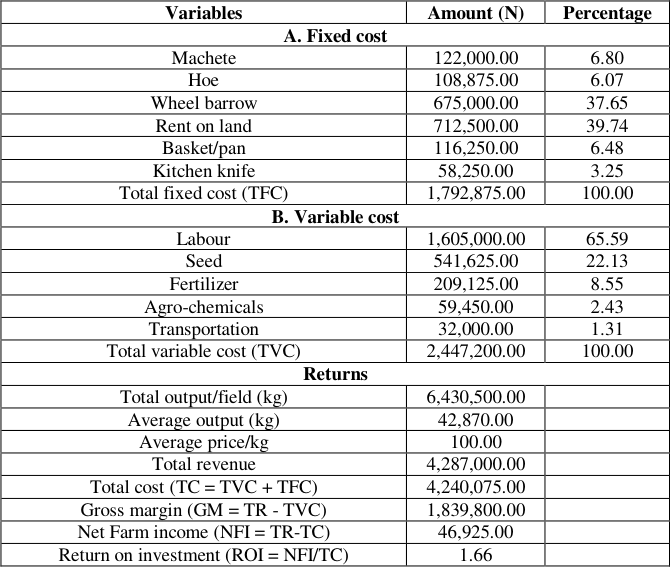 Table 2
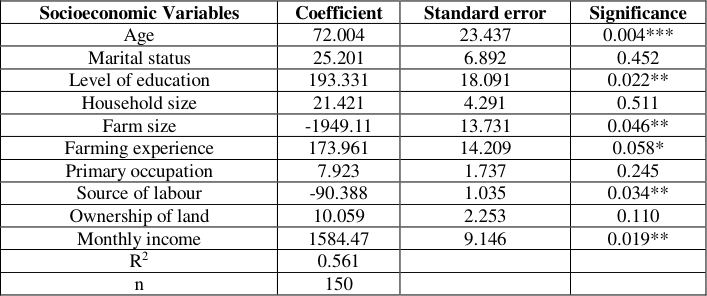 Table 3
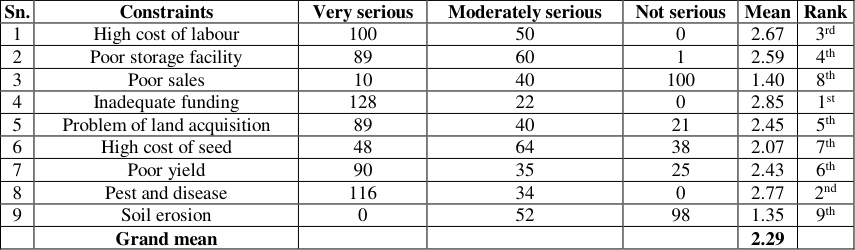 Table 4
Introduction
Agriculture is an important sector in the Nigerian economy capable of creating employment for over 60 percent of its population especially in the rural areas, the sector is subdivided into four important subsectors which are aquaculture, forestry, fisheries, and crop production (Obianefo et al., 2019; Anumudu et al., 2020) [9,3] . One important enterprise under the crop production subsector is vegetable farming which is common among women. Therefore, fluted pumpkin (Telfaira occidentalis) is an edible vegetable grown common in the southern part of Nigeria, it is generally referred to as a leafy and seed vegetable. Researchers like Ndor et al. (2013) [7] ; Obinaju and Asa (2015) [12] opined that fluted pumpkin is an efficient source of micronutrients whose importance in the diet of man cannot be overemphasized. Fluted pumpkin contains essential nutrients that increase disease resistance in the human body (Enete and Okon, 2010) [4] . This assertion corroborates the earlier report of Aiyelaagba and Kintomo (2002) [1] who noted that fluted pumpkin contained a high amount of antioxidant and hepatoprotective and antimicrobial properties. The leaf is a complementary food of first-order much more important to human health and animal origin (Okorji et al., 2012) [16] . The tender and succulent leaf and immature seeds are cooked and consumed as a vegetable. The leaf may also be used alone or together with Okra or Egusi seed (Citrullus lanatus) among other uses (Odiaka, 2001; Grubben and Denton, 2004; Obinaju and Asa, 2015) [2,6,15] . Farmers under this enterprise could make an important contribution to the gross domestic product (GDP) and national food security where a healthy and expanding market guiding industry is a safeguard against the lowering of health standards necessary for productive output in an expanding economy (Okorji et al., 2012) [16] . Several studies on the profitability of fluted pumpkin farming revealed that the venture is profitable and requires little startup capital. The study by Obinaju and Asa (2015) [15] ; Nwosu et al. (2013) [8] ; Girei et al. (2017) [5] ; Ogisi et al. (2014) [14] revealed that fluted pumpkin production had a positive return on investment which authenticate the viability of the enterprise. Vegetable farming is common among women whose significant role in agricultural production, processing, marketing, and supply is often underrated. Akalonu (2017) [13] asserts that women contribute about 70 percent workforce in the agricultural sector. Women are an important asset in the farm and family farm, their involvement in different subsectors of agriculture is tremendous in food production, processing, fisheries, fruit production, vegetable production, and marketing, among others. Women have often reported harsh weather, pest and diseases, scarcity and high cost of input, inadequate funds, www.extensionjournal.com poor sale, poor storage facility, among other major challenges facing the production of fluted pumpkins in Nigeria and at different study locations (Obiekwe and Ugwumba, 2016) [11] . Also, scholars like Obinaju and Asa (2015) [12] , Anozie et al. A multi-stage sampling technique was adopted to randomly select a cross-section of 150 women involved in fluted pumpkin farming. In stage one, five communities (Nibo, Mbaukwu, Okpuno, Umuawulu, and Nise) were purposively selected due to the dominance of women involved in the enterprise. In stage two, three villages were randomly selected to make it a total of fifteen (15) villages. Finally, in the last stage, 10 women engaged in fluted pumpkin farming were randomly sampled to make a total of 150 farmers for the study. Furthermore, a well-structured questionnaire and facial interview process were the research instruments used to elicit information from the farmers. The data collected were analyzed with a combination of descriptive statistics, budgetary method, and ordinary least square regression (OLS). The descriptive statistics which include Table, frequency, mean rating, and percentage were used to achieve objective one, objective two was achieved with the budgetary method, objective three was achieved with OLS regression, and objective four was achieved with the mean threshold of three points Likert type scale. The model is further defined below as:
A) descriptive statistics
A) descriptive statistics
Results and Discussions Summary statistics of socioeconomic variables
Table 1 reflects the summary statistics of the socioeconomic characteristics of women farmers of fluted pumpkin, the www.extensionjournal.com study revealed that the average age, household size, farm size, farming experience, and monthly income were approximately 45 years, 11 persons, 1.3 ha, 13 years, and N31,500.00 respectively. It was also discovered that the majority (78.33%, and 71.67%) of the women are married, and have fluted pumpkin and other agricultural activities as their primary occupation. Furthermore, the majority (81.67%, 66.67%) of the women use hired labour, and lease land respectively.
| S. N. | Variable | Frequency | Percentage (%) | Mean |
|---|---|---|---|---|
| 1 | Age (years): | |||
| 20-29 | 15 | 10 | ||
| 30-39 | 23 | 15 | ||
| 40-49 | 63 | 41.67 | 44.5 | |
| 50-59 | 40 | 26.67 | ||
| 60 and above | 10 | 6.67 | ||
| 2 | Marital status: | |||
| Single | 33 | 21.67 | ||
| Married | 117 | 78.33 | ||
| 3 | Level of education | |||
| No formal education | 87 | 58.33 | ||
| Primary | 38 | 25 | ||
| Secondary | 15 | 10 | ||
| Tertiary | 5 | 3.33 | ||
| 4 | Household size (person) | |||
| 1-5 | 70 | 46.67 | ||
| 6-10 | 80 | 53.33 | 10.5 | |
| 11-15 | 0 | 0 | ||
| 12 and above | 0 | 0 | ||
| 5 | Farm size (ha) | |||
| < 0.5 | 130 | 86.67 | ||
| 0.5 – 1 | 20 | 13.33 | 1.3 | |
| 1.1 - 3 | 0 | 0 | ||
| above 3 | 0 | 0 | ||
| 6 | Farming experience | |||
| 1-5 | 10 | 6.67 | ||
| 6-10 | 45 | 30 | ||
| 11-15 | 87 | 58.33 | 13 | |
| 16-20 | 5 | 3.33 | ||
| 21 and above | 3 | 1.67 | ||
| 7 | Primary occupation | |||
| Fluted pumpkin + other activities | 108 | 71.67 | ||
| Fluted pumpkin + non-farm activities | 43 | 28.67 | ||
| 8 | Source of labour | |||
| Family | 27 | 18.33 | ||
| Hired | 123 | 81.67 | ||
| 9 | Ownership of land | |||
| Freehold | 50 | 33.33 | ||
| Leased | 100 | 66.67 | ||
| 10 | Monthly income (N) | |||
| 10,000-20,000 | 12 | 8.33 | ||
| 21,000-31,000 | 87 | 58.33 | 31,500.00 | |
| 32,000-42,000 | 45 | 30 | ||
| 43,000 and above | 5 | 3.33 |
Table text extracted from the original PDF; superscript letters are shown inline. The original table image is below.
View original table image
Profitability analysis of fluted pumpkin enterprise
Table 2 reflect the profitability analysis of the women farmer, the study revealed that the total revenue from the production was N4,287,000.00 and the net farm income from fluted pumpkin production was N42,870.0. Also, the return on investment was 1.66, this implies that for every N1 investment, the women will make N1.66. These, therefore, means that fluted pumpkin production is profitable in the study area and this assertion is in agreement with Obiekwe and Ugwumba, 2016; Girei et al., 2017 [11,5] who opined that fluted pumpkin production is a profitable venture. www.extensionjournal.com
| Variables | Amount (N) | Percentage |
|---|---|---|
| A. Fixed cost | ||
| Machete | 122,000.00 | 6.80 |
| Hoe | 108,875.00 | 6.07 |
| Wheel barrow | 675,000.00 | 37.65 |
| Rent on land | 712,500.00 | 39.74 |
| Basket/pan | 116,250.00 | 6.48 |
| Kitchen knife | 58,250.00 | 3.25 |
| Total fixed cost (TFC) | 1,792,875.00 | 100.00 |
| B. Variable cost | ||
| Labour | 1,605,000.00 | 65.59 |
| Seed | 541,625.00 | 22.13 |
| Fertilizer | 209,125.00 | 8.55 |
| Agro-chemicals | 59,450.00 | 2.43 |
| Transportation | 32,000.00 | 1.31 |
| Total variable cost (TVC) | 2,447,200.00 | 100.00 |
| Returns | ||
| Total output/field (kg) | 6,430,500.00 | |
| Average output (kg) | 42,870.00 | |
| Average price/kg | 100.00 | |
| Total revenue | 4,287,000.00 | |
| Total cost (TC = TVC + TFC) | 4,240,075.00 | |
| Gross margin (GM = TR - TVC) | 1,839,800.00 | |
| Net Farm income (NFI = TR-TC) | 46,925.00 | |
| Return on investment (ROI = NFI/TC) | 1.66 |
Table text extracted from the original PDF; superscript letters are shown inline. The original table image is below.
View original table image
Influence of socioeconomic characteristics on women's profit from fluted pumpkin
Table 3 reflect the influence of socioeconomic characteristics on women's profit from fluted pumpkin, ordinary least square regression model was used to analyze the influence. The coefficient of multiple determinants (R 2 ) was 0.561 implying that 56.1% variation in the dependent variable (profit) was explained by the joint action of the independent variable (socioeconomic characteristics), while the remaining 43.9% was as a result error beyond the control of the women farmers. The coefficient of age (72.004) was positive and significant at 0.01 alpha level of probability, this implies that a unit increase in the age of women will increase their profit from the production of fluted pumpkin by 72.004 units. This finding was in agreement with Anozie et al., 2017. The coefficient of the level of education (193.331) was positive and significant at 0.05 alpha level of probability, this implies that a unit increase in the level of education of women farmers will increase their profit from fluted pumpkin farming by 193.331 units. This finding was in agreement with Onoh et al., 2016. The coefficient of farm size (1949.11) was negative and significant at 0.05 alpha level of probability, this implies that unit increase in the number of women farmers with smaller farm size will reduce their profit from fluted pumpkin farming by 1949.11 unit. This finding was in line with the assertion of Onoh et al., 2016. The coefficient of farming experience (173.961) was positive and significant at 0.1 alpha level of probability, this implies that a unit increase in the women farmers experience will increase their profit from a fluted pumpkin by 173.961 units. This finding was in line with the a priori expectation hence age and experience are positively related. This finding is in agreement with Obinagu and Asa, 2015 [15] . The coefficient of the source of labour (90.388) was negative and significant at 0.5 alpha level of probability, this implies that a unit increase in the number of hired labour employed will reduce the profit of women farmers by 90.388. This was expected by a priori expectation as most farming households in developing countries do not pay for family labour. The coefficient of monthly income (1584.47) was positive and significant at 0.05 alpha level of probability, this implies that a unit increase in the women farmers' income by a unit will increase their profit by 1584.47 units. Thus, the study reveals that the socioeconomic variables that influence women's profit were age, level of education, farm size, farming experience, source of labour, monthly income. Constraint to fluted pumpkin production in the study area Table 4 reflect the challenges facing women fluted pumpkin farmers in Awka South LGA, the study used a mean threshold from three points Likert type scale to analyze the data from the field, after the analysis; variables with a mean threshold of 2.0 and above was positive and strong in decision making as it posse serious challenge to the women in fluted pumpkin farming. Those with a mean threshold less than 2.0 were negative and weak for decision-making. The study had a grand mean of 2.29 which means the challenges identified affected the women. The challenges identified were; high cost of labour, poor storage facility, inadequate funding, and problems of land acquisition, high cost of seed, poor yield, pest, and disease. All the challenges identified corrobotes those reported in Obianefo, Osuafor and Ngo'mbe (2020) [10] .
| Sn. | Constraints | Very serious | Moderately serious | Not serious | Mean | Rank |
|---|---|---|---|---|---|---|
| 1 | High cost of labour | 100 | 50 | 0 | 2.67 | 3rd |
| 2 | Poor storage facility | 89 | 60 | 1 | 2.59 | 4th |
| 3 | Poor sales | 10 | 40 | 100 | 1.40 | 8th |
| 4 | Inadequate funding | 128 | 22 | 0 | 2.85 | 1st |
| 5 | Problem of land acquisition | 89 | 40 | 21 | 2.45 | 5th |
| 6 | High cost of seed | 48 | 64 | 38 | 2.07 | 7th |
| 7 | Poor yield | 90 | 35 | 25 | 2.43 | 6th |
| 8 | Pest and disease | 116 | 34 | 0 | 2.77 | 2nd |
| 9 | Soil erosion | 0 | 52 | 98 | 1.35 | 9th |
| Grand mean | 2.29 |
Table text extracted from the original PDF; superscript letters are shown inline. The original table image is below.
View original table image
| Socioeconomic Variables | Coefficient | Standard error | Significance |
|---|---|---|---|
| Age | 72.004 | 23.437 | 0.004*** |
| Marital status | 25.201 | 6.892 | 0.452 |
| Level of education | 193.331 | 18.091 | 0.022** |
| Household size | 21.421 | 4.291 | 0.511 |
| Farm size | -1949.11 | 13.731 | 0.046** |
| Farming experience | 173.961 | 14.209 | 0.058* |
| Primary occupation | 7.923 | 1.737 | 0.245 |
| Source of labour | -90.388 | 1.035 | 0.034** |
| Ownership of land | 10.059 | 2.253 | 0.110 |
| Monthly income | 1584.47 | 9.146 | 0.019** |
| R2 | 0.561 | ||
| n | 150 |
Table text extracted from the original PDF; superscript letters are shown inline. The original table image is below.
View original table image
Conclusions
Women provide more labour in agricultural sector especially in the crop production subsector and family farm settings, but this group of labour force has often been neglected especially in policy and decision making in the sector. Vegetable farming is generally associated with women and this enterprise is capable of creating employment and generating income. This study was meant to investigate whether the enterprise is profitable enough to advise women in a place of income diversification. Hence the analysis has further proven that fluted pumpkin production is profitable and in agreement with other researchers' assertions. These findings are not without a grey area as the study revealed that the women are often challenged in the following constraints; inadequate funding, and problems of land acquisition, high cost of seed, poor yield, pest, and disease, among others. Thus it becomes pertinent to make the following recommendation: 1. Women especially in the rural areas should be provided with agricultural subsidies to encourage them and reduce the money needed for investment into the enterprise. 2. Women should endeavor to organized themselves into a formidable group to enjoy the principles of bulk purchase and reduce the cost of inputs 3. Governmental and non-governmental agencies should help to develop more lands for women, especially where traditional policy did not give women access to land.
References
16 in the original paper- Aiyelaagba IO, Kintomo AA. Nitrogen response of fluted pumpkin (Telfaira occidentalis Hook F.) grown sole or intercropped with banana. Nutrient cycling in Agroecosystems 2002;64(2):231-235.
- Akalonu EC, Obiah ME, Onyeagoro CR, Duru LA, Okonya-Chukwu CR. Agricultural development innovation: adopting sustainable soil management practices among rural farmers in Imo State, Nigeria. Journal of Agriculture and Veterinary Sciences 2016;9(2):32-51.
- Anumudu OO, Onugu CU, Obianefo CA, Enwelu IA. Arresting unemployment through bee-keeping: A survey of trainees from Leventis Agricultural Training School, Osun State, Nigeria. International Journal of Science and Research 2020;9(1):1514-1517. DOI: www.extensionjournal.com 10.21275/ART20204116.
- Enete AA, Okon UE. Economics of waterleaf (Talinum triangulare) production in Akwa Ibom State, Nigeria. Journal of Field Actions 2012;4(4):1-5. Available at http://facrsreport.revues.org/438.
- Girei AA, Ohen SB, Kassali R. Production function analysis of Pumpkin (Cucurbita spp) in Central Agricultural Zone of Nasarawa State, Nigeria. Journal of Agricultural Science and Practice. 2017;2:8-15.
- Grubben GJ, Denton OA. Plant resources of tropical Africa 2 vegetable. P. 668 Prota Foundation Wageningen Netherland Backhuys Publisher, Leiden Netherland/ CTA, Wageningen Netherland 2004.
- Ndor E, Dauda SN, Garba MN. Growth and yield performances of fluted pumpkin (Telfairia occidentalis Hook F.) under Organic and Inorganic Fertilizer on Ultisols of North Central Nigeria. International Journal of Plant and Soil Science 2013;2(2):212-221. Article no: IJPSS.2013.004.
- Nwosu CS, Onyeneke RU, Okoli VB. Socioeconomic determinant of fluted pumpkin leaf (Telfairia occidentalis) production in Ezinihitte Mbaise LGA of Imo State, Nigeria. Agric. Res. J 2012;6:355-361.
- Obianefo CA, Okafor IP, Bola-Audu I, Umebali EE. Assessment of the Education Background on Perception of Single Digit Interest Rate among Members of Farmers Cooperative in Anambra State. International Journal of Trend in Scientific Research and Development 2019;3(5):113-117.
- Obianefo, Osuafor OO, Ng'ombe JN. On the Challenges Faced by Female Members of Agricultural Cooperatives in Southeast Nigeria. Journal of Agricultural Extension and Rural Development 2020;13(1):94-106.
- Obiekwe JN, Ugwumba COA. Encouraging rice production enterprises for employment generation and poverty reduction: The case of Anambra State, Nigeria. Asian Academic Research Journal of Social Science & Humanities (AARJSH) 2016;3(6).
- Obinaju LC, Asa UA. Economic analysis of vegetable (Telfairia occidentalis Hook f.) production among farming households in ibiono ibom local government area of Akwa Ibom State, Nigeria. European Journal of Agriculture and Forestry Research 2015;3(4):17-24.
- Odiaka NI. Survey on production and supply of Telfaira occidentalis in Markudi, Benue State, Nigeria. Crop production Department, University of Agriculture Markudi, Nigeria 2001.
- Ogisi OD, Begho T, Ewolor SA. Resource use efficiency and profitability of fluted pumpkin production in Ukwuani local government area of Delta State, Nigeria. American Journal of Agriculture and Forestry 2014;2(4):129-134.
- Okon UE, Aselm A, Bassey NE. Technical efficiency and its determinants in garden egg (Solanum Spp)b Production in Uyo metropolis, Akwa Ibom State. Field Action Science Report [online] 2010. Special issue 1. Available online at http://facrsreport.revues.org/458
- Okorji EC, Okon Ubokudom E, Nwankwo Jude O. Socioeconomic Determinants of irrigated vegetable Production Systems in Anambra Agricultural Zone of Anambra State, Nigeria. The Nigerian Agricultural Journal 2012;43:227-235.