
Research article · 2021 · Full text
International Journal of Biology SciencesPhylogenetic analysis of cotton leaf curl CLCuD virus from old world to new world
Volume 3(1) · Pages 10–17 · DOI: 10.33545/26649926.2021.v3.i1a.21 ↗
Research areasPlant Virus Research StudiesPlant and Fungal Interactions ResearchAnimal Virus Infections Studies
Abstract
Author-writtenIn Pakistan Cotton is one of the mainly significant fiber and cash crop. CLCuD affect the cotton production mainly in Pakistan. The disease of cotton leaf curl is due to multiple viruses from genus begomovirus and geminiviradae family. Viruses transmitted by whitefly and have single stranded DNA genome. CLCD is a synergistic interaction between virus and linked satellite molecules include betasatellites and alphasatellites. Viruses of different plant develop by mutation and recombination. The particular satellite molecule CLCuMuB is pathogenicity determinant to create disease in cotton crop. In this analysis detailed analysis of phylogenetic of cotton leaf curl betasatellite infect cotton was performed. Sequences of Cotton leaf curl betasatellites retrieved from NCBI database then align with the use of software ClustalW and construct phylogenetic tree through neighbor joining method by using MEGA 7 to know evolutionary relations between many strains of cotton leaf curl betasatellite. Percentage identity in column was achieved by run sequences in SDT. At the last part nucleotide BLAST tool used for sequences have similarity lower than 90 was performed to observe similarity and difference among sequences of cotton leaf curl betasatellite.
Summary
Source-checkedPlain-language reading of the full paper, prepared with AI and checked against the text. Each point links to the authors' own words.
Why it matters
- Cotton is a critical fiber and cash crop for Pakistan and is the second most significant oil seed crop globally. View evidence ↗
- Cotton leaf curl disease (CLCuD) has been the primary threat to cotton production for the last 20 years, causing severe losses. View evidence ↗
- The CLCuMuB satellite molecule is a key determinant of pathogenicity in the development of cotton leaf curl disease. View evidence ↗
The question
- The study aimed to perform a detailed phylogenetic analysis of the cotton leaf curl betasatellites that infect cotton. View evidence ↗
- The research sought to determine the evolutionary relationships between various strains of cotton leaf curl betasatellites. View evidence ↗
What they did
- The researchers retrieved all available complete sequences of cotton leaf curl betasatellites from the NCBI GenBank database. View evidence ↗
- DNA alignment was performed using Clustal W with a transition weight of 0.5 and the Clustal W 1.6 DNA weight matrix. View evidence ↗
- Sequence identity proportions were calculated using SDTv1.2 software with the Muscle alignment program. View evidence ↗
- Nucleotide BLAST was used to analyze similarities and differences for sequences that exhibited an identity percentage below 90%. View evidence ↗
What they found
- Betasatellite sequences from China were found to be on the same clade, indicating they are genetically close and likely share a similar origin. View evidence ↗
- One betasatellite from India showed nearly 98% sequence resemblance to those from China. View evidence ↗
- The sequence identity among CLCuMuB strains within Pakistan ranged from 0.82% to 0.98%. View evidence ↗
- The sequence similarity between Multan betasatellites of Pakistan and China was between 0.81% and 0.97%. View evidence ↗
- A lower sequence similarity of 0.64% to 0.65% was found between the Multan betasatellite of Pakistan and the CLCuGeB of Burkina Faso. View evidence ↗
- Gezira betasatellite sequences from Burkina Faso, Niger, Sudan, and the UAE showed significant resemblance to one another. View evidence ↗
What it means
- The authors conclude that Pakistan is the center where the Multan betasatellite was first recognized, and strains in India, China, Burkina Faso, Niger, Sudan, and the UAE may have derived from it. View evidence ↗
- Because all analyzed betasatellite molecules showed a similarity fraction of at least 78%, the authors conclude they all belong to the same species. View evidence ↗
Visual summary
1 visualsIllustrations explain the paper; they do not show study data.
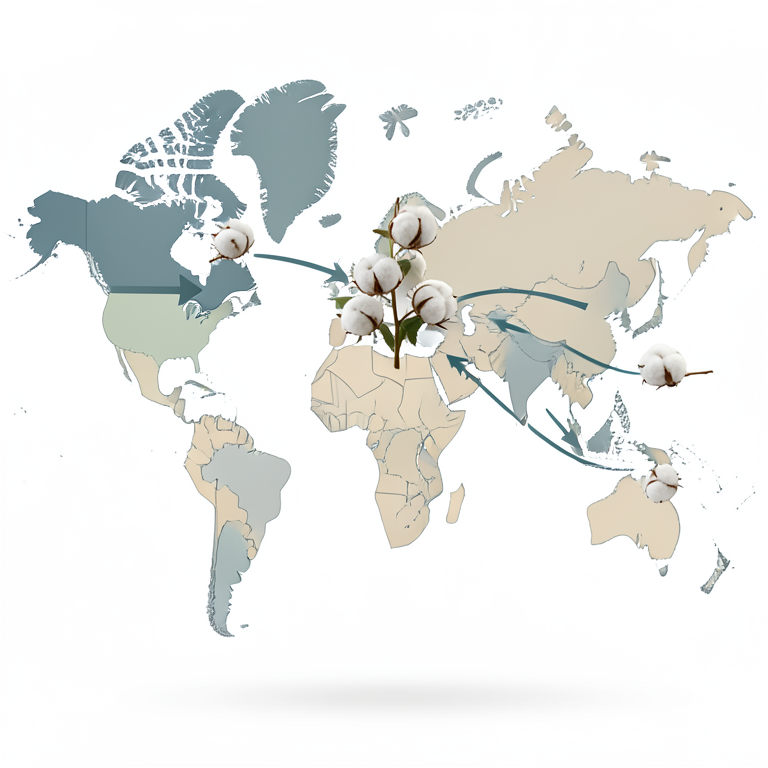
Proposed Global Spread of Multan Betasatellite
AI-generated conceptual illustration (Cotton plants (Gossypium hirsutum) and a world map). It explains the idea and does not show study data.
View source evidence ↗Figures & tables
From the original paper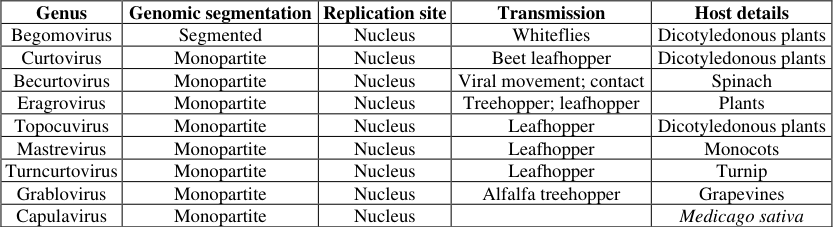 Table 1
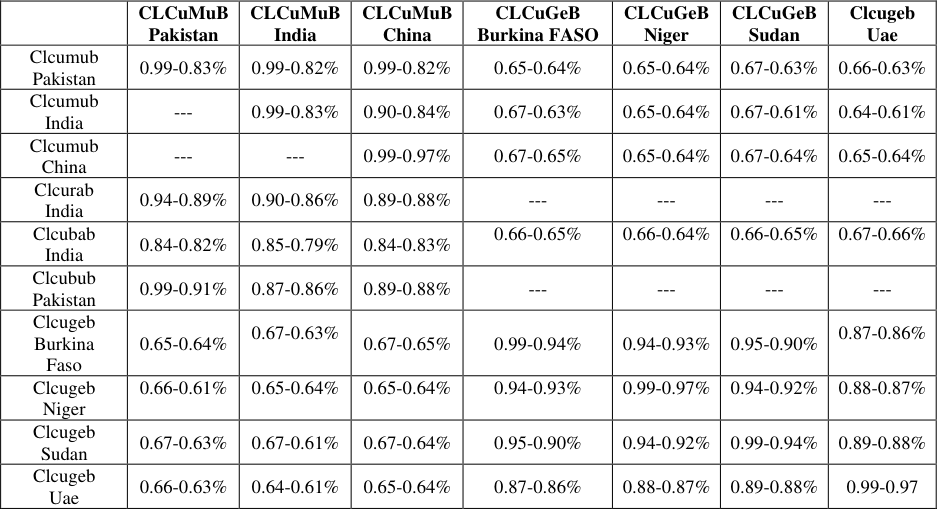 Table 2
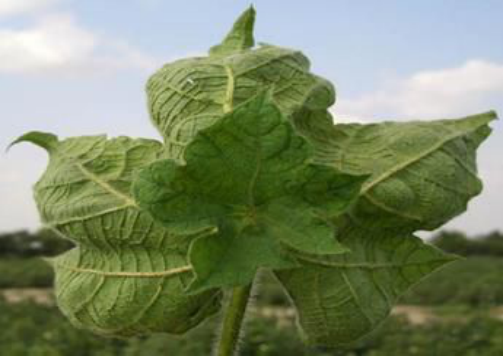 Figure 1
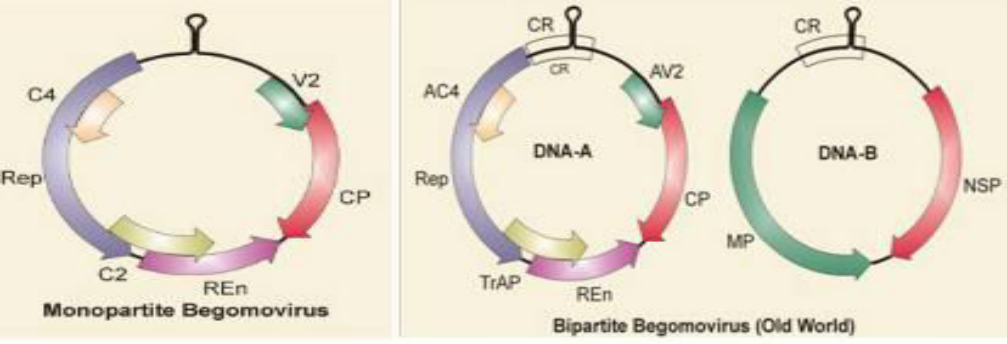 Figure 2
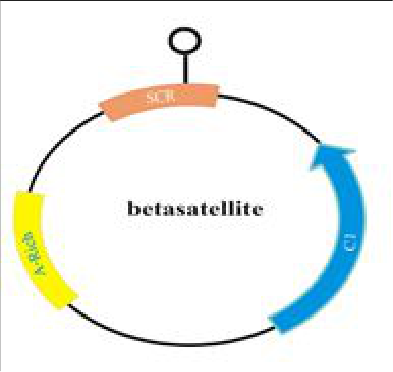 Figure 3
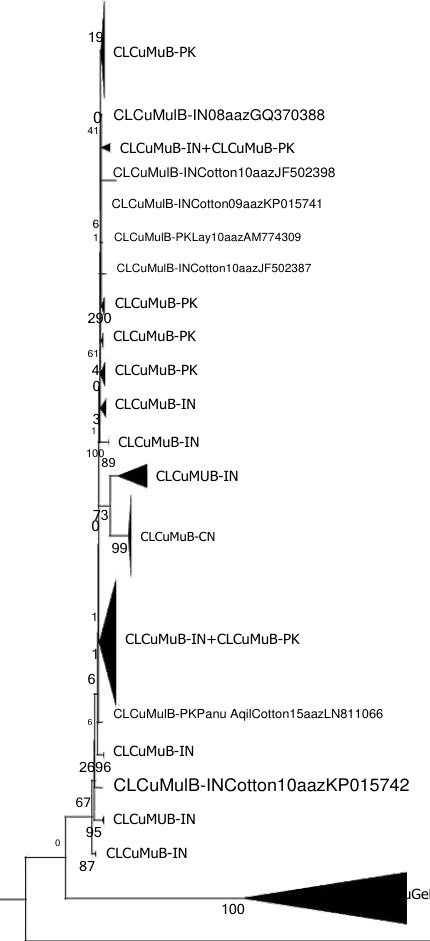 Figure 4
Introduction
Pakistan most important fiber and cash crop is cotton and it is the second mainly significant oil seed crop of the world (Farooq et al., 2014) [10] . G. hirsutum belong to the family Malvaceae and genus Gossypium (Azhar et al., 2013) [3] . Pakistan in the cotton production all over the world is on the 4th and in fiber export is on the first number (Aleem Ashraf et al., 2013). Due to huge economic significance cotton is also known as "white gold". Cotton has many use and it give us necessary product like meal, linters, oil, hulls and lint (Rabindran et al., 2014) [25] . Cotton is growing about sixty countries of the world (Aized et al., 2017) [1] . The main cotton cultivation countries are Pakistan, China, India and Uzbekistan.
Cotton Leaf Curl Disease
Geminiviridae families usually refer to as CLCuD linked begomoviruses. Mostly Old World begomovirus are monopartite have genomes that contain only one single stranded circular DNA (ssDNA) particle which are linked with betasatellite (Briddon et al., 2008) [11] and a third element known as alpha-satellite (Amrao et al., 2010) [2] .
Symptoms of CLCuD
Symptom in cotton typically emerges 2-3 weeks of inoculation. Infected plants show a variety of symptoms like curling of leaf, stunted growth and enations on the vein on the underneath of leave that may build up into cup like structure (Singh et al., 1997) [31] . Thickening of vein are of two types i.e. thickening of small vein and main-vein thickening. In minor vein thickening on juvenile leaves small green bead formed. The thickening appear first close to the leaf border and then extend interior to form a net of dark green thicken main vein (Mansoor et al., 2011) [18] .
Gemini viruses
Gemini virus tiny set of plant virus and have circular single strand genome (Kurstak, 1981) [17] which surrounded inside distinctive twin isometric particle (Harrison et al., 1977) [12] . Gemini virses transmit through insects and cause disease in both mono and dicots plants (d'Arcy et al., 2005) [8] . Gemini viruses that transmit through Bemicia tabaci (white fly) are more than 80% and belongs to the begomo virus genus. They frequently contain bipartite genome nominated DNA A and DNA B and cause disease in dicotyledonous plants (Harrison and Robinson, 1999) [13] .
Genera of Geminiviruses
The family Geminiviridae has been lengthened in recent times have nine genera Eragrovirus, Begomovirus, Capulavirus, Mastrevirus, Curtovirus, Becurtovirus, Topocuvirus, Grablovirus Turncurtovirus (Zerbini et al., 2017) [36] and Begomovirus genus contain viruses which cause more destruction and transmit through white fly.
Begomovirus
The begomovirus make up the biggest genus of the Geminiviradae family (RybickiEP et al., 2000). Most of the begomovirus genome contain two components (Padidam et al., 1995) [24] . The first component is DNA A coded every viral function essential for encapsidation, to control gene expression and for replication (Stanley, 1983) [32][33] . The DNA B coded two genes which have role in virus movement among and inside plant cells (Noueiry et al., 1994) [23] . Begomovirus have single strand circular genomic component. The earliest begomovirus which is analyzed have bipartite genome known as ACMV (Stanley, 1983; Stanley and Gay, 1983) [33,33] which is beginning in Old world and TGMV. [9,15,22] similar to DNA a component of OW (Old World) begomoviruses which is adequate to produce infectivity in host showed that they fulfill the requirement 'of the movement coded by genes of DNA B. Although some monopartite begomovirus like AYMV (Tan et al., 1995) [35] and Multan virus of cotton were not capable to produce disease and they need an additional component [2,11] . In addition to this most monopartite begomovirus linked with a symptom producing satellite recognized as betasatellites (Fig 1 .2).
Begomoviruses and Associated Satellite Molecules
Satellites are viruses that for replication needs an assistant virus however do not have wide nucleotide sequence characteristics like their helper virus and are not essential for its propagation (Murant and Mayo, 1982) [21] . Most of the satellite comprise of RNA and are linked with virus which have RNA genome and have no effect on the symptom cause by their helper virus in plant (Hu et al., 2009) [14] . [20 , 26 , 37] .
Betasatellites
Betasatellites
Materials and Methods
The research work was performed in the (CABB) Centre of Agricultural Biochemistry and Biotechnology department at Virology Laboratory University of Agriculture Faisalabad (UAF).
Retrieval of sequences from NCBI (National Center for Biotechnology Information)
All sequences of Cotton leaf curl betasatellite were find out in the database of NCBI. Cotton leaf curl betasatellites all complete sequences which is present in GenBank database taken in the FASTA format. First separated all the Cotton leaf curl betasatellite and then prepared a FASTA file of it.
Alignment by use of Clustal W and Phylogenetic study
Cotton leaf curl betasatellite complete sequences which were arranged in FASTA format was now build on MEGA7 for DNA alignment. Following parameters was used in clustal W alignment: 0.5= Transition weight and DNA weight matrix=clustal W 1.6.In clustal W after pairwise and multiple alignment, phylogenetic analysis was performed.
For this purpose opened the option of phylogeny on the main page and selected the option of construct/test neighbour joining tree. After this computed a phylogenetic tree over subsequent analysis preferences: phylogeny test is bootstrap method and number of bootstrap replications was= 1000 and form or technique is highest chance of combined.
Identity percentage by SDT
Previously ready FASTA file was changed into sdt file. SDTv1.2 software was used to open the sdt file. Then cotton leaf curl betasatellite all complete sequences were loaded onSDTv1.2 software. Alignment of loading sequences was completed by using Muscle alignment program. SDTv1.2 software result showed a color coded matrix. In column identity score was obtained for more accurate results. For pairwise comparison of sequences of cotton leaf curl betasatellites present in GenBank database of NCBI score was used for observing the lowest and highest nucleotide percentage.
Nucleotide BLAST
The sequences which have sequence identity percentage below 90% search the sequences in nucleotide BLAST to study the similarities and differences among all complete sequences of cotton leaf curl betasatellites. For this analysis first opened the Nucleotide BLAST, selected the sequences below 90% sequence identity and was copied them in given place and now done the BLAST of sequences. BLAST result showed a sequences list which has identity in genome sequence with the sequences whose BLAST was performed. Now genome alignment of a particular complete sequence of cotton leaf curl betasatellites was opened and checked the differences and similarities of this particular sequence and BLAST sequence was observed. point of view are very close to each other, climate conditions of both countries are also similar so the cotton species grown in both countries also have similarity. In both countries cotton leaf curl Multan betasatellite have similar field conditions and host. This might be the cause behind occurrence of betasatellites with larger sequence resemblance in their genomes and same origin. Then sequence contained sequence similarity proportion lower than 90% Nucleotide BLAST search was completed to examine the resemblance and dissimilarity among complete betasatellite genome sequence. The BLAST tool permits an investigator to evaluate a query sequence by means of sequence present in database and recognize sequences which look like our query sequence. Usually, betasatellite molecule did not permit a large amount of mutation take place in its genetic material. Consequently, less varieties present in betasatellite molecule. Betasatellite Species selection was 78%. Those contained above 78% similarity fraction separated from similar specie. In our study all betasatellites molecules with 78% similarity fraction were present. We can say that all were from the similar specie.
Acknowledgement
Acknowledgements I feel highly privileged to pay cordial gratitude to my reverend and zealot supervisor Dr. Muhammad Mubin Assistant Professor, CABB, UAF for his keen personal interest, dynamic supervision. I am also thankful to the members of my supervisory committee, Dr. M. Shah Nwaz ul Rehman Assistant Professor CABB, UAF and Dr. Tahira Iqbal, Department of Biochemistry, UAF for their constant support and help throughout the course of this study.
Figures and tables from the paper
| Genus | Genomic segmentation | Replication site | Transmission | Host details |
|---|---|---|---|---|
| Begomovirus | Segmented | Nucleus | Whiteflies | Dicotyledonous plants |
| Curtovirus | Monopartite | Nucleus | Beet leafhopper | Dicotyledonous plants |
| Becurtovirus | Monopartite | Nucleus | Viral movement; contact | Spinach |
| Eragrovirus | Monopartite | Nucleus | Treehopper; leafhopper | Plants |
| Topocuvirus | Monopartite | Nucleus | Leafhopper | Dicotyledonous plants |
| Mastrevirus | Monopartite | Nucleus | Leafhopper | Monocots |
| Turncurtovirus | Monopartite | Nucleus | Leafhopper | Turnip |
| Grablovirus | Monopartite | Nucleus | Alfalfa treehopper | Grapevines |
| Capulavirus | Monopartite | Nucleus | Medicago sativa |
Table text extracted from the original PDF; superscript letters are shown inline. The original table image is below.
View original table image
| — | CLCuMuB Pakistan | CLCuMuB India | CLCuMuB China | CLCuGeB Burkina FASO | CLCuGeB Niger | CLCuGeB Sudan | Clcugeb Uae |
|---|---|---|---|---|---|---|---|
| Clcumub Pakistan | 0.99-0.83% | 0.99-0.82% | 0.99-0.82% | 0.65-0.64% | 0.65-0.64% | 0.67-0.63% | 0.66-0.63% |
| Clcumub India | --- | 0.99-0.83% | 0.90-0.84% | 0.67-0.63% | 0.65-0.64% | 0.67-0.61% | 0.64-0.61% |
| Clcumub China | --- | --- | 0.99-0.97% | 0.67-0.65% | 0.65-0.64% | 0.67-0.64% | 0.65-0.64% |
| Clcurab India | 0.94-0.89% | 0.90-0.86% | 0.89-0.88% | --- | --- | --- | --- |
| Clcubab India | 0.84-0.82% | 0.85-0.79% | 0.84-0.83% | 0.66-0.65% | 0.66-0.64% | 0.66-0.65% | 0.67-0.66% |
| Clcubub Pakistan | 0.99-0.91% | 0.87-0.86% | 0.89-0.88% | --- | --- | --- | --- |
| Clcugeb Burkina Faso | 0.65-0.64% | 0.67-0.63% | 0.67-0.65% | 0.99-0.94% | 0.94-0.93% | 0.95-0.90% | 0.87-0.86% |
| Clcugeb Niger | 0.66-0.61% | 0.65-0.64% | 0.65-0.64% | 0.94-0.93% | 0.99-0.97% | 0.94-0.92% | 0.88-0.87% |
| Clcugeb Sudan | 0.67-0.63% | 0.67-0.61% | 0.67-0.64% | 0.95-0.90% | 0.94-0.92% | 0.99-0.94% | 0.89-0.88% |
| Clcugeb Uae | 0.66-0.63% | 0.64-0.61% | 0.65-0.64% | 0.87-0.86% | 0.88-0.87% | 0.89-0.88% | 0.99-0.97 |
Table text extracted from the original PDF; superscript letters are shown inline. The original table image is below.
View original table image
References
8 in the original paper- Aized T, Shahid M, Bhatti A, Saleem M, Anandarajah G. Energy security and renewable energy policy analysis of Pakistan. Renewable and Sustainable Energy Reviews, 2017.
- Amrao L, Amin I, Shahid MS, Briddon RW, Mansoor S. vector Bemisia tabaci (Genn.). J. Res. Punjab Agricultural University,1997:34:294-298.
- Stanley J. Infectivity of the cloned geminivirus genome requires sequences from both DNAs. Nature, 1983:305:643.
- Stanley J, Gay MR. Nucleotide sequence of cassava latent virus DNA. Nature, 1983:301:260.
- Stanley J, Saunders K, Pinner MS, Wong SM. Novel Defective Interfering DNAs Associated with Ageratum Yellow Vein Geminivirus Infection of Ageratum conyzoides. Virology,1997:239:87-96.
- Tan PH, Wong SM, Wu M, Bedford ID, Saunders K, Stanley J et al. Genome organization of ageratum yellow vein virus, a monopartite whitefly-transmitted geminivirus isolated from a common weed. Journal of General Virology,1995:76:2915-2922.
- Zerbini FM, Briddon RW, Idris A, Martin DP, Moriones E, Navas-Castillo J et al. ICTV virus taxonomy profile: geminiviridae. Journal of General Virology,2017:98:131133.
- Zia-Ur-Rehman M, Herrmann H-W, Hameed U, Haider M, Brown J. First detection of Cotton leaf curl Burewala virus and cognate cotton leaf curl Multan betasatellite and Gossypium darwinii symptomless alphasatellite in symptomatic Luffa cylindrica in Pakistan. Plant Disease,2013:97:1122-1122.