
Research article · 2021 · Full text
International Journal of Biology SciencesReview of nutritional states of viruses
Volume 3(1) · Pages 46–49 · DOI: 10.33545/26649926.2021.v3.i1a.25 ↗
Research areasViral gastroenteritis research and epidemiologyinterferon and immune responsesViral Infections and Immunology Research
Abstract
Author-writtenThe nutritional status of the host has long been associated with both severity and susceptibility to infectious disease. The accepted model system proposes that inadequate nutrition impairs the functioning of the immune system, thus resulting in increased susceptibility to infection. However, current work suggests that not only can the nutritional status of the host affect the immune response, but it can also affect the viral pathogen. In a mouse model, a benign strain of coxsackievirus B3 became virulent and caused myocarditis in selenium- and vitamin E-deficient mice. This change in pathogenicity was due to mutations in the viral genome, which changed an avirulent virus into a virulent one.
Summary
Source-checkedPlain-language reading of the full paper, prepared with AI and checked against the text. Each point links to the authors' own words.
Why it matters
- Host nutritional status is traditionally linked to how susceptible a person is to infection and how severe that infection becomes. View evidence ↗
- The standard scientific model suggests that poor nutrition increases infection risk by impairing the immune system's ability to function. View evidence ↗
- The ongoing appearance of new or returning pathogenic viruses represents a significant threat to global public health. View evidence ↗
The question
- The paper aims to review the molecular biology of pathogenic viruses and the molecular techniques used to detect and characterize them. View evidence ↗
What they did
- PCR-based techniques and DNA sequencing are used as highly sensitive and specific methods for identifying the circulation of viruses. View evidence ↗
What they found
- In mice lacking selenium and vitamin E, a normally benign strain of coxsackievirus B3 became virulent and caused myocarditis. View evidence ↗
- The increase in virulence in the coxsackievirus B3 mouse model was caused by mutations in the viral genome. View evidence ↗
- The 1998 Nipah virus outbreak in Malaysia and Singapore resulted in 276 cases of encephalitis and 106 deaths. View evidence ↗
- Since 2001, annual Nipah virus outbreaks in Bangladesh have shown a case-fatality rate as high as 90%. View evidence ↗
- Roughly 3.9 billion people across more than 120 countries are at risk of infection from Zika, Dengue, or Chikungunya viruses. View evidence ↗
- During the early stages of the SARS-CoV-2 outbreak, cases grew from 20,000 in the first 12 days to over 80,000 within 33 days. View evidence ↗
- Most hepatitis B virus (HBV) pre-S/S variants cause liver disease by inducing endoplasmic reticulum stress and retaining envelope proteins inside the cell. View evidence ↗
What it means
- The authors conclude that host nutrition does not just affect susceptibility and severity, but also plays a role in shaping how viruses evolve. View evidence ↗
- The authors recommend further research into obesity and malnutrition to understand how they impair host defenses and influence viral pathogenesis. View evidence ↗
Visual summary
1 visualsIllustrations explain the paper; they do not show study data.
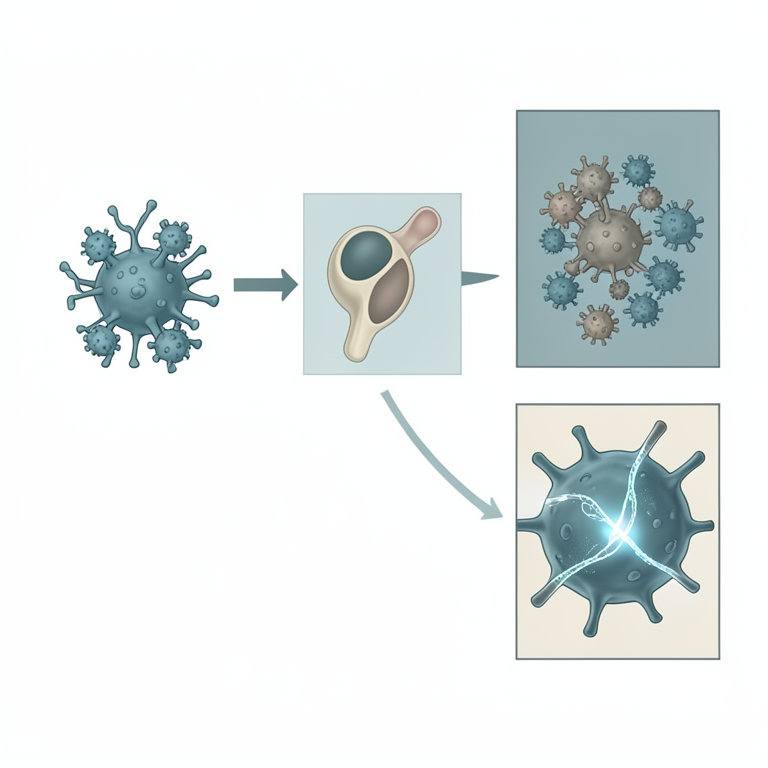
Nutrition-Virus Interaction Loop
AI-generated conceptual illustration (human immune cells and viral particles). It explains the idea and does not show study data.
View source evidence ↗Introduction
Pathogenic viruses are viruses that can infect and replicate within human cells and cause diseases. The continuous emergence and re-emergence of pathogenic viruses has become a major threat to public health. Whenever pathogenic viruses emerge, their rapid detection is critical to enable implementation of specific control measures and the limitation of virus spread. Further molecular characterization to better understand these viruses is required for the development of diagnostic tests and countermeasures. Advances in molecular biology techniques have revolutionized the procedures for detection and characterization of pathogenic viruses. The development of PCR-based techniques together with DNA sequencing technology, have provided highly sensitive and specific methods to determine virus circulation. Pathogenic viruses potentially having global catastrophic consequences may emerge in regions where capacity for their detection and characterization is limited. Development of a local capacity to rapidly identify new viruses is therefore critical. This article reviews the molecular biology of pathogenic viruses and the basic principles of molecular techniques commonly used for their detection and characterization. The principles of good laboratory practices for handling pathogenic viruses are also discussed. This review aims at providing researchers and laboratory personnel with an overview of the molecular biology of pathogenic viruses and the principles of molecular techniques and good laboratory practices commonly implemented for their detection and characterization [1] .
Pathogenesis
Varicella-zoster virus (VZV), a member of the human alphaherpesvirus family, causes chickenpox (varicella) mostly in children and establishes a latent infection in cranial, dorsal root and autonomic ganglia. Latent VZV can reactivate decades later to produce shingles (zoster). VZV-specific cellmediated immunity (CMI) declines with age, resulting in zoster and associated neurological complications that are also seen in immunocompromised organ transplant recipients and in patients with cancer or AIDS. The actual mechanism of reduction in VZV-specific CMI and associated virus reactivation remains unclear. VZV produces chickenpox and shingles only in humans, underscoring the need for an animal model to study VZV neuropathogenesis. Attempts by multiple groups to establish VZV infection in guinea pigs and mice by experimental inoculation have resulted in seroconversion without clinical symptoms [14][15][16] .
Outlook
Ebola virus disease (EVD) is a severe and frequently lethal disease caused by Ebola virus (EBOV). EVD outbreaks typically start from a single case of probable zoonotic transmission, followed by human-to-human transmission via direct contact or contact with infected bodily fluids or contaminated fomites. EVD has a high case-fatality rate; it is characterized by fever, gastrointestinal signs and multiple organ dysfunction syndrome. Diagnosis requires a combination of case definition and laboratory tests, typically real-time reverse transcription PCR to detect viral RNA or rapid diagnostic tests based on immunoassays to detect EBOV antigens. Recent advances in medical countermeasure research resulted in the recent approval of an EBOV-targeted vaccine by European and US regulatory agencies. The results of a randomized clinical trial of investigational therapeutics for EVD demonstrated survival benefits from two monoclonal antibody products targeting the EBOV membrane glycoprotein. New observations emerging from the unprecedented 2013-2016 Western African EVD outbreak (the largest in history) and the ongoing EVD outbreak in the Democratic Republic of the Congo have substantially improved the understanding of EVD and viral persistence in survivors of EVD, resulting in new strategies toward prevention of infection and optimization of clinical management, acute illness outcomes and attendance to the clinical care needs of patients [17] . The 2013-2016 Western African EVD outbreak was the first to be largely characterized by molecular epidemiological evidence. Deep-sequencing efforts, often performed on site and in parallel by several groups, resulted in the determination of >1, 600 codingcomplete (all open reading frames) or near-complete (typically coding-complete plus parts of leaders and/or trailers) EBOV genomes directly from human patient samples [18][19][20] . The honey bee queen is the central hub of a colony to produce eggs and release pheromones to maintain social cohesion. Among many environmental stresses, viruses are a major concern to compromise the queen's health and reproductive vigor. Viruses have evolved numerous strategies to infect queens either via vertical transmission from the queens' parents or horizontally through the worker and drones with which she is in contact during development, while mating, and in the reproductive period in the colony. Over 30 viruses have been discovered from honey bees but only few studies exist on the pathogenicity and direct impact of viruses on the queen's phenotype. An apparent lack of virus symptoms and practical problems are partly to blame for the lack of studies, and we hope to stimulate new research and methodological approaches. To illustrate the problems, we describe a study on sublethal effects of Israeli Acute Paralysis Virus (IAPV) that led to inconclusive results. We conclude by discussing the most crucial methodological considerations and novel approaches for studying the interactions between honey bee viruses and their interactions with queen health [21] . Chronic hepatitis B is a global health problem. The clinical outcomes of chronic hepatitis B infection include asymptomatic carrier state, chronic hepatitis (CH), liver cirrhosis (LC), and hepatocellular carcinoma (HCC). Because of the spontaneous error rate inherent to viral reverse transcriptase, the hepatitis B virus (HBV) genome evolves during the course of infection under the antiviral pressure of host immunity. The clinical significance of pre-S/S variants has become increasingly recognized in patients with chronic HBV infection. Pre-S/S variants are often identified in hepatitis B carriers with CH, LC, and HCC, which suggests that these naturally occurring pre-S/S variants may contribute to the development of progressive liver damage and hepatocarcinogenesis. This paper reviews the function of the pre-S/S region along with recent findings related to the role of pre-S/S variants in liver diseases. According to the mutation type, five pre-S/S variants have been identified: pre-S deletion, pre-S point mutation, pre-S1 splice variant, C-terminus S point mutation, and pre-S/S nonsense mutation. Their associations with HBV genotype and the possible pathogenesis of pre-S/S variants are discussed. Different pre-S/S variants cause liver diseases through different mechanisms. Most cause the intracellular retention of HBV envelope proteins and of endoplasmic reticulum stress, which results in liver diseases. Pre-S/S variants should be routinely determined in HBV carriers to help identify individuals who may be at a high risk of less favorable liver disease progression. Additional investigations are required to explore the molecular mechanisms of the pre-S/S variants involved in the pathogenesis of each stage of liver disease [22,23] .Understanding transmission routes and directionality of viral spread is a crucial first step in determining the effect and epidemiology of a given pathogen, because transmission routes have direct effects on the prevalence and virulence of viruses [24,25] .
Notes
The interactions between viruses and their honey bee queen hosts have practical importance for maintaining pollinator health because the queens play an important role in vertical transmission of many health-relevant viruses. More research is needed to document the distribution of viruses and their dynamics across space and time. Continued discovery of novel viruses or virus strains can be anticipated, necessitating continued monitoring efforts. This is particularly true to honey bee queen breeding operations that widely distribute their bees to their customers. Alternative to virus monitoring of queen breeders, local, small-scale queen breeding efforts could mitigate the risk of human-assisted virus spread over long distances [26] . Beyond the practical importance of more virus research in honey bee queens, honey bees present unique opportunities of academic interest to study the relations between host physiology, virus transmission and replication, and virus pathogenicity [27] . Specifically, the interplay between caste, potentially differential virulence evolution, and social immune mechanisms should be of great general interest. However, we believe that many experimental difficulties that complicate investigations into the interactions between viruses and honey bee queens need to be addressed before conclusive studies can improve our current understanding of queen-virus relationships and honey bee virology in general [28] .
Conclusion
Pathogen virulence is a complex interplay of both host and pathogen properties. Host nutritional status has long been considered a risk for infection susceptibility and severity and is now implicated in shaping viral evolution. Continued studies on the molecular consequences of obesity and malnutrition at the macro-and micronutrient levels will reveal which host defenses are impaired through malnutrition and how they control quasispecies development and viral pathogenesis. Similarly, as we gain insight into how hosts influence quasispecies formation and pathogen virulence, we too can exploit these features for host benefit [29] . Viral infections are either acute or persistent. An acute infection generally has a rapid course with an incubation period of days to weeks and the virus clears the body within 2 to 3 weeks of disease onset. Persistent infections may last months to years and can be characterized as late complications of acute infection or latent, chronic, or slow infections. Persistent infections may be reactivated and cause acute episodes or cause late sequela to infections. They may be associated with immunopathologic disease, may lead to neoplasia, and are important epidemiologically as a result of recurrence of or continual shedding [30] .
Acknowledgement
AcknowledgementThe author wishes to thank-AK's Innovative Research Centre (AKIRC).
References
30 in the original paper- Artika IM, Wiyatno A, Ma'roef CN. Pathogenic viruses: Molecular detection and characterization. Infection, genetics and evolution: journal of molecular epidemiology and evolutionary genetics in infectious diseases,2020:81:104215-104215.
- Chua KB, Gubler DJ. Perspectives of public health laboratories in emerging infectious diseases. Emerging microbes & infections,2013:2(1):1-6.
- De Wit E. Foodborne transmission of nipah virus in Syrian hamsters. PLoS pathogens,2014:10(3):e1004001e1004001.
- Chua K. Nipah virus: a recently emergent deadly paramyxovirus. Science,2000:288(5470):1432-1435.
- Syed A. Nipah Virus outbreak in the World. Int J Adv Res Biol Sci,2018:5(9):131-138.
- Thiberville SD. Chikungunya fever: epidemiology, clinical syndrome, pathogenesis and therapy. Antiviral research,2013:99(3):345-370.
- Stein DA. Inhibition of RNA virus infections with peptide-conjugated morpholino oligomers. Current pharmaceutical design,2008:14(25):2619-2634.
- Krishnamoorthy K. Burden of chikungunya in India: estimates of disability adjusted life years (DALY) lost in 2006 epidemic. Journal of vector borne diseases, 2009:46(1):26.
- Harapan H. Chikungunya virus infection in Indonesia: a systematic review and evolutionary analysis. BMC infectious diseases,2019:19(1):243-243.
- Syed A. Chikungunya Virus: An Infectious Disease. Int J Curr Res Biol Med,2018:3(10):20-30.
- Weaver SC, Reisen WK. Present and future arboviral threats. Antiviral research,2010:85(2):328-345.
- Biswas A. Emergence of Novel Coronavirus and COVID19: whether to stay or die out? Critical reviews in microbiology,2020:46(2):182-193.
- Syed A. Coronavirus: a mini-review. Int J Curr Res Med Sci,2020:6(1):8-10.
- Mahalingam R. Current In Vivo Models of VaricellaZoster Virus Neurotropism. Viruses,2019:11(6):502.
- Myers MG, Duer HL, Hausler CK. Experimental infection of guinea pigs with varicella-zoster virus. J Infect Dis,1980:142(3):414-20.
- Syed A. Varicella-Zoster virus. Int J Curr Res Biol Med,2019:4(4):10-11.
- Jacob ST. Ebola virus disease. Nature reviews. Disease primers,2020:6(1):13-13.
- Gire SK. Genomic surveillance elucidates Ebola virus origin and transmission during the 2014 outbreak. science,2014:345(6202):1369-1372.
- Carroll MW. Temporal and spatial analysis of the 20142015 Ebola virus outbreak in West Africa. Nature,2015:524(7563):97-101.
- Syed A. Ebola Virus Disease. Int. J. Curr. Res. Med. Sci,2019:5(3):18-23.
- Amiri E. Honey Bee Queens and Virus Infections. Viruses,2020:12(3):322.
- Chen BF. Hepatitis B virus pre-S/S variants in liver diseases. World journal of gastroenterology, 2018:24(14):1507-1520.
- Syed A. Jaundice it is not a disease, it is a symptom of several possible underlying illnesses. Int J Curr Res Med Sci,2018:4(11):16-26.
- Martin SJ. Global honey bee viral landscape altered by a parasitic mite. Science,2012:336(6086):1304-1306.
- Shapiro-Ilan DI. Definitions of pathogenicity and virulence in invertebrate pathology. Journal of invertebrate pathology,2005:88(1):1-7.
- Moritz RF. Research strategies to improve honeybee health in Europe. Apidologie,2010:41(3):227-242.
- Rangel J, Fisher A. Factors affecting the reproductive health of honey bee (Apis mellifera) drones-A review. Apidologie,2019:50(6):759-778.
- Meixner MD. A historical review of managed honey bee populations in Europe and the United States and the factors that may affect them. Journal of invertebrate pathology,2010:103:S80-S95.
- Honce R, Schultz-Cherry S. They are what you eat: Shaping of viral populations through nutrition and consequences for virulence. PLoS pathogens, 2020:16(8):e1008711-e1008711.
- Kennedy M, Greenacre CB. General concepts of virology. The veterinary clinics of North America. Exotic animal practice,2005:8(1):1-6.