
Research article · 2020 · Full text
International Journal of Biology SciencesMorphometry and length-length relationship of Jagora spp. collected from the river and stream of Aurora Province, Philippines
Volume 2(1) · Pages 18–21 · DOI: 10.33545/26649926.2020.v2.i1a.18 ↗
Research areasFish Biology and Ecology StudiesAquatic Invertebrate Ecology and BehaviorFish Ecology and Management Studies
Abstract
Author-writtenThe general objective of this study was to determine the shell morphometry of Jagora spp. collected from the river and stream of Aurora province, Philippines. Specifically, this study aimed to assess the shell length-length relationship of the snail species. The average shell measurements of Jagora spp. were: shell length (SL) = 34.58±24.80 mm, aperture length (AL) = 11.77±8.41 mm, whorl height 1 (WH1) = 4.82±1.62 mm, whorl height 2 (WH2) = 3.93±1.46 mm, whorl height 3 (WH3) = 3.32±1.69 mm, aperture width (AW) = 8.60±6.82 mm, whorl width 1 (WW1) = 13.32±15.26 mm, whorl width 2 (WW2) = 16.08±17.73 mm, body whorl width (BWW) = 19.25±20.15 mm and interior aperture length (AILL) = 6.73±3.73 mm. The correlations of SL to the rest of measurements were very strong or r value is from 0.80 to 0.99. These equations could be used to predict the value of AL (0.66 SL0.97), WH1 (1.12 SL0.40), WH2 (0.95 SL0.44), WH3 (0.64 SL0.64), AW (0.67 SL0.86), WW1 (0.20 SL1.71), WW2 (0.26 SL1.59), BWW (0.38 SL1.42) and AILL (1.06 SL0.52) if SL is given.
Summary
Source-checkedPlain-language reading of the full paper, prepared with AI and checked against the text. Each point links to the authors' own words.
Why it matters
- Morphological and morphometric studies are essential for identifying snail species, remaining useful even with the availability of molecular tools. View evidence ↗
- There is a lack of existing research regarding the shell morphometrics of pachychilidae snails within the Philippines. View evidence ↗
The question
- The study aimed to determine the shell morphometry of Jagora spp. snails collected from rivers and streams in Aurora province, Philippines. View evidence ↗
- A specific goal of the research was to assess the length-length relationships of the shells of these snail species. View evidence ↗
What they did
- The researchers collected 45 freshwater snails identified as Jagora spp. from Maria Aurora, Dingalan, and Dipaculao in Aurora province, Philippines. View evidence ↗
- Ten different shell morphometric characteristics were measured using a caliper, following established methods. View evidence ↗
- The association between shell length and other morphometric measurements was analyzed using correlation coefficients (r) calculated via trendline analysis in MS Excel. View evidence ↗
- Length-length relationships were estimated using a power function formula where X represents various shell lengths and SL is the shell length. View evidence ↗
What they found
- The average shell length (SL) was 34.58±24.80 mm, with other average measurements including aperture length (AL) at 11.77±8.41 mm and body whorl width (BWW) at 19.25±20.15 mm. View evidence ↗
- Shell length (SL) showed a very strong positive correlation with all other measured morphometrics, with r values ranging from 0.80 to 0.99. View evidence ↗
What it means
- The authors conclude that the generated equations can be used to predict various shell morphometric values provided the shell length is known. View evidence ↗
- The authors note that because no previous published studies on Jagora spp. shell morphometrics exist, they were unable to compare their results with other data. View evidence ↗
Visual summary
3 visualsIllustrations explain the paper; charts are replotted from the paper's own table values.
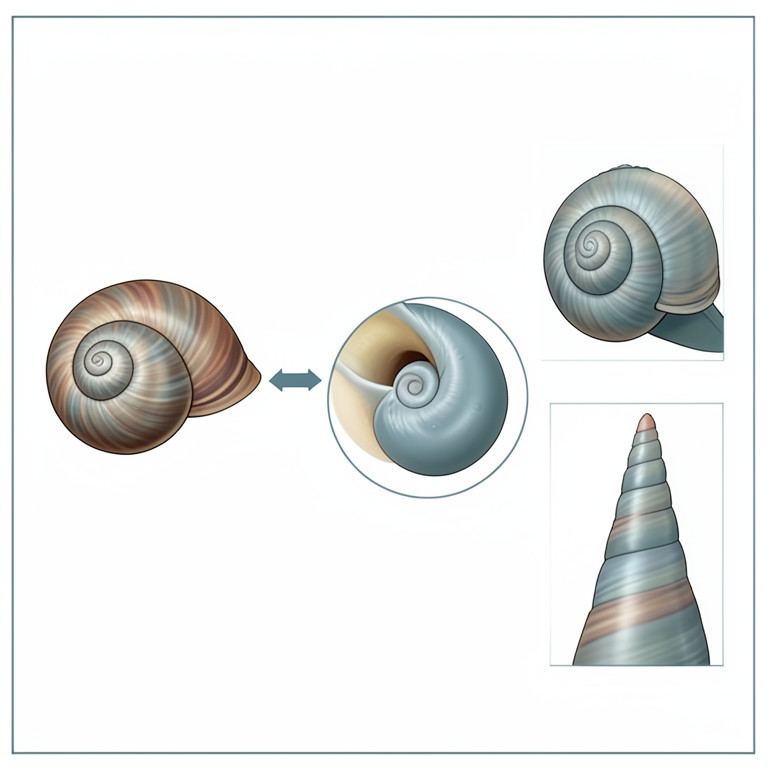
Predictive Relationship Concept
AI-generated conceptual illustration (Jagora snails (freshwater gastropods)). It explains the idea and does not show study data.
View source evidence ↗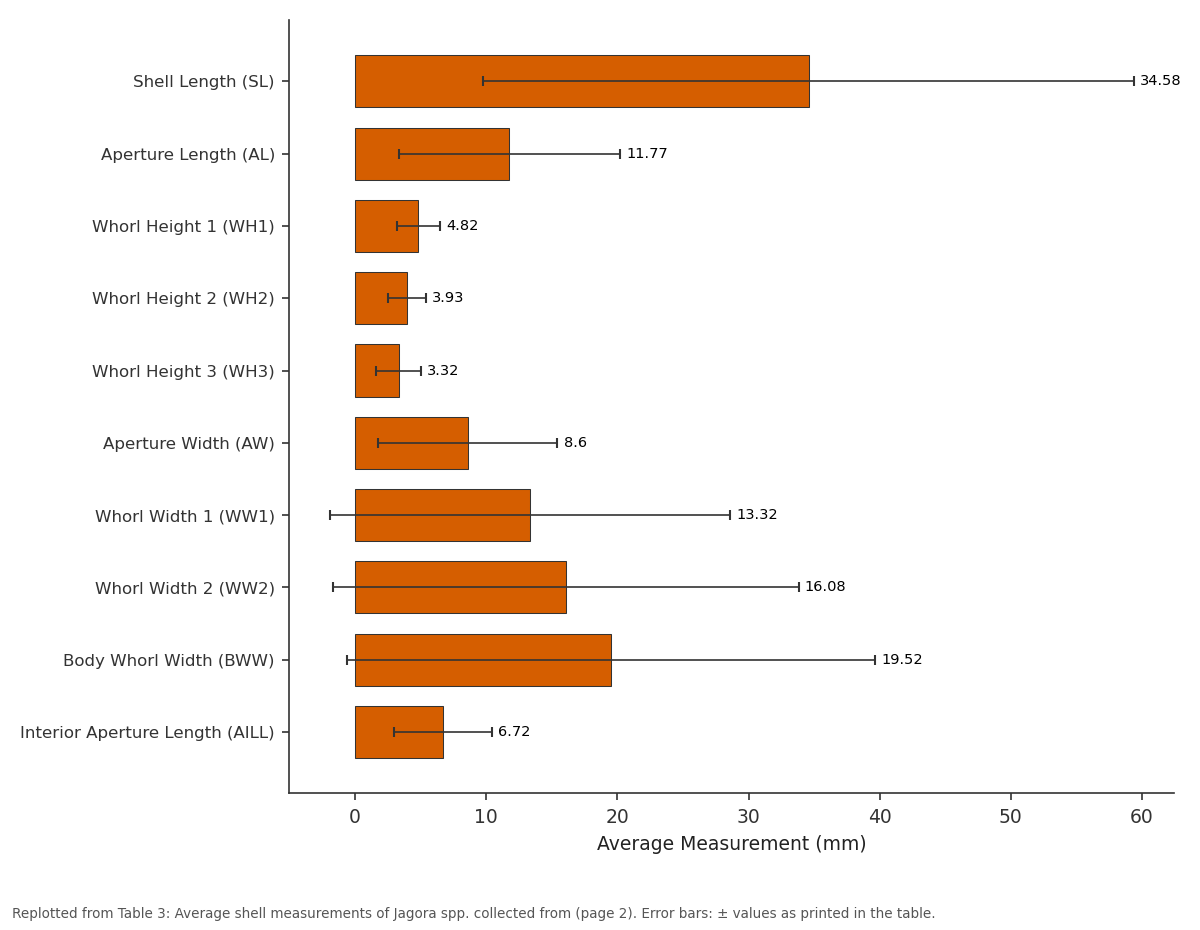
Average Measurement (mm): Shell Length (SL) vs Aperture Length (AL) vs Whorl Height 1 (WH1) vs Whorl Height 2 (WH2) vs Whorl Height 3 (WH3)
Replotted from Table 3 (page 2) of the original paper. Every bar is the paper's own table value.
View source evidence ↗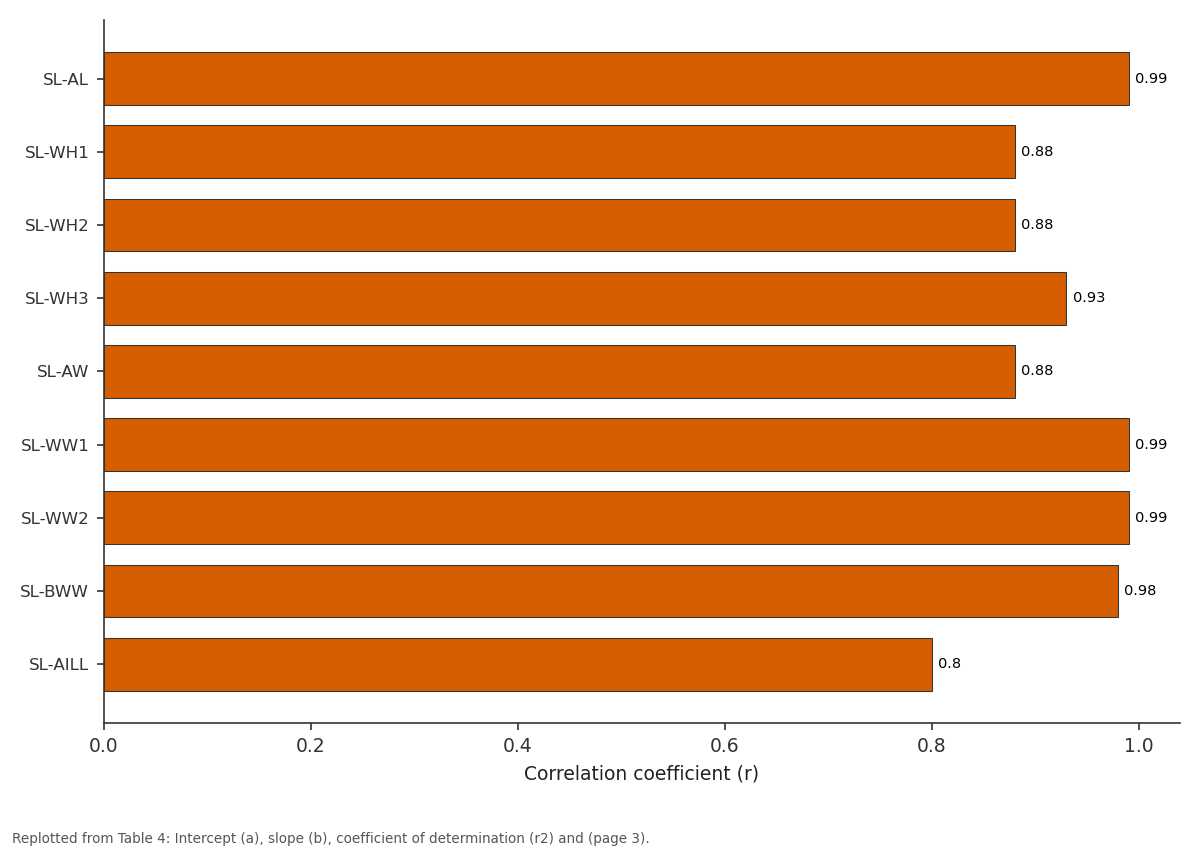
r: SL-AL vs SL-WH1 vs SL-WH2 vs SL-WH3 vs SL-AW
Replotted from Table 4 (page 3) of the original paper. Every bar is the paper's own table value.
View source evidence ↗Figures & tables
From the original paper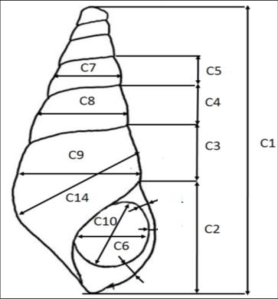 Figure 1
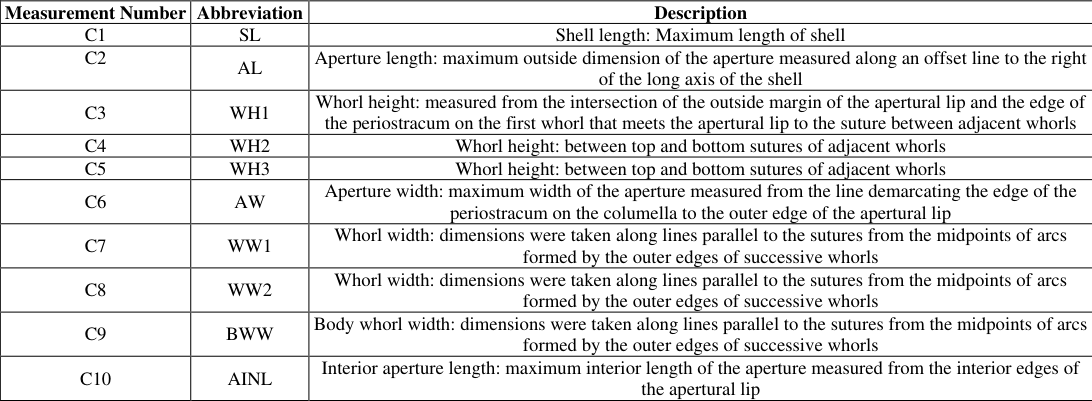 Table 1
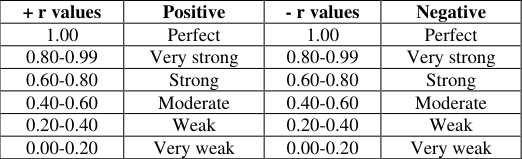 Table 2
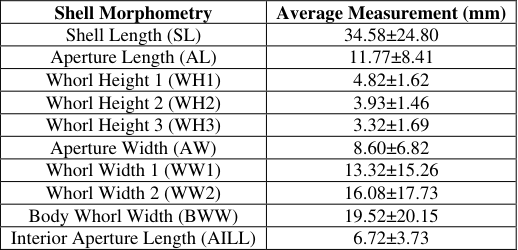 Table 3
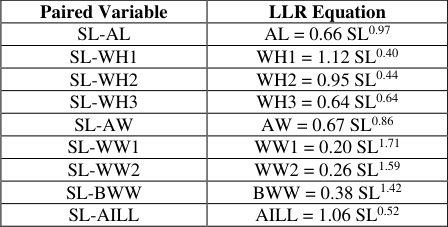 Table 5
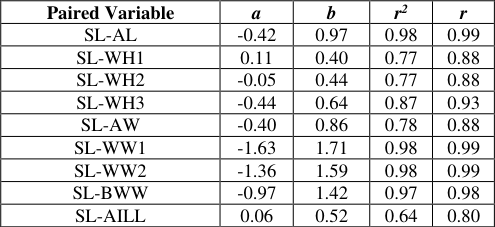 Table 4
Introduction
One of the freshwater species under superfamily Cerithioidea is Jagora spp. that is recorder in the northern part of the Philippines. This genus was named after the German naturalist and anthropologist Andreas Feodor Jagor (1817-1900), who between 1859 and 1860 travelled through the Philippine archipelago. It can grow up to 50 to mm length and 18 mm width. Its shell is highly towered, usually dark brown in color. The body is gray to black with filiform antennae [1,2] . Phenotypic plasticity of bivalve shell morphometry has long been reported in a number of literatures [3,4] . Various ecological factors are known to influence bivalve shell morphometry, including latitude [5] , depth of distribution [6] , tidal excursion or shore level [7] , water movements [8] , type of sediment [9] and trophic conditions [10] . Morphological and morphometric studies in snails are important for species identification even in the advent of molecular tools [11] . Likewise, the study of length-weight and length-length relationships is very important and widely practiced tool in the fishery for different purposes, especially in the study of population dynamics, ecology, Taxonomic differences, Event in life history like metamorphosis, maturity and stock management [12][13][14][15][16][17] . The pragmatic relationship between the shell morphometrics of the pachychilidae as represented by Jagora spp. enhances the knowledge regarding the commercially important pachychilidae species. Unfortunately, limited works have been done on the relationship of shell morphometrics of pachychilidae in the Philippines. The general objective of this study was to determine the shell morphometry of Jagora spp. collected from the river and stream of Aurora province, Philippines. Specifically, this study aimed to assess the shell length-length relationship of the snail species.
Materials and Methods
Materials and Methods
Collection and preparation of samples
Forty-five (45) pieces freshwater snail that were morphologically identified as Jagora spp. were collected from the river and stream of Maria Aurora, Dingalan and Dipaculao in the province of Aurora, Philippines. Snail samples were brought home for cleaning and visceral mass removal.
Measurement of shell morphology
A total of 10 shell morphometrics (Figure 1) were measured using a caliper following the works of Sherely [18] . The detailed shell morphometrics and characteristics are shown in Table 1.
Determination of degree of association between shell measurements
The degree of association between the shell length (SL) and aperture length (AL), whorl heights (WH), aperture width (AW), whorl width (WW), body whorl width (BWW) and interior aperture length (AINL) was based on the computed correlation coefficient (r) using trendline analysis in Microsoft (MS) Excel. The interpretation of correlation coefficient scale is provided in Table 2.
| + r values | Positive | - r values | Negative |
|---|---|---|---|
| 1.00 | Perfect | 1.00 | Perfect |
| 0.80-0.99 | Very strong | 0.80-0.99 | Very strong |
| 0.60-0.80 | Strong | 0.60-0.80 | Strong |
| 0.40-0.60 | Moderate | 0.40-0.60 | Moderate |
| 0.20-0.40 | Weak | 0.20-0.40 | Weak |
| 0.00-0.20 | Very weak | 0.00-0.20 | Very weak |
Table text extracted from the original PDF; superscript letters are shown inline. The original table image is below.
View original table image
Estimation of shell length-length relationship
The length-length relationship of the snail samples was estimated using the formula:
Where: SL = shell length in mm X = the other lengths in mm (AL, WH, AW, WW, BWW and AINL) a = intercept b = slope
Results and Discussion
Results and Discussion
Measurement of shell morphology
Provided in 3). Species discrimination can be done through shell morphology and morphometric variations [19] . Morphological and morphometric studies of gastropod shells are important, even though present-day molecular technology is widely used to identify organisms precisely [11] . The usage of morphometric analysis has obtained wide acceptance in the current biological scene as it is increasingly used as a necessary complement to molecular studies due to its reasonable cost and tolerable resolving power of discrimination. Species identification can be done in-situ based on morphological observation and this helps to avoid the misidentification of species [20] . Common shell characteristics used in morphometric studies are shell length, shell width, body whorl length, penultimate whorl width, aperture length and aperture width [21] . There were no available published studies on the shell morphometrics of Jagora spp., thus, it is impossible to compare the generated morphometrics from this present study.
In several studies, bivalve shell morphometry is influenced by ecological factors such as latitude [5] , depth of distribution [6] , tidal excursion or shore level [7] , water movements such as waves, turbulence and currents [8] , type of sediment [9] and trophic conditions [10] . Morphometric studies are valuable for the identification of the specimens [11] .
Determination of degree of association between shell measurements
A correlation coefficient measures the statistical relationship between two variables, in this case, the correlation between SL and the rest of shell morphometrics. The correlations of SL to all measurements were very strong or r value is from 0.80 to 0.99 (SL-AL = 0.99, SL-WH1 = 0.88, SL-WH2 = 0.88, SL-WH3 = 0.93, SL-AW = 0.88, SL-WW1 = 0.99, SL-WW2 = 0.99, SL-BWW = 0.98 and SL-AILL = 0.80). All paired variables showed direct relationship as indicated by positive b values (SL-AL = 0.97, SL-WH1 = 0.40, SL-WH2 = 0.44, SL-WH3 = 0.64, SL-AW = 0.86, SL-WW1 = 1.71, SL-WW2 = 1.59, SL-BWW = 0.142 and SL-AILL = 0.52), thus, an increase of 1 unit in the X variable will result to a certain unit of increase in the Y variable (Table 4). The first three highest r value was recorded between SL-AL, SL-WW1 and SL-WW2, thus, the value of AL, WW1 and WW2 could be best predicted given that SL is known. The generated r and b values in this study are impossible to compare because of unavailability of literatures.
| Paired Variable | a | b | r2 | r |
|---|---|---|---|---|
| SL-AL | -0.42 | 0.97 | 0.98 | 0.99 |
| SL-WH1 | 0.11 | 0.40 | 0.77 | 0.88 |
| SL-WH2 | -0.05 | 0.44 | 0.77 | 0.88 |
| SL-WH3 | -0.44 | 0.64 | 0.87 | 0.93 |
| SL-AW | -0.40 | 0.86 | 0.78 | 0.88 |
| SL-WW1 | -1.63 | 1.71 | 0.98 | 0.99 |
| SL-WW2 | -1.36 | 1.59 | 0.98 | 0.99 |
| SL-BWW | -0.97 | 1.42 | 0.97 | 0.98 |
| SL-AILL | 0.06 | 0.52 | 0.64 | 0.80 |
Table text extracted from the original PDF; superscript letters are shown inline. The original table image is below.
View original table image
Length-length relationship equation
In Table 5, the summary of length-length equations are provided. These equations could be used to predict the value of AL (0.66 SL 0.97 ), WH1 (1.12 SL 0.40 ), WH2 (0.95 SL 0.44 ), WH3 (0.64 SL 0.64 ), AW (0.67 SL 0.86 ), WW1 (0.20 SL 1.71 ), WW2 (0.26 SL 1.59 ), BWW (0.38 SL 1.42 ) and AILL (1.06 SL 0.52 ) if SL is given. The first three highest r value was recorded in pairs SL-AL, SL-WW1 and SL-WW2, thus, the value of AL, WW1 and WW2 could be best predicted using the length-length equation provided that SL is known. It is necessary to use standard measures for all populations to render the results more reliable when making comparisons between populations. Therefore, the length-length relations of species under various environmental conditions should be known. The length-length relationship is also of great importance for comparative growth studies [22] . In fisheries studies, length can often be measured more rapidly and easily than mass. The knowledge of the length-weight relationship makes it easier to determine the mass where only the length is known [22] .
| Paired Variable | LLR Equation |
|---|---|
| SL-AL | AL = 0.66 SL0.97 |
| SL-WH1 | WH1 = 1.12 SL0.40 |
| SL-WH2 | WH2 = 0.95 SL0.44 |
| SL-WH3 | WH3 = 0.64 SL0.64 |
| SL-AW | AW = 0.67 SL0.86 |
| SL-WW1 | WW1 = 0.20 SL1.71 |
| SL-WW2 | WW2 = 0.26 SL1.59 |
| SL-BWW | BWW = 0.38 SL1.42 |
| SL-AILL | AILL = 1.06 SL0.52 |
Table text extracted from the original PDF; superscript letters are shown inline. The original table image is below.
View original table image
Conclusion
The correlations of shell length (SL) to the rest of measurements (AL = aperture length, WH1 = whorl height 1, WH2 = whorl height 2, WH3 = whorl height 3, AW = aperture width, WW1 = whorl width 1, WW2 = whorl width, BWW = body whorl width and AILL = interior aperture length) were very strong or r value is from 0.80 to 0.99. These equations could be used to predict the value of AL (0.66 SL 0.97 ), WH1 (1.12 SL 0.40 ), WH2 (0.95 SL 0.44 ), WH3 (0.64 SL 0.64 ), AW (0.67 SL 0.86 ), WW1 (0.20 SL 1.71 ), WW2 (0.26 SL 1.59 ), BWW (0.38 SL 1.42 ) and AILL (1.06 SL 0.52 ) if SL is given.
Figures and tables from the paper
| Shell Morphometry | Average Measurement (mm) |
|---|---|
| Shell Length (SL) | 34.58±24.80 |
| Aperture Length (AL) | 11.77±8.41 |
| Whorl Height 1 (WH1) | 4.82±1.62 |
| Whorl Height 2 (WH2) | 3.93±1.46 |
| Whorl Height 3 (WH3) | 3.32±1.69 |
| Aperture Width (AW) | 8.60±6.82 |
| Whorl Width 1 (WW1) | 13.32±15.26 |
| Whorl Width 2 (WW2) | 16.08±17.73 |
| Body Whorl Width (BWW) | 19.52±20.15 |
| Interior Aperture Length (AILL) | 6.72±3.73 |
Table text extracted from the original PDF; superscript letters are shown inline. The original table image is below.
View original table image
References
23 in the original paper- Köhler F, Glaubrecht M. Morphology, reproductive biology and molecular genetics of ovoviviparous freshwater gastropods (Cerithioidea: Pachychilidae) from the Philippines, with description of the new genus Jagora. Zoologica Scripta. 2003; 32(1):35-59.
- Köhler F, Dames C. Phylogeny and systematics of the Pachychilidae of mainland Southeast Asia -Novel insights from morphology and mitochondrial DNA (Mollusca, Caenogastropoda, Cerithioidea). Zoological Journal of the Linnean Society. 2009; 157:679-699.
- Kwon JY, Park JW, Lee YH, Hong YK, Chang YJ. Morphological variation and genetic relationship among populations of shortnecked clam Ruditapes philippinarum collected from different habitats. Journal of Fisheries Science and Technology. 1999; 2:98-104.
- Costa C, Aguzzi J, Menesatti P, Antonucci F, Rimatori V, Mattoccia M et al. Shape analysis of different populations of clams in relation to their geographical structure. Journal of Zoology (Lond.). 2008; 276:71-80.
- Fiori S, Defeo O. Biogeographic patterns in life-history traits of the yellow clam, Mesodesma mactroides, in sandy beaches of South America. Journal of Coastal Resources. 2006; 22:872-880.
- Claxton WT, Wilson AB, Mackie GL, Boulding EG. A genetic and morphological comparison of shallow-and deep water populations of the introduced dreissenid bivalve Dreissena bugensis. Canadian Journal of Zoology. 1998; 76:1269-1276.
- Franz DR. Allometry of shell and body weight in relation to shore level in the intertidal bivalve Geukensia demissa (Bivalvia: Mytilidae). Journal of Experimental Marine Biology and Ecology. 1993; 174:193-207.
- Akester RJ, Martel EG. Shell shape, dysodont tooth morphology, and hinge-ligament thickness in the bay mussel Mytilus trossulus correlate with wave exposure. Canadian Journal of Zoology. 2000; 78:240-253.
- Nagarajana R, Lea SEG, Goss-Custard JD. Seasonal variations in mussel, Mytilus edulis L. shell thickness and strength and their ecological implications. Journal of Experimental Marine Biology and Ecology. 2006; 339:241-250.
- Tomaru Y, Kumatabara Y, Kawabata Z, Nakano S. Effects of water temperature and chlorophyll abundance on shell growth of the Japanese pearl oyster, Pinctada fucata martensii, in suspended culture at different depths and sites. Aquaculture Research. 2002; 33:109-116.
- Prioli SM, Prioli AJ, Julio HF, Pavanelli CS, Oliveira AV, Carrer H et al. Identification of Astyanax altiparanae (Teleostei, Characidae) in the Iguaçu. Genetic and Molecular Biology. 2002; 25(4):421-430.
- Le Cren ED. The length-weight relationships and seasonal cycle in gonad weight and condition in the perch (Perca fluviatilis). Journal of Animal Ecology. 1951; 20:201-219.
- Lagler KF, Bardach JE, Miller RR. Ichthyology. John Wiley and Sons, Inc., New York, 1962, 546.
- Abdoli A, Rasooli P, Mostafavi H. Length-weight relationships of Capoeta capoeta capoeta (Guldenstaedt, 1772) in the Gorganrud River, South Caspian Basian. Journal of Applied Ichthyology. 2008; 24:96-98.
- Ferreira S, Sousa R, Delgado J, Carvalho D, Chada T. Weight-length relationships for demersal fish species caught off the Madeira archipelago (eastern-central Atlantic). Journal of Applied Ichthyology. 2008; 24:9395.
- Vaslet A, Bouchon-Navaro Y, Louis M, Bouchon C. Weight-length relationships for 20 species collected in the mangroves of Guadeloupe (Lesser Antiles). Journal of Applied Ichthyology. 2008; 24:99-100.
- Epler P, Nowak M, Popek W. Growth rate of the chub (Squalius cephalus) and the nase (Chondrostoma nasus) from Raba, Dunajec and Poprad River. AACL Bioflux. 2009; 2:1-8.
- Sherely G. Morphological variation in the shells of Placostylus species (Gastropoda: Bulimulidae) in New Zealand and implications for their conservation. New Zealand. Journal of Zoology. 1996; 23(1):73-82.
- Pramithasari FA, Butet NA, Wardiatno Y. Variation in morphometric characters in four sand crab (Albunea symmysta) populations collected from Sumatra and Java Island, Indonesia. Tropical Life Sciences Research. 2017; 28(1):103-115.
- Doyle D, Gammell MP, Nash R. Morphometric methods for the analysis and classification of gastropods: A comparison. Journal of Molluscan Studies. 2018; 84:190193.
- Hamli H, Hamed NA, Azmai SHS, Idris MH. Conchology variations in species identification of Pachychilidae (Mollusca, Gastropoda, Cerithiodea) through multivariate analysis. Tropical Life Sciences Research. 2020; 31(2):145-158.
- Moutopoulos DK, Stergiou KI. Length-weight and length-length relationships of fish species from Aegean Sea (Greece). Journal of Applied Ichthyology. 2002; 18:200-203.
- Mehkri S, Perez D, Najarro P, Tsapekos M, Bopanna KN. Effect of Lutein (Lute-gen®) on proliferation rate and telomere length in vitro and possible mechanism of action. Int J Biol Res. 2019;4(4):84-91.
Cited by 4
From OpenAlex, OpenCitations and reference lists read by Scinovex
- Reproductive cycle in the male African fruit bat (Epomops franqueti) ↗
Ekeolu Oyetunde Kazeem, Olukole Gbadebo Samuel, Oke Olusiji Bankole · Journal of Entomology and Zoology Studies · 2022
Epomops franqueti is common in Sub-Saharan Africa. Unlike micro chiropteran, information on the reproductive activity of this bat is scanty. The morpho-physiology of the testis and epididymis of E. franqueti was investigated to determine the seasonal reproductive activity. Sixty adult male E. franqueti were captured at the University of Ibadan, Nigeria. Histomorphometry of the testis and epididymis was investigated. Serum
- Distribution, eggs number and nutrition content of pila scutata snail in rice fields of Subak Uma Desa, Duda village-Bali ↗
Ni Made Suartini, Ni Wayan Sudatri · International Journal of Fauna and Biological Studies · 2022
In the rice fields can be found several species of snails. One of them is Pila scutata which can be used as a source of protein. There is not much research on the snails, especially in rice fields in Bali. Research was conducted to determine the density, egg number, and nutritional content of the snail in rice fields of the
- Comparative analysis of morphometrics of fish species from river Ganga and Gomti of Uttar Pradesh (India) ↗
Anand Singh, Jahnavi Saxena, Rajesh K Srivastava, Sunil P. Trivedi, Arun Ratn · International Journal of Fisheries and Aquatic Studies · 2022
The present study aimed to investigate the morphometric characters of fish species, Labeo rohita, Rita rita, Wallago attu and Mystus aor sampled from two aquatic habitats, Gomti River nearby Lucknow and Ganga River at Ghazipur, Uttar Pradesh, India. Both rivers are extremely cherished rivers as they are full of natural resources and highly rich in faunal and floral diversity. A…
❝ 1PDF - Effect of PUFA on ovarian morphometry and haemodynamics in repeat breeding cows
Magi Murugan, R. Ezakial Napolean, M. Selvaraju, P. Selvaraj, P. Ponmurugan · International Journal of Veterinary Sciences and Animal Husbandry · 2023
The objectives of the present study to investigate follicle and corpus luteum size and blood flow indices by ultrasonagraphy in repeat breeding cows. Particularly polyunsaturated fatty acids (PUFA) in the form of crushed flaxseed @ 500 g per day for 30 days in addition to conventional feed, is a strategy to raise the nutritional status of the RBS cows to enhance follicular recruitment, growth, corpus luteum formation and its function.