
Research article · 2021 · Full text
International Journal of Agriculture Extension and Social DevelopmentHunger and poverty: Eliciting the facts through artificial neural network
Volume 4(2) · Pages 46–50 · DOI: 10.33545/26180723.2021.v4.i2a.103 ↗
Research areasAgricultural Economics and PracticesArtificial Intelligence and Decision Support Systems
Abstract
Author-writtenIndia is a country of agrarian economy. Nearly 70 per cent of its population is directly or indirectly depends on agriculture. Having 2/3rd of its population in villages, India’s economy and its problems is largely affected by its people residing in villages. The villages of India are quite wholesome in nature and it has a proper comprehensive ecosystem comprising of farm and off farm sector. Here in this study the farm locality is Beraberi gram panchayat, Habra II Block, North 24 pgs and the non-farm locality is Bilkanda gram panchayat, Barrackpur 2 block, North 24 pgs. 13 independent variables were studied against 4 dependent variables Hunger, Poverty, Voice and Cognitive Differentials. The respondents were women under the age group of 15 to 60. Total 150 respondents were selected. The statistical tool used in this study was Artificial Neural Network Analysis (ANN). The study revealed that communication variables, homestead land, stress perception and energy consumption, these were the parameters which were the most significant as far as the dependents variables were concerned.
Summary
Source-checkedPlain-language reading of the full paper, prepared with AI and checked against the text. Each point links to the authors' own words.
Why it matters
- India faces significant challenges with poverty and hunger, with 350 million people living below the poverty line and 200 million experiencing moderate to extreme hunger. View evidence ↗
- Hunger is viewed not merely as an agricultural failure, but as a complex social, economic, and political issue. View evidence ↗
- A declining agricultural economy has trapped growers in a cycle involving hunger, poverty, and a lack of 'voice' (the ability to communicate needs). View evidence ↗
The question
- The study aims to use Artificial Neural Networks (ANN) to analyze the social networking and interconnections between hunger, poverty, and voice. View evidence ↗
What they did
- The study sampled 150 female respondents between the ages of 15 and 60. View evidence ↗
- Research was conducted in two distinct areas of North 24 pgs, West Bengal: Beraberi gram panchayat (farm locality) and Bilkanda gram panchayat (non-farm locality). View evidence ↗
- The researchers analyzed 13 independent variables, including demographics, stress perceptions, land ownership, communication, and energy consumption. View evidence ↗
- The dependent variables measured were hunger, poverty, voice, and cognitive differential. View evidence ↗
- Artificial Neural Network (ANN) analysis was used to identify dominant independent variables by processing them through hidden layers to reach output variables. View evidence ↗
What they found
- Communication variables and energy consumption were found to be the dominant predictors for hunger. View evidence ↗
- Poverty was decisively influenced by management orientation, stress perception on voice, and homestead land. View evidence ↗
- The variable 'voice' was primarily characterized by communication variables and stress perception on poverty. View evidence ↗
- Communication variables were identified as the main reason for differences in cognitive differentials regarding awareness of government programs. View evidence ↗
What it means
- The authors conclude that ANN is a highly effective tool for identifying dominant variables and designing micro-level strategic interventions. View evidence ↗
- The authors recommend empowering people's 'voice' by selecting community-based opinion leaders and establishing anonymous grievance redressal kiosks. View evidence ↗
Visual summary
1 visualsIllustrations explain the paper; they do not show study data.
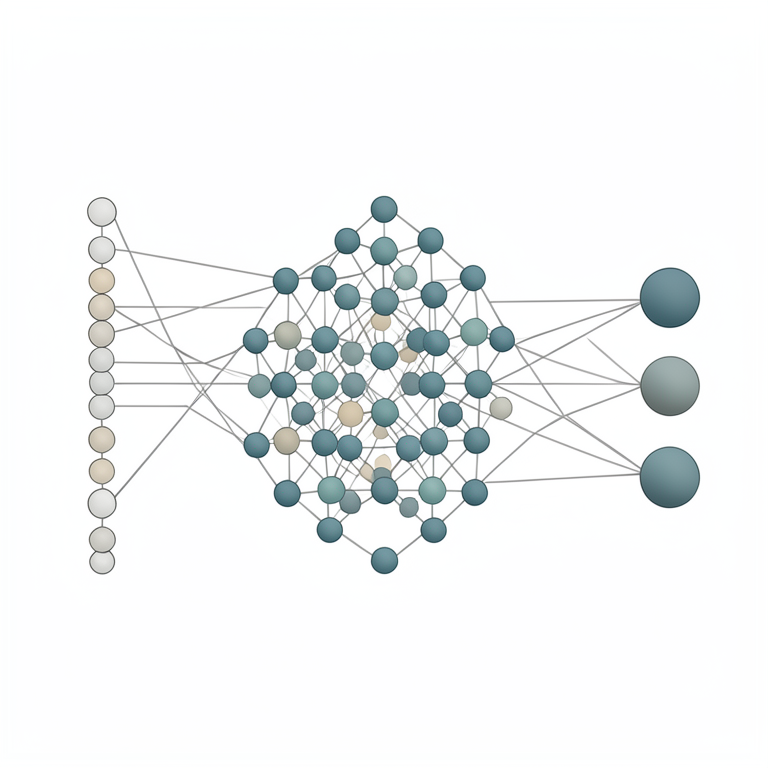
ANN Conceptual Flow
AI-generated conceptual illustration (A conceptual schematic of an artificial neural network architecture). It explains the idea and does not show study data.
View source evidence ↗Figures & tables
From the original paper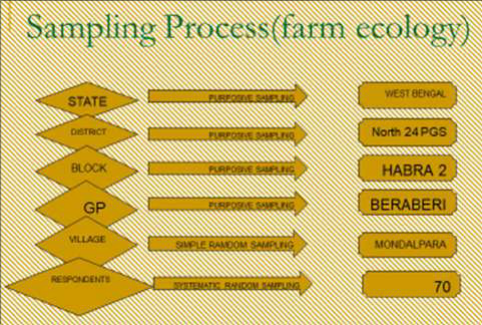 Figure 1
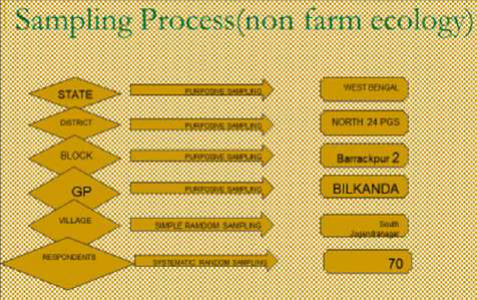 Figure 1
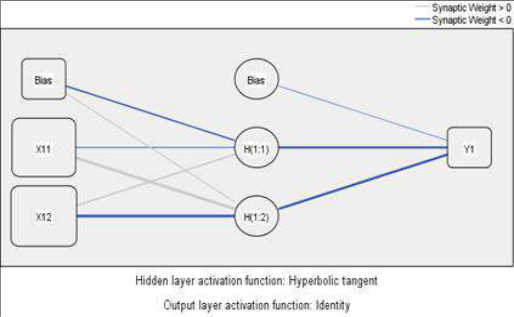 Figure 1
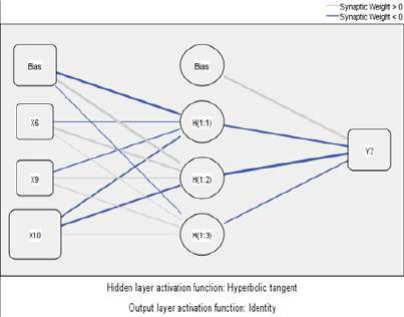 Figure 2
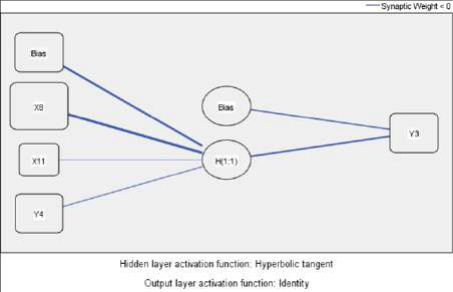 Figure 3
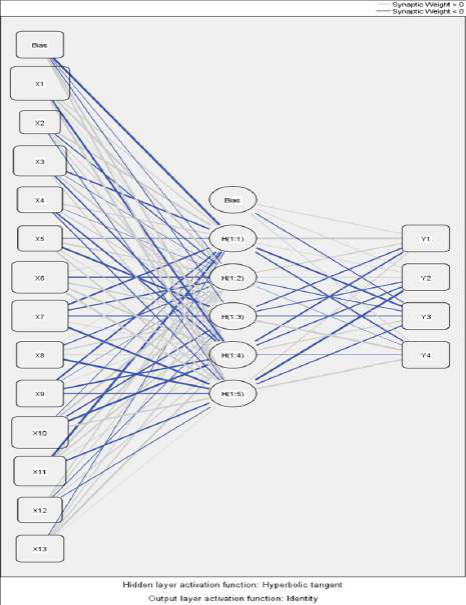 Figure 4
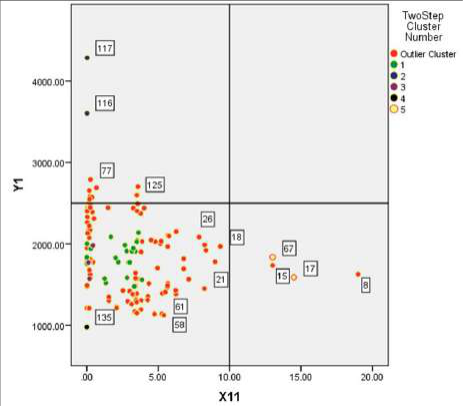 Figure 5
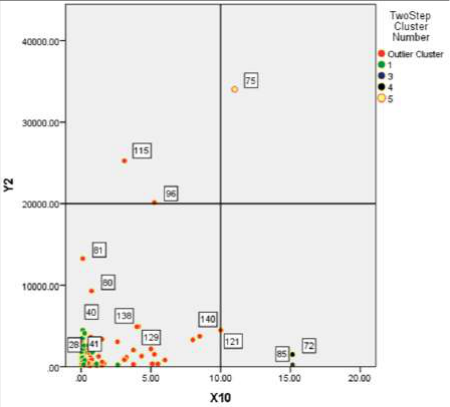 Figure 4
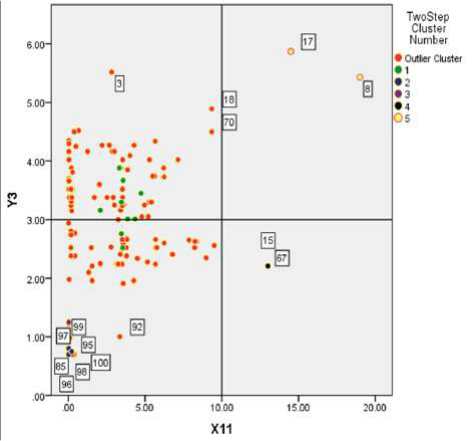 Figure 7
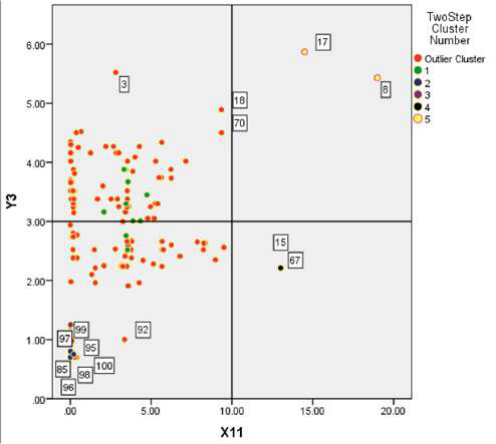 Figure 8
Introduction
In India 350 million people are living below the poverty line and of them, 200 million people have become victim to moderate to extreme hunger indexes. 42 per cent of the new born babies are under weight. 60 per cent of the children are suffering from moderate to high level of anaemia experiencing stunted growth. Beyond the curtain of hunger, there is another problem that is chronic hunger. Based on hunger index we the nation is occupying 100th position in the world (IFPRI Report, 2017). The scenario of chronic hunger is even worse and astoundingly it is worse than African nations as well. Poverty is also a significant issue in India. In spite of having one of the fastest-growing economies in the world, clocked at a growth rate of 4.2% in 2019-20, and a sizable consumer economy. The World Bank reviewed and proposed revisions in May 2014, to its poverty calculation methodology and purchasing power parity basis for measuring poverty worldwide, including India. According to this revised methodology, the world had 872.3 million people below the new poverty line, of which 179.6 million people live in India. In other words, India with 17.5% of total world's population, had 20.6% share of world's poor population. In spite of the several government schemes, programmes and projects in India, the problem of hunger and poverty are really could not be eradicated. A survey was done by FAO in 2009.A key objective of the Voices of the Hungry project (VoH) is to estimate comparable prevalence rates of food insecurity in national populations for more than 140 countries every year. These estimates are based on conditions and behaviours reported by adults through the Food Insecurity Experience Scale survey module (FIES-SM). The data collected in nationally representative surveys of the adult population in each country are used to compute a measure of severity of the food insecurity status for each respondent, focusing on conditions reflecting limited access to food. Individual measures are then calibrated against a common global reference scale of severity, thus allowing classifications and estimates of prevalence rates that are comparable across countries and population groups. The voice here is measured in terms of ability and permeability to communicate with others or availing communication from others as to their need for survival and growth. Here in this study also the unique character of studying silence of the 'uninformed diaspora' in India is that for farmers huge pile of information are there, but only a minuscule proportion is being accessed by the farmers. In this postmodern era, hunger is not only a failure of agriculture, rather it is a social, economic and political problem. To get rid of hunger, the socio-political models should be reconciled and re-organized if necessary. On a broader spectrum, the policy generations and modifications should be based on the empirical study researches, as well as should be realistic and broad based. Adding to this, the government should be complementary with a proper bureaucratic set up, a transparent and non-bias news media, voluntary nongovernmental organizations, active public discussion systems etc. Hunger does not involve only food but there are much more interconnections of other social, economic and political aspects (Amartya Sen, 1997) [3] . Indian agriculture is the largest but unorganised economic sector of the world. The farm entrepreneurs, are suffering from both the vagaries of nature and market. The decelerating agricultural economy has thrown the growers into a vicious cycle of hunger, poverty and voice. Hunger here has been denoted by the level of food, calorie and nutrition intake by human bodies within the framework of minimum requirement set by World Health Organisation (WHO). Poverty here has been www.extensionjournal.com measured in terms of per capita income per month from a unit of holding, which is 121 million in India (NSSO data, 2014-2015).Here in this paper we have used ANN to analyse the social networking of hunger, poverty and voice. Since the beginning of the 1990s, artificial neural networks (ANNs), also known as neural networks, have been applied to the analysis of remote sensing images with promising results (Atkinson and Tatnall 1997) [2] . Although ANN is basically a tool for remote sensing many authors have reported considerable advantages of ANNs over conventional methods (Mas and Flores, 2008). Here we also have tried to extrapolate the boundary of it.
Locale of Study
The present study has conducted in two separate socioecological strata. One study has conducted among the farm families and the other one has conducted on the non-farm families. Here we have only selected the respondents under the age group of 15-60 years. The farm locality is Beraberi gram panchayat, Habra II Block, North 24 pgs, West Bengal, India. And the non-farm locality is Bilkanda gram panchayat, Barrackpur 2 block, North 24 pgs, West Bengal, India. 13 independent variables from both the sectors were selected. These variables are -X1=age X2=education X3=family size X4=economic motivation X5=risk orientation X6=management orientation X7= stress perception on hunger X8=stress perception on poverty X9=stress perception on voice X10=Homestead land X11=Communication variables X12=Energy consumption X13= BMI Dependent variables selected are hunger (Y1), poverty (Y2), and voice (Y3) and cognitive differential (Y4).
Research Methodology
Before taking up actual field work a pilot study was conducted to understand the area, its people, institution, communication and extension system and the knowledge, perception and attitude of the people. Pilot study was conducted in both farm and non-farm ecology through survey and focused group discussion. The following parameters were checked in this pilot study like-number of households, cropping pattern, overall cropping intensity, socio-economic background of the families, government schemes which are running in the particular village, connectivity with the institutions, present establishment etc. On the basis of findings of the pilot study a preliminary schedule was formed with the help of literature reviewed and some of the experts of the chosen field. Then pre testing of Interview schedule was done. It's the process of advance testing of the study design after the schedule has been prepared. The object of pretesting is to detect the discrepancies that have emerged and to remove them after necessary modification in the schedule. After conducting pretesting (among the 5 per cent respondents of the total sample size) appropriate changes and modification of the interview schedule have been made. The individuals who responded in pretesting have been excluded in the final sample selected for the study. In case of the farm ecology the total families reside in the village are 193. Among these 193 farm families we have taken 70 respondents with a class interval of 3(actual CI is 2.75 which is nearly equal to 3). On the other side as far as the non-farm ecology is concerned, the total number of the families reside in the village are 186. Among these 186 families we have taken 70 respondents with a class interval of 3(actual CI is 2.65 which is nearly equal to 3).
Statistical Tool
The statistical tool used here in this study is Artificial Neural Network Analysis (ANN). This is the study to identify the dominant variables by passing the independent variables through the hidden layer to get the output variable. This statistical tool is used to reduce the errors of calculation and to achieve the most significant independent variables for a certain dependent variable. Artificial neural network helps us to interpret and estimate the nonlinear pathway of selected input variables on the output variables. Three distinct layers are over here, one is input layer the second is hidden layer wherein the errors are minimized through activation and the output layers or the dependent variables. For the graphical presentation of the first neural network we can find that X11 that is communication variables, X12 that is energy consumption variable have rooted the distinct and dominant impact on the output variable Y1 that is hunger. It has passed through the two hidden layers for the rationalization Vis a Vis the reduction of error. So we can predict hunger with least of errors from these two input variables one is X11 that is communication variables and X12 that is energy consumption. So hunger has been contributed characteristically and dominantly by the communication variables and at the same time it has been picked up energy consumption pattern as one of the important predictor for the level of hunger of the respondents. Now we are switching over to the second output variable poverty. Through the same way we can found that the management orientation X6 variable, stress perception on voice (X9) variable and homestead land (X10) variable have contributed in a decisive manner on the output variable poverty. Interestingly all these variables have been passed through three hidden layers for the management of their errors Vis a vis estimation of their effect on the output variables. Now we can switch over to the neural third neural network graph, here we can find that the predicted characters of the output variable that is cognitive differential, different level of knowledge and consciousness about different projects which are meant for poverty eradication and redressal of hunger. We can find that two variables that are X8 (stress perception on poverty) and X11(communication variables) have in a swashbuckling manner characterized the output variable Y3 that is voice. Here only one hidden layer would be considered through which these two variables have passed. Now we are moving to words wherein all these output variables have been considered together and at the same time all the input variables have been taken care of. Here we can find that five hidden layers are there and through which all these input variables have generated their impact on the consequent variables those are hunger, poverty, voice and cognitive differential. We take one case for example that is X8 (stress perception on poverty). Here we can find that the (stress perception on poverty) X8 variable that is stress perception on poverty has passed through two hidden layers, one is hidden layer 1: 2 and the other is hidden layer 1:5 and after rooted through these two hidden layers as well as being reduced in terms of error these variable X8 has impacted on the output variable Y2 that is poverty. So we can see that whenever the respondents are under serious stress they are morose and don't show the interest to interact with others.
Results and discussion
Then they undergo a kind of withdrawal syndrome and then they lack the information about the projects simply because of their lethargy to access the same. So these variables if we see that to be taken care of to characterize the variable poverty. In another case we can find that the variable X11 that is communication variable after being passed through the hidden layer 1:1 and 1:5, they have been characterized the output variable Y4 that is cognitive differential. So, it is interesting to note that the communication variables are the main reason why the respondents have developed their different levels of cognitive differentials on the awareness of different government programmes. These four neural network paradigms have been successful in isolating the dominant variables, determining the number of hidden layers and ultimately how they have characterize the respective and corresponding output variables. Now based on these four categories of responses we have got four quadrants and whenever we are taking care of the communication variables(X11) and it is considered as an integral part of the respondents, we can find that for the quadrant third most of the respondents are conglomerated. So the skewness of these respondents which are basically dominant in the quadrant 3, we can find that the respondents 135, 61, 58, 21 and 26 are so closely, intensely and integrally link with these variable Y1 that is hunger. Hence we can go strategically to identify these respondents to deal with the issues of communication vis a vis hunger. It is also true for the second picture where there is as usual four www.extensionjournal.com quadrants are there and for the third quadrant we can find that respondents 28, 41,129,140,148,40, 80 and 81, they are organically linked with the variable homestead land(X10). So for these respondents and in order to deal with the issues of poverty (Y2), homestead land can be considered as an important predictor. So the social ecology wherein the respondents are hailing from, they are quite conspicuously having the size of their homestead land in estimating the poverty. Accordingly for the third graphics we can find that the respondents are almost equally distributed for the first two quadrants and for the third quadrant we will find that the communication variables have been integrated for the responds 85,92,95,96,97,98,99 and 100 are characterized for the output variable voice. So in order to deal with the problem of voices why the respondents are so shaky or they are being dominant by withdrawal syndrome, we can take care of these respondents because the communication variables are organically linked with them. For the last graphics we can find that almost all the respondents are equally distributed among the four quadrants (++, +-, -+ and --). So, cognitive differential is a kind of dependent character which is almost universal for all the respondents. Therefore we can deal with this dependent variable for all the respondents in a uniform manner as well.
Policy Implications
1. From the ANN Fig 1 it is discernible that the variable energy consumption and communication have got decisive impact on the dependent variable Y1 that is hunger. So it implicates a policy dimension which would consider that the hunger cannot be contributed only by economic factors, but the kind and extent of energy consumption exercised by the rural women also affects the hunger status of them. At the same time communication, although it is not that dominant, has imposed a certain effect on hunger. Hence it clearly indicate that the communication is a critical input as a multi way tool for sharing information. In countries like India the poor people either does not allowed to or they don't feel to communicate their grievances and demand to the policy makers, political leaders, panchayat leaders or opinion leaders. Therefore it is mandatory in Indian scenario to make the people voice. Opinion leaders should be selected from the community so that the people are quite open up to them. Another thing that needs to be done is to make grievance redressal kiosks, where the rural people are allowed to submit their grievances without being pointed out (anonymously).
ANN Fig 2 righty implicates that the variable
management orientation, stress perception on voice and homestead land have formed a network of impact on poverty. Farm management is a concept, to speak up about high end management techniques, is dominantly fragile or absent in Indian farmers. The farmer seldom maintain their records on expenditure or income. Mostly they are responding from their memory. This indicate the lack of entrepreneurship at grass root level. So there must be a strong policy to build up farm entrepreneurship ever for a small and fragmented holding. We need to have a paradigm shift for creating, building and managing entrepreneurship in small, fragmented holdings also. This is absolutely a convention of contradiction in traditional entrepreueral concept. Conventionally it has been in practice that entrepreneurship is a character of big farmers. Being a competitor with the same market against a big farmer, the small farmers have to change their management orientation, a change from classical biological production to entrepreneurial creativity. The homestead holding can also be included in the process of building farm entrepreneurship while the homestead land can be up scaled into a home centred family farm. As a corollary the classical approach which restrain the homestead land to go for enterprise building should be denied. Instead of that the farmers should go for homestead land with a unique social ecology which can combine in clandestine manner the farm ecology also.
In the conventional agriculture without processing and value addition to crop, the small and marginal farmers are being the defeater in the market. The processing, value addition, proper quality control is the key factor of today's farming. The private stakeholders should also be invited by the farmers to invest on their farming and to purchase their produces. 3. When stresses are escalating, being agonized as a defeaters in the open market, the owner of the small and marginal holding are subjected to the erodibility of communication resources, potential and ability. The more is the stress, the less would be the voice and the less is the voice, the least would be the empowerment and entitlement. So, to restrain the farmers from quitting agriculture and from committing suicide, the farmers need to heve a social rehabilitation and moral boost up.
Conclusion
The Artificial Neural Network analysis is of immense utility in tracing out the most dominating variables from a plethora of system variables by systematically reducing the error through activating a set of hidden layers. We have to let the input variables passed through the hidden layers and select few ones. So, for all the dependent variables a few selected variables are there. Therefore for any kind of neural network it is interesting to isolate the dominant variables out of the trivial variables and all these interactions and integrated characters again can be distributed based on their beta regression co efficient and the way they are characterizing the Y1, Y2,Y3 and Y4 all these can be divided into four quadrants. For each quadrants, unique respondents are retaining and for them we can go for unique treatments without bothering about all at a time. Therefore ANN is a very useful and effective technique in delineating and describing the micro level strategical interventions.
Disclaimer
This paper does not consist any conflict of interest whatsoever. The Corresponding author can provide the primary data used in the paper as and when required.
Figures and tables from the paper
References
3 in the original paper- Mas JF, Flores JJ. The application of artificial neural networks to the analysis of remotely sensed data; International Journal of Remote Sensing 2008, 29(3).
- Atkinson PM, Tatnall ARL. Introduction: neural networks in remote sensing. International Journal of Remote Sensing 1997;18:699-709.
- Sen A. Poverty and Famine: An Eassy on Entitlement and Deprivation 1997.