
Research article · 2021 · Full text
International Journal of Agriculture and Food ScienceNutritional value and value-addition in Drumstick-A review
Volume 3(2) · Pages 36–41 · DOI: 10.33545/2664844x.2021.v3.i2a.55 ↗
Research areasMoringa oleifera research and applications
Abstract
Author-writtenMoringa oleifera tree is also known as a miracle tree due to its rich source of micro and macronutrients of great importance in human nutrition. Moringa plant has medicinal properties and can fulfil the human daily requirement diet. Almost every part of moringa has their importance and edible for example seed, bark, fruit, root, flower, and gum is rich in protein, minerals including calcium, iron, potassium, phosphorus, beta- carotene and respiratory of protein. This review paper covers the nutritional value, health benefits, and value-added products of moringa.
Summary
Source-checkedPlain-language reading of the full paper, prepared with AI and checked against the text. Each point links to the authors' own words.
Why it matters
- Moringa oleifera is referred to as a 'miracle tree' because it provides essential micro and macronutrients critical for human nutrition. View evidence ↗
- The plant possesses medicinal properties and has the potential to meet daily human dietary requirements. View evidence ↗
- Moringa is considered an affordable and dependable source of nutrition that can help prevent various health disorders. View evidence ↗
The question
- The objective of this review is to examine the nutritional value, health benefits, and the development of value-added products derived from moringa. View evidence ↗
What they did
- The authors conducted a literature review to synthesize information on the plant's nutrients, medicinal uses, and commercial applications. View evidence ↗
What they found
- Moringa leaves are composed of 27.51% crude protein, 43.88% carbohydrates, 19.25% crude fiber, and 2.23% crude fat. View evidence ↗
- Dried leaf powders have significantly higher iron content (19-24 mg/100g) compared to fresh leaves (0.085 mg/100g), with shadow drying yielding the highest amount. View evidence ↗
- Dried moringa leaves contain concentrations of potassium, protein, calcium, iron, and vitamin A that are 15, 9, 17, 25, and 10 times higher than those found in bananas, yogurt, milk, spinach, and carrots, respectively. View evidence ↗
- Adding 5% moringa leaf powder to herbal biscuits increased their protein content by 14%. View evidence ↗
- In the development of soup mixes, a combination of 10% moringa leaf powder and 35% moringa pulp powder provided the best results. View evidence ↗
- Moringa is associated with several health benefits, including blood sugar control for diabetes, immune system boosting, asthma treatment, and anemia prevention in pregnant women. View evidence ↗
What it means
- The authors conclude that nearly every part of the moringa plant is edible and nutritionally valuable, providing a wide array of proteins and minerals. View evidence ↗
Visual summary
3 visualsIllustrations explain the paper; charts are replotted from the paper's own table values.
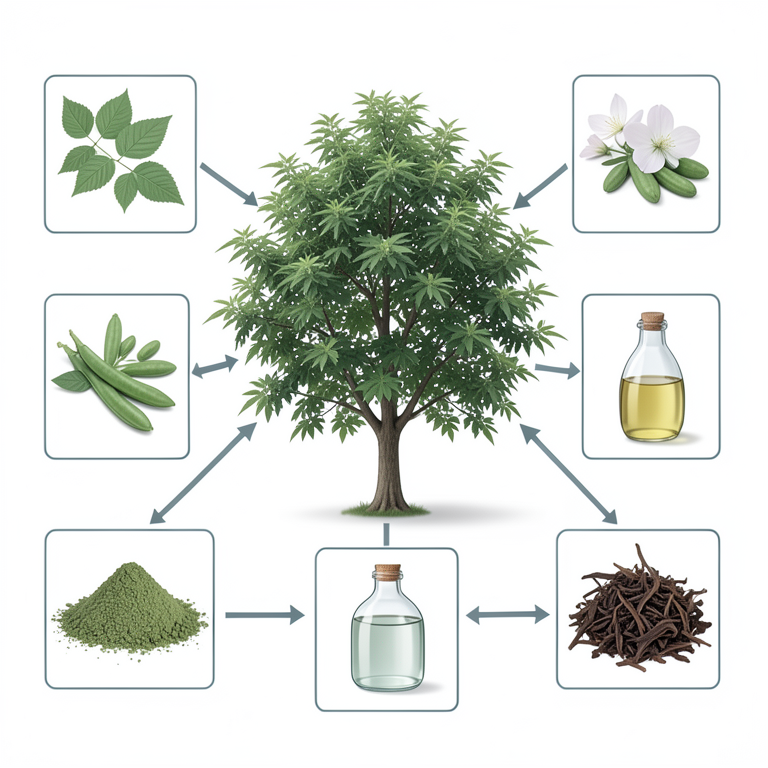
Moringa Utilization Cycle
AI-generated conceptual illustration (Moringa oleifera tree). It explains the idea and does not show study data.
View source evidence ↗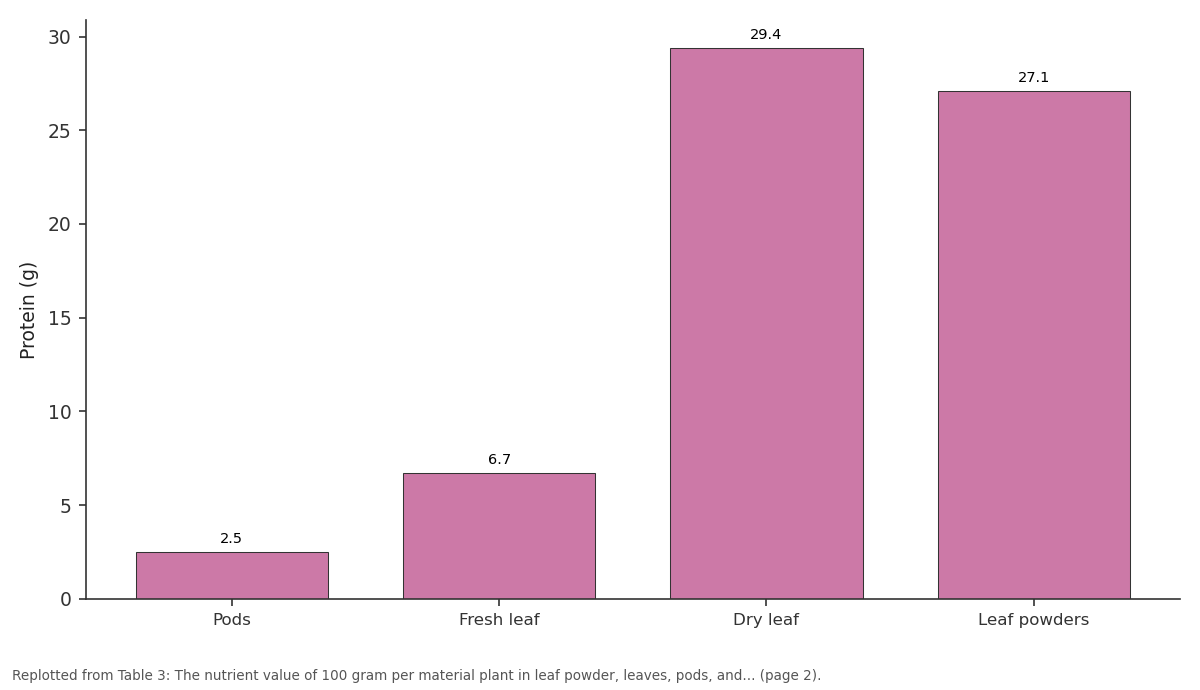
Protein (g): Pods vs Fresh leaf vs Dry leaf vs Leaf powders
Replotted from Table 3 (page 2) of the original paper. Every bar is the paper's own table value.
View source evidence ↗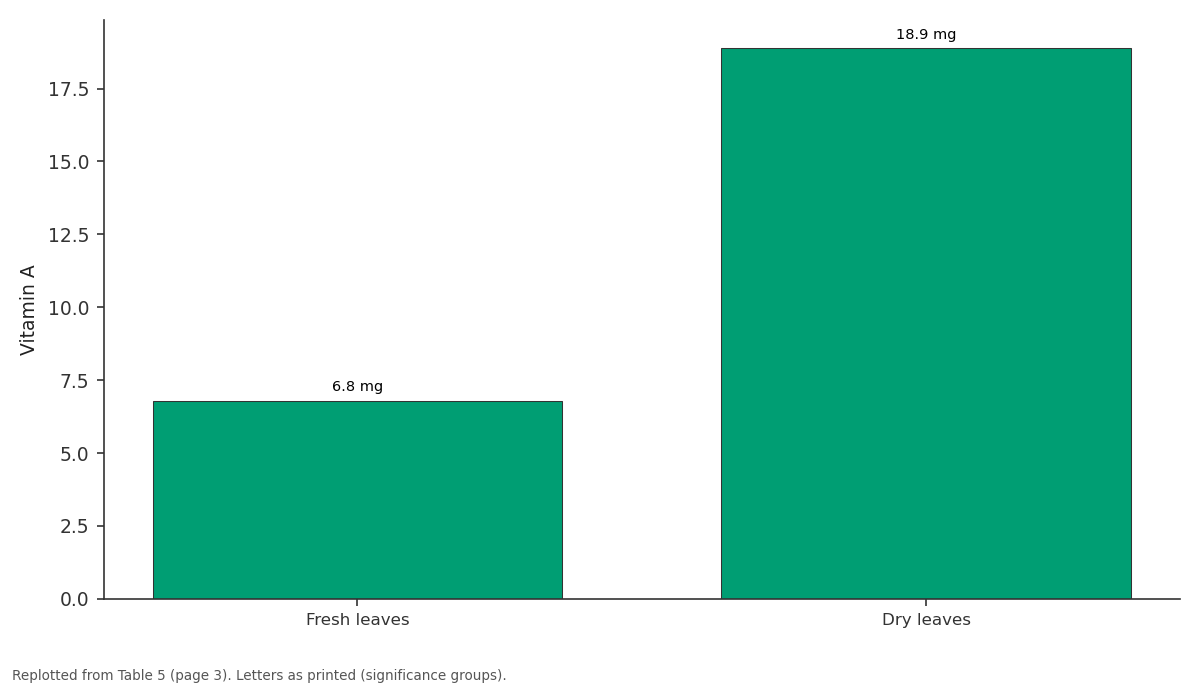
Vitamin A: Fresh leaves vs Dry leaves
Replotted from Table 5 (page 3) of the original paper. Every bar is the paper's own table value.
View source evidence ↗Figures & tables
From the original paper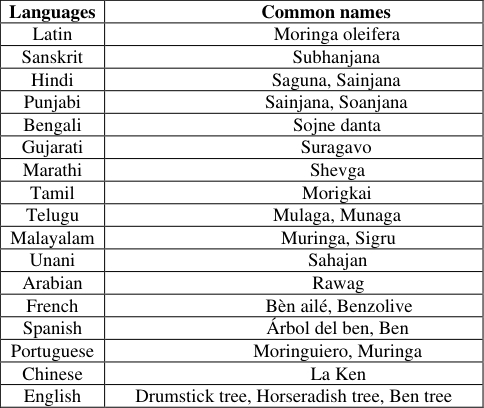 Table 1
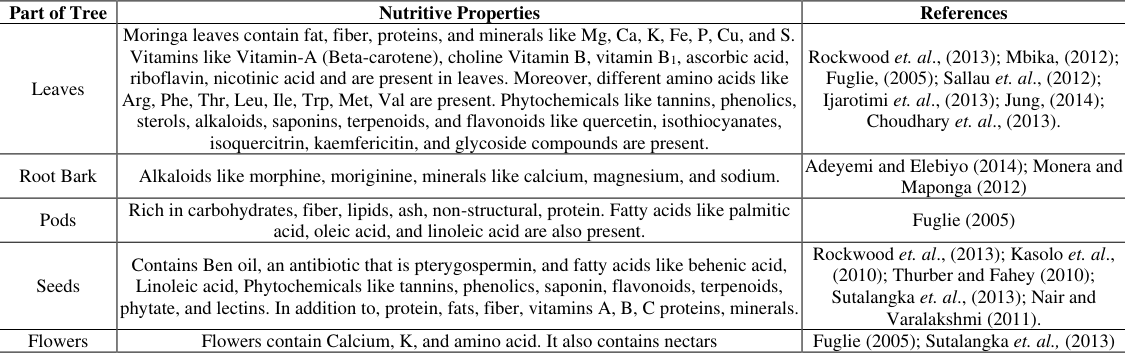 Table 2
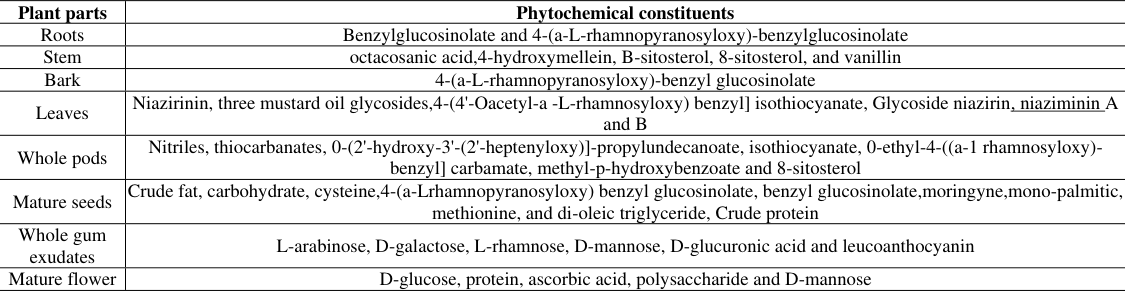 Table 2
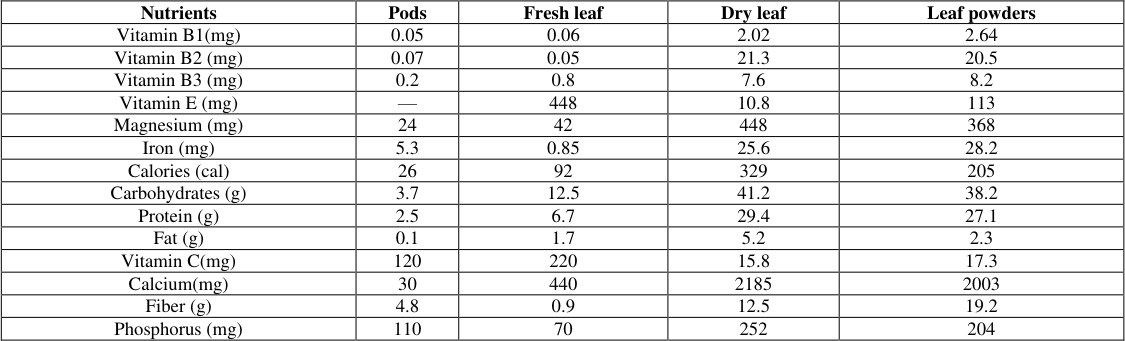 Table 3
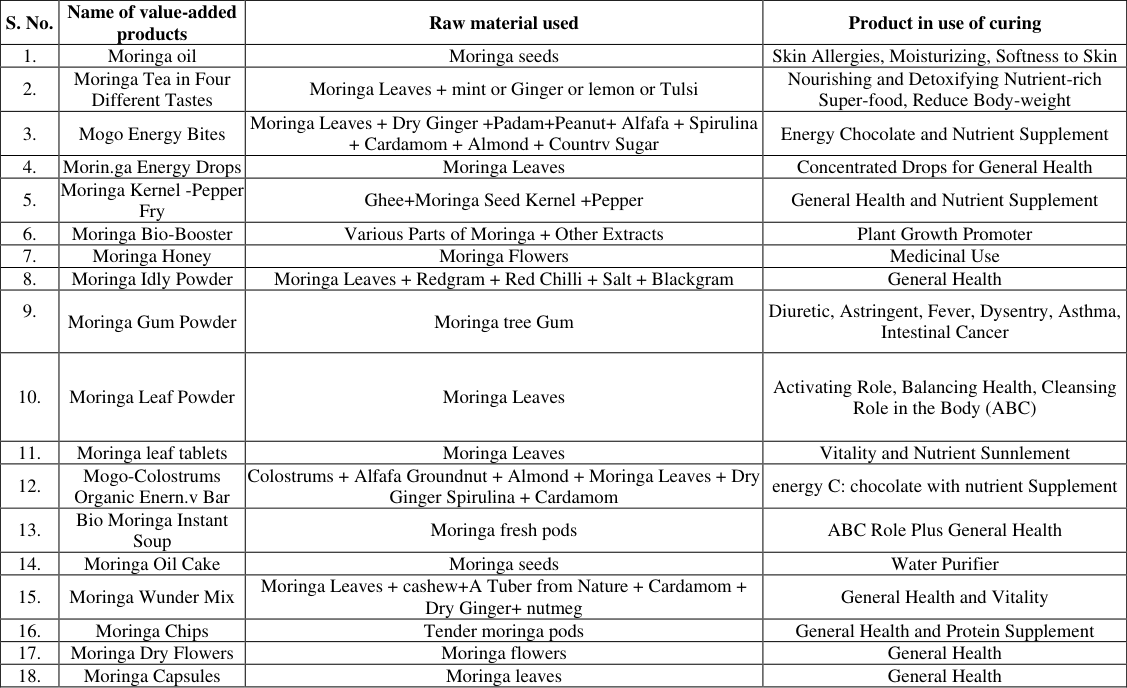 Table 4
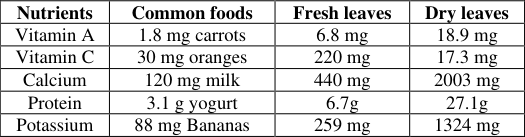 Table 5
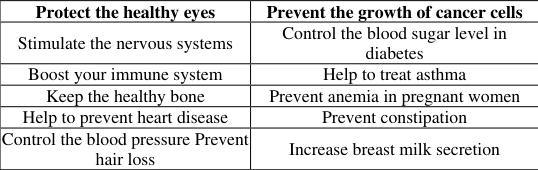 Table 6
 Table 7
Introduction
Moringa oleifera species is one of the majors from 13 species in the genus Moringa, have family Moringaceae (Prota, 2017). Many species are not reported yet, especially in Africa (Olson, 2017) [31] . Drumstick (Moringa oleifera) belongs to the family Moringaceae with chromosome number 2n= 28. The common name of moringa is drumstick tree due to its triangular seed pods, long, slender, it is resembling with horseradish due to taste of the roots and the oil which is derived from seeds also called by Ben oil tree (Niphm.gov.in). Other names of moringa are kelor, moonga, nebeday, mlonge, mulangay, saijhan. Drumstick comes from the sub-Himalayan region in Northern India. Now, moringa is mainly cultivated in sub-tropical and tropical areas where it is consumed as a vegetable (leaves and young seed pods). Moringa word derived from the Tamil language 'murungai'.
Moringa oleifera leaves rich in carotenoids, terpenoids, tannins, essential amino acids, flavonoids, fibers, and sugars, apart from that ascorbic acid, cardiac glycosides and saponins also identified in moringa leaves (Okumu et al., 2016) [29] . Drumstick mainly grows for its nutritious value, its fully grow pods, flowers and leaves use for consumption apart from that leave's extraction use for lactating mother's augment breast milk. Moreover, it is used for antimicrobial, anti-inflammatory, antioxidant, antidiabetic properties (Gopalakrishnan et al., 2016). Pods, flowers, and leaves have amino acids by 30%, 31%, and 44%. In addition, 46.78 % fiber and 20.66% protein contain by immature pods (Sánchez-Machado et al., 2010) [4] . M. oleifera leaves accommodate crude fat by 2.23%, crude protein by 27.51%, moisture content by 76.53%, crude fiber b 19.25%, ash content by 7.13%, calorific value as 1296.00 kJ/g (305.62 cal/g), and carbohydrate content as 43.88% (Oduro et al., 2008) [28] . all parts of moringa plant (roots, leaf, and bark) used as treatment or preventions against 300 complications (diseases, disorders) (National Institutes of Health-NIH, 2018). A study found that dry leaves of moringa contain more iron content than fresh leaves. They compared the fresh leaves of iron content with dried leaves powder which was prepared by various methods like sun drying, oven drying, and shadow dried and found that fresh leaves contained 0.085mg per 100g of iron and on other hand, sun-dried contains 21mg per 100g leaf powder, oven-dried contains 19mg per 100 g of leaves powder and shadow dried sample contained higher amount of iron than other two methods that was 24mg per 100g of leaf powder. Whereas the iron content of dried leaves powder made by various methods of dehydration was 19-24 mg per 100g of leaf powder which was 95-96 percent higher than fresh leaves. (Haniff and Chamberlain, 2013). Nutritional comparison of fresh and dry Drumstick leaves with common food per hundred grams. (Fuglie L. J. 1999). A study conducted in Africa -America on the food consumption in the male by 2 samples and founded that a higher percentage of boys aged between 14-16 years have consumed 62% carbonated beverages, and 62% sweetened juices 66% chips. It showed that children enable to get the (EAR) estimated average requirement for zinc (Kolahdooz et al., 2015) [17] . Apart from this, the moringa chips enriched with 26.0% (sample 1) and 24.0% (sample 2) of the EAR for zinc for aged group 9-13 years old of children. In addition, for the age group 9-13 years old of children, moringa chips accommodated between 14.0% of sample 1 and 17.0% of sample 2 of the Estimated Average Requirement.
Various value-added products of Moringa
Moringa tea was prepared like green tea. The researcher is interested to prepare two variations as V 1 T 1 and V 2 T 2 . The moringa leaf powder for two variants V 1 T 1 and V 2 T 2 were 14grams and 21grams respectively. The moringa tea was graced with 1 teaspoon of honey for twain Variations of 100ml tea (S Yegambal and A Swarnalatha, 2019) [36] . Researchers prepared the chocolate by using moringa powder, which requires milk, cocoa powder, and moringa powder. This product was also prepared in two distinct variations such as V 1 C 1 (40gms) V 2 C 2 (60gms) respectively (S Yegambal and A Swarnalatha, 2019) [36] .
Researchers studied the Moringa's leaves and sweet potato's leaves and found that the crude fat content of drumstick was more than the sweet potato. It is considered dietary fat absorbs and retains flavor, a dietitian consisted Moringa leaves are considered to be more appetizer Oduro et al., (2017). Researchers found the nutrient contents from Moringa paneer, Paneer with extract of Drumstick leaf of different concentration resulted that the moringa paneer has high nutrient content than normal paneer (Sachan, 2015). In A research it was reported that Herbal biscuits, biscuits assimilated with Moringa leaf powder @ 5% enhanced protein content by 14% (Alam et al., 2015). Cakes were made by using moringa leaves and whole wheat flour with distinct quantities of Moringa leaf (
). for the cake checked two parameters nutritional and sensory and found that crude fiber, moisture, crude protein, and total ash showed a greater while carbohydrate content and total fat decreased with enhancing the concentration of Drumstick (Chinma et al., 2014). Fortified yogurt was prepared with Moringa leaves but the product was not rated as good as compared with the control with as regards sensory parameters and also it did not negatively affect the growth of bacteria (lactobacillus rhamnosus) GR-1 in yogurt (Hekmat et al., 2015). The product made from moringa was Moringa muffin, which was rich in a high amount of beta carotene, protein, vitamin C, and fat. Apart from this mineral content was also high in Moringa muffin. Iron, Calcium, Potassium content was significantly higher in Moringa muffin than the controlled one. Moreover, phosphorus content was also higher (Srinivasamurthy et al., 2017). In the locals of Tamil Nadu state the moringa's Dry stem powder use as an antidote to poisonous bites (Rajendran et. al., 2008). Researchers' studies on mineral contained by moringa leaves and found that the eight ounces of moringa leaves contain 1000mg calcium and dry leaves powder of moringa have more amount of calcium that was 4000mg which is very higher than milk, milk can give 300-400mg of calcium (Gopala Krishnan et. al., 2016). Banana flour, drumstick flour, soy flour, mixed dry then butter oleo, sugar, full cream milk powder, water and then cooked until the dough is smooth, the dough is then printed and baked in an oven at 140 o C for 40 minutes. The protein range in each piece (100g) was 7.06 -7.97g and based on the requirement of nutritional food should contain 7.9-8.1g protein. Based on these requirements, F 1 formula that is banana flour (25%), soy flour (10%) and Moringa flour (10%), F 2 formula that is 15% banana flour, 15% soy flour, and 15% Moringa flour, and F3 formula that is banana flour (20%), soy flour (20%), and Moringa flour (5%) meet the standards recommended by the Institute of Medicine. (Allen et. al., 1995) [1] . In research of processing standardized the moringa-based soup by mix the other products like onion, tomato. In which researchers used the two processing techniques for example-pulping dehydrated and drying blending to prepare soup mixes. In the first method, by used a grinder make the pulp of different ingredients like tomato, moringa pods pulp, onion, and moringa leaves and dehydrated under drier at 70 0 C for 7-8 hours. This dried pulp is powdered, blended, and sieved with other ingredients. On other hand, using another method that was drying-blended separately dried all ingredients like tomato, moringa leaves, onion, moringa pod pulp at 70 0 C for 4-8 hours, and blended along with other ingredients viz. cornflour, soya flour, and milk solid with distinct proportion. The base, moringa leaves, and moringa pulp were added to soup mixes by different proportions and found that admixture of 10 percent moringa leaves to powder and 35 percent moringa pulp powder gave superior result (Saranya and John, 2017). Health benefits of Moringa soup: (S Yegambal and A Swarnalatha, 2019) [36] A study assessed that when moringa pods stored in ambient storage then ascorbic acid reduction was higher (8.2%) than the pods stored under 14 0 C temperature (5.5%) in local variety. Apart from this, in PKM-1 variety when oxygen concentration 3%, 4%, and 5% was estimated at 14 0 C in 40 days it revealed the higher loss of ascorbic acid that was by 54.1%, 5.3%, and 5.9% respectively. So, the 14 0 C of temperature treatment was best from both ambient and 14 0 C temperature, 4% oxygen, and 5% carbon dioxide for enhancing the shelf life of moringa pods up to 40 days (Selvi and Varadharaju, 2016). Moringa tree gave an important product that is gum, when the tree is wounded then the bark exudes the gum a sticky-like substance, which is white in color but after some time turns into reddish-brown or brownishblack on exposure. Gum is used in dental caries, Gum mixed with sesame oil is used to relieve fevers, headaches, intestinal complaints, asthma, Dysentery. Also, use in Gum used in leather tanning and calico printing. (Omotesho et. al., 2013) [16] .
Figures and tables from the paper
| Languages | Common names |
|---|---|
| Latin | Moringa oleifera |
| Sanskrit | Subhanjana |
| Hindi | Saguna, Sainjana |
| Punjabi | Sainjana, Soanjana |
| Bengali | Sojne danta |
| Gujarati | Suragavo |
| Marathi | Shevga |
| Tamil | Morigkai |
| Telugu | Mulaga, Munaga |
| Malayalam | Muringa, Sigru |
| Unani | Sahajan |
| Arabian | Rawag |
| French | Bèn ailé, Benzolive |
| Spanish | Árbol del ben, Ben |
| Portuguese | Moringuiero, Muringa |
| Chinese | La Ken |
| English | Drumstick tree, Horseradish tree, Ben tree |
Table text extracted from the original PDF; superscript letters are shown inline. The original table image is below.
View original table image
| Plant parts | Phytochemical constituents |
|---|---|
| Roots | Benzylglucosinolate and 4-(a-L-rhamnopyranosyloxy)-benzylglucosinolate |
| Stem | octacosanic acid,4-hydroxymellein, B-sitosterol, 8-sitosterol, and vanillin |
| Bark | 4-(a-L-rhamnopyranosyloxy)-benzyl glucosinolate |
| Leaves | Niazirinin, three mustard oil glycosides,4-(4'-Oacetyl-a -L-rhamnosyloxy) benzyl] isothiocyanate, Glycoside niazirin, niaziminin A and B |
| Whole pods | Nitriles, thiocarbanates, 0-(2'-hydroxy-3'-(2'-heptenyloxy)]-propylundecanoate, isothiocyanate, 0-ethyl-4-((a-1 rhamnosyloxy)- benzyl] carbamate, methyl-p-hydroxybenzoate and 8-sitosterol |
| Mature seeds | Crude fat, carbohydrate, cysteine,4-(a-Lrhamnopyranosyloxy) benzyl glucosinolate, benzyl glucosinolate,moringyne,mono-palmitic, methionine, and di-oleic triglyceride, Crude protein |
| Whole gum exudates | L-arabinose, D-galactose, L-rhamnose, D-mannose, D-glucuronic acid and leucoanthocyanin |
| Mature flower | D-glucose, protein, ascorbic acid, polysaccharide and D-mannose |
Table text extracted from the original PDF; superscript letters are shown inline. The original table image is below.
View original table image
| Nutrients | Pods | Fresh leaf | Dry leaf | Leaf powders |
|---|---|---|---|---|
| Vitamin B1(mg) | 0.05 | 0.06 | 2.02 | 2.64 |
| Vitamin B2 (mg) | 0.07 | 0.05 | 21.3 | 20.5 |
| Vitamin B3 (mg) | 0.2 | 0.8 | 7.6 | 8.2 |
| Vitamin E (mg) | –– | 448 | 10.8 | 113 |
| Magnesium (mg) | 24 | 42 | 448 | 368 |
| Iron (mg) | 5.3 | 0.85 | 25.6 | 28.2 |
| Calories (cal) | 26 | 92 | 329 | 205 |
| Carbohydrates (g) | 3.7 | 12.5 | 41.2 | 38.2 |
| Protein (g) | 2.5 | 6.7 | 29.4 | 27.1 |
| Fat (g) | 0.1 | 1.7 | 5.2 | 2.3 |
| Vitamin C(mg) | 120 | 220 | 15.8 | 17.3 |
| Calcium(mg) | 30 | 440 | 2185 | 2003 |
| Fiber (g) | 4.8 | 0.9 | 12.5 | 19.2 |
| Phosphorus (mg) | 110 | 70 | 252 | 204 |
Table text extracted from the original PDF; superscript letters are shown inline. The original table image is below.
View original table image
| S. No. | Name of value-added products | Raw material used | Product in use of curing |
|---|---|---|---|
| 1. | Moringa oil | Moringa seeds | Skin Allergies, Moisturizing, Softness to Skin |
| 2. | Moringa Tea in Four Different Tastes | Moringa Leaves + mint or Ginger or lemon or Tulsi | Nourishing and Detoxifying Nutrient-rich Super-food, Reduce Body-weight |
| 3. | Mogo Energy Bites | Moringa Leaves + Dry Ginger +Padam+Peanut+ Alfafa + Spirulina + Cardamom + Almond + Countrv Sugar | Energy Chocolate and Nutrient Supplement |
| 4. | Morin.ga Energy Drops | Moringa Leaves | Concentrated Drops for General Health |
| 5. | Moringa Kernel -Pepper Fry | Ghee+Moringa Seed Kernel +Pepper | General Health and Nutrient Supplement |
| 6. | Moringa Bio-Booster | Various Parts of Moringa + Other Extracts | Plant Growth Promoter |
| 7. | Moringa Honey | Moringa Flowers | Medicinal Use |
| 8. | Moringa Idly Powder | Moringa Leaves + Redgram + Red Chilli + Salt + Blackgram | General Health |
| 9. | Moringa Gum Powder | Moringa tree Gum | Diuretic, Astringent, Fever, Dysentry, Asthma, Intestinal Cancer |
| 10. | Moringa Leaf Powder | Moringa Leaves | Activating Role, Balancing Health, Cleansing Role in the Body (ABC) |
| 11. | Moringa leaf tablets | Moringa Leaves | Vitality and Nutrient Sunnlement |
| 12. | Mogo-Colostrums Organic Enern.v Bar | Colostrums + Alfafa Groundnut + Almond + Moringa Leaves + Dry Ginger Spirulina + Cardamom | energy C: chocolate with nutrient Supplement |
| 13. | Bio Moringa Instant Soup | Moringa fresh pods | ABC Role Plus General Health |
| 14. | Moringa Oil Cake | Moringa seeds | Water Purifier |
| 15. | Moringa Wunder Mix | Moringa Leaves + cashew+A Tuber from Nature + Cardamom + Dry Ginger+ nutmeg | General Health and Vitality |
| 16. | Moringa Chips | Tender moringa pods | General Health and Protein Supplement |
| 17. | Moringa Dry Flowers | Moringa flowers | General Health |
| 18. | Moringa Capsules | Moringa leaves | General Health |
Table text extracted from the original PDF; superscript letters are shown inline. The original table image is below.
View original table image
| Nutrients | Common foods | Fresh leaves | Dry leaves |
|---|---|---|---|
| Vitamin A | 1.8 mg carrots | 6.8 mg | 18.9 mg |
| Vitamin C | 30 mg oranges | 220 mg | 17.3 mg |
| Calcium | 120 mg milk | 440 mg | 2003 mg |
| Protein | 3.1 g yogurt | 6.7g | 27.1g |
| Potassium | 88 mg Bananas | 259 mg | 1324 mg |
Table text extracted from the original PDF; superscript letters are shown inline. The original table image is below.
View original table image
| Protect the healthy eyes | Prevent the growth of cancer cells |
|---|---|
| Stimulate the nervous systems | Control the blood sugar level in diabetes |
| Boost your immune system | Help to treat asthma |
| Keep the healthy bone | Prevent anemia in pregnant women |
| Help to prevent heart disease | Prevent constipation |
| Control the blood pressure Prevent hair loss | Increase breast milk secretion |
Table text extracted from the original PDF; superscript letters are shown inline. The original table image is below.
View original table image
| Moringa capsule Moringa dried leaves | Energy and health supplements Can be used as a food fortification |
|---|---|
| Poonga monga moringa tea | Nourishing beverages |
| Zija smart mix health drink | Delicious powder drink blend filled with Moringa oleifera full of essential vitamins and minerals |
| Moringa pharm | Organic moringa leaf capsule |
| Moringa tea | Nourishing beverages |
| Moringa pod powder | Can be used as a food fortification |
| Miracle malunggay | 100% pure Moringa oliefera leaf food supplementation |
| Pooga Monga health drink | Health drink mixture of pomegranate - moringa-aloe vera |
Table text extracted from the original PDF; superscript letters are shown inline. The original table image is below.
View original table image
References
43 in the original paper- Allen LH, Howson CP. Estimated mean per capita energy requirements for planning emergency food aid rations, 1995.
- Anonymous. Status report, Department of horticulture, Govt of Chattisgarh, 2018.
- Sutalangka C, Wattanathorn J, Muchimapura, Thukhammee W. Moringa oleifera mitigates memory impairment and neurodegeneration in an animal model of age-related dementia, Oxid. Med. Cell. Longev, 2013, 1-9.
- D.I. Sánchez-Machado, J.A. Núñez-Gastélum, C. ReyesMoreno, B. Ramírez Wong, J. López-Cervantes, Nutritional quality of edible parts of Moringa oleifera. Food Anal. Methods, 3, 2010, 175-180.
- David Haniff, Alan Chamberlain. Impact of drying-out on the nutritive estimation of drumstick leaves. Advances in Life Science and Biotechnology,2013:1(2):15-19.
- Dhakad AK, Ikram M, Sharma S, Khan S, Pandey VV, Singh A. Biological, nutritional, and therapeutic significance of Moringa oleifera Lam. Phytotherapy Research, 2019, 1-34.
- Foidl N, Makkar HPS, Becker K. The potential of Moringa oleifera for agricultural and industrial uses, 2001, 45-76.
- Fuglie LJ. The Miracle Tree: Moringa oleifera: Natural Nutrition for the Tropics. Church World Service, Dakar, 1999, 68. Available: http://www.echotech.org/bookstore/ advanced_searc h_result. php? keywords=Miracle+Tree
- Fuglie LJ. Noms vernaculaires du Moringa oleifera In L'arbre de la vie. Les multiples usages du Moringa, 2002, 163-167.
- Sandeep1 G, Anitha2 T, Vijayalatha3 KR, Sadasakthi A. Moringa for nutritional security (Moringa oleifera Lam.), International Journal of Botany Studies ISSN: 2455541X,2018:4(1):21-24
- Gopala Krishnan L, Doriya K, Kumar DS. Moringa oleifera: A review on nutritive importance and its medicinal application. Food Science and Human Wellness. 2016; 5:4956.
- Gopala krishnan L, Doriya L, kumar DS. Moringa oleifera: A review on nutritive importance and its medicinal application. Food. Sci. human wellness,2016:5:49-56 https://niphm.gov.in/IPMPackages/Drumstick.pdf I.L. Jung. Soluble extract from Moringa oleifera leaves with a new anticancer activity
- Rockwood JL, Anderson BG, Casamatta DA. Potential uses of Moringa oleifera and an examination of antibiotic efficacy conferred by M. oleifera seed and leaf extracts using crude extraction techniques available to underserved indigenous populations, Int. J. Phytotherapy Res., 3, 2013, 61-71.
- Kasolo JN, Bimenya GS, Ojok L, Ochieng J, Ogwal-okeng JW. Phytochemicals and uses of Moringa oleifera leave in Ugandan rural communities, J. Med. Plants Res., 4, 2010, 753-757. 15. Journal of Pharmacognosy and Phytochemistry,2019:8(1):1173-1176
- JW Fahey. Trees for Life Journal, KF Omotesho; FE SolaOjo; TR Fayeye; RO Babatunde; GA Otunola; TH Aliyu. International Journal of Development and Sustainability, 2005-2013:2:799-813.
- Kolahdooz F, Butler JL, Christiansen K, Diette GB, Breysse PN. Food and nutrient intake in African American children and adolescents aged 5 to 16 years in Baltimore City. Journal of the American College of Nutrition, 2015, 1-12.
- Kshirsagar RB, sawate AR, Patil BM, Zaker MA. Studies on morphological, nutritional characteristics on different parts (leaves, flowers, pods) of moringa oleifera variety (Koimbtoor-1), International Journal of Processing and Postharvest Technology,2016:7(2):237-242
- Fuglie LJ. The Moringa Tree: A local solution to malnutrition Church World Service in Senegal, 2005.
- Mbikay M. Therapeutic potential of Moringa oleifera leaves in chronic hyperglycemia and dyslipidemia: a review, Front. Pharmacol, 3, 2012, 1-12.
- Thurber MD, Fahey JW. Adoption of Moringa oleifera to combat under-nutrition viewed through the lens of the diffusion of innovations theory, Ecol. Food Sci. Nutr., 48, 2010, 1-13.
- M.K. Choudhary, S.H. Bodakhe, S.K. Gupta. Assessment of the antiulcer potential of Moringa oleifera root-bark extract in rats, JAMS J. Acupunct. Meridian Stud., 6 (2013), pp. 214-220
- Nambiar V S and Parnami S (2008) Standardization and organoleptic evaluation of drumstick (Moringa oleifera) leave incorporated into traditional Indian recipes. Trees Life J 3(2): 1-7.
- National Institutes of Health (NIH). NIH Record Vol LX, No. 6 (New York: NIH), 2018, www.nih.gov
- O.S. Adeyemi, T.C. Elebiyo. Moringa oleifera supplemented diets prevented nickel-induced nephrotoxicity in Wistar rats, J. Nutr. Metab, 2014, 2014:18
- Ijarotimi OS, Adeoti O, Ariyo O. Comparative study on nutrient composition, phytochemical, and functional characteristics of raw, germinated, and fermented Moringa oleifera seed flour, Food Sci. Nutr, 2013, 452-463
- Oduro I, Ellis W O, Owusu D. Nutritional potential of two leafy vegetables: Moringa oleifera and Ipomoea batatas leave. Scientific Res Essay, 2008:3(2):57-60.
- Okumu MO, Mbaria JM, Kanja LW, Gakuya DW, Kiama SG, Ochola FO. Phytochemical profile and antioxidant capacity of leaves of Moringa oleifera (Lam) extracted using different solvent systems. Journal of Pharmacognosy and Phytochemistry,2016:5:302-308.
- Olson ME. Moringa frequently asked questions. Acta Horticulturae, (No.1158), 2017, 19-32.
- P.T. Olagbemide, P.C. Alikwe. Proximate analysis and chemical composition of raw and defatted Moringa oleifera kernel. Adv. Life Sci. Technol., 24, 2014, 92-99.
- Pandey A, Pradheep K, Gupta R. 2011. ''Drumstick tree'' (Moringa oleifera Lam.): a multipurpose potential species in India. Genetic Resources and Crop Evolution 58:453-460 PLOS ONE, 9, 2014, 1-10.
- Rajendran K, Balaji P, Basu MJ. Medicinal plants and their utilization by villagers in southern districts of Tamil Nadu. Indian Journal of Traditional Knowledge,2008:7(3):417420.
- Reeta Mishra, Satyendra Pal Singh, and B.P.S. Raghubanshi. Nutritional Potential of Drumstick Moringa Oleifera Leaves. The Journal of Rural and Agricultural Research,2020:20(1):34-37.
- Kesharwani S, Prasad P, Roy A, Kumar Shanu A. UK Journal of Pharmaceutical and Biosciences,2014:2:34-41.
- Yegambal S, Swarnalatha A. Nutrient analysis and development of products in drumstick leaves. Journal of Pharmacognosy and Phytochemistry,2019:8(1):1173-1176.
- Nair S, Varalakshmi KN. Anticancer, cytotoxic potential of Moringa oleifera extracts on HeLa cell line, J. Nat. Pharm,2011:2:138-142.
- Saranta S, John R. Development and Standardization of enriched moringa (Moringa oleifera Lam.) based soup mixes, International Journal of Home Science,2017:3(1):177-180.
- Sekhar C, Venkatesan N, Vidhyavathi a et al. Post-harvest processing of moringa and socio-economic appraisal of moringa orchards in Tamil Nadu. Int J Horticulture,2017:7(30):275-287.
- Selvi A, Varadhuraja N. Controlled atmosphere storage of (Moringa oleifera) pods. Proceedings of the 10 th International Conference on Controlled Atmosphere and fumigation in stored products November, Chanakyapuri, New Delhi, 2016, 62-66.
- Singh H. Moringa: a crop of future, keynote address during a brainstorming session of moringa at TNAU, Coimbatore, 2010.
- Monera TG, Maponga CC. Prevalence and patterns of Moringa oleifera use among HIV positive patients in Zimbabwe: a cross-sectional survey, J. Public Health Africa,2012:3:6-8.
- Yarley Otu PN, Naa P, Saalia F, and Amankwah EA. Characterization of Fresh Moringa Oleifera Beverage. Food Science and Quality Management,2013:21:26-34.
- Zirmare Jyoti. A study of the economic viability of moringa in dryland regions of Maharashtra: with special reference to value addition and export aspects. Journal of pharmacognosy and phytochemistry,2018:7(2):374-376.
- Zoumas BL, Armstrong LE, Backstrand JR, Chenoweth WL, Chinachoti P, Klein BP, et al. High-Energy, Nutrien-Dense Emergency Relief Food Product. Food and Nutrition Board: Institute of Medicine (Washington DC: National Academy Press), 2002.
Cited by 8
From OpenAlex, OpenCitations and reference lists read by Scinovex
- Growth performance and serum composition of Heteroclarias fed Moringa oleifera leaf meal based diet ↗
Aiyelari TA, Adeyeye OH · International Journal of Fisheries and Aquatic Studies · 2022
An experiment was carried out to determine the growth performance and serum composition of hybrid catfish Heteroclarias fed Moringa oleifera leaf meal based diet as a feed additive.At the start of the experiment, twelve glass aquaria of size 70cm x 45cmx 40cm each filled with well water up to 70% of its volume were stocked with 120 fingerlings (mean weight
- Nutritional and sensory evaluation of Moringa oleifera fortified pasta ↗
Pallavi Tomar, Seema Sonkar · International Journal of Home Science · 2022
Present study was undertaken to evaluate the quality of pasta supplemented with different proportion of Moringa powder. Three treatment (T1, T2 and T3) of Pasta were prepared by using rice flour and different proportion of Moringa powder. Control sample containing only 100% Maida. All the treatment was evaluated for the nutritional and sensory quality. In India pasta is used as
- Nutritional evaluation and in vitro dry matter digestibility (IVDMD) of Moringa oleifera, Medicago sativa, Chloris gayana and their combinations at different ratios
OL Alarape, PK Migwi, JO Ondiek · International Journal of Veterinary Sciences and Animal Husbandry · 2023
The major factor limiting ruminant production in the tropics is the lack of a year-round supply of quality forage and protein supplements. Therefore, the use of underutilized shrubs and trees such as Moringa oleifera is noteworthy due to its rich nutritional composition and potential as a feed resource for ruminants. This study investigated the nutritional composition of Moringa leaves, Lucerne hay, and Rhodes grass hay with their combinations at different ratios. The ingredients were grouped into seven in ratios 90:10:0, 90:5:5, 90:0:10, 0:100:0, 0:50:50, 0:0:100, and 100:0:0 of Rhodes grass
- Antioxidant activity of Moringa oleifera Lam ↗
Zeeshan Nisar, Manik Sharma, Jagrati Tripathi, Rajendra Chauhan · International Journal of Fauna and Biological Studies · 2022
The leaves of Moringa oleifera Lam were extracted in Methanol, Petroleum ether, and ethyl acetate, and chemical detection of biotic compounds in extracts was carried out. The TLC indicates the presence of quercetin, rutin, and luteolin, and the total flavonoid and antioxidant activity of the extract show high antioxidant activity.
- Impact of cashew (Anacardium occidentale L) and moringa (Moringa oleifera Lam) leaves-based biopesticides on major insect pests and predators associated with white-seed melon (Cucumeropsis mannii Naudin) ↗
Emmanuel Okrikata, Otabor Jane Itohan, Ugber Mwakyoga Abraham · Acta Entomology and Zoology · 2023
We assessed the impact of cashew (Anacardium occidentale L.) and moringa (Moringa oleifera Lam.) leaves extracts on the insect pests and yield of white-seed melon (Cucumeropsis mannii Naudin) under field conditions in the late season of 2022. Concentrations (50%, 75%, and 100% v/v) of aqueous leaves extracts of A. occidentale and M. oleifera were utilised, with chlorpyriphos 20EC (Perfect killer®)…
❝ 0PDF - Effect of Moringa oleifera soup on selected biophysiological parameters among adult with hypercholesterolemia working in selected tertiary care hospital ↗
Priya A, J. Sheela., Kalaivani ., Malarvizhi S, Mony K, Ravichandran K · International Journal of Advance Research in Nursing · 2023
Background: “Effect of Moringa oleifera soup on selected bio physiological parameters among adult with hypercholesterolemia working in selected tertiary Care Hospital”. Hypercholesterolemia is also called as dyslipidaemia or hyperlipidaemia. In past 20 years it is found that the threat of death related to disorders of abnormal lipid metabolism is increased upto 30%. Moringa oleifera is found to be economically and…
❝ 0PDF - Nutritional analysis and sensory evaluation of food products enriched with Moringa oleifera leaves
Neha Qumar, Noor Fatima · International Journal of Horticulture and Food Science · 2022
The present study was primarily undertaken on Moringa oleifera Leaves which are commonly referred to as drumstick. These are important food commodity which has enormous attention as the natural nutrition of the tropics. The leaves, seeds and flower of Moringa olefera all have great nutritional and therapeutic value. Moreover consumption is very less due to lack of knowledge and awareness. Therefore, the effort was made to develop food products. Two commonly consumed food products namely Laddu and Mathri were developed which was incorporated at 5gm, 10gm and 15gm levels of Moringa oleifera leav
- Moringa: Natural gift as a miraculous tree ↗
Maya Y Gaikwad · International Journal of Pharmacognosy and Life Science · 2021
The Moringa species having much more health benefits. It consists of large amount of vitamins, amino acids and minerals. Moringa species contain various phytoconstituents such as alkaloids, saponins, tannins, steroids, phenolic acids, glucosinolates, flavonoids, and terpenes. This review mainly focuses on various species of Moringa along with its pharmacological activity. It also emphasize on the species of Moringa available throughout…
❝ 0PDF