
Research article · 2021 · Full text
International Journal of Advanced Biochemistry ResearchEffects of palm oil consumption on lipid and lipoprotein profiles in a group of hypertensive patients at the Abidjan heart institute
Volume 5(2) · Pages 13–17 · DOI: 10.33545/26174693.2021.v5.i2a.68 ↗
Research areasFatty Acid Research and Health
Abstract
Author-writtenAim: To study the changes in lipid and lipoprotein parameters in a group of hypertensive patients, consuming palm oil or not, at the Abidjan Heart Institute.Methods: We recruited 196 hypertensive patients, which were divided into two groups consumers and non-consumers of palm oil. We analyzed total cholesterol, triglycerides, HDL cholesterol, LDL cholesterol and atherogenic index.Results: Participants' mean age was 57.13 years. Among palm oil consumers, 56.7% had normal cholesterol levels, while 30.8% had high cholesterol levels. In non-palm oil users, cholesterolemia was normal in 56.5% and elevated in 27.2%. Similarly, the serum values of triglycerides, HDL cholesterol, LDL cholesterol and atherogenic index, also showed no significant difference between palm oil consumers and non-consumers.Conclusion: The consumption of palm oil does not significantly influence the lipid and lipoprotein parameters and therefore, has no effect on increasing blood pressure.
Summary
Source-checkedPlain-language reading of the full paper, prepared with AI and checked against the text. Each point links to the authors' own words.
Why it matters
- Cardiovascular diseases are the primary cause of death worldwide, contributing to 17.5 million non-communicable disease deaths. View evidence ↗
- Hypertension is highly prevalent in Côte d'Ivoire, estimated at 33.4% and making up 75% of consultations at the Abidjan Heart Institute. View evidence ↗
- Palm oil is sometimes claimed to be atherogenic because it contains high levels of saturated fatty acids, specifically palmitic acids. View evidence ↗
The question
- The study aimed to examine how palm oil consumption affects lipid and lipoprotein parameters in hypertensive patients at the Abidjan Heart Institute. View evidence ↗
What they did
- The researchers systematically sampled 196 adult hypertensive patients of both sexes from the Abidjan Heart Institute. View evidence ↗
- The participants were divided into two groups: 104 palm oil consumers and 92 non-consumers. View evidence ↗
- The study measured total cholesterol, triglycerides, HDL cholesterol, LDL cholesterol, and the atherogenic index (TC/HDL ratio). View evidence ↗
- Biochemical assays were conducted at the Treichville Teaching Hospital using an automated Random Cobas Integra 400 system and conventional enzymatic methods. View evidence ↗
What they found
- Normal LDL cholesterol levels (< 1.7 g/l) were found in 79.0% of palm oil consumers and 75.8% of non-consumers, with no significant difference (p=0.6). View evidence ↗
- Comparing consumption patterns, 78.8% of those using only refined palm oil and 80% of those using both crude and refined forms had normal LDL levels. View evidence ↗
What it means
- The authors conclude that palm oil consumption does not significantly affect lipid or lipoprotein parameters and does not increase blood pressure. View evidence ↗
- The authors recommend informing the public about the benefits of palm oil, such as its high vitamin E and β-carotene content, which may improve cardiovascular risks. View evidence ↗
- The authors postulate that while normal consumption is safe, repeatedly heating palm oil may increase blood pressure due to oxidation. View evidence ↗
Visual summary
1 visualsIllustrations explain the paper; charts are replotted from the paper's own table values.
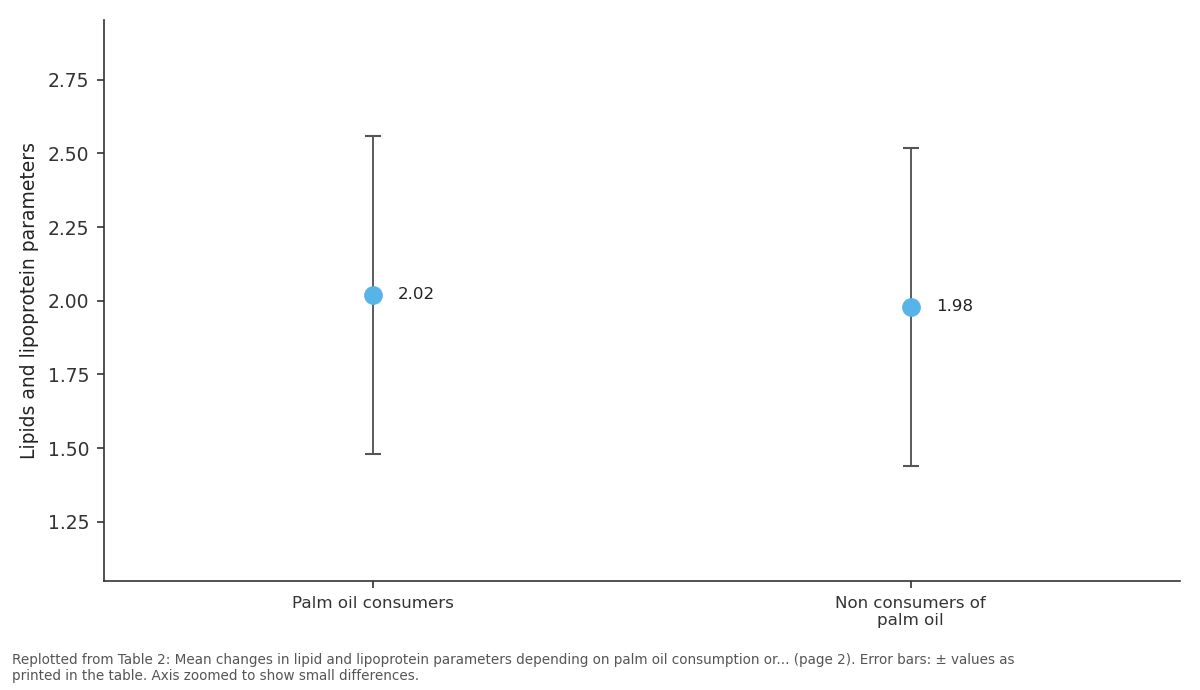
Lipids and lipoprotein parameters: Palm oil consumers vs Non consumers of palm...
Replotted from Table 2 (page 2) of the original paper. Every bar is the paper's own table value.
View source evidence ↗Figures & tables
From the original paper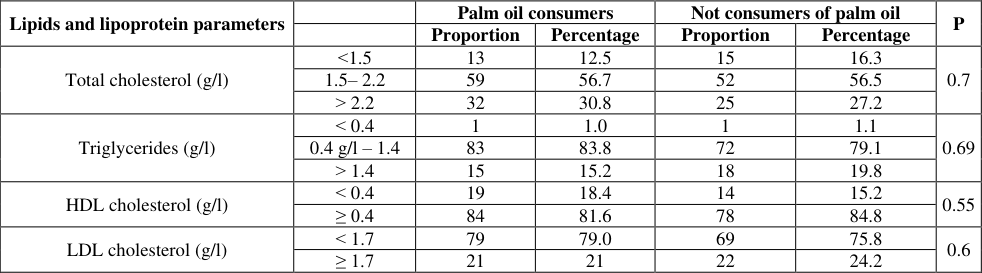 Table 1
 Table 2
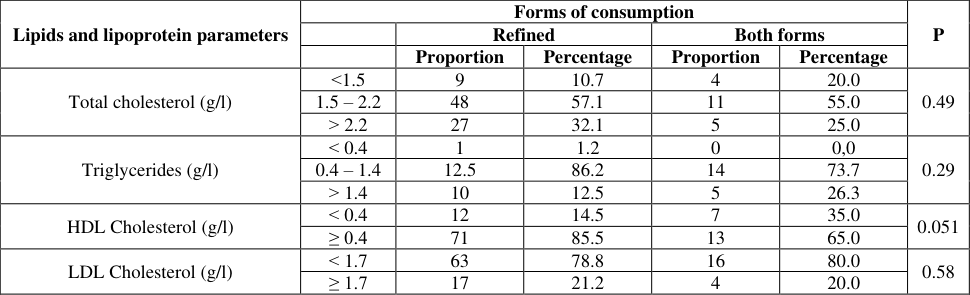 Table 3
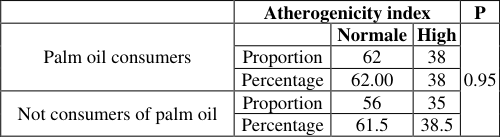 Table 4
Introduction
Cardiovascular diseases accounted for most non-communicable disease deaths (17.5 million NCD deaths) and are globally the leading cause of death [1] . Their prevalence is incessantly progressing in both developed and developing countries [2,3] . High blood pressure is the most common cardiovascular disease and is a major public health problem for societies in socioeconomic and epidemiological transition [4] . Globally, more than a quarter (26.4%) of the adult population is hypertensive and several studies have shown the increasing prevalence of high blood pressure [5][6][7][8] . In France, 40% of people aged 65 and 90% of those aged 85 are affected by this pathology [9] . High blood pressure prevalence in a populationbased cohort in Switzerland was found in 34.9% of subjects, 49.1% of whom were unaware of this condition [5] . The prevalence of self-reported high blood pressure among adults living in Brazilian state capitals and the federal district was 24.1% [6] . This trend is increasing, especially in sub-Saharan Africa, where about eighty million patients had hypertension, and according to the epidemiological projections, they will be fifty million in 2025 [4,10] . In Côte d'Ivoire, the prevalence of hypertension is estimated at 33.4% and represents 75% of consultations at the Abidjan Heart Institute [11] . Obesity, high cholesterol, hypertriglyceridemia is mainly considered major risk factors for cardiovascular disease and the occurrence of elevated blood pressure [1,4,12] . In addition, it is well known that hypertension and hypercholesterolemia are inter-related ad mutually potentiating cardiovascular risk factors, that, when occurring together, strongly accelerate atherosclerosis and significantly increase cardiovascular risk [3,[13][14][15] . There are hereditary hypercholesterolemia, another side to a disease or nutritional origin in an excessive intake of saturated fat, cholesterol, and calories [7][8][9] . Among oil, palm oil is one of the most important sources of food lipids and is the most widely consumed oil in the world, with nutritional and beneficial properties for health [16][17][18][19][20] . But this oil is alleged to be atherogenic due to its high content of saturated fatty acids, namely palmitic acids [21][22] . We have previously shown that some patients with hypertension [23] did not consume palm oil because it was recommended to them by members of the medical and paramedical personnel, under the pretext that this consumption exposes these patients to cardiovascular complications and other chronic diseases [24] . Although palm oil is known to exercise beneficial effects on human health [19, 20, 25] , it is a subject of controversy. Thus, we previously studied the impact of its consumption of variations in lipid and lipoprotein profiles of healthy young Ivorian subjects living in rural areas [26] . But no work has been done on the lipid and lipoprotein profile in hypertensive patients, whether or not they use palm oil in our country, taking into account the high prevalence of hypercholesterolemia in hypertensive patients [3,[13][14][15] which increases cardiovascular risk factors. Therefore, this work was undertaken to study the changes in lipid and lipoprotein parameters in a group of hypertensive patients, consuming palm oil or not, at the Abidjan Heart Institute.
Material and Methods
Material and Methods
Patients
Hypertension was defined as systolic blood pressure 140 mm Hg and/or diastolic BP 90 mm Hg or use of antihypertensive medication. A total of 196 hypertensive patients was systematically sampled. These patients attend both the consultation service and the laboratory of the Abidjan Heart Institute, according to well-defined criteria. These are adult patients (≥ 18 years old) of both sexes, known hypertensive patients with or without palm oil consuming. There were 104 patients who consumed palm oil, while 92 patients did not consume. Among palm oil consumers, there were 20 (19.2%) who consumed in both forms, i.e., crude, and refined, and 84 (80.8%) consumed only refined form of palm oil. Patients who did not consume palm oil, used others oil in their diet. Patients who refused the samples were not selected. A researcher-administered questionnaire collected information on socio-demography, presence of high blood pressure (BP), and family history of hypercholesterolemia. Other measurements included: blood pressure, weight, height, abdominal circumference.
Methods
This prospective cross-sectional descriptive and analytical study lasted four months. The biochemical parameters analyzed were total cholesterol, triglycerides, HDL cholesterol, LDL cholesterol and total cholesterol / HDL or atherogenic index. The assays were performed at the biochemistry laboratory of the Treichville Teaching Hospital, on automated "Random Cobas Integra 400" (Roche Diagnostics), according to conventional enzymatic methods. The data collection was conducted on a survey sheet.
Ethical approval and Informed consent
The Protocol was approved by the institutional ethics committee. The written informed consent of each patient was obtained.
Statistical analysis
The statistical analysis was performed using SPSS. The results are shown as mean ± SD (Standard Deviation) and median (range). The data were analyzed using the Fisher, and chi-squared tests. The p-value of <0.05 was denoted as statistically significant. The mean changes of various lipid and lipoprotein parameters studied showed that differences observed in the groups of palm oil consumers and non-consumers were not significant. Among palm oil consumers, 62% had a normal atherogenicity index. The proportion with a normal atherogenicity index at the non-consumer level was about the same (61.5%). There was no significant difference between the two groups.
Results
Results
Discussion
Discussion
Age, sex, and duration of hypertension
The patients were mostly adults (55.1%) with an average age of 57.13 years. The female sex was predominant, with a ratio sex of 0.75 in agreement with those of Youmbissi et al. [27] reported an average age of 56 years for men and 55 years for women in a population of hypertensive patients in a study on lipid profile in hypertensive to Cameroon. This age is the one from which metabolic diseases such as diabetes and chronic diseases like arterial hypertension usually occur. Hypertension had been changing for less than 5 years in most patients, who were regularly monitored for their pathology at the Abidjan Heart Institute. Patients with mild hypertension (Grade 1) accounted for the largest number (34.9%), followed by those with a high normal-grade hypertension (31.8%), while Grade 2 patients accounted for 26.7%. Youmbissi et al. [27] had also found 26.11% of moderate hypertension, consistent with our results.
Consumption or not of palm oil and form of consumption
Patients who consumed palm oil in their diet were significantly more numerous (53.1%) than those not consuming (46.9%). These results are contrary to those of previous work [23] , where we had reported 96.25% of consumers. The current palm oil consumption could be explained by the fact that this oil is the main oil produced in West Africa regions, and moreover, Côte d'Ivoire is the second producers [28] of this oil in Africa. In addition, palm oil is present, not only in most urban commercial areas, but also in markets, in the countryside and at affordable prices, which would favor its choice by the people. Regarding palm oil form of consumption, most consumer patients (80.8%) preferred it in refined form, while only 19.2% used the crude and refined forms of the oil for their different meal.
We didn't find patients who consumed exclusively crude red palm oil, while this form is rich in carotenoids, vitamin E and other important phytonutrients [18,20,25] .
Variations in lipid and lipoprotein parameters in patients with and without palm oil
Hypercholesterolemia was defined according to cardiovascular risk and LDL-cholesterol levels or the use of lipid-lowering drugs [9,12] . Most of patients consuming palm oil had a total normal cholesterol, without any significant difference with the values in non-consumers' patients (Table 1). Sun et al. [29] reported similar proportions. It is well known that palm oil is a vegetable oil that does not contain cholesterol [18,20] . In addition, cholesterol is produced endogenously in 2/3 cases from acetyl coenzyme A, the remaining 1/3 comes from food, including animal fat [30] . Different mean values of lipid and lipoprotein parameters are normal, without no significant difference between palm oil consumers and non-consumers (Table 2). Most of patients consuming palm oil or not, triglyceride levels were normal, with no significant difference between the two groups. Regarding the palm oil form of consumption, total cholesterol and serum triglyceride concentrations were substantially the same in patients who consumed exclusively refined form, likewise patients consuming both forms, without significant difference (Table 3). Most of patients had normal total cholesterol and triglyceride values, and these results were close to that reported by Dauqan et al. [31] . It is well known that trans fatty acids increase total cholesterol and serum triglyceride content, while palm oil does not contain trans fatty acids, and therefore, cannot increase these parameter levels [17,20] . The consumption of palm oil or not didn't significantly influence the HDL cholesterol level, just like the form of consumption (Tables 2 and4). Boon et al. [16] had shown that long-term use of palm oil in its various forms raised HDL cholesterol levels in hypertensive rats. Mukherjee [17] and Sundram [18] also reported the beneficial effects of palm oil consumption on the lipid profile of rats, particularly on HDL cholesterol level elevation. Thus, the consumption of palm oil has a protective effect against cardiovascular diseases, because of increasing the HDL cholesterol level, thus fighting against atherosclerosis [16][17][18] . The serum LDL cholesterol level was normal, although in patients consuming palm oil and non-users. Thus, the consumption or not of palm oil do not significantly influence serum LDL cholesterol levels. Palm oil is rich in carotenoids, vitamin E (tocopherols and tocotrienols), which are known to have major antioxidant properties [19,20] . Indeed, Amr and Kamsiah demonstrated the significant effects of palm oil consumption on lipid profile in mice [32] and the beneficial effects on the heart in rats [33] . The combined effect of antioxidant properties of carotenoids, tocopherols, tocotrienols and the 50% unsaturated fatty acids contained in palm oil gives it a high oxidative stability compared to other vegetable oils [19,20,30] . Studies have shown that a diet rich in saturated fatty acids (AGS) increases LDL cholesterol [19] , while the presence of antioxidants, such as carotenoids has a well-known cardioprotective effect. In fact, the higher LDL cholesterol level, the higher the risk of atherosclerosis and higher the HDL cholesterol level, the lower the risk of cardiovascular disease. Concerning the benefits linked to the consumption of palm oil, this work agrees with that of Sun et al. [29] , who had reported that palm olein had no recognizably different effects on body fatness or blood lipids in a healthy Chinese population. Edem and Mukherjee also showed a reduction in serum LDL cholesterol levels [17,20] . Thus, the long-term consumption of palm oil, because of their antioxidant properties, lowers LDL cholesterol levels as proved in other studies [17,20,30] .
| Lipids and lipoprotein parameters | Forms of consumption | — | — | — | — | P |
|---|---|---|---|---|---|---|
| Refined | Both forms | |||||
| Proportion | Percentage | Proportion | Percentage | |||
| Total cholesterol (g/l) | ˂1.5 | 9 | 10.7 | 4 | 20.0 | 0.49 |
| 1.5 – 2.2 | 48 | 57.1 | 11 | 55.0 | ||
| ˃ 2.2 | 27 | 32.1 | 5 | 25.0 | ||
| Triglycerides (g/l) | ˂ 0.4 | 1 | 1.2 | 0 | 0,0 | 0.29 |
| 0.4 – 1.4 | 12.5 | 86.2 | 14 | 73.7 | ||
| ˃ 1.4 | 10 | 12.5 | 5 | 26.3 | ||
| HDL Cholesterol (g/l) | ˂ 0.4 | 12 | 14.5 | 7 | 35.0 | 0.051 |
| ≥ 0.4 | 71 | 85.5 | 13 | 65.0 | ||
| LDL Cholesterol (g/l) | ˂ 1.7 | 63 | 78.8 | 16 | 80.0 | 0.58 |
| ≥ 1.7 | 17 | 21.2 | 4 | 20.0 |
Table text extracted from the original PDF; superscript letters are shown inline. The original table image is below.
View original table image
| — | — | Palm oil consumers | Non consumers of palm oil | P |
|---|---|---|---|---|
| Lipids and lipoprotein parameters | Total cholesterol (g/l) | 2.02 ± 0.54 | 1.98 ± 0.54 | 0.08 |
| Triglycerides (g/l) | 1.17 ± 1.52 | 1.19 ± 0.93 | ||
| Cholesterol HDL (g/l) | 0.48 ± 0.14 | 0.48 ± 0.17 | ||
| Cholesterol LDL (g/l) | 1.32 ± 0.48 | 1.28 ± 0.5 | ||
| TC/HDL ratio | 4.6 ± 2.2 | 4.3 ± 1.61 |
Table text extracted from the original PDF; superscript letters are shown inline. The original table image is below.
View original table image
| Lipids and lipoprotein parameters | — | Palm oil consumers | — | Not consumers of palm oil | — | P |
|---|---|---|---|---|---|---|
| Proportion | Percentage | Proportion | Percentage | |||
| Total cholesterol (g/l) | ˂1.5 | 13 | 12.5 | 15 | 16.3 | 0.7 |
| 1.5– 2.2 | 59 | 56.7 | 52 | 56.5 | ||
| ˃ 2.2 | 32 | 30.8 | 25 | 27.2 | ||
| Triglycerides (g/l) | ˂ 0.4 | 1 | 1.0 | 1 | 1.1 | 0.69 |
| 0.4 g/l – 1.4 | 83 | 83.8 | 72 | 79.1 | ||
| ˃ 1.4 | 15 | 15.2 | 18 | 19.8 | ||
| HDL cholesterol (g/l) | ˂ 0.4 | 19 | 18.4 | 14 | 15.2 | 0.55 |
| ≥ 0.4 | 84 | 81.6 | 78 | 84.8 | ||
| LDL cholesterol (g/l) | ˂ 1.7 | 79 | 79.0 | 69 | 75.8 | 0.6 |
| ≥ 1.7 | 21 | 21 | 22 | 24.2 |
Table text extracted from the original PDF; superscript letters are shown inline. The original table image is below.
View original table image
Changes in atherogenicity index
The atherogenicity index was normal (TC/HDL) in both palm oil consumers and non-consumers, with an insignificant difference (62 and 61.5% respectively). These results agree with those of Boon [16] , who found that the CT / HDL index was lower in rats supplemented with palm oil. This may suggest the role of palm oil in the significant decline in the atherogenicity index from these animals. Edem and Fife [20,30] had previously shown the important role of oil in reducing atherogenicity index. Thus, palm oil could help to reduce the risk of developing hypertension-associated cardiovascular disease by improving lipid and lipoprotein profile of hypertensive patients [34] . We can postulate that normal consumption of palm oil has no effect on increasing blood pressure; it is rather the intake of repeatedly heated palm oil that causes an increase in blood pressure because oxidization of dietary cooking oil increases the risk of cardiovascular diseases such as hypertension by increasing the formation oxidative oxygen radicals [33,35] .
Conclusion
The consumption of palm oil does not significantly influence the lipid and lipoprotein parameters and therefore, has no effect on increasing blood pressure. The population should be made aware of the benefits of its consumption, due to it's its high vitamin E content (tocopherols and tocotrienols), β-carotenes, which could contribute to improve cardiovascular risks in hypertensive patients.
Acknowledgements
The authors thank all the medical and paramedical staff of the Cardiology Institute of Abidjan, for their invaluable collaboration in carrying out this work.
Funding statement
This work received financial support from the "Fond Interprofessionnel pour la Recherche et le Conseil Agricoles (FIRCA)", as well as the "Association Interprofessionnelle pour la Filière Palmier à Huile" (AIPH) from Côte d'Ivoire towards the "Palm oil and health" project, under the number "1612/FIRCA/UFR SMA/PALMIER À HUILE/RE/ 2017". We sincerely thank FIRCA and AIPH.
Figures and tables from the paper
| — | Atherogenicity index | — | — | P |
|---|---|---|---|---|
| Palm oil consumers | Normale | High | 0.95 | |
| Proportion | 62 | 38 | ||
| Percentage | 62.00 | 38 | ||
| Not consumers of palm oil | Proportion | 56 | 35 | |
| Percentage | 61.5 | 38.5 |
Table text extracted from the original PDF; superscript letters are shown inline. The original table image is below.
View original table image
References
26 in the original paper- Allaert FA, Fouchères G, Elias-Billon I, Maigret P. Prevalence of asymmetrical blood pressure in uncontrolled hypertensive patients is high and highly related with cardiovascular diseases prevalence. Ann Cardiol Angeiol (Paris). 2016;65(3):136-41.
- Noubiap JJ, Essouma M, Bigna JJ, Jingi AM, Aminde LN, Nansseu JR. Prevalence of elevated blood pressure in children and adolescents in Africa: a systematic review and meta-analysis. Lancet Public Health. 2017;2(8):e375-e386.
- Ministère de la Santé et de l'Hygiène Publique. Etude de la prévalence et de certains aspects épidémiologiques de l'hypertension artérielle en Côte d'Ivoire; c2020. [en ligne] Disponible sur http://news.abidjan.net/h/551930.html. Consulté le 03/07/2020.
- Śliż D, Marcinkiewicz A, Olejniczak D, Jankowski P, Staniszewska A, Mamcarz A, et al. Hypercholesterolemia and prevention of cardiovascular diseases in the light of preventive medical examinations of employees in Poland. Int. J Occup Med Environ Health. 2019;2:111687.
- Balbay Y, Gagnon-Arpin I, Malhan S, Öksüz ME, Sutherland G, Dobrescu A, et al. The impact of addressing modifiable risk factors to reduce the burden of cardiovascular disease in Turkey. Turk Kardiyol Dern Ars. 2019;47(6):487-497.
- Bae YS, Choi S, Lee K, Son JS, Lee H, Cho MH, et al. Association of Concurrent Changes in Metabolic Health and Weight on Cardiovascular Disease Risk: A Nationally Representative Cohort Study. J Am Heart Assoc. 2019;8(17):e011825.
- Pierre S, Seo G, Rivera VR, Walsh KF, Victor JJ, Charles B, et al. Prevalence of hypertension and cardiovascular risk factors among long-term AIDS survivors: A report from the field. J Clin Hypertens (Greenwich). 2019;21(10):1558-1566.
- Boon CH, Ng M, Choo Y-M, Mok SL. Super, red palm oleins improve the blood pressure, heart size, aortic media thickness and lipid profile in spontaneously hypertensive rats. PLoS ONE. 2013;8(2):1-12.
- Mukherjee S, Mitra A. Health effects of palm oil. Journal of Human Ecology. 2009;26:197-203.
- Sundram K, Khor HT, Ong AS. Effect of dietary palm oil and its fractions on rat plasma and high-density lipoprotein lipids. Lipids. 1990;25:187-193.
- Jacques R, Adriaan JE, Anna-Mart E, Eugene FT. Health benefits of a natural carotenoid rich oil: A proposed mechanism of protection against ischaemia/reperfusion injury, Asia pacific J of clin. Nutr. 2008;17(1):316-319.
- Edem DO. Palm oil: Biochemical physiological nutritional, hematological and toxicological aspects: A review. Plant Foods for Hum. Nutr. 2002;57(3):319341.
- Fattore E, Fanelli R. Palm oil and palmitic acid: A review on cardiovascular effects and carcinogenicity. Int. J Food Sci. Nutr. 2013;64(5):648-59.
- Agostoni C, Moreno L, Shamir R. Palmitic acid and health: Introduction, Crit. Rev. Food Sci. Nutr. 2016;56(12):1941-1942.
- Monde A, Camara-Cisse M, Koffi G, Adeoti M, Djohan F, Konin C, et al. Evaluation des connaissances sur les valeurs nutritionnelles de l'huile de palme chez les patients hypertendus à l'Institut de Cardiologie d'Abidjan. Afrique Bio Médicale. 2016;21(3):57-64.
- Monde AA, Moundounga J-C, Camara-Cisse M, Gauze-Gnagne-Agnero C, Nguetta R, Fogha D, et al. Connaissances, attitudes et pratiques sur les valeurs nutritionnelles de l'huile de palme chez le personnel médical et paramédical de l'Institut de Cardiologie d'Abidjan. Int. J Biol. Chem. Sci. 2019;13(4):19691979.
- Monde AA, Cisse-Camara M, Ake AA, Koffi G, Gauze Gnagne-Agnero C, Djohan F, et al. Biochemical properties, nutritional values, health benefits and sustainability of palm oil, Biochimie. 2020;178:81-95.
- Ake AA, Monde AA, Edjeme-Ake A, Bahi GA, Djaman AJ, Yapo AP. Effects of Palm Oil Consumption on Lipid Profile among Rural Ivorian Youth. Journal of Food Research. 2017;6(4):140-149.
- Youmbissi TJ, Djoumessi S, Nouedoui C, Ndobo P, Meli J. Profil lipidique d'un groupe d'hypertendus Camerounais noirs africains. Médecine d'Afrique Noire. 2001;48(7):305-314.
- Palm oil in the Ivorian economy/Palmafrique. www.socfin.com. (Accessed 08 March 2020).
- Sun G, Xia H, Yang Y, Ma S, Zhou H, Shu G, et al. Effects of palm olein and olive oil on serum lipids in a Chinese population: a randomized, double-blind, crossover trial. Asia Pacific Journal of Clinical Nutrition. 2018;27(3):572-580.
- Dauqan E, Abdullah H, Abdullah A, Mohd Z. Effect of different vegetable oils (Red Palm Olein, Palm Olein, Corn Oil and Coconut Oil) on Lipid Profile in Rat. Food and nutrition sciences. 2001;2(4):253-258.
- Amr AR, Fatma A, Elrahman MA. Effect of some dietary oils and fats on serum lipid profile, calcium absorption and bone mineralization in mice, Pakistan J of Nutr. 2010;9(7):643-650.
- Kamsiah J, Norhayati M, Norzana G, Aini UN, ImaNirwana S. Effects of Heated vegetable oils on serum Lipids and Aorta of Ovariectomized Rats, Pakistan J of Nutr. 2006;5(1):19-29.
- Subhan FB, Chan CB. Diet quality and risk factors for cardiovascular disease among South Asians in Alberta. Appl Physiol Nutr Metab. 2019;44(8):886-893.
- Leong XF, Najib MN, Das S, Mustafa MR, Jaarin K. Intake of repeatedly heated palm oil causes elevation in blood pressure with impaired vasorelaxation in rats. Tohoku J Exp Med. 2009;219(1):71-8.
Cited by 4
From OpenAlex, OpenCitations and reference lists read by Scinovex
- Impact of Palm Oil Consumption on Hypercholesterolemia in Ivorian Subjects ↗
Yapo-Kee Bénédicte, Ake Aké Alexandre, A. Mbaegbu Emmanuella, Niava-Bouberi Bénita, Lohoré Jeannine, Ecrabey Christian et al. · Advances in Biochemistry · 2024
Palm oil is widely consumed in Côte d'Ivoire and is accused of causing hypercholesterolemia, which justifies the evaluation of the impact of its consumption on the increase in total cholesterol in Ivorian people. This was a prospective cross-sectional analytical study involving 2862 palm oil consumers over a 11-month period. The study was carried out in the health districts of Côte…
❝ 1PDF - Impact of insect pests of female oil palm inflorescences on the quality of palm bunches and palm oil ↗
Assiénin Hauverset N’Guessan, Bossoma Danielle Anougba, Niamketchi Gilles Léonce, Kouamé Jean-Noël Konan, N’guessan Alphonse Kouassi · Journal of Entomology and Zoology Studies · 2022
Oil palm is a major cash crop for many countries. In fact, Côte d'Ivoire is the second largest African producer after Nigeria and the first African exporter. Despite this performance, the cultivation of this plant is limited by a variety of pests that strongly affect its production. These include leafminer Coelaenomenodera lameensis, defoliating caterpillars (Latoia spp), pests of the stipe…
❝ 0PDF - Circadian blood pressure variations in normotensive and hypertensive Indian adults: An exploratory study ↗
Deepali Khatri, Leena Phadke · International journal of applied research · 2022
Background and Objectives: Though 24hours BP monitoring is a useful tool that provide insights in masked and white coat hypertension as well as can be used as a marker of allostatic load (by monitoring circadian variations) and applicable in chronotherapy, is still sparingly used clinically. Hence, the objective of present study is to explore the pattern of circadian variation of…
❝ 0PDF - Study of dyslipidemia in blood serum and sweat fluid of men with diabetic nephropathy in Mosul city ↗
Shaymaa ABD Alrazak A Altony, Eman Adel Hadi · International Journal of Chemical and Biological Sciences · 2022
The objective of this study was the determine Creatinine, eGFR, Total cholesterol (TC), Triglycerides (TG), High Density lipoproteins-cholesterol (HDL-C), low Density lipoproteins-cholesterol (LDL-C), Very Low-Density lipoproteins-cholesterol (VLDL-C) and Atherogenic Index (AI) in Serum Blood and Sweat fluid. The results showed increased in Creatinine, Total cholesterol, Triglycerides, very low-Density lipoproteins-cholesterol and Atherogenic Index in Serum and Sweat fluid. Also, increased in