
Research article · 2021 · Full text
International Journal of Agriculture and Food ScienceReview on ginger bacterial wilt (Ralstonia solanacearum Smith) and its management approaches: The case of Ethiopia
Volume 3(2) · Pages 09–15 · DOI: 10.33545/2664844x.2021.v3.i2a.51 ↗
Research areasPlant Pathogenic Bacteria StudiesGinger and Zingiberaceae researchHumic Substances and Bio-Organic Studies
Abstract
Author-writtenGinger Bacterial wilt disease posed a threat to ginger production in countries where ginger is produced. It is caused by Ralstonia solanacearum (Smith) biovar III race 4. Having knowledge on biology, distribution and possibl ways to manage the disease is important in designing cost Effective management strategies of the disease. The objective of this paper was to give an Overview on biology, distribution, importance and management approaches of ginger bacterial Wilt caused by Ralstonia solanacearum (Smith). Ralstonia solanacearum is distributed in many Habitats all over the world and has broad host range. It is seed and soil borne pathogen that can easily transfer from one cropping season to the next by infected seed piece and soil. The symptom of the disease can be seen on above ground and underground parts of ginger plant. Efforts have been made to manage the disease in many countries including Ethiopia. Available management options for the disease are using biological control agents, cultural methods, chemical methods and integrated disease management. Integration of different management options like the use of chemicals, biological control agents, and organic amendments were found better controlled infection caused by Ralstonia solanacearum (Smith). The use of biological Control agents is one of the most preferable disease management options. Therefore, research should be directed towards identification and efficacy test of biological control agents against the pathogen. Moreover, integration and efficacy evaluation of different management tactics should be done in a way it is environmentally safe, economically feasible and sustainable.
Summary
Source-checkedPlain-language reading of the full paper, prepared with AI and checked against the text. Each point links to the authors' own words.
Why it matters
- Ginger is a significant commercial crop valued for its aromatic rhizomes, which serve as both medicinal and culinary ingredients. View evidence ↗
- Bacterial wilt, caused by the pathogen Ralstonia solanacearum, is one of the primary biological constraints limiting ginger production. View evidence ↗
- In Ethiopia, ginger bacterial wilt is an emerging and devastating disease capable of causing total crop failure. View evidence ↗
The question
- The objective of this review is to provide a comprehensive overview of the biology, distribution, importance, and management strategies for ginger bacterial wilt. View evidence ↗
What they did
- The review examines four primary management categories: biological control agents, cultural methods, chemical treatments, and integrated disease management (IDM). View evidence ↗
What they found
- Ralstonia solanacearum has an exceptionally broad host range, infecting more than 200 plant species across over 50 botanical families. View evidence ↗
- In southern Ethiopia, ginger bacterial wilt has been shown to reduce crop yields by as much as 98%. View evidence ↗
- Soil biofumigation using cabbage was found to be highly effective, resulting in a bacterial wilt incidence of 5.92% and a yield of 15.16 t/ha. View evidence ↗
- In tomato plants, inoculation with the fungus Glomus versiforme reduced R. solanacearum populations by 26.7% in the rhizosphere, 79.3% on root surfaces, and 81.7% in the xylem. View evidence ↗
- In vitro tests showed that Streptocycline provided the highest average inhibition of the pathogen at 20.05 mm, compared to Copper hydroxide at 6.2 mm. View evidence ↗
- The most effective biological control combination identified was Bacillus megaterium paired with maize powder, achieving 73.7% biocontrol activity. View evidence ↗
- Integrated management options in Ethiopia showed varying efficacy by location, with 42.1% efficacy in Jimma and 38.3% in Teppi. View evidence ↗
What it means
- The authors conclude that biological control agents are the most preferable management option due to their sustainability, economic feasibility, and environmental safety. View evidence ↗
- The authors recommend implementing crop rotation with non-host crops, such as cereals, to starve the pathogen and reduce its population in the soil. View evidence ↗
- The authors note that national-level distribution data for the disease in Ethiopia is not clearly known and data on yield loss assessments are scarce. View evidence ↗
- A limitation in current research is the failure to account for the synergistic effect of the nematode Meloidogyne incognita, which can accelerate wilting when present with the bacteria. View evidence ↗
Visual summary
1 visualsIllustrations explain the paper; they do not show study data.
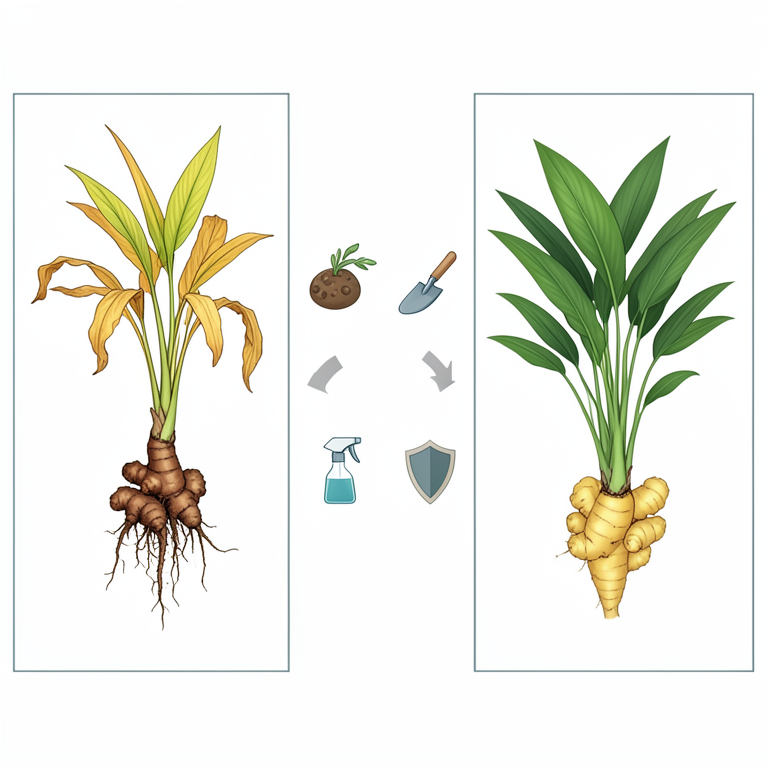
Management Strategy Framework
AI-generated conceptual illustration (ginger plants (Zingiber officinale)). It explains the idea and does not show study data.
View source evidence ↗Figures & tables
From the original paper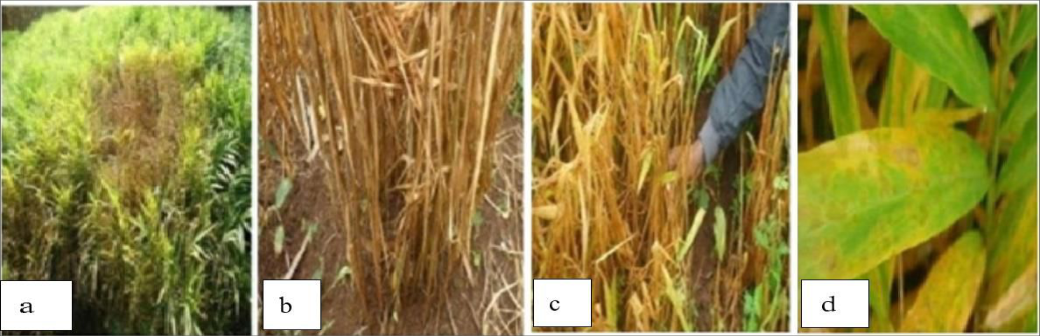 Figure 1
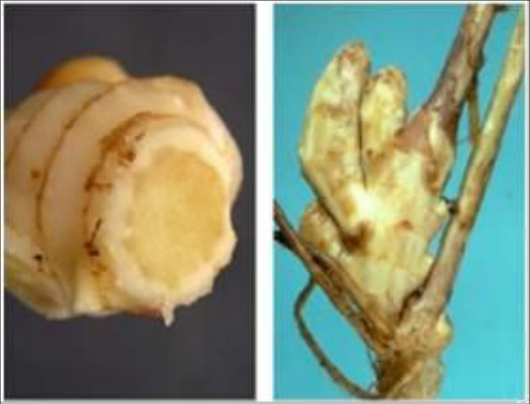 Figure 2
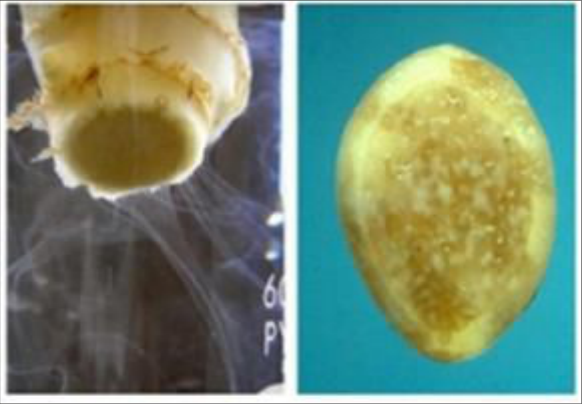 Figure 2
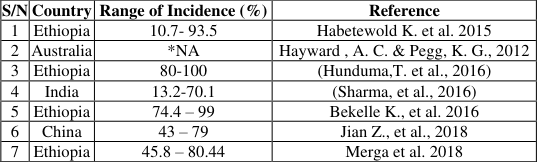 Table 1
Introduction
Ginger (Zingiber officinale Rosc.) is an important commercial crop grown for its aromatic rhizomes, which are used as both spice and medicine. It is an herb with a thickened, fleshy, perennial, subterranean rhizome and with one or more aerial leafy stems. Rhizome strong, up to 2cm thick, irregularly branched but normally only in a vertical direction, covered with deciduous, thin scales, which leave ring-like scars; epidermis corky, pale yellow to light-brown, irregularly wrinkled in the dried rhizome; roots having a smooth circular cross-section, thin, fibrous, white to light-brown; on dried rhizomes scars of leafy stems visible as shallow cup-like holes. Stem erect unbranched, mainly formed by the leaf-sheaths, up to 1m high, pale-green, often reddish at base. It was originated in Southeast Asia probably in India (Jansen, 1981) [23] . Ginger is cultivated in several parts of the world. China and India have continued to lead the world in fresh ginger production with a combined global share of over 50%, followed by Indonesia, Nepal and Nigeria. Other major producers of ginger include Bangladesh, Japan, Thailand, Philippines, Cameroon, Sri Lanka, Korea and Fiji (Henry E. C. & Adriano B. 2009) [21] . In Ethiopia Ginger cultivation started when Arabs, in the 13th century brought ginger from India to East Africa (Jansen, 1981) [23] and ginger had perhaps been known since then in Ethiopia, and predominantly grown in the wetter parts of the Southern Nations, Nationalities and Peoples" Regional State (SNNPRS).
Ginger production to a lesser extent, has been also extended to some parts of Western Oromia and Northern Amhara (Tadesse et al., 2016) [35] . There are different abiotic constraints that limit the productivity of ginger such as low levels of input use (fertilizer, pesticide, improved seeds, etc.), low levels of irrigation, soil degradation and soil erosion, inadequate agricultural research and extension, and constraints in market development. Common diseases of ginger are soft rot caused byphythium spp., bacterial wilt (Ralstonia solanacearum), yellows (fusarium oxysporium, Phyllosticata leaf spot, nematode (Pratylenchus coffeae) and storage rots which is causedby Pythium sp., Fusarium oxysporum f. sp. zingiberi and Sclerotium rolfsii (Sharma, et al., 2017) [32] Among the biotic constraints bacterial wilt, which is caused by Ralstonia solanacearum is one of the most important diseases that limit its production. Bacterial wilt poses a serious damage to the cultivation of many Solanaceous crops such as tomato, potato, tobacco, pepper and eggplant in tropical, sub-tropical and temperate regions (Hayward, 1991) [20] . Bacterial wilt disease of ginger, which is one of the major constrains of ginger production in tropical and subtropical regions of world is highly heterogeneous bacterial pathogen of many economically important crops causes severe wilting (Smith et al. 1995) [34] . Ginger bacterial wilt is considered to be newly emerging and devastating disease which caused total crop failure in ginger producing areas of Ethiopia (Bekelle et al. 2016, Duressa, 2018) [5, 11] . Since the disease is currently posing serious threat to ginger production, it is very crucial to have the knowledge of biology, distribution and possible ways to manage the disease. Therefore the objective of this paper was to overview biology, distribution, economic importance and management approaches of ginger bacterial wilt caused by Ralstonia solanacearum.
Biology of Ralstonia solanacearum
Characterization and Classification of the Pathogen Roop Singh et al., (2015) [31] studied cultural and biochemical characterization of Ralstonia solanacearum causing bacterial wilt in ginger. They isolated the pathogen from diseased rhizomes of Zingiber officinale and inoculated on triphenyl tetrazolium chloride agar, casamino peptone glucose agar, yeast extract agar and potato dextrose agar. Cream white and dull white color colonies were found on nutrient agar and yeast extract milk agar. The result revealed that the white fluidal colonies with spiral pink centre were found. Cream or off-white color colonies were found. Besides, irregular, smooth, highly fluidal colonies were found on triphenyl tetrazolium chloride agar, casamino peptone glucose agar, potato dextrose agar and yeast extract chalk agar. Round small colonies were found on nutrient agar, yeast extract milk agar, yeast extract agar and yeast extract peptone agar. Furthermore, it showed positive reactions for potassium hydroxide solubility test, catalase test, starch hydrolysis test, motility test and casein hydrolysis test and showed negative reaction for gram staining. Bacterial wilt, caused by members of the Ralstonia solanacearum species complex is a serious disease of many solanacous crops in tropical and sub-tropical regions of the world. Ralstonia solanacearum grouped into Kingdom: Monera, Phlum: Proteobacteria, Class: Beta proteobacteria, Order: Burkholderiales, Family: Burkholderiacaea, Genus: Ralstonia, Species: Solanacearum (Tahat, and Sijam, 2010) [28] . Ralstonia solanacearum is distributed in many habitats all over the world and has an unusually broad host range (Hayward 1991, Denny 2006) [20,10] . It can infect over 200 plant species representing over 50 botanical families (Hayward 1991) [20] . Due to its global distribution, adaptive potential and large host range, Ralstonia solanacearum has turned into a model system to study plant-microbe interactions, pathogenicity determinants and pathogen ecological behavior. Since Ralstonia solanacearum is a soil-borne pathogen and that resistance of the host is limited, bacterial wilt is very difficult to control (Hayward, 1991) [20] .
Sign and Symptom of the Disease
The symptom of the disease is associated with water soaked patches or linear streaks appear. These symptoms are followed by yellow to bronze colouration of margins of the lower-most leaves which gradually progresses upwards. At later stages, the leaves become flaccid with intense yellowish bronze colour and droop ultimately exhibiting typical wilt symptoms. If the affected rhizomes are pressed, a milky bacterial exudate oozes out. When infected tissues are steeped in clear water for a while, the water turns cloudy and milky (Meenu and Kaushal, 2017) [26] . The most common external symptoms of the infected plants are wilting, stunting and yellowing of the leaves, bending of the leaves downwards showing leaf epinasty, growth of adventitious roots in the stems, and the development of narrow dark stripes in the infected vascular bundles beneath the epidermis observed. This results from multiplication of the bacteria in the vascular system to levels that clog the vessels (Boucher et al., 2001) [7] . The internal symptoms which are a direct reaction to infection include progressive discoloration of the vascular tissue, mainly the xylem, at early stages of infection, and of portions of the pith and cortex, as the disease progresses, until complete necrosis occurs. Slimy viscous ooze typically appears on the vascular bundles of stems that have been cut across; as a result, collapse and death of the plant take place because of the degradation of occluded xylem vessels and the destruction of surrounding tissues (Boucher et al., 2001) [7] . On the above ground ginger plant part which started with slight yellowing and wilting of the lower leaves. The wilt progresses upward, affecting the younger leaves, followed by a complete yellowing and browning of the entire pseudo-steam. Under conditions favorable for disease development, the entire shoot becomes flaccid and wilts with little or no visible yellowing. However, the plant dries very rapidly and the foliage becomes yellow-brown in 5 to 10 days. (Habetewold et al., 2015) [18] .
Source: (Habetewold et al. 2015) [18] The underground symptom of ginger bacterial wilt include: Discoloration of rhizomes that are often rotted inside, Rhizomes and stem vasculature with a water-soaked appearance and Discoloration of vascular tissues (Figure 2). In addition, Bacterial ooze from an infected ginger rhizome was also reported (Nelson, 2013) [29] .
Source: Nelson, 2013 [29] Fig 2 : Ginger bacterial wilt sign and symptom on underground parts of ginger
Pathogen Survival, Spread and Life Cycle
The sources of infections of Ralstonia solanacearum are contaminated soil, in plant materials, on farm equipment, and in irrigation or surface water. The bacterium survives in the soil for varying periods of time, and is able to persist between successive crops. The bacterium has been found to survive in sheltered sites such as plant debris and latently infected potato tubers, the deeper soil layers and in the rhizosphere of roots of weed hosts (Hayward, 1991) [20] . The survival of the Ralstonia solanacearum, race 4 strains was reported in plant-free soil and potting medium in the presence of plants inoculated by different methods (nonwounded, rhizome-wounded, and stem-wounded) and irrigated on different schedules (alternate and daily). Ralstonia solanacearum can survive in soil for a long time and invades suitable plant-host when come in contact with. It colonizes in the xylem and spread into the host and causes wilt. Thereafter it returns back to soil and resides there as saprophytes (Kumar, R., 2014) [25] .
Host Range
Ralstonia solanacearum is bacterialwilt causal agent of many plant species. It has broad host range in over 50 plant family with more than 400 reported host plants.Infects potatoes (Solanum tuberosum), eggplant (Solanum melongena) peppers (Capsicum annum), tomatoes (Lycopersicon esculentum), geraniums, geranium carolinianum, ginger (Zingiber officinale), and few weed species including bitter sweet (Celastru orbiculatus), night shade (Solanum karsense) and stingingnettle (Urtica dioica) (Tahat and Sijam, 2010) [28] . Since the pathogen is able to survive in the soil over a long time; it can exist in a very wide range of weeds and volunteer crops (Fajinmi A. and Fajinmi O., 2010) [25] . Bottle gourd (Lagenaria siceraria), one of the earliest cultivated plants in China wasdetected as host for Ralstonia solanacearum in 2005 (Gao et al., 2007) [16] .
Distribution and importance of Ginger Bacterial wilts
The first Ginger bacterial wilt diseases were reported from India in 1941 by Thomas, then after a lots of reports came from Australia (Hayward et al., 1967) [13] [18] . In many tropical and subtropical regions the pathogen has been widely distributed and associated with a wide range of hosts (Agrios, 2005) [1] . Ralstonia solanacearum, a widely distributed and economically important plant pathogen, invades the roots of diverse plant hosts from the soil and aggressively colonizes the xylem vessels, causing a lethal wilting known as bacterial wilt disease. The bacterium, which is often endemic in the soil, penetrates the plant through the root system and eventually causes irreversible wilting and death. The disease has caused serious upsets to farmers who have been venturing into greenhouse production of crops that are susceptible to the bacterium (Kinyua et al., 2014) [24] . Bacterial wilt is a significant disease of many crops besides ginger root. These wilt diseases are caused by several subgroups of a bacterial pathogen, Ralstonia solanacearum. Strains of R. solanacearum have been classified into 5 races based on their host ranges, and into 5 biovars based on their differential ability to produce acid from a set of specific carbohydrates. Those races principally attack Bananas (race 1), ornamental plants (race 2), and potato (race 3), Ginger (race 4) and mulberries race 5. Rastonia solanacearum race 4 infected ginger crop in many ginger growing countries (Nelson, 2013) [29] .
In Ethiopia ginger bacterial wilt was first reported in 2016. Survey was conducted in 11 zones of Southern parts of Ethiopia.
It was 100% prevalent and severely infected commercial farms and small scale farms from 11 surveyed zones. Samples collected during the survey were subjected to laboratory and green house analysis. It is one of themost devastating plant diseases of economically important crops mainly Solanaceousfamily such as tomato, potato, pepper and eggplant. These crops play a significant roleprimarily as sources of income and food security for the small scale farming communityin Ethiopia (Kurabachew H., & Ayana G., 2016) [19] . Study showed that Ginger bacterial wilt is serious threat to ginger production in southern parts of Ethiopia which reduced the yield up to 98%. Survey was done in 2012 in major ginger producing areas of Ethiopia. Accordingly, a total of 165 producing farmer's field which found in twenty seven woredas, nine zones and two special woreda in south Nation and Nationality of People Regional State (SNNPRS) and one zone and one woreda in Gambela regions were assessed. The result confirmed that Bacterial wilt of ginger was found wide spread in all area and the incidence varied from 10.7% in Gamogofa zone and 93% in Sheka zone (Habetewold et al. 2015) [18] . The disease that threaten ginger production in Ethiopia was caused by Ralstonia solanacearum biovar III race 4 and it were distributed in major ginger growing areas of the region (Bekelle et al. 2016) [5] . Ginger bacterial wilt was reported to be among newly emerging diseases in Western parts of Ethiopia that severely affected ginger production in the area (Duressa, 2018) [11] . The disease is one of destructive diseases that posed threat to the production of ginger in different countries. The disease was reported across different ginger producing countries with variable range of incidence level (Table 1)
| S/N | Country | Range of Incidence (%) | Reference |
|---|---|---|---|
| 1 | Ethiopia | 10.7- 93.5 | Habetewold K. et al. 2015 |
| 2 | Australia | *NA | Hayward , A. C. & Pegg, K. G., 2012 |
| 3 | Ethiopia | 80-100 | (Hunduma,T. et al., 2016) |
| 4 | India | 13.2-70.1 | (Sharma, et al., 2016) |
| 5 | Ethiopia | 74.4 – 99 | Bekelle K., et al. 2016 |
| 6 | China | 43 – 79 | Jian Z., et al., 2018 |
| 7 | Ethiopia | 45.8 – 80.44 | Merga et al. 2018 |
Table text extracted from the original PDF; superscript letters are shown inline. The original table image is below.
View original table image
Management Approaches of Ginger Bacterial Wilt
Management of any crop disease starts with correct identification of the causal agent. In some circumstances, ginger wilt can be caused by combination two organisms (bacteria and nematodes) that act synergistically. DAS, S., (2004) [9] noticed that, quick wilt of ginger caused can be caused by Meloidogyne incognita and Ralstonia solanacearum. Simultaneous inoculation of M. incognita @ 1000 J2/kg soil + R. solanacearum @ 4 × yield including reduction in infectivity as well as population of M. incognita. Presence of M. incognita in simultaneous inoculation and M. incognita preceding the inoculation of Ralstonia solanacearum by 10 days reduced the incubation period of wilting by 5 and 10 days respectively there by facilitating successful infection. For this reason, correct identification of disease causal agent determines which control method should be applied. Different management options (cultural, host resistance, biological, chemical and integrated disease management) have been used for control of bacterial wilt disease caused by Ralstonia solanacearum.
Cultural Method
Cultural methods used to control and eradicate bacterial wilt are, use of healthy seed and planting in clean soils. However, many additional factors influence the incidence of the bacterium, such as environmental conditions (temperature and soil moisture), rotation with non-host plants, the use of less susceptible varieties and cultural practices (crop sanitation and nematode control) (Choudhary et al., 2018) [8,12] . Crop residue management is known to be essential in controlling soil borne pathogens. Carbon released from crop residues contributes to increasing soil microbial activity and so increases the likelihood of competition effects in the soil (Bailey and Lazarovits, 2003) [3] . The placement of the residue in soil can lead to the displacement of the pathogen from its preferred niche diminishing the pathogen's ability to survive. The benefits of applying organic amendments for disease control are incremental, generally slower acting than chemical. But, last longer, and their effects can be cumulative (Bailey and Lazarovits, 2003) [3] . Soil amendment with silicon fertilizer and sugarcane bagasse reduced population of Ralstonia solanacearum, mean wilt incidence, percent severity index, and corresponding areas of disease incidence, and severity progress curves in the moderately resistant tomato cultivar. Population of Ralstonia solanacerum was significantly reduced (p < 0.05) in silicon fertilizer treated plants both at 5 and 12 days post inoculation compared to non-amended for moderately resistant cultivar with an average of 29.2 and 17.6% reduction, respectively. Similarly, in sugarcane bagasse treatment, the bacterial population was also significantly reduced compared to the control treatment at 5 days post inoculation but not at 12 days post inoculation in moderately resistant cultivar. However, no significant reduction was obtained in bacterial populations in the moderately susceptible cultivar for all treatments (Ayana G. et al., 2011) [2] . Biofumagation with cabbage significantly reduced percentage of wilting and increased the yield of Ginger. In this study, six treatments i.e Soil treatment by biofumigation using cabbage, Soil treatment using bleaching powder at 10g/bed, Rhizome treatment by heat, Rhizome treatment by rhizobacterial antagonist, Rhizome treatment by endophytic bacterial antagonist and Control were used to manage bacterial wilt and soft rot disease of ginger. Biofumigation treatment of the soil with cabbage resulted in lowest soft rot and bacterial wilt disease incidence of 9.97% and 5.92% respectively with a highest yield of 15.16 t/ha (Bandyopadhya, et al., 2016) [4] .
Host Resistance
Host resistance is one of the safest and cheapest ways of disease management. Developing cultivars that are resistant to bacterial wilt is the most economical, environment friendly and effective method of disease management. Breeding for resistance to bacterial wilt has been concentrated widely on important economic crops, such as eggplant, peanut, pepper, potato, tobacco and tomato (Boshou, 2005) [6] . It was reported that out of 285 tomato accessions tested in Korea for Resistance to Ralstonia solanacearum in at Seedling Stage four germplasms were found to be resistant to pathogen. Getachew et al. (2009) [19] evaluated resistance of tomato genotypes against the highly aggressive Rasltonia solanacearum strain originated from Ethiopia. He found that six resistant, eleven moderately resistant, whereas most genotypes, including all tomato cultivars commonly grown in Ethiopia, were found highly susceptible.
Biological Method
The use of chemical compound is toxic to environment. Because, in addition to pest we aimed to control, it can also kill non target organisms including: natural enemies, birds, plant, wild animals, marine life, humans and soil biota. Disappearance of natural enemies of in turn gives chance for the pest to flourish in the absence of natural enemies and become supper pest. Killings of microorganisms in polluted soil can also negatively impact in crop production as soil fertility can be reduced in the absence of saprophytic and symbiotic microorganism's involved nutrient fixation and supplies. So, the use of biological controls products for soilborne pathogen has gained popularity in recent years due to environmental concerns raised on the use of chemical products in disease management (Haas and De'fago, 2005) [17] . Furthermore, it was also reported that, Ralstonia solanacearum was inhibited as a result of increased phenols induced locally or systemically by an arbuscular mycorrhizal fungus. In pot cultures, R. solanacearum populations in the rhizosphere, on root surfaces and in the xylem were decreased by 26.7, 79.3 and 81.7%, respectively, following inoculation of tomato plants (Lycopersicon esculentum Mill.) with Glomus versiforme Berch. Colonization of the plants by both Ralstonia solanacearum and G. versiforme increased the contents of soluble phenols and cellwall bound phenols in root tissue, but with different patterns (Zhu and Yao, 2004) [38] .
Chemical Method
Singh and Jagtap (2017) [33] reported in vitro growth inhibition capacity of chemicals with varying inhibition ability against Ralstonia solanacearum. Average inhibition ranged from 6. Other chemicals like copper oxychloride, plant guard, copper hydroxide and plantomycine were moderately effective whereas bromophol was least effective.
Integrated Disease Management Approach
Integrated disease management is a combination of methods, such as cultural, host resistance, biological, and chemical application, that are environmentally compatible, economically feasible, and socially acceptable to reduce damage caused by diseases to tolerable levels. The main goals of integrated disease management are eliminate or reduce the initial inoculum, reduce the effectiveness of initial inocula, increase the resistance of the host, delay the onset of disease and slow secondary cycles (Agrios, 2005) [1] . Different studies revealed that the use of two or more management options have better achieved control of Ralstonia solanacearum than sticking to single management method. According to (Yang, L, et al., 2012) [37] integration of soil amendment with organic composts and biological control agents increased the efficacy of biological control agents to control the population of Ralstonia solanacearum that cause ginger wilt disease in China. Two organic composts (maize powder and soybean residue) were combined with one combination (the aqueous solution of Bacillus subtilis and Bacillus cereus) and two single (Bacillus subtilis and Bacillus megaterium) biological control agents which together showed significant biocontrol efficacies. The study revealed that 3 -30% biocontrol efficacy improvement was obtained by addition of the two organic composts compared to the biological control agent treatment. The best biocontrol activity (73.7%) was obtained from the combination of Bacillus megaterium and maize powder. Merga et al. (2018) [27] reported that the integration of different cultural management options including hot water treatment, soil solarazation, soil amendment with potassium fertilizer (KCL) and bio fumigation with lemon grass reduced percent disease incidence and disease progress on research conducted at two locations; Jimma and Teppi zones of Ethiopia. Although integration of these management options was found to be promising, their efficacy varied between the two locations. The higher efficacy (42.1%) was obtained at Jimma and the lower (38.3%) was obtained at Teppi. But, there is no evidence why efficacy of integration of management options varied across locations.
Summary and Conclusion
Ginger (Zingiber officinale Rosc.) is an important commercial crop grown for its aromatic rhizomes. Its production is affected by many diseases and insect pests. Bacterial wilt disease of ginger, which is one of the major constrains of ginger production in tropical and subtropical regions of world is highly heterogeneous bacterial pathogen of many economically important crops causes severe wilting. In Ethiopia ginger bacterial wilt was first reported in 2016 and since then it is affecting ginger production in ginger producing areas of southern and western parts of the country. The high incidence of plant mortality makes Ralstonia solanacearum as one of the world's most destructive plant pathogens. The disease that threatens ginger production in Ethiopia was caused by Ralstonia solanacearum biovar III race 4 and the diseases were distributed in major ginger growing areas. Management of any crop disease starts with correct identification of the causal agent. In some circumstances, ginger wilt can be caused by combination two organisms (bacteria and nematodes) that act synergistically. Efforts have been made to manage the disease in many countries including Ethiopia. The available management options for the disease are using biological control agents, cultural methods, chemical methods and integrated disease management approaches. Since pathogen has ability to colonize soil habitat, it can cause disease up on cultivation of susceptible host. For this reason it is important to use crop rotation farming system with non-host crops like cereals so that its population can be reduced. This helps to starve Ralstonia solanacearum in the absence of right host. The use of biological control agents is one of the most preferable disease management options because it is environmentally safe, economically feasible and sustainable. Once biological control agents are established in certain habitat, frequent application is not needed unlike that of chemicals because, they can perpetuate by their own provided that the practices that can harm them like chemical application is avoided.
Future Prospects
The use of biological control agents for management of ginger bacterial wilt is very limited in Ethiopia. Therefore, research should be directed towards identification and efficacy test in vitro, green house and field condition to explore best candidate biological control agents against Ralstonia solanacearum. Even though the pathogen is reported as a challenge of ginger production in Ethiopia, distribution of the disease is not clearly known at national level and yield loss assessment data are scarce. Since the pathogen is soil and seed borne, attention should be given to internal and external quarantine system to prevent introduction of the disease which makes the situation very worse. Furthermore, Information is scarce regarding efficacy evaluation of integrated disease management approaches. For this reason, focus should be given to evaluate efficacy of different management options and integrating them in a way that they have better performance when used together than when used solely. Moreover, more of works done so far did not considered for the presence or absence of nematode species (Meloidogyne incognita) that together with Ralstonia solanacearum can hasten wilting in ginger. So that, attention should be given to detect both pathogens to set appropriate disease management strategy. Due to the complexity of the disease, the management of bacterial wilt is very difficult once infection is occurred. Therefore, application of Tissue Culture Technology should be enhanced to produce disease free planting materials
Figures and tables from the paper
References
38 in the original paper- Agrios GN. Plant Pathology. Academic Press, New York, USA, 2005:5:922.
- Ayana G, Fininsa C, Ahmed S, Wydra K. 'Effects of Soil Amendment on Bacterial Wilt caused by Ralstonia solanacerum and Tomato Yields in Ethiopia',2011:51(1):1317. doi: 10.2478/v10045-011-0013-0.
- Bailey KL, Lazarovits G. 'Suppressing soil-borne diseases with residue management and organic amendments', Soil & Tillage Research,2003:72:169-180. doi: 10.1016/S01671987(03)00086-2.
- Bandyopadhyay Sekhar, Banga Uttar, Vishwavidyalaya Krishi. Biofumigation-An eco-friendly approach for managing bacterial wilt and soft rot disease of ginger. Indian Phytopathology,2016:69(1):53-56.
- Bekelle Kassa et al. Status of Ginger Wilt and Identification of the Causal Organism in Southern Nations Nationality and People States of Ethiopia. International Journal of Research Studies in Agricultural Sciences (IJRSAS),2016:2(4):1-11.
- Boshou L. A broad review and perspective on breeding for resistance to bacterial wilt. In C. Allen, P. Prior, and A.C. Hayward, (ed.), Bacterial Wilt Disease and the Ralstonia solanacearum Species Complex. American Phytopathological Society Press St. Paul MN, 2005, 225238.
- Boucher C, Genin, S, Arlat M. Current concepts of pathogenicity in plant pathogenic bacteria. Comptes Rendus de l' Academie des Sciences Serie III: Sci. de la Vie-Life Science,2001:324:915-922.
- Choudhary DK, Nabi SU, Dar MS, Khan KA. 'Ralstonia solanacearum: A wide spread and global bacterial plant wilt pathogen',2018:7(2):85-90.
- DAS S. Interaction and Management of Quick Wilt of Ginger Caused by Meloidogyne incognita and Ralstonia solanacearum. PhD dissertation, Orissa University of Agriculture and Technology, Bhubaneswar, India, 2004.
- Denny TP. Plant pathogenic Ralstonia species. In: Gnanamanickam SS, ed. Plant associated bacteria. Dordrecht, the Netherlands, Springer Publishing, 2006, 573644.
- Duressa TF. Newly Emerging Insect Pests and Diseases as a Challenge for Growth and Development of Ethiopia: The Case of Western Oromiya. J Agri Sci Food Res,2018:9:201.
- Devendra Kumar Choudhary, Sajad UN Nabi, Mohammad Saleem Dar, Kamran Ahmad Khan. Ralstonia solanacearum: A wide spread and global bacterial plant wilt pathogen. Journal of Pharmacognosy and Phytochemistry,2018:7(2):85-90.
- Elphinstone JG. The current bacterial wilt situation: A global overview. Bacterial wilt disease and the R.solanacearum complex. edited by Caitilyn Allen, Philippe Prior, and Hayward AC American Phytopathological society. St. Paul, Minnesota, 2005.
- Epstein E. Silicon. Annu. Rev. Plant Physiol. Plant Mol. Biol,1999:50:641-664.
- Fajinmi AA, Fajinmi OB. An overview of bacterial wilt disease of tomato in Nigeria. J. Agric,2010:5(4):242-247.
- Gao GA, Jin L, Xie K, Yan G, Qu D. Bottle gourd: a new host of Ralstonia solanacearum in China. Australasian Plant Pathology Society,2007:(1):151-152. doi: 10.1094/PHYTO95-0136.
- Haas D, De`fago G. Biological control of soilborne pathogens by fluorescent Pseudomonas. Review of Microbiology,2005:3:307-319.
- Habetewold kifelew, Bekelle Kassa, Kasahun Sadessa, Tariku Hunduma. Prevalence of Bacterial Wilt of Ginger (Z. Officinale) Caused by Ralstonia Solansearum (Smith) in Ethiopia. International Journal of Research Studies in Agricultural Sciences (IJRSAS),2015:1(6):14-22.
- Henok Kurabachew, Getachew Ayana. Bacterial Wilt Caused by Ralstonia Solanacearum in Ethiopia: status and management approaches: a review. International Journal of Phytopathology,2016:5(3)107-119.
- Hayward AC. Biology and epidemiology of bacterial wilt caused by Pseudomonas solanacearum. Phytopathology,1991:29:65-87.
- Henry E Camacho, Adriano Brescia. The Australian ginger industry: Overview of market trends and opportunities. The State of Queensland, Department of Employment, Economic Development and Innovation, 2009.
- Hunduma T, Sadessa K, Getaneh G. 'First Report of Ginger (Zingiber officinale) Bacterial Wilt Disease in Ethiopia', Research Journal of Agriculture and Forestry Science,2016:4(4):5-9.
- Jansen PCM. Spices, Condiments and Medicinal Plants in Ethiopia, their Taxonomy and Agricultural Significance. Wageningen PUDOC, 1981, 1-132.
- Kinyua Z, Miller S, Chin A, Subedi N. 'Bacterial Wilt Disease Standard Operating Procedure for Use in Diagnostic Laboratories Version: EA-SOP-RS1', The International Plant Diagnostic network, 2014.
- Kumar R. Studying Virulence functions of Ralstonia solanacearum, the causal agent of bacterial wilt in plant. Tezpur Universsity, Tezpur (Assum), India, 2014, 16.
- Meenu G, Kaushal M. 'Diseases infecting ginger (Zingiber officinale Roscoe): A review',2017:38(1):15-28. doi: 10.18805/ag.v0iOF.7305.
- Merga Jibat, Habtamu Terefe, Eshetu Derso. Integrated management of bacterial wilt (Ralstonia solanacearum) of ginger (Zingiber officinale) in Southwestern Ethiopia. Archives of Phytopathology and Plant Protection, 2018. (https://doi.org/10.1080/03235408.2018.1504374).
- Monther Muhamad Tahat, Kamaruzaman Sijam. Ralstoinia solanacearum: The bacterial wilt causal agent. Asian Jornal of plant Sciences,2010:9(7):385-393.
- Nelson S. 'Bacterial wilt of edible ginger in Hawai i', College of Tropical Agriculture and Human Resources, University of Hawaii, 2013, 8.
- Rahman MF, Islam MR, Rahman T, Meah MB. Biochemical Characterization of Ralstonia solanacerum Causing Bacterial Wilt of Brinjal in Bangladesh. Progress. Agric,2010:21(12):9-19.
- Roop Singh, Jagtap GP, Jatwa TK, Bannihatti RK. Cultural and Biochemical Characterization of Ralstonia solanacearum Causing Bacterial Wilt in Ginger. Progressive Research -An International Journal, 2015:10(SpecialIV):2346-2349.
- Sharma S, Dohroo NP, Veerubommu S, Phurailatpam S, Thakur N, Yadav AN. Integrated Disease Management of Storage Rot of Ginger (Zingiber officinale) caused by Fusarium sp. in Himachal Pradesh, India. Int. J. Curr. Microbiol. App. Sci,2017:6(12):3580-3592.
- Singh R, Jagtap GP. 'In Vitro Evaluation of Antibacterial Chemicals and Bioagents against Ralstonia solanacearum Infecting Bacterial Wilt in Ginger', International Journal of Current Microbiology and Applied Sciences,2017:6(5):2034-2045.
- Smith JJ, Offord LC, Holderness M, Saddler GS. Genetic diversity of Burkholderiasolanacearum (synonym Pseudomonas solanacearum) race 3 in Kenya. Applied and Environmental Microbiology,1995:61(12):4263-4268.
- Tadesse Fikre, Asfaw Kifle, Sinedu Abate, Alye Tefera, Brihanu Sima, Abraham Astatike et al. Ginger (Zingiber Oficinale Rosec.): Production, Postharvest Handling, Processing and Marketing -A Comprehensive Extension Package Manual, 2016. DOI: 10.13140/RG.2.1.2274.9283
- That MM, Sijam K. Roasting solanacearum: The bacterial wilt causal agent. Asian Journal of Plant Sciences,2010:9(7):385.
- Yang W, Xu Q, Lui H, Wang Y, Wang Y, Yang H et al. 'Evaluation of biological control agents against Ralstonia wilt on ginger', Elsevier Inc,2015:62(3):144-151. doi: 10.1016/j.biocontrol.2012.05.001.
- Zhu HH, Yao Q. Localized and Systemic Increase of Phenols in Tomato Roots Induced by Glomus versiforme Inhibits Ralstonia solanacearum. J. Phytopathology,2004:542:5375.