
Research article · 2018 · Full text
International Journal of Agriculture Extension and Social DevelopmentEffectiveness of SHG among women
Volume 1(1) · Pages 39–41 · DOI: 10.33545/26180723.2018.v1.i1a.99 ↗
Research areasDiabetes and associated disorders
Abstract
Author-writtenSHGs are like-minded groups, usually from the similar low economic background people, formed to help and receive support from each other in income-oriented activities or for social, economic, and political empowerment. This research shows the educational level and the social status (economic independence and participation in decision making) of women before and after joining any SHG.
Summary
Source-checkedPlain-language reading of the full paper, prepared with AI and checked against the text. Each point links to the authors' own words.
Why it matters
- Improving the status of women is considered essential for economic development, particularly in developing countries where women's rights are often imperfect. View evidence ↗
- Self-Help Groups (SHGs) are formed by people from similar low economic backgrounds to provide mutual support for income-generating activities and empowerment. View evidence ↗
- SHGs are needed because many rural women are poor and uninformed, and collective action is seen as a way to promote awareness and overcome obstacles. View evidence ↗
The question
- The study aims to determine how joining an SHG affects women's educational levels and social status, specifically regarding economic independence and decision-making participation. View evidence ↗
What they did
- The researchers used a descriptive research design to study SHGs in parts of Punjab and Jammu & Kashmir. View evidence ↗
- A convenience sample of 100 members from 10 SHGs was selected, and data were analyzed using Chi-square tests. View evidence ↗
What they found
- The majority of participants (80%) used their loans for unproductive purposes, while only 20% used them for constructive purposes. View evidence ↗
- Joining an SHG shifted borrowing patterns: reliance on money lenders dropped from 60% to 20%, while bank borrowing increased from 10% to 60%. View evidence ↗
- Member income increased after joining the SHG; the proportion of women earning less than 2,000 rupees decreased from 30% to 5%. View evidence ↗
- Savings increased after joining the SHG, with the percentage of women saving only 200-400 rupees dropping from 70% to 30%. View evidence ↗
- Statistical analysis confirmed a significant relationship between income and economic independence (standard of living) for SHG members. View evidence ↗
- Participation in decision-making increased significantly from 30% before joining the SHG to 80% after joining. View evidence ↗
- The study found no significant relationship between a member's education level and their participation in decision-making after joining the SHG. View evidence ↗
What it means
- The authors conclude that SHGs have improved the financial and social status of members living in poverty. View evidence ↗
- The authors note that results may be affected by respondent bias and the constraints of the researcher's sampling schedule. View evidence ↗
Visual summary
1 visualsIllustrations explain the paper; charts are replotted from the paper's own table values.
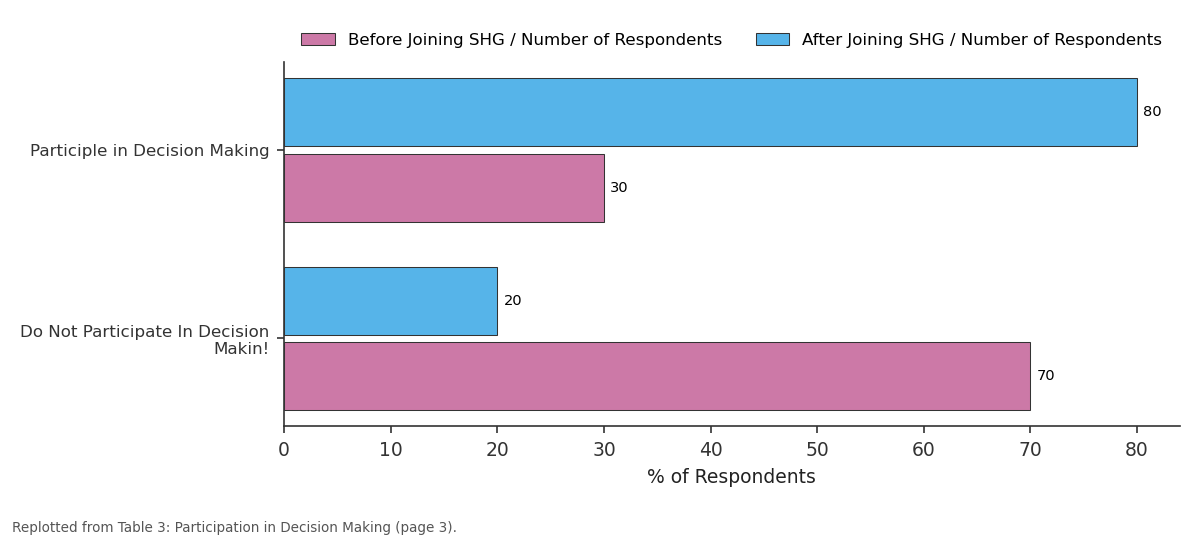
Before Joining SHG / Number of Respondents and After Joining SHG / Number of Respondents: Participle in Decision... vs Do Not Participate In...
Replotted from Table 3 (page 3) of the original paper. Every bar is the paper's own table value.
View source evidence ↗Figures & tables
From the original paper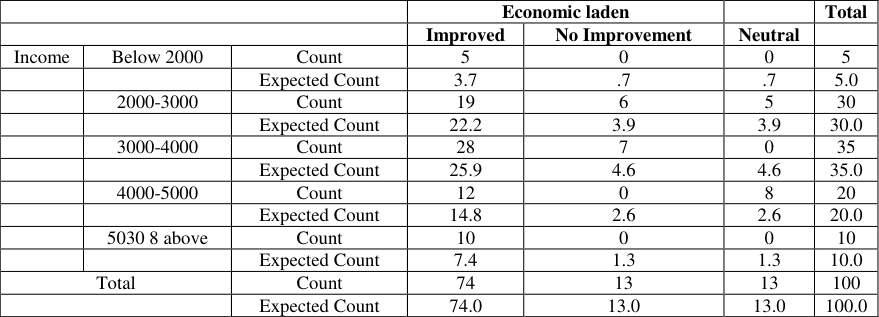 Table 1
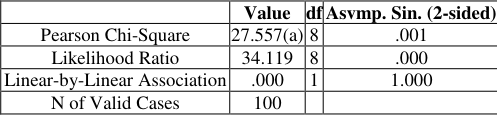 Table 2
 Table 3
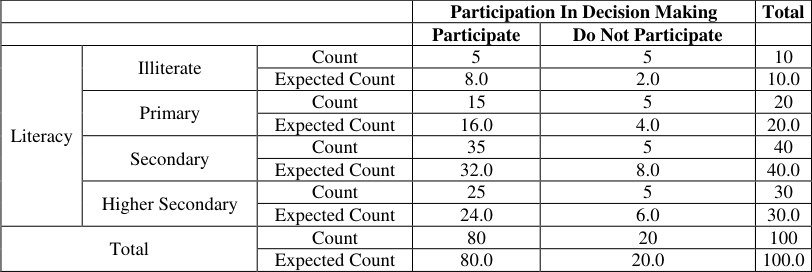 Table 4
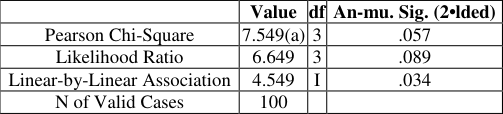 Table 5
Introduction
For the economy to develop, the status of women must be improved. Women's rights are not perfect in developing countries. India is marketing several development programs to enhance its status. NABARD also supports the creation of self-help groups (SHGs). In 1992, NABARD's efforts to reduce poverty in the field led to the creation of SHG. As a result, women's organizations have grown across the country. SHG members are encouraged to save money each month, which instills financial responsibility among SHG members. SHG members learn a wide range of skills. They teach not only sewing and weaving, but also agriculture, pickling, making soap and lighting candles. In addition to training, clients are not provided with secure funding to establish their own companies or to pay off past debts. In a nutshell, SHG is:
Need for SHGs
Majority of rural women are poor, uninspired and uninformed. As a collective, they are expected to promote awareness and overcome obstacles. So, SHGs were formed with a set of objectives: Instill financial discipline, Encourage saving, Improve living standards, Organize training and development, Create and develop linkage with different NGOs and government departments, Uplift their leadership qualities.
Goverrnment policies for SHGs
To achieve its duties, the Indian government has been creating policies to support SHGs and women welfare through integrating resources in women-centric sectors. Some of the programmes are: Rastriya Mahila Kosh in 1993, Swa-Sakti project in 2000-01,
Latter two were at the state level of competition. Only a handful of the many government programmes aimed at empowering women were listed above.
Functions of SHGs
Meet on a regular basis, keep a record of its members' attendance, and help its members find a solution to their issues. Collect membership fees; organize variety of training and skill enhancement-oriented courses; provide credit in small quantity and collect repayment of loans; keep accurate records; and take minutes during meetings.
Review of literature
There are several reasons why rural poverty exists, but majority of researchers focuses on the government's efforts to relieve it. On the other hand, it was highlighted that SHGs were the most effective approach to tackle poverty at the local level. Researchers argued that SHGs has the capability to develop employment and income opportunities for its members to curb poverty. It was also looked at how SHGs may bring about social transformation and help in rural development.
Objective
To determine the educational level and the social status (economic independence and participation in decision making) of women before and after joining any SHG.
Research methodology
Researchers have studied SHG in some areas of J&K & Punjab. Descriptive Research Design was used. To examine the interdependency of income and www.extensionjournal.com economic independence (standard of living) after joining SHG, and To examine the interdependency of education and participation in decision making (to change social status) after joining SHG.
10 SHGs and 100 of its there members were selected as a convenience sample to analyze data using a statistical tool (Chi-square).
Limitations
The respondents' responses might be prejudiced even though every effort has been made to eliminate bias. As a second point, the samples were gathered according to the researcher's schedule. Before joining SHG 70% responded to have savings of rupees 200-400. 24% between rupees 400-600. 5% between rupees 600-800, and 1% between rupees 800-1000. After joining the SHG, 30% have savings between rupees 200-400. 40% between rupees 400-600. 25% between rupees 600-800, and 5% saved between rupees 800-1000.
Analysis and interpretation
After joining the SHG, the members' income and economic independence (standard of living) were analyzed using the Chi square method. Hypothesis H0: There exists no substantial link between income and economic independence (standard of living). H1: Income and economic independence (standard of living) have a strong correlation. 30% of SHG members were permitted to make decisions before entering the group. As a result of the SHG, 80 percent of respondents were able to engage in decisionmaking. According to the data, the social status of most of the members has improved significantly.
After joining the SHG, the members' education and participation in decision making (to change social status) were analyzed using the Chi square method. Hypothesis H0: There exists no substantial link between education and participation in decision making (to change social status). H1: Education and participation in decision making (to change social status) have a strong correlation.
Findings
The bulk of participants are between the ages of 30 and 40, with 42% having completed high school and 55% remaining unemployed. Half of the club's members join solely to take advantage of the no-hassle borrowing option. Eighty percent of participants utilize the loan for unproductive reasons, and sixty percent took out highinterest loans from moneylenders before to joining the Organisation. The monthly revenue of members has increased dramatically. Members were able to save substantially after joining SHG, and they became economically independent because of joining SHG.
Suggestions
There is a possibility that members will be encouraged to spend the credit for constructive purposes.
It is feasible to organize trips to other successful organizations so that members may share helpful ideas.
Conclusion
Individuals living in poverty found social housing groups (SHGs) to be a blessing. As a result, its members' financial and social status has improved. Self-help groups (SHGs) have grown in social and economic power. According to the survey, they were also able to save and lend a helping hand in times of need. Encourage them to join in social activities and public awareness campaigns so that they may make a difference in society.
Figures and tables from the paper
| — | — | — | Economic laden | — | — | Total |
|---|---|---|---|---|---|---|
| Improved | No Improvement | Neutral | ||||
| Income | Below 2000 | Count | 5 | 0 | 0 | 5 |
| Expected Count | 3.7 | .7 | .7 | 5.0 | ||
| 2000-3000 | Count | 19 | 6 | 5 | 30 | |
| Expected Count | 22.2 | 3.9 | 3.9 | 30.0 | ||
| 3000-4000 | Count | 28 | 7 | 0 | 35 | |
| Expected Count | 25.9 | 4.6 | 4.6 | 35.0 | ||
| 4000-5000 | Count | 12 | 0 | 8 | 20 | |
| Expected Count | 14.8 | 2.6 | 2.6 | 20.0 | ||
| 5030 8 above | Count | 10 | 0 | 0 | 10 | |
| Expected Count | 7.4 | 1.3 | 1.3 | 10.0 | ||
| Total | Count | 74 | 13 | 13 | 100 | |
| Expected Count | 74.0 | 13.0 | 13.0 | 100.0 |
Table text extracted from the original PDF; superscript letters are shown inline. The original table image is below.
View original table image
| — | Value | df | Asvmp. Sin. (2-sided) |
|---|---|---|---|
| Pearson Chi-Square | 27.557(a) | 8 | .001 |
| Likelihood Ratio | 34.119 | 8 | .000 |
| Linear-by-Linear Association | .000 | 1 | 1.000 |
| N of Valid Cases | 100 |
Table text extracted from the original PDF; superscript letters are shown inline. The original table image is below.
View original table image
| Social Status | Before Joining SHG | — | After Joining SHG | — |
|---|---|---|---|---|
| Number of Respondents | % of Respondents | Number of Respondents | % of Respondents | |
| Participle in Decision Making | 30 | 30 | 80 | 80 |
| Do Not Participate In Decision Makin! | 70 | 70 | 20 | 20 |
Table text extracted from the original PDF; superscript letters are shown inline. The original table image is below.
View original table image
| — | — | — | Participation In Decision Making | — | Total |
|---|---|---|---|---|---|
| Participate | Do Not Participate | ||||
| Literacy | Illiterate | Count | 5 | 5 | 10 |
| Expected Count | 8.0 | 2.0 | 10.0 | ||
| Primary | Count | 15 | 5 | 20 | |
| Expected Count | 16.0 | 4.0 | 20.0 | ||
| Secondary | Count | 35 | 5 | 40 | |
| Expected Count | 32.0 | 8.0 | 40.0 | ||
| Higher Secondary | Count | 25 | 5 | 30 | |
| Expected Count | 24.0 | 6.0 | 30.0 | ||
| Total | Count | 80 | 20 | 100 | |
| Expected Count | 80.0 | 20.0 | 100.0 |
Table text extracted from the original PDF; superscript letters are shown inline. The original table image is below.
View original table image
| — | Value | df | An-mu. Sig. (2•lded) |
|---|---|---|---|
| Pearson Chi-Square | 7.549(a) | 3 | .057 |
| Likelihood Ratio | 6.649 | 3 | .089 |
| Linear-by-Linear Association | 4.549 | I | .034 |
| N of Valid Cases | 100 |
Table text extracted from the original PDF; superscript letters are shown inline. The original table image is below.
View original table image
References
4 in the original paper- Perumal VMS. SHGs: Empowering women at the grassroots. Social Welfare 2005, 52(4).
- Gopalan S. Women's Empowerment paradigm shift from welfare to empowerments. Social Welfare 1996, 43(5).
- Vasimalai MP, Narender K. Micro-finance for Poverty Reduction: The Kalanjiyam Way, Economic and Political Weekly 2007, 42(13).
- Mukundan, Hilaria Soundari. Emerging Dimensions in Self-Help Groups. New Delhi: Dominant Publishers and Distributors 2007.