
Research article · 2020 · Full text
International Journal of Veterinary Sciences and Animal HusbandryEvaluation of growth and carcass characteristics of ISA brown cockerels as influenced by age at surgical caponization
Volume 5(4) · Pages 169–174 · DOI: 10.22271/veterinary.2020.v5.i4c.292 ↗
Research areasAnimal Nutrition and PhysiologyLivestock and Poultry ManagementAgricultural Practices and Plant Genetics
Abstract
Author-writtenThe study was conducted to determine the effects of age at surgical caponization on the growth performance and carcass characteristics of ISA Brown cockerels. A total of 108 birds were used for the study and allotted to four treatments of 27 birds each, replicated three times to give 9 birds per replicate. The cockerels were surgically altered at 4, 6 and 8 weeks of age. Birds had access to formulated starter, grower and finisher diets ad libitum during a twenty one week experimental period. The results revealed that final weight and weight gain in the capons were significantly (p < 0.05) higher than in uncaponized birds. Birds caponized at 8 weeks recorded the highest in final weight (3.35 kg/bird) and weight gain (2.98 kg/bird), as against the least obtained from the control with 2.53 kg/bird and 2.17 kg/bird respectively. Significant differences were also observed in feed conversion ratio and mortality. Birds caponized at 8 weeks had better feed conversion ratio of 3.98, as against the least (5.65) obtained from the control. The control group of intact roosters also had the least dressed weight percentage (74.25%), while the birds caponized on the 8 week had the highest percentage (81.67%). Caponization similarly improved relative weights of some cut parts and increased the deposition of abdominal fat. It is concluded that surgical caponization with particular reference to that undertaken when the birds were 8 weeks old, significantly improved growth performance and carcass characteristics of ISA Brown cockerels.
Summary
Source-checkedPlain-language reading of the full paper, prepared with AI and checked against the text. Each point links to the authors' own words.
Why it matters
- Poultry is a critical part of the Nigerian economy, providing roughly 15% of the total annual protein intake for the population. View evidence ↗
- Intensive egg production creates a surplus of male layer-type chicks, which make up 50% of hatched chicks but lack significant commercial value. View evidence ↗
- Producing capons (castrated males) is a potential solution to the surplus cockerel problem because capon meat has desirable physicochemical properties and sensory attributes. View evidence ↗
The question
- The study aimed to determine how the age at which ISA Brown cockerels are surgically caponized affects their growth performance and carcass characteristics. View evidence ↗
What they did
- The experiment used 108 ISA Brown cockerels divided into four treatment groups of 27 birds each, with three replicates of 9 birds per group. View evidence ↗
- The treatments consisted of a control group of intact cockerels and three groups caponized at 4, 6, and 8 weeks of age, respectively. View evidence ↗
- Birds were fed a phased diet: a starter ration (24% CP, 3200 kcal/kg) from 3-6 weeks, a grower ration (18% CP, 3098 kcal/kg) from 7-16 weeks, and a finisher ration (16% CP, 3000 kcal/kg) from week 17 onwards. View evidence ↗
- Researchers measured weekly weight gain, feed intake, and mortality, and used this data to calculate the feed conversion ratio. View evidence ↗
What they found
- Birds caponized at 8 weeks achieved the highest final weight (3.35 kg/bird), compared to the lowest weight in the intact control group (2.53 kg/bird). View evidence ↗
- The highest weight gain was observed in birds caponized at 8 weeks (2.98 kg/bird), while the control group had the lowest (2.17 kg/bird). View evidence ↗
- Feed efficiency improved with caponization, with the 8-week group showing the best feed conversion ratio (3.98) compared to the control (5.65). View evidence ↗
- Caponization increased mortality rates (6.42% to 8.58%) compared to the intact control group, which had the lowest mortality at 3.13%. View evidence ↗
- The highest dressed weight percentage (81.67%) was found in birds caponized at 8 weeks, which was statistically similar to those caponized at 6 weeks. View evidence ↗
- Caponization increased abdominal fat deposition, with the 4-week group having the highest relative weight (2.39%) and the intact group the lowest (1.52%). View evidence ↗
What it means
- The authors concluded that surgical caponization improves growth and carcass traits, with the most significant improvements occurring when birds are caponized at 8 weeks of age. View evidence ↗
- The authors recommend caponization as a viable method for utilizing redundant cockerels to produce high-quality meat. View evidence ↗
Visual summary
3 visualsIllustrations explain the paper; charts are replotted from the paper's own table values.
Impact of Caponization Age
AI-generated conceptual illustration (ISA brown cockerels). It explains the idea and does not show study data.
View source evidence ↗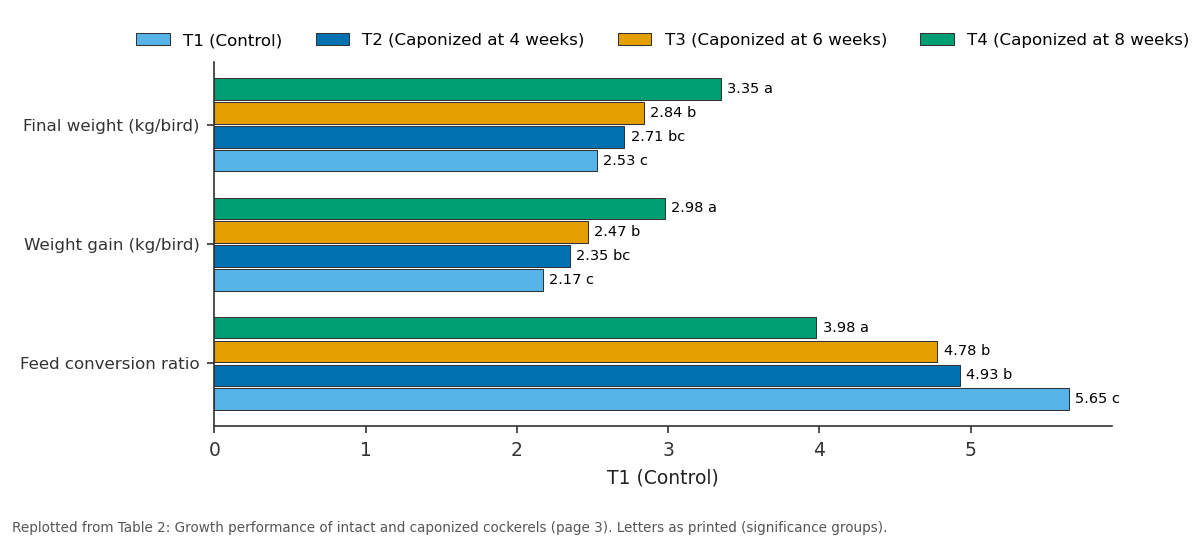
T1 (Control) and T2 (Caponized at 4 weeks) and more: Final weight (kg/bird) vs Weight gain (kg/bird) vs Feed conversion ratio
Replotted from Table 2 (page 3) of the original paper. Every bar is the paper's own table value.
View source evidence ↗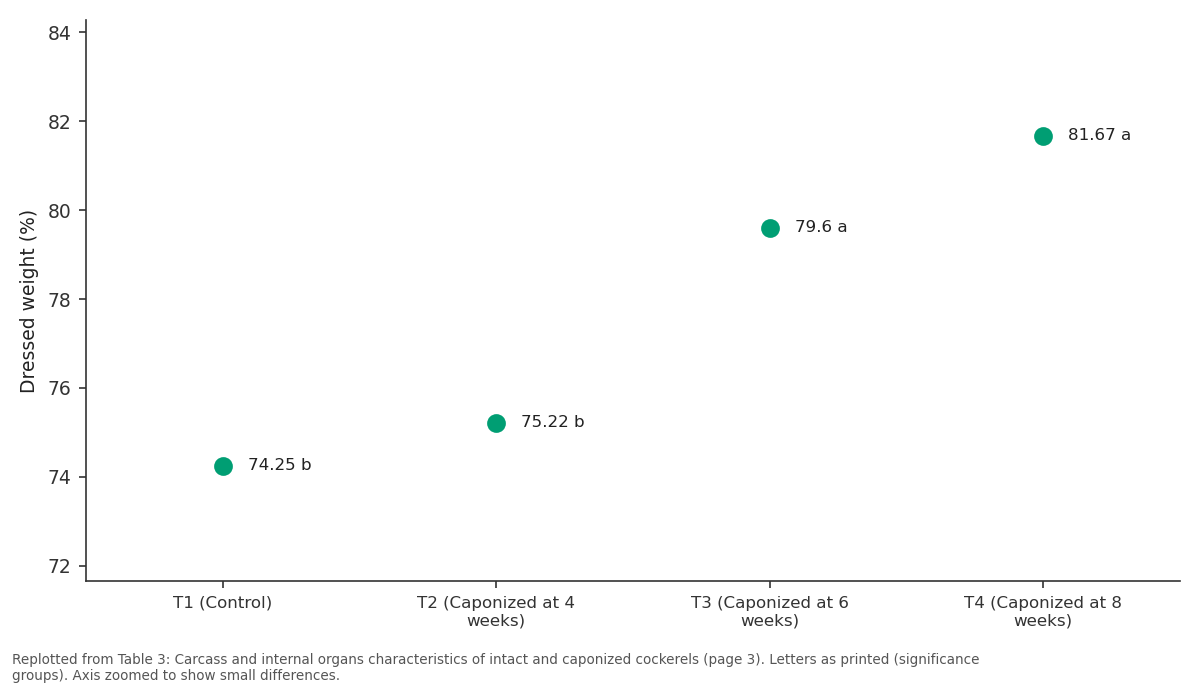
Dressed weight (%): T1 (Control) vs T2 (Caponized at 4... vs T3 (Caponized at 6... vs T4 (Caponized at 8...
Replotted from Table 3 (page 3) of the original paper. Every bar is the paper's own table value.
View source evidence ↗Figures & tables
From the original paper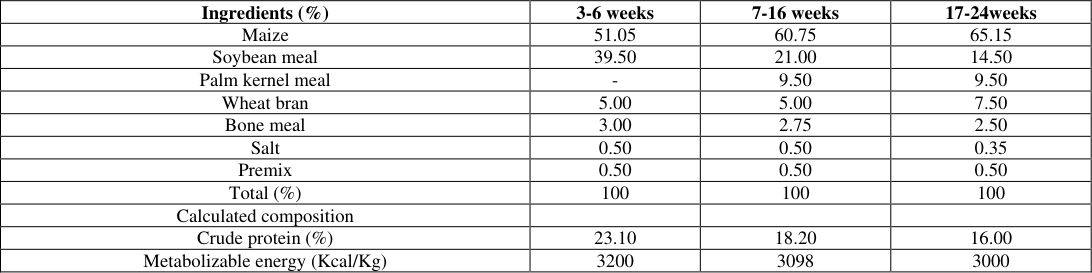 Table 1
 Table 2
 Table 3
Introduction
Poultry's importance to the Nigerian economy cannot be exaggerated as it contributes about 15 percent of the total annual protein intake, with approximately 1.3kg of poultry products consumed per head per annum [1] . Human requirements for the protein of animal origin was estimated to be 55g per day for adult males and 45g for women [2] . This leaves a considerable demand gap that indicates possibilities for innovative improvements in poultry meat production. In line with this, it is worthy of note that there is an increasing number of redundant cockerels, which form 50% of hatched chicks from improved intensive egg production. These surplus day-old male chicks of the layer type are currently without significant commercial value and are at best used as food for carnivorous animals. All attempts to raise male chicks of the layer type for meat production have resulted in high consumption of feed and low meat yield, which is difficult to market at competitive prices [3] . Due to this inefficiency in producing meat in a short time, they are culled on the first day, which also presents a severe ethical problem as advocated by animal welfare groups [4] . This problem may be solved using these birds for capon production, primarily as this class of poultry has distinguished itself withfavourable sensory attributes and desirable physicochemical properties of the meat [5] . In many countries, capons' production (surgically castrated male chickens) is deeply rooted in local tradition [6,7,8] . It was first associated with a religious ritual, but now the procedure is performed to increase the market weight of cockerels and improve the quality of their meat [9] . Today, cockerels are caponized on a broader scale in Italy, France, Taiwan, China, and the USA, where they are marketed as high-quality products [10] .
Caponization is not practiced commercially in Nigeria. Therefore, it is essential to investigate whether this technology can be applied commercially to contribute to the rational management of cockerels and create the possibility of adding substantially to farmers' household income. Capon meat is moister, more tender and flavorful than that of a cockerel or a hen, which is due not only to the hormonal differences during the capon's development but also because capons are not as active as roosters, which makes their meat more tender and fatty [9] . Surgical castration is most often performed, but Immunocastration, where female sex hormones are used to suppress testosterone, is also used in the USA [11] . However, research shows that the meat from surgically castrated cockerels is of better quality [12] . Compared to intact cockerels, capons have better metabolism and reach higher body weights, and their meat is more delicate and juicier [13] . The higher adipose tissue accumulation in capons has a beneficial effect on improving taste properties, which is of prime importance to consumers, who are increasingly demanding better-tasting products [14] . It has been demonstrated that the major factors considered to affect capon body weight, carcass, and organoleptic traits include age at caponization, age at slaughter, species or strain, and nutritional level [15,16] . Capons have been produced from heavy breeds such as Jersey Giants, Brahmas, Orpingtons, Cornish, Plymouth Rocks, Cochins, or Cornish × Plymouth Rock cross used by the commercial broiler industry [17] . Typically, male chicks of heavy breeds are caponized at 2 to 4 weeks of age, and at this age, heavy breeds should weigh approximately 450 g [17] . On the other hand, most of the slowgrowing meat-type chickens are caponized after six weeks of age [7,10,16,18] because these chickens take longer to gain the recommended body weight for caponization. However, the tunica albuginea of the testes becomes hard when the birds are caponized at later stages, and this makes removing the testes a more difficult and time-consuming procedure [18] . Hence, it is necessary to develop an efficient method for caponization that can be performed at an age that will guarantee an improved survival rate. Therefore, the study's premise was to investigate the effects of caponization at different ages and its influence on growth performance and carcass characteristics of ISA Brown cockerels.
Materials and methods
Materials and methods
Experimental location
The experiment was carried out at the poultry unit of the Teaching and Research Farm, Ambrose Alli University, Emaudo Annex, Ekpoma. The farm is located in Esan West Local Government of Edo State, Nigeria, and lies between latitude 6.44 0 N and longitude 6.8 0 E.
Birds management and Experimental design
Three weeks old ISA Brown cockerels were acquired from a reliable farm and used for this study. They were allowed a one-week acclimatization period, during which they were provided with feed and water ad libitum. Adequate sanitary measures and recommended medication and vaccination were adhered to during the period of the experiment.Formulated diets were as recommended [19] and are stated in Table 1. From 3 to 6 weeks of age, the birds were fed 24% crude protein and 3200 kcal/kg metabolizable energy chick starter ration. From 7 to 16 weeks of age, the birds received a grower's ration of 18% crude protein and 3098kcal/kg, while from the 17 th week, they were offered a finisher ration of 16% crude protein and 3000kcal/kg metabolizable energy. The study was conducted with 108 (one hundred and eight) cockerels in a completely randomized design (CRD). The birds were randomly allotted to 4 (four) treatment groups having 27 birds each, replicated three times to give 9 (nine) birds per replicate. Treatment 1 was the group of intact/uncaponized cockerels; Treatment 2 birds were caponized at four (4) weeks of age, Treatment 3 birds were caponized at six (6) weeks of age while Treatment 4 birds were caponized at eight (8) weeks of age.
| Ingredients (%) | 3-6 weeks | 7-16 weeks | 17-24weeks |
|---|---|---|---|
| Maize | 51.05 | 60.75 | 65.15 |
| Soybean meal | 39.50 | 21.00 | 14.50 |
| Palm kernel meal | - | 9.50 | 9.50 |
| Wheat bran | 5.00 | 5.00 | 7.50 |
| Bone meal | 3.00 | 2.75 | 2.50 |
| Salt | 0.50 | 0.50 | 0.35 |
| Premix | 0.50 | 0.50 | 0.50 |
| Total (%) | 100 | 100 | 100 |
| Calculated composition | |||
| Crude protein (%) | 23.10 | 18.20 | 16.00 |
| Metabolizable energy (Kcal/Kg) | 3200 | 3098 | 3000 |
Table text extracted from the original PDF; superscript letters are shown inline. The original table image is below.
View original table image
Surgical caponization
The caponization procedure was performed according to the methods described by Chen et al [12] . All birds in the group due for caponization were deprived of feed for 24 hours and water for 12 hours, followed by caponization of the designated group. A simple table was set at an angle to permit the direct entry of light into the bird's body cavity and enable the operator to work with greater ease. The wings and legs were fastened to the table, and the bird stretched to its full length to expose the rib cage area. The birds down feathers were removed from the lateral region just anterior to the thigh, and the part swabbed with methylated spirit. An incision was made between the last two ribs and widened by a small rib spreader. The testis was removed by simultaneously teasing its connective tissue supports free and applying gentle suction with caponizing forceps. The operation was then repeated on the opposite side using the same procedure. After removing the spreader, the wound was swabbed with iodine 10%, and the skin and thigh muscle returned to their original position to serve as a natural bandage over the incision. After surgery, the birds were provided with feed and water. Antibiotics was administered orally for five days to reduce the occurrence of infection. After one week, the air accumulated under the skin was released by carefully puncturing it with a needle.
Data collection
Growth performance parameters were assessed weekly and included weight gain, feed intake, and mortality. The feed conversion ratio was estimated from the data collected.
Weight gain was estimated as the final weight minus the initial weight. Feed intake or consumption was measured as the total weight of feed given or feed offered minus leftover. The feed conversion ratio was estimated as the ratio of feed intake and weight gain. All measurements were made using a 20 kg pan scale. At the end of the experiment (16 weeks after the last caponization), six birds with liveweight close to the group's average weight were selected from each treatment, making a total of 24 birds from the study. They were tagged correctly, secluded, and starved of feed for 12 hours. Slaughtering was performed by cervical dislocation, and the birds dipped in hot water for about a minute to facilitate scalding. Carcass assessment was done with the aid of a 20kg pan scale while internal organs weight were taken with a sensitive scale with an accuracy of 0.01g. The relative weight percentages of cut parts and internal organs were determined as the weight of cut part/live weight multiplied by 100.
Statistical analysis
All data generated were subjected to a one-way analysis of variance (ANOVA). Where significant treatment effects were observed, differences between treatment means were compared using Duncan's Multiple Range Test (DMRT) with the SAS package [20] . The level of statistical significance was present at P < 0.05 (5%).
Results
Results
Growth performance of intact and caponized cockerels
The effect of age at surgical caponization on ISA Brown cockerels' measured growth parameters is given in Table 2 below. 39* NS = Not significant; * = significant difference; SEM = standard error of mean a, b, c: means along the same row with different superscripts are significantly different No significant differences were observed in initial weight and feed intake between intact cockerels and capons. The observed numerical differences were marginal. The final weight of intact cockerels was least (2.53kg/bird), while capons caponized last (at 8 weeks) recorded the highest final weight of 3.35kg/bird. No significant difference was, however, observed between the intact group and those caponized the earliest. Birds caponized at 8 weeks had a weight gain value of 2.98kg/bird as against the least weight recorded in the control (2.17kg/bird). This followed the same pattern of statistical significance as observed in the final weight. Weekly weight gain was significantly higher (0.15kg/bird/week) in birds caponized at 8 weeks, while those caponized at 4 and 6 (0.12kg/bird/week each) had no significant difference from what was obtained from the control (0.11kg/bird/week). Caponization improved feed efficiency as the feed conversion ratio obtained from the caponized birds was significantly better than the control. Treatment 4 (birds caponized at 8 weeks) had a feed conversion ratio of 3.98 against 5.65 obtained from the control. However, mortality was significantly less in the control with 3.13% death recorded. Substantially higher mortality (6.42% -8.58%) was recorded in the caponized groups.
| Parameters | T1 (Control) | T2 (Caponized at 4 weeks) | T3 (Caponized at 6 weeks) | T4 (Caponized at 8 weeks) | SEM |
|---|---|---|---|---|---|
| Initial weight (kg/bird) | 0.36 | 0.36 | 0.37 | 0.37 | 0.01NS |
| Final weight (kg/bird) | 2.53c | 2.71bc | 2.84b | 3.35a | 0.04* |
| Weight gain (kg/bird) | 2.17c | 2.35bc | 2.47b | 2.98a | 0.24* |
| Weekly weight gain (kg/bird/week) | 0.11b | 0.12b | 0.12b | 0.15a | 0.01* |
| Total feed intake (kg/bird) | 12.25 | 11.58 | 11.81 | 11.87 | 0.29NS |
| Average weekly feed intake (kg/bird/week) | 0.61 | 0.58 | 0.59 | 0.59 | 0.03NS |
| Feed conversion ratio | 5.65c | 4.93b | 4.78b | 3.98a | 0.31* |
| Mortality (%) | 3.13a | 8.58b | 6.42b | 6.42b | 1.39* |
Table text extracted from the original PDF; superscript letters are shown inline. The original table image is below.
View original table image
Carcass and internal organs characteristics of intact and caponized cockerels
The detailed composition of carcass assessment (live, plucked, eviscerated, and dressed weights) and relative weight of cut parts and internal organs are presented in Table 3 below. All assessed carcass characteristics recorded significant (p>0.05) differences among all treatments. Parameters such as liveweight, plucked weight, and eviscerated weight followed a progressively increasing pattern from the control to Treatment 4, which had the highest values in these parameters (3558.21g, 3205.15g, and 2945.56g respectively). The intact birds had the least and significantly different values in live weight (2532.63g), plucked weight (2188.22g), and eviscerated weight (1887.92g). Dressed weight percentage was also considerably lower in the control (74.25%), though statistically similar to capons castrated at 4 weeks. The highest dressed weight percentage of 81.67% was obtained from capons caponized at 8 weeks, and also shared statistical significance with those caponized at 6 weeks. 3 also presents the relative weight of the cut parts. Caponization increased the relative weight percentages of economic parts such as the breast, drumsticks, and thighs. The birds caponized at 4 6 weeks recorded the highest relative weight of breast (20.00% and 20.09% respectively), while those caponized at the eighth week had the highest relative weight of drumsticks (12.20%) and thighs (14.50%). Internal organs such as the lungs, liver, and spleen were not affected by caponization as no significant difference was observed between the intact birds and the capons. However, the abdominal fat pad was significantly higher in the capons with those caponized at 4 weeks having the highest relative weight of 2.39%. The intact birds recorded the least value of 1.52%.
| Parameters | T1 (Control) | T2 (Caponized at 4 weeks) | T3 (Caponized at 6 weeks) | T4 (Caponized at 8 weeks) | SEM |
|---|---|---|---|---|---|
| Live weight (g) | 2532.63d | 2737.15c | 2856.74b | 3558.21a | 21.52* |
| Plucked weight (g) | 2188.22d | 2338.09c | 2577.43b | 3205.15a | 36.26* |
| Eviscerated weight (g) | 1887.92d | 2057.75c | 2239.81b | 2945.56a | 43.23* |
| Dressed weight (%) | 74.25b | 75.22b | 79.60a | 81.67a | 0.88* |
| Head (%) | 2.95c | 2.64d | 4.02b | 4.37a | 0.06* |
| Neck (%) | 5.27d | 5.47c | 6.07a | 5.63b | 0.04* |
| Back (%) | 13.30a | 12.70b | 12.52b | 10.88c | 0.14* |
| Breast (%) | 18.08c | 20.00a | 20.09a | 18.74b | 0.07* |
Table text extracted from the original PDF; superscript letters are shown inline. The original table image is below.
View original table image
Discussion
Discussion
Performance characteristics of experimental birds
The present results showed a positive and significant effect of caponization on ISA Brown cockerels' final body weight with a progressive improvement as the age at caponization advanced. It has been reported that once the stress of the castration procedure has been overcome, caponization will have a positive effect on weight gain [21] . In that study, capons aged 20 weeks were significantly heavier than their uncastrated contemporaries, which is in agreement with the present study. Some other research findings have pointed to a beneficial effect of castration on birds' bodyweight [12,22] , whereas other studies [7,23,24] have not confirmed such a correlation. In the present study, a tendency toward a higher growth rate was observed in capons from the fourth week after castration, which resulted in a statistically significant difference relative to the control group at the end of the study when the birds were 24 weeks old. In experiments performed with Green-legged Partridge, capons were characterized by higher body weight than roosters [9,22] . The higher body weight of caponized cockerels may be associated with a decreased level of androgens, which lowers their aggression and other activities and ultimately contributes to improved feed conversion and higher weight gain [25] . In contrast to the above, Castellana Negra cockerels [7] and broilers [26] did not show any significant difference in the bodyweight of capons to that of cocks. They postulated that the different growth responses of capons might result from the birds' genetic origin, caponization age, slaughter age, and interaction between them. Despite the reports of androgen's effects on muscle growth in mammals, testosteronewhich stimulates protein synthesis and contributes to increasing muscle weight in mammals, may exert inhibitory effects in prepubertal birds [27] . They demonstrated that birds caponized as early as three weeks old were characterized by higher bodyweight than uncastrated males. Such a relationship was not noted when birds were castrated at a later age of 12 weeks and raised to 26 weeks [27] .
The fact that the capons in the present study were significantly heavier at the end of the experiment when the birds were 24 weeks old might also be because the roosters were more aggressive at this stage and, consequently, expended more energy in establishing and maintaining a caste order/hierarchy. This was also observed and reported in another study [28] . A decrease in testosterone levels, found in caponized birds, leads to changes in their behavior, including reduced motor activity [25,29,30] , and causing capons maintenance energy requirements and feed consumption to decrease considerably [31] . In the present study, the accumulated feed conversion ratio for the capons was significantly improved than that of the roosters. It would appear that caponizationgrew this variable once castration stress was overcome. Other authors also reported similar findings [32,33] . However, if capons deposit more fat (which is generally considered to be the norm), it is difficult to see how the efficiency of feed utilization is not altered by castration [34] . In the present study, the feed consumption and improvement in utilization efficiency in capons compared to roosters might be explained by the higher fat deposition in the capons, as shown in Table 3. In contrast to the present study, Taiwan country chicken cockerels caponized at 10 weeks of age and raised to 28 weeks were characterized by feed efficiency that was comparable in caponized and intact cockerels [6] . Mortality was highest in the birds that were caponized earliest, and within a short period after the procedure, there was a progressive reduction in death as the birds grew older. Therefore, it can be inferred that the older the birds before caponization, the higher their ability to withstand caponization stress as evident in the result obtained in this study. This inference also agrees with the documented opinion that the various responses of birds to caponization, especially mortality, are positively influenced by age at caponization [26] .
Carcass and internal organs characteristics of intact and caponized cockerels
Caponization was reported in several studies to increase breast weight [6,7,13] , and this agrees with the findings of the present study. Wing weight was reported to be either increased [6,21] or not affected [7,13] by caponization. No significant difference was recorded in wing weight in this study between intact birds and capons caponized in the fourth and sixth weeks. However, significantly lower wing weight was obtained from the birds caponized at 8 weeks. Inconsistent effects were found for feet (thigh and drumstick) and the rest of the carcass weights in the previously mentioned studies [6,7,13,21] . The disparity with our results can be attributed to the fact that local chicken breeds were used for those documented studies against the hybrid strain used in the present study. In capons, a study reports heavier liver [11] , while another study reports an opposite trend [7] . Contrary to these reports, the result of this study found no significant difference between capons and intact males. The liver is the primary site for the de novo synthesis of fatty acids in birds [35] , and in heavy breeds, it accommodates the increased lipogenic needs first by increasing its size [36] . Despite the non-significant result, the relative weight of liver in birds caponized at 4 and 6 weeks were numerically heavier than intact birds by 6%. Concerning heart weight, capons generally seem to have lighter hearts than intact males [7] . Only the earliest caponized birds had lighter hearts than intact birds in this study. The weight of gizzard was not affected by caponization, as reported in previous studies [6,7] . However, this is contrary to the present study's findings where significantly heavier gizzard were obtained from capons caponized at 6 and 8 weeks. As earlier established, due to reduced synthesis of sex steroids, caponization increases fat deposition in the carcass, which was confirmed by postmortem analyses and chemical analyses of muscles in castrated birds [7,8,13,23,37] . Capon's higher fat content is considered an advantage because it enhances palatability [9,38] . It is documented that abdominal fat pad significantly increased in capons, regardless of breed and age at caponization or slaughter [13,37] This was confirmed in the present study, though other studies [26,28] statistically disagree. The tendency for increased fat pad can be inferred from the absence of testosterone, which has been shown to minimize fat accretion in cockerels [39] .
Conclusion
This study revealed that the caponization of ISA Brown cockerels at weeks 4, 6, and 8, significantly influenced their growth performance and some carcass characteristics. After the testis' surgical removal, birds gained weight steadily, and 16 weeks after the first caponization, capons have fully recovered and heavier than the uncaponized birds. It was also observed that caponizing cockerels when they are between 6 and 8 weeks old increases their level of tolerance of the procedure resulting in a lower mortality rate. In summary, surgical caponization improved growth and carcass traits, and was most pronounced in the birds caponized at 8 weeks old. Therefore, this procedure can serve as a tool in the utilization of redundant cockerels and provide a niche for the production of high-quality capon meat.
References
39 in the original paper- Ologbon AC, Ambali I. Poultry Enterprise Combination among Small-Scale Farmers in Ogun State, Nigeria: A Technical Efficiency Approach. Journal of Agriculture and Veterinary Sciences 2012;4:8.
- Food and Agriculture Organization of the United Nations, World Health Organization and United Nations University, Energy and protein requirements: report of a Joint FAO/WHO/UNU Expert Consultation (held in Rome from 5-17 October 1981) 1985.
- Kaleta EF, Redmann T. Approaches to determine the sex prior to and after incubation of chicken eggs and of dayold chicks, World's Poultry Science Journal 2008;64(03):391-399.
- Leenstra FR, Munnichs G, Beekman V, Heuvel-Vromans E, Aramyan LH, Woelders H. Killing day-old chicks? Public opinion regarding potential alternatives. Animal Welfare 2011;20(1):37-45.
- Poltowicz K, Wezyk S, Calik J, Pasciak P. The use of native chicken breed in poultry meat production. Proc. Brit. Soc. Anim. Sci 2004;1:30-32.
- Hsu JC, Lin CY, Influence of caponization on the carcass characteristics in Taiwan country chicken cockerels. Asian-Australian Journal of Animal Science 2003;16:575-580.
- Miguel JA, Ciria J, Asenjo B, Calvo JL. Effect of caponisation on growth and on carcass and meat characteristics in Castellana Negra native Spanish chickens. Animal 2008;2:305-311.
- Díaz O, Rodríguez L, Torres A, Cobos A. Chemical composition and physico-chemical properties of meat from capons as affected by breed and age. Spanish Journal of Agricultural Research 2010;8:91-99.
- Calik J, Połtowicz K, Świątkiewicz K, Krawczyk J, Nowak J. Effect of caponization on meat quality of Greenleg Partridge cockerels. Annals of Animal Science 2015;15:541-553.
- Sirri F, Bianchi M, Petracci M, Meluzzi A. Influence of partial and complete caponization on chicken meat quality. Poult. Sci 2009;88:1466-1473.
- Rahman MM, Islam MA, Ali MY, Khondaker MEA, Hossain MM. Effect of caponisation on body weight, hematological traits and blood cholesterol concentration of Nara chicken. International Journal of Poultry Science 2004;3:284-286.
- Chen KL, Hsieh TY, Chiou PWS. Caponization effects on growth performance and lipid metabolism in Taiwan country chicken cockerels. Asian-Australian Journal of Animal Science 2006;19:438-443.
- Tor M, Estany J, Villalba D, Molina E, Cubilo D. Comparison of carcass composition by parts and tissues between cocks and capons. Animal Research 2002;51: 421-431.
- Sinanoglou VJ, Mantis F, Miniadis-Meimaroglou S, Symeon GK, Bize-Iis LA. Effects of caponisation on lipid and fatty acid composition of intramuscular and abdominal fat of medium-growth broilers. Br. Poultry Science 2011;52:310-317.
- Mast MG, Jordan HC, Macneil JH. The effect of partial and Complete Caponization on growth rate, yield, and selected physical and sensory attributes of cockerels, Poultry Science 1981;60:1827-1833.
- Chen KL, Wu CP, Chou RGR. Effect of caponization age on growth performance and postmortem change in muscles of Taiwan country chicken. J Agric. Assoc. China 2000;1:54-63.
- Jacob J, Mather JB. Capons. Factsheet PS-54. Department of Animal Science, Florida Cooperative Extension Service, Institute of Food and Agricultural Service, University of Florida, Gainesville 2000.
- Rikimaru K, Takahashi H, Nicholas MA. An efficient method of early caponization in slow-growing meat-type chickens. Poultry Science 2011;90:1852-1857.
- Olomu JM. Monogastric Animal Nutrition: Principles and practices (A. Jacham publication, Benin City, Nigeria, 2010).
- SAS Institute, SAS/STAT Statistical Analysis System User's Guide. Version 9.1.3, (SAS Institute Inc., Cary, NY, 2005.
- Muriel Duran A. The effect of caponization on production indices and carcass and meat characteristics in free-range Extremena Azul chickens, Span. J Agric. Res 2004;2:211-216.
- Kwiecień M, Kasperek K, Grela E. Effect of caponization on the production performance, slaughter yield and fatty acid profile of muscles of Greenleg Partridge cocks. Journal of Food Science and Food Technology 2015;52:7227-7235.
- Symeon GK, Mantis F, Bizelis I, Kominakis A, Rogdakis E. Effects of caponization on growth performance, carcass composition and meat quality of males of a layer line. Animal 2012;6:2023-2030.
- Adamski M, Kuźnicka J, Banaszak M, Wegner M. The analysis of meat of Sussex cockerels and capons (S11) at different ages, Poultry Science 2016;95:125-152.
- Mahmud M, Shaba P, Gana J, Yisa H, Ndagimba R. Effects of surgical caponisation on growth, carcass and some haematological parameters in cockerel chickens, Sokoto Journal of Veterinary Sciences 2013;11:57-62.
- Symeon GK, Mantis F, Bizelis I, Kominakis A, Rogdakis E. Effects of caponization on growth performance, carcass composition and meat quality of medium growth broilers. Poultry Science 2010;89:1481-1489.
- Chen KL, Chen TT, Lin KJ, Chiou PWS. The effects of caponization age on muscle characteristics in male chicken, Asian-Australian Journal of Animal Science 2007; 11:1684-1688.
- Zanusso J, Remignon H, Auvergne A, Molette C, Manse H, Babile R. Performance characteristics and quality of chicken meat: Comparisons between males, females and capons, British Poultry Science 2001; 42(S1):S42-S43.
- Zuk M, Johnsen TS. Social environment and immunity in male red jungle fowl, Behavioral Ecology 2000;11:146153.
- Essien A, Akpet SO, Ukorebi BA, Orok EE, Akinola LAF, Ayuk EA, Adejumo DO. Growth and agonistic responses of Yaffa Breed Cockerels administered testosterone propionate. Journal of Biology, Agriculture and Healthcare 2012;2:8-14.
- Zawacka M, Murawska D, Michalik D. Selected Slaughter Traits of Zielononóżka Kuropatwiana and Rhode Island Red Capons, XXVI International Poultry Symposium PB WPSA, Kazimierz Dolnynad Wisłą, Poland 2014,152-153.
- Mas N, Šerman V, Horvat Z, Strakova E, Valpotić H, Mikulec Z, Mašek T, Suchy P, Vince S. Use of brewer's yeast in feeding capons, Veterinarski Arhiv 2013;83:245252.
- Mašek T, Severin K, Gottstein Ž, Filipović N, Stojević Z, Mikulec Ž. Effects of early castration on production performance, serum lipids, fatty acid profile and desaturation indexes in male chicken broilers fed a diet with increased fat content, Veterinarski Arhiv 2013;83:233-243.
- ETCHES RJ. Reproducciónaviar. (Editorial Acribia, Zaragoza, 1996, 339.
- Mayes PA, Botham KM. Biosynthesis of fatty acids. Page 173 in Harper's Illustrated Biochemistry. R. K. Murray, D. K. Granner, P. A. Mayes, and V. W. Rodwell, ed. McGraw-Hill, London, UK 2003.
- Shapira NI, Nirand I, Budowski P. Response of lipogenic enzymes to overfeeding in liver and adipose tissue of light and heavy breeds of chicks, British Journal of Nutrition 1978;39:151-157.
- Cason JA, Fletcher DL, Burke WH. Effects of caponization on broiler growth, Poultry Science 1988;67: 979-981.
- Amorim A, Rodrigues S, Pereira E, Valentim R, Teixeira A. Effect of caponisation on physicochemical and sensory characteristics of chickens, Animal 2016;10: 978-986.
- Snapir N, Robinzon B, Shalita B. The involvement of gonads and gonadal steroids in the regulation of food intake, body weight and adiposity in the White Leghorn cock, Pharmacol. Biochem. Behav 1983;19:617-624.
Cited by 2
From OpenAlex, OpenCitations and reference lists read by Scinovex
- Effects of gonadectomy on clinical-hematological, metabolic and hormone conditions of cockerels ↗
Микола Олександрович Захаренко, Ivan Cheverda, І. М. Kurbatova · Regulatory Mechanisms in Biosystems · 2022
Gonadectomy (caponization) of cockerels is an important way of increasing their productivity, improving the quality and taste properties of the meat, and obtaining dietary products. The objective of the study was the influence of gonadectomy of cockerels on their clinical condition, morphological composition of blood, hemoglobin content and anabolism in the tissues, their productivity and chemical content of the muscles.…
❝ 1PDF - FRACTIONAL COMPOSITION OF BLOOD PLASMA PROTEINS, MICROBIOLOGICAL PARAMETERS OF MUSCLES AND SLAUGHTER QUALITIES OF GONADOECTOMY ROOSTERS ↗
Ivan Cheverda, Микола Олександрович Захаренко, I. M. Kurbatova, V. V. Solomon · Sučasne ptahìvnictvo · 2022
Meeting the growing needs of consumers in quality food products with dietary and high palatability is possible by increasing the production of capon meat (gonadectomy roosters). The purpose of the work is to study the fractional composition of blood plasma proteins, average daily body weight gains, slaughter rates and the quality of meat of Adler silver roosters after gonadectomy. It…
❝ 0PDF