
Research article · 2018 · Full text
International Journal of Veterinary Sciences and Animal HusbandryOverview of Inclusion Body Hepatitis (IBH) in commercial broilers
Volume 3(5) · Pages 92–94
Research areasAnimal Virus Infections StudiesViral gastroenteritis research and epidemiologyHepatitis Viruses Studies and Epidemiology
Abstract
Author-writtenInclusion Body Hepatitis (IBH) is viral disease of Avian Adenoviruses group and mostly affects avian species. Incidences of Adenovirus infection is gradually increases in most of the countries and many infections are in subclinical form. Mostly after the declining of maternal immunity in chicks, virus replicates in birds and make them prone to infections. IBH Infection in birds is characterized by haemorrhages and dystrophic necrobiotic changes in the liver and kidneys, accompanied by intranuclear inclusion bodies. A characteristic macroscopic lesion is the enlarged, dystrophic liver with yellowish color and crumbly texture. Like most of the viral diseases, IBH also don’t have any specific treatment but to prevent secondary bacterial infections antibiotic may be given to birds. Proper vaccination in parents will give adequate antibodies in progeny, and if there is decline in maternal antibodies we can go for vaccination in progeny. It is a common disease in several countries and resulting huge mortality in broiler birds causing serious economic loss to poor farmers.
Summary
Source-checkedPlain-language reading of the full paper, prepared with AI and checked against the text. Each point links to the authors' own words.
Why it matters
- Inclusion Body Hepatitis (IBH) is a viral disease caused by the Adenoviruses group that affects a wide range of avian species. View evidence ↗
- IBH is common in multiple countries and causes high mortality in broiler chickens, leading to significant economic losses for farmers and the poultry industry. View evidence ↗
- Avian adenoviruses (AAVs) are the causative agents for both inclusion body hepatitis and hydropericardium syndrome in broilers. View evidence ↗
The question
- The paper provides a general overview of Inclusion Body Hepatitis in commercial broilers, covering its etiology, clinical signs, and prevention. View evidence ↗
What they did
- The authors categorize Avian adenoviruses into five species (A, B, C, D, and E) comprising 12 different serotypes. View evidence ↗
- For the diagnosis of IBH, virus isolation is performed using samples of the liver, kidney, and spleen from fresh carcasses. View evidence ↗
- Diagnostic protocols include using 50% glycerol saline for PCR samples and 10% formalin for histopathological examination (HPE). View evidence ↗
What they found
- IBH primarily affects chickens between 3 and 7 weeks of age, though cases have been seen in birds under 1 week old. View evidence ↗
- Infection rates for IBH increase in birds already suffering from immunodeficiency diseases such as Chicken infectious Anaemia (CIA) and Infectious Bursal Disease (IBD). View evidence ↗
- The total mortality rate for IBH is typically below 10%, although it can reach as high as 30% in some cases. View evidence ↗
- Post-mortem findings include a swollen yellowish liver with petechial hemorrhages, pale swollen kidneys, and up to 10ml of clear fluid in the pericardium (specifically for serotype-4). View evidence ↗
- Vertical transmission of the virus to commercial broiler flocks primarily occurs via breeder flocks infected with AAV serotypes 4 and 8. View evidence ↗
- Lesions associated with Group C adenoviruses are noticed from the 2nd week, whereas Group D lesions appear from the 3rd week. View evidence ↗
What it means
- The authors conclude that the most effective ways to prevent IBH outbreaks are a combination of good farm-level biosecurity and effective vaccination. View evidence ↗
- The authors state there is no specific treatment for IBH, but recommend antibiotics to prevent secondary bacterial infections. View evidence ↗
Visual summary
1 visualsIllustrations explain the paper; they do not show study data.
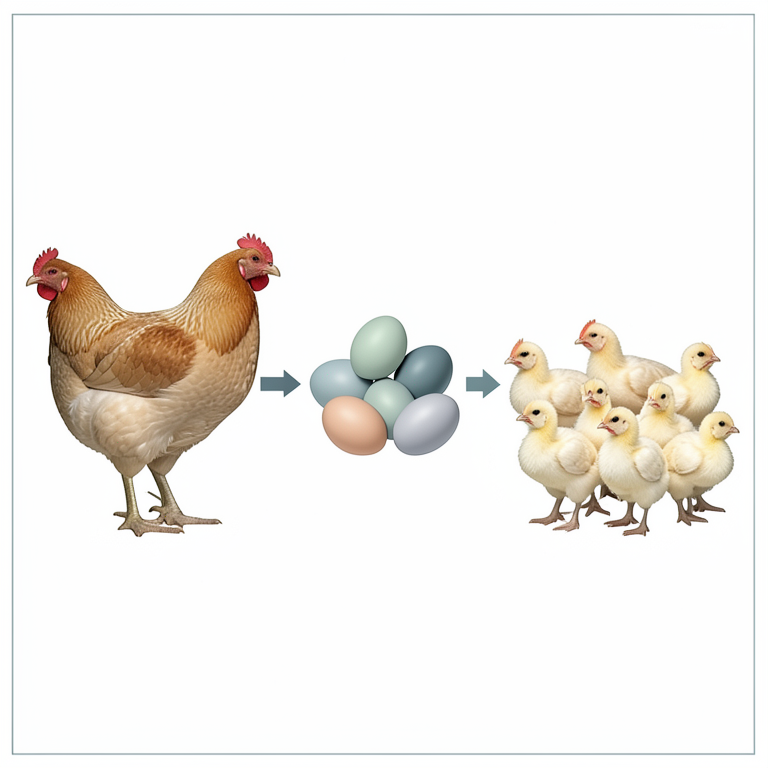
Transmission Cycle of IBH
AI-generated conceptual illustration (commercial broiler chickens). It explains the idea and does not show study data.
View source evidence ↗Figures & tables
From the original paper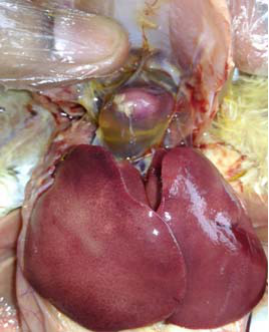 Figure 1
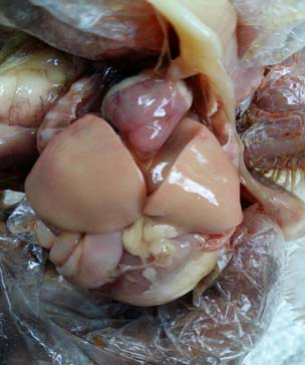 Figure 2
Introduction
Inclusion Body Hepatitis (IBH) is viral disease basically Adenoviruses group and are widespread throughout all avian species. Avian adenoviruses (AAVs) in broilers responsible for causing two important diseases known as inclusion body hepatitis (IBH) and hydropericardium syndrome (HP). Inclusion body hepatitis was first described in the US in 1963 by Helmbolt and Frazier [1]. Necropsy revealed friable, pale yellow-white livers scattered with hemorrhages.
Spotted hemorrhages were seen on the abdominal walls and thighs and on the pale and swollen kidneys. Areas of congestion of ventriculus and spleen were present. It is a common disease in several countries, where broilers are severely affected, resulting in high mortality rates. The disease occurs mainly in chickens 3 to 7 weeks of age, but it has been reported in chickens less than 1 week old [2].
IBH infection rates are high in birds with secondary infection to some immunodeficiency diseases like Infectious Bursal Disease (IBD) and Chicken infectious Anaemia (CIA) [3, 4, 5]. Although IBH is transmitted by both vertical and horizontal means, vertical transmission is reported as a very efficient way to spread from parent birds to progenies [6, 7]. Pathological lesion in liver is result of various degrees of haemorrhages. Ecchymotic hemorrhages may also be seen in the liver and less consistently in leg and breast muscles.
In most cases, the main lesions are in the liver [8, 9]. The sick chickens carry the virus in their excreta, kidneys, tracheal and nasal mucosa. The virus is resistant to many environmental factors and could be easily transmitted by a mechanical route. Clinically, affected birds show lethargy, huddling, ruffled feathers, and inappetence [10].
Etiology Group I avian adenoviruses are ubiquitous in domestic fowl and often been isolated from asymptomatic chickens. There are 5 Species of Avian adenovirus A, B, C, D and E with 12 Serotypes 1 to 12 namely Fowl adenovirus A (FAdV-1), Fowl adenovirus B (FAdV-5), Fowl adenovirus C (FAdV-4, -10), Fowl adenovirus D (FAdV-2, -3, -9 -11), Fowl adenovirus E (FAdV-6, -7, -8a, -8b). VET 2018; 3(5): 92-94 Dr. Keshab Prasad Sharma Broiler Technical Head, West Bengal- Suguna Foods Pvt Ltd., West Bengal, India Dr.
Firozuddin Ahmed Regional Technical Manager, West Bengal- Globion India Pvt Ltd., West Bengal, India Dr. Subrata Chowdhury Technical Manager, West Bengal - Rossari Biotech Limited., West Bengal, India Correspondence Dr. Keshab Prasad Sharma Broiler Technical Head, West Bengal- Suguna Foods Pvt Ltd., West Bengal, India Group C Group D Serotype – 4 & 10 Serotype – 2,3,9 & 11 Lesions noticed from 2nd week Lesions noticed from 3rd week Major lesions - Hydropericardium No Heart involvement Vaccine – Type 4 Vaccine - Type 2 & 11 Broiler age of vaccination 1-10 days Broiler age of vaccination 1-10 days Breeder Vaccination: 7 days and 21 weeks Breeder vaccination: 11 week and 18 week. Transmission Transmission may be vertical or lateral and may involve fomites.
Immunosuppression for instance due to early IBD challenge or congenital CAV infection may be important. Both Horizontal and vertical transmission play an important role in IBH. Vertical transmission mostly involves breeder flocks infected with AAV serotypes 4 and 8 and transmit the same to commercial broiler flocks. Whereas Horizontal transmission from young chicks in contact with infected chicks can die of peracute IBH/HP.
Clinical Findings IBH is characterized by a sudden onset and a sharply increased death rate that reaches peak values by the 3rd - 4th day and returns back within the normal range by the 6th - 7th day. The total death rate is usually under 10% but sometimes could attain 30%. More rarely, macro-scopically visible necrotic foci could be detected in the liver. Progeny of high health status breeding flocks appear to be at greater risk.
Perhaps because they have lower levels of maternal antibody. Infection with some strains of AAVs may result in minimal hepatic disease; however, if birds have been infected with immunosuppressive viruses (IBDV, CAV, Marek's disease), the clinical disease become evident. Some of the common clinical signs observed in birds are depression, unevenness amongst flock, Inappetence, ruffled feathers, high body temperature, pallor of comb and wattles (Breeder birds). Upon Post mortem of birds one can easily see accumulation of clear fluid upto 10ml in the pericardium, Yellow color subcutaneous fat, Swollen liver with yellowish color and mottled with petechial haemorrhages, pulmonary oedema, Pale and swollen kidney, Swollen bursa with hemorrhagic lesion, Spleen enlargement with hemorrhagic lesion and Hydropericardium (HHPS) in serotype -4.
Mortality rates also vary depending on the pathogenicity of the virus and infection with other viral or bacterial agents. Signs associated with diseases caused by other pathogens (eg, bacteria, fungi, or viruses) commonly occur if birds are immunosuppressed. Fig 1: Straw color fluid accumulation in Pericardium Fig 2: Pale and enlarged liver Treatment and Prevention As in case of majority of viral diseases, there is no specific treatment to this disease. Antibiotic therapy may help to prevent secondary bacterial growth in affected birds.
Keezhanelli powder is a very good liver tonic and can be used along with Jaggery as treatment in affected birds. Immunodeficiency is one of the major issues and immunostimulants like Aloe Vera, Vitamin E and Selenium in combination is useful in elevating immunity in birds. Liver supplements should be given to birds to support the hepatitis damages caused by infection. Farm Biosecurity is very much important to control the spread of viral outbreaks from one to another place.
Proper shed cleaning, Shed white Washing, Terminal disinfection before chicks placement and also sufficient shed rest if any recent history of viral outbreaks is very important to control further viral outbreaks. A very strong disinfectant spray should be used to contain the spread of disease. Cleaning of farm utensil, Proper disposal of dead birds and restrict the entry of unwanted person in farm premises are very useful from Biosecurity point of view. Vaccination with Killed IBH vaccine to chicks at hatchery or within 5 days of age at farm level will protect the birds from IBH.
When breeders are properly vaccinated, antibodies generated by the vaccine are transmitted to the progeny, providing protection against field infections and clinical disease. Effective vaccination and good biosecurity at farm level are the preventive measures of IBH outbreaks. Sample collection for Diagnosis of IBH Replication of Fowl Adeno viruses takes place mainly in liver, kidney and spleen. Liver, kidney and Spleen with lesions from fresh carcass should be considered for virus isolation.
Tissues should be collected and placed into sterile plastic container either individual tissue or pooled. For PCR, Pooled samples to be placed in 50% Glycerol saline (50ml of Glycerine + 50ml Normal saline) and to add 1 or 2 drops gentamycin. For HPE, Pooled samples should be kept in 10% formalin (10 ml of formalin + 90 ml of Distilled water). Samples should always be shipped on Ice pack or Gel pack to avoid damages or putrification.
Conclusion
Inclusion Body Hepatitis (IBH) affects avian species. Infections are in subclinical form. IBH also don’t have any specific treatment but to prevent secondary bacterial infections antibiotic may be given to birds along with proper vaccination in parents will give adequate antibodies in progeny. It causes huge mortality in broiler birds causing serious economic loss to poor farmers as well as the whole commercial poultry industry.
References
10 in the original paper- Helmbolt CF, Frazier MN. Avian hepatic inclusion bodies of unknown significance. Avian Dis. 1963; 7:446- 450.
- Pilkington PT, Brown P, Villegas B, McMurray RK, Page GN, Rowland, et al. Adenovirus-induced inclusion body hepatitis in four-day-old broiler breeders. Avian Dis. 1997; 41:472-474.
- Toro H, Gonzales C, Cerda L, Hess M, Reyes E, Geissea C. Chicken anemia virus and fowl adenoviruses: Association to induce the inclusion body hepatitis/ hydropericardium syndrome. Avian Dis. 2000; 44:51-58.
- McFerran JB, McCracken RM, Connor TJ, Evans RT. Isolation of viruses from clinical outbreaks of inclusion body hepatitis. Avian Pathol. 1976; 5:315-324.
- McFerran JB, Adair BM. Group I adenovirus infections. Pages 214–227 in Diseases of Poultry. 11th edition. Y. M. Saif, ed. Iowa State Press, Ames, 2003.
- McFerran JB, Adair B. Avian adenoviruses- a review. Avian Pathol. 1977; 6(3):189-217.
- McCracken JB, Adair BM. Avian adenoviruses. In: McFerran JB, McNulty MS, editors. Virus infections of birds. Amsterdam, The Netherlands: Elsevier Science Publishers. 1993, pp. 123-144.
- Howell J, McDonald BW, Christian RG. Inclusion body hepatitis in chickens. Can Vet J. 1970; 11(5):99-101.
- Macpherson I, McDougall JS, Laursen-Jones AP. Inclusion body hepatitis in a broiler integration. Vet Rec. 1974; 95(13):286-289.
- Hafez HM. Avian adenoviruses infections with special attention to inclusion body hepatitis/hydropericardium syndrome and egg drop syndrome. Pak Vet J. 2011; 31(2):85-92.
Cited by 2
From OpenAlex, OpenCitations and reference lists read by Scinovex
- Molecular epidemiology of fowl adenoviruses in Greece ↗
Giovanni Franzo, Zoi Prentza, Thomas Paparounis, Vasilios Tsiouris, Giovanni Centonze, Matteo Legnardi et al. · Poultry Science · 2020
Outbreaks of inclusion body hepatitis (IBH) and adenoviral gizzard erosion have been anecdotally reported in Greece since approximately 2011. However, a relevant increase in clinical outbreaks compatible with IBH has been described since 2014. Unfortunately, with limited exceptions, only serological assays were performed, and involved strains were not properly characterized. In the present study, 35 outbreaks were investigated in the…
❝ 17PDF - Pathological investigation, molecular characterization and first-time isolation of the predominant serotypes of fowl adenovirus (FAdV-D and E) from commercial poultry in Bangladesh ↗
Mohammad Sadekuzzaman, Md. Sojon Miah, Rokshana Parvin, Md. Enamul Haque, Tanbin Rubaiya Islam, Sanzila Hossain Sigma et al. · Frontiers in Microbiology · 2024
Background: Fowl adenovirus (FAdV) is a globally distributed virus that inflicts significant economic losses on the poultry industry. The study aimed at pathological investigation, molecular characterization, isolation, and pathogenicity determination of FAdV from commercial poultry. Methods: A total of 86 liver samples were collected from 80 commercial chicken farms. All samples were examined for gross pathology; only liver samples were…
❝ 10PDF