
Research article · 2021 · Full text
International Journal of Statistics and Applied MathematicsPerformance of solar energy on parabolic through technology
Volume 6(4) · Pages 54–56
Research areasSolar Thermal and Photovoltaic SystemsSolar-Powered Water Purification Methods
Abstract
Author-writtenIn this paper we compares different solar field technologies, in terms of both performance at design conditions and annual energy production; an in-house code, PATTO, was used to perform energy balances. Further thermodynamic advantages can be achieved with a direct steam generation plant; the main drawback is the more complex transient control and no commercially available storage systems. We propose the innovative Milan configuration, which combines advantages of direct steam evaporation and the use of a heat-transfer fluid, to investigate both synthetic oil and solar salts for steam superheating and reheating.
Summary
Source-checkedPlain-language reading of the full paper, prepared with AI and checked against the text. Each point links to the authors' own words.
Why it matters
- Solar energy is considered a fundamental tool for transitioning from a carbon-based economy to a green economy, particularly in regions with high solar radiation. View evidence ↗
- Concentrating solar energy is a promising technology because storage systems allow it to decouple energy collection from electricity production. View evidence ↗
- The widespread adoption of parabolic trough technology is hindered by high solar field costs and poor steam cycle performance caused by the temperature limits of synthetic oil. View evidence ↗
The question
- The study aims to compare various solar plant technologies, differing in heat-transfer fluid (HTF) and solar field layout, against the Nevada Solar One plant (referred to as IND-OIL). View evidence ↗
What they did
- The researchers used an in-house code called PATTO to calculate energy balances and predict the performance of CSP plants under both design and off-design conditions. View evidence ↗
- The PATTO code was implemented using MS Visual Basic 6.0 and utilized Excel spreadsheets for data input and output. View evidence ↗
- To maximize the amount of energy collected, the study utilized a north-south tracking axis. View evidence ↗
- The control strategy for partial loads involved varying the mass flow (down to 50% of design conditions) to maintain a constant HTF exit temperature. View evidence ↗
What they found
- The net annual average solar-to-electric efficiency increased from slightly above 15% for the conventional IND-OIL scheme to over 17% for the DSG and MILAN-SALTS schemes. View evidence ↗
- The IND-SALTS scheme did not show the same efficiency superiority as others due to poor performance during periods of low Direct Normal Irradiance (DNI). View evidence ↗
- The MILAN-SALTS solution is considered promising because its salt-dedicated solar field can be oversized for thermal energy storage, which mitigates transient condition issues found in DSG. View evidence ↗
What it means
- The authors conclude that more detailed analyses are necessary before a final determination can be made regarding the optimal plant configuration for parabolic trough fields. View evidence ↗
- The authors note that plant optimization must account for the varying investment costs associated with the different technological options considered. View evidence ↗
- The study's simplified analysis may be altered if significant heat storage capacity is introduced, as this would change the plant's operating strategy and design philosophy. View evidence ↗
Visual summary
1 visualsIllustrations explain the paper; they do not show study data.
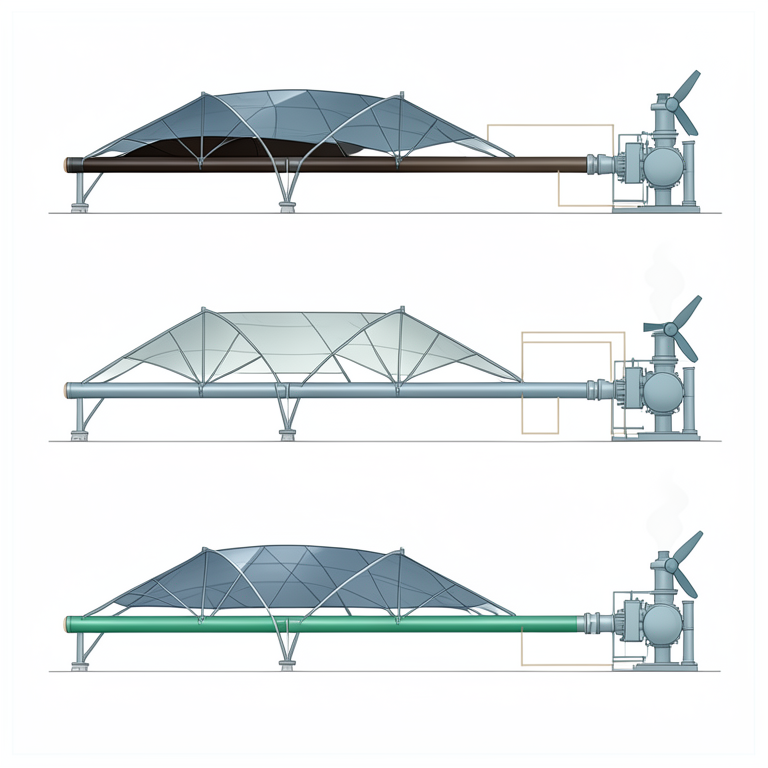
Comparison of Solar Plant Configurations
AI-generated conceptual illustration (parabolic trough solar collectors and power plant components). It explains the idea and does not show study data.
View source evidence ↗Figures & tables
From the original paper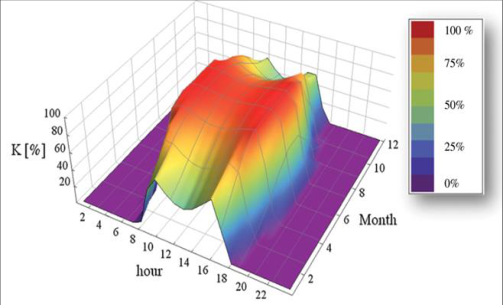 Figure 1
Introduction
Renewable energy and-for regions with high solar radiation-solar energy can play a fundamental role to move from a carbon economy to a green economy. Among solar energy conversion systems, concentrating solar energy is a very promising technology because it can decouple the solar energy source from electricity production due to storage systems. Today, this feature is not possible for photovoltaic plants because systems for storing electrical energy are not economically competitive. For solar thermal power plants, parabolic trough technology can be considered the state of the art because of the experience gained at the SEGS plants and, more recently, at Nevada Solar One in the United States (ACCIONA) and at the Andasol plants in Spain. In all these plants, the heat-transfer fluid (HTF), which collects and transfers the solar thermal energy to the power block, is synthetic oil. Two primary issues hindering the diffusion of this technology is the cost of the solar field and the relatively poor performance of the steam cycle due to temperature limits of synthetic oil. In the past, thermal stability of the receiver also limited solar field working conditions to below 400 0 C; today, however, commercially available receivers can withstand temperatures up to 580 0 C (HEMS08). Because of these limitations, different plant schemes based on parabolic trough solar fields have been investigated, as well as innovative collector technologies. Some examples are: (i) Integrated Solar Combined-Cycle (ISCC) systems, in which the steam produced in the solar field is injected into the steam cycle of a conventional natural gas combined cycle, (ii) integration with geothermal power plant technology, and (iii) linear Fresnel concentrators [1][2][3][4][5][6][7][8][9] . The aim of our study is to compare different solar plant technologies to the state-of-the-art Nevada Solar One plant, which we chose as the reference (designated "IND-OIL"); innovative plants studied differ in both solar field layout and HTF. Energy balances were calculated with the in-house code PATTO (PArabolic Trough Thermodynamic Optimization), able to predict the performance of solar trough-based concentrating solar power (CSP) plants in both design and off-design conditions. The code is implemented in MS Visual Basic 6.0, with Excel spreadsheets as the user interface for input and output data. Starting from the on-design sizing, the code calculates off-design performance and the annual electricity production for a specific site without thermal storage. A revised version including thermal storage optimization is currently being developed.
Analysis
The solar collector thermal model for off-design performance calculation is the same as used in on-design phase. In addition to latitude and longitude, tracking axis orientation is necessary to calculate sun path during the year and the angle between the sun rays and the vector normal to the aperture (named the incidence angle ), which has the highest offdesign impact of reducing concentrating system optical efficiency [10][11] . The incidence angle depends on the parabolic trough tracking axis orientation as follows:
where Z is the zenith angle, is the hour angle, and d is the declination. In this paper, we selected a north-south tracking axis to maximize the collected energy. Optical efficiency correction for the incidence angle is usually expressed by the cosine effect and the Incidence Angle Modifier (IAM). In this chapter, the global parameter K(), which includes cosine effect, IAM and end-losses is used. The following dependence on for Eurotrough (K()-ET) is adopted:
Fig. 1 shows the strong variation of K() along a year, the consequence of different incidence angle (see Eq. ( 1)). In particular, the resulting K() shape is typical for Northern Hemisphere locations at a latitude of about 35 0 . In addition to the K() parameter, we consider a row shading effect to account for mutual parabolic mirror shadowing that causes a decrease in the amount of active mirror surface. The ratio of the effective mirror aperture area to the total aperture area is a function of incidence angle (), solar zenith angle ( z ), and layout of collectors in the solar field, defined by collector aperture width "AW" and length of spacing between row "L spacing ", as reported in Eq. ( 4):
For simplicity, K() and shading effect are directly applied to the solar radiation, as presented in Eq. ( 5), instead of correcting the optical efficiency:
The solar field control strategy at partial load was based on keeping a constant exit temperature of HTF (i.e. equal to design conditions) by varying the mass flow until 50% of the mass flow design conditions. Then, during very low solar radiation hours, HTF mass flow in the solar field was fixed, decreasing the solar field outlet temperature. In a previous paper, we demonstrated that this strategy optimizes annual energy production. The resulting temperature range for low radiation, affected by a sliding pressure turbine control, is between 250 0 C and 290 0 C.
Conclusions
Results indicate relevant differences among the energy performance of the solutions considered: the net annual average solar-to-electric efficiency varies between slightly above 15% for the conventional IND-OIL scheme to over 17% for the DSG and MILAN-SALTS schemes, which take advantage of the higher operating temperatures of the power cycle. This superiority does not hold for the IND-SALTS scheme, which is penalized by the poor performance at low DNI. In this respect, the MILAN-SALTS solution also seems particularly promising because the solar field dedicated to Salts can be oversized to store thermal energy, reducing transient conditions issues related to DSG. It should be pointed out that the presence of heat storage of significant capacity could modify the plant design philosophy and plant operating strategy, thus changing the energy balances obtained by this simplified analysis. Moreover, plant optimization should account for different investment costs related to the various options considered. Hence, more detailed analyses are required before drawing conclusions about the best plant configuration to be adopted in solar plants based on parabolic trough fields.
References
11 in the original paper- Cohen G, Kearney D, Kolb J. Final Report on the Operation and Maintenance Improvement Program for Concentrating Solar Power Plants. Report N SAND 991290. Sandia National Laboratory. Siemens Concentrated Solar Power, Ltd 2018.
- Patnode AM. Simulation and Performance Evaluation of Parabolic Trough Solar Power Plants. Master thesis, University of Wisconsin -Madison 2016.
- Solar Millennium AG. The parabolic trough power plants Andasol 1 to 3, 2008.
- Relloso S, Delgado E. Experience with molten salt thermal storage in a commercial parabolic trough plant. ANDASOL-1 commissioning and operation 2019.
- Kennedy CE. Review of Mid-to high-temperature solar selective absorber materials. Technical, Report 2012. NREL/TP-520-31267.
- Dersch J et al., Performance modeling and economical evaluation of integrated solar combined-cycle systems. J Solar Energy Eng ASME 2012.
- Astolfi M, Xodo L, Romano MC, Macchi E. Technical and economical analysis of a solar-geothermal hybrid plant based on an Organic Rankine Cycle. Geothermics (October) 2020.
- Mills D. Advances in solar thermal electricity technology. Solar Energy 2004;76:19-31.
- Giostri A, Binotti M, Silva P, Macchi E, Manzolini G. Comparison of two linear collectors in solar thermal plants: parabolic trough vs. Fresnel. In: Proceedings of ASME 2011 5th International Conference on Energy Sustainability & 9th Fuel Cell Science, Engineering and Technology Conference, August 7-10, 2011, Washington, DC, USA 2012.
- Duffie J, Beckman W. Solar Engineering of Thermal Processes, second ed. John Wiley & Sons, Inc 2013.
- Stine WB, Geyer M. The sun's position (Chapter 3). Collecting solar energy (Chapter 4). Power from the sun 2011.