
Research article · 2021 · Full text
International Journal of Advanced Biochemistry ResearchEvaluation of thyroid function in diabetes mellitus at a tertiary care hospital in central Karnataka
Volume 5(1) · Pages 35–38 · DOI: 10.33545/26174693.2021.v5.i1a.63 ↗
Research areasDiabetes and associated disordersBiomarkers in Disease MechanismsMetabolism, Diabetes, and Cancer
Abstract
Author-writtenBackground: The thyroid hormone abnormalities are closely associated with diabetes. Undetected, untreated thyroid dysfunction may impair diabetes control, its early detection. Hence, prompt treatment among diabetics would be beneficial in achieving glycemic control, minimizing cardiovascular risk and improving general well‑being. In this central Karnataka As the data on thyroid disorders in diabetics is limited region, the present study was taken up to estimate the thyroid dysfunction in diabetic patients. Aim: To estimate the thyroid dysfunction in diabetic patients. Material and Methods: Hospital-based cross-sectional study was conducted after obtaining institutional ethics committee clearance, at a tertiary care teaching hospital in Chitradurga, Karnataka, among 100 diagnosed cases of diabetes mellitus. Patients’ lipid, thyroid and diabetic profiles were estimated and were then divided as hypothyroid, hyperthyroid, and euthyroid depending on the thyroid profiles. Results: Out of 100 diabetic patients, 71% were euthyroid, 23% hypothyroid and 6% were hyperthyroid. BMI, waist: hip ratio, TSH were significantly lower (22.3±1.8 Kg/mt2; 0.79±0.18), whereas T3 and T4 were significantly elevated among hyperthyroid patients compared to hypothyroid and euthyroid group. Levels of FBS, total cholesterol, triglycerides, LDL cholesterol and HbA1c were significantly elevated in hypothyroid patients. The mean levels of FBS, total cholesterol, triglycerides, LDL cholesterol and HbA1c were significantly elevated in hypothyroid patients compared to euthyroid group. Conclusion: Unidentified thyroid dysfunction could negatively impact diabetes and its complications and may be one of the prime causes of poor management of type 2 DM. Therefore, there is a need for routine assay of thyroid hormones in type 2 diabetic patients to improve the medical management as well as to reduce the morbidity in them.
Summary
Source-checkedPlain-language reading of the full paper, prepared with AI and checked against the text. Each point links to the authors' own words.
Why it matters
- Thyroid hormone abnormalities are closely linked to diabetes, and if left undetected and untreated, they can hinder the control of the disease. View evidence ↗
- Early detection and prompt treatment of thyroid dysfunction in diabetic patients can help achieve better glycemic control, lower cardiovascular risks, and improve overall well-being. View evidence ↗
- Thyroid dysfunction is more common in diabetic groups (10-24%) than in the general population (7-13.4%). View evidence ↗
The question
- The study aimed to estimate the prevalence and nature of thyroid dysfunction among patients with diabetes mellitus. View evidence ↗
What they did
- The research was a hospital-based cross-sectional study conducted at a tertiary care teaching hospital in Chitradurga, Karnataka, between September 2020 and February 2021. View evidence ↗
- Researchers collected 5 ml of overnight fasting venous blood to analyze blood chemistry using Vitros 4600 and T3, T4, and TSH levels using the COBAS e411 chemiluminescence method. View evidence ↗
- A one-way ANOVA test was used to compare biochemical parameters, including lipid profiles, HbA1c, fasting blood sugar (FBS), and blood pressure, across the euthyroid, hypothyroid, and hyperthyroid groups. View evidence ↗
What they found
- Hyperthyroid patients had significantly lower average BMI (22.3±1.8 Kg/mt2) and waist-to-hip ratio (0.79±0.18) compared to hypothyroid and euthyroid patients. View evidence ↗
- Hyperthyroid patients showed significantly higher levels of T3 and T4 and significantly lower levels of TSH compared to the other two groups. View evidence ↗
- Hypothyroid patients had significantly higher mean levels of fasting blood sugar (FBS), total cholesterol, triglycerides, LDL cholesterol, and HbA1c compared to euthyroid patients. View evidence ↗
- In the hyperthyroid group, FBS and HbA1c levels were significantly elevated, while serum cholesterol and LDL cholesterol levels were decreased. View evidence ↗
What it means
- The authors conclude that undetected thyroid dysfunction can negatively affect diabetes and its complications, potentially contributing to the poor management of type 2 diabetes mellitus. View evidence ↗
- The authors recommend routine thyroid hormone testing for type 2 diabetic patients to improve medical management and reduce morbidity. View evidence ↗
Visual summary
2 visualsIllustrations explain the paper; charts are replotted from the paper's own table values.
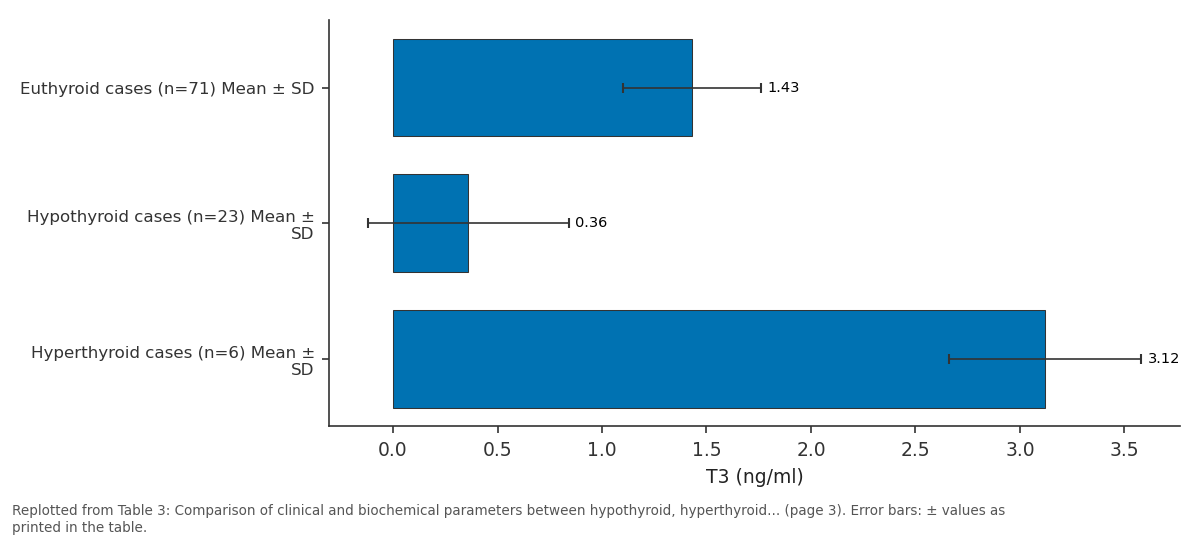
T3 (ng/ml): Euthyroid cases (n=71)... vs Hypothyroid cases... vs Hyperthyroid cases...
Replotted from Table 3 (page 3) of the original paper. Every bar is the paper's own table value.
View source evidence ↗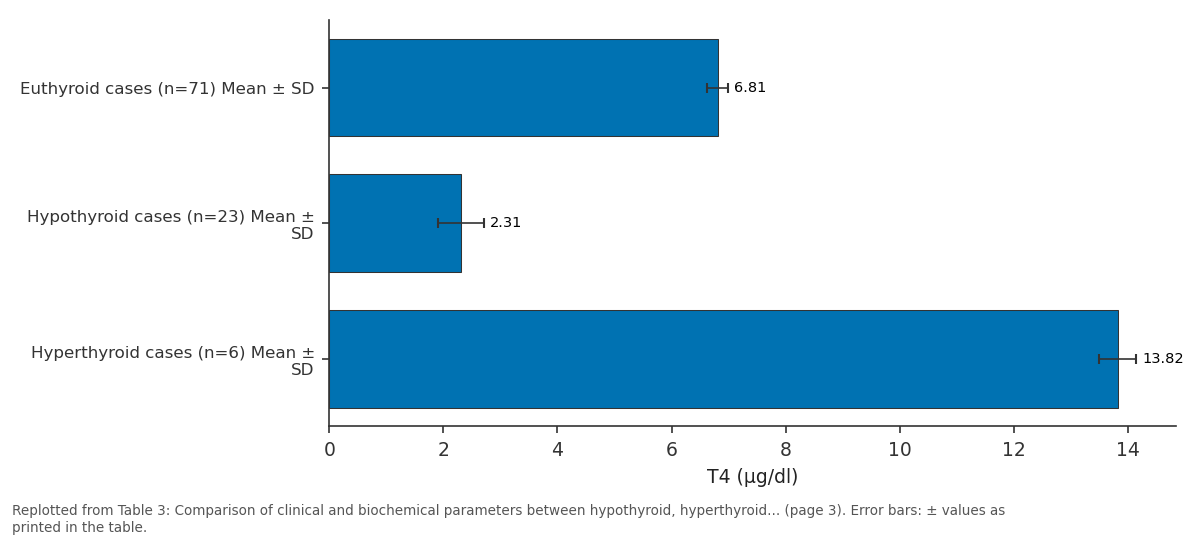
T4 (µg/dl): Euthyroid cases (n=71)... vs Hypothyroid cases... vs Hyperthyroid cases...
Replotted from Table 3 (page 3) of the original paper. Every bar is the paper's own table value.
View source evidence ↗Figures & tables
From the original paper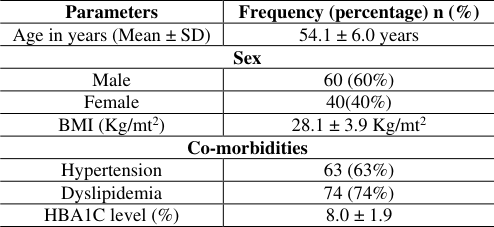 Table 1
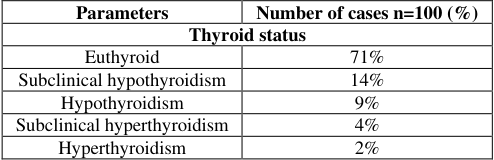 Table 2
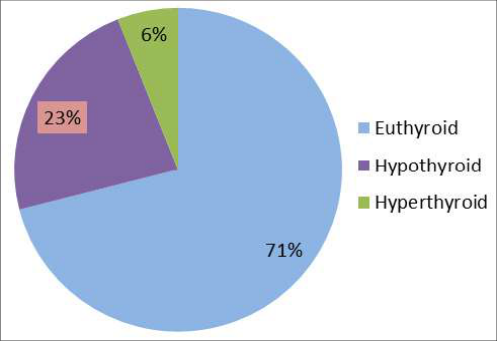 Figure 1
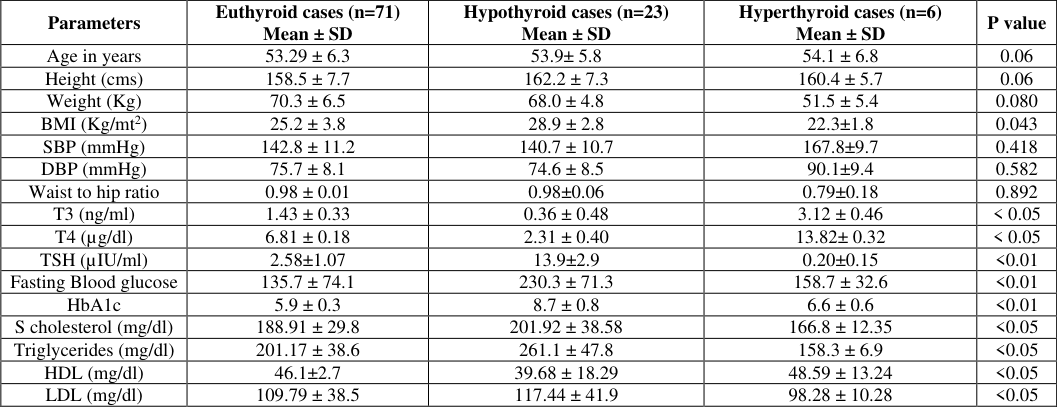 Table 3
Introduction
India, being the diabetic capital of the world has been facing a major challenge of managing this metabolic disorder in the wake of a COVID-19 pandemic. Diabetes is the most common metabolic disorder, followed by thyroid dysfunction. The diabetogenic potential of COVID-19 is a serious cause of concern and the diabetic population is expected to rise from 171 million in 2000 to >400 million in 2030. Prevalence of thyroid dysfunction varies between 7-13.4% in general population and 10-24% in diabetic group [1][2][3][4] . Diabetes mellitus impairs the body metabolism by influencing thyroid function: at the level of the hypothalamus (by thyroid stimulating hormone release-TSH) and peripheral tissues by conversion of T4 to T3), leading to lower levels of triiodothyronine (T3) and low/normal or high levels of thyroxin (T4). As insulin and thyroid hormones are intricately involved in cellular metabolism, excess or deficit of either of them results in the functional derangement of the other [5,6] . There is an intricate biochemical interrelationship between insulin, iodothyronine and metabolism of carbohydrates, proteins, and lipids [5][6][7] . There is an inverse relation between iodothyronines and insulin. Hyperthyroidism leads to insulin resistance whereas hypothyroidism increases susceptibility to hypoglycaemia. Thus, thyroid dysfunction may adversely affect diabetes control, thereby, accentuating burden of the health care system [5,7] .
As the thyroid hormone abnormalities are closely associated with diabetes, as the undetected, untreated thyroid dysfunction may impair diabetes control, its early detection and prompt treatment among diabetics would prove beneficial in achieving glycaemic control, minimising cardiovascular risk and improving general well-being [5][6][7] . As the data on thyroid disorders in diabetics is limited in this central Karnataka region, the present study was taken up to estimate the thyroid dysfunction in diabetic patients.
Material and Methods
This hospital-based cross-sectional study was conducted after obtaining institutional ethics committee clearance, at a tertiary care teaching hospital in Chitradurga, Karnataka, from September 2020 to February 2021. The patients suffering from diabetes mellitus for a minimum of 6 months, visiting the outpatient department of General Medicine were included after explaining the purpose of the study and obtaining their informed consent. Patients were examined for the presence of diabetes mellitus, according to ADA criteria for diagnosis of diabetes mellitus [8] . The participants were then divided as hypothyroid, hyperthyroid, and thyroid, depending on the thyroid profiles. Patients suffering from chronic inflammatory diseases and infections, liver disease, kidney disease, heart failure, ascites, abdominal hernias, tumors, complications of diabetes, previous history of thyroid disorders and pregnant women were excluded from the study. All the participant patients' thorough clinical history and examination details were noted in a preformed semistructured proforma, which included emphasis on symptoms of hypothyroidism and hyperthyroidism, history of associated illnesses such as coronary artery disease, hypertension, and cerebrovascular accident as well as family history regarding DM, thyroid disorders. 5 ml of overnight fasting venous blood sample was collected from all the patients. Blood chemistry analysis was done by Vitros 4600. And T3, T4, and TSH levels were analysed by COBAS e411 by chemiluminescence method. Subclinical hypothyroidism was defined as an elevated TSH level with normal serum thyroid hormone levels. Hypothyroidism was defined as an elevated TSH together with decreased serum thyroid hormone levels. Subclinical hyperthyroidism was defined as a decreased TSH with normal thyroid hormone levels and hyperthyroidism was defined as a decreased TSH with elevated thyroid hormone levels [4] .
Statistical analysis
The data was compiled in Microsoft Excel 2010 spreadsheet and statistical analysis was done using Statistical Package for the Social Sciences (SPSS) Windows version 20. Descriptive variables were expressed in percentages, continuous variables expressed in mean and standard deviation. One way ANOVA test was applied to analyse the levels of various biochemical parameters such as lipid profile, HbA1c, FBS, systolic and diastolic BP, among hypothyroid, hyperthyroid and euthyroid subgroups. Associations with p-value of < 0.05 were considered to be statistically significant.
Results
A total of 100 diabetic patients who fulfilled the study criteria participated in the study. The average age was 54.1 ± 6.0 years. 60% of the participants were males and 40% were females. 63% had hypertension, 74% had dyslipidemia, and the average body mass index (BMI) of these participants was 28.1 ± 3.9Kg /mt 2 . (Table 1) Out of 100 diabetic patients, 71% were euthyroid, 14% had subclinical hypothyroidism and 9% had overt hypothyroidism. But, subclinical hyperthyroidism in our study was lesser at 4% and overt hyperthyroidism was 2% only. (Table 1 and2, Figure 1) Figure 1 shows that a majority (71%) of the study diabetic population was euthyroid. Table 2 shows that a 14% has Subclinical hypothyroidism, 9% had Hypothyroidism. Subclinical hyperthyroidism and Hyperthyroidism were present among 4% and 2% patients respectively 3 shows that the average BMI levels and waist to hip ratio were significantly lower among hyperthyroid patients (22.3±1.8 Kg/mt s ; 0.79±0.18) compared to hypothyroid patients (28.9 ± 2.8 Kg/mt 2 ; 0.98±0.06) and euthyroid patients (28.9 ± 2.8 Kg/mt 2 ; 0.98 ± 0.01). The average systolic and diastolic blood pressure levels were significantly higher among hyperthyroid patients compared to euthyroid and hypothyroid patients. (Table 3). The average levels of T3 and T4 were significantly elevated among hyperthyroid patients compared to hypothyroid and euthyroid group, and the average levels of TSH were significantly lesser among hyperthyroid group as compared to the euthyroid and hypothyroid group. (Table 3). Among the study population, the mean levels of FBS, total cholesterol, triglycerides, LDL cholesterol and HbA1c were significantly elevated in hypothyroid patients compared to euthyroid group. Among the hyperthyroid patient group, the levels of FBS and HbA1c were significantly elevated, whereas, the levels of serum cholesterol and LDL cholesterol were decreased and the TG and HDL levels were unchanged (Table 3)
| Parameters | Euthyroid cases (n=71) Mean ± SD | Hypothyroid cases (n=23) Mean ± SD | Hyperthyroid cases (n=6) Mean ± SD | P value |
|---|---|---|---|---|
| Age in years | 53.29 ± 6.3 | 53.9± 5.8 | 54.1 ± 6.8 | 0.06 |
| Height (cms) | 158.5 ± 7.7 | 162.2 ± 7.3 | 160.4 ± 5.7 | 0.06 |
| Weight (Kg) | 70.3 ± 6.5 | 68.0 ± 4.8 | 51.5 ± 5.4 | 0.080 |
| BMI (Kg/mt2) | 25.2 ± 3.8 | 28.9 ± 2.8 | 22.3±1.8 | 0.043 |
| SBP (mmHg) | 142.8 ± 11.2 | 140.7 ± 10.7 | 167.8±9.7 | 0.418 |
| DBP (mmHg) | 75.7 ± 8.1 | 74.6 ± 8.5 | 90.1±9.4 | 0.582 |
| Waist to hip ratio | 0.98 ± 0.01 | 0.98±0.06 | 0.79±0.18 | 0.892 |
| T3 (ng/ml) | 1.43 ± 0.33 | 0.36 ± 0.48 | 3.12 ± 0.46 | < 0.05 |
| T4 (µg/dl) | 6.81 ± 0.18 | 2.31 ± 0.40 | 13.82± 0.32 | < 0.05 |
| TSH (µIU/ml) | 2.58±1.07 | 13.9±2.9 | 0.20±0.15 | <0.01 |
| Fasting Blood glucose | 135.7 ± 74.1 | 230.3 ± 71.3 | 158.7 ± 32.6 | <0.01 |
| HbA1c | 5.9 ± 0.3 | 8.7 ± 0.8 | 6.6 ± 0.6 | <0.01 |
| S cholesterol (mg/dl) | 188.91 ± 29.8 | 201.92 ± 38.58 | 166.8 ± 12.35 | <0.05 |
| Triglycerides (mg/dl) | 201.17 ± 38.6 | 261.1 ± 47.8 | 158.3 ± 6.9 | <0.05 |
| HDL (mg/dl) | 46.1±2.7 | 39.68 ± 18.29 | 48.59 ± 13.24 | <0.05 |
| LDL (mg/dl) | 109.79 ± 38.5 | 117.44 ± 41.9 | 98.28 ± 10.28 | <0.05 |
Table text extracted from the original PDF; superscript letters are shown inline. The original table image is below.
View original table image
| Parameters | Number of cases n=100 (%) |
|---|---|
| Thyroid status | |
| Euthyroid | 71% |
| Subclinical hypothyroidism | 14% |
| Hypothyroidism | 9% |
| Subclinical hyperthyroidism | 4% |
| Hyperthyroidism | 2% |
Table text extracted from the original PDF; superscript letters are shown inline. The original table image is below.
View original table image
| Parameters | Frequency (percentage) n (%) |
|---|---|
| Age in years (Mean ± SD) | 54.1 ± 6.0 years |
| Sex | |
| Male | 60 (60%) |
| Female | 40(40%) |
| BMI (Kg/mt2) | 28.1 ± 3.9 Kg/mt2 |
| Co-morbidities | |
| Hypertension | 63 (63%) |
| Dyslipidemia | 74 (74%) |
| HBA1C level (%) | 8.0 ± 1.9 |
Table text extracted from the original PDF; superscript letters are shown inline. The original table image is below.
View original table image
Discussion
The spectrum of thyroid dysfunction among the diabetic patients was analysed in the present study. A majority of 71% were euthyroid, whereas 23% were hypothyroid (14% Subclinical hypothyroidism, 9% Hypothyroidism) and 6% hyperthyroid (2% overt and 4% subclinical hyperthyroidism). The majority of diabetic patients also had comorbid conditions such as hypertension (63%) and dyslipidaemia (74%). (Table 1, 2 Figure 1) The findings of the present study are consistent with the study elsewhere [9][10][11][12] . In the present study, levels of FBS, and HbA1c were found to be significantly elevated in both hypo and hyperthyroidism patients compared to euthyroid patients. (Table 3) Thyroid hormones affect glucose metabolism via several mechanisms. Hyperthyroidism has long been recognized to promote hyper glycemia. During hyperthyroidism, the half-life of insulin is reduced most likely secondary to an increased rate of degradation and an enhanced release of biologically inactive insulin precursors, also endogenous glucose production increases mainly by up regulating GLUT2 receptors and increased lipolysis which leads to stimulation of gluconeogenesis. As for hypothyroidism, glucose metabolism is affected by decreased glucose production and developing insulin resistance [7,[12][13][14][15] . In the present study, levels of TC and LDL were significantly raised in hypothyroid diabetic patients compared to euthyroid and hyperthyroid groups. TG levels were significantly higher and HDL levels were significantly lesser among hypothyroid group compared to euthyroid and hyperthyroid groups. Thyroid hormones have a crucial role in lipid metabolism by inducing HMG-CoA reductase, upregulating LDL receptors and stimulating lipoprotein lipase (LPL). In hypothyroidism, although there is decreased thyroid function that results in reduced activity of HMG-CoA reductase, TC and LDL-C levels are increased due to the decreased LDL-receptors' activity, resulting in decreased catabolism of LDL and IDL and decreased clearance of TG-rich lipoproteins due to decrease in LPL activity [7,13,14] . Despite the increased activity of the HMG-CoA reductase, levels of total cholesterol, LDL-C, ApoB and Lp (a) tend to decrease in patients with clinical or subclinical hyperthyroidism. This is due to increased LDL receptor gene expression resulting in enhanced LDL receptor-mediated catabolism of LDL particles [7,13,14] . Thyroid hormones induce the HMG-CoA reductase, which is the first step in cholesterol biosynthesis. Moreover, T3 up regulates LDL receptors by controlling the LDL receptor gene activation. This T3-mediated gene activation is done by the direct binding of T3 to specific thyroid hormone responsive elements (TREs). Thyroid hormones can influence HDL metabolism by increasing cholesteryl ester transfer protein (CETP) activity. In addition, thyroid hormones stimulate the lipoprotein lipase (LPL). Although decreased thyroid function is accompanied by reduced activity of HMG-CoA reductase, TC and LDL-C levels are increased in patients with overt hypothyroidism. This is due to the decreased LDLreceptors' activity, resulting in decreased catabolism of LDL. Also, a decrease in LPL activity is found in overt hypothyroidism, decreasing the clearance of TG-rich lipoproteins. Therefore, overt hypothyroid patients may also present with elevated TG levels [7,13,14,16] . Despite the increased activity of the HMG-CoA reductase, levels of TC, LDL-C, ApoB and Lp (a) tend to decrease in patients with clinical or subclinical hyperthyroidism. This is due to increased LDL receptor gene expression resulting in enhanced LDL receptor-mediated catabolism of LDL particles [7,[13][14][15][16] .
Conclusion
The study highlights the relationship between diabetes mellitus and thyroid disorders. Unidentified thyroid dysfunction could negatively impact diabetes and its complications and may be one of the prime causes of poor management of type 2 DM. Therefore, there is a need for a routine assay of thyroid hormones in type 2 diabetic patients to improve medical management as well as to reduce the morbidity in them.
References
15 in the original paper- Misra A, Ghosh A, Gupta R. Heterogeneity in presentation of hyperglycaemia during COVID-19 pandemic: A proposed classification. Diabetes Metab Syndr. 2021;15(1):403-406.
- Rubino F, Amiel SA, Zimmet P, Alberti G, Bornstein S, Eckel RH, et al. New-Onset Diabetes in Covid-19. N Engl J Med. 2020;383(8):789-790.
- Saeedi P, Petersohn I, Salpea P, Malanda B, Karuranga S, Unwin N, et al. Global and regional diabetes prevalence estimates for 2019 and projections for 2030 and 2045: Results from the International Diabetes Federation Diabetes Atlas, 9th edition. Diabetes Res Clin Pract. 2019;157:107843.
- Uppal V, Vij C, Bedi GK, Vij A, Banerjee BD. Thyroid disorders in patients of type 2 diabetes mellitus. Indian J Clin Biochem. 2013;28(4):336-41.
- Kim MK, Kwon HS, Baek K, Lee JH, Park WC, Sohn HS, et al. Effects of thyroid hormone on A1C and glycated albumin levels in nondiabetic subjects with overt hypothyroidism. Diabetes Care. 2010;33:2546-8.
- Hage M, Zantout MS, Azar ST. Thyroid disorders and diabetes mellitus. J Thyroid Res. 2011;2011:439-463.
- Sonne DP, Hemmingsen B. Comment on American Diabetes Association. Standards of Medical Care in Diabetes-2017. Diabetes Care. 2017;40(1):S1-S135.
- Chutia H, Bhattacharyya H, Ruram AA, Bora K, Chakraborty M. Evaluation of thyroid function in type 2 diabetes in north-eastern part of India: A hospital-based study. J Family Med Prim Care. 2018;7(4):752-755.
- Pramanik S, Ghosh S, Mukhopadhyay P, Bhattacharjee R, Mukherjee B, Mondal SA, et al. Thyroid Status in Patients with Type 2 Diabetes Attending a Tertiary Care Hospital in Eastern India. Indian J Endocrinol Metab. 2018;22(1):112-115.
- Mehalingam V, Sahoo J, Bobby Z, Vinod KV. Thyroid dysfunction in patients with type 2 diabetes mellitus and its association with diabetic complications. J Family Med Prim Care. 2020;9(8):4277-4281.
- Kalra S, Aggarwal S, Khandelwal D. Thyroid Dysfunction and Type 2 Diabetes Mellitus: Screening Strategies and Implications for Management. Diabetes Ther. 2019;10(6):2035-2044.
- Rizos CV, Elisaf MS, Liberopoulos EN. Effects of thyroid dysfunction on lipid profile. Open Cardiovasc Med J. 2011;5:76-84.
- American Diabetes Association. 2. Classification and Diagnosis of Diabetes: Standards of Medical Care in Diabetes-2020. Diabetes Care. 2020;43(1):S14-S31.
- Pangajam P, Juliette AV. Association between thyroid hormones & lipid profile in type 2 diabetes mellitus patients-A case control study in tertiary care hospital. Int J Clin Biochem Res. 2021;8(1):25-28.
- Abbas JM, Chakraborty J, Akanji AO, Doi SA. Hypothyroidism results in small dense LDL independent of IRS traits and hypertriglyceridemia. Endocr J. 2008;55(2):381-9.