
Research article · 2018 · Full text
International Journal of Veterinary Sciences and Animal HusbandryThe effect of Nigella sativa (black seed) on ethanol induced ulcer in wistar albino rats
Volume 3(3) · Pages 33–36
Research areasNigella sativa pharmacological applicationsHibiscus Plant Research StudiesCurcumin's Biomedical Applications
Abstract
Author-writtenThe study was carried out to determine the protective role of the aqueous extract of Nigella sativa on ethanol induced intestinal ulcer. A total of twenty (20) healthy Wistar albino rats were randomly divided into four groups of five rats each. The control was pre-treated with normal saline, the second group was pretreated with a standard ulcer drug (Gestid suspension), the third group was pretreated with aqueous extract of Nigella sativa at low dose (320mg/kg) and the fourth group was pretreated with aqueous extract of Nigella sativa at a high dose of 640mg/kg. The findings at the end of the experiment revealed that the control group showed distortion in the intestinal mucosa, damaged submucosa, basement membrane, blood vessel and muscular layer. The Gestid group showed an intact submucosa and mild damage to the intestinal lining. The low dose showed a distorted intestinal mucosa and the high dose group showed mild damage to the intestinal mucosa. The aqueous extract of Nigella sativa administered at 320 mg/kg body weight and 640 mg/kg body weight dose appeared to have protected the intestine from ethanol-induced ulcer at the end of the experimental study.
Summary
Source-checkedPlain-language reading of the full paper, prepared with AI and checked against the text. Each point links to the authors' own words.
Why it matters
- Peptic ulcers are lesions that typically develop in the duodenum and stomach within the gastrointestinal tract. View evidence ↗
- Key causes of peptic ulcers include alcohol use, smoking, stress, H. pylori infection, and the overuse of NSAIDs. View evidence ↗
- Ethanol is known to cause severe gastric ulcers by creating instabilities in the gastric mucosa. View evidence ↗
The question
- The researchers aimed to determine if an aqueous extract of Nigella sativa (black seed) could protect against ethanol-induced intestinal ulcers. View evidence ↗
What they did
- The study used 20 healthy Wistar albino rats, divided into four groups of five rats each. View evidence ↗
- The positive control group (Group I) received 1ml of ethanol orally and was sacrificed after one hour. View evidence ↗
- Group II was pre-treated with a low dose of Nigella sativa aqueous extract (320mg/kg) 30 minutes before ethanol induction. View evidence ↗
- Group III was pre-treated with a high dose of Nigella sativa aqueous extract (640mg/kg) 30 minutes before ethanol induction. View evidence ↗
- Group IV received a standard ulcer medication, Gestid, 30 minutes before ethanol induction. View evidence ↗
- Intestinal morphology was examined by fixing the duodenum in 10% formalin and staining with cresyl violet and Hematoxylin and Eosin (H&E). View evidence ↗
What they found
- The control group exhibited extensive damage, including distortion of the intestinal mucosa and damage to the blood vessels, muscular layer, basement membrane, and submucosa. View evidence ↗
- Rats treated with the standard drug Gestid showed an intact submucosa but still experienced mild damage to the intestinal lining. View evidence ↗
- The high dose (640 mg/kg) extract significantly improved the structure of the intestinal villi and reduced irritation in the blood vessels and mucosa membrane. View evidence ↗
What it means
- The authors concluded that aqueous extracts of Nigella sativa at both 320 mg/kg and 640 mg/kg doses provided protection against ethanol-induced intestinal ulcers. View evidence ↗
- The authors suggest that the protective effects may be due to the presence of thymoquinone in Nigella sativa. View evidence ↗
Visual summary
1 visualsIllustrations explain the paper; they do not show study data.
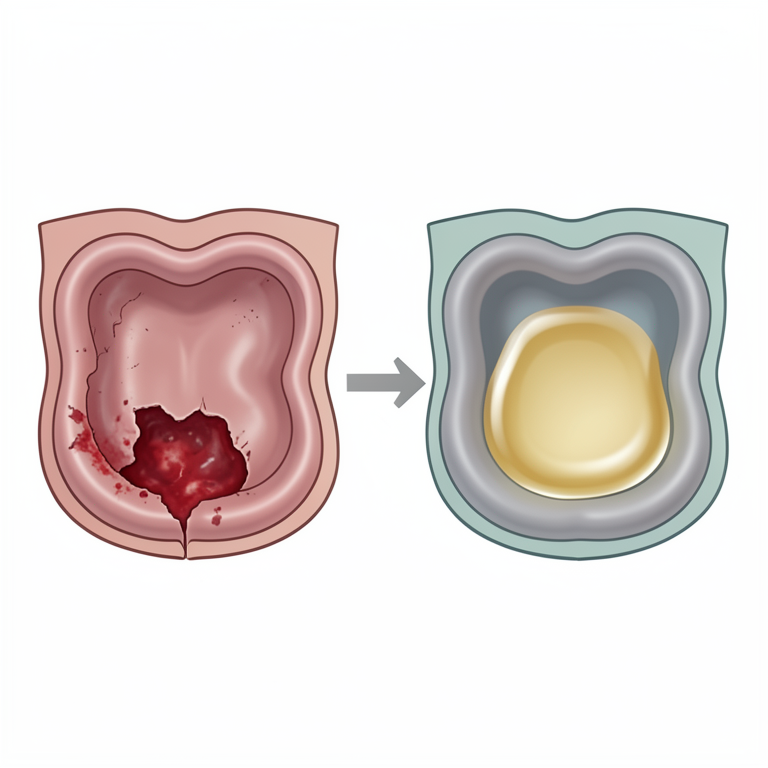
Protective Effect of Nigella sativa
AI-generated conceptual illustration (Wistar albino rats and their stomach lining). It explains the idea and does not show study data.
View source evidence ↗Figures & tables
From the original paper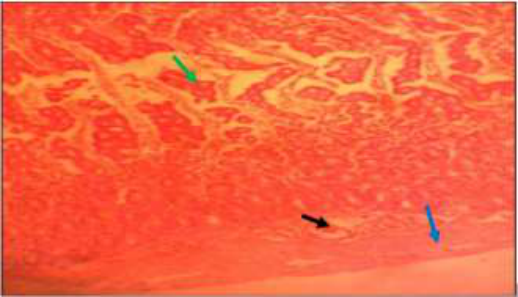 Figure 1
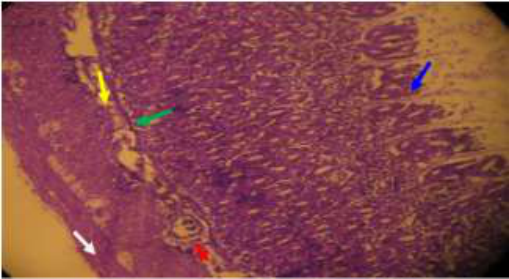 Figure 2
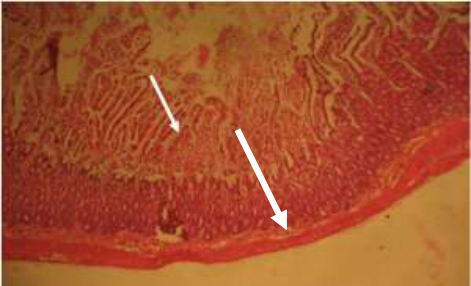 Figure 3
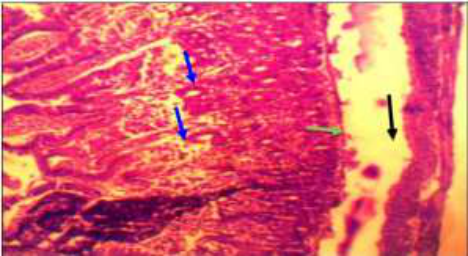 Figure 4
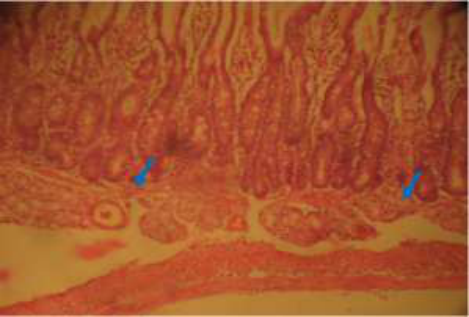 Figure 5
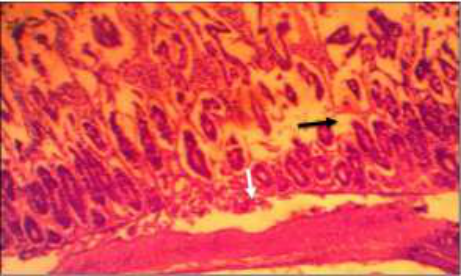 Figure 6
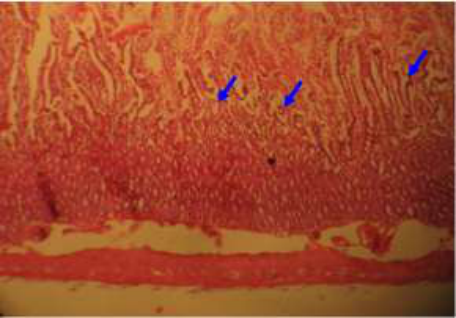 Figure 7
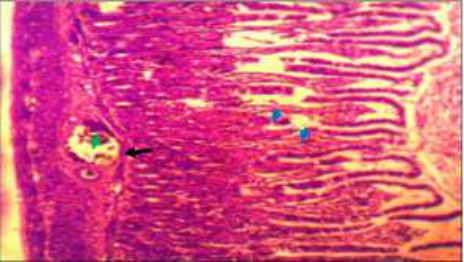 Figure 8
Introduction
Peptic ulcers are pathological lesions in the gastrointestinal tract that usually occur in the stomach and duodenum. Major etiologic factors of peptic ulcer include the following: Helicobacter pylori infection, the excessive use of non-steroidal anti-inflammatory drugs (NSAIDs), alcohol consumption, cigarette smoking, psychological and physiological stress [1] . Gastric ulcer is commonly characterized by necrosis, infiltration of neutrophils, reduction in blood flow, induction of oxidative stress, and secretion of inflammatory mediators [2][3] , impairment of the balance between aggressive (increased acid secretions) and protective factors, stress, trauma, sepsis, hemorrhagic shock, burns, pulmonary and liver diseases, helicobacter pylori, use of cigarettes and alcohol, and steroidal and non-steroidal antiinflammatory drugs. These have been shown to play a role in gastric ulcerogenesis [4] Gastric ulcers are common gastrointestinal (GI) disorders that affect approximately 10% of the world population. They are multifactorial and complicated disorders resulting from breakdown of the equilibrium between the defense mechanisms of the gastric mucosa and aggressive factors [5] . It is estimated that 14.5 million people worldwide are affected by gastric ulcers in 2007, with a mortality of 4.08 million individuals [2] Ethanol is considered as an agent that induces extreme gastric ulcers as it stimulates severe instabilities in the gastric mucosa [5][6] Ethanol performs its lethal effect on gastric epithelium and leads to the formation of typical necrotic injuries due to a decrease in bicarbonate secretion and mucus production which provides a protective cover over the gastric mucosa in a normal condition. It also aggravates a reduction in gastric blood flow, induction of oxidative stress, increased activity of xanthine oxidase, an increase in malondialdehyde (MDA) level, solubilization of components of the mucus of the stomach and a decrease in glutathione level [6][7] . Gastric ulcers are locally treated in some communities in northern Nigeria using Nigella sativa. Nigella sativa is also called Habbatulsauda or Habbat al Baraka and is known around the world by many names because of its ancient popular history and medicinal value. It is also known as black caraway, Roman Coriander, carvi (French), Schwarz kummel (German), Kalonji (Hindi/Urdu), Kezah (Hebrew), Chernushka (Russian). It is an annual herbaceous plant that grows about 16-24 inches in height. The name Nigella sativa comes from the Latin word Nigellus, meaning black. It is translated as "seed of blessing". The seed is called black cumin or black seed in English, while in old Latin it was called Panacea meaning cure all. It comes from a Small rectangular Black seed which is known as Blessed seed (Habbat al Baraka or Habbatulsauda). Nigella sativa is a member of the Ranunculacea family [8] . Black cumin or Black seed has even been described as a 'miracle herb' and a cure for every disease except death" (SahihBukhari). Black cumin seed have been used to successfully keep healthy for over 3,300 years. It is one of the early providers of life. The miracle seed has been used by millions of people to treat various ailments for century in different parts of the world especially in Mediterranean, Middle and Indian, Pakistan, Bangladesh and also in Europe [8] . This study was carried out to determine the protective role of an aqueous extract of black seed (Nigella sativa) in the treatment of duodenal or intestinal ulcer.
Materials and Method 2.1 Collection and identification of plant materials
The seeds of Nigella sativa were purchased from a traditional herbalist in Damaturu; North-Eastern Nigeria. The seed was identified and authenticated by a plant taxonomist of the Department of Biological Science, University of Maiduguri, Borno State.
Ethical approval of the Research Protocol
The study protocol was approved by the Ethics Committee for Experiments on Animals of University of Maiduguri (number UM/HA/UGP/16.17-010) All experiments were carried out in accordance with the constituted Ethics Committee of the institution within which the work was undertaken and it conformed to the provisions of the Declaration of Helsinki (as revised in 2000)
Extraction procedures
The Nigella sativa seeds were winnowed and crushed to smaller fragments using a pestle and a mortar. 100g of the crude extract was soaked in 1 liters of distilled water for 24 hours. The extract was then filtered. The liquid component was removed using an evaporator. The extract was then poured on a tray for complete dryness, after drying; the yield was measured to be 35.4%.
Animal Husbandry
Twenty (20) adult male and female Wistar albino rats weighing between 65.9g to 89.6g were obtained from Department of Biochemistry animal house, University of Maiduguri. The rats were acclimatized for two weeks to let them adapt to the animal house condition. The rats were housed in a cross ventilated room with temperature, humidity and 12 hours light/ 12 hours dark cycle maintained. The rats were fed with standard laboratory pellet and water adlibitum.
Experimental design
Twenty (20) adult Wistar rats weighing between 65.9g to 88.6g were used for this study. The rats are grouped into four (I, II, III and IV) with each group containing 5 rats. The animals were fasted for 18 hours prior to the start of the experiment to make sure the stomach was empty.
Group I, received 1ml of ethanol by oral route and served as positive control group and were sacrificed 1h later. Group II, received aqueous extract of Nigella sativa (320mg/kg body weight) by oral route 30 minutes prior to ulcer induction with ethanol. This group was sacrificed 1h after inducing ulcer. Group III, received aqueous extract of Nigella sativa (640mg/kg body weight) by oral route 30 minutes prior to ulcer induction with ethanol. This group was sacrificed 1h after inducing ulcer Group IV, received a standard ulcer drug (Gestid) 30 minutes prior to inducing ulcer with ethanol and were sacrificed 1h after inducing ulcer.
Preparation of solution
Stock solution of Nigella sativa was prepared by dissolving four grams (4g) in 20ml of distilled water to obtain a concentration of 0.2g/ml. Calculation of the actual concentration carried out by substituting weight of each rat.
Tissue processing
After the examination of the morphology of intestine, the duodenum were fixed in 10% formalin and tissue processing and staining was carried out using Hematoxylin and Eosin (H & E) and cresyl violet.
Results
Results
Discussion
The distortion of the mucosal layer and the basement membrane that was noticed in rats pre-treated with normal saline showed that normal saline did not protect the intestine in ethanol -induced intestinal ulcer. Alcohol consumption therefore resulted in irritation and inflammation of intestinal mucosa which eventually led to intestinal ulcer and affect mucous production as observed in figures I and II. This is also in accordance with studies conducted by [9][10] . The submucous layer in this group also showed distortion as was also found in the animals in group 2 (Fig 3 -4). The glandular epithelium was observed to be thicker in the group treated with Gestid. This group also showed a mild mucosal layer disruption as well as mild damage to blood vessels and basement membrane. This drug is standardly used for the treatment of gastric ulcer, but it offered less protection on the intestine in the experimental group because the stomach digested the drug before it reached the intestine for absorption wheras ethanol passed directly into the intestine where its absorption caused the damage observed in the micrograph for this group damage. This is in agreement with [9] who experimented on the effect of ulcer on standard drug antacid in treatment of gastric ulcer. It was discovered that because the stomach acid was neutralized, it also offered mild protection to the intestines. The experimental group that was pre-treated with aqueous extract of Nigella sativa in low dose (320 mg/kg) showed mild disruption of the intestinal villi but the mucosal distortion was less compared to the rat pre-treated with normal saline, this is in agreement with [12][13] who reported that when Wistar rats that were induced with ulcer were given
International Journal of Veterinary Sciences and Animal Husbandry Nigella sativa, it reduced distortion in the mucosal layer of the intestine. Aqueous extract that was administered in high dose (640 mg/kg) showed an high improvement in the structure of the intestinal villi, the mucosa membrane and the blood vessels irritation were less, this may had occured as a result of the thymoquinone substance that is present in the Nigella sativa. Reports according to [12] shows that Nigella sativa has an antioxidant and anti-secretory activities, which might had contributed in protecting the mucosal layer of the intestine.
Figures and tables from the paper
References
13 in the original paper- El-Maraghy SA, Sherine MR, Nancy NS, Gastroprotective Effect of Crocin in Ethanol-Induced Gastric Injury in Rats, Chemico-Biological Interactions. 2015; 229:26-35
- Chen H, Huijun L, Yuhong L et al., Antibacterial activity of Nigella sativa against clinical isolates of methicillin resistant staphylococcus aureus. 2008; 20(3):72-74
- Chen H, Huijun L, Yuhong L et al., Protective effects of Pogostone from Pogostemonis Herba against ethanolinduced gastric ulcer in rats, Fitoterapia. 2015; 100:110117
- Halici Z, Beyzagul P, Elif C et al., Inhibiting Renin Angiotensin System in Rate Limiting Step by Aliskiren as a New Approach for Preventing Indomethacin Induced Gastric Ulcers, Chemico-Biological Interactions, 2016, 258
- Zeren S, Zulfu B, Fatma EK et al., Gastroprotective effects of sulforaphane and thymoquinone against acetylsalicylic acid induced gastric ulcer in rats, J of Surg Res, 2016, 203:34.
- Antonisamy P, Veeramuthu D, Adithan A, et al., Protective Effects of Friedelin Isolated from Azima Tetracantha Lam. Against Ethanol-induced Gastric Ulcer in rats and Possible Underlying Mechanisms, Eur J of Pharmacol. 2015; 750:167-175
- Bode J, Christiane MD. Alcohol role in gastrointestinal disorder. Alcohol Health and Research World. 1997; 21(1):77-78.
- Khan M, Chen H, Tania M et al., Anticancer activities of Nigella Sativa. African Journal of Traditional, Comp and Alt Med. 2011; 8(5):226-232.
- Morotta F, Tajiri H, Safran P et al., Ethanol Related Gastric Mucosal Damage: Evidence of a Free Radical Mediated Mechanism and Beneficial Effect of Oral Supplementation with Bionormalizer, a Novel Natural Antioxidant Digestion. 1999; 60(6):538-543.
- Bode J, Christiane MD. Alcohol role in gastrointestinal disorder. Alcohol Health and Research World. 1997 21(1):77-78.
- Avicenna J. Effect of Nigella sativa on the Kidney Function in rat. Journal of Phytomed. 2013; 3(2):152-158
- Hannan A, Saleem S, Chaudhary S, Barka M et al., Antibacterial Activity of Nigella Sativa against Clinical Isolates of Methicillin Resistant Staphylococcus Aureus. 2008; 20(3):72-74.
- Zhengquan Lai, Xiaoping Lai, Zhi-Xiu Lin, Ziren Su, Protective effects of pogostone from Pogostemonis Herba against ethanol-induced gastric ulcer in rats, Fitoterapia. 2015; 100:110-117