
Research article · 2020 · Full text
International Journal of Veterinary Sciences and Animal HusbandryA review on recent advances in uses of organic acids in poultry production
Volume 5(4) · Pages 26–30
Research areasAnimal Nutrition and PhysiologyLivestock and Poultry ManagementAgricultural Practices and Plant Genetics
Abstract
Author-writtenThe use of organic acids in poultry production is increasing day by day due to its beneficial effect. This review explain the effect of organic acids on the performance, gut health, nutrient digestibility, egg production, Carcass, biochemical and haematological status of birds. Due to demand of meat and eggs, production should be increased so antibiotics were used to prevent birds from diseases. Antibiotics use in poultry production is prohibited since 2012. Therefore, search for its alternative was start and essential oil, probiotics and organic acids give good results. Organic acids act as antifungal and anticoccidial agent which inhibit growth of pathogenic organisms and increase the digestibility. Organic acids in proper dose rate improve growth, health status and decrease mortality.
Summary
Source-checkedPlain-language reading of the full paper, prepared with AI and checked against the text. Each point links to the authors' own words.
Why it matters
- The poultry industry is growing rapidly globally and in India, where it is critical for combating malnutrition due to India's high rank in meat and egg production. View evidence ↗
- Due to bans on antibiotics as growth promoters (since 2006 in the EU and 2012 generally), there is a need for alternative feed additives to maintain production. View evidence ↗
- Organic acids and their salts are used as alternatives to antibiotics to avoid antibiotic residues in meat and the subsequent risk of antibiotic resistance. View evidence ↗
The question
- The review aims to explain how organic acids affect poultry performance, gut health, nutrient digestibility, egg production, carcass quality, and biochemical/haematological status. View evidence ↗
What they did
- The review examines various organic acids, including simple monocarboxylic acids (formic, acetic, propionic, butyric) and those with hydroxyl groups (lactic, malic, tartaric, citric). View evidence ↗
- The mechanism of action involves undissociated organic acids penetrating bacterial cell walls and dissociating inside the cell, lowering internal pH and disrupting protein synthesis. View evidence ↗
What they found
- Supplementation with sodium butyrate (0.5%), calcium propionate (1.0%), or sorbate (3%) has been shown to improve body weight and feed conversion ratio (FCR) compared to control groups. View evidence ↗
- Organic acid salts significantly reduce gut pH (P<0.05) and improve intestinal villus height and crypt depth in broilers. View evidence ↗
- Dietary organic acids reduce the population of pathogenic bacteria in the gut, specifically reducing ileal Salmonella (P<0.01) and E. coli (P<0.05) counts. View evidence ↗
- Nutrient digestibility is improved by organic acids, with 3% calcium sorbate showing the highest protein retention (P<0.05) and 0.25% formic acid improving overall nutrient digestibility. View evidence ↗
- In laying hens, 0.5% sodium butyrate or calcium propionate increases profitability by reducing feed costs; organic acids also improve egg shell thickness (P<0.05) but reduce the albumen index (P<0.05). View evidence ↗
- Butyric acid at 0.2% improves carcass yield and performance in Japanese quails with sub-optimal diets and maintains carcass quality in coccidiosis-challenged broilers. View evidence ↗
- Organic acid supplementation is associated with increased serum total protein, albumin, and globulin, while decreasing cholesterol levels in both serum and meat. View evidence ↗
What it means
- The authors conclude that organic acids are the most promising growth promoter alternative for improving poultry production. View evidence ↗
- The authors state that organic acids improve production by enhancing protein digestibility, promoting pancreatic secretion, and improving gut morphology (increasing villi height and decreasing thickness). View evidence ↗
Figures & tables
From the original paper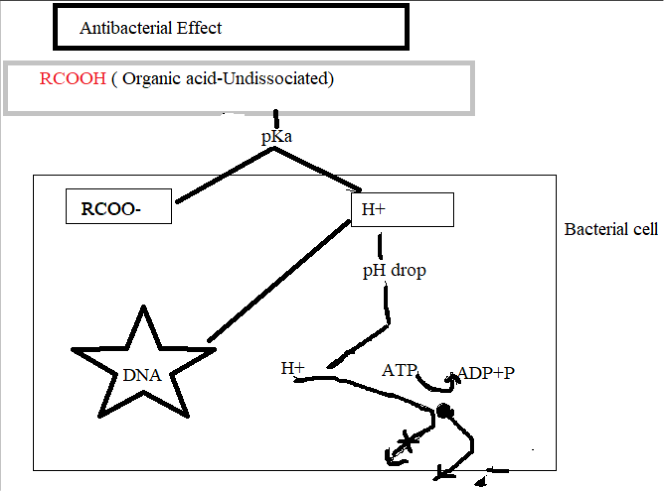 Figure 1
Introduction
Poultry is one of the fastest growing industry in India as well as in the world. India is ranking third in egg production and fourth in meat production which indicates the need for increasing production to combat the problem of malnutrition (Poultry Sector in India 2017) [33] . The poultry sector is continuously in look for new feed additives in order to improve the feed efficiency and health of poultry birds. The ban on the use of antibiotics as growth promoters in EU since 2006 permitted the finding of alternative to antibiotics in farm animal nutrition (Attia et al., 2006; 2012) [2,3] . Alternative strategies comprising of organic acids and their salts, probiotics, prebiotics and enzymes were developed to cope up with antibiotic residual problem in meat which can ultimately give rise to antibiotic resistance issue. One such substitute was the use of organic acids as a feed additive in the animal production. Organic acids stimulate the epithelial growth of the intestinal wall (Langhout and Sus, 2005) [24] . Dietary organic acids and their salts are able to inhibit the growth of detrimental microbes in the feed and subsequently maintains the level of beneficial bacteria in the gastrointestinal tract. In addition, they not only decrease the pH of the gastro-intestinal tract but also increases the solubility, digestion and absorption of the nutrients (Vogt et al., 1981; Patten and Waldroup, 1988 and Skinner et al., 1991) [47,31,42] . These studies would be related to the source, the amount of organic acids used, location, environmental condition and the composition of the diets (Gama et al., 2000) [16] . Gut health is one of the major factors upsetting the performance of birds and thus the economics of poultry production and hence the profitability of an enterprise (Samik et al., 2007) [40] . Gut microflora has a noteworthy effect on gut health, host nutrition and growth performance by intermingling the nutrient utilization and development of gut system of the host (Barrow, 1992) [5] . Broilers are always under the threat from pathogens like Escherichia coli, Salmonella, Clostridium spp. etc., so, the practice of addition of sub-therapeutic dosage of antibiotics in feed as additives to achieve protection from specific intestinal pathogens and as growth promoter is increasing day by day though there is a ban on use of it (Dibner and Richards, 2005) [10] . Organic acids are either simple monocarboxylic acids (formic, acetic, propionic and butyric acid) or carboxylic acids with hydroxyl group (lactic, malic, tartaric and citric acid). In undissociated form, they penetrate the semi-permeable membrane of bacterial cell wall, enters the cytoplasm and decrease the internal pH affecting the enzyme system (e.g. decarboxylases and catalases) thus, inhibiting glycolysis, preventing active transport and interfering with signal transduction. Hence, the supplementation of organic acids in feed instead of sub-therapeutic dosage of antibiotics is being seriously considered, particularly in the context of reservations in using antibiotic as a feed additive. The use of organic acids has been reported to protect the young chicks by competitive exclusion (La Ragione and Woodward, 2003) [23] , enhancement of nutrient utilization, growth and feed conversion efficiency (Denli et al., 2003) [9] . They can also stimulate pancreatic juice secretion and modifies the gut morphology in terms of villi height thus increasing the area of absorption of the nutrients (Dibner and Buttin, 2002) [11] . On the other hand, it stated that diet palatability and appetite can be influenced by organic acids (Cave, 1982) [8] .
Effect of OA on Performance
High production and better FCR is key to develop the poultry industry. Many works were done to achieve it. To increase the production rate, Antiobiotics were used but due to their harmful effect they are prohibited and alternatives are used like organic acids. Elnesr et al. (2018) [12] conducted an experiment to investigate the effect of sodium butyrate (SB) supplementation on growth of Japanese quail and it was observed that there is better FCR and high body weight as compare to control group. Vinus et al. (2017) [46] reported that basal diets containing sodium butyrate and calcium propionate @ 0.5% and 1.0% respectively showed high body weight and FCR than control group. Tomar et al. (2017) [45] conducted a study to know the effect of organic acid supplementation on performance of broiler chicken and Results indicated better (P<0.05) performance in terms of body weight gain and feed efficiency ratio in treatment group where there was 3% sorbate dietary supplementation. Fouladi et al. (2017) [14] conducted a research trial to evaluate the effects of acetic acid, lactic acid and butyric acid on the production performance of female Japanese quails and it was observed that the diets containing Basal diet +Lactic acid +Butyric acid+Acetic acid and Basal diet +Acetic acid alone considerably increased feed intake and feed conversion) and improved performance of Japanese quails. Emami et al. (2017) [13] performed an experiment to know the effects of commercial organic acid blend on male broilers challenged with E. coli K88 on performance of broilers and observed that addition of Organic acid to the diets of ETEC challenged birds either numerically or significantly improved growth performance. Ishfaq et al. (2015) [18] determined the efficacy of Acipure (citric acid, formic acid, lactic acid, propionic acid) supplementation on the performance of unsexed broiler chicken which showed that A significant (P<0.05) increase in body weight gain was observed in the group of birds fed with acidifier when compared with the group of birds fed untreated diets. The feed conversion ratio was improved and mortality reduces. The growth promoter effects of acidifiers are attributed to their ability to limit the growth of potential pathogens in the digestive tract of animals (Luckstadt et al., 2004; 2008) [26,27] . Thus, the digestive tract remains healthy, functions more efficiently and more nutrients are available for absorption. OAs' enhances the digestibility of protein and amino acid by increasing gastric proteolysis. They reduce gastric pH which may boost the action of pepsin (Kirchgessner and Roth, 1988) [22] during proteolysis which activates the release of gastrin and cholecystokinin hormones and regulate the digestion and assimilation of protein (Hayat et al., 2014) [17] and play a significant role in better utilization of the available nutrients resulting in improved growth rate and feed conversion efficiency (Denli et al., 2003) [9] .
Effect of OA on Gut health
Elnesr et al. (2018) [12] determined the effect of dietary sodium butyrate (SB) supplementation on histomorphometry of intestine and immune organs of Japanese quails and significantly improve villus height and width of intestine and morphometry of immune organs in organic acid supplemented group. Vinus et al. (2017) [46] evaluated the effect of dietary supplementation of salts of organic acids on gut health of broilers and result showed that, pH was reduced significantly (P<0.05) in treatment groups where diet supplemented with organic acid. There was significant improvement was observed in villus height and crypt depth in all treatment groups and Lowest Coliform bacteria (log CFU/g.) was recorded in treatment group. Higher duodenal villi height and crypt depth observed in of organic acids or probiotics alone or in combination on gut health of broiler chickens when diet was supplemented with acidifiers and the dietary treatment dramatically improved gut microflora by decreasing the population of Escherichia coli and increasing the Lactobacillus spp.:E. coli ratio. (Rodjan et al. 2017) [37] . Nicodeme et al. (2017) [29] studied the effect of organic acids and multispecies probiotic on gut microbial load (Campylobacter) in broilers and led to a slight but reduction of pathogenic microorganisms. Kazempour and Jahanian (2017) [21] evaluated the effect of dietary supplementation of organic acids (OA) on gut microbiota and concluded that dietary supplementation of OA reduced (P<0.01) ileal enumeration of Salmonella and the lowest (P<0.05) Escherichia coli count. Fouladi et al. (2017) [14] investigated the effect of organic acids supplement on gut microflora in female Japanese quails (Coturnix coturnix japonica) and results showed that the diets containing BD+LA and BD+BA significantly decreased the E.Coli and Salmonella population in the gastrointestinal tract. Awaad et al. (2016) [4] studied the effect of Na-butyrate supplementation on gut integrity of experimentally induced salmonella enteritidis in broiler chicks and Gut integrity of NaB supplemented groups showed significant increase in villi height, crypt to depth ratio and had positive effect in maintenance of healthy intestinal epithelial cells. The organic acids in their un-dissociated form are able to pass through the bacterial cell membrane into the cell, where they dissociate in H+ ions which lowers the pH of the cell and RCOO-ions that can disrupt normal cell function and protein synthesis. (Luckstadt et al., 2004; Luckstadt, 2008) [26,27] . Adding OAs to feed can lower gastric pH which accelerates the conversion of pepsinogen to pepsin, thereby improving the absorption rate of proteins, amino acids and minerals (Park et al., 2009) [30] .
Effect of OA on Biochemical and haematological parametrs
Elnesr et al. (2018) [12] showed the effect of dietary sodium butyrate (SB) supplementation on blood biochemistry and haematology where there is significant change observed in case of total protein and cholesterol. Supplementation of organic acids reduced meat cholesterol level when Vinus et al. (2017) [46] studied the effect of dietary supplementation of salts of organic acids on biochemical parameters of broilers. Fouladi et al. (2017) [14] performed an experiment to evaluate the effects of acetic acid (AA), lactic acid (LA) and butyric acid (BA) on the serum biochemical parameters on female Japanese quails and observed that diets containing BD+AA and BD+LA alone increased serum cholesterol, HDL, albumin, globulin and total protein and the groups containing BD+AA and BD+LA decreased triglyceride contents in serum. Seifi et al. (2015) [41] investigated the impacts of acetic acid on blood biochemicals of broiler chickens and increased the blood urea but other serum components did not influenced by addition of acetic acid to the ration. Ramigani et al. (2015) [35] determined the effect of dietary supplementation of organic acids on serum biochemical profile of broiler birds where higher serum total protein, albumin, globulin levels and decreased cholesterol level were recorded in organic acid supplemented groups. The effect of organic acid supplementation on protein metabolism may be related to improvement of intestinal amino-acids absorption in acidic conditions that consequently enhances protein synthesis (Yesilbag and Colpan, 2006) [48] .
Effect of OA on Nutrient digestibility
Tomar et al. (2017) [45] evaluated the effect of organic acid supplementation on nutrient digestibility. The retention of DM, CP and GE improved on supplementation of organic acids @ 3% of the diet and the highest (P<0.05) retention of protein was observed in broilers assigned diet supplemented with calcium sorbate @ 3% of the diet. Rodjan et al. (2017) [37] evaluated the effect of organic acids or probiotics alone or in combination on nutrient digestibility in broiler chickens. the crude fiber digestibility was found to be increased in chicks supplemented with CDOA or CDOAP relative to CD (P<.05). Ndelekwute et al. (2017) [28] evaluated the effect of organic acids (acetic, butyric, citric and formic acids) on growth and nutrient digestibility of broilers. From the study, it was concluded that 0.25% formic acid could be added to broiler diets to improve the digestibility of nutrients. Thirumeignanam et al. (2006) [44] studied the effect of dietary supplementation of organic acids on nitrogen retention. The increased nitrogen retention in organic acid treated groups was attributed to the increased digestibility of crude protein.
As pH reduces in the upper part of the GIT, there may be increase in nutrient digestibility. Due to reduced pH in the stomach, pepsinogen and other zymogens get activated by adjusting gastric acidity closer to that required for optimal activity resulting in increased enzyme activity and improve the digestion of proteins (Jongbloed et al. 2000) [19] . OAs raised gastric proteolysis and improved the digestibility of protein and amino acids by reducing pH of the chime and thus enhanced the digestibility of protein (Samanta et al., 2010) [39] .
Effect of OA on carcass production
Peyman et al. (2014) [32] conducted an experiment to evaluate the effect of organic acids supplementation (acetic, lactic and butyric acids) in the basal diet and their effects on carcass parameter on male Japanese quails. increase in the intestinal weight. Bonos et al. (2014) [6] studied the carcass characteristics of Japanese quails as affected by sex or mannan oligosaccharides and calcium propionate. Results of the study revealed that the female quails showed increased carcass weight and liver to live weight percentage. Salmanzadeh et al. (2013) [38] evaluated the effect of dietary supplementation of butyric acid on carcass traits of Japanese quails. it was found that dietary supplementation with high level of butyric acid improved carcass traits by increasing surface absorptive area which promoted nutrient assimilation sustained performance of Japanese quails. Abdel-Mageed (2012) [1] revealed the effect of using organic acids on carcass parameters of Japanese quails fed optimal and sub-optimal energy and protein levels. It was observed that using dietary butyric acid at a level of 0.2% in Japanese quail diets containing sub-optimal energy and protein levels helped in improving quail performance and carcass yield. Leeson et al. (2005) [25] conducted an experiment to study the effect of butyric acid on the carcass yield of broiler chickens. The results showed that 0.2% of butyric acid could maintained the performance and carcass quality of broilers, especially in vaccinated birds challenged with coccidiosis.
Effect of organic acids on egg production
Ravinder et al., (2016) [36] was conducted an experiment to evaluate the effect of supplementing different levels of salts of organic acid in the laying hen's diet on egg quality parameters. Egg production was more profitable at 0.5% level of sodium butyrate and 0.5% level of calcium propionate which reduced the feed cost per dozen eggs and per kg egg mass production without affecting the egg quality. Effect of dietary available phosphorus and organic acids on the performance and egg quality of laying hens was studied by Park et al, (2009) [34] . Hen-housed egg production was highest in the Available Phosphorous 0.3 + Organic Acid 0.2 treatment group. Effect of supplementation of organic acids on laying Performance, body fatness and egg quality of hens was studied by Rahman et al., (2008) [34] and results indicated that Inclusion of organic acids improved egg shell thickness (P<0.05) while significantly reduced albumen index (P<0.05). Incorporation of organic acids attributed to significant increase per cent albumen (P<0.01) and significant decrease in yolk per cent (P<0.05). Soltan, M. A.(2008) [41] evaluated the effect of dietary supplementation of organic acid in laying hens and observed that organic acid supplentation at the level of 780 ppm of laying hens improve persistence of laying eggs and shell quality.
Conclusion
The results from the cited literature showed that organic acids at different dose rate and different form have beneficial effect on poultry species like chicken, Quail, etc. OAs' increases the gastric proteolysis by enhancesing the digestibility of protein and amino.), enhancement of nutrient utilization, growth and feed conversion efficiency). They can also promote pancreatic juice secretion and modifies the gut morphometry by increasing villi height and decreasing intestinal thickness and therefore increasing the area of absorption of the nutrients which improve performance of birds by improving FCR, Body weight and Body weight gain. Due to decrease in pH in Upper part of GIT and reducing microbial competition with the host for nutrients and endogenous nitrogen losses, there is increase in nutrient absorption. Among various alternatives, organic acid considered as most promoising growth promoter which improve poultry production.
Figures and tables from the paper
References
48 in the original paper- Abdel-Mageed MA. Effect of using organic acids on performance of Japanese quail fed optimal and suboptimal energy and protein levels 2. Butyric acid. Egypt. Poult. Sci. 2012; 32(3):625-644.
- Attia YA, Bohmer BM, Roth-Maier DA. Responses of broiler chicks raised underconstant relatively high ambient temperature to enzymes, amino acid Supplementations, or diet density. Arch. Geflugelkd. 2006; 70:80-91.
- Attia YA, Ellakany HF, Abd El-Hamid AE, Bovera F, Ghazaly SA. Growing and laying performance of Japanese quail fed diet supplemented with different concentrations of acetic acid. Ital. J Anim. Sci. 2012; 12:e37.
- Awaad MHH, Wafaa A, Abd EI Ghany Nasef SA, Medhat S, Halwany EI et al. Effect of Na-Butyrate supplementation on electromicroscopy, virulence gene expression analysis and gut integrity of experimentally induced salmonella enteritidis in broiler chickens. Asian J. of Poult. Scie. 2016; 10(3):126-133.
- Barrow PA. Probiotics for chickens. In: Probiotics. Ed. Fuller, R., Chapman and Hall, London, 1992, 224-257.
- Bonos E, Christaki E, Florou-Paneri P. Effects of dietary Mannan-oligosaccharides and Calcium formate on performance and egg quality of Japanese quail. J Food Sci. Eng. 2011; 1(4):289-296.
- Bozkurt M, Kucukyilmaz K, Catli AU, Cinar M. The effect of single or combined dietary supplementation of prebiotics, organic acid, and probiotics on performance and slaughter characteristics of broilers. S Afr J Anim Sci. 2009; 39:197-205.
- Cave NAG. Effect of dietary short and medium chain fatty acids on feed intake by chicks. Poult. Sci. 1982; 61:1147-1153.
- Denli M, Okan F, Celik K. Effect of dietary probiotic, organic acid and antibiotic supplementation to diets on broiler performance and carcass yield. Pakistan Journal of Nutrition. 2003; 2:89-91.
- Dibner JJ, Richards JD. Antibiotic growth promoters in agriculture: history and mode of action. Poult. Sci. 2005; 84:634-643.
- Dibner JJ, Buttin P. Use of organic acids as a model to study the impact of gut microflora on nutrition and metabolism. Journol of Applied Poultry Research. 2002; 11(4):453-463.
- Elnesr SS, Ropy A, Abdel-Razik AH. Effect of dietary sodium butyrate supplementation on growth, blood biochemistry, haematology and histomorphometry of intestine and immune organs of Japanese quail. The animal consortium. 2018; 13(6):1234-12442.
- Emami NK, Daneshmand A, Zafari NS, Graystone EN, Broom LJ. Effects of commercial organic acid blends on male broilers challenged with E. coli K88: Performance, microbiology, intestinal morphology and immune response. Poultry Science, 2017, 1-10.
- Fouladi P, Ebrahimnezhad Y, Aghdam HS, Maheri N, Ahmadzadeh A. Effects of organic acids supplement on performance,egg traits, blood serum biochemical parameters and gut microflora in female Japanese quail (Coturnix coturnix Japonica).Brazilian J Poult. Sci. 2018; 20(1):133-144.
- Freitag M. Organic acids and salts promote performance and health in animal husbandry. In: Lückstädt C, editor. Acidifiers in animal nutrition-a guide for feed International Journal of Veterinary Sciences and Animal Husbandry http://www.veterinarypaper.com preservation and acidification to promote animal performance. Nottingham, UK: Nottingham University Press, 2007, 1-11.
- Gama NMSQ, Olivera MBC, Santin E, Berchieri J. Supplementation with organic acids in diets of lying hens. Ciencia Rural. 2000; 30:499-502.
- Hayat TA, Sultan RU, Khan Khan S, Zahoor ULH, Ullah R, Aziz T. Impact of organic acid on some liver and kidney function tests in japanese Quails, Coturnix coturnix japonica. Pakistan J Zool. 2014; 46:1179-1182.
- Ishfaq A, Rather SA, Mir AH, Gupta M. Effect of Acipure (feed acidifier) on the growth performance, mortality and gut pH of broiler chickens. IJLR. 2015; 5(10):40-46.
- Jongbloed AW, Mroz Z, Kemme, PA. The effects of microbial phytase, organic acids and their interaction in diets for growing pigs. Livest Prod Sci. 2000; 67:113122.
- Kaczmarek SA, Barri A, Hejdysz M, Rutkowski A. Effect of different dose coated butyric acid on growth performance and energy utilization in broilers. Dept. Anim. Nutri. and Feed Management, Poznan University of Life Sciences, Wolynska 33, 60-637 Poznan, Poland; and Animal Nutrition and Health EMEA Toekomstlaan 42, Herentals, Belgium, 2009.
- Kazempour F, Jahanian R. Effects of different organic acids on performance, ileal microflora, and phosphorus utilization in laying hens fed diet deficient in non-phytate phosphorus. Animal feed scienc and technology, 2017.
- Kirchgessner M, Roth FX. Nutritive effects of organic acids in piglet rearing and pig fattening. Ubersichten zur Tierernahrung. 1988; 16:93-108.
- La Ragione, Woodward. Competitive exclusion by Bacillus subtilis spores of Salmonella enterica serotype Enteritidis and Clostridium perfringens in young chickens. Veterinary Microbiology. 2003; 94(3):245-256.
- Langhout P, Sus T. Volatile fatty acids improve performance and quality. International Poultry Production. 2005; 13(3):17.
- Leeson S, Namkung H, Antongiovanni Lee EH. Effect of butyric acid on the Performance and carcass yield of broiler chickens, Poult. Sci. 2005; 84:1418-1422.
- Luckstadt C. The use of acidifiers in fish nutrition. CAB Reviews: Perspectives in Agri. Vet. Sci. Nutri and Natural Reso. CAB Int. 2008; 3:44.
- Luckstadt C, Senkoylu N, Akyurek H, Agma A. Acidifier -a modern alternative for antibiotic free feeding in livestock production with special focus on broiler production. Veterinarija Ir Zootechnika. 2004; 27(49):9193.
- Ndelekwute EK, Unah UL, Udoh UH. Effect of dietary organic acids on nutrient digestibility, faecal moisture, digesta pH and viscosity of broiler chickens. MOJ Anat and Physiol. 2019; 6(2):40-43.
- Nicodeme GM, Adeline HS, Fabrizio Tatone A, Fabien S, Maxime Q, Segolene Q et al. Effect of organic acids and multispecies probiotic on performance in broilers reared under free range conditions. Frontiers in Microbiology. 2017; 8:828.
- Park KW, Rhee AR, Um Paik JS. Effect of dietary available phosphorus and organic acids on the performance and egg quality of laying hens. J Appl. Poult. Res. 2009; 18:598-604.
- Patten JD, Waldroup PW. Use of organic acids in broiler diets. Poultry Science. 1988; 67:1178-1182.
- Peyman F, Ebrahimnezhad Y, Aghdam SH, Maheri SN, Ahmadzadeh. Effects of Organic Acids Supplement on Performance and Gut Parameters in Male Japanese quail (Coturnix Coturnix japonica). Biological Forum an Int. J. 2014; 6(2): 127-134.
- Poultry Sector in India. Poultry sector, opportunities and challenges in India. Netherlands business support office Hyderabad, India R.V.O.H, 2017.
- Rahaman MS, Howlider MAR, Mahiuddin M, Rahman MM. Effect of Supplementation of Organic Acids on Laying Performance, Body Fatness and Egg Quality of Hens. Bang. J Anim. Sci. 2008; 37(2):74-81.
- Ramigani VR, Ramana JV, Rao SD, Shakila S, Suresh J. Effect of dietary supplementation of organic acids on digestibility of nutrients and serum biochemical profile of broiler chicken. Ind. J. Ani. Nutri. 2015; 32(3):300-304.
- Ravinder D, Raj Singh B, Sajjan S, Chandrashekhar SP, Lalit. The effect of dietary supplementation of salts of organic acid on production performance of laying hens. Vet World. 2016; 9(12):1478-1484.
- Rodjan P, Soisuwan K, Thongprajukaew Y, Theapparat S, Khongthong, Jeenkeawpieam J et al. Effect of organic acids or probiotics alone or in combination on growth performance, nutrient digestibility, enzyme activities, intestinal morphology and gut microflora in broiler chickens. J Anim Physiol Anim Nutr. 2017, 1-10.
- Salmanzadeh M. Evaluation of dietary butyric acid supplementation on small Intestinal morphology, performance and carcass traits of Japanese quails. Ilkhchi Branch, Islamic Azad University, Ilkhchi, Iran, 2013.
- Samanta S, Haldar S, Ghosh TK. Comparative efficacy of an organic acid blend and bacitracin methylene disalicylate as growth promoters in broiler chickens: effects on performance, gut histology, and small intestinal milieu. Vet. Med. Int. 2010, 645-650.
- Samik KP, Halder G, Mondel MK, Samanta G. Effect of organic acid salt on the performance and gut health of broiler chicken. J Poult. Sci. 2000; 44:389-395.
- Seifi S, Sayrafi R, Khoshbakht R, Gilani A. Effects of dietary acetic acid on intestinal microbiota, serum components, internal organs and performance of broilers. Global J. Anim. Sci. Research. 2015; 3(2):536-543.
- Skinner JT, Izat AL, Waldop PW. Research note: fumaric acid enhances performance of broiler chickens. Poultry Science. 1991; 70:1444-1447.
- Soltan MA. Effect of Dietary Organic Acid Supplementation on Egg Production, Egg Quality and Some Blood Serum Parameters in Laying Hens. International Journal of Poultry Science. 2008; 7(6).
- Thirumeignanam D, Swain RK, Mohanty SP, Pati PK. Effect of dietary supplementation of organic acids on performance of broiler chicken. Indian J Anim. Nutr. 2006; 23(1):34-40.
- Tomar JS, Nayak S, Baghel RPS, Malapure CD, Govil K, Thakur D. Organic acids supplementation in the diets and performance of broiler chicken. Indian J Anim. Nutr. 2017; 34(4):458-462.
- Vinus MA, Akbar BS, Tewatia Sushil K. Effect of dietary supplementation of salts of organic acids on gut morphology and meat quality of broilers. Indian J Anim. Res. 2017; 52(12).
- Vogt H, Matthes S, Harnisch S. The influence of organic acids on the performance of Broilers. 2. Communication. Archive for Poultry Customer 46:223-227 hens. Archives for poultry studies. 1981; 45:221-232.
- Yesilbag D, Çolpan I. Effects of Organic Acid Supplemented Diets on Growth Performance, Egg Production and Quality and on Serum Parameters in Laying Hens, Revue Med. Vet. 2006; 157(5):280-284.
Cited by 4
From OpenAlex, OpenCitations and reference lists read by Scinovex
- The effects of organic acids on broiler chicken nutrition: A review ↗
Prosper Chukwudi, Paulinus Ikenna Umeugokwe, Nnanna Ephraim Ikeh, Bright Chigozie Amaefule · Animal Research and One Health · 2024
Abstract To meet the requirements of the modern chicken industry, high levels of productivity and efficient feed conversion are necessary. This can be partially accomplished by using particular feed additives. The prohibition of antibiotic usage has compelled researchers to explore alternative options to antibiotics. Organic acids and their salts are commonly employed in poultry farming as substitutes for antibiotic growth…
❝ 32PDF - Comparative analysis of the nutritional, physicochemical, and bioactive characteristics of Artemisia abyssinica and Artemisia arborescens for the evaluation of their potential as ingredients in functional foods ↗
Qais Ali Al‐Maqtari, Norzila Othman, Jalaleldeen Khaleel Mohammed, Amer Ali Mahdi, Waleed AL‐Ansi, Abeer Essam Noman et al. · Food Science & Nutrition · 2024
Abstract Artemisia abyssinica and Artemisia arborescens are unique plants that show significant bioactive properties and are used for the treatment of a variety of diseases. This study assessed the nutritional values, functional properties, chemical composition, and bioactive attributes of these plants as functional nutritional supplements. Compared to A. arborescens, A. abyssinica had higher fat (4.76%), fiber (16.07%), total carbohydrates (55.87%),…
❝ 3PDF - Effect of Adding Tartaric and Salicylic Acids and Their Mixture to Water and Diet in Egg Quality Characteristics of Aged Laying Hens ↗
Ammar Taleb Dhiab, Younus Abbas Khalaf Al-Saadi · Diyala Agricultural Sciences Journal · 2021
The study aimed to know the effect of adding tartaric and salicylic acids alone and a mixture of water and diet on the egg quality characteristics of aged laying hens for brown Lohmann. 210 laying hens 60 weeks old were used The duration of the experiment, which lasted 112 days(16 weeks), was divided into four equal periods at a rate…
❝ 2PDF - Butirato de sodio protegido con grasa en la dieta de pollos de engorde ↗
Gastón Adolfo Castaño, Jaime Andrés Betancourt, Valentina Gómez, Susana García, Yeny Loaiza, Laura Hernández et al. · Revista Colombiana de Ciencia Animal - RECIA · 2023
El butirato es una alternativa a los antibióticos promotores de crecimiento debido a su acción sobre bacterias patógenas, vellosidades intestinales y sistema inmune. El objetivo de este trabajo fue determinar el efecto de varios niveles de butirato de sodio protegido con grasa en la dieta de pollos de engorde sobre el desempeño y la canal. Se utilizaron 160 aves alojadas…
❝ 0PDF