
Research article · 2021 · Full text
International Journal of Veterinary Sciences and Animal HusbandryTreatment of chronic gastritis in an adult labrador working dog: A case study
Volume 6(3) · Pages 22–24 · DOI: 10.22271/veterinary.2021.v6.i3a.355 ↗
Research areasClinical Nutrition and GastroenterologyDiet and metabolism studies
Abstract
Author-writtenGastritis is a common condition in dogs resulting due to inflammation of the gastric mucosa. The stomach lining can be subjected to irritation by several substances including foreign bodies and food components, which may disagree with the digestive system of canine. An adult Labrador working male dog, named as “Diesel” aged eight years and six months was presented with complaints of decreased feed intake and stomach upset. Temperature and general activity remained normal. Vomiting with foamy bile was seen twice a day. All the hemato-biochemical parameters were within normal range except for blood urea, serum creatinine and alkaline phasphatse, which showed higher values. Based on the clinic-biochemical presentation, the case was diagnosed as chronic gastritis and the treatment regime comprising of fluid therapy, antiemetics, antacids and antibiotics was administered. The animal responded to the treatment and recovery was uneventful.
Summary
Source-checkedPlain-language reading of the full paper, prepared with AI and checked against the text. Each point links to the authors' own words.
Why it matters
- Gastritis is a frequent condition in dogs characterized by inflammation of the stomach lining (gastric mucosa). View evidence ↗
- The inflammation of the stomach lining can be caused by irritants such as food components or foreign bodies. View evidence ↗
- Chronic gastritis lasts for two weeks or more and can progress to more severe issues like infections, gastrointestinal blockages, or ulcers. View evidence ↗
The question
- The study aimed to treat a case of chronic gastritis in an adult Labrador dog using a combination of fluid therapy, antibiotics, antacids, and antiemetics. View evidence ↗
What they did
- Clinical signs observed in the dog included vomiting with foamy bile occurring twice daily. View evidence ↗
- The treatment protocol included withholding food for 24 to 48 hours while providing small amounts of water, followed by the gradual reintroduction of a low-fat diet consisting of oatmeal and milk. View evidence ↗
- Pharmacological treatment included Ranitidine (2mg/kg orally), Famotidine (0.5 mg/kg), Omeprazole (1 mg/kg orally), Pantoprazole (1 mg/kg I.V.), and Metoclopramide (1-2 mg/kg/24 hrs I.V.). View evidence ↗
What they found
- Initial biochemical tests showed elevated blood urea (63.7 mg/dl vs normal 10-50 mg/dl) and serum creatinine (2.86 mg/dl vs normal 0.9-1.4 mg/dl). View evidence ↗
- The dog exhibited hypoalbumenia, with a serum albumin level of 2.0 gm/dl compared to the normal range of 3.8-5.0 gm/dl. View evidence ↗
- Initial symptomatic treatment with antacids, appetizers, and a low-fat diet for three days resulted in no improvement. View evidence ↗
- Significant improvement was observed after five days of the comprehensive treatment course. View evidence ↗
- The dog achieved complete recovery within two weeks of treatment. View evidence ↗
What it means
- The authors suggest that a low-fat diet, such as oatmeal, milk, or curd rice, may be prescribed to facilitate a speedy recovery from chronic gastritis. View evidence ↗
Visual summary
1 visualsIllustrations explain the paper; they do not show study data.
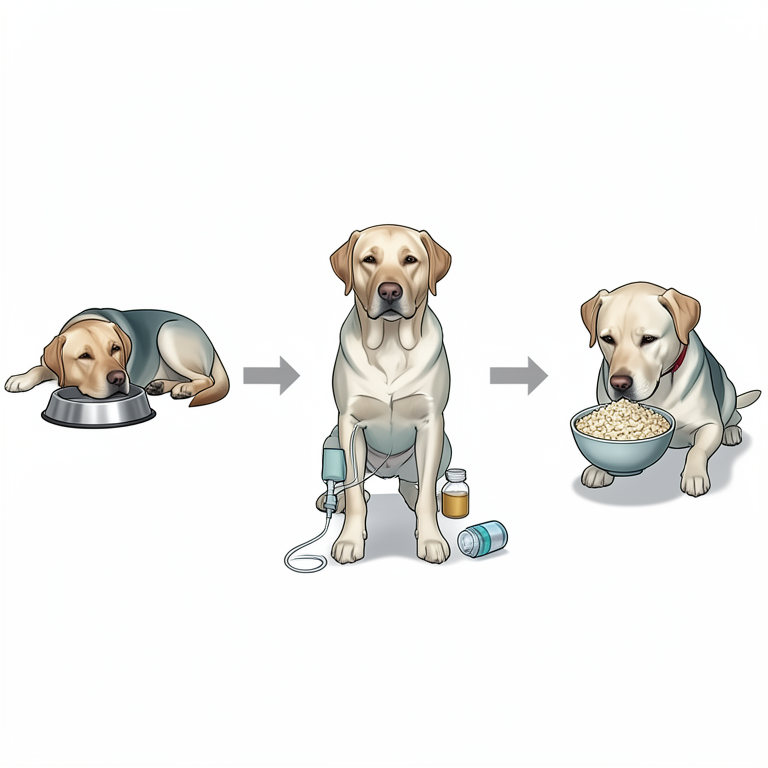
Treatment Protocol Flowchart
AI-generated conceptual illustration (adult Labrador Retriever dog). It explains the idea and does not show study data.
View source evidence ↗Figures & tables
From the original paper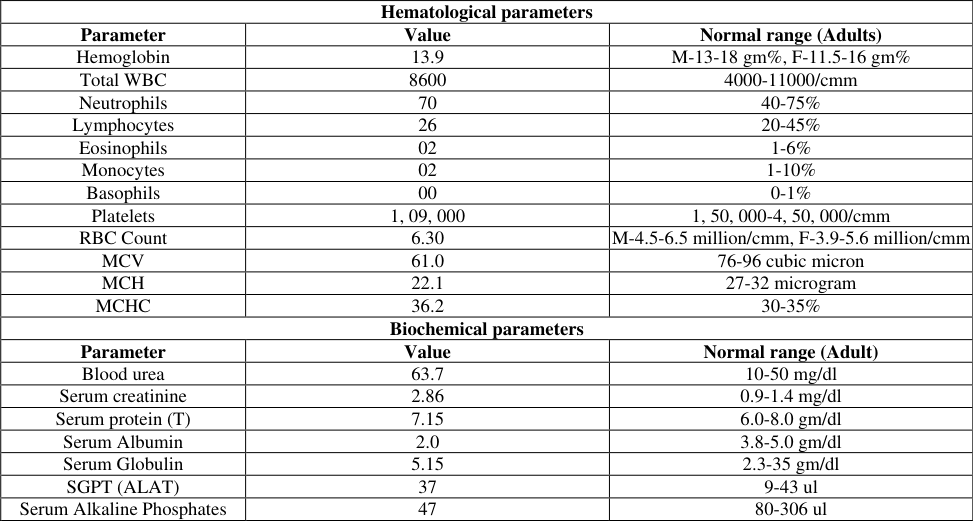 Table 1
Introduction
Gastritis is a common condition in dogs resulting due to inflammation of the gastric mucosa. The stomach lining can be subjected to irritation by several substances including foreign bodies and food components, which may disagree with the digestive system of canine. Gastritis can be acute where in clinical manifestations appear suddenly and severely, or chronic, where it appears steadily and worsen over the period of time. Gastric mucosa becomes inflamed and the prominent symptoms include excessive vomiting with yellow foamy bile, decreased appetite or anorexia, dehydration or increased thirst, diarrohea and abdominal discomfort or pain. In acute gastritis, these symptoms can be severe, which may be relived within 24 hours. Chronic gastritis typically last for two or more weeks and worsen over time, leading to other conditions including ulcers, gastrointestinal blockage, and infection. (Clarke, 2020).
Case history and clinical findings
An adult Labrador working dog, Trade Tracker, of the unit, 33 Battalion, Sashastra Seema Bal (SSB), Kewti, P.O. Bhanupratappur, Uttar Bastar, Dist. Kanker, Chattisgarh, India named as "Diesel" aged around eight years and six months was presented with complaints of decreased feed intake and stomach upset. Temperature and general activity remained normal. Vomiting with foamy bile was seen twice a day. The complete blood count (CBC) and serum biochemical values are presented in Table 1. Appetizers and antacids were given initially as a symptomatic treatment with low fat diet for three days, however, no improvement was observed in the condition of the dog. A course of antibiotics was also given along with antiemetics and gastroprotectives to treat any bacterial infection. The dog showed minimal interest in feeding because of abdominal discomfort.
| Hematological parameters | — | — |
|---|---|---|
| Parameter | Value | Normal range (Adults) |
| Hemoglobin | 13.9 | M-13-18 gm%, F-11.5-16 gm% |
| Total WBC | 8600 | 4000-11000/cmm |
| Neutrophils | 70 | 40-75% |
| Lymphocytes | 26 | 20-45% |
| Eosinophils | 02 | 1-6% |
| Monocytes | 02 | 1-10% |
| Basophils | 00 | 0-1% |
| Platelets | 1, 09, 000 | 1, 50, 000-4, 50, 000/cmm |
| RBC Count | 6.30 | M-4.5-6.5 million/cmm, F-3.9-5.6 million/cmm |
| MCV | 61.0 | 76-96 cubic micron |
| MCH | 22.1 | 27-32 microgram |
| MCHC | 36.2 | 30-35% |
| Biochemical parameters | ||
| Parameter | Value | Normal range (Adult) |
| Blood urea | 63.7 | 10-50 mg/dl |
| Serum creatinine | 2.86 | 0.9-1.4 mg/dl |
| Serum protein (T) | 7.15 | 6.0-8.0 gm/dl |
| Serum Albumin | 2.0 | 3.8-5.0 gm/dl |
| Serum Globulin | 5.15 | 2.3-35 gm/dl |
| SGPT (ALAT) | 37 | 9-43 ul |
| Serum Alkaline Phosphates | 47 | 80-306 ul |
Table text extracted from the original PDF; superscript letters are shown inline. The original table image is below.
View original table image
Intravenous fluid therapy was given for rehydration and restoration of electrolytes along with antiemetics so as to control vomiting. The food was withheld and the dog was given small amounts of water at regular intervals for 24 to 48 hours, food was gradually reintroduced in small amounts. A low fat diet included milk and oatmeal.
With above course of treatment for 5 days significant improvement was seen. Appetite resumed in due course of time, however, the dog did not recovered completely. The treatment regime which followed is enumerated in detail as under:
Fluid therapy with gastric mucosal therapy
As due to vomiting and Diarrhoea, immediate correction of hypokalemia with antispasmodics was required because hypokalemia leads to hindrance in gastric emptying (Bichard and Sherding, 2005) [4] . GI protectants in combination with drugs containing H2 receptor antagonists (cimetidine, ranitidine, famotidine), proton pump inhibitors (omperazole, pantoprazole), cryoprotectants (Sucralfate) and synthetic prostaglandins (misoprostol), were used. Ranitidine @ 2mg/kg was given orally for gastric acid suppression (Bersenas et al., 2005) [3] . Proton pump inhibitors were used as most potent agents for suppression of gastric acid secretion. Famotidine @ 0.5 mg/kg, omperazole @ 1 mg/kg orally quarterly 24 hrs and pantoprazole @ 1 mg/kg I.V. were used These drugs shield healthy and uncovered mucosa from more worm and encourage epitheliacization of gastric mucosa (Kuwayaina et al., 1991). Intravenous asministration of metclopramide @ 1-2 mg/kg/24 hrs was given as dopamine antagonist to check vomiting (Sawant et al., 2004). Antispasmodic drugs (dicyclomine) was administered for stabilization of GIT motility as well as to relieve acute abdominal pain of unclear etiology & suffering.
Antioxidant therapy
Antioxidants were used to protect gastric mucosa and epithelial membrane. Vitamin C was used which reduces oxidative damage to the gastric mucosal layer (Aditi et al., 2012) [1] . Hematocrit values show that blood urea, serum creatinine and alkaline phasphatse were higher, which were probably may be due to hypoalbumenia. The feeding included egg albumin and curd rice as gastroprotectant acted as a supportive therapy in the present case.
It is pertinent to mention that during the course of treatment the dog remained active, through with decreased appetite, vomiting sometimes with yellowish foamy bile, temperatures remained normal and urine and stool were scanty sometimes. The dog initially experienced abdominal discomfort and pain. The dog completely recovered in two weeks.
Discussion
Chronic gastritis is a common condition in dogs results from inflammation of gastric mucosa, which causes a variety of unpleasant symptoms.
If the dog consumes something unusual, then abdominal radiograph is a must for viewing anything abnormal in the stomach such as obstruction.
Ultrasound or endoscopy can also be performed to obtain a detailed view of stomach so as to help in arriving at a definitive diagnosis. Urinalysis can be employed to detect urinary tract infection, diabetes or kidney disease. The usual immediate treatment for severe gastritis symptoms in dogs includes re-hydration and restoring electrolytes to treat bacterial infection and anti-emetics to control vomiting. Whether the case is severe or minor, it is usually a good idea to withhold food and only give small amounts of water with ORS for 24-48 hours then reintroduce food gradually in small amounts.
A low fat diet like curd rice/ milk and oatmeal may be prescribed for speedy recover from chronic gastritis.
Recovery of gastritis in dogs
Most of the acute cases of gastritis will usually have a good prognosis after the dog has received adequate hydration. If there is no improvement within two days of receiving treatment, the treating veterinary doctor may reassess the situation. Vomiting, stomach discomfort will cease with the elimination of the cause. Depending on the severity of case at the time of evaluation the dog may be given treatment until the dog becomes stable enough to return to normal health. Specific instructions may be given as to medication, if needed, and the reintroduction of food.
Acknowledgement
AcknowledgementsThe author is indebted to Director General, Sashastra Seema Bal (SSB), India for providing all necessary facilities for present case study.
References
13 in the original paper- Aditi A, Graham DY. Vitamin C, gastritis and gastric disease: a historical review and update. Digestive Diseases and Sciences 2012;57(10):2504-2515.
- Amorim I, Taulescu MA, Day MJ, Catoc C, Reis CA, Carneiro F, Gastner F. Canine gastric pathology: A review. Journal of Comparative Pathology 2016;154(1):9-37.
- Bersenas AM, Mathews KA, Allew DG, Canlon PD. Effects of ranitidine, fainotidine, pantoprazole, and omperazole on intragastric ple in dogs. American Journal of Veterinary Research 2005;66(3):425-431.
- Bichard SJ, Sherding RG. Saunders Manual of small Animal Practice-E-Book. Elsevier Health Sciences 2005.
- Day MJ, Biltzer T, Mansel J. World small Animal Veterinary Association Gastro intestinal Standardization group. Histopathological standards for the diagnosis of gastro intestinal inflammation in endoscopic biopsy from the dog and cat: A report from the World Small Veterinary Association Gastrointestinal Standardization group. J Journal of Comparative Pathology 2008;138:S1-S43.
- Ettinger SJ, Feldman EC. Textbook of Veterinary Internal Medicine. Elsevier Saunders, St. Louis, Missouri, USA 2005.
- Grooters AM, Johusow SE, Sherding RG. Endoscopy case of the month: Chronic vomiting and weight loss in dog. Veterinary Medicine 1994;89(3):196-199.
- Hesta M, Ottermans C, Krammer-Lucas S, Zentole J, Hellweg P, Buyse J, Janssens GPT. The effect of vitamin C supplementation in healthy dogs on antioxidative capacity and immune parameters. Journal of Animal Physiology and Animal Nutrition 2009;93(1):26-34.
- Kuwayama H, Matsuo Y, Eastwood GL. Effects of sucralfate, lausoprazole and cimetidine on the delayed healing by hydrocortisone sodium phosphate of chronic gastric ilcers in the rat. American Journal of Medicine 1991;91(2):S15-S19.
- Patel PK, Patel SK, Dixit SK, Rathore RS. Gastritis and Peptic Ulcer Diseases in dogs: A Review. International Journal of Current Microbiology and Applied Sciences 2018;7(03):2475-2501.
- Pennick DG, Nyland TG, Kerr LY, Fisher PE. Utrasonographic evaluation of gastrointestinal disease in small animals Veterinary Radiology and Ultrasound 1990;31(3):134-141.
- Rebar AH, Macwilliams PS, Feldman B, Metzger F, Pollock R, Roche J. A guide to hematology in dogs & cats. CRC Press 2001.
- Simpson KW. Stomach. In: Canine and Feline gastroenterology. Washabhan R.J., Day, M.J., Eds, Elsevier sauders, St. Loius 2013, 606-650.