
Research article · 2019 · Full text
International Journal of Agriculture Extension and Social DevelopmentAllelopathic effect of aqueous extracts of Anagallis arvensis on Zea mays, Triticum aestivum and Pennisetum glaucum
Volume 2(2) · Pages 1–15 · DOI: 10.33545/26180723.2019.v2.i2a.25 ↗
Research areasAllelopathy and phytotoxic interactionsPlant Growth Enhancement Techniques
Abstract
Author-writtenThe study was designed to explore the allelopathic effect of Anagallis arvensis on Zea mays under laboratory condition during 2015-2016. The allelopathic influence of aqueous extracts of Anagallis arvensis on the germination, seedling growth, fresh weight and dry weight of Zea mays, Triticum aestivum and pennisetum glaucum have been determined. It was eminent that 20 g aqueous extracts of leaves and 72 h treatment present inhibitory effect on germination percentage, radical length, fresh weight and dry weight and the cause was found significantly higher than that recorded in the control treatment. The inhibitory effects were increased proportionally with increasing extract concentration and soaking duration. Treatment with 10, 20 and 30g extract has increased the germination with time. It is high in 48 h treatment while 20 g extract treatment has decreased the germination at 48h treatment. Overall 72 h treatment decreased the mean germination in all concentration. At very low concentration increased in time has less effect on germination. The result showed that at 24h the germination high with increase in concentration while at 48h the germination high with increase in concentration except 20g concentration and high duration the germination rate was low. The only exception was observed in the 10 g concentration of leaves that increased the plumule length. These findings indicate that Anagallis arvensis sown in fields which had leaf and stem litter of test plant will be adversely affected regarding germination, growth and ultimately resulting in lower yield.
Summary
Source-checkedPlain-language reading of the full paper, prepared with AI and checked against the text. Each point links to the authors' own words.
Why it matters
- Allelopathy is the process where plants release biochemicals, called allelochemicals, that can either help or harm other plants. View evidence ↗
- The weed Anagallis arvensis can cause significant agricultural damage, leading to annual yield losses between 40% and 90% in crops and grasslands. View evidence ↗
The question
- The researchers aimed to determine how aqueous extracts of Anagallis arvensis affect the germination, growth, and weight of Zea mays, Triticum aestivum, and Pennisetum glaucum. View evidence ↗
What they did
- Aqueous extracts were created by soaking 10g, 20g, and 30g of dried stems, leaves, and roots from Anagallis arvensis at three different growth stages. View evidence ↗
What they found
- Treatment with 20g of leaf extract for 72 hours inhibited the germination percentage, radical length, and both fresh and dry weights. View evidence ↗
- The inhibitory effects on the test plants increased as the concentration of the extract and the soaking duration increased. View evidence ↗
- In maize treated for 24 hours, the 20g extract was the most effective at reducing plant biomass (fresh and dry weight). View evidence ↗
- For maize treated for 24 hours, increasing the extract concentration significantly decreased seed germination and the length of the plumule and radicle compared to the control. View evidence ↗
- In wheat treated for 24 hours, seed germination decreased as the concentration of the extract increased compared to the control. View evidence ↗
- A 15g root extract decreased the fresh and dry weight of wheat and pearl millet seedlings but increased the fresh and dry weight of maize seedlings compared to the control. View evidence ↗
What it means
- The authors conclude that Anagallis arvensis has an allelopathic effect that damages the germination and early growth of the studied plant species. View evidence ↗
- The authors recommend that the studied crops should not be cultivated in areas where Anagallis arvensis is present. View evidence ↗
- Because the study was conducted in a laboratory, the authors state that greenhouse research is needed as natural growth conditions may change the results. View evidence ↗
Visual summary
1 visualsIllustrations explain the paper; they do not show study data.
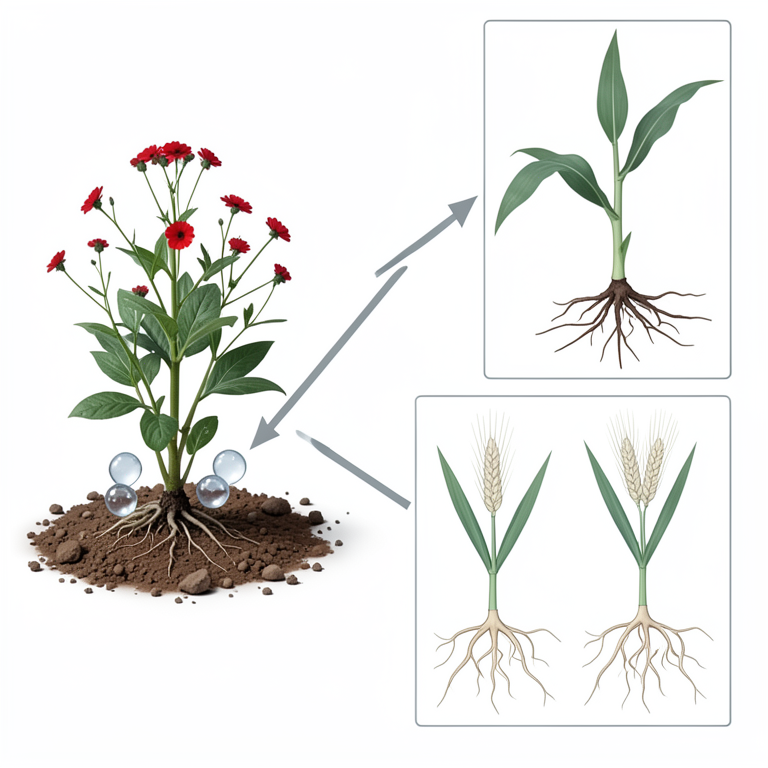
Allelopathic Interaction Concept
AI-generated conceptual illustration (Anagallis arvensis (Scarlet Pimpernel) and seedlings of Zea mays (corn), Triticum aestivum (wheat), and Pennisetum glauc). It explains the idea and does not show study data.
View source evidence ↗Figures & tables
From the original paper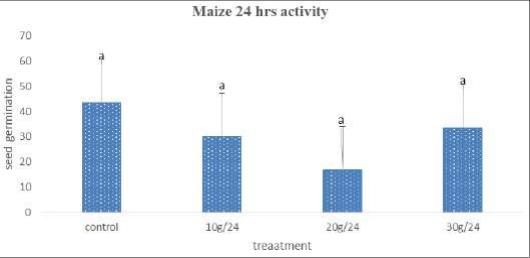 Figure 4Page 2
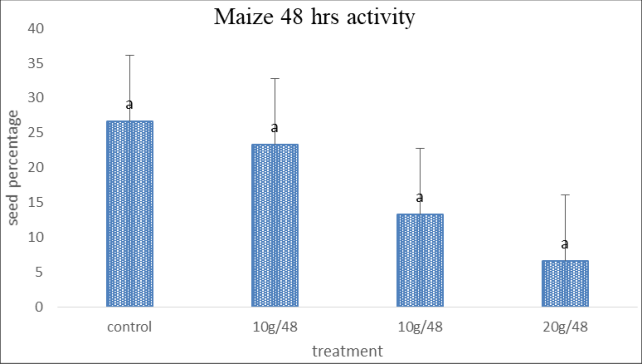 Figure 4Page 3
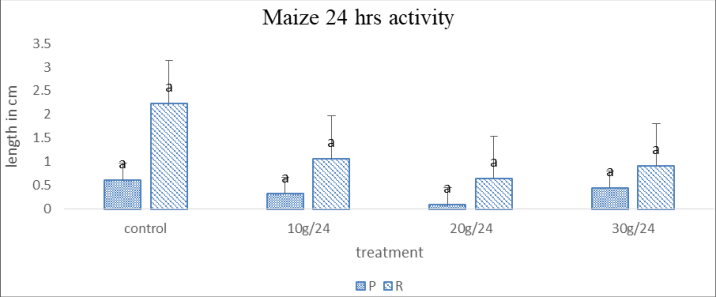 Figure 4Page 3
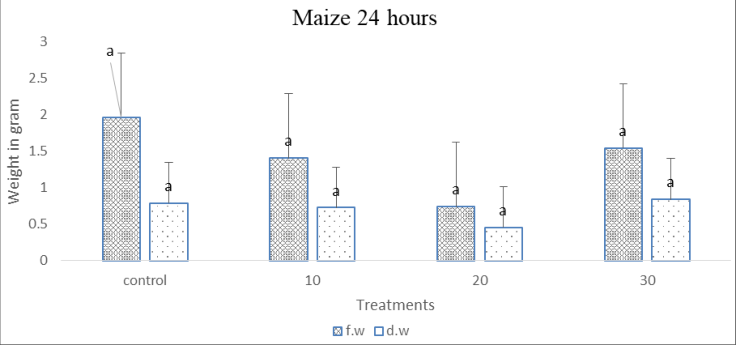 Figure 4Page 3
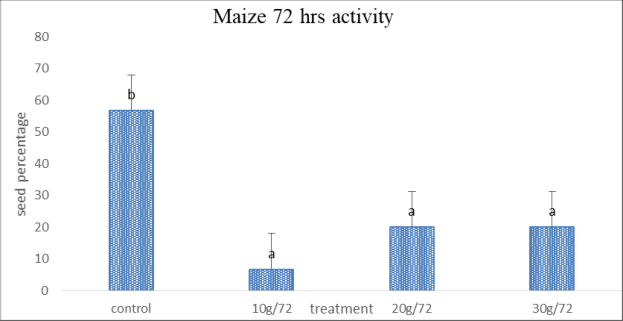 Figure 4Page 4
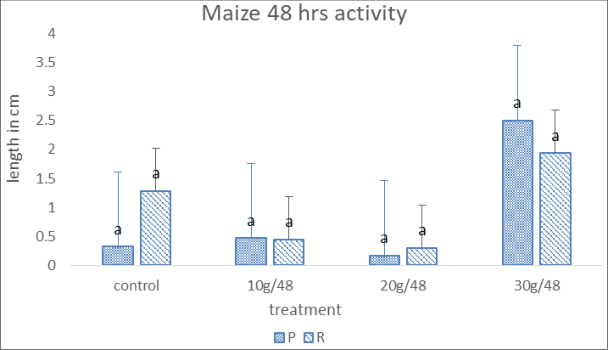 Figure 4Page 4
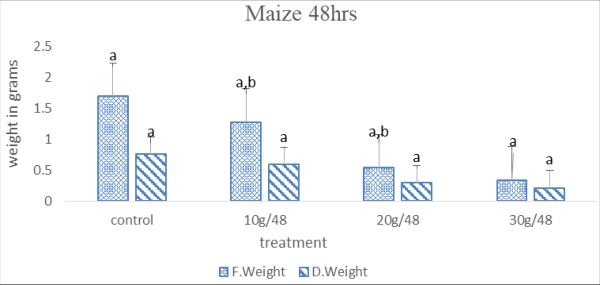 Figure 4Page 4
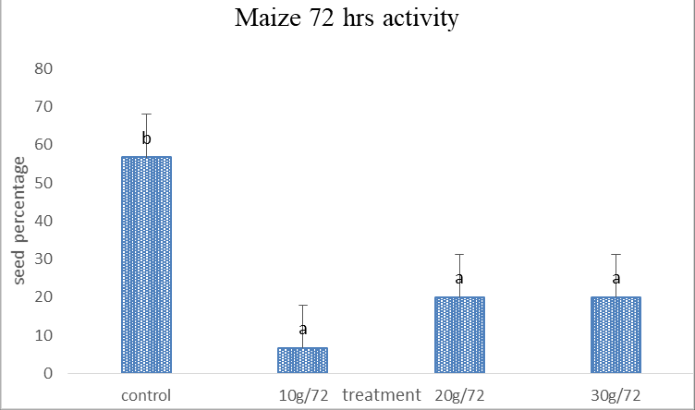 Figure 4Page 5
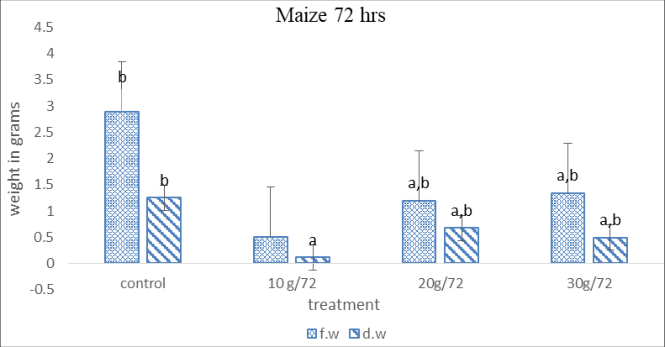 Figure 4Page 5
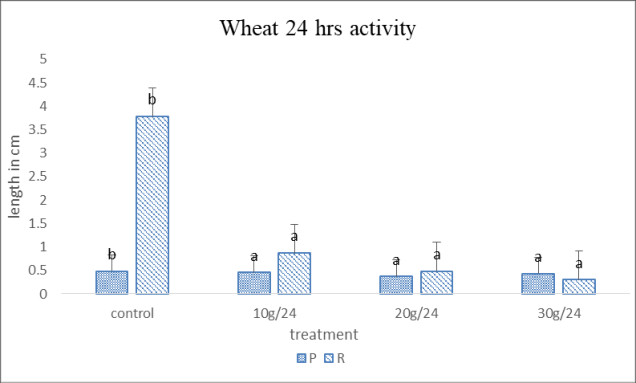 Figure 4Page 6
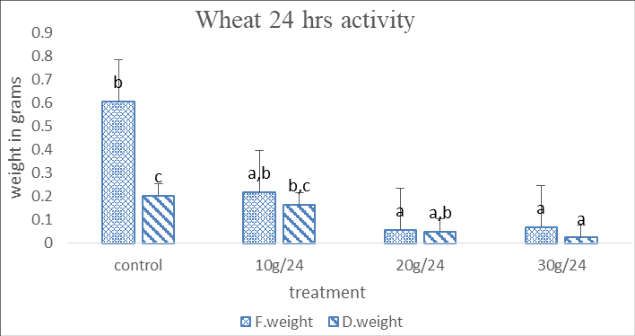 Figure 4Page 6
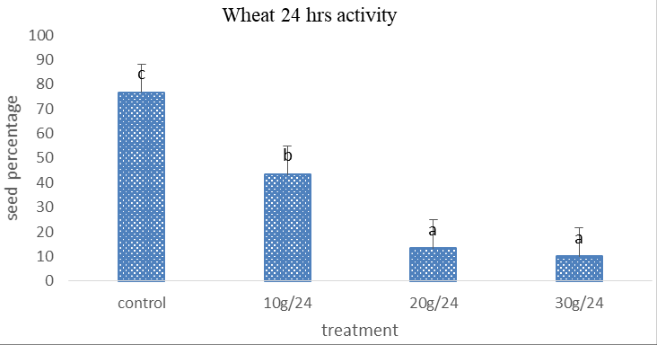 Figure 4Page 6
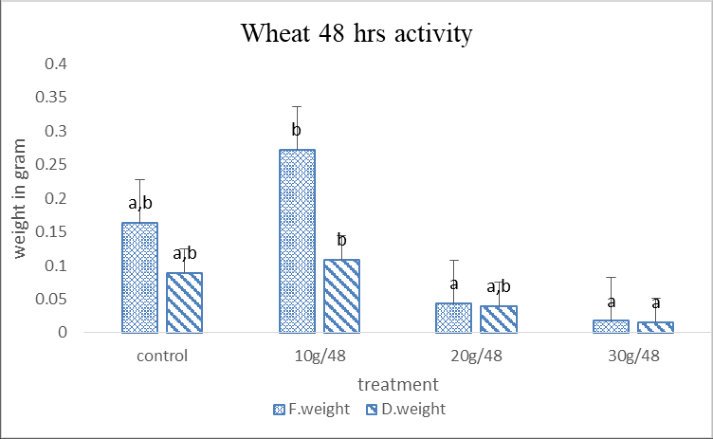 Figure 4Page 7
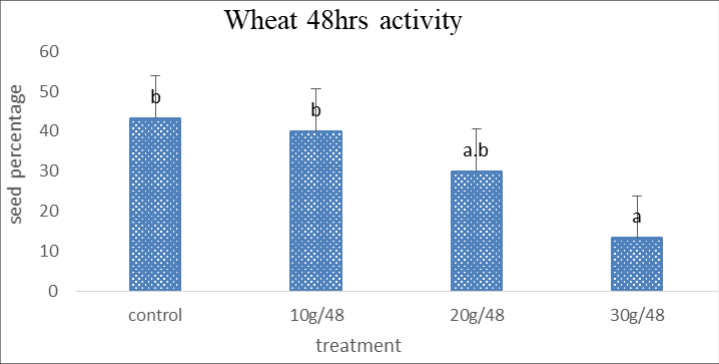 Figure 4Page 7
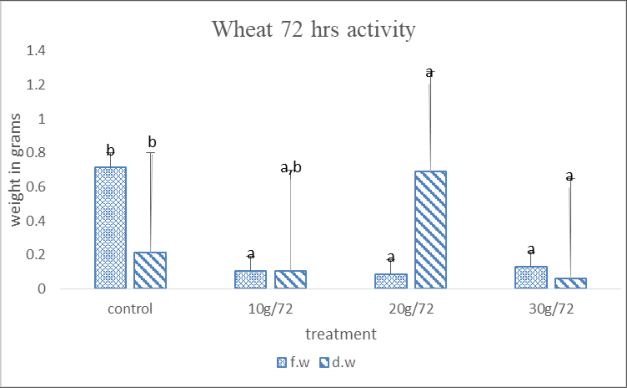 Figure 4Page 8
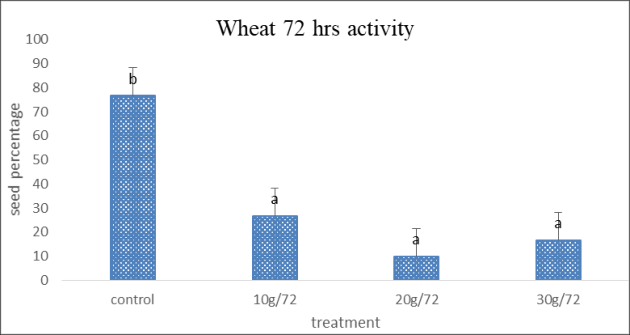 Figure 4Page 8
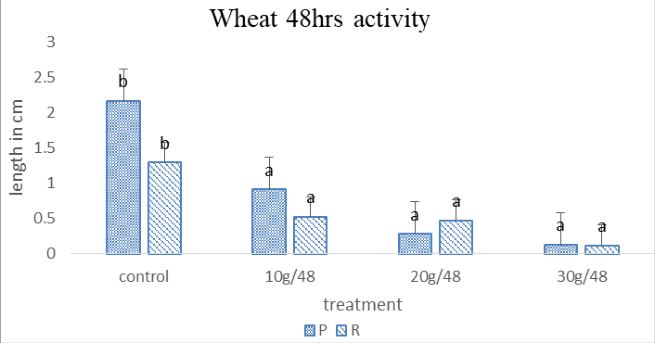 Figure 4Page 8
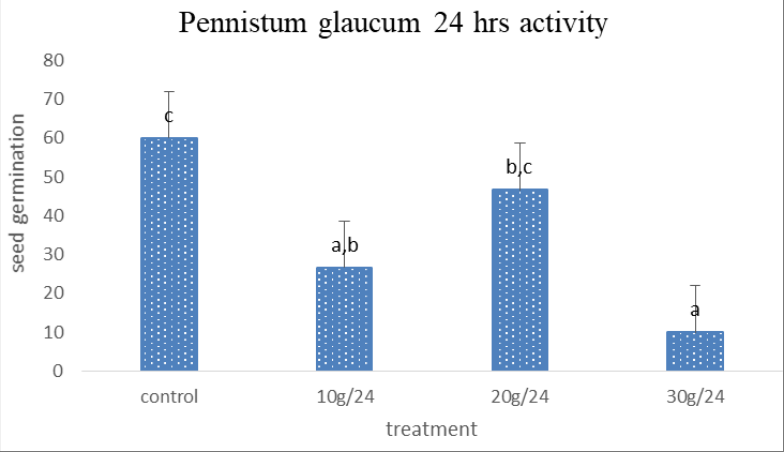 Figure 4Page 9
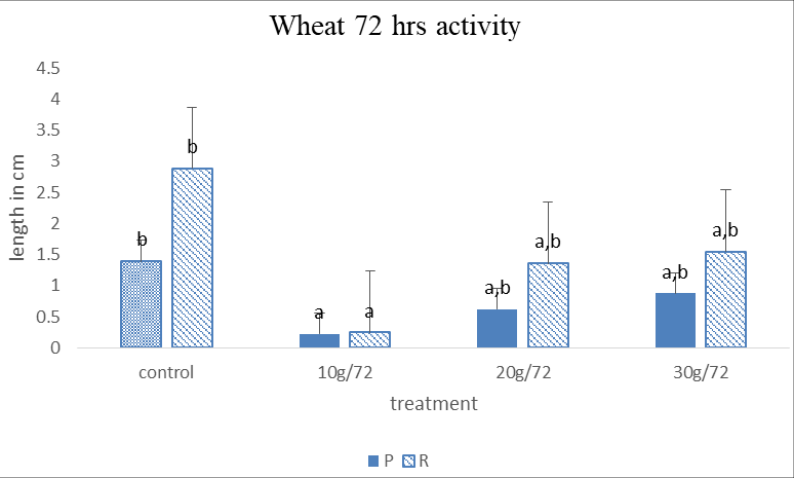 Figure 4Page 9
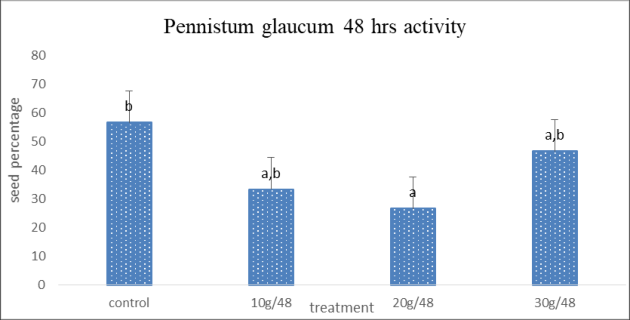 Figure 4Page 10
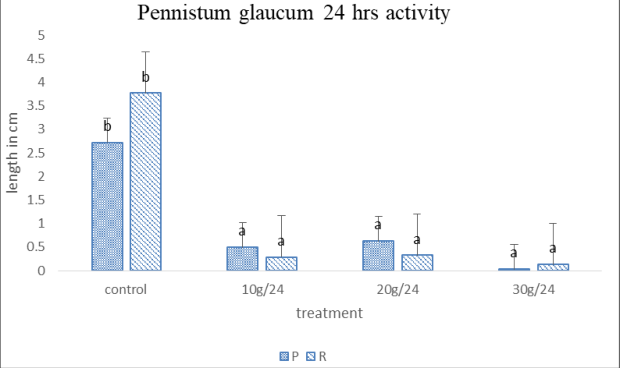 Figure 4Page 10
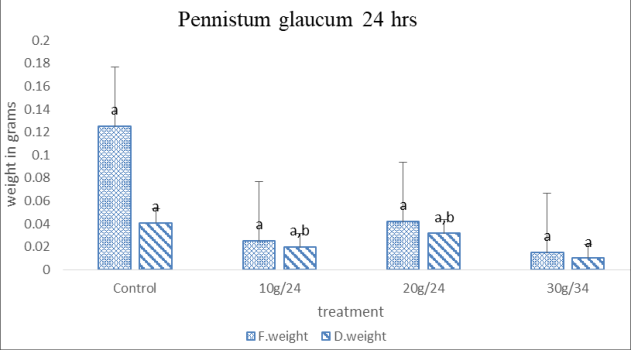 Figure 4Page 10
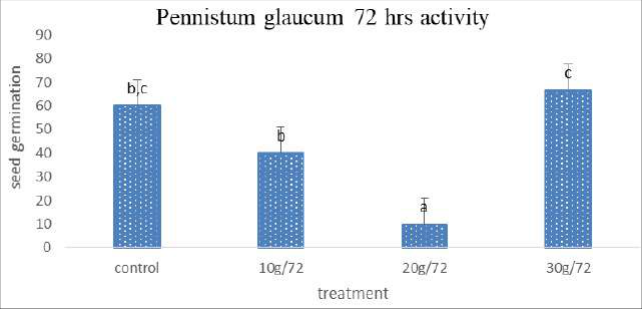 Figure 4Page 11
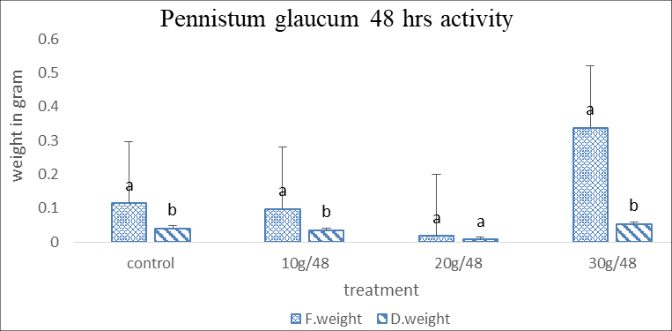 Figure 4Page 11
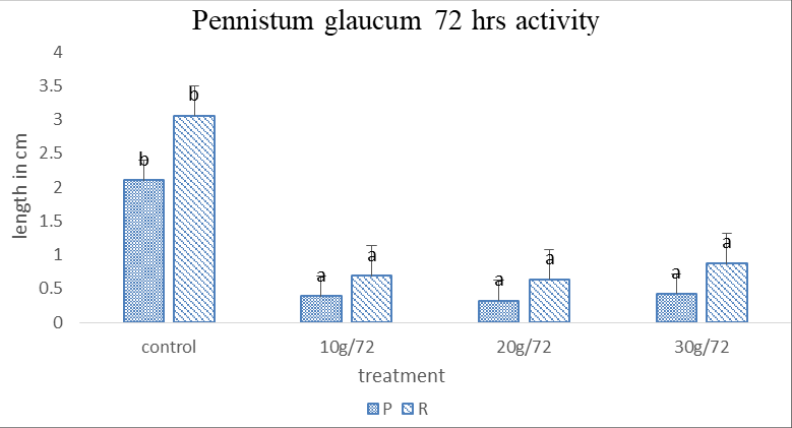 Figure 4Page 12
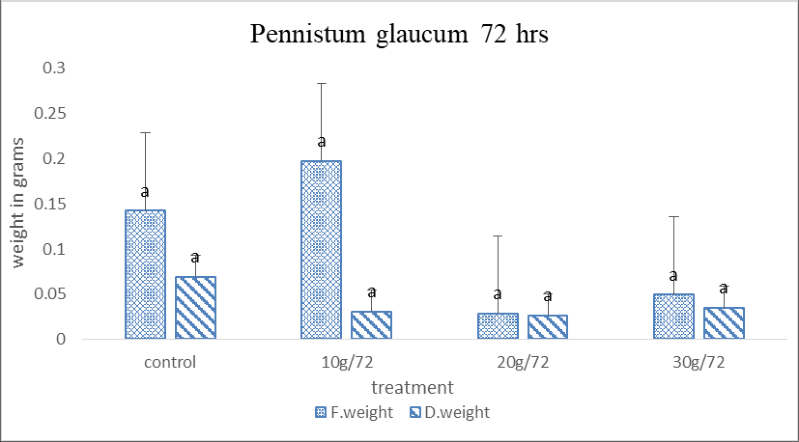 Figure 4Page 12
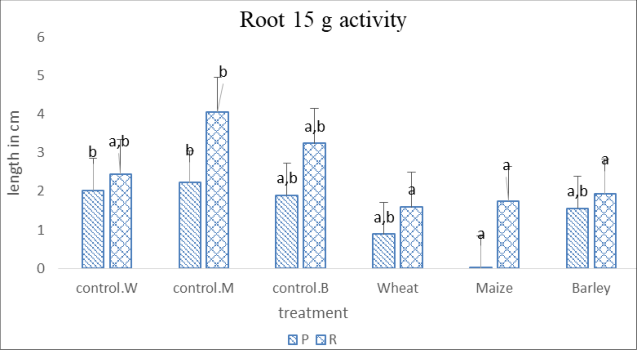 Figure 4Page 13
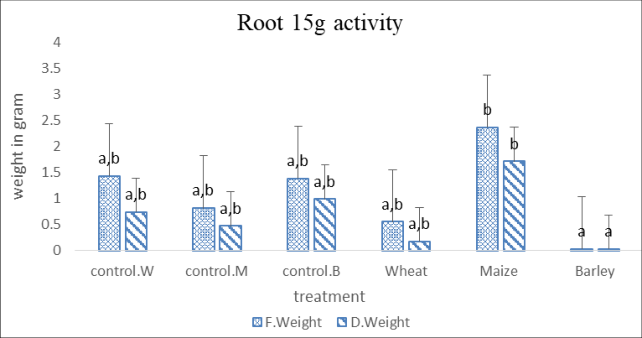 Figure 4Page 13
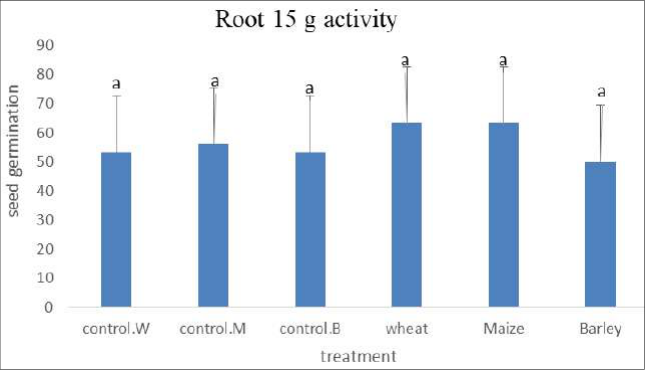 Figure 4Page 13
Introduction
The term allelopathy is derived from the Greek word compounds allelo and pathy mean "mutual harm" or "suffering" and was first used in 1937 by Austrian scientist Hans Molisch in the book "The Effect of Plants on Each Other" (Mokou et al., 2017) [4] . Early research point out the observations of poor regeneration of forest species, crop damage, yield reductions, replant problems for tree crops, occurrence of weed free zones, and other related changes in vegetation pattern (Bàrberi, 2002) [5] . `Pathos' also means `feeling' or `sensitive' and could therefore be used to describe both positive (sympathetic) and negative (pathetic) interactions (Wojtkowski, 2006) [6] . The concept of allelopathy received new attention in 1974, after the publication of the first book in English on allelopathy by Elroy L. Rice. The International Allelopathy Society defined allelopathy as follows: "Any process involving secondary metabolites produced by plants, micro-organisms, viruses, and fungi that influence the growth and development of agricultural and biological systems (excluding animals), including positive and negative effects" (Mokou et al., 2017) [4] . The allelopathic properties of plants can be exploited successfully as tool for pathogens and weed reduction (khan et al., 2005) [7] .
Allelochemicals
Allelopathy refers to the beneficial or harmful effects of one plant on another plant, both crop and weed species, from the release of biochemical, known as allelochemicals, from plant parts by leaching, root exudation, volatilization, residue decomposition, and other processes in both natural and agricultural systems (Weston and Duke, 2003) [8] . Allelochemicals are a subset of secondary metabolites not required for metabolism (growth and development) of the allelopathic organism. The chemicals released by a plant to inhibit the growth of the surrounding plants are known as allelochemicals. The second important allelochemicals are pseudoguaionolides which occur in shoot and root region. This pseudoguaionolides includes parthenin, anhydroparthenin, ambrosin, coronopilin, damsin which causes the cytotoxic, mitochondrial oxidative phosphorylation inhibition and allelopathic activity (Xuan et al., 2005) [9] . Among these allelochemicals parthenin was reported as an active principle component of this plant which possesses the strong allelopathic potential and allergic reactions. As a result this weed leads to 40 % and 90 % loss in yield per annum in both agricultural crops and forage producing grasslands (Nath, 1988) [12] . In case of Sorghum crop 40 to 90% loss in yield was also reported www.extensionjournal.com (Tamado et al., 2002) [11] . Allelochemicals with negative allelopathic effects are an important part of plant defense against herbivory (i.e., animals eating plants as their primary food). In 1971, Whittaker and Feeny published a study in the journal of Science, which defined allelochemicals as all chemical interactions among organisms. Allelochemicals have a key role in plant defense (Halbrendt, 1996) [15] . They influence both biodiversity and composition of plant communities. Production of allelochemicals varies with phenological stages of plants and different plant parts accumulate potential allelochemicals in particular stages of development Allelochemicals are plant secondary metabolites normally released into the environment through volatilization, leaching, root exudation and decomposition of plant residues in the soil (Kruse et al., 2002) [14] .
Plant introduction 1.2.1 Anagallis arvensis
Scarlet pimpernel (Anagallis arvensis; also known as red pimpernel, red chickweed, poorman's barometer, poor man's weather-glass, shepherd's weather glass or shepherd's clock) is a low-growing annual plant. The native range of the species is Europe and Western and North Africa. The species has been distributed widely by humans, either deliberately as an ornamental flower or accidentally. This common European plant is generally considered a weed and is an indicator of light soils, though it grows opportunistically in clay soils as well. The origin of the name pimpernel comes from pympernele. The flower is most widely known as the emblem of the fictional hero the Scarlet Pimpernel (Rebaz et al., 2001) [1] .
Material and methods
Material and methods
Collection, Drying and Storage of Plant Materials
Many experiments were conducted for the determination of the allelopathic potential of Anagallis arvensis on germination and growth seedling of Triticum aestivum, Zea mays and Pennisetum glaucum. Anagalis arvensis was collected from different parts of district Mardan Garhi Kapura, Shehbaz Garhi, Shanker area. Then it was dried at room temperature 25-30C in shade. The dried material was crushed separately and stored in paper bags and were labeled respectively for extraction.
Surface Sterilization
After thorough washing with sterilized water glasswares were sterilized at 121 0 C for 15 minutes. Seeds were surface sterilized in 5% ethanol for 5 minutes and then washed three times with distilled water (Salam et al., 2011) [2] .
Preparation of Aqueous Extract
Aqueous extract were prepared by soaking 10gram, 20gram and 30gram shade dried stem, leaves and roots extracts at three phenological stages i.e. vegetative, reproductive, and post reproductive of Anagalis arvensis. 10 gram powder of leaves of Anagalis arvensis at three different stages were dissolved in 250 ml of distilled water and were kept for 24 hours, 48 hours and 72 hours. After 24 hours, the extract was filtered and aqueous extract were stored at 10 0C in case where it is not used. The aqueous extract of leaves, stem and roots of different stages were used against the test species Triticum aestivum, Zea mays and Pennisetum glaucum. The petri dishes were sterilized in autoclave 121 0C for 2 hours. The filter paper were kept in petri dishes and moistened with aqueous extract of 3 ml after sterilization. The seed of Triticum aestivum Zea mays and Pennisetum glaucum were kept in these petri dishes at equal distance from one another. The petri dishes were kept in incubator for 72 hours at 25 0C . Control test was also applied using distilled water. After 72 hours, the length of radicals and plumules were observed along with fresh and dry weight of the seeds. The same procedure was applied for another test (Naseem et al., 2009) [3] . The following parameters of the test species were recorded. Germination of the grains, Length of the plumules, Dry weight of seedlings, Fresh weight of seedlings, Total length of plumules and radicals.
Results
Results
Maize Results
In maize 24 hours activity there was negative effect on maize plant seedling germination, with respect to decrease the plant germination as compare to control. Among the treatments the 30 gram treatment had positive effect, in response to increase the plant seedling germination as compare to 20 and 10 gram treatments. Statistically significant data recorded as given in figure (4.1a). In maize 24 hours activity there was a significant effect on maize plant seed germination as compare to control, as the concentration is increase to the plant the growth and length of plumule and radicle become decrease. Among the treatment the 20 gram treatment had more negative effect especially the length of plumule was decrease as compare to 10 and 20 gram treatments. In maize 48 hours activity there was a significant effect on maize plant seedling germination, in response to decrease the plant seedling germination as compare to control.
Among the treatments the 10 gram treatment had a positive effect with respect to increase the plant seedling germination as compare to 20 and 30 gram treatments. Statistically significant data recorded as given in figure (4.2a). In maize 48 hours activity there was negative effect on maize plant seedling growth of treatments as compare to control. Among the treatment there was a successive decrease maize plant seedling growth if we see the graph it is clear that when the concentration of Anagallis arvensis extract is increased then the fresh and dry weight were decreased. The effects of Anagalis arvensis on fresh and dry weight of seedlings is given in the figure as in (4.2b).
Effects of Anagalis arvensis (5ml extract) on (a) maize seed germination (b) fresh and dry weight and (c) plumule and radical.
In maize 72 hours activity there was negative effect on plant seedling germination, in response to decrease the plant seedling germination as compare to control. Among the treatments the 10 gram treatment had a more negative effect with respect to decrease the plant seedling germination as compare to 20 and 30 gram treatments. Statistically significant data recorded as given in figure (4.3a). In maize 72 hours activity there was significant effect of the extract application upon the maize plants, with respect to a decrease in both fresh and dry weight. Among the treatments the 10 gram extract was more effective in reducing the plants biomass i.e. both fresh and dry weight as compare to 20 gram and 30 gram extracts. The effects of Anagalis arvensis on fresh and dry weight of seedlings is given in the figure as in (4.3b).
Fig 4.3b: Fresh and dry weight
In maize 72 hours activity there was negative effect on plant seedling germination, in response to decrease the plant seedling germination as compare to control. Among the treatments the 10 gram treatment had a more negative effect with respect to decrease the plant seedling germination as compare to 20 and 30 gram treatments. The effect of Anagallis arvensis on plumule and radical is given in the figure as in (4.3c).
Wheat Results
In wheat 24 hours activity there was significant effect of wheat treatments as compare to control in response to decrease the germination of seeds as the concentration was increase to the treatments. Among the application; the 10 gram treatment proved to be more non-effective, increasing the plant biomass i.e. the seed germination as compare to 20 and 30 gram treatments. Statistically significant data recorded as given in figure (4.4a). www.extensionjournal.com In wheat 24 hours activity there was a significant effect on wheat plant seedling growth in response to decrease the fresh and dry weight of treatment as compare to control, as the concentration of extract is increased to the plant seeds the growth of treatment become decrease. Among the treatments the 10 gram treatment had positive effect with respect to increase the fresh and dry weight of plant seedling growth as compare to 20 and 30 gram treatments. The effects of Anagalis arvensis on fresh and dry weight of seedlings is given in the figure as in (4.4b).
Fig 4.4b: Fresh and dry weight
In wheat 24 hours activity there was no effect on plumule of treatments as compare to control, while the radical had negative effect with respect to decrease the length of radical germination as compare to control. Among the treatments the 10 gram radical had positive effect, in response to increase the length of radical growth as compare to 20 and 30 gram treatments. The effect of Anagallis arvensis on plumule and radical is given in the figure as in (4.4c). In wheat 48 hours activity there was a negative effect of wheat plant seed germination as compare to control in response to decrease the plant seed germination. Among the treatments the 10 and 20 gram treatment had a positive effect with respect to increase the plant germination as compare to 30 gram treatment. Statistically significant data recorded as given in figure (4.5a). In wheat 72 hours activity there was a negative effect on plant seed germination with respect to decrease the plant seedling growth. Among the treatments the 10 and 20 gram had positive effect with respect to increase the plant seedling germination growth as compare to 20 gram treatment. Statistically significant data recorded as given in figure (4.6a).
Fig 4.6a: Seed germination
In wheat 72 hours activity there was negative effect of wheat plant seedling growth as compare to control with respect to decrease the fresh and dry weight of plant. Among the treatments the dry weight of 20 gram showed positive effect with respect to increase the dry weight of plant as compare to 10 and 20 gram treatments. The effects of Anagalis arvensis on fresh and dry weight of seedlings is given in the figure as in (4.6b). In wheat 72 hours activity there was negative effect on wheat plant seedling growth with respect to decrease the growth and length of plumule and radicle as compare to control. Among the treatments there was positive effect on 20 and 30 gram treatment with respect to increase the length of plumule and radicle as compare to 10 gram treatment. The effect of Anagallis arvensis on plumule and radical is given in the figure as in (4.6c).
Pearl millet Results
In Pennisetum glaucum 24 hours activity there was negative effect on plant seedling germination with respect to decrease the plant seedling germination. Among the treatments the 20 gram treatment had positive effect with respect to increase plant seedling germination as compare to 10 and 30 gram treatments. Statistically significant data recorded as given in figure (4.7a).
Fig 4.7a: Seed germination
In Pennisetum glaucum 24 hours activity there was a negative effect of treatments as compare to control on pearl millet plant seedling growth with respect to decrease both in fresh and dry weight. Among the treatments there was a more negative effect on 10 gram and 30 gram extract as compare to 20 gram extract. The effects of Anagalis arvensis on fresh and dry weight of seedlings is given in the figure as in (4.7b). www.extensionjournal.com In Pennisetum glaucum 24 hours activity there was a significant effect on pearl millet plant seedling growth as compare to control. Among the treatments the 30 gram treatment had more negative effect, with respect to decrease the length of plumule and radical as compare to 10 and 20 gram treatments. The effect of Anagallis arvensis on plumule and radical is given in the figure as in (4.7c). In Pennisetum glaucum 48 hours activity there was negative effect on plant seedling germination, with respect to decrease the plant seedling germination as compare to control. Among the treatments the 30 gram treatment had positive effect, in response to increase the plant seedling germination as compare to 20 and 10 gram treatments. Statistically significant data recorded as given in figure (4.8a). In Pennisetum glaucum 48 hours activity there was nonsignificant effect on pearl millet plant seedling germination as compare to control. Among the treatments the 30 gram treatment had positive effect with respect to increase, especially the fresh weight of plant as compare to 20 and 10 gram activity. The effects of Anagalis arvensis on fresh and dry weight of seedlings is given in the figure as in (4.8b). In Pennisetum glaucum 72 hours activity there was a nonsignificant effect of 10 gram extract as compare to control with respect to increase especially in fresh weight of plant growth, while the 20 and 30 gram extract show a significant effect on pearl millet plant seedling growth as compare to control with respect to decrease both in fresh and dry.
Among the treatments the 10 gram extract was non-effective and showed increasing of fresh weight as compare to 20 and 30 gram extracts. The effects of Anagalis arvensis on fresh and dry weight of seedlings is given in the figure as in (4.9b).
Fig 4.9b: Fresh and dry weight
In Pennisetum glaucum 72 hours activity there was negative effect on pearl millet plant seedling growth with respect to decrease the length of plumule and radical as compare to control. Among the treatments the 30 gram treatment had positive effect in response to increase the length of plumule and radical as compare to 10 gram treatment. The effect of Anagallis arvensis on In root 15 gram extract as compare to control the wheat and maize had enhanced the plant seedling germination (growth), while the pearl millet had negative effect on plant seedling germination with respect to decrease of plant seedling germination as compare to control. Among the treatments the maize had more positive effect on plant seedling germination, in response to increase the rate of germination as compare to wheat and pearl millet treatments. Statistically non-significant data recorded as given in figure (4.10a). www.extensionjournal.com In root 15 gram activity there was negative effect on wheat and pearl millet with respect to decrease the fresh and dry weight of plant seedling as compare to control, while there was positive effect on maize plant seedling with respect to increase the fresh and dry weight of plant seedling as compare to control. Among the treatments there was more negative effect on pearl millet with respect to decrease the fresh and dry weight of plant as compare to wheat and maize. The effects of Anagalis arvensis on fresh and dry weight of seedlings is given ins the figure as in (4.10b).
Fig 4.10b: Fresh and dry weight
In root 15 gram activity there was negative effect on wheat, maize and pearl millet plant seedling growth with respect to decrease the length of plumule and radical as compare to control. Among the treatments there was positive effect on pearl millet plant seedling growth, in response to increase the length of plumule and radical as compare to wheat and maize plant treatments. The effect of Anagallis arvensis on plumule and radical is given in the figure as in (4.10c).
Discussion
In [17,18] while studying the allelopathic effect of different plants. They observed that the foliar leachates have been more phytotoxic in nature. Comparative analysis between extracts and duration showed significant inhibitory effect of 48hr treatment on Plumule and radical length. In addition to it, the comparison of duration and concentration showed significant inhibitory effect of 15g concentration in 24hr treatment on fresh weight. The result shows that the inhibitory effects were increased proportionally with the extract concentration and duration. The present findings corroborate the earlier report by (Khanh et al., 2005) [19] . The percentage of germination, plumule and radicle length of rice and cowpea, were decreased with increasing concentration of Acacia auriculiformis leaf leachates. Several reports address the allelopathic effect of various plants that significantly affected seed germination and seedling growth of several crops and weed species (Mokou et al., 2017) [4] these studies showed that the leaf extract of E. camaldulmensis decreased root growth of the majority of the crops. Its effectiveness on germination and growth suggests that leaves and stem of Anagallis arvensis may act as a source of allelochemicals after decomposition that intern negatively affects the neighboring or successional plants. The observed different phytotoxicity of Anagallis arvensis may be attributed to the presence of variable amount of phytotoxic substances in different parts that leach out under natural conditions. Some recent studies indicating the phytotoxic/allelopathic effect of aqueous extracts of plants include Chrozophora oblique (Khan et al., 2011) [21] . All these studies indicated the release of phototoxic chemicals during the preparation of aqueous extracts. Based on this finding, a study was further extended to explore the impact of Anagallis arvensis leaves as they possessed greater phytotoxicity on the emergence and growth of weed plants.
Wheat and Pearl Millet
In the present study allelopathic effects of Anagallis arvensis leaves, stem and root was observed on germination, plumule length, radicle length, fresh weight and dry weight of Wheat and Pearl millet. The present research showed that the significant effect on plumule length was found in 10g concentration at 72h duration while the effect of 30g concentration was high than the 10g, 15g (root) and 20g concentration. Within effects the duration rate of 24h duration was high on seed germination, fresh and dry weight and plumule and radical length than 48h and 72h which show that the allelochemical of Anagallis arvensis was highly produce with the increase in duration while high concentration also decrease the length of plumule. Such type of work was also done by different researchers i.e. (Khan et al, 2011) [21] . Comparative analysis between extract concentration and duration showed significant inhibitory effect of 48hr treatment at 15g on plumule length as compare to control. The present findings agree with the prior report by (Ehsan et al., 2012) [22] . The result showed that extract of Anagallis arvensis leaves decrease the fresh weight as compare to control. Within concentration as well as their effect of 30g increase the fresh weight as compare to 10g, 15g and 20g of test species. Within duration the effect of 24h increase the fresh weight of test species as compare to 48h and 72h. It means that the allelochemicals are produced in high rate when concentration as well as duration increased and vice versa. Our results agree with that of Khan, et al., 2011 [21] . Some recent studies indicating the phytotoxic/allelopathic effect of aqueous extracts of plants include Chrozophora oblique (Khan et al., 2011) [21] and Rhazya stricta (Khan et al., 2011) [21] . The percentage of germination, plumule and radicle length of rice and cowpea, were decreased with increasing concentration of Acacia auriculiformis leaf leachates. The result showed that extract of Anagallis arvensis leaves decrease the dry weight as compare to control. Within concentration as well as their effect on 30g increase the dry weight of test specie as compare to 10g, 15g and 20g. Within duration the effect of 24h increase the dry weight of test species as compare to 48h and 72h. They observed that the leaves extract have been more phytotoxic in nature. According to this research Anagallis arvensis have allelopathic effect on studied species and it can damage germination and early seedling growth of planted seeds. Because of important of primary growth stage on establishment of pant, it suggested that the mentioned plants don't cultivate with Anagallis arvensis have medic values and cannot be eliminated from the studied area hence we must search the proper way to reduce the allopathic effect of this species on the others.
Conclusion
The present investigation revealed that its effectiveness on germination and growth suggests that leaves of Anagallis arvensis may act as a source of allelochemicals after being released into soil or after decomposition. The presence of allelochemicals negatively affects the neighboring or successional plants. Further studies are suggested to clarify the possible physiological mechanism related to allelopathic effect on plants. This experiment was conducted in laboratory condition therefore it suggests that more research could be carried out in greenhouse condition because in natural condition the results may change as a result of differences in growth conditions. It also suggested that more investigation about the allelopathic effect of this species
Figures and tables from the paper
References
23 in the original paper- Rebaz Z, Shaukat SS, Siddiqui IA. Allelopathic potential of Anagallis arvensis L., a cosmopolitan weed. Pak. J Biol. Sci. 2001; 4(4):446-450.
- Salam IU, Ahmed M, Ali ST. Allelopathic effect of scarlet pimpernel (Anagallis arvensis) on seed germination and radical elongation of mung bean and pearl millet. Pakistan Journal of Botany. 2011; 43(1):351-355.
- Naseem M, Aslam M, Ansar M, Azhar M. Allelopathic effects of sunflower water extract on weed control and wheat productivity. Pak. J Weed Sci. Res. 2009; 15(1):107-116.
- Mokou BM, Jordaan JJ, Mafeo TP. The Effect of Root and Shoot Extracts of Seriphium Plumosum as Allelopathic Agents. Insights for Res. 2017; 1(1):42-49.
- Bàrberi Paolo. Weed management in organic agriculture: are we addressing the right issues. Weed research. 2002; 42(3):177-193.
- Wojtkowski P. Introduction to agroecology: principles and practices. CRC Press, 2006, 17.
- Khanh TD, Chung MI, Xuan TD, Tawata S. The exploitation of crop allelopathy in sustainable agricultural production. Journal of Agronomy and Crop Science. 2005; 191(3):172-184.
- Weston LA, Duke SO. Weed and crop allelopathy. Critical Reviews in Plant Sciences. 2003; 22(3-4):367389.
- Xuan TD, Shinkichi T, Khanh TD, Chung IM. Biological control of weeds and plant pathogens in paddy rice by exploiting plant allelopathy: an overview. Crop protection. 2005; 24(3):197-206.
- Kotal SD, Bhowmik SR, Kundu PK, Kumar AD. A statistical cyclone intensity prediction (SCIP) model for the Bay of Bengal. Journal of Earth System Science. 2008; 117(2):157.
- Tamado T, Ohlander L, Milberg P. Interference by the weed Parthenium hysterophorus L. with grain sorghum: influence of weed density and duration of competition. International Journal of Pest Management. 2002; 48(3):183-188.
- Nath R. Parthenium hysterophorus L.-a review. Agricultural reviews. 1988; 9(4):171-179.
- Close DC, McArthur C. Rethinking the role of many plant phenolics-protection from photodamage not herbivores. Oikos. 2002; 99(1):166-172.
- Kruse M, Strandberg M, Strandberg B. Ecological effects of allelopathic plants-a review. NERI Technical Report, 2000, 315.
- Halbrendt JM. Allelopathy in the management of plantparasitic nematodes. Journal of Nematology. 1996; 28(1):8.
- Welch CJ, Wu N, Biba M, Hartman R, Brkovic T, Gong X et al. Greening analytical chromatography. TrAC Trends in Analytical Chemistry. 2010; 29(7):667-680.
- Hussain F, Gadoon MA. Allelopathic effects of Sorghum vulgare Pers. Oecologia. 1981; 51(2):284288.
- Talukder KA, Aslam M, Islam Z, Azmi IJ, Dutta DK, Hossain S et al. Prevalence of virulence genes and cytolethal distending toxin production in Campylobacter jejuni isolates from diarrheal patients in Bangladesh. Journal of clinical microbiology. 2008; 46(4):1485-1488.
- Khanh TD, Chung MI, Xuan TD, Tawata S. The exploitation of crop allelopathy in sustainable agricultural production. Journal of Agronomy and Crop Science. 2005; 191(3):172-184.
- Mokou BM, Jordaan JJ, Mafeo TP. The Effect of Root and Shoot Extracts of Seriphium Plumosum as Allelopathic Agents. Insights for Res. 2017; 1(1):42-49.
- Khan et al. Evidence for Allelopathy of Tinospora cordifolia on Physiological and Biochemical Activities of Some Weed Plants (Doctoral dissertation, Aligarh Muslim University), 2011.
- Ehsan M, Hussain F, Mubarak SS. Allelopathic potential of Anagalis arvensis L. African Journal of Biotechnology. 2012; 11(46):10527-10533.
- Khan M, Musharaf S. Inhibitive effects of Chrozophora obliqua (del.) juss. On germination and seedling growth of cultivated species. Journal of Stored Products and Postharvest Research. 2012; 3(1):1-6.