
Research article · 2020 · Full text
International Journal of Horticulture and Food ScienceReview on post-harvest handling to reduce loss of fruits and vegetables
Volume 2(2) · Pages 48–52 · DOI: 10.33545/26631067.2020.v2.i2a.52 ↗
Research areasPostharvest Quality and Shelf Life ManagementNanocomposite Films for Food PackagingDate Palm Research Studies
Abstract
Author-writtenFruits and vegetables are the perishable agricultural commodities. Harvesting of pre-matured and over-matured fruits results in shorter storage life and quality deterioration. Thus the fruits should be harvested at proper stage of maturity for good quality with better storage. Vegetables on other hand can be harvested at horticultural maturity. However, poor handling method of produce has resulted to a serious post-harvest loss, loss of time and money spend. Unavailability of suitable handling processes and chemical treatment are triggering huge amount of loss of commodities. Hence, producers are suffering from great economic loss due to lack of proper handling methods, lack of nature and cause of postharvest loss and proper preservation methods. However, loss can be minimized by subejecting produce to proper management and handling procedure such as cleaning, grading and sorting, storage, transportation and marketing. Pre-harvest and postharvest treatment with certain chemicals also extends the shelf life of commodities by preventing from harmful pathogens and from contamination. The data were collected from different relevant sources and has been described in own words. Consequently, this paper suggests the postharvest handling of fruits and vegetables in such a way to reduce post-harvest loss and increase the availability of produce.
Summary
Source-checkedPlain-language reading of the full paper, prepared with AI and checked against the text. Each point links to the authors' own words.
Why it matters
- Fruits and vegetables are highly perishable agricultural products, making them susceptible to rapid deterioration. View evidence ↗
- Inefficient handling methods lead to significant post-harvest losses, resulting in wasted time and financial loss. View evidence ↗
- A lack of appropriate handling processes and chemical treatments contributes to the high volume of commodity loss. View evidence ↗
The question
- The paper aims to suggest post-harvest handling methods for fruits and vegetables that reduce losses and increase produce availability. View evidence ↗
What they did
- The author conducted a review by collecting data from various relevant sources and synthesizing the information. View evidence ↗
- The review examines several key management and handling procedures, including cleaning, sorting, grading, storage, transportation, and marketing. View evidence ↗
What they found
- Harvesting fruits either before or after their optimum maturity stage leads to decreased quality and a shorter storage life. View evidence ↗
- Precooling extends the shelf life of tomatoes by reducing decay, water loss, and ripening rates, while minimizing microbial and metabolic activity. View evidence ↗
- Sorting is critical because overripe fruits release ethylene, which accelerates the ripening of the surrounding produce. View evidence ↗
- Transportation can account for losses of up to 20% of the produce due to mechanical injury and uncontrolled temperature and humidity. View evidence ↗
- In Nepal, tomatoes stored using zero energy methods experience losses ranging from 14% to 25%. View evidence ↗
- Certain packaging materials, such as nylon sacks, can increase internal temperatures by preventing air circulation, which accelerates heat build-up from respiration. View evidence ↗
- The marketing system in Nepal often fails both producers and consumers, leaving farmers with low returns and consumers with higher prices. View evidence ↗
What it means
- The author concludes that careful manipulation of post-harvest handling methods can significantly extend shelf life and minimize losses. View evidence ↗
- The author recommends the use of low-temperature treatments and controlled atmosphere storage to effectively preserve produce. View evidence ↗
Visual summary
2 visualsIllustrations explain the paper; charts are replotted from the paper's own table values.
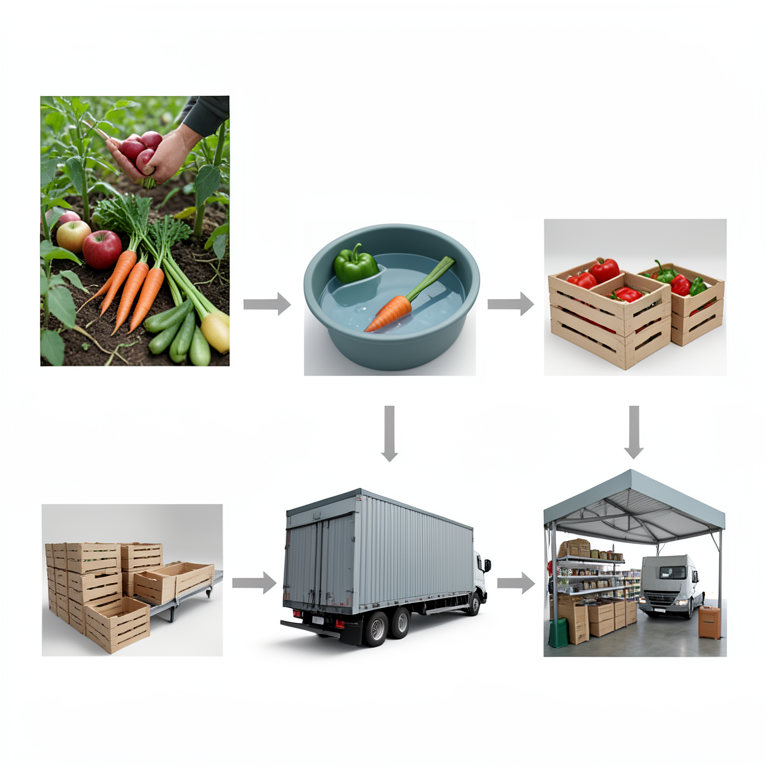
Post-Harvest Handling Workflow
AI-generated conceptual illustration (mixed fresh produce including apples, carrots, and bell peppers). It explains the idea and does not show study data.
View source evidence ↗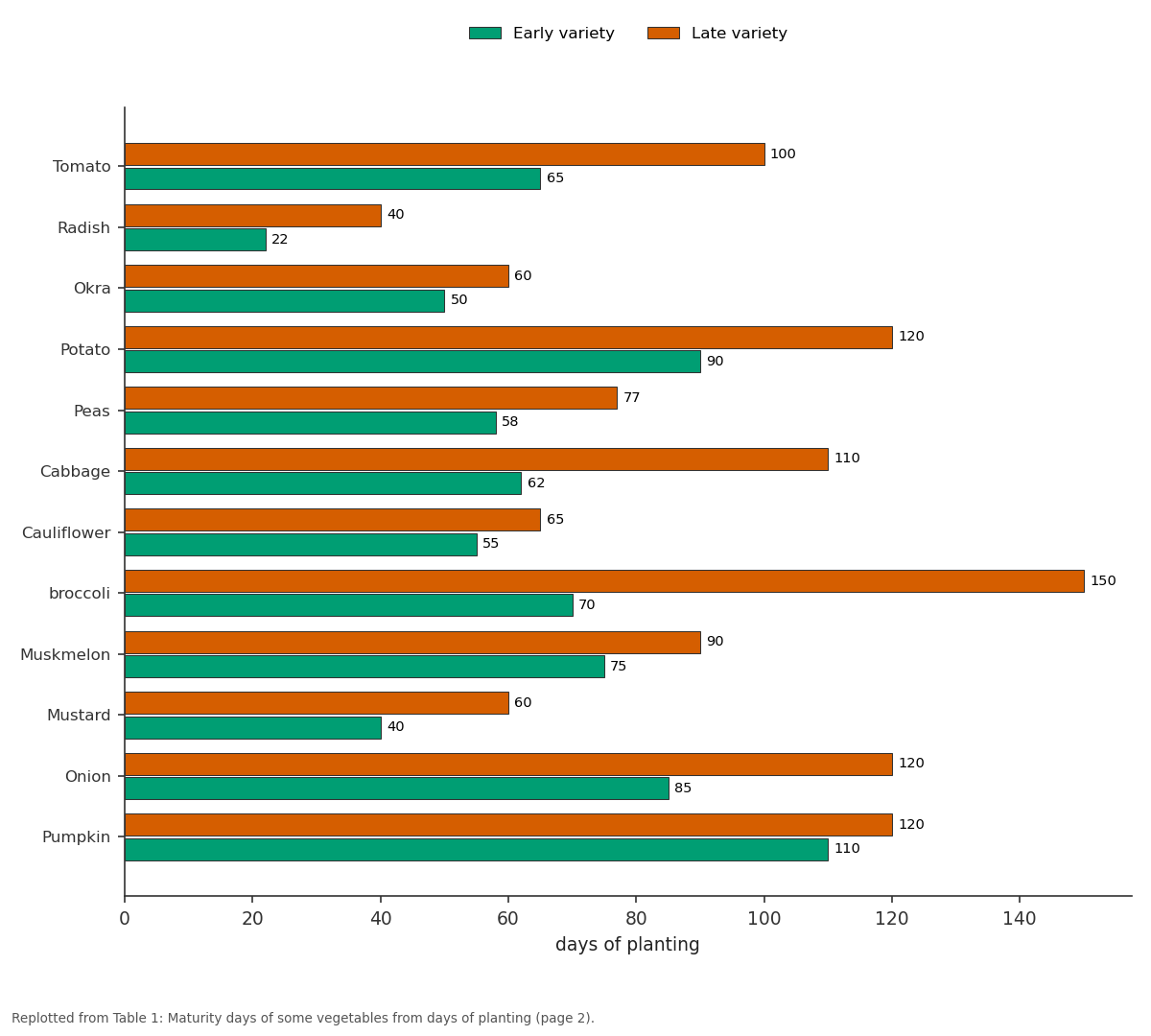
Early variety and Late variety: Tomato vs Radish vs Okra vs Potato vs Peas
Replotted from Table 1 (page 2) of the original paper. Every bar is the paper's own table value.
View source evidence ↗Figures & tables
From the original paper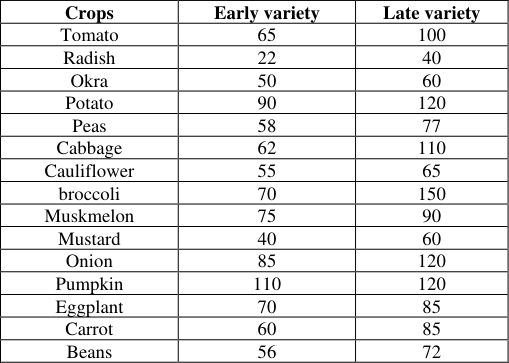 Table 1
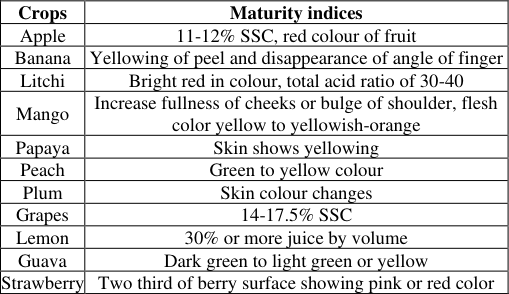 Table 2
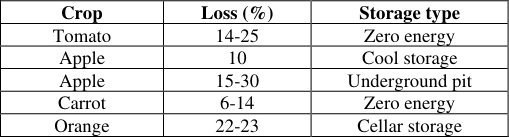 Table 3
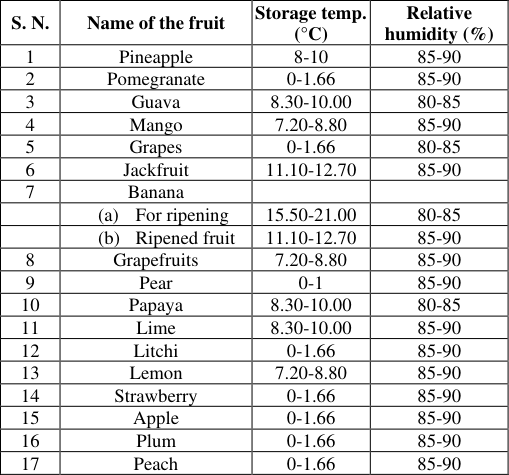 Table 4
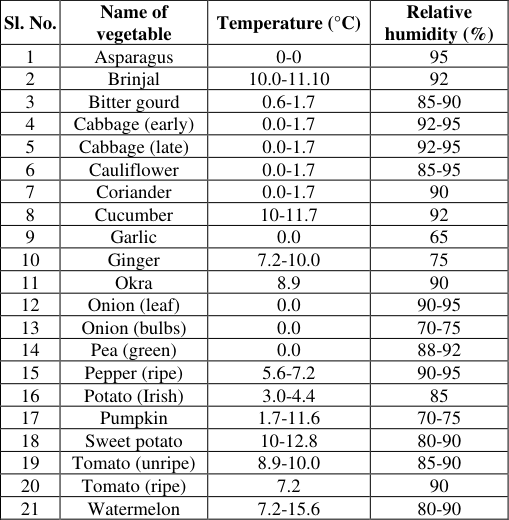 Table 5
 Figure 1
Introduction
Horticultural commodities harvested prematurely results in poor quality and such commodities deteriorate much faster than that is harvested at the proper stage of maturity. On the other hand, harvesting beyond optimum maturity results in shorter storage life. Thus the fruits should be harvested at proper stage of maturity for good quality with better storage. The processes carried out immediately following harvesting including cooling, cleaning, sorting, grading, packaging, transportation are postharvest handling processes. At all stages of postharvest handling, there is significant loss in both quality and quantity of perishable commodities. Increase in shelf life, maintenance of quality and minimization of undesirable changes are the main goals of postharvest horticulture. Preservation of original quality of the fruits or vegetables is the best possible outcome achieved in post-harvest handling process. (Toivonen, J, & Terry, 2014) [24] .
Harvesting
The physiological maturity of any fruit at harvest has an important effect on post-harvest quality of that fruit (Beckles, 2012) [5] . Postharvest processes like storage, transportation and marketing are influenced by the stage at which the commodities are harvested. Fruits should be harvested at physiological maturity at which they attain maximum dry weight. On other hand, vegetables should be harvested at horticultural maturity or field maturity. Fruits are harvested on the basis of skin colour, taste, size, total soluble solid (TSS) and other desirable characters. Vegetables on other hand are harvested based on consumer's willingness. Maturation, ripening and senescence are the critical stages that predominantly determine the shelf life of fruits and vegetables. The stage of maturity gives an indication of the fruit being ready for harvest (FAO, 2008) [9] . Great care must be taken while harvesting fruits and vegetables to avoid the injuries which will hasten deterioration.
Precooling
Harvesting stage is usually characterized by high heat content of many fruits and vegetables and should be minimize with dispatch before carrying out of any postharvest handling activity (Bachmann, 2000) [4] . Precooling is done for rapid cooling of a commodity to the required transit or storage temperature and to slow down the physiological processes. It is the first step in temperature management. Immediate cooling after harvest is most important operation as increased field heat gives rise to undesirable changes in some metabolism and triggers quality deterioration. (Akbudak, 2012) [2] . Precooling minimises the effect of microbial activity, metabolic activity, respiration rate, and ethylene production (Shahi, 2012) [22] , whilst reducing the ripening rate, water loss, and decay, thereby preserving quality and extending shelf life of harvested tomatoes (M.D. Ferreira, 1994) [16] . Precooling can be done with various processes like room cooling, forced air cooling, hydro-cooling, vacuum cooling and ice cooling. However, rate of cooling depends on cooling medium, thermal properties of produce, contact between medium and produce stacking pattern.
Cleaning
Proper cleaning and sanitation of the produce is the subject of major concern to all the farmers, intermediaries and consumers, not only to control of post-harvest diseases, but also for prevention of food-borne illness to consumers (Arah I. K., 2016) [12] . Fruits and vegetables should be cleaned with related methods and materials. Sodium hypochlorite solution, thiabendazole, chlorinated water are frequently used for cleaning or disinfection. The PH of wash solution is found to be more effective in between 6.5 to 7.5.
Sorting and Grading
One of the most important processes in packaging and marketing of fruits and vegetables is sorting and grading (O. Arjenaki, 2013) [20] . Sorting is the process of removing of damaged, diseased, rotten fruits from healthy and clean ones which are unsuitable for marketing and storage. Secondary contamination can be minimized by removing diseased and damaged commodities. Only sensory quality parameters are taken into consideration during sorting. Sorting is the most important marketing strategy which needs to be considered during handling. Therefore, fruits and vegetables are sorted into different grades which fetch higher price in the market (Alao, 2000) [3] . The process of categorising fruits and vegetables based on their shape, size, colour and internal characteristics is called as grading. Grade can be A, B, C or 1, 2, 3 or fine, course or large, medium, small etc. Some timers the term sizing and grading are used synonymously in which grading is based on size. Differentiation of fruits and vegetables in a common factor or parameter helps handlers in storing in favourable containers, transportation and easy handling. Grading on the basis of different maturity stages and other morphological appearance like colour helps to remove overripe and unripe fruits. Overripe fruits produce ripening hormone ethylene which hastens the ripening of fruits of whole mass (Arah I. K., 2016) [12] .
Packaging
Packaging is the process of enclosing produce to protect from external contamination (physical, chemical and biological) and mechanical injuries (Kochhar, 2014) [15] . For mandarin and apple, corrugated cardboard boxes and for tomatoes, specific sizes of plastic trays or cartoons are suitable to local conditions are standardized and locally available wrapping/cushion materials are recommended (Bhattarai, 2018) [6] . Nylon sacks, plastic or wooden crates, woven palm baskets, cardboard boxes and polythene bags are the common packaging materials that are used in most of the developing countries (Idah & Yisa, 2007) [11] . Most of these packaging materials do not provide all protection needed by the commodity. Some structures made up of nylon sacks do not allow the circulation of cool air due to non-aeration which increases inner temperature causing a build-up of heat due to respiration and containers with rough surfaces and edges cause mechanical injuries to the produce (Arah I. K., 2016) [12] . Package must have sufficient mechanical strength, must be free from chemical substances, should allow rapid cooling of the contents and packaging should meet the handling and marketing requirements.
Storage
Storage is the art of keeping the quality of agricultural materials and preventing them from deterioration for specific period of time, beyond their normal shelf life (Kiaya, 2014) [14,25] . Some commodities are stored shortterm and some are stored for long term according to their nature of deterioration and their demands in the market and also by their relative prices in the market. Most of the enzymes work best up to temperature of 30°C and are inactivated above 400C. Continuous exposure of some climacteric fruits to a temperature of about 300C or above causes the flesh to ripen, but the fruits fail to develop colours. Lycopene accumulation in tomato is inhibited at high temperature, thus tomato ripened at higher temperature do not develop red color. Ripe tomatoes can be stored at temperatures of 10-15°C and 85-95% relative humidity for long term storage (Castro, 2005) [7] .
Transportation
In most of the developing countries like Nepal, marketing centers are located far from the point of production and also inaccessible by road. Harvested commodities are brought to the local market from point of production by trolleys, bus, motorcycles or manually. Long distance transportation (different parts of country to Kathamndu) is carried out by bus, trucks and other vehicles. On the other hand, developed countries have good road conditions with refrigeration facilities. Worst condition of road has led to improper transportation of harvested commodities which has become the big challenge on both production and consumption level (Abimbola, 2014) [1] . Transporting of horticultural commodities in refrigerated containers is not only convenient but also reduces the loss. However, in developing countries the initial investment for refrigeration and other operation costs are very high which may be beyond the access of people. Quick transportation of fruits and vegetables should be carried out for successful marketing and quality maintenance. Most of the losses which occur during transportation occur due to physical and mechanical injury and uncontrolled conditions, mainly temperature and humidity (Opadokun, 1987) [21] . During transportation of commodities, losses up to 20% can occur.
To reduce such losses of the produce, long distance facilities should be provided and produce should be properly packed and stacked in well ventilated containers (Yahaya & Mardiyya, 2019) [23] . Good and efficient transport system not only reduce the post-harvest loss of horticultural produce but also will assist in stabilizing the price fluctuations of various commodities available in different markets of the country.
Marketing
Marketing is the process by which horticultural commodities are moved from point of production to the point of consumption. Marketing is the ultimate and end process in the post-harvest system. However, marketing and transportation are the similar processes which is an essential link in the system (Victor Kiaya, 2014) [14,25] . Marketing of fresh perishables presents more problems compared to other durable agricultural products (Yahaya, M, & S, 2015) [27] . Marketing of horticultural crops is quite difficult as compared to cereal crops due to perishable nature, bulkiness, seasonal produce, great care and immediate disposal. As a result, the supply of horticultural commodities is subjected to various problems including wide fluctuating in prices. The spectrum of prices from producer to consumer, which is an outcome of various intermediaries at different levels in the marketing system, is also unique for fruits and vegetables (Neeraj, 2017) [19] . Loss of the produce may occur at different intermediaries. Pre-harvest contract is the common marketing practice followed due to perennial nature and uncontrolled volume production. Contractors purchase the orchard in lump sum basis few months prior to production season. (D. Dhakal, 2005) [8] found following four types of marketing channels in the market survey of acid lime and hill lemon in Nepal. More loss is experienced when fruits and vegetables are in excess in the market. This discourages farmers to produce fruits and vegetables. Therefore, efforts should be made to avoid glutting and the loss should be reduced to bearest minimum (Mardiyya SY, 2019) [17,18] .
Conclusion
Postharvest shelf life and quality of fruits and vegetables greatly depend upon postharvest handling practices, treatments and harvesting method too. Due to perishable nature of produce, fruits and vegetables should be used with dispatch. Postharvest handling methods significantly cannot improve the quality but can maintain the condition when if handling is done with great care. Failure to adopt these postharvest handling methods has resulted in high amount of loss especially in developing countries like Nepal. Postharvest loss can be considerably minimized and shelf life can be extended by careful manipulation of postharvest handling methods. Loss can be minimized by careful harvesting, careful handling, implementing important cultural methods, storage, packaging and transportation. Controlled atmosphere storage and low temperature treatment has been found to be effective for fruits and vegetables. Until the simple postharvest practices are followed, postharvest losses in fruits and vegetables will continue to be a major challenge for handlers of developing countries.
Figures and tables from the paper
| Crops | Early variety | Late variety |
|---|---|---|
| Tomato | 65 | 100 |
| Radish | 22 | 40 |
| Okra | 50 | 60 |
| Potato | 90 | 120 |
| Peas | 58 | 77 |
| Cabbage | 62 | 110 |
| Cauliflower | 55 | 65 |
| broccoli | 70 | 150 |
| Muskmelon | 75 | 90 |
| Mustard | 40 | 60 |
| Onion | 85 | 120 |
| Pumpkin | 110 | 120 |
| Eggplant | 70 | 85 |
| Carrot | 60 | 85 |
| Beans | 56 | 72 |
Table text extracted from the original PDF; superscript letters are shown inline. The original table image is below.
View original table image
| Crops | Maturity indices |
|---|---|
| Apple | 11-12% SSC, red colour of fruit |
| Banana | Yellowing of peel and disappearance of angle of finger |
| Litchi | Bright red in colour, total acid ratio of 30-40 |
| Mango | Increase fullness of cheeks or bulge of shoulder, flesh color yellow to yellowish-orange |
| Papaya | Skin shows yellowing |
| Peach | Green to yellow colour |
| Plum | Skin colour changes |
| Grapes | 14-17.5% SSC |
| Lemon | 30% or more juice by volume |
| Guava | Dark green to light green or yellow |
| Strawberry | Two third of berry surface showing pink or red color |
Table text extracted from the original PDF; superscript letters are shown inline. The original table image is below.
View original table image
| Crop | Loss (%) | Storage type |
|---|---|---|
| Tomato | 14-25 | Zero energy |
| Apple | 10 | Cool storage |
| Apple | 15-30 | Underground pit |
| Carrot | 6-14 | Zero energy |
| Orange | 22-23 | Cellar storage |
Table text extracted from the original PDF; superscript letters are shown inline. The original table image is below.
View original table image
| S. N. | Name of the fruit | Storage temp. (°C) | Relative humidity (%) |
|---|---|---|---|
| 1 | Pineapple | 8-10 | 85-90 |
| 2 | Pomegranate | 0-1.66 | 85-90 |
| 3 | Guava | 8.30-10.00 | 80-85 |
| 4 | Mango | 7.20-8.80 | 85-90 |
| 5 | Grapes | 0-1.66 | 80-85 |
| 6 | Jackfruit | 11.10-12.70 | 85-90 |
| 7 | Banana | ||
| (a) For ripening | 15.50-21.00 | 80-85 | |
| (b) Ripened fruit | 11.10-12.70 | 85-90 | |
| 8 | Grapefruits | 7.20-8.80 | 85-90 |
| 9 | Pear | 0-1 | 85-90 |
| 10 | Papaya | 8.30-10.00 | 80-85 |
| 11 | Lime | 8.30-10.00 | 85-90 |
| 12 | Litchi | 0-1.66 | 85-90 |
| 13 | Lemon | 7.20-8.80 | 85-90 |
| 14 | Strawberry | 0-1.66 | 85-90 |
| 15 | Apple | 0-1.66 | 85-90 |
| 16 | Plum | 0-1.66 | 85-90 |
| 17 | Peach | 0-1.66 | 85-90 |
Table text extracted from the original PDF; superscript letters are shown inline. The original table image is below.
View original table image
| Sl. No. | Name of vegetable | Temperature (°C) | Relative humidity (%) |
|---|---|---|---|
| 1 | Asparagus | 0-0 | 95 |
| 2 | Brinjal | 10.0-11.10 | 92 |
| 3 | Bitter gourd | 0.6-1.7 | 85-90 |
| 4 | Cabbage (early) | 0.0-1.7 | 92-95 |
| 5 | Cabbage (late) | 0.0-1.7 | 92-95 |
| 6 | Cauliflower | 0.0-1.7 | 85-95 |
| 7 | Coriander | 0.0-1.7 | 90 |
| 8 | Cucumber | 10-11.7 | 92 |
| 9 | Garlic | 0.0 | 65 |
| 10 | Ginger | 7.2-10.0 | 75 |
| 11 | Okra | 8.9 | 90 |
| 12 | Onion (leaf) | 0.0 | 90-95 |
| 13 | Onion (bulbs) | 0.0 | 70-75 |
| 14 | Pea (green) | 0.0 | 88-92 |
| 15 | Pepper (ripe) | 5.6-7.2 | 90-95 |
| 16 | Potato (Irish) | 3.0-4.4 | 85 |
| 17 | Pumpkin | 1.7-11.6 | 70-75 |
| 18 | Sweet potato | 10-12.8 | 80-90 |
| 19 | Tomato (unripe) | 8.9-10.0 | 85-90 |
| 20 | Tomato (ripe) | 7.2 | 90 |
| 21 | Watermelon | 7.2-15.6 | 80-90 |
Table text extracted from the original PDF; superscript letters are shown inline. The original table image is below.
View original table image
References
26 in the original paper- Abimbola O. Post-harvest losses and welfare of tomato farmers in Ogbomosho, Osun state, Nigeria. Journal of Stored Products and Post-harvest Research 2014;5(2):813.
- Akbudak BA. Effects of pre-harvest harpin and modified atmosphere packaging on quality of cherry tomato cultivars 'Alona' and 'Cluster'. British Food Journal 2012;114(2):180-196.
- Alao SL. The importance of post-harvest loss prevention. Graduation ceremony of School of food storage technology. Nigeria: Nigerian Stored Products Research Institute, Kano 2000, P1-10.
- Bachmann JE. Post-harvest Handling of Fruits and Vegetables, Appropriate Technology Transfer for Rural Areas, USA 2000.
- Beckles D. Factors affecting the post-harvest soluble solids and sugar content of tomato (Solanum lycopersicum) fruit. Postharvest Biology and Technology 2012;63(1):120-140.
- Bhattarai DR. Postharvest Horticulture in Nepal. Horticulture International Journal 2018;2(6):458-460.
- Castro LV. Effect of cooling delay and cold-chain breakage on 'santa Clara' tomato. Journal of Food, Agriculture and Environment 2005;3(1):49-54.
- Dhakal D, KT. Marketing survey of acid lime and hill lemon in Nepal. Journal of Institute of Agriculture and Animal Science 2005, 107-116.
- FAO. Basic Harvest and Postharvest Handling consideration for Fresh Fruits and Vegetables Handling and Preservation. Rome, Italy: FAO 2008.
- Hurst W. Harvest, handling and sanitation. In W. Hurst, Commercial Tomato production Handbook B 1312. Georgia: CAES publication, University of Georgia 2010.
- Idah P, Yisa EA. Fruits and vegetables handling and transportation in Nigeria. AU Journal of Technology 2007;10(3):175-183.
- Isaac Kojo Arah et al. Postharvest Handling Practices and Treatment Methods for Tomato Handlers in developing countries: A Mini Review. (P. Parolin, Ed.) Advances in Agriculture 2016, 1-8.
- Kader AA. A Perspective on Postharvest Horticulture (1978-2003). Horticulture Science 2003;38(5):10041008.
- Kiaya V. Postharvest losses and strategies to reduce them. ACF International 2014.
- Kochhar PP. Active packaging in food industry; a review. Environmental Science, Toxicology and Food Technology 2014;8(5):1-7.
- Ferreira MD, JB. Physiological responses of strawberry to film wrapping and precooling methods. Proceedings of the Florida State Horticultural Society 1994;107(3):265-269.
- Mardiyya SY, SY. Review of post-harvest losses of fruits and Vegetables. Biomedical Journal of Scientific Research and Technology 2019, 10192-10200.
- Mardiyya SY. Review of Postharvest Losses of Fruits and Vegetables. Biomedical Journal of Scientific and Technical Research 2019, 10192-10200.
- Neeraj AC. Marketing and production of fruits and vegetables in India. International Journal of Current Microbiology and Applied Sciences 2017;6(9):28962907.
- Arjenaki O, OM. Online tomato sorting based on shape, maturity, size and surface defects using machine version. Turkish Journal of Agriculture and Forestry 2013;37(1):62-68.
- Opadokun J. Reduction of post-harvest losses in fruits and vegetables. Zaria: IAR 1987.
- Shahi NC. Effects of precooling treatments on shelf life of tomato in ambient condition. International Journal of Food, Agriculture and Veterinary Science 2012;114:5056.
- Yahaya SM, AM. Review of Post-harvest Losses of Fruits and Vegetables. Biomedical Journal of Scientific and Technical Research 2019, 10192-10200.
- Toivonen PM, JE, Terry MA. Post-harvest Care and the Treatment of Fruits and Vegetables. Springer Science + Business Media 2014, 465-483.
- Victor Kiaya. Postharvest Losses and Strategies to Reduce Them. Scientific and Technical Department. ACF International 2014.
- Yahaya LF, ML, SM. Isolation and Identification of Pathogenic Fungi Causing Deterioration of Lettuce Plant (Lactuca sativa). Journal of Plant Science and Research 2015.
Cited by 29
From OpenAlex, OpenCitations and reference lists read by Scinovex
- Post-harvest Management Strategies for Quality Preservation in Crops ↗
K. Lalpekhlua, Akriti Tirkey, Sibyala Saranya, Punuri Jayasekhar Babu · International Journal of Vegetable Science · 2024
Post-harvest loss significantly impacts food security, economy, and the overall health of the entire population. About 30% of fresh produce is lost after harvest every year. Physical, macro-biological, microbiological, and enzymatic factors play key roles in losing quality and quantity of harvested crops. Management practices are strategized and executed to address these factors, bringing about new and improved technologies, along…
❝ 44 - An Overview on Post-Harvest Technological Advances and Ripening Techniques for Increasing Peach Fruit Quality and Shelf Life ↗
Umar Hayat, Wenqing Li, Hangling Bie, Suning Liu, Dandan Guo, Ke Cao · Horticulturae · 2023
Post-harvest handling and ripening techniques have an impact on peach quality and shelf life, which has a big impact on consumer satisfaction and market competitiveness. This review paper examines recent advancements in ripening techniques and post-harvest technologies with the goal of improving peach fruit quality and sustainability. The factors impacting fruit quality after harvest and the physiological changes that occur…
❝ 40PDF - Fungal Biocontrol Agents in the Management of Postharvest Losses of Fresh Produce—A Comprehensive Review ↗
Phathutshedzo Ramudingana, Ndivhuho Agnes Makhado, Casper Nyaradzai Kamutando, Mapitsi Silvester Thantsha, Tshifhiwa Paris Mamphogoro · Journal of Fungi · 2025
Postharvest decay of vegetables and fruits presents a significant threat confronting sustainable food production worldwide, and in the recent times, applying synthetic fungicides has become the most popular technique of managing postharvest losses. However, there are concerns and reported proofs of hazardous impacts on consumers' health and the environment, traceable to the application of chemical treatments as preservatives on fresh…
❝ 37PDF - Crop water requirement and irrigation scheduling under climate change scenario, and optimal cropland allocation in lower kulfo catchment ↗
Birara Gebeyhu Reta, Samuel Dagalo Hatiye, Mekuanent Muluneh Finsa · Heliyon · 2024
Crop water requirement and irrigation scheduling in Lower Kulfo Catchment of southern Ethiopia have not assessed under climate change scenarios, and the allocation of crop land also not optimal that signifcantly challenges to crop productivity.Therefore, this study was conducted to evaluate the effects of climate change on future crop water requirements, and irrigation scheduling, and to allocate cropland optimally. Bias…
❝ 22PDF - Handling Strategies and Facilities for Horticultural Crops ↗
Chinenye Agnes Ariwaodo · OALib · 2022
Horticultural crops are high-value crops and of higher profit than staple food crops per unit of land.It also generates income since it can be used for several purposes to achieve zero hunger and food security.The major problem with fruits and vegetables is the short postharvest shelf life.They are highly delicate and are endangered to rapid quality loss after harvest.Using best…
❝ 15PDF - Analysis of the pre-harvest factors that influence on the postharvest quality attributes of Tomatoes (Lycopersicon esculentum Mill.): A systematic review ↗
Ayehu Fekadu, Belay Andarege · Scientia Horticulturae · 2024
❝ 13 - Managing Postharvest Losses of Vegetables and Fruits: A Methodological Review ↗
Sourav De, Subhasis Banerjee, Subhasis Banerjee, Sabyasachi Banerjee, Sabyasachi Banerjee · Recent Advances in Food Nutrition & Agriculture · 2024
Vegetables and fruits are highly perishable agricultural commodities cultivated all over the world. However, inadequate handling practices have led to significant postharvest losses of these agricultural commodities, as well as the wastage of valuable resources, such as time and money. Hence, it can be observed that cultivators often experience significant financial setbacks as a result of inadequate comprehension regarding the…
❝ 12 - A comprehensive meta-analysis exploring potential of GABA for postharvest chilling injury mitigation in horticultural produce ↗
Hafiz Umer Javed, Yuan-sen Liu, Ping Shi, Nida Mahreen, Somayeh Rastegar, Jun-guang Hao et al. · Scientia Horticulturae · 2024
❝ 11 - A critical review on bioaerosols—dispersal of crop pathogenic microorganisms and their impact on crop yield ↗
Abdul Zul’Adly Mohaimin, Sarayu Krishnamoorthy, Pooja Shivanand · Brazilian Journal of Microbiology · 2023
❝ 9PDF - A Comprehensive Review on Nanotechnology Intervention in Shelf Life Studies of Citrus Fruits ↗
Yengkhom Disco Singh, Naorem Bidyaleima Chanu, Techi Mana · Current Food Science and Technology Reports · 2024
❝ 7 - On-Site Intelligent Grading System for Fruits and Vegetables: Case Studies on Tomato and Apple ↗
Yuliang Yun, Zhiyong Ma, Xueke An, Dehao Li · Smart agriculture · 2024
❝ 7 - REVIEW ON POST-HARVEST HANDLING OF FRUITS AND VEGETABLES TO MINIMIZE LOSS ↗
Prashna Budhathoki, Shreejan kumar Pandey, Prajwal Magar · Food and Agri Economics Review · 2022
Post-harvest handling is carried out only after the harvest of fruits and vegetables. The harvesting method varies according to the nature of the crop and also based on the availability of resources. Fruits and vegetables have a limited shelf-life. So, they must be harvested at the proper stage of maturity. Post-harvest quality and shelf-life of fruits and vegetables mainly depend…
❝ 6PDF - Formulation and optimization of plant based organic coating with citrus peel extract for enhancing shelf life and quality of postharvest litchi fruit ↗
Shubham Patidar, Purnima Kumari, Anupama Singh, Navin Chandra Shahi, Khan Chand, Afzal Hussain et al. · Journal of Food Measurement & Characterization · 2025
❝ 5 - Characterizing avocado production systems for Ugandan exports: the need for consolidation and support for sustainable development ↗
Peter Sseruwagi, Edouard Lehmann, Paul Sigombe, Gabriel Ddamulira, Jan Willem Van Casteren, Pieterjan De Bauw · Frontiers in Sustainable Food Systems · 2025
Hass avocado production and trade are rapidly expanding globally, with increasing consumer demands on quality, safety and sustainability. Last decade, the contribution of East Africa has increased tremendously following several comparative advantages. However, despite substantial recent public and private investments, Uganda’s Hass production and export lags behind neighboring countries. This is mainly due to the sector’s limited organization, resulting in…
❝ 5PDF - Effects of Calcium Chloride on Shelf Life and Quality of Banana (Musa sapientum cv. Jin) ↗
Susmita Dhali, Shamim Ahmed Kamal Uddin Khan, Juan Carlos Dı́az-Pérez, Md. Yamin Kabir · Journal of the Bangladesh Agricultural University · 2024
Banana is a popular fruit that has been extensively cultivated in Bangladesh. However, high perishability along with very short shelf life of banana leads to immense fruit losses every year. An experiment was conducted to evaluate the effect of calcium chloride (CaCl₂) on the quality attributes and shelf life of bananas cv. Jin. The experiment was laid out in a…
❝ 5PDF - From farm to fork: a review of strategies for sustainable reduction of post-harvest losses in Sub-Saharan Africa ↗
Kurai Gareth Mawoneke, Takudzwa Rusike, Humphrey Masimba Makumbirofa, Joel Mukwidigwi · Cogent Food & Agriculture · 2025
Post-harvest losses (PHL) represent a critical barrier to food security, economic stability, and sustainable development in Sub-Saharan Africa (SSA), with annual losses estimated at 30–50% for key commodities. This review synthesizes recent literature (2015–2024) to analyze the multifaceted causes of PHL and evaluate effective mitigation strategies. The primary drivers of PHL include biological threats (insect pests, microbial pathogens, rodents), inadequate…
❝ 4PDF - Postharvest handling and value added products of tomato to enhance the profitability of farmers ↗
Andithevar Beaulah, K. R. Rajadurai, T Anitha, Jacob Rajangam, S. Maanchi · Plant Science Today · 2025
Effective postharvest handling and value addition of tomatoes are crucial for enhancing farmers’ profitability. Tomatoes, as a highly perishable crop, often experience significant losses during postharvest stages due to insufficient storage and handling practices. Postharvest losses of horticultural crops, ranging from 20% to 40%, create a substantial gap in market potential. This study explores various postharvest handling techniques and value…
❝ 3PDF - A REVIEW PAPER ON POST-HARVEST LOSS ON FRUITS AND VEGETABLES ↗
Rachana Tandan Chhetri, Prajwal Magar, Subarna Kandel, Pariwesh Gnyawali · Food and Agri Economics Review · 2023
Horticultural commodities like fruits and vegetables are highly perishable in nature having a short shelf life. Post-harvest losses on horticulture commodities can be qualitative or quantitative and the quality deterioration can be either physical or physiological. After harvesting, the steps like handling-cooling, cleaning, sorting, grading, packaging, storing, transporting, and marketing must go through high post-harvest losses. Consequently, there will be…
❝ 3PDF - Short Food Supply Chains for Fresh Fruit and Vegetables ↗
Irene Navarro-del Águila, Jerónimo de Burgos Jiménez · Springer eBooks · 2025
❝ 2 - Policy frameworks for promoting the reduction of loss and waste in food systems: insights from fruit and vegetable supply chains ↗
Maria Paula M. B. B. Gonçalves, Jedidiah Precious Oru-bo, Maria Paula M. B. B. Gonçalves, Eugene A. Mohareb, Anderson S. Sant’Ana · Trends in Food Science & Technology · 2026
Background Global food loss and waste (FLW) is estimated to represent one-third of all edible food produced. This has wide-reaching social, economic and environmental impacts. For FLW mitigation, food reduction efforts are considered priorities, preventing surplus related losses. Important tools for driving change, legislation can steer FLW mitigation programs and set goals for organised action across the food system. Due…
❝ 1PDF