
Research article · 2020 · Full text
International Journal of Agriculture and Food ScienceLens culinaris Medikus a traditional crop of Kumaun Himalaya and ethnobotanical prespectives
Volume 2(2) · Pages 01–03 · DOI: 10.33545/2664844x.2020.v2.i2a.33 ↗
Research areasGenetic and Environmental Crop StudiesBotanical Research and ChemistryAgricultural pest management studies
Abstract
Author-writtenLentils (Lens culinaris) is most nutritious annual cool season crop belongs to Fabaceae family commonly called Lentil also known by many common names viz., Masur (small seeded), (Kay, 1979). Lentil was one of the first domesticated grain legumes, originating from the Near East center of origin (Zohary, 1999). Lentil subsequently spread to central Asia and the Mediterranean Basin (Cubero, 1981; Lev-Yadun et al., 2000) among grain legumes, lentil seeds have highest protein content (22% to 34.6%) and considered as the third highest level of protein of any legume after soybeans and hemp, and major source of protein in vegetarian diet. Its lens-shaped seeds exist with a spectrum of colors including yellow, red, orange, green, brown or black depending on the cultivar, and subsequently the composition of the seed coats and cotyledons (Xu and Chang, 2010).
Summary
Source-checkedPlain-language reading of the full paper, prepared with AI and checked against the text. Each point links to the authors' own words.
Why it matters
- Lentils (Lens culinaris), also known as Masur, are highly nutritious annual cool-season crops belonging to the Fabaceae family. View evidence ↗
- Lentil seeds are a primary protein source for vegetarians, with a protein content ranging from 22% to 34.6%, the highest among grain legumes. View evidence ↗
- Lentils are beneficial for crop rotation because they possess the ability to fix nitrogen. View evidence ↗
The question
- The paper aims to provide an overview of Lens culinaris as a traditional crop of the Kumaun Himalaya and discuss its ethnobotanical perspectives. View evidence ↗
What they did
- The authors conducted a literature review, synthesizing data from various botanical and agricultural references to describe the crop. View evidence ↗
What they found
- The lentil plant is characterized as a bushy, erect annual that typically grows between 30 and 80 cm in height. View evidence ↗
- There are two main seed types: macrosperma (6-9 mm diameter, yellow cotyledons), found in the New World and Mediterranean, and microsperma (2-6 mm, red, orange, or yellow cotyledons), found in the Indian subcontinent. View evidence ↗
- Optimal seed germination occurs between 18-21°C, while growth and yields are optimized at around 24°C; temperatures exceeding 27°C are harmful. View evidence ↗
- Lentils can tolerate a wide range of environmental conditions, including annual precipitation from 2.8 to 24.3 dm, mean temperatures from 6.3 to 27.3°C, and soil pH from 4.5 to 8.2. View evidence ↗
- Per 100 g, lentils provide a variety of B vitamins, including 1.7 mg nicotinic acid, 13.2 mg biotin, and 107 mg folic acid. View evidence ↗
- 100 g of dried lentil seeds contain 340-346 calories, 20.2 g of protein, 65.0 g of total carbohydrates, and significant minerals such as 780 mg of potassium and 325 mg of phosphorus. View evidence ↗
- Ethnobotanically, lentils are used to treat constipation and intestinal issues, and as a paste for cleansing foul or indolent ulcers. View evidence ↗
- Lentil residues (husks, leaves, stems) are used for livestock feed and consist of 50% carbohydrate and 21.4% fiber. View evidence ↗
What it means
- The authors conclude that the lentil seed is a highly desired crop due to its superior protein, carbohydrate, and calorie content compared to other legumes, as well as its fast cooking time. View evidence ↗
Visual summary
1 visualsIllustrations explain the paper; they do not show study data.
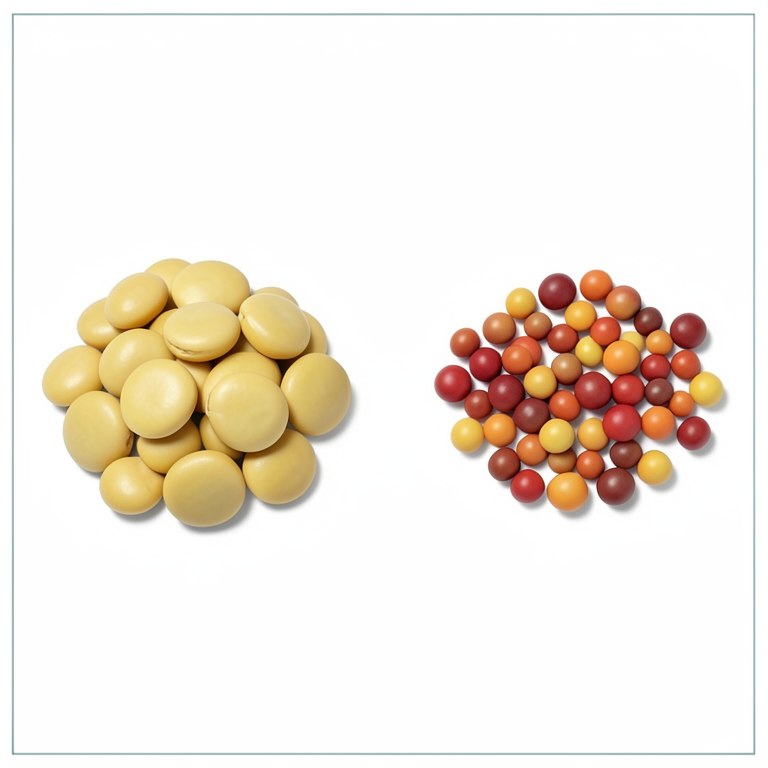
Lentil Seed Types Comparison
AI-generated conceptual illustration (Lens culinaris (lentil) seeds). It explains the idea and does not show study data.
View source evidence ↗Figures & tables
From the original paper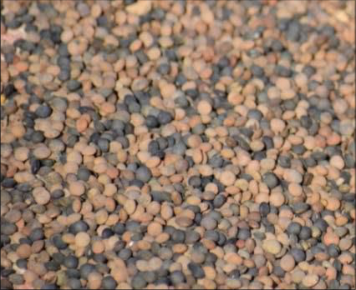 Figure 1
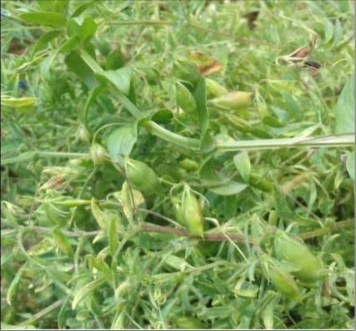 Figure 2
Introduction
Lens culinaris is a much-branched, erect, bushy, annual plant growing 30 -80cm tall. Lentil is one of the oldest pulse crops and is of ancient cultivation in western Asia, Egypt and southern Europe. It probably originated in western Asia, from where it eventually spread throughout temperate and subtropical regions of the world and into the higher elevations in tropical areas. The earliest records of it being used date back 6 to 11,000 BC in Ancient Greece, though it was another 5,000 years before it was being cultivated regularly. A very important food plant, its nutritious seed has become a staple food for many (Facciola, 1990) [6] . The species is hermaphrodite (has both male and female ofloral parts) and is pollinated by Cleistogomy (selfpollinating without flowers ever opening). The plant is self-fertile and useful for crop rotation since it has the nitrogen fixing ability.
Origin and Geographical Distribution
Lentil is one of the oldest pulse crops and of ancient cultivation in western Asia, Egypt and southern Europe. It probably originated in western Asia, from where it spread into the Mediterranean region, Asia, Africa and Europe. Lentil was a common part of the diet of the ancient Greeks, Jews and Romans and was the mainstay of the poor, especially in Egypt. It was associated with many legends, tales and customs, and it is the first pulse crop mentioned in the Bible. The oldest archaeological remains of lentil are from Greece, dated 11,000 BC, and Syria, dated 8500-7500 BC. However, it is uncertain whether they were from cultivated plants or from wild ones. India.
Botanical Discription
The botanical features of Lens culinaris (cultivated lentil) can be described as annual bushy herb, slender almost erect or suberect, much-branched, softly hairy; stems slender, angular, 15-75 cm height (Duke, 1981; Muehlbauer et al., 1985) [5] . Ten to sixteen leaflets are subtended on the rachis (40-50 mm); upper leaves have simple tendrils while lower leaves are mucronate (Muehlbauer et al., 1985). "The leaves are alternate, compound, pinnate, usually ending in a tendril or bristly; leaflets 4-7 pairs(fig2), alternate or opposite; oval, sessile, 1-2 cm long; stipules small, entire; stipules absent; pods oblong, flattened or compressed, smooth, to 1.3 cm long, 1-2-seeded; seed biconvex, rounded, small, 4-8 mm × 2.2-3 mm, lens-shaped, green, greenish-brown or light red speckled with black; the weight of 100 seeds range from 2 to 8 g; cotyledons red, orange, yellow, or green, bleaching to yellow, often showing through the testa, influencing its apparent color" (Kay, 1979; Duke, 1981; and Muehlbauer et al., 1995) [5] . Flowers are small, pale blue, purple, white or pink, in axillary 1-4-flowered racemes; 1-4 flowers are borne on a single peduncle and a single plant can produce upto 10-150 peduncles each being 2.5-5 cm long (Muehlbauer et al., 1985). Flowering proceeds acropetally. The size of seeds increase from the types grown in eastern regions to western types. Two types, namely; macrosperma, found mainly in the Mediterranean region and the New World (seed size ranging from 6 to 9 mm in diameter and yellow cotyledons with little or no pigmentation), and microsperma (2 to 6 mm with red orange or yellow cotyledons) found on the Indian subcontinent(fig1 [4] . The first one includes the Chilean or yellow cotyledon types while the latter includes the small seeded Persian or red cotyledon lentils (Kay, 1979). Germination is hypogeal and this keeps the developing seedlings below ground level which reduces the effects of freezing and other desiccating environmental conditions (Muehlbauer et al. 1985).
Climate
Seeds will germinate at temperatures above freezing but best at the range of 18-21°C; temperatures above 27°C are harmful; optimum temperatures for growth and yields are around 24°C. Lentils are grown as a cool weather or winter crop in the semiarid tropics, cultivated from sea level to 3,800 m, but are not DOI: https://doi.org/10.33545/2664844X.2020.v2.i2a.33 suited to the humid tropics. They are less damaged by drought than by waterlogging. Lentils thrive well on a wide range of soils from light loams and alluvial soil to black cotton soils, best on clay soils; tolerate moderate alkalinity. Salt tolerance is higher during germination than during subsequent development. At 20.0 mmhos/cm salinity, seed yields are reduced 50%. Greenhouse studies suggest that tolerance to 3.9 mmhos is more realistic. Lentils are quantitative long-day plants, some cultivars tending to be day-neutral. Lentil is reported to require environments ranging from cool temperate steppe to wet through subtropical dry to moist forest life zones. It tolerates annual precipitation of 2.8-24.3 dm annual mean temperature of 6.3-27.3°C and pH of 4.5-8.2". (Kay, 1979; Duke, 1981) [5] Soil Lentil prefers a sandy soil in a warm sunny sheltered position, prefers well-drained soil and can grow in nutritionally poor soil. It cannot grow in the shade. It prefers dry or moist soil. Lentils grow on many soil types, ranging from sandy to heavy clay soils, and on a large range of pH (4.5-9), provided that the soils are not saline, waterlogged or subject to flooding (Bejiga, 2006) [2] . riboflavin, and 1.5 mg niacin. Lentils are a good source of B vitamins, containing per 100 g: 0.26 mg thiamine, 0.21 mg riboflavin, 1.7 mg nicotinic acid, 223 mg choline, 107 mg folic acid, 130 mg inositol, 1.6 mg pantothenic acid, 13.2 mg biotin, and 0.49 mg pyridoxine. Vitamins, except folic and pantothenic acids, increase markedly during sprouting. Dry lentil husks contain 11.1% protein (1.3% digestible), 0.7% fat, 47.5% carbohydrate, 25.6% fiber, and 3.1% ash" (Duke, 1981) [5] . "About 90% of lentil protein is found in the cotyledons with albumins and globulins being the major fractions. Digestibility coefficients for lentil are relatively high and range from 78-93%, while biological values range from 32-58%. Oleic, palmitic and linoleic are the dominant fatty acids" (Hulse, 1994) [8] .
Traditional and Medicinal Use
They are considered to be useful in the treatment of constipation and other intestinal affections. Made into a paste, they are a useful cleansing application in foul and indolent ulcers (Chopra et. al., 1986) [3] . In India, lentils are poulticed onto the ulcers that follow "smallpox and other slow-healing sores" (Duke, 1981) [5] .
In the 6th century, chickpeas were believed to be an aphrodisiac; while curiously enough, lentils were considered to have the opposite effect, and this was probably the reason why the lentil was included in the diet in monasteries on meatless days (Van der Maesen, 1972) [12] . The primary product is the seed which has a relatively higher contents of protein, carbohydrate and calories compared to other legumes and is the most desired crop because of its high average protein content and fast cooking characteristic in many lentil producing regions (Muehlbauer et al., 1985). Husks, dried leaves, stems, fruit walls and bran (residues), can be fed to livestock. Lentil residues contain about 10.2% moisture, 1.8 % fat, 4.4% protein, 50% carbohydrate, 21.4% fiber, and 12.2% ash (Muehlbauer et al., 1985).
Chemical Composition
Protein concentration of lentils reportedly range from 22-34.6%, References moisture, 20.2 g protein, 0.6 g fat, 65.0 g total carbohydrate, about 4 g fiber, 2.1 g ash, 68 mg Ca, 325 mg P, 7.0 mg Fe, 29 mg Na, 780 mg K, 0.46 mg thiamine, 0.33 mg riboflavin, 1.3 mg niacin (Adsule et al., 1989; Muehlbauer et al., 1985). Among the cool season legume crops, lentil is the richest in the important amino acids (lysine, arginine, leucine, and sulpher containing amino acids) (Williams et al., 1994). The starch content ranges from 35-53% in the seed and 42% in dry matter while amylose varies from 20.7 to 38.5% of the seed starch (Huisman and Van der poel, 1994; Hulse, 1994) [7,8] . "One hundred grams of decorticated lentil seed contain 344 calories, 9.9 % moisture, 25.8 g protein, 1.8 g fat, 58.8 g total carbohydrate, 0.9 g fiber, 3.7 g ash, 24 mg Ca, 271 mg P, 10.6 mg Fe, 0.47 mg thiamine, 0.21 mg
References
16 in the original paper- Adsule RN, Kadam SS, Leung HK. Lentil. In: CRC hand book of world food legumes (eds. D.K. Salunkehe and S.S. Kadam). Boca Raton, Florida, USA: CRC Press, 1989.
- Bejiga G. Lens culinaris Medik. Record from Protabase. Brink, M. & Belay, G. (Editors). PROTA (Plant Resources of Tropical Africa / Resources végétales de l'Afrique tropicale), Wageningen, Netherlands, 2006.
- Chopra RN, Nayar SL, Chopra IC. Glossary of Indian Medicinal Plants (Including the Supplement). Council of Scientific and Industrial Research, New Delhi, 1986.
- Cubero JI. "Origin, taxonomy and domestication," in Lentils, eds C. Webb and G. Hawtin (London: Commonwealth Agricultural Bureaux), 1981, 15-38.
- Duke JA. Handbook of legumes of world economic importance. Plenum Press, New York, 1981, p. 52-57.
- Facciola S. Cornucopia: a source book of edible plants. Published by Kampong Pubns, Vista, CA, 1990.
- Huisman J, van der Poel AFB. Aspects of the nutritional quality and use of cool season food legumes in animal feed. pp. 53-76. In: F.J. Muehlbauer and W.J. Kaiser (eds.), Expanding the Production and Use of Cool Season Food Legumes. Kluwer Academic Publishers. Dordrecht, The Netherlands, 1994.
- Hulse JH. Nature, composition and utilization of grain legumes. p.11-27. In: ICRISAT. Uses of tropical grain legumes: Proceedings of a consultants' meeting, 27-30 Mar, 1989. ICRISAT Center, India, Patancheru, A.P. 502 324. India: ICRISAT, 1990.
- Kays D. Food Legumes. Tropical development and research institute (TPI). TPI Crop and Product Digest, 1979; (3):4871.
- Lev-Yadun S, Gopher A, Abbo S. The cradle of agriculture. Science, 2000; 288:1602-1603.
- Muehlbauer FJ, Cubero JI, Summerfield RJ. Lentil (Lens culinaris Medic.). p. 266-311. In: R.J. Summerfield and E.H. Roberts (eds.), Grain Legume Crops. Collins, 8 Grafton Street, London, UK, 1985.
- Van der Maesen LJG. Cicer L., A monograph of the Genus, with special reference to the chickpea (Cicer arietinum L.), its ecology and cultivation, Commun. Agric. University. Wageningen, 1972.
- Williams PC, Bhatty RS, Deshpande SS, Hussein LA, Savage GP. Improving nutritional quality of cool season food legumes. p. 113-129. In: F.J. Muehlbauer and W.J. Kaiser (eds.), Expanding the Production and Use of Cool Season Food Legumes. Kluwer Academic Publishers, Dordrecht, the Netherlands, 1994.
- Xu B, Chang SK. Phenolic substance characterization and chemical and cell-based anti-oxidant activities of 11 lentils grown in the Northern United States. Journal of Agricultural and Food Chemistry, 2010; 58:1509-1517
- Zohary D. Monophyletic vs. polyphyletic origin of the crops on which agriculture was founded in the Near East. Genet. Resour. Crop Evol, 1999; 46:133-142.
- Nasr ME, Zinhoum RA, Lotfy K. Efficacy of cold plasma against three of stored grain insects. Int J Entomol Res. 2020;5:113-7.