
Research article · 2020 · Full text
International Journal of Veterinary Sciences and Animal HusbandryRuminal and reticular foreign bodies in cattle slaughtered at bodit municipal abattoir
Volume 5(1) · Pages 04–10
Research areasAnimal Diversity and Health Studies
Abstract
Author-writtenA cross-sectional study was conducted from November, 2017 to April, 2018 at Bodit Municipal Abattoir, in Wolaita zone, Southern Ethiopia. With the objectives of to assess the prevalence and type of ruminal and reticular foreign bodies in cattle slaughtered at Bodit Municipal Abattoir and to correlate the frequency of foreign bodies with animal factors such as age, breed, body condition and origin of animals. Both ante mortem and postmortem examinations were employed to examine the live animal and for the recovery of foreign body from rumen and reticulum after slaughter respectively. The study animals were selected by using systematic random sampling method from the total slaughtered animals. The species of animals slaughtered in this abattoir is bovine and only male animals are slaughtered in the abattoir. From the total of 514 male animals are examined and from them (107/514) 20.8% were positive for the occurrence of indigestible rumen and reticulum foreign bodies. The rumen harbored mostly nonmetallic materials while reticulum was the major site for the retention of metallic objects. The prevalence of foreign bodies detected from the slaughtered animals with their age group are young 3(5.2%), adult 34(17.1%) and old 70(27.2%) from the total examined animals are 58, 199 and 257 respectively. The prevalence of rumen and reticulum foreign bodies are higher in cross breeds (39.6%) than local breeds (16.5%). The overall prevalence of foreign bodies in these study animals with low body condition (40.1%) was significantly higher (χ2=72.129, p
Summary
Source-checkedPlain-language reading of the full paper, prepared with AI and checked against the text. Each point links to the authors' own words.
Why it matters
- Ingesting indigestible foreign bodies in cattle is an economically significant pathological condition that causes high rates of illness and death. View evidence ↗
- Foreign bodies in the rumen and reticulum can reduce animal fattening by hindering the absorption of volatile fatty acids. View evidence ↗
- Perforation of the reticulum wall due to foreign bodies can lead to traumatic reticulo peritonitis. View evidence ↗
The question
- The study aimed to determine the prevalence and types of foreign bodies in the rumen and reticulum of cattle at Bodit Municipal Abattoir and how these correlate with age, breed, body condition, and origin. View evidence ↗
What they did
- A cross-sectional study was performed from November 2017 to April 2018 at the Bodit Municipal Abattoir in Southern Ethiopia. View evidence ↗
- The study examined a total of 514 male cattle. View evidence ↗
- Pearson's Chi-square test was used to analyze the association between the prevalence of foreign bodies and various risk factors. View evidence ↗
What they found
- The overall prevalence of indigestible foreign bodies in the rumen and reticulum was 20.8% (107 out of 514 animals). View evidence ↗
- Prevalence increased with age: 5.2% (3/58) in young cattle (≤5 years), 17.1% (34/199) in adults (5-10 years), and 27.2% (70/257) in old cattle (≥10 years). View evidence ↗
- Crossbreed cattle had a higher prevalence of foreign bodies (39.6%, 38/96) compared to local breeds (16.5%, 69/418). View evidence ↗
- The highest prevalence of foreign bodies was found in cattle from Sodo (26.1%), and the lowest in those from Gesuba (15.7%). View evidence ↗
- Most foreign bodies were located in the rumen (75.7%, 81/107), followed by the reticulum (22.4%, 24/107), with 1.86% (2/107) found in both. View evidence ↗
- Plastic was the most common type of foreign body encountered, accounting for 30.8% of cases. View evidence ↗
What it means
- The authors conclude that indigestible metallic and non-metallic materials can lead to poor body condition in cattle by interfering with food digestion. View evidence ↗
- The authors recommend keeping grazing animals away from urban garbage and dumping sites to prevent ingestion of foreign bodies. View evidence ↗
Visual summary
3 visualsIllustrations explain the paper; charts are replotted from the paper's own table values.
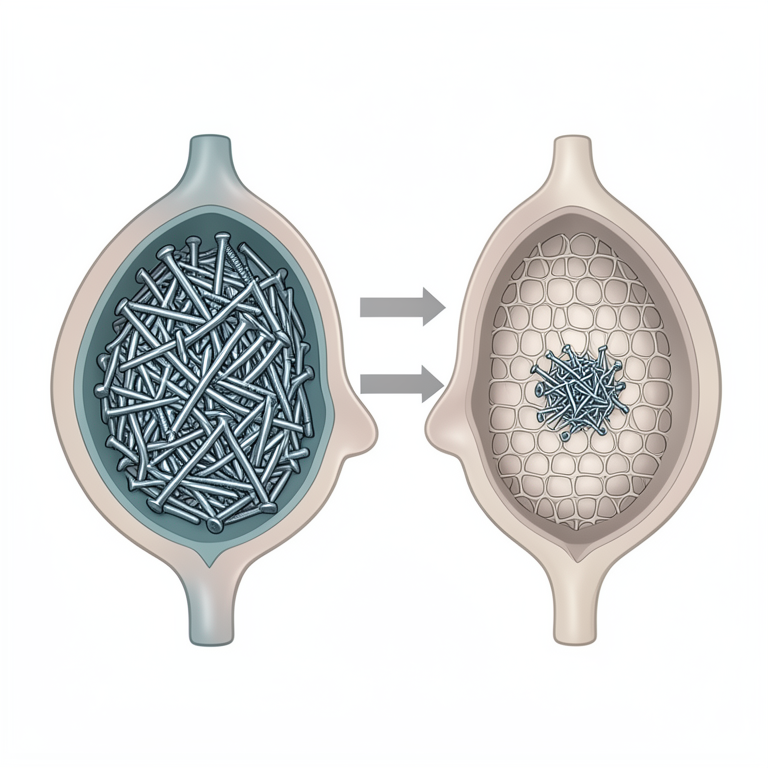
Distribution of Foreign Bodies
AI-generated conceptual illustration (bovine rumen and reticulum). It explains the idea and does not show study data.
View source evidence ↗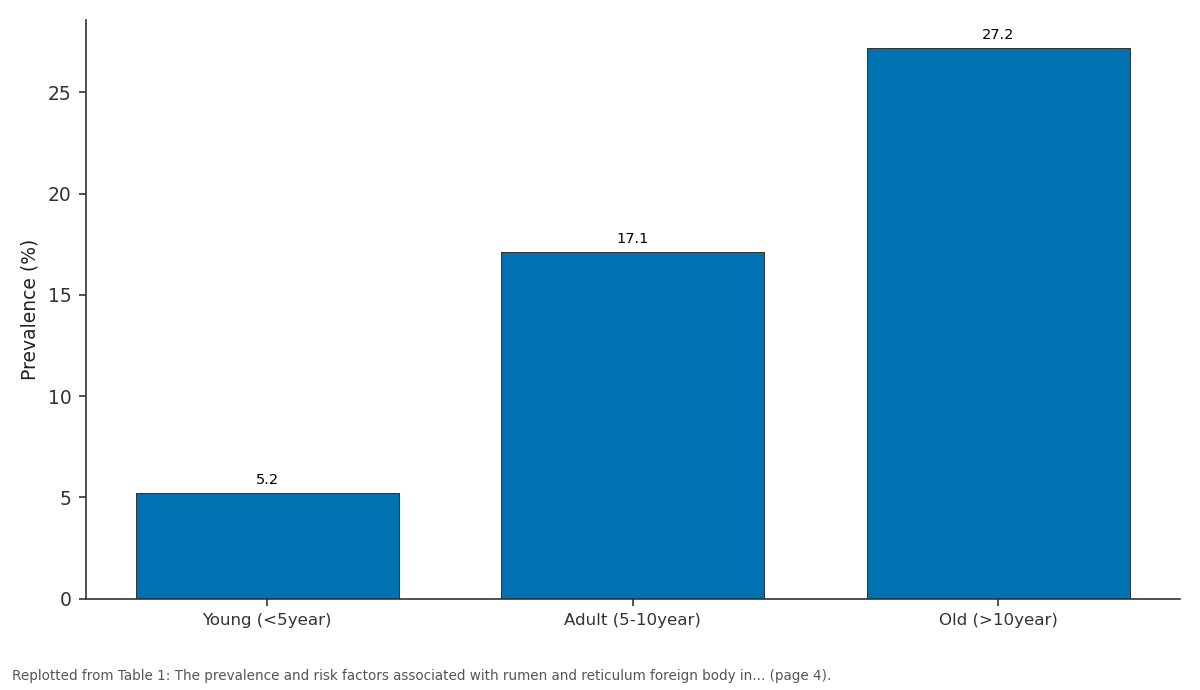
Prevalence (%): Young (<5year) vs Adult (5-10year) vs Old (>10year)
Replotted from Table 1 (page 4) of the original paper. Every bar is the paper's own table value.
View source evidence ↗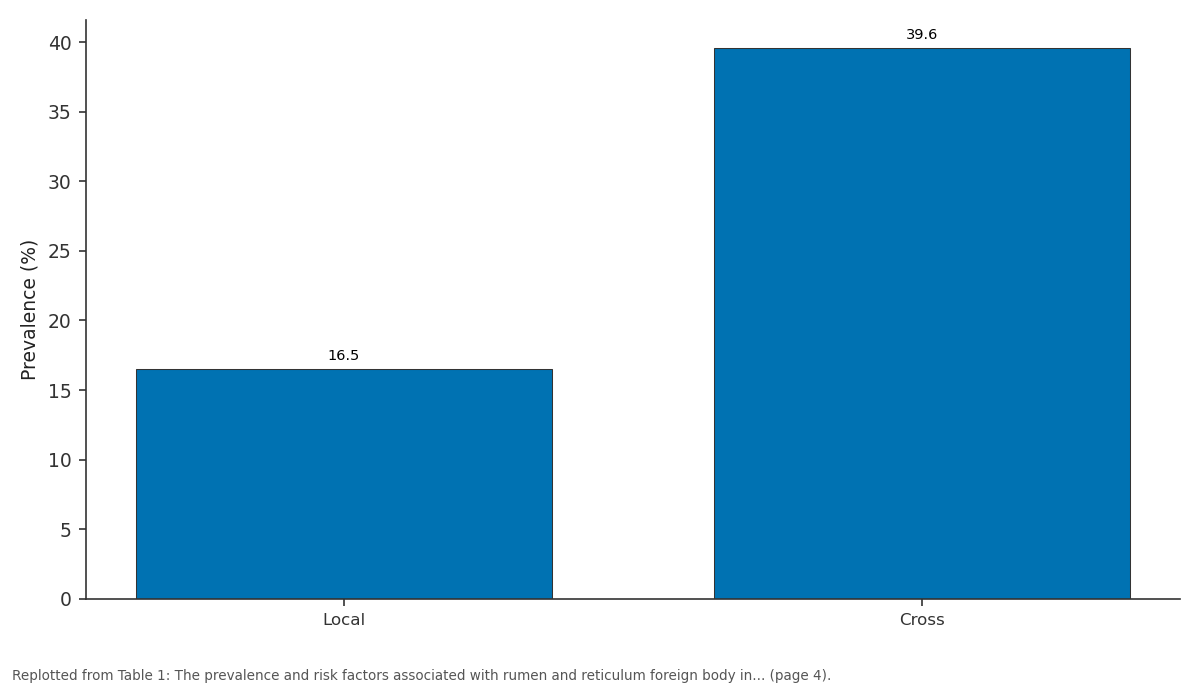
Prevalence (%): Local vs Cross
Replotted from Table 1 (page 4) of the original paper. Every bar is the paper's own table value.
View source evidence ↗Figures & tables
From the original paper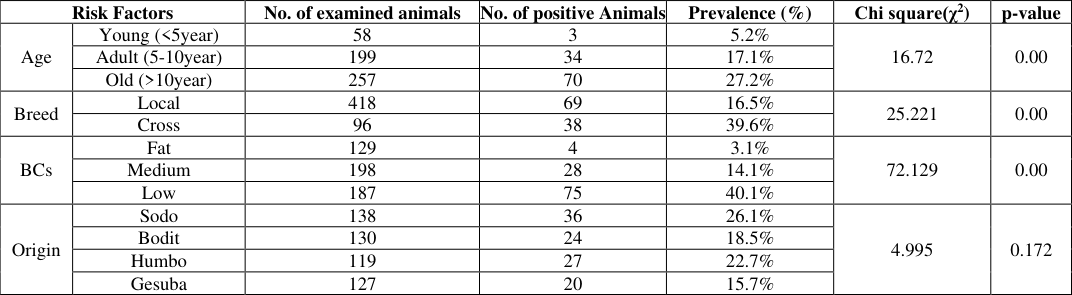 Table 1
Introduction
Livestock are a source of high-quality protein (meat, milk and eggs) and also contribute to the economic welfare of people by providing hides, skins, fertilizer and power of traction for agricultural purposes, increasing the productivity of small holdings [1] . They are also a 'living savings bank', serving as a financial reserve for periods of economic distress and crop failure and as a primary source of cash income [2] . In many developing countries, Like Ethiopia, domestic animals play a crucial role in they constitute as source for traction power, income, in provision of meat, milk, honey, eggs, cheese and butter supply provide mainly the needed animal protein that contributes to the improvement of the nutritional status of the peoples [3] . Ethiopia is known for its high livestock population, being the first in Africa and tenth in the world [4] . Ethiopia has an enormous and diverse livestock population that plays an important role in the economy and livelihoods of farmers and pastoralists with a total contribution of 15% of Gross Domestic Product (GDP) and 33% of the agricultural output. Current estimates of livestock population show that the total cattle population for the country is estimated to be about 57.83 million, 28.89 million sheep, 29.70 million goats, 2.08 million horses, 7.88 million donkeys, 1.23 million camels in Ethiopia [5] .
Ethiopia is one of the countries with the largest number of livestock in Africa and livestock production plays a major role in the development of Ethiopia's agriculture. And it has great potential for increased livestock production, both for local use and for export. However, expansion was constrained by inadequate nutrition, improper management, nutritional deficiencies, disease, lack of support services and inadequate information on how to improve animal breeding, marketing and processing [6] . The ingestion of indigestible foreign bodies in cattle is a pathological condition of economic importance which leads to severe economic losses as a result of high morbidity and mortality rates [7,8] . Because of their indiscriminate feeding habits, cattle are known to ingest and, at times, choke because of ingestion of different types of indigestible materials referred to as foreign bodies [9] . Gastrointestinal foreign bodies are among the most common cause of death in veterinary medicine. Sheep and goats are highly selective feeder and ingest significantly less amount of foreign bodies as compared to cattle [10] . Cattle are more susceptible to foreign body syndrome than small ruminants because they do not use their lips for prehension and are more likely to eat chopped feed; lack of oral discrimination in cattle may lead to ingestion of foreign bodies would be rejected by other specie [11] . Animals with nutritional deficiencies and unbalanced dietary habits lead to ingest various types of foreign bodies deliberately. The indiscriminate feeding habits and mineral deficiency makes them susceptible to inadvertent ingestion of foreign materials. They are the root causes for various problems in different organ of the animals, mainly in rumen and reticulum [12] . The Industrialization and mechanization of agriculture have further increased the incidence of foreign bodies in the animals [13] . The disease of rumen and reticulum are great economic importance because of severe losses on productivity of the animals sometimes leading to the death of the animals [7, 8] . The ingestion of indigestible materials has been associated with feed scarcity [14] . The ingestion of materials other than normal feed gets lodged in the rumen and compromising the ruminal space and interfering with the normal physiological functions of the rumen [15] . This indigestible material hinders the process of fermentation and mixing of contents leading to indigestion [16] . The presence of foreign bodies in the rumen and reticulum also hampers the absorption of volatile fatty acids and consequently reduction in the rate of animal fattening [17,18] . Traumatic reticulo peritonitis develops as a consequence of perforation of the wall of reticulum [19] and it allows leakage of ingesta and bacteria which contaminates the peritoneal cavity, resulting in local or diffuse peritonitis is the swallowed objects can also penetrate pleural cavity causing pleuritis and pneumonitis and into the pericardial sac causing pericarditis [20] . The condition is serious in our country usually in urban and peri-urban areas where extensive building are carried out and proper plastic material disposal is no conditioned and so thrown on roads and near the fence or anywhere and that is way our dairy cattle are dying mainly associated with foreign bodies [21] . In Ethiopian information regarding the magnitude and occurrence of fore stomach foreign bodies is very limited and the ruminants are kept under poor extensive farming system and they are more likely to be exposed to ingestion of indigestible materials from different sources due to high environmental contamination with plastic bags and other materials. The fact that rumen impaction by these foreign bodies is mainly asymptomatic in nature and only diagnosed in live animals if the material is accumulated in large amount and thus, it can be adequately studied in abattoirs. Therefore, the objectives of this study are: To assess the prevalence and type of ruminal and reticular foreign bodies in cattle slaughtered at Bodit Municipal Abattoir. To correlate the frequency of foreign bodies with animal factors such as age, breed, body condition and origin of animals.
Materials and Methods
Materials and Methods
Description of the study area
The town has a latitude and longitude of 37°52′E and [22] .
Study population
The study was conducted on apparently healthy slaughtered cattle at Bodit Municipal Abattoir from November, 2017 to April, 2018. The animals will originate from different agro ecological zones which have different management system. Animals are both local and cross breed cattle kept under extensive and semi intensive farming systems. Even though, the study animals were kept under broad range of management, animals in most of the rural areas were kept to graze pasture on grass land and supplementary feedings of crop residue when pasture is scarce especially during long dry season. Animals for slaughter are brought on their foot by attendants from local market and by vehicle from far areas.
Study design
A cross-sectional study was conducted from November, 2017 to April, 2018 at Bodit Municipal Abattoir to assess the prevalence of rumen and reticulum foreign bodies and to identify the type of foreign bodies and their risk factors in rumen and reticulum of cattle presented for slaughter. Cattle presented for slaughter was identified by sex, age, origin and body condition score prior to slaughter. Age was determined based on dental eruption as previously described by [23] Body condition was evaluated based on scores ranging from Score 1 (physically thin), 2(medium) and 3(fat) were described by [24] . After slaughter the rumen and reticulum was removed carefully from the abdominal cavity and opened, and any foreign body obtained was washed, dried and identified accordingly.
Sampling method and sample size
The animals was selected using systematic random sampling using regular interval to study the prevalence and types of the foreign bodies in the rumen and reticulum of cattle presented for slaughter in the abattoir. The required sample size for this work was determined according to [25] using a formula for an infinite population size, and with 95% confidence level, 5% desired absolute precision by considering a 50% expected prevalence of the rumen and reticulum foreign bodies in cattle in the area.
Study methodology Ante mortem examination
Ante mortem examination on individual animals was done for assessment of sex, age, breed, body condition and their place of origin (Sodo, Humbo, Gasuba and Bodit). Epidemiological data is also determined including, the main categorization of the animals in the study area; sex (female and male) and age is categorized into young (<5 years), adult(5-10 years) and old(>10years) based on dentition pattern and body condition also low, medium and fat with breed differentiation(cross and local). Each animal selected for the study was further identified by providing a unique identification number that could be used for both ante-mortem and post-mortem examinations of the animal and each animals mark for the identification by writing a code on its gluteal muscle by using ink.
Postmortem examination
In the postmortem examination rumen and reticulum was examined immediately after the animal is slaughtered in the evisceration stage, the stomach is carefully removed from the abdominal cavity and opened for the prevalence of any foreign non dietary material by visualization and palpation. All the contents were examined thoroughly for the presence of foreign bodies. Any foreign bodies were obtained during inspection washed with water to remove adhering feed material and identify type of foreign bodies. When the finding was positive, the location and type of the foreign bodies was recorded otherwise recorded as negative in postmortem record sheet.
Data management and statistical analyses
The data collected were entered and scored in Microsoft Excel worksheet. Before subjected to statistical analysis, the data were thoroughly screened for errors and properly coded.
For data analysis IBM © SPSS ® statistics 21(IBM© Corporation, 2012) was used. Descriptive statistical analysis such as calculation of percentage was used to summarize and present the data collected. The prevalence of rumen and reticulum foreign bodies was calculated as percentage by dividing total number of cattle examined. Pearson's Chi square (χ2) test was employed to assess the existence of association between prevalence of the foreign bodies and different potential risk factors considered. For a Chi square (χ2) test, P-value < 0.05 was considered significant whereas p-value > 0.05 considered non-significant.
Results
Results
The prevalence of rumen and reticulum foreign body based on associated risk factors
The Study animals were grouped into three as young (≤5 years), adult (5-10 years) and old (≥ 10 years), from them 58, 199 and 257 animals were examined with age in these age groups, 3(5.2%), 34(17.1%) and 70(27.2%) were found positive, respectively. The foreign bodies were more frequently encountered in old animals than other two groups.
The statistical analysis also showed that there exist highly significant differences among the three age groups (p<0.05) in the occurrences of foreign bodies. From the total 514 animals there are 418 local breeds and 96 cross breeds were examined; from them 69(16.5%) and 38(39.6%) of foreign bodies were detected in both breeds respectively. So the prevalence of rumen and reticulum foreign bodies was higher in cross breeds than local breeds. The statically analysis also showed that there exist significant differences among different breed (p=0.00) which is P<0.05 in the occurrences of foreign bodies.
Prevalence of foreign bodies with regard to their site of location
From the total of 107 positive cases of foreign body, 81(75.7%) were occurred in rumen while 24(22.4%) in the reticulum and only 2(1.86%) were found in the rumen and reticulum. Most of plastic materials were found in the rumen; while reticulum was the major site for the retention of metallic objects. The statically analysis also showed that the Occurrence of foreign body was highly significant difference (p=0.00) in rumen and reticulum. The Plastics were the most frequently encountered (30.8%) foreign body type in the fore stomach of slaughtered animals.
Discussions
Ingestion of indigestible foreign materials by ruminants is a common worldwide problem previously reported from Nigeria [14,18] Jordan [10] Sudan [26,27,28,29] and Pakistan [30] . This study showed an overall foreign body prevalence of 20.8% (107/514) in cattle slaughtered at Bodit municipal abattoir. The occurrence rate of IFB in cattle obtained during this study is higher than the previous report of in Rwanda; reported from [31] (17.4%) foreign bodies in the fore-stomach of cattle at Rwanda, [32] 17.16%, of rumen and reticulum foreign body in cattle slaughtered at Wolaita Sodo Municipal abattoir and the report of [33] 17.07% of prevalence of fore stomach foreign bodies in Hawasa Municipal Abattoir, Ethiopia. The present study is far higher than the reports of [34] 13.22% of rumen and reticulum foreign body in cattle slaughtered at Jimma Municipal Abattoir and also the report from [35] an overall prevalence of 14.8% of rumen and reticulum foreign body in male cattle slaughtered at Gondar Elfora abattoir. However, in contrast to this finding, is slightly lower than the study conducted on cattle at Hirna municipal abattoir the prevalence of rumen and reticulum foreign bodies (23.9%) reported by [36] and similarly lower than the occurrences of indigestible foreign bodies in cattle slaughtered at Morogoro Municipal abattoir in, Tanzania, the prevalence (24.03%) have been reported by [37] . This finding is significantly lower than the prevalence 59.14% reported by [30] prevalence of indigestible rumen and reticulum foreign bodies in Achaia cattle in Pakistan and significantly lower than the prevalence reported that (77.41%) in Jordon, [38] the cases of adult dairy cattle suffering from recurrent tympany had indigestible foreign bodies. In present study, the higher prevalence of foreign bodies was detected in cattle greater than (old) 10 years age (27.2%) followed by adult cattle 5-10 years (17.1%) and young cattle (5.2%). This study shows that the older animals were more frequently affected with indigestible materials than the younger ones. This study is in agreement with [27,39] who recovered plastics, leather, clothes and ropes at higher prevalence from the rumen and reticulum of old small ruminants. Again this study is similar to the report from [34] who found (81.25%) of foreign bodies in cattle greater than 10 year age and [33] also reported (17.85%) of the animals had higher frequency of foreign bodies in rumen and reticulum in the old age. This study agrees with [7] reported old dairy cattle are the most commonly affected group [38] from Jordan also reported the metallic foreign bodies were found in 10(32.25%) of the cows from medical records of 31 old dairy cows suffering from the recurrent rumen tympany. The similar finding was reported from Rwanda by [40] more foreign bodies (29.5%) were found in older animals (10 years and above) than in younger and middle-aged animals. This might be associated with increase of exposure through life and many were found accumulate and lead the undead animals to be positive. So the animals with old age are more affected than other age groups. This is due to the more foreign bodies in older animals may be a result of the gradual accumulation of indigestible materials ingested over a prolonged period of time.
The prevalence was higher in the cross breed cattle (39.6%) than local breeds (16.5%). It is agree with the work of [33] who reported fore stomach foreign bodies with the high prevalence of (58.82%) in cross breeds. It is also agreed with the work of [34] who found 70% in cross breed and 10.77% in local breed. This might be due to associated with the level of body size, production and drought power which requires high demand of energy and nutrition, hence increase exposure for foreign bodies.
In this study the animals with low body condition were found to be most affected with indigestible foreign bodies. The prevalence of foreign bodies in present study of cattle with low body condition is 75(40.1%), medium 28(14.1%) and fat body condition 4(3.1%). This finding is in agreement with the reports of [27,11] . The low body condition by itself might be due to the contribution of the foreign body that is the animal loss weight after it has been exposed or it might be due to the interference of foreign body with the absorption of volatile fatty acid (VFA) and thus causes reduced weight gain. Hairball sometimes occur in ruminants fore stomachs and abomasums and over long period of time, these materials form large tight balls inside the rumen leading to anorexia, decreased production and loss of body condition as such foreign bodies hinders the process of fermentation and mixing of contents leadings to poor body condition [39] . The results of this study are in agreement with those of g [41] in Jimma, South-west Ethiopia, [33] in Hawassa municipal abattoir, [18] in Nigeria and [42] in East Shoa, Ethiopia. The types of foreign bodies in this study were plastics, metallic, fabric, leather and others such as hair ball, stones and bones. From this result, plastics 33(30.8%), fabric 29(27%), metals 23(21.5%), leather 7(6.5%) and others 15 (14%) were encountered positive cases in the rumen and reticulum of slaughtered animals. From them plastics were the most frequently occurred rumen foreign body in cattle slaughtered in Bodit municipal abattoir. The result agrees with the reports of [43] the indigestible foreign bodies in the rumen and reticulum in Haramaya abattoir, the prevalence of plastics was (79.2%). Because of the wide spread use; improper disposal of plastic bags and lack of awareness among livestock owners on the risk of ingestion of these materials on the health of their animals also contributed to the high prevalence of rumen impaction in this species. Shortage of feed during the long dry season increase the likelihood of ingestion of plastic foreign bodies which is also associated with a shortage of feed specifically of minerals and vitamins origin.
The reports from [17,14] cattle and sheep reared within urban and sub-urban environments indicates that impaction of the rumen resulted from the accumulation of foreign bodies such as plastic bags interfered with flow of ingesta leading to the distention of rumen. This finding is in general agreement with various reports from different countries like Nigeria showed an overall prevalence of 81.6% [18] and Jordan (85%) [44,45] also reported that plastic bags were the most common cause of rumen impaction that were found in all of the animals examined at Addis Ababa municipal abattoir. Similar study in Jordan by [44] , revealed 74% plastic foreign body prevalence. This study indicated that larger number of foreign bodies occurred in the rumen (75.7%) than reticulum (22.4%) of the examined animals. This may be due to that the larger size of rumen as compared to that of reticulum.
Rumen and reticulum foreign bodies can significantly affect the digestion process by occupying space and blocking ingesta movement which ultimately impair the health and productivity of animals. This finding is agreed with the report of [46,43,45] also have reported higher frequency of foreign bodies in the rumen than in the reticulum. This study also indicated that metallic foreign bodies were most frequently recovered from reticulum, while nonmetallic foreign bodies were detected from rumen. The metallic foreign bodies were most frequently recovered from reticulum due to retention of foreign bodies by the honey comb structure of the reticular mucosa and their heavy weight result in gravitational attraction force of these heavy foreign bodies to the ventral part of the fore stomach. Again this finding was in general agreement with the findings of [27,39,47], and may be attributed to the larger rumen volume, the cumulative size and material composition of the foreign bodies, and the types of materials, with metals and sharp objects tending to localize preferentially in reticulum [7] The highest prevalence of foreign body was observed in animals originated from Sodo (26.1%) and the lowest in those originated from Gesuba (15.7%). In Nigeria, prevalence of foreign bodies was observed to be higher in animals originating from urban settings than from rural areas revealing that management of animals plays a crucial role for the occurrence of foreign bodies. In urban areas, the land available for grazing is generally smaller and animals that are kept under extensive system in urban areas are to graze the refused dumps generated from households and factory wastes. It has been reported that ingestion of foreign bodies is associated with shortage of forage and increased pollution of grazing land with indigestible foreign bodies [44,48] . The impaction resulting from the accumulation of indigestible foreign bodies in the rumen interferes with the flow of ingesta leading to distension of the abdomen and passage of scanty feces [14,33] reported a prevalence rate of 30.5% in Hawassa which is again from urban area. The difference in the prevalence rate might be due to difference in the origin of animals presented for slaughter and types of waste management system between the sites (Urban and rural). In urban areas pieces of metallic materials from old fences, from construction of buildings and also materials used for rolling and packaging of commodities are left unwisely. So they have more chance of acquiring foreign bodies than rural areas.
Ingestion and lodgment of foreign bodies are common in the bovine primarily due to indiscriminate feeding habits.
Industrialization and mechanization of agriculture has further had increased the incidence of foreign bodies in these animals [49] . In free grazing system, livestock reared in urban and periurban areas often left in market place, road side and near chicken waste. [33,27] had stated that urban and semi-urban areas are polluted with plastics, ropes, hairs, wool and metals are growing problem for grazing animals because of the poor management system and inadequate availability of feed especially during long dry seasons. The animals near to urban areas were more easily accessible to ingestion of indigestible foreign bodies and they are commonly seen grazing along major roads where there are many plastics and other waste products. This indigestible foreign bodies and waste products are leading to a high number of mortalities, loss of production and non-digestible foreign bodies in cattle stomach.
Conclusion and recommendation
The ingestion of metallic and nonmetallic foreign bodies are most common problem encountered in cattle not only because of its mortality and morbidity but also it causes decrease in production and productivity of animals suffering from them. The ingestion of indigestible foreign materials could pose serious health risks for free-grazing ruminants. It is common in developing countries like Ethiopia where the standard of animal management is unsatisfactory. This study revealed an overall prevalence of 20.8% of foreign bodies in the fore stomach of cattle slaughtered at Bodit Municipal Abattoir. This study showed that there is association between age and prevalence of foreign bodies. Most of animals with the age greater than 10 years were more affected than adult animals. Both cross breed and cattle with low body condition are the most affected groups compared to that of local breed cattle and medium body condition respectively. The types of foreign bodies detected in this study are plastics, fabric, metals, leathers and others such as hair ball, stone and bone. From them the plastics were most commonly encountered foreign material followed by fabric and metallic. More indigestible foreign bodies were found in the rumen (75.7%) than the reticulum (22.4%). Most of the nonmetallic foreign bodies were found in the rumen while metallic foreign bodies were in reticulum. The animals were originated from Sodo has highest prevalence of foreign bodies were detected and lowest the animals originated from Gesuba. Therefore, this study suggests that metallic and non-metallic indigestible materials could lead to poor body condition of the study cattle, which is a consequence of its interference with digestion of food. The presence of metallic and non-metallic objects in cattle stomach may have direct and indirect effects on livestock productivity which could further hinder the sustainable production and economic losses due to severe loss of production and increased mortality rates. Thus, based on the above conclusion the following recommendations are forwarded. The grazing animals should be kept away from urban garbage and dumping places. Animals should be supplied with sufficient feed in order to mitigate the problem of ingestion of foreign bodies. The awareness and education should be created at different community levels on careless disposal of plastic bags (indigestible foreign bodies) and as well as the periodical cleaning of these wastes in the grazing area of animals.
The appropriate solid waste disposal system should be practiced and protect the environment from pollution. The further research should be made to emphasize the important of the problem and address the prevention and control measure.
Acknowledgement
AcknowledgementsI would like to express my heartfelt thanks to my advisor, Dr. Taju Nigussie, for his great contribution to finish this DVM thesis.
Figures and tables from the paper
| Risk Factors | — | No. of examined animals | No. of positive Animals | Prevalence (%) | Chi square(χ2) | p-value |
|---|---|---|---|---|---|---|
| Age | Young (<5year) | 58 | 3 | 5.2% | 16.72 | 0.00 |
| Adult (5-10year) | 199 | 34 | 17.1% | |||
| Old (>10year) | 257 | 70 | 27.2% | |||
| Breed | Local | 418 | 69 | 16.5% | 25.221 | 0.00 |
| Cross | 96 | 38 | 39.6% | |||
| BCs | Fat | 129 | 4 | 3.1% | 72.129 | 0.00 |
| Medium | 198 | 28 | 14.1% | |||
| Low | 187 | 75 | 40.1% | |||
| Origin | Sodo | 138 | 36 | 26.1% | 4.995 | 0.172 |
| Bodit | 130 | 24 | 18.5% | |||
| Humbo | 119 | 27 | 22.7% | |||
| Gesuba | 127 | 20 | 15.7% |
Table text extracted from the original PDF; superscript letters are shown inline. The original table image is below.
View original table image
References
49 in the original paper- Torr S, Eisler M, Coleman P, Morton J, Machila N. Integrated control of ticks and tsetse, a report for the DFID advisory and support service contract, project ZV 0151; NRI code V 0160, 2003.
- International Livestock Research Institute (ILRI). Making the livestock revolution work for poor, Annual Report, International Livestock Research Institute, Nairobi, Kenya, 1999.
- Mekonnen T. An epidemiological study on ovine pasteurellosis in Arsi, South east Ethiopia, DVM Thesis, Faculty of Veterinary Medicine, Addis Ababa University Debre Zeit, Ethiopia,7-12, 2000.
- Central statistics authority (CSA). Agricultural sample survey report on livestock, Poultry and beehives populations. Addis Ababa, Ethiopia. 2004; 4(1):11-19.
- Central Statistical Agency (CSA). Agricultural sample survey results for NNPR. Statistical report on livestock and livestock characteristics (private peasant holdings). Addis Ababa, Ethiopia, 2016, II.
- Central statistical authority (CSA). Federal democratic republic of Ethiopia. Agricultural sample survey 2008/2009 (2001 E.C). Reporton livestock and livestock characteristics. 2009; 2:167-213.
- Radostitis O, Gay C, Hinchcliff K. Veterinary Medicine, A Text book of disease of cattle, sheep, pig and Horse, 10 th ed. Artes orapapa Spain. 2007; 7:337.
- Ramin AG, Shoorifeh SJ, Ashtiani HRA, Naderi MM, Behzadi MA, Tamadon A. Removal of Metallic objects from animal feeds: Development and studies on a new machine, Journal of veterinary Scan. 2008; 3:1-6.
- Baumont R. 'Palatability and feeding behaviour in ruminants. A review', Annales de Zootechnie, Journal of Animal Sciences. 1996; 45(5):385-400.
- Hailat N, Nouh S, AI-Darraji A, Lafi S, AI-Ani F, AIMajali A. Prevalence and pathology of foreign bodies (plastics) in Awassi sheep in Jordan. Journal of Small Ruminant Research. 1997; 24:43-48.
- Curin MC, DM, Basser JM. Clinical text book for veterinary technicians. 6 th ed. Elsever Saunders, 2006, 224244.
- Tyagi RPS, Singh J. Ruminant surgery. CBS Publishers and Distributers, New Delhi, Journal of veterinary science. 2004; 5(2):198-204.
- Misk NA, Nigam JM, Rifat JF. Management of foreign body syndrome in Iragi cattle, Journal of Agricultural Practice. 1984; 5(8):19-21.
- Igbokwe IO, Kolo MY, Egwu GO. Rumen impaction in sheep with indigestible foreign body in the semi-arid region of Nigeria. Journal of Small Ruminant Research. 2003; 49(2):141-147.
- Abdelaal AM, Maghawry SL. Selected studies on foreign body impaction in goats with special reference to ultrasonography, Journal of Veterinary World. 2014; 7(7):522-527.
- Raoofi A, Namjoo A, Karimi AH, Esfahani MA. A study of clinical signs, hematological changes and pathological findings of experimental ingestion of soft foreign body (plastic rope) in goats, Journal of Basic and Applied Sciences. 2011; 105:351-354.
- Abdullahi US, Usman GSH, Mshelia TA. 'Impaction of rumen with indigestible garbage in cattle and sheep reared with in urban and sub-urban environment', Nigeria Veterinary Journal. 1984; 13:89-95.
- Remi-Adewunmi BD, Gyang EO, Osinowo. Abattoir survey of foreign body rumen impaction in small ruminants. Nigerian Veterinary Journal. 2004; 25:32-38.
- Gokce HI, Gokce G, Cihan M. Alterations in coagulations profiles and biochemical and hematological parameters in cattle with traumatic reticuloperitonitis, Veterinary Research Communication. 2007; 31:529-536.
- Kahn C. The Merck veterinary manual, 9 th ed., USA, Merck and CO., INC. 2005; 4(1):186-188.
- Ramaswamy V, Sharama H. Plastic bags threat to environmental and cattle health: A retrospective study from Gondar city of Ethiopia. The IIOAB Journal Special Issue on Environmental Management for Sustainable Development. 2011; 2:7-12.
- Wolaita Zone Agricultural Office (WZAO): Livestock statistical data of Wolaita zone, Wolaita zone agricultural office livestock and natural resource development team, 2017.
- Ducharme G, Fubin S: Farm animal surgery 1 st ed., USA, Saunders Elsevier. 2004; 186-188.
- Pruitt RJ. Personal Communication. South Dakota State University: Brookings. 14-30, 1994.
- Thrusfield MU. Veterinary Epidemiology.3 rd ed. Burgh, U.K: Black well science LTD, 182-189, 2005.
- Ghurashi MAH, Seri HI, Bakheit AH, Ashwag EAM. Effect of surgical removal of foreign body from goat's rumen with special reference to the prevalence of foreign body in goats in Southern Darfur. Australian, Journal of Basic and Applied Sciences. 2009; 3(2):664-668.
- Abebe F, Nuru M. 'Prevalence of indigestible foreign body ingestion in small ruminants slaughtered at Luna export abattoir, East Shoa, Ethiopia', Journal of Animal and Veterinary Advances. 2011; 10(12):1598-1602.
- Bakhiet N. Studies on the rumen pathology of Sudanese desert sheep in slaughter house. Sudan Sheep Science Research Essay. 2008; 3(7):294-298.
- Mohammed A, Bakhiet O, Hayder A. Retrospective study on the prevalence of foreign body in goat's Rumen: Omdurman Province, Khartoum State, Sudan (19982002). Journal of Animal Science and Veterinary Medicine. 2006; 5:449-451.
- Anwar K, Khan I, Aslam A, Mujtaba M, Din A, Amin Y. 'Prevalence of indigestible rumen and reticulum foreign bodies in Achai cattle at different regions of Khyber Pakhtunkhwa', Journal of Agricultural and Biological Science. 2013; 8(8):580-586.
- Mushonga B, Habarugira G, Musabyemungu A, Udahemuka JC, Jaja FI. Investigations of foreign bodies in the fore-stomach of cattle at Ngoma Slaughterhouse, Rwanda, Journal of the South African Veterinary Association. 2015; 86:1233.
- Bassa K, Tesfaye W. Study on rumen and reticulium foreign bodies in cattle slaughtered at Wolaita Sodo municipal Abattoir, Ethiopia. International Journal of Advanced Multi-disciplinary Research. 2017; 4(1):11-19.
- Rahel M. Study on fore stomach foreign body in cattle Slaughtered Hawassa Municipal Abattoir, Ethiopia, DVM thesis Gondar University, Faculty of Veterinary Medicine, Gondar, Ethiopia, 3-9, 2011.
- Desiye T, Mersha C. Study on Rumen and Reticulum Foreign Bodies in Cattle Slaughtered at Jimma Municipal Abattoir, South West Ethiopia. American Eurasian Journal of Scientific Research. 2012; 7(4):160-167.
- Berrie K, Tadesse E, Mossie B, Anteneh B. Study on Rumen and reticulum foreign body in slaughtered cattle at Gondar Elfora abattoir, World Journal of Biology and Medical Sciences. 2015; 2:133-150.
- Dawit T, Diriba D, Birhanu M, Amene F. The Problem of Environmental Pollution as Reflected in the Fore Stomach of Cattle: A Postmortem Study in Eastern Ethiopia. Global Journal of Environmental Research. 2012; 6(2):61-65.
- Bwatota SF, Makungu M, Nonga HE. Occurrences of Indigestible Foreign Bodies in Cattle Slaughtered at Morogoro Municipal Slaughterhouse, Tanzania. 2018; 4:6.
- Ismael Z, Majabi A, Al-Qudah K. Clinical and surgical findings and outcome following rumenotomy in adult dairy cattle affected with recurrent rumen tympany associated with nonmetallic foreign bodies. American Journal of Animal and Veterinary Science. 2007; 2:66-70.
- Roman T, Hiwot Y. Occurrence of rumen foreign bodies in sheep and goats slaughtered at the Addis Ababa Municipality. Ethiopian Veterinary Journal. 2010; 14:91100.
- Borden M, Gervais H, Aline M, Jean C, Udahemuka FI, Dunisani P. Investigations of foreign bodies in the forestomach of cattle at Ngoma Slaughterhouse, Rwanda. 2015; 1:6.
- Tesfaye D, Chanie M. 'Study on rumen and reticulum foreign bodies in cattle slaughtered at Jimma Municipal Abattoir, South West Ethiopia', Journal of Scientific Research. 2012; 7(4):160-167.
- Fromsa A, Mohammed N. 'Prevalence of indigestible foreign body ingestion in small ruminants slaughtered at Luna Export Abattoir, East Shoa, Ethiopia', Journal of Animal and Veterinary Advances. 2011; 10(12):15981602.
- Negash S, Sibhat B, Sheferaw D. A postmortem study on indigestible foreign bodies in the rumen and reticulum of ruminants, eastern Ethiopia. Onderstepoort. Journal of Veterinary Science and Technology. 2015; 8:3
- Hailat N, South S, Al-Darraji A, Al-Majali A. Prevalence and Pathology of foreign bodies (plastics) in Awassi sheep in Jordan, Small Ruminant Research. 1996; 24:43-48.
- Hewot Y. Occurrence of rumen foreign bodies in sheep and goats slaughtered at Addis Ababa municipal abattoir. DVM thesis, Faculty of Veterinary Medicine, Addis Ababa University, Debrezeit, Ethiopia, 2008.
- Nuru M. Prevalence of foreign bodies in rumen and reticulum of small ruminants slaughtered at Lunna export abattoir, DVM thesis, School of Veterinary Medicine, Jimma University, Jimma, Ethiopia, 2009.
- Tesfaye D, Daba D, Mekibib M, Fekadu A. The problem of environmental pollution as reflected in the fore stomach of cattle: A postmortem study in Eastern Ethiopia. Journal of Environmental Research. 2012; 6:61-65.
- Rossow N, Horvath Z. Internal Medicine of domestic animals, 1 st Ed. VEB Gustav Fischer, Verlag, Nigerian Veterinary Journal. 1985; 2(8):79.
- Misk A, Nigam J, Rifati J. Management of foreign body syndrome in Iraqi cattle. Agricultural Practice. Pakistan Veterinary Journal. 1999; 5(8):91-121.