
Research article · 2019 · Full text
International Journal of Research in AgronomyReplacement of concentrate mixture with different levels of water hyacinth (Eichhornia crassipes) in basal diet on feed intake and production performance of piglets
Volume 2(2) · Pages 35–40 · DOI: 10.33545/2618060x.2019.v2.i2a.21 ↗
Research areasBiological Control of Invasive SpeciesAgricultural Systems and PracticesDiverse Cultural Media Analysis
Abstract
Author-writtenAn experiment was conducted on weaned piglets at Piggery Research Unit of Regional Agricultural Research Station (RARS), Tarahara, Sunsari from 12 September to 4 December 2019 for 84 days after adjustment period of seven days. Twenty piglets after weaning of 4-6 months age were allocated into four treatments each with 5 replications by using Completely Randomized Design. Four type of experimental diets were composed for experimental piglets. Piglets of T1 (control) group were provided adlib concentrate mixture, 95% concentrate feed + 5% water hyacinth (WH) were given to T2 group, 90% concentrate feed + 10 WH were offered to T3 group and piglets of T4 group were fed 85% concentrate feed + 15% WH as per their daily requirement. Feed and water hyacinth intake were recorded daily and body weight gain was measured once a week. Experiment revealed that feed and WH intake was highly significant (p
Summary
Source-checkedPlain-language reading of the full paper, prepared with AI and checked against the text. Each point links to the authors' own words.
Why it matters
- Pig farming is a valuable enterprise for improving the livelihoods of poor and vulnerable small-scale farmers. View evidence ↗
- Feed costs are a major burden in swine production, accounting for 70-75% of the total production cost. View evidence ↗
- Water hyacinth (WH) is a globally invasive aquatic plant known for its high nutritional value. View evidence ↗
The question
- The study aimed to evaluate how replacing different levels of concentrate mixture with water hyacinth in a basal diet affects the feed intake and growth performance of piglets. View evidence ↗
What they did
- The study took place at the Piggery Research Unit of RARS, Tarahara, Sunsari, from September 12 to December 4, 2019, lasting 84 days following a seven-day adjustment period. View evidence ↗
- Individual piglet body weight gain was measured every seven days in the morning before feeding. View evidence ↗
What they found
- There was a highly significant difference (p<0.001) in feed and water hyacinth intake among the different treatment groups. View evidence ↗
- The control group (T1) had the highest total body weight gain at 37.66 kg, followed by T3 (34.91 kg) and T2 (34.25 kg), though these differences were not statistically significant. View evidence ↗
- The highest average daily gain was seen in the control group (448 g/day), followed by T3 (415.59 g/day) and T2 (407.73 g/day). View evidence ↗
- The Feed Conversion Ratio (FCR) remained almost similar across all treatment groups at approximately 1:2 kg. View evidence ↗
- Cost-benefit analysis indicated that replacing the concentrate mixture with 10% water hyacinth was more beneficial than replacements of 5% or 15%. View evidence ↗
What it means
- The authors conclude that concentrate mixture can be safely replaced with up to 15% water hyacinth without negatively impacting body weight gain. View evidence ↗
- Using water hyacinth as a swine feed ingredient up to 15% is presented as an economically viable and environmentally friendly solution to the problem of this invasive plant. View evidence ↗
- The authors state that further validation of these findings in actual farmers' fields is necessary. View evidence ↗
Visual summary
2 visualsIllustrations explain the paper; charts are replotted from the paper's own table values.
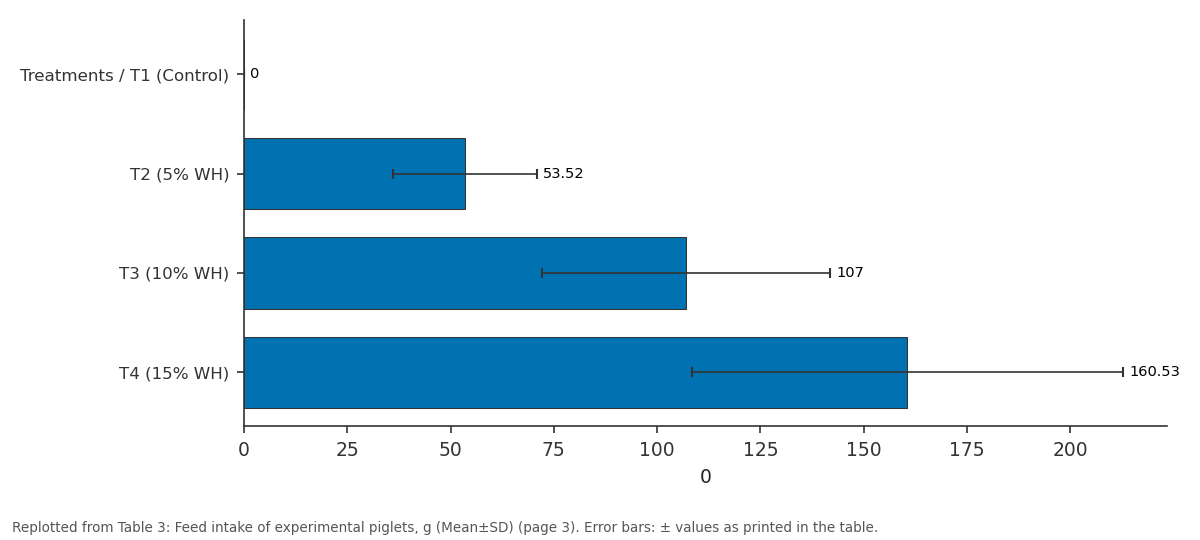
0: Treatments / T1... vs T2 (5% WH) vs T3 (10% WH) vs T4 (15% WH)
Replotted from Table 3 (page 3) of the original paper. Every bar is the paper's own table value.
View source evidence ↗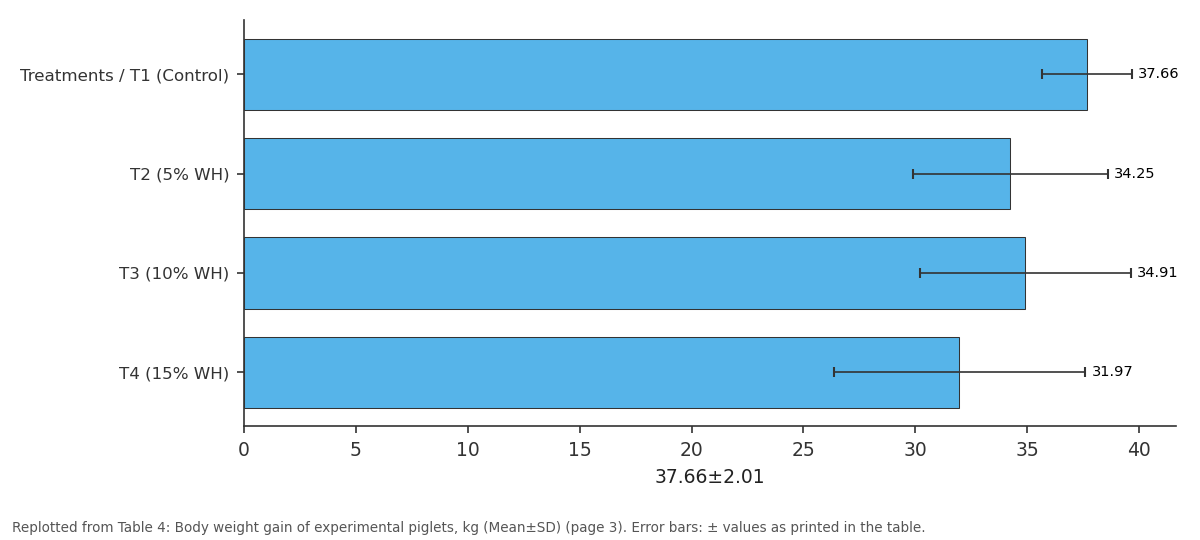
37.66±2.01: Treatments / T1... vs T2 (5% WH) vs T3 (10% WH) vs T4 (15% WH)
Replotted from Table 4 (page 3) of the original paper. Every bar is the paper's own table value.
View source evidence ↗Figures & tables
From the original paper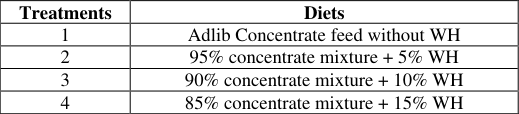 Table 1
 Table 2
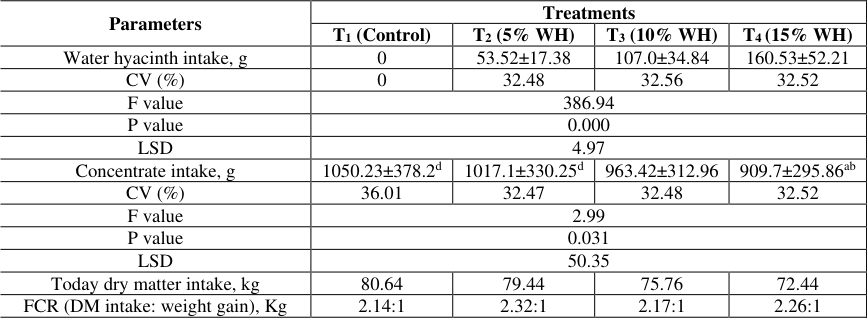 Table 3
 Table 4
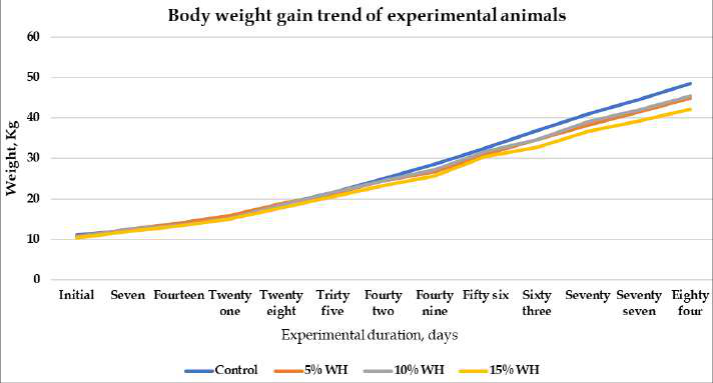 Figure 1
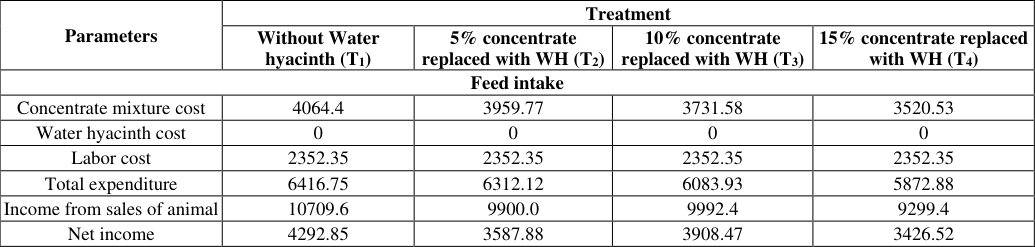 Table 5
Introduction
A pig enterprise contributes in many ways to improve the livelihood of poor and vulnerable small-scale farmers. Pork and other pig products provide for high value animal protein, the meat is easy to dress and has superior curing and storage qualities. Additional income is earned from the sale of animals and importantly from their products. This additional income can be used to invest in farm assets, pay for school fees and medical treatments. Pigs provide income for women, strengthening their role in families as well as in local communities. The sick and disabled can participate in pig raising as it does not require excessive labor and is not too complex in its management. The low start-up costs and small investments required for buildings and equipment are recovered fairly quickly as slaughter can take place at about six to eight months from farrowing (birth), pending on breed and feed availability. Pigs additionally can be considered as a store of wealth and a safety net in times of crisis. The pig, depending on feed and other management aspects, commonly grows rapidly to slaughter age and has a high reproductive rate compared to ruminants, making it a low risk investment with quick returns. Additionally, pig husbandry can be easily integrated with a series of other farming activities within the agricultural and aquaculture sectors. Pig production is a form of livestock keeping that does not necessarily require access to agricultural land and has therefore gained importance in the growing sector of peri-urban and urban small-scale livestock keeping (Dietze, 2011) [13] . Pig farming has been accepted socially and culturally by certain ethnic groups in Nepal. Pig farming trend is changing gradually due to urbanization some commercial and modern pig farming recently started in Nepal. Bampudke, Pakhribas black and Dharane Kalo Bangur etc. Exotic breeds of pigs such as Hampshire, Duroc and Yorkshire etc. are imported in Nepal since 1957 AD. The pig population of Nepal is estimated to be 1.43 million and producing 28214 MT pork per annum (Krishi diary, 2019) [17] .
Pork consumption has grown tremendously over the years across the Nepal, but production has not responded sufficiently to meet demand. One of the main reasons for rising pork demand is removal of cultural barriers that prevented people from consuming the meat. Most of the people who are growing pigs are overseas migrant workers who have returned home for good. Consumption of pork is going up in the country, as protein intake is continuously increasing due to rise in income level. Today, people of almost every ethnic background consume pork, which is pushing up demand for this meat product (Thapa, 2017) [31] . In swine production, feed alone represent 70-75% of total cost of production. In intensive pig production, pig directly compete with human being for feeding, since conventional fattening is based on the feeding of cereals like maize, wheat, oats, barley etc. along with other protein, mineral and vitamin supplements. Farmers are unable to support costly feeding program because of high cost of cereals and oil cakes. Novel feed ingredients are not traditionally been used for swine feeding. However, these can be used as supplemental ingredients to the basal ration in order to reduce the feed cost. To get profit from swine farming, one has to plan carefully to get maximum feed efficiency from a particular diet. One can easily reduce the feed cost using many locally available novel feed resources. The novel feeds can be used as supplemental ingredients which are available in large quantities at cheaper rate. Many novel feeds contain antinutritional factors which reduce the productivity of animals by hampering the digestibility of nutrients (Ngullie, 2019) [23] . WH has perhaps been a subject of more indecisive study than any other aquatic plant in recent years. Several scientists (Rogers and Davis, 1972; Cornwell et al, 1977; Soerjani, 1984) [28, 11, 29] reported that WH has been utilized as livestock feed, bio-fertilizer, sewage purifier and biogas production, paper and fiber (Bagnall et al, 1974) [6] , and dried hyacinth can be used as animal feed for cows, pigs, goats, etc (CWSCB, 1982) [8] . WH is one such new feed resource for pig which foliage and stem is commonly used as a supplementary feeding for pigs (Le et al., 2006 and Jafari, 2010) [19,16] . A maximum inclusion rate of 6-7% (on DM basis) was considered economically viable because of presence of anti-nutritional factors in it (Mako et al., 2011) [21] . WH is an invasive aquatic plant in most countries all over the world. It has been recognized for its high nutritional value (Poddar et al, 1991) [24] . According to an analysis by Abobarkr et al (1984) [4] , all of the essential amino acids were present at high levels in the leaf protein isolates of water hyacinth. One of the advantages of using WH in pig diets is its lysine content (Abobarkr et al, 1984) [4] , the first limiting amino acids for pig. WH have a water content of over 90 per cent. The crude protein contains between 10 and 26 percent, but the leaves contain higher levels (about 38 per cent). The mineral content depends directly on the water where the hyacinth grows, but the mean value ranges from 17 to 26 percent. The fibre level averages about 20 percent has made WH interesting for use as fodder to cattle, goats, pigs, ducks and tilapia fingerlings (Tham, 2015; Lareo and Bressani, 1981) [32,20] . However, published data are limited on its possibility to use for pig diet. Therefore, this experiment was carried out in order to assess the possibilities of replacing concentrate mixture with different levels of WH to a basal diet on growth performance and feed intake of piglets.
Materials and Methods
Materials and Methods
Experimental site and animal selection
An experiment was conducted on weaned piglets at Piggery Research Unit of Regional Agricultural Research Station, Tarahara, Sunsari from 12 September to 4 December 2019 for 84 days after adjustment period of seven days. Twenty piglets after weaning of 4-6 months age were allocated into four treatments each with 5 replications by using Completely Randomized Design. Experimental piglets were kept in cemented floor in group according to treatment. All experimental animals were drenched with Fenbendazole at the rate of 5 mg/kg body weight against internal parasites at the beginning of the experiment.
Diet composition
Compound feed containing 16% crude protein and metabolizable energy at the level of 2700 Kcal/kg were procured from Sagar Feed Industry, Itahari, Sunsari and water hyacinth was collected in the premises of Piggery Research Unit of RARS, Tarahara and National Buffalo Research Program, Tarahara, Sunsari. The WH plants were harvested lush green using local canoe. The plants were washed clean with the water and packed in plastic bags before taking them ashore. The root and petioles were immediately removed and discarded. After washing, leaves and stem were immediately chopped to an average size of about to 2 cm in length, dried in the shed until crispy while still retaining the greenish coloration and dry matter was achieved 25-30%. The dried WH was thereafter incorporated into basal diet at different levels of inclusion to replace the concentrate mixture weight. All diets were balanced for calcium and phosphorous as per the requirements.
Experimental diets
Four experimental diets as of treatments were thus prepared to feed the experimental animals (Table 1).
| Treatments | Diets |
|---|---|
| 1 | Adlib Concentrate feed without WH |
| 2 | 95% concentrate mixture + 5% WH |
| 3 | 90% concentrate mixture + 10% WH |
| 4 | 85% concentrate mixture + 15% WH |
Table text extracted from the original PDF; superscript letters are shown inline. The original table image is below.
View original table image
Feeding regime
Required amount of concentrate mixture and WH was mixed and provided twice a day (morning and evening) in group basis to the experimental animals. The experiment animals had free access to clean drinking water.
Chemical analysis
The samples of concentrate mixture and WH were sent to the Animal Nutrition Division, NARC, Khumaltar, Lalitpur for proximate analysis. Representative samples were analyzed for Dry Matter (DM), Crude Protein (CP), Crude Fibre (CF), Ether Extract (EE) and Ash contents (TA). The DM was determined by oven drying at 100°C for 24 hrs. Crude protein of the samples was determined by using the Kjeldahl method. Ether extract was determined by using Soxhlet apparatus. Total ash content was determined by ashing at 550 0 C in muffle furnace for 16 hrs.
(AOAC, 1980) [3] . Ether extract of the samples was determined using the Van Soest methods (Goering HK and Van Soest, 1970) [14] .
Observation recording
Total feed offered to the experimental piglets was recorded daily in group basis and refusal in the next morning. The body weight gain of individual piglet was measured at seven days interval in the morning before feeding.
Data analysis
Data of feed intake and body weight gain were analyzed by Oneway Annova test for every measurement using statistical package SPSS, version 16.
Results and Discussions Chemical composition of feed ingredients
Chemical composition of feed ingredients is presented in Table (2).
Feed intake
The feed intake of the experimental animals has been presented in Table (4). Table 3 showed that intake of WH was correlated with levels of inclusion. Intake was increased as per the rate of inclusion level which was highly significant (p<0.001) among diet groups. Highest intake of concentrate mixture was noted in T 1 (1050 g/day/animal) followed by T 2 (1017.1 g/day/animal) and T 3 (963.42 g/day/animal) which was significant (p<0.05) between T 1 and T 4 groups and T 2 and T 4 groups. Feed intake of T 3 and T 4 groups was noted insignificant. Similarly, highest FCR (DM intake: weight gain) was observed for T 1 (control) group (2.14:1kg) followed by T 3 (2.17: 1kg) and T 4 (2.26:1 kg).
| Parameters | Treatments | — | — | — |
|---|---|---|---|---|
| T1 (Control) | T2 (5% WH) | T3 (10% WH) | T4 (15% WH) | |
| Water hyacinth intake, g | 0 | 53.52±17.38 | 107.0±34.84 | 160.53±52.21 |
| CV (%) | 0 | 32.48 | 32.56 | 32.52 |
| F value | 386.94 | |||
| P value | 0.000 | |||
| LSD | 4.97 | |||
| Concentrate intake, g | 1050.23±378.2d | 1017.1±330.25d | 963.42±312.96 | 909.7±295.86ab |
| CV (%) | 36.01 | 32.47 | 32.48 | 32.52 |
| F value | 2.99 | |||
| P value | 0.031 | |||
| LSD | 50.35 | |||
| Today dry matter intake, kg | 80.64 | 79.44 | 75.76 | 72.44 |
| FCR (DM intake: weight gain), Kg | 2.14:1 | 2.32:1 | 2.17:1 | 2.26:1 |
Table text extracted from the original PDF; superscript letters are shown inline. The original table image is below.
View original table image
Body weight gain
The body weight gain trend of the experimental animals is presented in Table (3).
Cost benefit analysis
Cost benefit analysis is a systematic approach to estimating the strength and weaknesses of alternatives used to determine option which provide the best approach to achieving benefits while preserving saving (David et al, 2013) [12] . Benefits and costs in cost benefit analysis are expressed in monetary terms and are adjusted for the time value of money; all flows of benefits and costs over time are expressed on a common basis in terms of their net present value (David et al, 2013) [12] . In this study, cost benefit analysis was done by considering feed and labor costs and income from sales of experimental piglets. The detail of cost benefit is presented in Table (5). The pellet feed used in the experiment was procured from the Sagar Feed Industry, Itahari, Sunsari at the rate of NRs 45 / kg. The labor cost was taken considering the rule and regulations of Nepal Agricultural Research Council (NARC) for the fiscal year 2076/77. One labor was hired for the 91 days for feeding to experimental animals (20), cleaning of shed, to measure the feed refusal daily, to measure the body weight gain at seven days interval, to provide the fresh drinking water and to help the veterinarian to treat the sick animal if that occurred. The wages rate of labor per day was NRs 517.0. The total labor cost was calculated NRs 517 / day x 91 days (NRs 47047.0) and divided by 20 experimental animals (47047/20 =2352.25). After completion of experiment, experimental animals were sold out to the butchers at the rate of NRs 220 /kg live weight. If the experimental animals had been sold to breeder farmers the selling rate might be higher than NRs 220.0. Cost benefit analysis showed that replacement of concentrate mixture with WH at the rate of 10% was comparatively beneficial than that of 5 and 15% replacement (Table 5).
Discussions
The aim of this study was to evaluate the feed intake and growth performance of growing piglets by replacing concentrate mixture with WH at the rate of 0, 5, 10 and 15 percent in their basal diets. Experiment revealed that there was highly significant (p<0.001) effect of replacement of concentrate mixture with WH in different levels on feed and WH intake during entire experimental period. FCR of all experimental group was almost similar (2:1kg).
Barman et al (2015) [7] conducted an experiment on piglets by feeding three types of experimental diets containing WH at the rate of 0, 5 and 10% by replacing maize and designated as T 1 , T 2 and T 3 groups, respectively. In that study they found that there was no difference in DM intake (kg/d) across the groups. Digestibility coefficients (%) of nutrients were similar across the groups except crude fibre digestibility which was reduced significantly in T 3 group in comparison to other two groups. The average body weight gain (g/day) was statistically similar across all groups. The feed conversion ratio and cost of production per kg live weight was similar in all the groups. However, feed cost per kg gain was significantly (p<0.05) reduced in comparison to T 1 (control) group. Moreover, they concluded that WH foliage could replace 5% maize in ration of crossbred grower pigs without any adverse effect on body weight gain. Ngullie, L (2019) [23] reported that WH foliage is commonly used as a supplementary feeding for pigs in smallholder farms in Asia. It was reported that water hyacinth foliage could replace 5% maize in ration of crossbred grower pigs without any adverse effect on nutrient utilization. Akankali and Elenwo (2019) [1] conducted an experiment on piglets 24 large white weaner pigs of both sexes with initial live weight of 10-12 kg were randomly allocated to four dietary treatments by using CRD and each treatment replicated thrice with two piglets per replicate. A balance basal diet was formulated with soybean meal (SBM) as the protein source (T 1 control), in T 2 , T 3 and T 4 SBM was replaced with WH in the levels of 10, 20 and 30%, respectively. Experiment revealed that there was no significant influences of animal studies, growth and performance are important the treatments on average weekly feed conversion indices in evaluating productivity. The growth and ratio (weight: gain) among the treatment group performance indices of the pigs evaluated in the study was non-significant with increasing levels of WH. Similarly, analysis of variance showed the difference between the treatment groups (p>0.05) influence of WH on average final weight.
In case of growth performance, this study showed that there was no significant effect of different levels of concentrate mixture replacement with WH on growth performance of piglets from beginning to end of the experiment, however, highest total body weight gain and average daily gain was obtained in T 1 (control) group (37.66 kg and 448.33 g/day, respectively) than that of other treatment groups. This could be as a result of fairly adequate crude protein and amino acid profile of WH which was supposedly sufficient enough to cause the possible weight increment. This agrees with the findings of (Peo et al, 2001 and Parr et al, 1996) [25,26] who reported that pigs fed diets of protein concentration varying from 15%-20% CP adequately supplemented with lysine and methionine, gained sufficient weight. Bohman (2001) [5] reported that pigs fed with 20% crude protein produced weight gains and feed efficiency comparable to those fed 16% crude protein. Moreover, pigs have a unique ability to eat, digest utilize, and covert poor-quality unconventional feed ingredients to high quality meat. The good weight gain of the pigs fed dietary treatments could also be attributed to the presence of non-toxic or non-anti-nutritional factors in water hyacinth which would have inhibited growth. And, this agrees with Gilster and Wahlstrom (1999) [15] who reported that WH contains no toxic or anti-nutritional substance that depresses growth. Also, Perason et al (2001) [27] reported that as the particle size of feed containing crude fibre becomes smaller, better weight gains are obtained. The chopping of the WH to small sizes to pass through a 0.5mm screen after drying, could have aided in digestion, utilization of the plant and the consequent good weight gain. Ajuogu (2019) [2] conducted an experiment to determine the impact of feeding WH-based diets on the organ weights and carcass quality characteristics of weaner pigs. The weaner pigs were fed WH based meal at dietary levels of 0%, 10%, 20% and 30% inclusion Levels to replace SBM in the experimental diets. The result of the organs (Liver heart, kidney, spleen and lungs) and carcass weights revealed no significant difference (p>0.05) between the treatment groups and the control. The result of the lean fat deposit and back-fat thickness showed a significant difference among the pigs used in the study. The control diet (0%WH) had the highest fat content and diet IV (30%WH) had the least fat content. Since the lean fat deposit and back-fat thickness are a reflection of the fat deposits in the pig WH produced better (lean fat) pork than Soya bean meal. He concluded that WH had no poisonous impact on organs. Also, SBM has a better significant influence in terms of the fat deposit than water hyacinth. According to Suharsono (1979) [30] , mixing of WH up to 15% into the rations did not significantly affect pig growth and it could reduce the prices of the ration because reducing the amount of concentrate was needed.
A study conducted by Men et al (2006) [22] revealed that pig had shown good acceptance for WH and the pigs fed on WH based diets had better carcass appearance than the common diet fed pigs in Vietnam, because, pork exhibited low back-fat and body fat with excellent meat productivity (Choi, 2004 and Kim, 2012) [9, 18] . Inclusion of 5-15% of WH biomass in the pig feed did not affect daily gain in feed intake, fat thickness and loin eye area compared to control (Cui et al., 2004) [10] . As an animal feed, it has been used fresh. In experiments with pigs in southwest Colombia, fresh water hyacinth was substituted for 20 per cent of commercial feed without toxicological problems or effects on rate of growth (Lareo and Bressani, 1981) [20] . Ngullie, L (2019) [23] reported that WH foliage is commonly used as a supplementary feeding for pigs in smallholder farms in Asia. It was reported that WH foliage could replace 5% maize in ration of crossbred grower pigs without any adverse effect on nutrient utilization. Xing et al. (2001) [34] investigated the appropriate proportion of WH in pig feed and analyzed the economic benefits. The growing pig reached a standard weight of 90 kg, and the optimal ratio of concentrate to WH was 1:0.5 in the previous period and 1:1 in the later period. Compared with the control group, each pig saved 8184 kg of refined material, resulting in cost savings of 9.95 Chinese yuan.
Tacio (2009) [33] reported that 5% of water hyacinth in the total diet of pigs leads to significantly weight gains. But feed containing 30 percent of more of hyacinth can reduce weight gain by over 90 percent. These tests showed that water hyacinth as a feed for animals must be used with great care.
Conclusion
It can be concluded from this study that one of the real long term, economically viable and environmentally friendly solution to the WH menace was can be utilized it as feed ingredient in swine diets up to 15%. This will help in recycling WH into a useful feed resource, thereby help in reducing cost of feeding. However, further validation of this findings in farmers field is necessary.
Acknowledgement
AcknowledgementsAuthors are grateful to NARC for allocating fund and for the encouragement to conduct this experiment. Similarly, authors are thankful to Regional Director Mr Tika Ram Chapagain of RARS, Tarahara, Sunsari for providing experimental animals and space for this experiment. Authors are also thankful to the animal attendant (Mrs Sharada Hingmang) of piggery Research Unit of RARS, Tarahara for her hard works in shed cleaning, feeding of experimental piglets and weighing. Likewise, Mrs Kalpana Subedi (T4) and Dr Prakash Kumar Yadav (T5) of RARS, Tarahara also deserve appreciation for their work on data recording. Finally, thanks also go to Technical, Administrative and Financial staffs of Animal Nutrition Division, NARC, Khumaltar, Lalitpur for their moral and physical support during entire experimental period.
Figures and tables from the paper
| S/n | Ingredients | DM | OM | TA | CP | CF | NDF | ADF | ADL | HC | Cellulose |
|---|---|---|---|---|---|---|---|---|---|---|---|
| 1 | Water hyacinth | 18.61 | 96.69 | 3.31 | 13.51 | NA | 59 | 28.45 | 5.35 | 30.55 | 23.09 |
| 2 | Concentrate mixture | 89.31 | 93.48 | 6.52 | 24.81 | 8.32 | NA | NA | NA | NA | NA |
Table text extracted from the original PDF; superscript letters are shown inline. The original table image is below.
View original table image
| Parameters | Treatments | — | — | — | — | — | — |
|---|---|---|---|---|---|---|---|
| T1 (Control) | T2 (5% WH) | T3 (10% WH) | T4 (15% WH) | CV | F value | P value | |
| Initial weight, kg | 11.02±0.58 | 10.75±2.14 | 10.51±2.12 | 10.3±1.45 | 13.58 | 0.249 | 0.861 |
| Final weight, kg | 48.68±2.36 | 45.0±6.57 | 45.42±5.64 | 42.27±6.34 | 10.92 | 1.463 | 0.262 |
| Total Weight gain, kg | 37.66±2.01 | 34.25±4.35 | 34.91±4.72 | 31.97±5.62 | 13.14 | 0.854 | 0.481 |
| Average daily gain, g | 448.33±2.39 | 407.73±4.78 | 415.59±5.61 | 380.59±6.69 | 12.83 | 1.452 | 0.267 |
Table text extracted from the original PDF; superscript letters are shown inline. The original table image is below.
View original table image
References
34 in the original paper- Akankali JA, EI Elenwo. Use of water hyacinth as feedstuffs for animals in Nigeria. International Journal of Advances in Scientific Research and Reviews. 2019; 4(01):91-97.
- Ajuogu KP. Organs weight and carcass quality and characteristics of growing pigs fed graded levels of water hyacinth. Journal of Global Biosciences. 2019; 4(1):18711876.
- AOAC. Official Methods of Analysis. Association of Official Analysis Chemists, Washington DC, USA, 1980.
- Abobakr TM, NM Shemi, Messallam AS. Isolation and chemical evaluation of protein from water hyacinth. Plant foods for Human Nutrition. 1984; 34:67-73
- Bohman JC. The effect of graduate levels of alfalfa and aureomycin on growing fathering swine. Journal of Animal Science. 2001; 23:102-107
- Bagnall LO, TS Furman, JF Hentges, WJ No land, RW Shirley. Feed and fiber from effluent-grown water hyacinth. Proceedings Environmental Protection Agency Technology. Series EPA 660/2-7-041. NTIS. Springfleld, V.A, 1974.
- Barman K, Das, R Thomas, S Banik. Effect of replacement of maize with water hyacinth foliage on nutrient utilization in crossbred grower pigs. Indian Journal of Animal Science. 2015); 85(4):435-436
- CWSCB. Common Wealth Science Council. The blessing that is hyacinth. RT-27, 1982, 26
- Choi, YS. Studies on the pork quality of Korean native black pigs and its improvement through dietary manipulation. PhD. thesis. Kangwon National University, Chuncheon, Korea. 2004, 169
- Cui L, H Xiao, L Chen, Y Xu, Y Huang, J Chu, et al. Feeding effects of water hyacinth from Lake Dinshan on swine fattening. Feed Industry. 2004; 25(3):39-40
- Cornwell DA, Zoltek J Jr, Patrinely CD, des Furman T, Kim JI. Nutrient removal by water hyacinth. Journal Water Pollution Control Federation. 1977; 7:57-65
- David RP Ngulube, Adock D. A cost-benefit analysis of document management strategies used at a financial institution in Zimbabwe: A case study. South Asian Journal of Information Management. 2013; 15(2).
- Dietze K. Pigs for prosperity. Rural Infrastructure and Agro-Industries Division Food and Agriculture Organization of the United Nations, Rome, 2011.
- Goering HK, Van Soest. Forage fibre analysis apparatus, reagents, procedures and some application, ARS, USDA, handbook N 397, 1970.
- Gilster KE Whalstrom. Effect of protein leaves of swine fed to heavy weight on body weight gain and feed efficiency. Journal of Animal Science. 1999; 17:566-569.
- Jafari N. Ecological and socio-economic utilization of water hyacinth (Eichhornia crassipes). Journal of Applied Sciences and Environmental Management. 2010; 14(2):4349.
- Krishi Diary. Ministry of Agriculture and Livestock Development. Agriculture Information and Training Center, Harihar Bhawan, Lalitpur, Nepal, 2019.
- Kim GW. Analysis of carcass quality grades according to gender, back fat thickness and carcass weight in pigs. Korean Journal Animal Science Technology. 2012; 54:2933.
- Le TM, Yamasaki S, Caldwell JS, Yamada R, Takada R, Taniguchi T, et al. Effect of farm household income levels and rice-based diet or water hyacinth (Eichhornia crassipes) supplementation on growth/cost performances and meat indexes of growing and finishing pigs in the Mekong Delta of Vietnam. Animal Science Journal. 2006; 77:320-29.
- Lareo L, Bressani R. Crecimiento de Jacinto de Agua (Eichhornia crassipes), en el Tropico, Arch. Latinoamer. Nutr. 1981; 31:758.
- Mako AA, Babayemi OJ, Akinsoyinu AO. An evaluation of nutritive value of water hyacinth (Eichhornia crassipes) harvested from different water sources as animal feed. Livestock Research for Rural Development. 2011; 23(5). (Article 106) (http: // www.lrrd. org/lrrd23/5/mako23106.htm)
- Men LT, Yamasaki S, Caldwell JS, Yamada R, Takada R, Taniguchi T et al. Effect of farm household income levels and rice-based diet or water hyacinth (Eichhornia crassipes) supplementation on growth/cost performances and meat indexes of growing and finishing pigs in the Mekong Delta of Vietnam. Animal Science Journal. 2006; 77(3):320-329
- Ngullie L. Novel feeds for economic feeding of pigs. ACTO (animal science). KVK Longleng, ICAR RC for NEH Region, Nagaland Centre, 2019.
- Poddar KL Mandal. Banerjee GC. Study on water hyacinth -chemical of plant and water from different habitats. Indian Veterinary Journal. 1991; 68:833-837.
- Peo ER, Ashton GC, Spear VC, Carton DV. Protein and fat requirements of young pigs. Journal of Animal production. 2001; 137:995.
- Parr WH, Copper BS, Cox DRS, Wood JF. The small-scale manufacture of compound Animal feed Bulletin. 1996; 9:48-60.
- Pearson AM, Prestly B, Dutson JR. Growth and regulation in Farm Animals. 6th edition Elsre Publishers, London, UK, 2001, 222-225.
- Rogers JJ, Davis DE. Nutrient removal by water hyacinth. Weed Science. 1972; 20:123-128.
- Soerjani DS. Indonesia experience in water hyacinth utilization: Notes on Aquatic Weeds. Indian Journal of Agricultural Science. 1984; 4:371-37.
- Suharsono AK. Pemanfaatan Eceng Gondok sebagai Makanan Ternak Non Ruminansia. Prosiding Seminar Penelitian dan Penunjang Pengembangan Peternakan II, LPP. Bogor, 1979, 3-8.
- Thapa B. Demand for pork meat in Nepal. The Kathmandu Post, 2017.
- Tham HT. Utilization of water hyacinth as animal feed. Review Article. Journal of Engineering and Applied Sciences. 2015; 4(1):1-6
- Tacio HD. Water hyacinth ecological value, environmental impacts. Gala Discovery, 2009.
- Xing YH, YX Ma, Wang R, Wang XJ. Appropriate matching ratio and economic benefit analysis of finishing pigs fed water hyacinth. Liaoning Agric. Sci. 2001; 2:45.