
Research article · 2020 · Full text
International Journal of Veterinary Sciences and Animal HusbandrySurveillance of European honeybee subspecies distribution in Chiang Mai, Thailand
Volume 5(2) · Pages 04–07
Research areasInsect and Pesticide ResearchPlant and animal studiesInsect and Arachnid Ecology and Behavior
Abstract
Author-writtenNowadays the most common subspecies of western honeybee or European honey bee (Apis mellifera) have 28 subspecies around the world. The subspecies are divided into four major branches were confirmed by mitochondrial DNA analysis. African subspecies belong to branch A, north western European subspecies branch M, south western European subspecies branch C and Middle Eastern subspecies branch O. The different sub species of European honeybees have different characterization factors such as tolerances of environmental temperature changes, specific diseases resistant, defence behaviour and other economically important Traits. In this studied we collected the samples from 50 colonies of Apis mellifera from January to March 2017 at Chiang Mai, Thailand and used PCR-RFLP to identify mitochondrial lineages and subspecies of European Honeybees. There have three different subspecies of Apis mellifera such as Thai A1 Thai A2 and Thai B in Chiang Mai. Province, Thailand. Thai A group are similar match to C or east European lineage A.m. ligustica and A.m. carnica and Thai B group are similar to the match of O or Middle Eastern lineage, A.m. syriaca and A.m. lamarckii. The Haplotype group of ThaiA1 (38% of colonies) and group ThaiA2 (52%) Haplotype group ThaiB (10%).
Summary
Source-checkedPlain-language reading of the full paper, prepared with AI and checked against the text. Each point links to the authors' own words.
Why it matters
- European honeybee subspecies vary in economically important traits, including their defense behavior, disease resistance, and tolerance to temperature changes. View evidence ↗
- Northern Thailand is a critical region for beekeeping, containing 66% of the country's total honey bee colonies and 52% of its beekeepers. View evidence ↗
- Large numbers of European honeybees (Apis mellifera) were imported from Taiwan to Chiang Mai and Lampoon in the 1970s for commercial use. View evidence ↗
The question
- The study aimed to clarify the maternal ancestry of European honeybees in Chiang Mai Province, Thailand, using PCR-RFLP analysis of mitochondrial DNA. View evidence ↗
What they did
- Samples were collected from 50 honeybee colonies across five different districts in Chiang Mai, Thailand, between January and March 2017. View evidence ↗
- Total DNA was extracted from one honeybee thorax per colony using the RBC Real genomic DNA extraction kit. View evidence ↗
- The intergenic region between the tRNAleu and COII genes was amplified using specific primers E2 and H2. View evidence ↗
- The study utilized PCR-RFLP analysis with the restriction enzymes Dra I and Hinf I to identify mitochondrial lineages. View evidence ↗
What they found
- Three different subspecies of Apis mellifera, Thai A1, Thai A2, and Thai B, were identified in Chiang Mai Province. View evidence ↗
- The Thai A group matched the C (East European) lineage (A.m. ligustica and A.m. carnica), while the Thai B group matched the O (Middle Eastern) lineage (A.m. syriaca and A.m. lamarckii). View evidence ↗
- Among the colonies sampled, the distribution of haplotypes was 52% for Thai A2, 38% for Thai A1, and 10% for Thai B. View evidence ↗
- Comparing 2017 data to 2007 data, the distribution of the Thai A2 subspecies in Chiang Mai increased, while no new honeybee species were introduced. View evidence ↗
What it means
- The authors conclude that while Thai European honeybee subspecies are resistant to local diseases and climate changes, their breeding and production quality are inferior to those of European honeybees. View evidence ↗
- The authors recommend upgrading the quality of queens, worker foraging activities, and honey production quality to improve beekeeping in Thailand. View evidence ↗
Visual summary
1 visualsIllustrations explain the paper; they do not show study data.
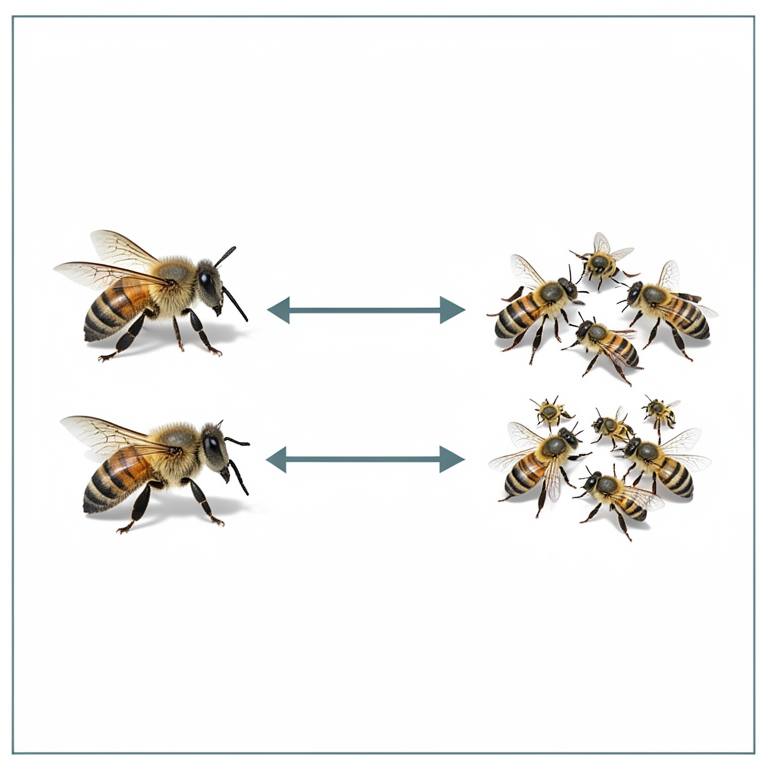
Lineage Mapping
AI-generated conceptual illustration (European honeybee (Apis mellifera)). It explains the idea and does not show study data.
View source evidence ↗Figures & tables
From the original paper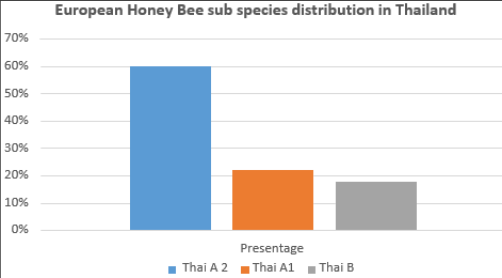 Figure 1
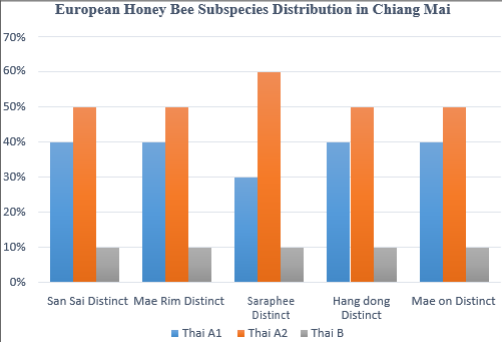 Figure 2
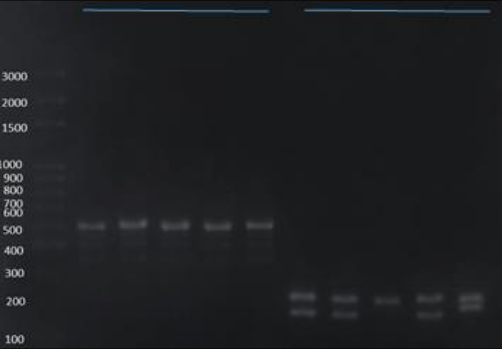 Figure 3
Introduction
In Thailand, there are four native species of honey bees: Apis andreniformis, Apis cerana, Apis dorsata and Apis florea (Oldroyd and Wongsiri, 2006) [17] . Thailand is a tropical country it has various plantation and several kinds of flora are blooming in all seasons. Especially in the north of Thailand, have plenty of nectar resources and suitable climate for beekeeping (Oldroyd and Wongsiri, 2006, Chantawannakul, de Guzman, Li, and Williams, 2015) [17,4] . There are four native species of honey bees: Apis andreniformis, Apis cerana, Apis dorsata and Apis florea (Oldroyd and Wongsiri, 2006) [17] . Today beekeeping in Thailand have more than 500,000 of European honey bee colonies and 1,000 beekeepers all over the country (Suwannapong, Benbow, and Nieh, 2011) [25] . Apis mellifera L. was introduced to Chulalongkorn University, Bangkok Thailand in the early 1940s and 1953 Introduced to Kasetsart University (Seanbualuang, P., 2012) [26] . At 1970s there were imported large numbers of A. mellifera from Taiwan to Lampoon and Chiang Mai in northern Thailand for commercial purposes (Wongsiri et al., 1995) [27] . Beekeeping for Apis mellifera were spread out in northern Thailand, especially Chiang Mai province, Thailand. Beekeepers distributions in northern Thailand 7 provinces such as Chiang Mai, Chiang Rai, Phra, Lamphun, Lampang, Phayao, and Nan. In the Northern Thailand have 66% of total honey bee colonies in Thailand and 52% of total beekeepers (Suwannapong, G., et al. 2011) [25] . There are 28 subspecies have been described from A. mellifera's native range in Europe, Africa and the Middle East, based primarily on morphometric variation (Ruttner, 1988; Engel, 1999) [20] . The different sub species of European honey bees have different characterization factors such as tolerances of environmental temperature changes, specific diseases resistant, defence behaviour and other economically important Traits (Ruttner, 1988) [20] . The Studies of A. mellifera mitochondrial DNA have at least 4 major mitochondrial lineages such as M or West European, C or Eastern Mediterranean, A or African, (Hall and Muralidharan, 1989; Arias and Sheppard, 1996) [15,2] and O or Middle Eastern lineage (Franck et al., 2000) [12] . A possible fifth lineage, Y, has been described from Ethiopia (Franck et al., 2001) [13] . Until 2006 the ancestry of A. mellifera in Thailand is unknown, then the matrilineal origins of Apis mellifera were recorded as 5 rear and 3 major subspecies of Apis mellifera by PCR-RFLP and direct DNA sequencing (Suppasat. T., et al., 2007) [24] . The RFLP (Restriction Fragment Length Polymorphisms) is the revealed by the digesting of the whole entire mitochondrial genome with restriction endonucleases. PCR-RFLP is more convenient than RFLP because it is revealed within a specific PCR-amplified region. The most popular PCR amplification of the non-coding region located between the tRNAleu and COII genes by digestion with the Dra restriction enzyme, commonly known as Dra I test. It is widely used in Honey bees maternal identification Clarke et al., 2002; Pinto et al., 2004) [5,18] . In this research to clarify the maternal ancestry of A. mellifera in Chiang Mai Provence, Thailand used PCR-RFLP analysis of four regions of mtDNA restricted with the 6-base restriction enzymes Dra I and a 4base restriction enzyme, Hinf I.
Materials and Methods
Materials and Methods
Collections
Apis mellifera samples were collected between January to March 2017 from 50 colonies from 5 different distinct in Chiang Mai Thailand. All samples were kept in 95% ethanol and stored at -20 •C until extraction. Because it is helpful in phylogeographical studies, easy to understand in natural hybrid zone, detecting of new species from foreign queen's introduction and tracking on temporal changed of honey bee maternal compositions (Cánovas et [3,16,5,13,12,7,11] . PCR-based assays, colony identification using the DraI test can be performed in a small-sized laboratory equipped with basic equipment. The DraI test was adopted as the standard for honey bee maternal identification, for several reasons. Because it has proven to be the most powerful and informative. And COI-COII/DraI variation has been widely documented across natural and introduced honey bee ranges. The combination of length and restriction-site polymorphisms produced by the DraI test has resolved over 100 haplotypes (Franck et [13,3] . In this research to determine the RFLP pattern, the digested products of each samples are electrophoresed in 1.5% Agarose gel at 110V for 90 min.
PCR-RFLP analysis
PCR-RFLP analysis
Result
Restriction enzyme digestion of PCR products are summarized in amplification of tRNAleu-COII revealed fragments of two sizes. Digestion of this fragment with Dra I produced a single pattern and Hinf I have two restriction patterns found. According to recent research got the amplification of tRNAleu-COII revealed fragments of two sizes such as 573 bp and 837p. The smaller fragment was defined as "ThaiA", which is the typical of the C lineage. The digestion of this fragment with Hinf I revealed two restriction patterns which defined as "ThaiA2" and the larger fragment were defined as "ThaiB". When the compared of recent research the result of the European Honey Bee Sub species distribution in Chiang Mai Province have three different subspecies such as "Thai A1", "Thai A2" and "Thai B". Thai a group are similar match to C or east European lineage A.m. ligustica and A.m. carnica and Thai B group are the match similar with O or Middle Eastern lineage, A.m. syriaca and A.m. lamarckii. The Haplotype group of ThaiA1 (38% of colonies) and group ThaiA2 (52%) Haplotype group ThaiB (10%). [27] . From 1970, the European honeybees are distributed in Chiang Mai Provence. Suppasat. T, et al., 2007 [24] , studied matrilineal origins of European Honeybees Apis mellifera in Thailand. The three subspecies of A. mellifera were distributed around the country. Although the bee colonies were increased more than two times the honey production and honeybee product production are didn't increase too much. Thai European Honey Bee sub species can be resistant for climate changes and local diseases problems, but the production and breeding are not so good like European honeybees. To the best quality of beekeeping in Thailand the keeping bees are needed to upgrade the best honey production quality bees, the worker bees foraging activities and the best breeding quality of queen.
Figures and tables from the paper
References
27 in the original paper- Alburaki M, Moulin S, Legout H, Alburaki A, Garnery L. Mitochondrial structure of Eastern honey bee populations from Syria, Lebanon and Iraq. Apidologie. 2011; 42:628641. http://dx.doi.org/10.1007/s13592-011-0062-4.
- Arias MC, WS S. Molecular phylogenetics of honey bee subspecies (Apis mellifera L.) inferred from mitochondrial DNA sequence. Mol. Phylogenet. E. 1996; 5:557-566.
- Cánovas F, De La Rúa P, Serrano J, Galián J. Geographical patterns of mitochondrial DNA variation in Apis mellifera iberiensis (Hymenoptera: Apidae). Journal of Zoological Systematics and Evolutionary Research. 2008; 46(1):24-30. http://dx.doi.org/10.1111/j.14390469.2007.00435.x
- Chantawannakul P, De Guzman LI, Li J, Williams GR. Parasites, pathogens, and pests of honeybees in Asia. Apidologie. 2015; 47(3):301-324. doi:10.1007/s13592015-0407-5
- Clarke KE, Rinderer TE, Franck P, Quezada-Euán JJG, Oldroyd BP. The Africanization of honey bees (Apis mellifera L.) of the Yucatan: a study of a massive hybridization event across time. Evolution. 2002; 56(7):1462-1474. http://dx.doi.org/10.1111/j.00143820.2002.tb01458.x
- Collet T, Ferreira KM, Arias MC, Soares AEE, Del Lama MA. Genetic structure of Africanized honey bee populations (Apis mellifera L.) from Brazil and Uruguay viewed through mitochondrial DNA COI-COII patterns. Heredity. 2006; 97:329-335.
- De La Rúa P, Serrano J, Galián J. Mitochondrial DNA variability in the Canary Islands honey bees (Apis mellifera L.). Molecular Ecology. 1998; 7(11):1543-1547. http://dx.doi.org/10.1046/j.1365-294x.1998.00468.x
- De La Rúa P, Galián J, Serrano J, Moritz RFA. Genetic structure and distinctness of Apis mellifera L: populations from the Canary Islands. Molecular Ecology. 2001; 19:1733-1742. http://dx.doi.org/10.1046/j.1365294X.2001.01303.x
- De La Rúa P, Galián J, Serrano J, Moritz RFA. Molecular characterization and population structure of the honey bees from the Balearic Islands (Spain). Apidologie. 2001; 32:417-427. http://dx.doi.org/10.1051/apido:2001141
- Engel MST. The taxonomy of recent and fossil honeybees (Hymenoptera: Apidae; Apis). J Hymenoptera Res, 1999, 165-196.
- Franck P, Garnery L, Solignac M, Cornuet JM. The origin of west European subspecies of honey bees (Apis mellifera): New insights from microsatellite and mitochondrial data. Evolution. 1998; 52(4):1119-1134. http://dx.doi.org/10.2307/2411242
- Franck P, Garnery L, Celebrano G, Solignac M, Cornuet JM. Hybrid origin of honey bees from Italy (Apis mellifera ligustica) and Sicily (A.m. sicula). Molecular Ecology. 2000; 9:907-921. http://dx.doi.org/10.1046/j.1365294x.2000.00945.x
- Franck P, Garnery L, Loiseau A, BP O, HR, H MS et al. Genetic diversity of the honeybee in Africa: Microsatellite and mitochondrial data, Heredity. 2001; 86:420-430.
- Garnery L, Cornuet JM, Solignac M. Evolution History of Honey Apis mellifera inferred from mitochondrial DNA analysis. Molecular Ecology. 1992; 1:145-154.
- Hall, Muralidharan K. Evidence from mitochondrial DNA that African honey bees spread as continuous maternal lineages, Nature. 1989; 339:211-213.
- Jensen AB, Palmer KA, Boomsma JJ, Pedersen BV. Varying degrees of Apis mellifera ligustica introgression in protected populations of the black honey bee, Apis mellifera mellifera, in northwest Europe. Molecular Ecology. 2005; 14:93-106.
- Oldroyd, Wongsiri S. Asian Honey Bees. Biology, Conservation and Human Interactions. Harvard University Press, Cambridge, Massachusetts, 2006, 13-35.
- Pinto MA, Rubink WL, Coulson RN, Patton JC, Johnston JS. Temporal pattern of Africanization in a feral honeybee population from Texas inferred from mitochondrial DNA, Evolution. 2004; 58:1047-1055.
- Pinto MA, Muñoz I, Chávez-Galarza J, De La Rua P. The Atlantic Side of the Iberian Peninsula: a hot-spot of novel African honey bee maternal diversity. Apidologie. 2012; 43:663-673. http://dx.doi.org/10.1007/s13592-012-0141-1
- Ruttner F. Biogeography and taxonomy of honeybees, Springer-Verlag, Berlin. Sanpa, 1988.
- Sa, Chantawannakul P. Survey of six bee viruses using RT-PCR in Northern Thailand. J Invertebr Pathol. 2009; 100(2):116-119. doi:10.1016/j.jip.2008.11.010
- Rortais A, Arnold G, Alburaki M, Legout H, Garnery L. Review of The DraI COI-COII test for the conservation of the black honey bee (Apis mellifera mellifera). Conservation Genetics Resources. 2011; 3:383-391. http://dx.doi.org/10.1007/s12686-010-9351-x
- Shaibi T, Munoz I, Dall'olio R, Lodesani M, De La Rua P, Moritz RFA. Apis mellifera evolutionary lineages in Northern Africa: Libya, where orient meets occident. Insectes Sociaux. 2009; 56:293-300.
- Suppasat T, Smith DR, Deowanish S, Wongsiri S. Matrilineal origins of Apis mellifera in Thailand. Apidologie. 2007; 38(4):323-334. doi:10.1051/apido:200701
- Suwannapong G, Benbow ME, Nieh JC. Biology of Thai Honeybees: Natural History and threats In: Bees: Biology, Threats and Colonies Editor: Richard M. Florio, 2011, 198.
- Seanbualuang P. Basic Knowledge of Beekeeping, Naresuan University Journal. 2012; 20(2):93-100.
- Wongsiri Chanchao C, Deowanish S, Aemprapa S, Chaiyawong T, S P, S L. Honeybee diversity and beekeeping in Thailand. Bee World. 1995; 81:20-29.