
Research article · 2020 · Full text
International Journal of Veterinary Sciences and Animal HusbandryPost-weaning growth performances of guinea pigs (Cavia porcellus) feed on a diet containing Ipomea batatas leaves and/or Stylosanthes guianensis meal
Volume 5(5) · Pages 49–55
Research areasRabbits: Nutrition, Reproduction, HealthAnimal Nutrition and Physiology
Abstract
Author-writtenGuinea pigs are monogastrics herbivores then, plants play an important role in their diet. In Sub-Saharan Africa many plant of less importance in human nutrition can be valorized in the guinea pigs feeding. This study which was carried out at the Research and Experimental Farm (REF) of the Faculty of Agronomy and Agricultural Sciences (FAAS) aim to evaluate the feeding potential of Ipomea batatas leaves and Stylosanthes guianensis. A total of 36 guinea pigs of 3 weeks aged, born at the REF were sexed, identified and randomly distributed according to a factorial design of 4 rations and sexes. Each plant were harvested individually, dried, crushed and mixed with by-products in order to constitute different diets (T0 (control), TFP (20% leaves flour of I. batatas), TST (20% flour of S. guianensis) and TFP + ST (10% leaves flour of I. batatas + 10% flour of S. guianensis)). Each animal received 60 g of feed corresponding to its batch every day between 6 and 8 Am. Refusals were collected and weighed before any new service in other to determine the feed intake. Weight growth was monitored by weighing of the animals from the beginning of the study and then once a week until the 16th week. The results show that: Food consumption was comparable between sex and between diets. The TFp + St diets gave better weight gains (352.00g and 2.92 g / day respectively for total gains (TG) and average daily gains (ADG) in females as well as the best consumption index (7.87) in males. Males exhibited a significantly higher weight with TSt and TFp + St diets compared to females. The RFp + St diet seem to be the most appropriate for better post-weaning growth of guinea pig.
Summary
Source-checkedPlain-language reading of the full paper, prepared with AI and checked against the text. Each point links to the authors' own words.
Why it matters
- Developing small-breeding species is considered a key strategy for improving food security, generating income, and fighting protein malnutrition. View evidence ↗
- In Sub-Saharan Africa, plants that are not highly valued for human nutrition can be used as resources for feeding guinea pigs. View evidence ↗
- The high cost of conventional protein sources like fishmeal and soybean meal limits their use in guinea pig diets, prompting a search for alternative protein sources. View evidence ↗
The question
- The study aimed to evaluate the potential of using Ipomea batatas leaves and Stylosanthes guianensis as feed for guinea pigs. View evidence ↗
What they did
- The experiment used 36 guinea pigs, aged 3 weeks, divided into four groups of 9 animals each. View evidence ↗
- Four diets were tested: a control (T0), 20% I. batatas leaves (TFP), 20% S. guianensis (TST), and a combination of 10% I. batatas and 10% S. guianensis (TFP + ST). View evidence ↗
- Animal weight growth was monitored weekly from the start of the study until the 16th week. View evidence ↗
- The researchers measured food consumption, total gain (TG), average daily gain (ADG), and the feed conversion ratio (FCR). View evidence ↗
What they found
- The gender of the guinea pigs did not have a significant effect on their food consumption. View evidence ↗
- Female guinea pigs fed with any of the forage-supplemented diets (TFP, TST, or TFP+ST) showed significantly higher weight gains than those in the control group. View evidence ↗
- The combined TFP + ST diet resulted in the highest weight gains for females, with a total gain of 352.00g and an average daily gain of 2.92 g/day. View evidence ↗
- Males fed the combined TFP + ST diet had a significantly lower (better) feed conversion ratio compared to males on the T0, TFP, and TST diets. View evidence ↗
- The specific protein source used in the diet did not significantly affect the total gains or average daily gains for males or for the animals regardless of sex. View evidence ↗
What it means
- The authors conclude that combining I. batatas leaves and S. guianensis meal in the diet is the most suitable option for promoting post-weaning growth. View evidence ↗
Visual summary
2 visualsIllustrations explain the paper; charts are replotted from the paper's own table values.
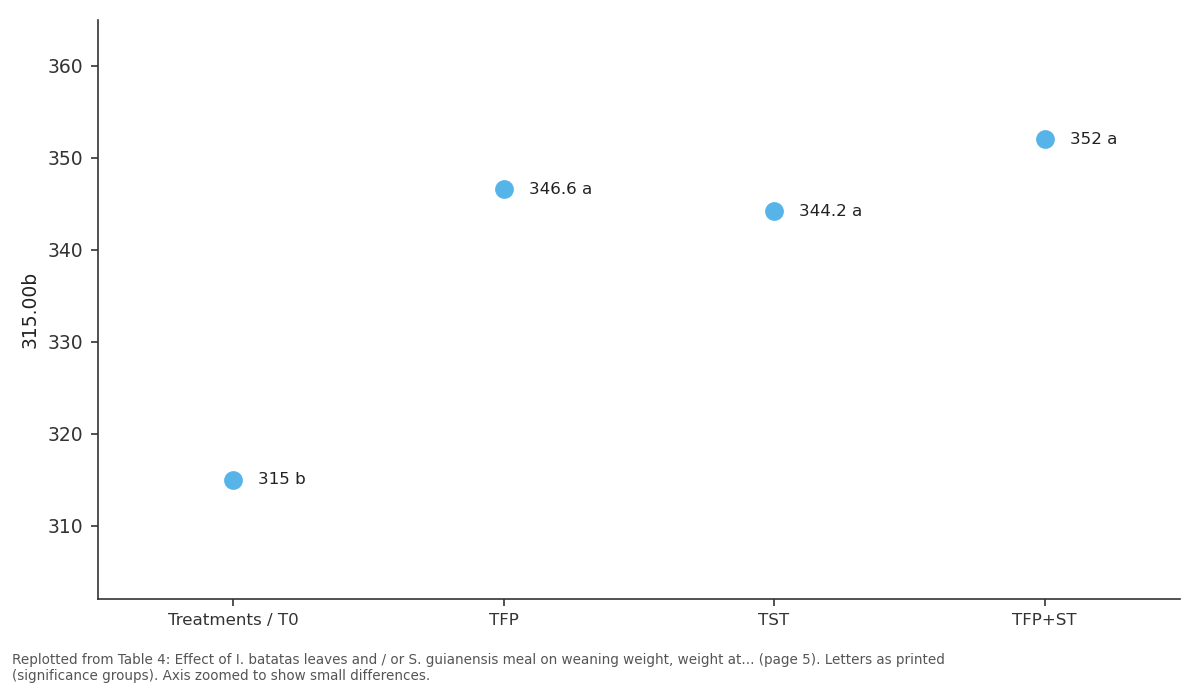
315.00b: Treatments / T0 vs TFP vs TST vs TFP+ST
Replotted from Table 4 (page 5) of the original paper. Every bar is the paper's own table value.
View source evidence ↗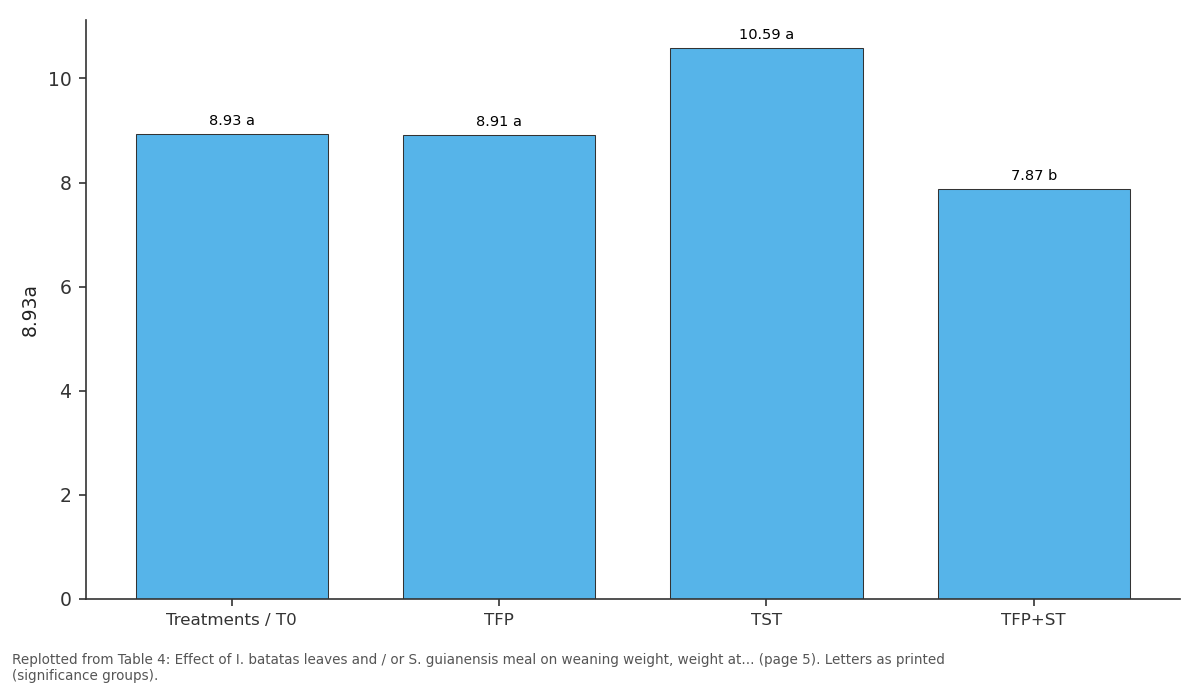
8.93a: Treatments / T0 vs TFP vs TST vs TFP+ST
Replotted from Table 4 (page 5) of the original paper. Every bar is the paper's own table value.
View source evidence ↗Figures & tables
From the original paper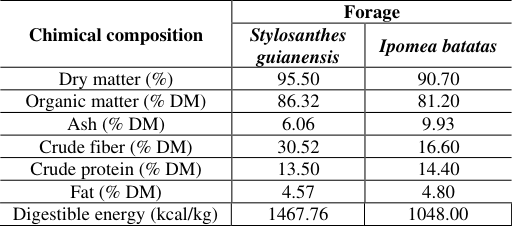 Table 1
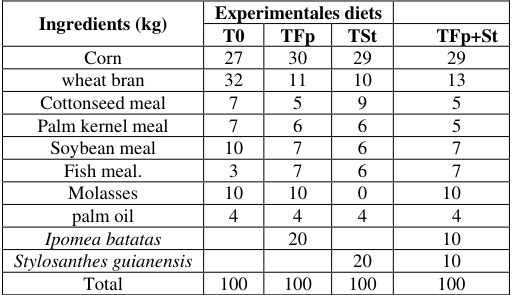 Table 2
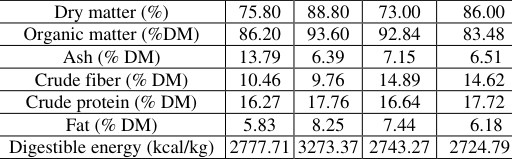 Table 3
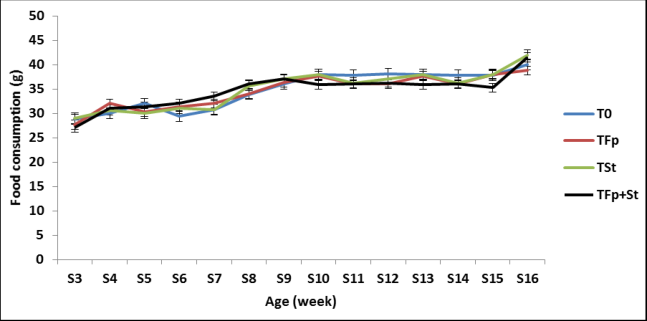 Figure 2
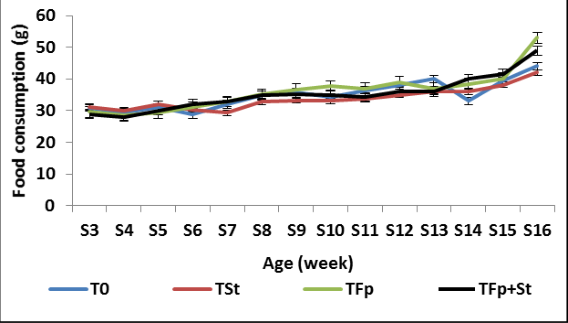 Figure 1
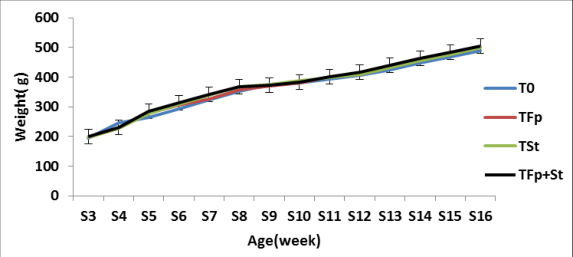 Figure 5
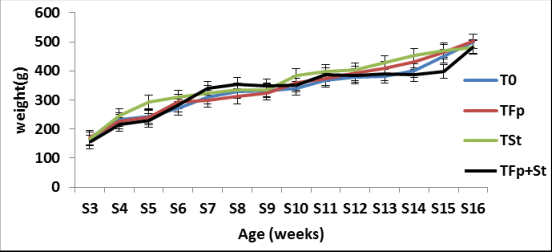 Figure 4
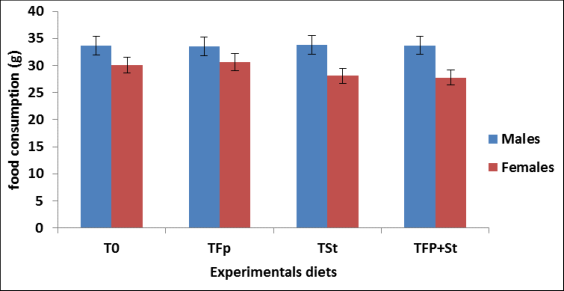 Figure 3
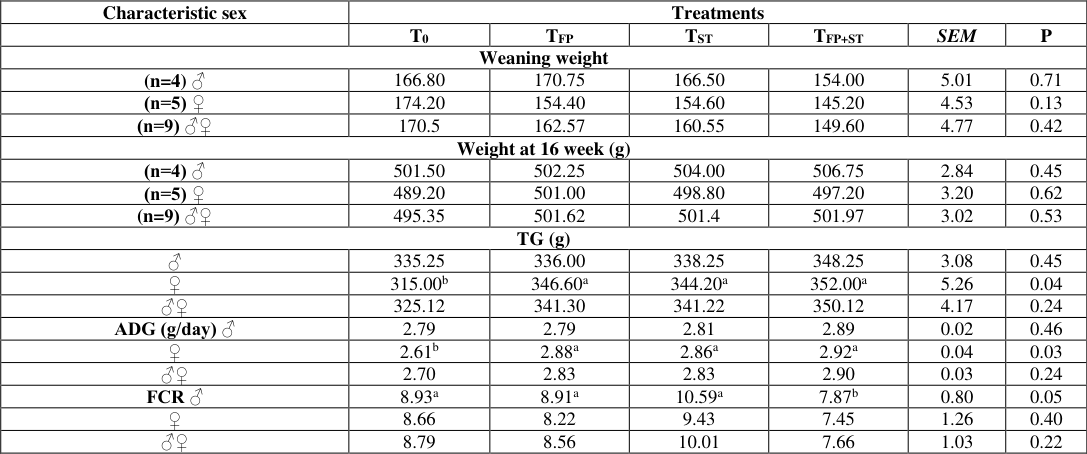 Table 4
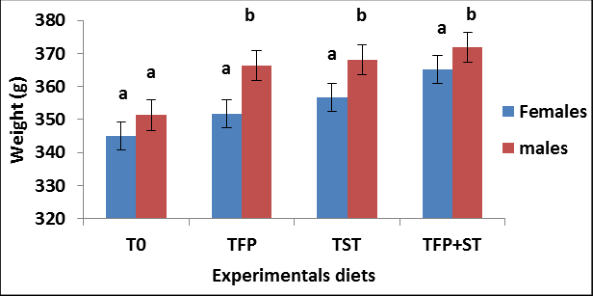 Figure 6
Introduction
The development of small-breeding species appears to be an essential solution of the fight against protein malnutrition, for food security and for income generation (Mettre, 2011) [7] . This category, include caviaculture. From Latin America, carviaculture is widely practiced in Cameroon, where it constitutes a pledge of food security by providing an important source of protein, especially for populations whose income does not allow easy access to meat (Yiva et al., 2014; Noumbissi et al., 2014) [19,13] . Indeed, the guinea pig is a small, very prolific and easily manageable monogastric herbivorous which makes better use of fibers and provides good quality meat (rich in proteins, B vitamins and low in fat) depending on the type of diet given (Mettre, 2011) [7] . Its carcass yield varies from 50-70% (Kouakou et al., 2017; Zougou et al., 2017) [6,20] . Despite these advantages, carviaculture suffers overall from a lack of monitoring and technicality (Miégoué et al., 2016) [8] which leads to low production. Improving the productivity of guinea pigs and intensifying carviaculture can be achieved by a balanced diet which consider their nutritional needs and by better management of the diet (Miégoué et al., 2016) [8] . However, conventional ingredients (soybean meal, fishmeal, etc.) likely to overcome protein deficiencies, due to their high cost, limit their use in feeding monogastric herbivorous such as guinea pigs. Several research studies have therefore been initiated to improve the use of alternative sources of protein; in particular legumes foraged in guinea pig diet (Miégoué et al., 2018; Mouchili et al., 2019; Nguedia et al., 2019) [8,9,11,12] . It is in this quest for locally available sources of good and available protein that this study is investigated in other to evaluate the effect of Stylosanthes guianensis and Ipomea batatas leaves meal in diet on guinea pigs growth. S. guianensis is valuable forage rich in protein which can be used to supplement the diet of ruminants during dry season (Thang et al., 2010). Its high fiber content (30-38%) provides flexibility of choice in feed ingredients as it can replace both energy and protein sources (Cook et al., 2005) [2] . Pen et al. (2013) [15] revealed that including 30% of S. guianensis leaves in the diet would significantly increase the intake of organic matter in zebu. But its low lysine content can lead to amino acid imbalance (Phengsavanh et al., 2013) [16] . The leaves of I. batatas are known to be a good source of antioxidants, vitamins (A, B2, C, and E) and protein (19-29%) with a lysine content of 4g / 100g of total nitrogenous matter (An et al., 2003) [1] . The combination of these forages could therefore represent an interesting alternative for supplementing diet of guinea pigs. It is to illuminate this perspective that the present work was initiated and proposes to contribute to the improvement of guinea pig feeding through the evaluation of S. guianensis and / or I. batatas leaves on the guinea pigs post-weaning growth.
Material and Methods
The study was conducted between October 2019 and March 2020 at the Research and Experimental Farm (REF) of the Faculty of Agronomy and Agricultural Sciences of the University of Dschang located in the West Cameroon higher lands. At 15th degree of the East Meridian, at latitude 5 ° 26 '27 "North and at longitude 10 ° 26' 29" East. Precipitation varies between 1,500 and 2,000 mm per year with an average annual temperature of around 20°C, total annual insolation of around 1,800 hours and an average relative humidity varying between 40 and 90%. The climate is Cameroonian type modified by altitude with a rainy season that goes from mid-March to mid-November and a dry season that goes from mid-November to mid-March. The original vegetation of the region is a shrub savannah with in places gallery forests (Pamo et al., 2005) [14] . For this study, 36 guinea pigs of 3 weeks age were divided into four groups of 9 animals each. Each group was then divided into two sub-groups according to sex (ie 5 females and 4 males), as to constitute comparable lodges according to live weight. The animals were raised in boxes made of plywood (1m long, 0.8m wide and 0.6m high) each equipped with lighting and electric heating, 2 woody feeders for the compound feed and two concrete water troughs. These boxes were fixe in one of the livestock buildings made at the Research and Experimental Farm of University of Dschang. Animals were raised on the ground, on a litter of 5cm thick made up of untreated dry wood chips. The litter was renewed every 3 days to avoid accumulation of feces and urine. Lodges were equipped with a cover of small mesh to protect animals from mice and other predators that may accidentally enter the livestock building. The complete cleaning of the building followed by the disinfection of boxes was done with bleach at a dose of 125 ml per 15l of water before the animals were introduced. The anti-stress (amine total at a rate of 1g per 1l of water) was administered in the drinking water three days before and after any manipulation. To avoid a possible vitamin C deficiency, a tablet of 240 mg vitamin C was diluted in 1.5 l of drinking water and served ad libitum from the introduction of the animal to the end of the trial. Sweet potato leaves (Ipomea batatas) were harvested in a farmer farm in Santchou agricultural zone and Stylosanthes guianensis was harvested in the REF forage field. Table 1 shows the nutritional value of the forages used. The leaves of each plant were harvested individually, dried, crushed and mixed with 10% sugar cane molasses as well as the ingredients (corn, wheat bran, cottonseed meal, soybean meal, palm kernel meal, fish meal. and palm oil) purchased from resellers of agricultural by-products in the city of Dschang to constitute different diets (T0, TFp, TSt and TFp + St). A sample of 100 g of each experimental diet was taken, transported in the animal production and nutrition laboratory to be dried in an oven at 60 0 C for 12 hours (until constant weight), then ground using a tri-hammer grinder fitted with a 1 mm mesh sieve and stored in plastic bags for the evaluation of their dry matter (DM), organic matter (OM), crude protein (CP), and crude fiber (CF) content according to the method described by AOAC (2000).
| Chimical composition | Forage | — |
|---|---|---|
| Stylosanthes guianensis | Ipomea batatas | |
| Dry matter (%) | 95.50 | 90.70 |
| Organic matter (% DM) | 86.32 | 81.20 |
| Ash (% DM) | 6.06 | 9.93 |
| Crude fiber (% DM) | 30.52 | 16.60 |
| Crude protein (% DM) | 13.50 | 14.40 |
| Fat (% DM) | 4.57 | 4.80 |
| Digestible energy (kcal/kg) | 1467.76 | 1048.00 |
Table text extracted from the original PDF; superscript letters are shown inline. The original table image is below.
View original table image
Table 2 shows the percentage and chemical composition of the experimental rations. Each weaned guinea pig was sexed, identified (with the number of the curly worn to its ear) and randomly distributed according to a factorial design (4x2) comprising the 4 rations (T0, TFP, TST and TFP + ST) and the sexes (male and female) and monitored in each lodges up to 16 weeks of age. Diet were randomly assigned and each animal received 60 g of feed corresponding to its lodges every day between 6 and 8 Am. Food left over were collected and weighed before any new service in other to determine the food consumption. Weight growth was monitored by weighing animals from the beginning of the study and then once a week up to 16 th week. The recorded weights was used to evaluate the post-weaning weight evolution from the 3 rd to the 16 th week as well as the corresponding total gains (TG) and average daily gains (ADG). All weighing's were performed using a sensitive electronic balance (laboratory balance) with a capacity of 7 kg and a precision of 0.5 g. The data collected allowed to calculate food consumption, total gain (TG), average daily gain (ADG) and feed conversion ratio (FCR) according to the following formulas: Food consumption = Served -Refused TG (g) = Final weight -Initial weight ADG (g / day) = GT / duration of the test FCR = total consumption / GT
| Ingredients (kg) | Experimentales diets | — | — | — |
|---|---|---|---|---|
| T0 | TFp | TSt | TFp+St | |
| Corn | 27 | 30 | 29 | 29 |
| wheat bran | 32 | 11 | 10 | 13 |
| Cottonseed meal | 7 | 5 | 9 | 5 |
| Palm kernel meal | 7 | 6 | 6 | 5 |
| Soybean meal | 10 | 7 | 6 | 7 |
| Fish meal. | 3 | 7 | 6 | 7 |
| Molasses | 10 | 10 | 0 | 10 |
| palm oil | 4 | 4 | 4 | 4 |
| Ipomea batatas | 20 | 10 | ||
| Stylosanthes guianensis | 20 | 10 | ||
| Total | 100 | 100 | 100 | 100 |
Table text extracted from the original PDF; superscript letters are shown inline. The original table image is below.
View original table image
Composition chimique
Composition chimique
Statistical analyzes
Data collected were subjected to two-way analysis of variance (ration and sex of the animal) according to the general linear model (MLG). The statistical model used is as follows: Yijh = µ + αi + βj + δh + (αβ) ij + eijh where Yijh = observation on animal h having received the factors i (ration) and j (sex) µ = overall mean αi = effect of ration i βj = effect of sex j δh = effect of animal h eijh = residual error on animal h having received factors i and j (αβ) ij = effect of the interaction between factors i and j When differences existed between treatments, means were separated by the Waller Duncan test at the 5% significance level (Steel and Torrie, 1980) [17] . SPSS version 20.0 analysis software was used.
Results
The evolution of feed intake of male guinea pigs depending on the diets is shown in figure 1. In this figure, it appear a linear increase of total feed intake regardless of the ration from the 3 rd to the 16 th week. However, there is a decrease in the consumption of diet T0 at the 13 th week followed by a continuous increase from the 14 th to 16 th week. Figure 3 illustrates the effect of Ipomea batatas leaves meal and / or Stylosanthes guianensis meal on food intake between males and females from 3 to 16 weeks. It appears that whatever the diet, the quantities ingested by males were higher compared to those ingested by females. However, gender had no significant effect (P > 0.05) on food consumption. The effect of I. batatas leaves meal and / or S. guianensis meal on the weight evolution of male guinea pigs from weaning to the 16 th week (Figure 4) shows an increase in the weight of male guinea pigs regardless of the ration. The animals which received the TFp + St Diet recorded low weights from the 3 rd to the 6 th week; then from the 13 th to the 16 th week. However, guinea pigs fed with the same diets showed high weights between 6 and 9 weeks of age. However, the addition of forage had no significant effect (P> 0.05) on the weight of male guinea pigs. It come out from figure 5 that, the inclusion of I. batatas leaves and / or S. guianensis meal in the diet lead to the continuous increasing in the weight of the females from the 3 rd to the 16 th independent of the diet. From the first weeks, the weight gain was in favor of the animals of lodge T0 then subsequently the guinea pigs of the TFp + St lodge presented weights slightly higher than those of the other lodges although no significant difference (P> 0,05) has been observed. 4 shows the effect of I. batatas leaves meal and / or S. guianensis meal on weaning weight, 16 th week weight, TG, ADG and FCR of weaners guinea pigs according to diet and sex. It comes out from this table that there were no significant (P> 0.05) difference amount treatments according to weaning and 16 th weeks weight of males, females or regardless of sex. The females receiving the TFp; TSt and TFp + St diets had comparable weight gains (P> 0.05) but this was significantly (P ≤0.05) higher than those of the guinea pigs from the T0 group. The same trend was observed on average daily gains. Males fed with T0, TFp and TSt diets had a Feed conversion ratio comparable (P> 0.05) but statistically (P ≤0.05) high than that of males receiving the TFp + St diet. The source of protein in to the diet had no significant effect on total gains and average daily gains in males and regardless of the sex. The same trend was observed for feed conversion ratio of the female and regardless of sex.
between males and females that allow males to eat faster than females. Weight at 16 weeks was comparable between the different rations. This lack of difference could be explained by the fact that the animals converted nutrients with the same efficiency regardless of the ration. The results of this study are contrary to those of Miégoué et al. (2018) [19] who observed a significant increase in the weight of guinea pigs at 8 weeks of age with increasing levels of Arachis glabatra. Males exhibited a higher weight than females. This difference was significant with TSt TFp + St diets when comparing weight between sex. This would be due to the low growth potential of females compared to that of males. Indeed, by comparing the measurements of young weaned guinea pigs subjected to the same breeding conditions, Egena et al. (2010) [3] notified that males grew faster than females. In addition, Zougou et al. (2017) [20] reported a significantly elevated weight in male guinea pigs compared to females fed with diet containing 14 and 16% protein at 8 weeks of age. Weight gains (GT and ADG) significantly increased with the addition of the protein source to the diet in female guinea pigs. This could be explained by the herbivorous status of guinea pigs, which therefore tend to better value plant proteins (Miégoué et al., 2018) [19] . The highest average daily gain obtain in this study (2.92g / day) is less than 6.38g / day and greater than 1.43g / day reported by Nguedia et al. (2019) [12] in female guinea pigs aged 8 and 24 weeks respectively. This difference would be linked to the age of the animals. Indeed, Ekkers, (2009) [4] through the growth curve in guinea pigs shows that over the first 5 months, we observe an exponential growth without visible difference between sex then after 6 months, we observe a slowdown in growth between the two sexes. With the males entering a slower growing area than the females. The consumption index varied significantly with the diet in males. This difference would result from the variability recorded with food consumption in male guinea pigs in this study. The highest CI (10.59) of this study recorded in male guinea pigs fed with diet containing Stylosanthes guianensis flour alone would result from the high content of cellulose and the quality of fibers in this diet. In fact, in rabbits, Gidenne et al. (2009) [5] observed an increase in CI of 26% when increasing the level of ADF from 12 to 20% in the food.
Conclusion
From this study on effect of the inclusion of I. batatas leaves and / or S. guianensis meal on feed intake and post-weaning growth, it appears that: Food consumption was comparable between sex and between diets; the association of I. batatas leaves and S. guianensis meal in the diet gave better weight gains (GT and ADG) in females as well as the best consumption index in males; males showed a significantly higher weight with diets containing S. guianensis and the association compared to females.
The associations of these two forages in the diets therefore seem to be better suited for the post-weaning growth of piglets.
Figures and tables from the paper
| Dry matter (%) | 75.80 | 88.80 | 73.00 | 86.00 |
|---|---|---|---|---|
| Organic matter (%DM) | 86.20 | 93.60 | 92.84 | 83.48 |
| Ash (% DM) | 13.79 | 6.39 | 7.15 | 6.51 |
| Crude fiber (% DM) | 10.46 | 9.76 | 14.89 | 14.62 |
| Crude protein (% DM) | 16.27 | 17.76 | 16.64 | 17.72 |
| Fat (% DM) | 5.83 | 8.25 | 7.44 | 6.18 |
| Digestible energy (kcal/kg) | 2777.71 | 3273.37 | 2743.27 | 2724.79 |
Table text extracted from the original PDF; superscript letters are shown inline. The original table image is below.
View original table image
| Characteristic sex | Treatments | — | — | — | — | — |
|---|---|---|---|---|---|---|
| T0 | TFP | TST | TFP+ST | SEM | P | |
| Weaning weight | ||||||
| (n=4) ♂ | 166.80 | 170.75 | 166.50 | 154.00 | 5.01 | 0.71 |
| (n=5) ♀ | 174.20 | 154.40 | 154.60 | 145.20 | 4.53 | 0.13 |
| (n=9) ♂♀ | 170.5 | 162.57 | 160.55 | 149.60 | 4.77 | 0.42 |
| Weight at 16 week (g) | ||||||
| (n=4) ♂ | 501.50 | 502.25 | 504.00 | 506.75 | 2.84 | 0.45 |
| (n=5) ♀ | 489.20 | 501.00 | 498.80 | 497.20 | 3.20 | 0.62 |
| (n=9) ♂♀ | 495.35 | 501.62 | 501.4 | 501.97 | 3.02 | 0.53 |
| TG (g) | ||||||
| ♂ | 335.25 | 336.00 | 338.25 | 348.25 | 3.08 | 0.45 |
| ♀ | 315.00b | 346.60a | 344.20a | 352.00a | 5.26 | 0.04 |
| ♂♀ | 325.12 | 341.30 | 341.22 | 350.12 | 4.17 | 0.24 |
| ADG (g/day) ♂ | 2.79 | 2.79 | 2.81 | 2.89 | 0.02 | 0.46 |
| ♀ | 2.61b | 2.88a | 2.86a | 2.92a | 0.04 | 0.03 |
| ♂♀ | 2.70 | 2.83 | 2.83 | 2.90 | 0.03 | 0.24 |
| FCR ♂ | 8.93a | 8.91a | 10.59a | 7.87b | 0.80 | 0.05 |
| ♀ | 8.66 | 8.22 | 9.43 | 7.45 | 1.26 | 0.40 |
| ♂♀ | 8.79 | 8.56 | 10.01 | 7.66 | 1.03 | 0.22 |
Table text extracted from the original PDF; superscript letters are shown inline. The original table image is below.
View original table image
References
20 in the original paper- An LV, Frankow-Lindberg BE, Lindberg JE. Effect of harvesting interval and defoliation on yield and chemical composition of leaves, stems and tubers of sweet potato (Ipomoea batatas L. (Lam.) plant parts. F. Crop Res 2003;82:49-58.
- Cook BG, Pengelly BC, Brown SD, Donnelly JL, Eagles DA, Franco MA, et al. Tropical forages: an interactive selection tool. CSIRO, DPI&F (Qld), CIAT and ILRI, Brisbane, Australia Documentation 2005, 8p.
- Egena SSA, Alabi JO, Dikko HA, Stephen E, Silas AT, Musa CT. Growth performance and nutrient digestibility of guinea pigs (Cavia porcellus) fed two levels of protein and energy. International Journal of Applied Biological Research 2010;2(2):38-43.
- Ekkers V. La caviaculture comme source de protéines en milieu périurbain pour les populations du Nord Kivu. Travail de fin d'étude en Médecine Vétérinaire. Faculté de Médecine Vétérinaire. Université de Liège 2009, 25p.
- Gidenne T, Carabaño R, Badiola I, Garcia J et Licois D. L'écosystème caecal chez le lapin domestique : Impact de la nutrition et de quelques facteurs alimentaires Conséquences sur la santé digestive du lapereau. 12èmes Journées de la Recherche Cunicole. 27-28 novembre 2007, Le Mans, France 2007.
- Kouakou JMU, Kashala JC, Ngulu AN, Khang'Mate F, Lunumbi JBO. Etude du rendement à l'abattage des cobayes hybrides issus des croisements entre souches parentales d'origine diverses au Centre expérimental de Kimwenza dans la zone périphérique de Kinshasa. Journal of Animal &Plant Sciences 2017;32(1):51045110. Publication date 28/02/2017, http://www.m.elewa.org/JAPS; ISSN 2071-70245104
- Metre TK. Petit, bon pour la santé et très prolifique. Rural 2011;21:51-53. Disponible 18.02.2013 en ligne: http://www.rural21.com/uploads/media/rural_fr_5153_2-2011.pdf. consulté le 24 avril 2012.
- Miégoué E, Tendonkeng F, Lemoufouet J, Noumbissi MNB, Mweugang NN, Zougou TG, et al. Croissance présevrage des cobayes nourris au Panicum maximum supplémenté avec une ration contenant Arachis glabrata, Calliandra calothyrsus ou Desmodium intortum. International Journal of Biological Chemestry and Science 2016;10(1):313-325
- Miegoué E, Tendonkeng F, Ngouopo NM, Fossi J, Ntsafack P, Agwah ED, et al. Post-Weaning Growth Performance of Guinea Pigs (Cavia porcellus L) Fed on Panicum maximum Supplemented with Graded Levels of Arachis glabrata in the Diet. Journal of Veterinary Science & Animal Husbandry 2018;6(6):601.
- Miegoué E, Tendonkeng F, Mweugang NN, Fossi J, Ntsafack P, Ebile AD, et al. Post-Weaning Growth Performance of Guinea Pigs (Cavia porcellus L.) Fed on Panicum maximum Supplemented with Graded Levels of Arachis glabrata in the Diet. J Vet Sci Ani Husb 2019;7(1):102.
- Mouchili M, Tendonkeng F, Miégoué E, Nguefack N, Lemogo TJR, Fokom WD, et al. Effect of Fertilization Level on Chemical Composition, intake and Digestibility in vivo of Moringa oleifera Cutting at 6 Months in Guinea Pig. Journal of Agronomy and Agricultural Science 2019;2:007.
- Nguedia G, Miégoué E, Tendonkeng F, Sawa C, Feulefack Defang H, Fossi J, et al. Effect of Spirulina level on post-weaning growth of guinea pig cavia porcellus in wersten Cameroun. JSM Veterinary Medecine and Reseach 2019;1:9
- Noumbissi MNB, Tendonkeng F, Zougou TG, Pamo TE. Effet de différents niveaux de supplémentation de feuilles de Tithonia diversifolia (Hemsl.) sur l'ingestion et la digestibilité in vivo de Penissetum purpureum K. Schum. Chez le cobaye (Cavia porcellus L). Tropicultura 2014;3:138-146.
- Pamo TE, Boukila B, Fonteh FA, Tendonkeng F, Kana JR. Composition chimique et effet de la supplémentation avec Calliandra calothyrsus et Leucaena leucocephala sur la production laitière et la croissance des chevreaux nains de Guinée. Livestock Research for Rural Development 2005;17:30. Retrieved November 7, 2012, from http://www.lrrd.org/lrrd17/3/tedo17030.htm.
- Pen M, Savage DB, Nolan JV, Seng M. Effect of Stylosanthes guianensis supplementation on intake and nitrogen metabolism of Bos indicus cattle offered a basal diet of mixed rice straw and tropical grass. Animal Production Science 2013;53:453-457
- Phensavahnh P, Stur W. Effect of replacing soybean protein with protein from porcupine joint vetch (Aeschynomene histrix BRA 9690) and stylo (Stylosanthes guianensis Composite) leaf meal on growth performance of native (Moo Lath) Lao pigs. Tropical Animal Health Production 2013;45(8):1795-1802.
- Steele RG, Torrie JH. Principles and procedures of statistics. McGraws Hill Book C, New York 1980, 633.
- Thang CM, Ledin I, Bertilsson J. Effect of feeding cassava and/or Stylosanthes foliage on the performance of cross bred growing cattle. Trop. Ani. Health Prod 2010;42(1):1-11.
- Yiva HC, Fon DE, Meutchieye F, Niba AT, Manjeli Y, Djikeng A, et al. Cavies for income generation, manure for the farm and meat for the table. Scholarly Journal of Agricultural Science 2014;4(5):260-264.
- Zougou GT, Tedonkeng F, Miégoué E, Noumbissi MN, Mboko AV, Matumuini FEN, et al. Performances de production des cobayes (Cavia porcellus L) en fonction du niveau des protéines alimentaires. International Journal of Biological and Chemical Science 11(2): 828840Int. J Biol. Chem. Sci 2017;11(2):828-840.
Cited by 1
From OpenAlex, OpenCitations and reference lists read by Scinovex
- Sun-dried Stylo Hay (Stylosanthes guianensis CIAT 184) as Dietary Fibre Source in Rabbits ↗
K.S. Kouadio, Yapo Magloire Yapi, Moussa Kimse, K.J.B. Alla, Thierry Noël Gidenne, E.N. Wandan · Indian Journal of Animal Research · 2022
Background: In West Africa, one of the main problem of rabbit production is the lack of fibre-balanced feeds available at remunerative price, as the supply of fibrous raw material remains difficult. Expensive fibrous raw materials imported from temperate countries are the most fibre source used in rabbit feed formulation. This study aimed to assess the nutritive value and the potential…
❝ 1PDF