
Research article · 2020 · Full text
International Journal of Veterinary Sciences and Animal HusbandryImmune response in rabies vaccinated stray dogs of Kerala: A preliminary study
Volume 5(1) · Pages 34–35
Research areasRabies epidemiology and controlVirology and Viral DiseasesViral Infections and Vectors
Abstract
Author-writtenBackground: The role of stray dogs in the persistence of domestic dog rabies and whether removal of such dog is beneficial remains contentious issues for control programs seeking to eliminate rabies. Though rabies immunization of stray dogs is an important component of government sponsored stray dog control programs, vaccine coverage and efficacy are largely unknown. Objective: This study aimed to determine herd immunity in vaccinated stray dogs of Kerala, a southern state of India by estimating the level of antibody in a random vaccinated population. Methodology: The study was conducted in stray dogs captured for government sponsored Animal Birth Control (ABC) program. Animals were vaccinated against rabies. Dogs selected randomly were bled after one month of vaccination. Rabies antibody level was measured by Indirect ELISA. Results: The study revealed that 70% of dogs showed minimum required protective titer (≥0.5IU/ml) at one month post vaccination. However, strong immune response could not be detected in a major proportion of vaccinated dogs even at one month post vaccination and hence unlikely that sufficient titre would be maintained for one year, a matter of concern in endemic areas.
Summary
Source-checkedPlain-language reading of the full paper, prepared with AI and checked against the text. Each point links to the authors' own words.
Why it matters
- Rabies is a major public health problem in India, with stray dogs serving as the primary drivers for spreading the virus between humans and animals. View evidence ↗
- While government programs include rabies immunization for stray dogs, there is a lack of knowledge regarding the actual efficacy and coverage of these vaccines. View evidence ↗
The question
- The study aimed to evaluate herd immunity among vaccinated stray dogs in Kerala, India, by measuring their antibody levels. View evidence ↗
What they did
- The dogs were administered a single dose of an inactivated tissue culture rabies vaccine with a potency greater than 2.5 IU/ml. View evidence ↗
- One month after vaccination, ten dogs were randomly recaptured to have their blood collected for antibody testing. View evidence ↗
- Antibody levels were measured using an Indirect ELISA (Platelia Rabies II Biorad) following the manufacturer's guidelines. View evidence ↗
What they found
- At one month post-vaccination, 70% of the tested dogs reached the WHO-recommended minimum protective antibody titer of ≥0.5 IU/ml (or EU/ml). View evidence ↗
- Despite reaching the minimum threshold, 60% of the dogs failed to produce a strong immune response 30 days post-vaccination, with titers remaining marginal. View evidence ↗
- A major proportion of the dogs exhibited antibody titers ranging between 0.5 and 2 EU/ml. View evidence ↗
- Thirty percent of the vaccinated dogs showed no detectable rabies antibodies in their serum, indicating a failure to respond immunologically. View evidence ↗
- The authors suggest it is unlikely that the observed antibody levels would remain sufficient for a full year in a rabies-endemic area. View evidence ↗
What it means
- The authors conclude that immunization strategies should be reformulated to include booster doses after the primary dose and annual boosters to achieve proper herd immunity. View evidence ↗
- The study recommends reviewing immunization strategies and expanding coverage to ensure the reservoir host population is adequately protected. View evidence ↗
- The authors state that further studies with larger sample sizes are needed to accurately assess true herd immunity. View evidence ↗
Visual summary
1 visualsIllustrations explain the paper; they do not show study data.
Vaccination Response Distribution
AI-generated conceptual illustration (stray dogs). It explains the idea and does not show study data.
View source evidence ↗Figures & tables
From the original paper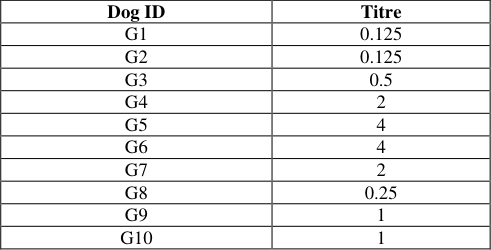 Table 1
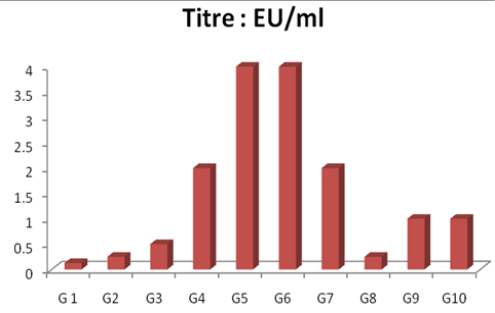 Figure 1
Introduction
Rabies is a significant public health issue in India and occurs throughout the year. Stray dogs play a primary role in maintaining and spreading rabies among man and animals. It is necessary to immunize this species to breakdown the chain of transmission cycle. Although national and state level rabies control programs carry out immunization in dogs, it has not been able to achieve required vaccination coverage. Efficacy of vaccination is largely unknown especially in stray dogs. Thus, this study aimed to determine the magnitude of the serological response in stray dogs immunized with a single dose inactivated tissue culture rabies vaccine of potency >2.5IU/ml.
Objective
To assess herd immunity in vaccinated stray dogs of Kerala, a southern state of India by estimating level of antibody in a representative population selected at random.
Materials and Methods
The study was conducted in stray dogs captured for government sponsored ABC program. Hundred dogs were randomly selected. All the selected animals were apparently healthy and sero negative prior to vaccination. They were vaccinated with a single dose of inactivated tissue culture rabies vaccine of potency >2.5IU/ml. All the dogs were individually identified by ear notch number and released back to their home locality after vaccination. Randomly ten dogs were captured back after one month and blood was collected for serological evaluation of rabies virus antibody. Serum was collected, heat inactivated at 56 o C for 30 min and stored at -20 o C until testing. Rabies virus antibody level was determined by Indirect ELISA (Platelia Rabies II Biorad Cat no.355-0180) as per manufacturer's instructions.
Results and Discussion
Rabies virus antibody levels in different animals of the study group at 30 DPV are depicted in Table 1 and figure 1. 70% of the dogs showed sufficient titre of ≥0.5EU/ml, WHO recommended minimum protective antibody level. Analysis of individual dog titre showed that titres were marginal and strong immune response was not produced in majority (60%) even at 30 DPV. The titters ranged between 0.5 -2 EU/ml in a major proportion. It appears highly unlikely that these animals would have sufficient titre for one year, a matter of concern in a rabies endemic place. 30% of the dogs had no detectable rabies antibody in serum after vaccination which was worrisome. In rabies endemic regions it may be hazardous to relay on the single dose vaccination program. The results demonstrated that an important proportion of vaccinated dogs (30%) did not respond immunologically to vaccination and may act as easy target for picking up, maintenance and transmission of virus. Stray dogs are usually poor cared for. Their precarious physical condition along with outdoor living habits makes them vulnerable to infection. This could a probable reason for the observed poor immunologic response to immune prophylaxis. Many studies indicated that a single injection of rabies vaccine often failed to result in adequate titre and may not be sufficient to maintain rabies neutralizing antibody in serum for one year [1][2][3] The relationship between number of vaccination and tier level of antibody was reported earlier [1] . The study findings indicate that re-formulization of immunization strategies especially the recommendation of booster dose after primary dose and annual boosters and extension of vaccination campaigns are necessary to reach adequate protection levels and herd immunity in stray dogs, the reservoir host population of urban rabies.
| Dog ID | Titre |
|---|---|
| G1 | 0.125 |
| G2 | 0.125 |
| G3 | 0.5 |
| G4 | 2 |
| G5 | 4 |
| G6 | 4 |
| G7 | 2 |
| G8 | 0.25 |
| G9 | 1 |
| G10 | 1 |
Table text extracted from the original PDF; superscript letters are shown inline. The original table image is below.
View original table image
Conclusion
The study demonstrated that a single dose of rabies vaccine did not elicit adequate antibody level in majority of dogs sufficient to give protection for their entire life. Though annual booster administration is practically difficult in free roaming stray dogs, appears necessary to maintain protective titre. In conclusion, strategy of immunization must be reviewed and vaccination coverage must be expanded as to provide adequate protection in reservoir host. More studies with larger sample size are recommended to assess true herd immunity.
References
3 in the original paper- Fernandez KG, Martins M, Amaral BP, Cargnelutti JF, Weiblen R, Flores EF. Antibody against rabies virus in dogs with or without history of vaccination in Santa Maria -RS-Brazil. Cienc. Rural, 2017, 47(11).
- Swapna Susan Abraham, Gopakumar S, Terenz BR, Viswanathan H. Immune response to rabies vaccination in pet dogs of Kerala: A preliminary Report. Souvenir, 13 th National Conference of APCRI, 2011, 52.
- Tepsumethanon W, Polsuvan C, Lumlertdaecha B, Khawplod P, Thiravat H, Wilde H et al. Immune response to rabies vaccine in Thai dogs: A Preliminary Report. Vaccine. 1991; 9(9):627-630.