
Research article · 2020 · Full text
International Journal of Veterinary Sciences and Animal HusbandryParticipative modelling of a micro insurance scheme for African swine fever (ASF) in a peri-urban pig farming (PF) in Kinshasa, democratic republic of Congo (DRC)
Volume 5(1) · Pages 11–17
Research areasAnimal Disease Management and EpidemiologyVector-Borne Animal DiseasesAgriculture and Rural Development Research
Abstract
Author-writtenA study was conducted using the active / accelerated participatory research method (APRM) on the public model of ASF risk management from the colonial era to the present day, with a view to identify their limits and propose a model for the future in Kinshasa, DRC. Fishery and livestock experts stated that the ASF was propagated using the SIR (Susceptible-Infested-Retired) model. The appearance of ASF presents a serious health risk in terms of PF productivities. This study identified two models. The first model, the colonial state one, supported the insurance premium ASF 100% while the second or current model from 1960 to the present day, the Congolese state supports the insurance premium ASF 0%. Small and large pig farmers use 100% self-insurance in case of ASF. At the provincial level in Kinshasa, an average pig people of 24% is swept away annually by the ASF and represents nearly 16,093 pigs or $ 4,224,237.50. Whereas at the level of a PF, the pig farmer loses all of his pigs. The 3 months growing pig premium is calculated taking into account its target point which is estimated at 75 kg. The parent premium is calculated over 5 years. Compensation for losses due to ASF is essential to eradicate ASF and allow the collaboration of pig farmers and communal health police. We recommend the model (90.10) for small pig farmers and (60.40) for large pig farmers. Small pig farmers are 84% of all pig production in Kinshasa, DRC. The National Insurance Company (NIC) is ready to create a micro insurance department to support small pig farmers.
Summary
Source-checkedPlain-language reading of the full paper, prepared with AI and checked against the text. Each point links to the authors' own words.
Why it matters
- Agricultural risk management is a strategic priority for governments because food security is essential for a society's social and economic stability. View evidence ↗
- African swine fever (ASF) poses a significant health risk that negatively impacts pig farming (PF) productivity. View evidence ↗
- The probability of ASF affecting pig breeding is 0.8 for large producers and 0.5 for small producers, which limits overall production. View evidence ↗
The question
- The study aims to propose a future model for the public management of ASF risks in Kinshasa, Democratic Republic of Congo (DRC). View evidence ↗
What they did
- The research was conducted in the peri-urban communes of Mont-Ngafula and Maluku in Kinshasa between September 2015 and June 2018. View evidence ↗
- The study used five complementary methods: historical analysis, surveys, participative research, observation, and mathematical modeling. View evidence ↗
- Researchers used Scilab-6.0.2 to model ASF propagation and Matlab R2018b to model the micro insurance premiums. View evidence ↗
What they found
- Historically, the colonial state covered 100% of ASF insurance premiums, whereas the Congolese state has covered 0% from 1960 to the present. View evidence ↗
- On average, 24% of the pig population in Kinshasa is lost annually to ASF, amounting to approximately 16,093 pigs or $4,224,237.50. View evidence ↗
- Small pig farmers are the primary producers in the region, accounting for 84.1% (10,788 pigs) of the 12,828 pigs produced annually. View evidence ↗
- Pure premiums collected cover allowances for 53.63% in minimum loss scenarios, 22.34% in average scenarios, and 14.11% in maximum loss scenarios. View evidence ↗
What it means
- The authors recommend a microinsurance model where the state subsidizes 90% of premiums for small farmers and 60% for large farmers. View evidence ↗
- The authors conclude that improving biosecurity levels in pig farming is necessary to optimize the effectiveness of compensation. View evidence ↗
- The authors note that the current low level of biosecurity in pig farming facilitates the spread of ASF in Kinshasa. View evidence ↗
Visual summary
1 visualsIllustrations explain the paper; they do not show study data.
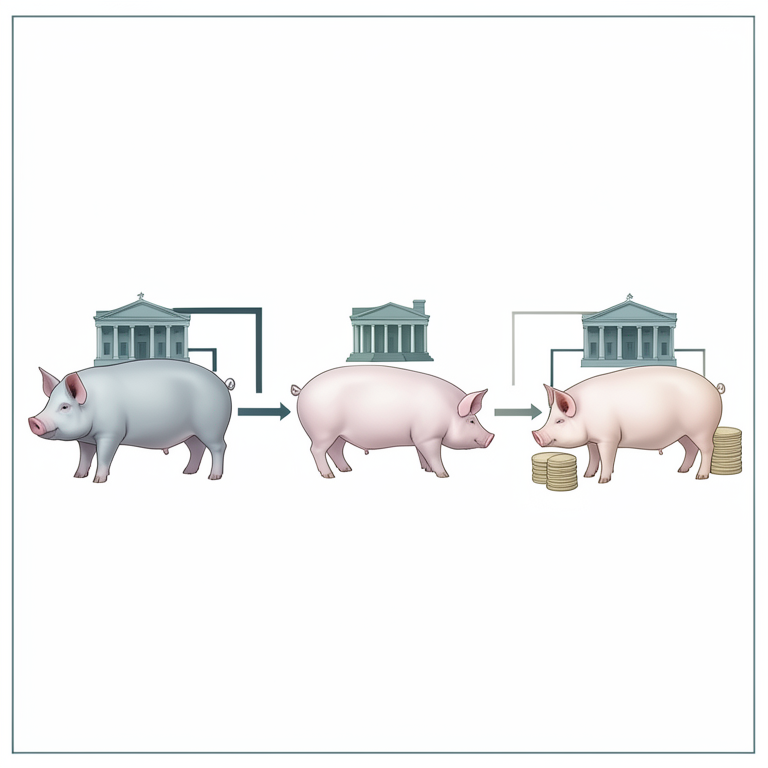
Evolution of Insurance Models
AI-generated conceptual illustration (domestic pigs in a peri-urban farm setting). It explains the idea and does not show study data.
View source evidence ↗Figures & tables
From the original paper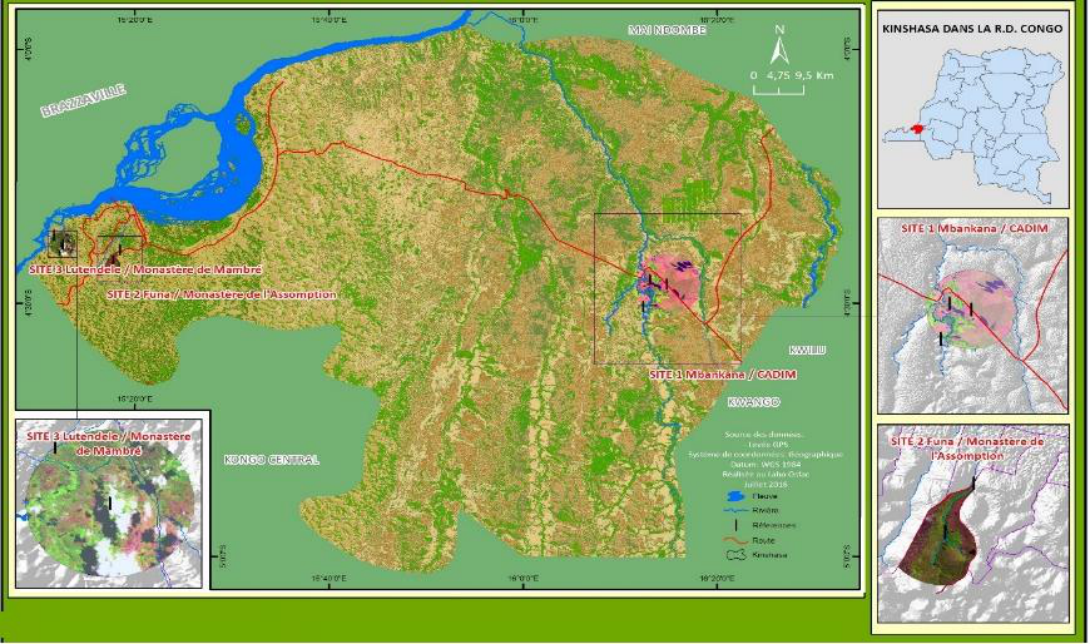 Figure 1
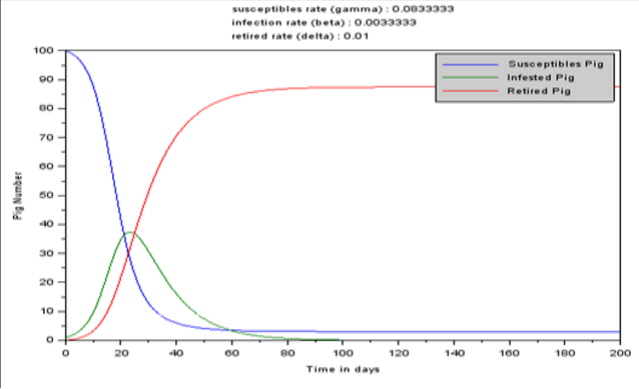 Figure 2
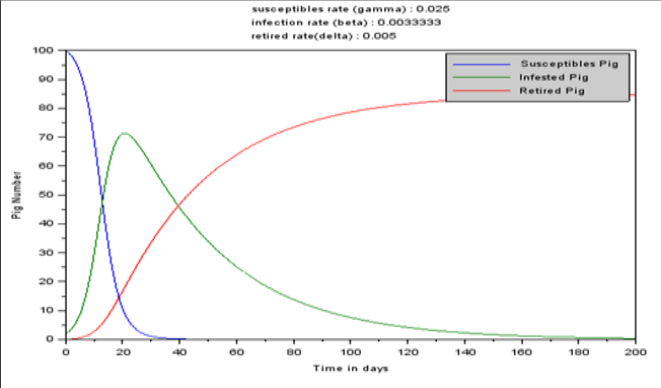 Figure 3
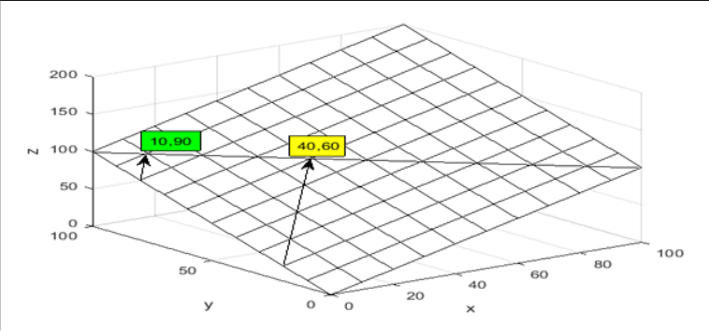 Figure 5
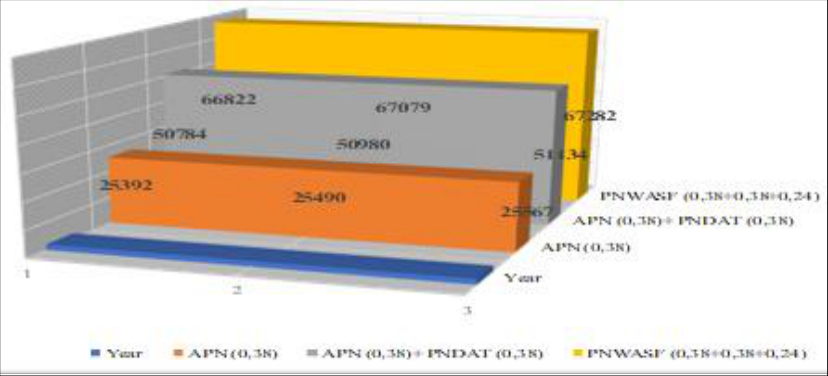 Figure 4
 Table 1
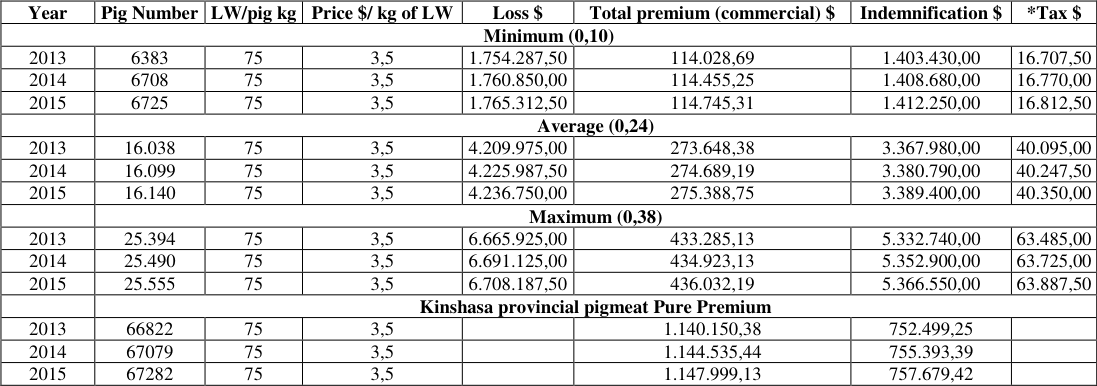 Table 2
Introduction
Agricultural production is surrounded by many uncertainty. Any agricultural production plan has many potential outcomes associated with it. Whatever the generating event and how it is triggered, the risk will have an impact on the farmer's income (pig farmer). In these conditions, risk in agriculture is today one of the essential elements to take into account in the overall management of its operations. The risk in agriculture therefore represents a nested system in which markets and government measures interact with the risks and strategies of the farmers (Mathieu, 2011) [22] . In agricultural activity, which is inherently dependent on climatic and health conditions, the risk is particularly present. Risk is the harmful consequence of a random event. Agricultural risk management is primarily the responsibility of the farm business. Its general approach begins with a phase of prevention, followed by a phase of risk treatment (Cordier et al., 2013a) [10] . Risk management in agriculture is a strategic issue for governments as old as agriculture. Indeed, the food security of a society is the prerequisite for social and economic stability. When the state intervenes heavily in risk management, as in the case of Spain, Canada and the United States, the question of risk sharing between companies (farmers, insurers) and governments inevitably arises. The balance between the respective contributions of each is unstable because it results from more or less fragile political compromises (Cordier et al., 2013) [10] . In the context of the DR Congo, two periods stand out clearly: (i) the period before independence (before 1960) where the pig farmer was obliged to collaborate with the health police of his commune in the execution these hog farming activities
International Journal of Veterinary Sciences and Animal Husbandry http://www.veterinarypaper.com to avail themselves of compensation in case of passage of the ASF (Piron and Devos, 1959) [25] . (ii) After independence, from 1960 to today, the code Piron, Volume III, updated to March 31, 1959 being placed in the drawer. Some texts of this document have been modified and completed to date without this can provide a qualitative leap from the current requirements of the World Trade Organization (WTO), the International Organization of Epizootics (IOE) and the Codex Alimentary Commission (World Animal Health, 2002).
(Bakajika law December 2004, Agricultural Code December 2011) [22] . The ASF is considered a scourge by the code Piron and Devos (1959) [25] and as a fire risk with compulsory insurance by the National Insurance Company. The insurable pig will have to be 3 months to 5 years old (NIC, 2001 and CNAAS, 2010) although no pig farmer knows it and does not contract it. The probability of ASF being abused in a pig breeding is respectively 0.8 and 0.5 for large and small pork producers and limits pig production (Tona-Tona et al., 2019) [27] . Sorin, 2006 quoted by Yandia, 2011 estimates the parts due to ASF between 0.24 ± 0.14% in Cameroon, Benin, Gambia and Togo. From these contributions, the expression model of the phenotypes can be written in "current" terms as follows, assuming that the phenotypes (P) are expressed in a homogeneous environment and that they are the sum of the effects of the genotype (G) and environment (E) and what escapes model α: Additivity of genotype and environment: P = G + E + α is the model of quantitative genetics (Laloe, 2011). The present study aims to propose a model of the future for public risk management ASF in Kinshasa, DRC.
Material and methods 2.1 Study environnement
This study was carried out in Kinshasa from September 2015 to June 2018. It involved two peri-urban communes, Mont-Ngafula and Maluku, whose populations are estimated at 261,000 and 180,000 people respectively. Three sites were chosen because they are representative of the organizational dynamics of the peri-urban PF in Kinshasa as well as because of the high concentration of pig farmers and their accessibility.
Source: Osfac, October, 2016
Data collection methods and statistical analysis
The approach revolves around five complementary approaches: the historical method, the survey method, the participative research: semi-structured interview (simple ranking checklist), proportional stacking, scoring matrix, seasonal calendar, participatory cartography, chronogram and transversal walk), observation and mathematical modeling.
The collection of socio-economic data was carried out using the active / accelerated method of participatory research (AMPR). The collected data was saved in a database in Excel.
The Scilab-6.0.2 software was used to model the ASF while the Matlab R2018b software (9.5.0.944444) was used to model the insurance premium or ASF micro insurance.
Results
Results
Opinions of fisheries and livestock experts
Experts from the Ministry of Fisheries and Livestock said that the ASF spreads in Kinshasa according to the model SIR (Susceptible-Infested-Withdrawn). The incubation phase can last 3-15 days. The SIR model is due to Kermack and McKendrick in 1927. The ASF is not a zoonotic disease, the consumption of meat promotes the spread of the virus. There is a high morbidity and mortality which is above normal within 15 days. We consider the case of an open pig people due to birth rate and entry into the borders.
The expressions found after the resolution of the differential system above, are given by
Propagation of ASF in a breeding without intervention
At the level of a pig breeding, when ASF is rampant, in addition to the action of the disease, the pig farmer eliminates his pig herd and leaves with a healthy nucleus.
Opinion of the pig farmers of Maluku and Mont Ngafula in Kinshasa
The pig farmers confirm the presence of ASF. The cutaneous signs observed are mainly redness in the extremities (ears, paws) and hyperthermia. The presence of anorexia, diarrhea, sometimes hemorrhagic vomiting is also noticed. High mortality appears in a record time (ie in one month). The losses are total at the level of a PF reported the pig farmers.
Evolution of the ASF epidemic
Provincial level in Kinshasa: the differential equation system provided by the SIR model is not linear, so it is mathematically hard to find the exact solutions. To find approximate solutions, we use a software. The SciLab-6.0.2 software allowed us to solve the SIR system and its variants in a relatively easy way. It works by writing command lines, but it also gives the possibility to execute scripts that implement a calculation and display the procedure quite easily. The ASF carries a maximum of 38% of the provincial pig people in Kinshasa. The epidemiological unit is at least one infested pig, two infested pigs, one infested pig herd, one District or one commune. At the level of a pig breeding, when the ASF is rife, the pig farmer loses all of his pigs. He uses self-insurance to revive his pig breeding. The transition from the first model to the second constitutes an institutional / legal (systemic) risk that Congolese pig farmers had experienced losing the advantage of the full coverage of the insurance premium by the colonial state. This study proposes a subsidy of ASF microinsurance premiums of about 90% for small pig farmers and 60% for large pig farmers. The NIC offers a 40% subsidy for all pig farmers. Out of a total of 12,828 pigs produced annually, small pig farmers produce 10,788 pigs, ie 84.1% compared to 2,040 pigs or 15.9% for large pigs. In case of loss of pork confirmed by the health police that it is due to the ASF, the insured pig farmer is compensated by the insurer and this goes through the recent pig farmers, their pigs, the porcine traceability, serological monitoring of pig breeding by experts in production and animal health. The application of these economic models should have an impact on the reduction of losses and even the eradication of ASF. The genetic value of a pig spawner decreases with age, however it retains its commercial value as consumable meat. The actuarial calculations of the premium of a piglet in growth is made with respect to its target live weight (75 kg) and its payment is annual. In terms of evaluating the economic impact of an animal epidemic such as ASF, the most widely used and used tool is Cost Benefit Analysis (CBA). Table 2 shows that it is better to cushion the shock of ASF with an ASF micro insurance program. According to Simonet (1994) [30] the pure premium is 66% of the commercial premium. Pure premiums collected cover allowances for a minimum of 53.63%; average of 22.34% and a maximum of 14.11%. There is an exponential law relationship between premium and indemnity. For NIC, the Congolese state should also support the compensation of 46.35 to 85.99% as appropriate and insurance or micro insurance ASF should be mandatory. For the minima, it is an operating loss while the average and maximum losses lead to the ruin of the insurer.
| Year | Pig Number | LW/pig kg | Price $/ kg of LW | Loss $ | Total premium (commercial) $ | Indemnification $ | *Tax $ |
|---|---|---|---|---|---|---|---|
| Minimum (0,10) | |||||||
| 2013 | 6383 | 75 | 3,5 | 1.754.287,50 | 114.028,69 | 1.403.430,00 | 16.707,50 |
| 2014 | 6708 | 75 | 3,5 | 1.760.850,00 | 114.455,25 | 1.408.680,00 | 16.770,00 |
| 2015 | 6725 | 75 | 3,5 | 1.765.312,50 | 114.745,31 | 1.412.250,00 | 16.812,50 |
| Average (0,24) | |||||||
| 2013 | 16.038 | 75 | 3,5 | 4.209.975,00 | 273.648,38 | 3.367.980,00 | 40.095,00 |
| 2014 | 16.099 | 75 | 3,5 | 4.225.987,50 | 274.689,19 | 3.380.790,00 | 40.247,50 |
| 2015 | 16.140 | 75 | 3,5 | 4.236.750,00 | 275.388,75 | 3.389.400,00 | 40.350,00 |
| Maximum (0,38) | |||||||
| 2013 | 25.394 | 75 | 3,5 | 6.665.925,00 | 433.285,13 | 5.332.740,00 | 63.485,00 |
| 2014 | 25.490 | 75 | 3,5 | 6.691.125,00 | 434.923,13 | 5.352.900,00 | 63.725,00 |
| 2015 | 25.555 | 75 | 3,5 | 6.708.187,50 | 436.032,19 | 5.366.550,00 | 63.887,50 |
| Kinshasa provincial pigmeat Pure Premium | |||||||
| 2013 | 66822 | 75 | 3,5 | 1.140.150,38 | 752.499,25 | ||
| 2014 | 67079 | 75 | 3,5 | 1.144.535,44 | 755.393,39 | ||
| 2015 | 67282 | 75 | 3,5 | 1.147.999,13 | 757.679,42 |
Table text extracted from the original PDF; superscript letters are shown inline. The original table image is below.
View original table image
Discussion
The results made it possible to highlight two public models of payment of the insurance premium or micro insurance ASF implemented from the colonial era to the present day. The first so-called colonial model (0.100) had made the PE prosper, while the second model, which is the opposite of the first (100.0) model from 1960 until now, did not ensure the development of the PF. DRC pig farmers had experienced institutional / legal (systemic) risk during independence. This finding is supported by OECD. Harwood et al., (1999) and Holzmann and Jorgensen (2001) cited by Lidsky et al., (2017) [18] . The PF as it is practiced without support of the Congolese state on the eradication of the ASF cannot know a notable development. This finding was also made by Fasina et al., (2011) [14] and Sánchez-Vizcaíno et al., (2014) [26] . ASF is considered a scourge, a fire hazard by NIC and IOE international regulations (2017) and therefore requires the support of the public authorities. FAO (2014) [15] argues that transboundary animal diseases (TADs) whose ASF must be avoided and controlled, as they cause economic losses for smallholders and pastoralists. Rault and Krebs (2010) argue that the economic consequences of epidemic health risks are potentially high and multi-sectoral. Proposals for 60% and 90% support for large and small pig farmers, respectively, are supported by Cordier et al., (2008) [11] who offer 80% assistance with the payment of insurance premiums. The proposed ASF micro insurance would bring hope once initiated. It is useful to set up a pilot program to control the spread of ASF and to create pest free areas. The optimization of the compensation passes by the increase of the level of biosecurity of the PF. The low level of biosecurity in PF interviews the ASF in Kinshasa, DRC. This observation was also affirmed in Cameroon (Anonymous, 2015) [1] . Risk management by small pig farmers is a real challenge, they must be able to ensure, but also develop resilient pork production systems. This finding has already been reported by Hazell (2014) [16] . At the level of pig farmers households, the potential contribution of micro insurance to breaking the cycle of poverty plays both a production and a protective role (Collins et al., 2009 and Cohen and Sebstad, 2005) [8,9] . Micro insurance would therefore be a mechanism to stabilize the incomes of pig farmers and encourage investment. Troy (2013) [32] argues that micro insurance provides a stronger loan repayment guarantee and can therefore help to facilitate access to credit. Micro insurance promotes wealth creation. As an emergency financing system, micro insurance promotes the gradual formation of wealth in the low-income market and prevents people who have managed to escape poverty from falling back into it. Bester et al., (2010) [2] argue that micro insurance is thus a vehicle for mobilizing finance that, from a macroeconomic point of view, can fuel economic growth. For the KTVAC (2003) [6] , the effectiveness of the measures is based in particular on compensation for losses and slaughtering of pigs. In the DRC, we must combine our efforts on the rigorous application of animal health measures (prevention, control and eradication) with a view to limiting and achieving the total extinction of this disease in the future. It is a fact that, apart from any suspicion, the defensive measures will essentially consist in promoting intensive pig farming. Indeed, the prevention of African swine fever in infected areas is almost impossible as long as traditional methods of pig breeding. The contribution of the public authorities should take into account the contribution of small pig producers to the quantity produced in pigmeat delivered on the kinship market, which amounts to 84%. Pure premiums from the total annual pig population are lower ($ 752,499.25) than the minimum losses ($ 1,403,430.00) due to ASF. This difference of $ 650,930.75 does not appeal to private insurers seeking economic profitability, however the public authority can invest in a social profitability project. The grouping of many of the risks allows statistical compensation to insurers by using the premiums collected for another risk whose loss is zero to pay a claim. The public authorities should pay 46.57-85.89% as some countries like Senegal do.
Conclusion
Production and animal health experts from the Ministry of Fisheries and Livestock said the ASF was spreading in Kinshasa, DRC according to the SIR model (Susceptible-Infested-Retired). The first model of payment of the so-called colonial ASF insurance premium z1 (0.100) had made the PF prosper, while the second z2 (100.0), which is the opposite of the first, did not make the PF prosper. Losses due to the ASF are of the average of 24% at the provincial level of Kinshasa. The victims used self-insurance to revive the PF. The present study shows that it is possible to secure the PF of Kinshasa, DRC via a ASF micro insurance program. We propose as model of the future of management of the ASF, for the small pig farmers (10,90) and (40,60) for the big pig farmers although the ideal would be to return to the first model of before 1960 and this is only possible through negotiations between associations of pig farmers, experts in production and animal health and Livestock and researchers. Public power has an important role to play in ensuring the development of PF in Kinshasa and throughout the DRC.
Figures and tables from the paper
| Pig | Sex | LW kg | VM $ | LW kg | VM $ | Premium (6,5%) $ | Franchise (20%) $ | Indemnification (80%) $ |
|---|---|---|---|---|---|---|---|---|
| First year breeder | ♀ | 80-100 | 300 | --- | --- | 19,5 | 60 | 240 |
| 80-100 | 600 | --- | --- | 39 | 120 | 480 | ||
| ♂ | 80-100 | 500 | --- | --- | 32,5 | 100 | 400 | |
| 80-100 | 1000 | --- | --- | 65 | 200 | 800 | ||
| Gowing piglet | ♀ | 15-25 | 70 | 80 | 280 | 18,2 | 56 | 224 |
| ♂ castré | 15-25 | 70 | 75 | 262,5 | 17,06 | 52,5 | 210 |
Table text extracted from the original PDF; superscript letters are shown inline. The original table image is below.
View original table image
References
29 in the original paper- Anonymous Strategic plan for the prevention and control of African swine fever (ASF) in Cameroon. MTF / CMR / 034 / STF project: support for improved control of cross-border diseases of livestock subject to trade, 2015.
- Bester H, Hougaard CH, Chamberlain D. Guidelines for National Micro insurance Market Development Processes, 2010. URL, https://a2ii.org/sites/default/files/ field/uploads/2013_02_11_a2ii_boit_a_outils_no._2.pdf
- Blanc CH. Risk Management in Agriculture: DemandCrop Insurance Demand Model, 2003, 1-40.
- Briquel V, Vilain L, Bourdais JL, Girardin P, Mouchet C, Viaux P. The IDEA method (farm sustainability indicators): an educational approach, engineering. 2010; 25:29-39.
- Kinshasa Tropical Veterinary Agronomic Center. Herds and Cultures of the Tropics: Special Report on Pigs, In: KTVAC, 2003, 1-73.
- Collard M-C, Huens V, ET Mahieu E. Economie, social Et environnemental [type de support], 2007, Adresse URL: http://www.saw-b.be/EP/2007/EtudeESDD.pdf, consulted the 24/11/2019.
- Collins D, Morduch J, Rutherford S, Ruthven O. Portfolios of the poor: How the world's poor live on $2 a d Day (Princeton, N.J., Princeton University Press), 2009.
- Cohen M, Sebstad J. "Reducing vulnerability: The demand for micro insurance", dans Journal of International Development. 2005; 17(3):397-474.
- Cordier J, Debar ET, J-CH. Agricultural risk management: the North American path what lessons for the European Union, Club Demeter, Paris, 2013, 69.
- Cordier J, Erhel A, Pindard A. ET Courleux FR. Risk Management in Agriculture : From Theory to Implementation : Policy Considerations, Economic Note and Studies. 2008-2013; 30:1-40.
- Churchill CR. ET Matul M. Protecting the underprivileged Guide to micro insurance. International Labor Office, Geneva, and the Munich Re Foundation, 2014, 1-732.
- Dourmad J, Pomar CET, Masse D. Modeling the flow of compounds at risk for the environment in pig farming, Swine Research Days. 2002; 34:183-194.
- Fasina FO, Lazarus DD, Spencer BT, Makinde AA, Bastos ADS. Cost Implications of African swine fever in Smallholder Farrow-to-Finish Units: Economic Benefits of Disease Prevention through Biosecurity. Tran's boundary and Emerging Diseases, 2011. doi:10.1111/j.1865-1682.2011.01261.x
- FAO. World of breeding in 2013 disease situation. N ° 43/2014 Empres 360 animal health, 2014.
- Hazell P. Rethinking the role of small farms in development strategies. FARM, Point of View n ° 2, 2014.
- Laloë D. The genesis and development of the concepts of classical genetic evaluation. In: Special issue, Genetic Improvement. Mulsant P, Bodin L, Coudurier B, Deretz S, Roy P, Quillet E, et al. Anim. 2011; 24:323-330.
- Lidsky V, Maudet C, Malpel G-P, Gerster Fr, Helfter M, Lejeune H, et al. Risk management tools in agriculture. Address, 2017. URL: file:///C:/Users/User/ Downloads/ cgaaer_16104_2017_rapport%20(1).pdf, consulted the 18/10/2019
- Gebreegziabher K, Tadesse ETT. Risk perception and management in smallholder dairy farming in Tigray, Northern Ethiopia, and Journal of Risk Research. 2014. 17(3)367-381, DOI: 10.1080/13669877.2013.815648.
- Gourmelen CL, ET Rieu M. Evaluation of the cost of effluent management in different types of hog farms, Porcine Research Days. 2006; 38:263-270.
- International Organization of Epizooties, Terrestrial Animal Health Code General Provisions 24th edition, 2015, OIE, Paris. 2017; 1:476.
- Mathieu G. The perception and management of risks in agriculture by Limousin breeders Contribution of Limousin agricultural chambers to the etude-action Vivea project "Anticipation and risk management in the Limousin region [online] (2011) Address, 2011. URL: http://www.limousin.synagri.com/ca1/PJ.nsf/TECHPJPA RCLEF/09326/$File/Perception%20risque5.pdf? Open Element, consulted the 11/12/2015.
- Penrith ML, Guberti V, Depner K, Lubroth J. Preparation of Response Plans for African Swine Fever, FAO Animal Health Service, Rome, 2011, 84.
- Piron P, Devos J. Piron Code, updated 1959 Economic Legislation-Animal-Veterinary Medicine -Protection, Belgian Congo, Brussels. 1959; 3:283-298.
- Sánchez-Vizcaíno JM, Mur L, Sánchez-Matamoros A. ET Martínez-López B. African swine fever: New challenges and measures to prevent the spread of the disease. In: International Organization of Epizootics, 82nd General Assembly World Assembly World Organization for Animal Health, Paris, 25-30 2014, 2014, 1-11.
- Tona Tona A, Thilmant P, Ntoto -M'vubu R. Okitayela - Onawoma Fr. Assessment of biosecurity level of periurban pig farming in Kinshasa, Democratic Republic of Congo (DRC) Afrique Science. 2019; 15(2):197-210.
- Toussaint B, ET Dahareng D. The management of livestock effluents the booklets of Agriculture No. 2, Ministry of the Walloon Region, Directorate General for Agriculture, Gembloux, 2000, 33.
- Simonet-Accounting for Insurance and Capitalization Enterprises, Ed. Agnus, Paris. 1994; 1:75.
- Yandia M-C. Identification of risk factors and estimation of seroprevalence of African swine fever in the Thies regions. University Cheikh Anta Diop of Dakar. Doctoral thesis, 2011. URL: http://www.beep.ird.fr/collect/eismv/idex/assoc/TD1123.dir/TD11-23.pdf,consultedthe 13/07/2019.
- Troy B. Insurance and agricultural development: new dynamics in Algeria, Morocco and Tunisia, 2013.
Cited by 1
From OpenAlex, OpenCitations and reference lists read by Scinovex
- African Swine Fever (ASF) Insurance Premium Estimate Test at Mont-Ngafula in Kinshasa, Democratic Republic of Congo (DRC): A Model Under Construction ↗
Alexandre Tona Tona, Alphonse Roger Ntoto M’vubu, Rostin Mabela Makengo Matendo, Freddy Okitayela Onawoma · International Journal of Agricultural Economics · 2021
In order to estimate the average insurable pig numbers held by breeders, their monetary value, the ASF insurance premium in the event of adoption of the product, a survey was carried out from January 2 to April 10, 2021, among 63 pig farmers. from Mont Ngafula in Kinshasa, DRC to collect information relating to the construction of a future model…
❝ 0PDF