
Research article · 2021 · Full text
International Journal of Research in AgronomyReview on effect of N and P fertilizer rates on yield and yield components of common bean [Phaseolus vulgaris (L.)] varieties
Volume 4(1) · Pages 32–40 · DOI: 10.33545/2618060x.2021.v4.i1a.46 ↗
Research areasAgricultural pest management studiesAgronomic Practices and Intercropping SystemsGenetics and Plant Breeding
Abstract
Author-writtenThis paper reviews on effect of N and P fertilizer rates on yield and yield components of common bean [Phaseolus vulgaris (L)] varieties. Under this review recent literatures concerning on effect of nitrogen fertilizer rate, effect of phosphorus fertilizer rate and interaction effect of NP fertilizer rate relating with different varieties of common bean have been covered. From those N and P fertilizers have significance effect on production of common bean varieties. And it showed that the increased N rates linearly increased grain yields in both common bean cultivars IPR 139 and perola up to a rate of 180 kg n ha-1, regardless of the plant density. The review also covered the effects of Phosphorus Fertilizer and different common bean varieties and it indicated that Hawassa Dume variety showed the best performance followed by Nasir where as Ibbado showed the least except in 1000 seed weight and harvest index. Under the interaction effect of NP fertilizer this review showed that no significant increase in growth and phonological characters as well as yield attribute with increased rates of NP fertilizers above 27 kg n: 69 kg p2o5 ha-1. Optimum grain yields were reviewed in response to combined application of 27 kg N and 69 kg P2O5 ha-1 for Awash 1, Awash Melka and Red Wolayita respectively. Generally, under this review it is triad to show the recommended fertilizer rate and its combination for the recommended types of varieties and its growth performance from different literatures with explanatory tables and figures
Summary
Source-checkedPlain-language reading of the full paper, prepared with AI and checked against the text. Each point links to the authors' own words.
Why it matters
- Common bean is a critical food and export crop in Ethiopia, providing essential protein and income for impoverished farmers. View evidence ↗
- Bean production in many areas is limited by acidic soil conditions and deficiencies in soil nitrogen and phosphorus. View evidence ↗
- The way common beans respond to fertilizer is not uniform; it varies based on the variety, soil type, moisture, and farming practices. View evidence ↗
The question
- The review aims to examine how different rates of nitrogen (N) and phosphorus (P) fertilizers affect the yield and yield components of common bean varieties. View evidence ↗
- The study seeks to identify the optimal application rates of nitrogen and phosphorus for maximizing common bean productivity. View evidence ↗
What they did
- The authors conducted a review of recent literature focusing on the individual and interactive effects of nitrogen and phosphorus fertilizer rates across various common bean varieties. View evidence ↗
What they found
- In the cultivars IPR 139 and Perola, grain yields increased linearly as nitrogen rates were raised up to 180 kg N ha-1, independent of plant density. View evidence ↗
- Among the varieties reviewed for phosphorus response, Hawassa Dume performed best, followed by Nasir, while Ibbado generally performed the worst (excluding harvest index and 1000 seed weight). View evidence ↗
- Across the varieties studied, a phosphorus application rate of 20 kg P2O5 ha-1 was found to be the most effective for all measured parameters. View evidence ↗
- Increasing combined NP fertilizer rates beyond 27 kg N and 69 kg P2O5 ha-1 did not result in significant further increases in yield attributes or growth characters. View evidence ↗
- For the varieties Awash 1, Awash Melka, and Red Wolayita, the optimum grain yields were achieved with a combined application of 27 kg N and 69 kg P2O5 ha-1. View evidence ↗
- Phosphorus fertilizer significantly increased the number of pods per plant, with the highest count observed at a rate of 20 kg ha-1. View evidence ↗
- The maximum number of seeds per pod was achieved at a phosphorus rate of 20 kg ha-1, while the lowest was found in the unfertilized control group. View evidence ↗
What it means
- The authors conclude that the use of mineral nitrogen and phosphorus fertilizers is essential for achieving optimum yields and sustainable common bean production. View evidence ↗
Visual summary
3 visualsIllustrations explain the paper; charts are replotted from the paper's own table values.
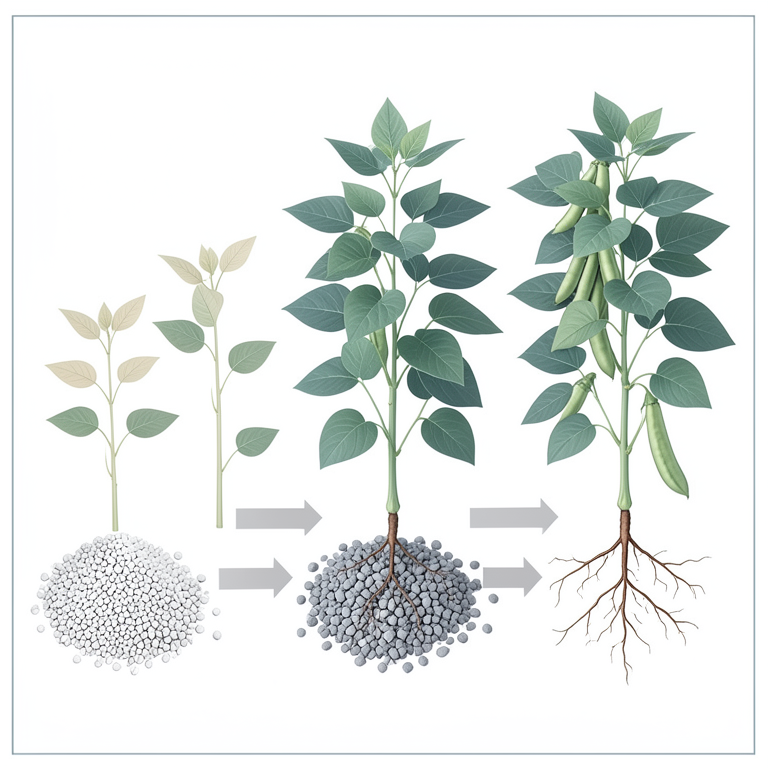
Fertilizer Response Trends
AI-generated conceptual illustration (common bean plants (Phaseolus vulgaris)). It explains the idea and does not show study data.
View source evidence ↗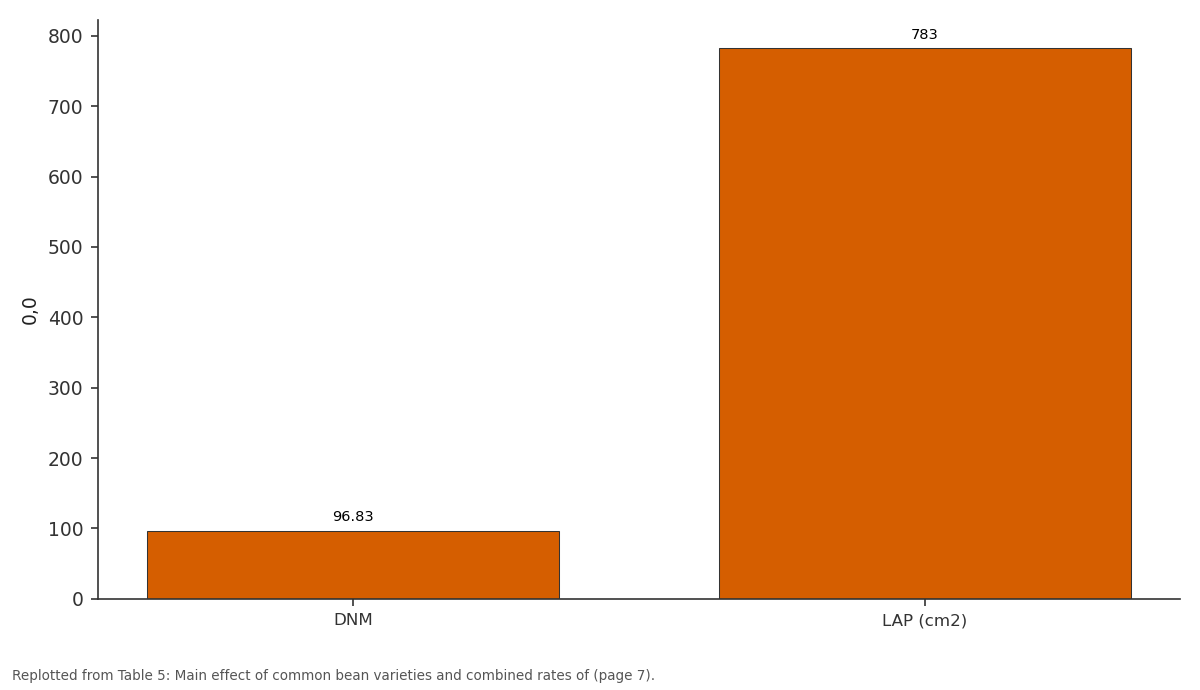
0,0: DNM vs LAP (cm2)
Replotted from Table 5 (page 7) of the original paper. Every bar is the paper's own table value.
View source evidence ↗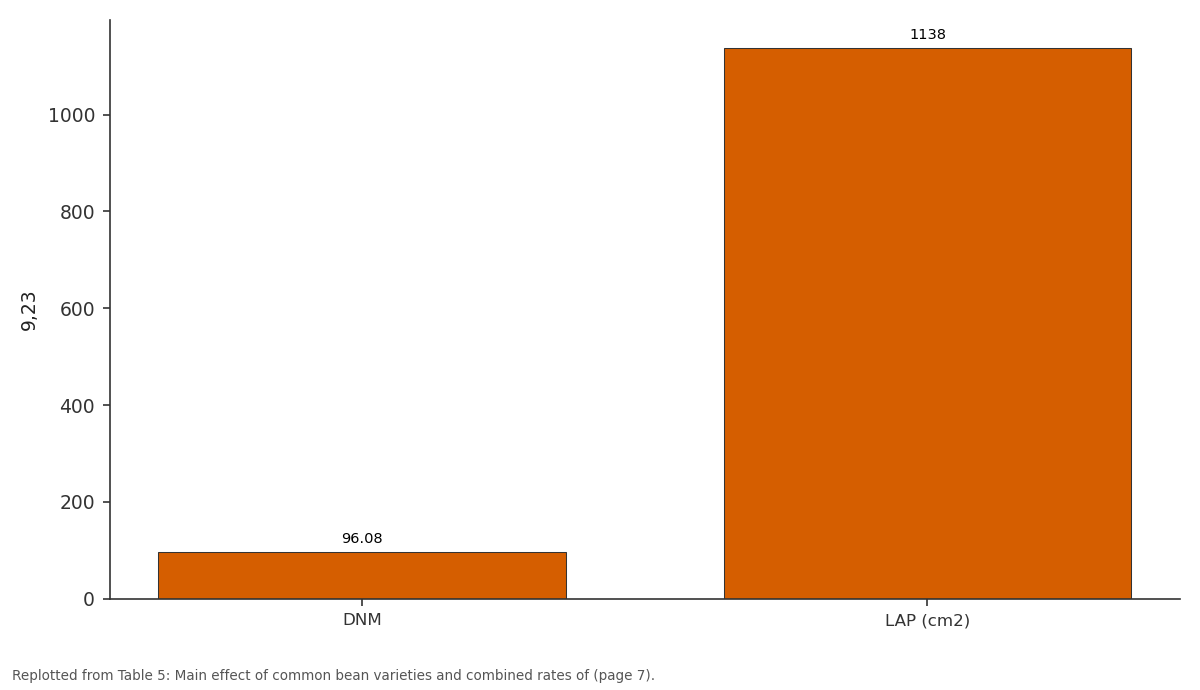
9,23: DNM vs LAP (cm2)
Replotted from Table 5 (page 7) of the original paper. Every bar is the paper's own table value.
View source evidence ↗Figures & tables
From the original paper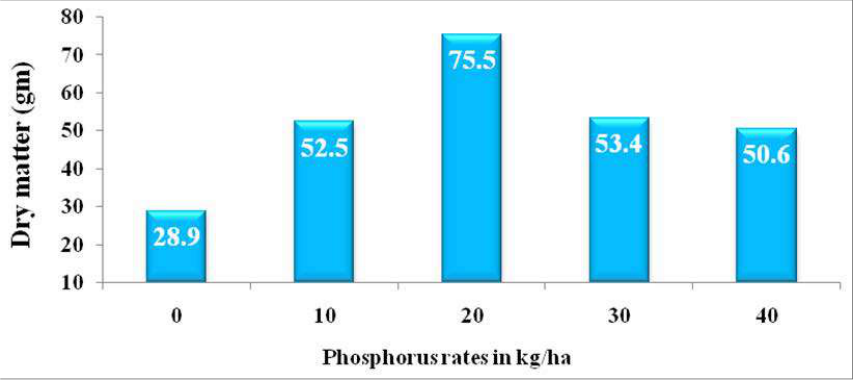 Figure 2
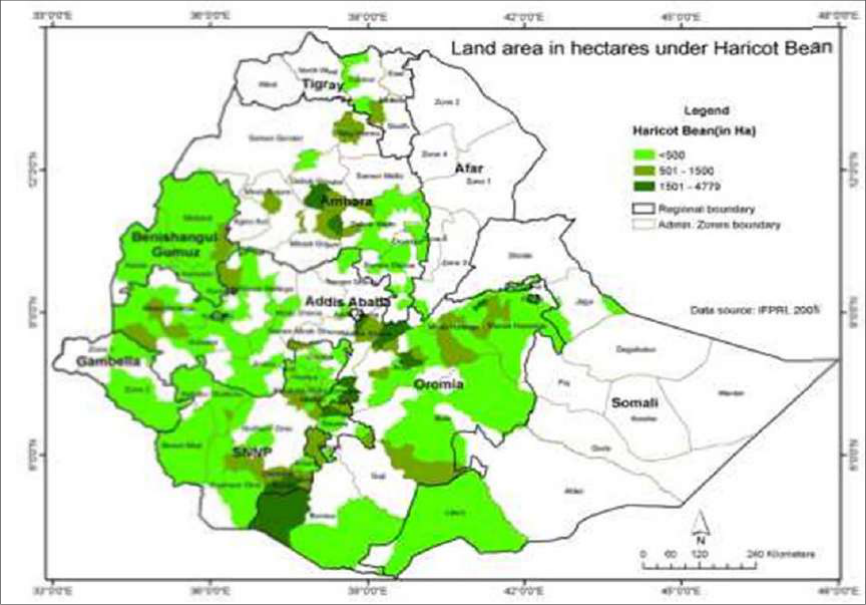 Figure 1
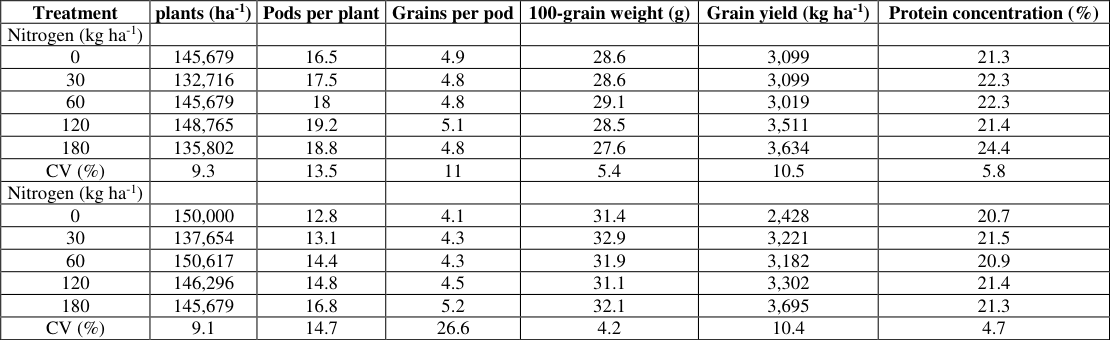 Table 1
 Table 2
 Table 3
 Table 4
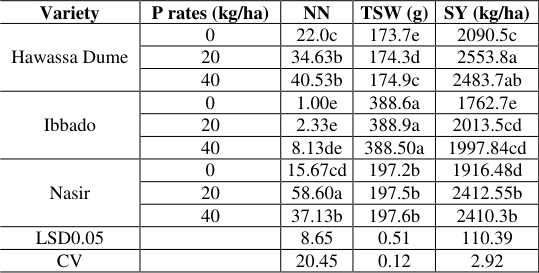 Table 4
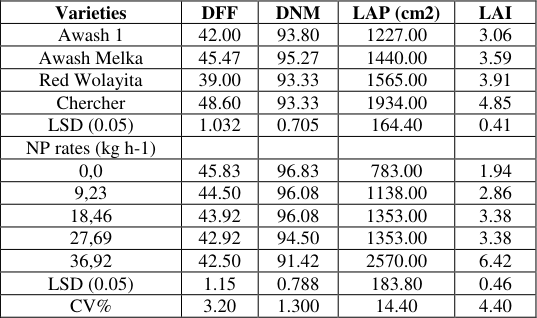 Table 5
Introduction
Common bean (Phaseolus vulgaris L.) is the most important food and export crop in Ethiopia and it is the source of protein and cash for poor farmers (Dereje Negatu et al., 1995) [17] and it is high in starch, protein and dietary fiber and is an excellent source of potassium, selenium, molybdenum, thiamine, vitamin B6, and folic acid (Maiti, R.K., and Singh, V.P., 2007) [38] . Common bean is the best-known species of the genus Phaseolus in the family Fabaceae of about fifty plant species, all native to America. After the Asteraceae and Orchidaceae, the Fabaceae is the third largest family of flowering plants in the world and the first in Ethiopia (Arenas, O.R., et al., 2013) [8] . It is a family of great economic importance and very unique in having members that can form associations with symbiotic bacteria to fix atmospheric nitrogen (Karagkiozi, P., et al., 2012) [32] . Common bean originated from the New World; two centers of origin were identified Andean and Mesoamerican (Hornakova, O., et al., 2003; Logozzo, G., et al., 2007) [30,36] . The domestication occurred independently in South America and Central America/Mexico, leading to two different domesticated gene pools, the Andean and Mesoamerican, respectively (Papa, R. and Gepts, P., 2003; Petry, N., et al., 2015) [44,45] . This crop is native to Mexico and Guatemala where the greater part of the diversity of varieties is found (Arenas, O.R., et al., 2013) [8] . Common bean is the most widely distributed of the related species and has the broadest range of genetic resources (Gomez, O., 2004) [26] and is frequently used as food crop throughout the world, especially in Latin America and Africa. Different races have been described in both gene pools differentiated for morph-agronomical traits. Common bean was introduced to Europe probably from Cuba immediately after Columbus"s voyage/ since the first half of the sixteenth century. It was distributed widely in all parts of Europe and the Mediterranean area where many landraces and varieties evolved that were grown to provide dry seed or fresh pods (Logozzo, G., et al., 2007) [36] . The species was perhaps introduced to the eastern part of Africa by Portuguese traders in the sixteenth century (Wortmann, C.S., et al., 2004) [61] . The wide range of growth habits of common bean varieties has enabled the crop to fit in the many growing situations. Among the different growth habits of common bean, the prostrate and the bushy types achieve rapid ground cover, compete with weeds and avoid competition (Zelalem Zewdu, 2014) [62] . Moreover, common bean is an important understory companion crop in various intercropping systems throughout the world (Rahmeto Negash, 2007) [46] . It is planted in pure stands of single landrace, as mixed plantings of several farmers" varieties, and intercropped with maize, sorghum, sweet potato, cotton, coffee and other crops. Under Ethiopian condition, the crop is normally grown twice a year, the first production is during the short rainy season (April to June) and the second is during the long rain season (July to October) (Kedir Oshone et al., 2014) [33] . Common bean is the major staple food supplementing the protein source for the poor farmers who cannot afford to buy expensive meat. Common bean is high in starch 49%, protein 21.4% and dietary fiber 22.9% and is also a good source of minerals and vitamins including iron, potassium, selenium, molybdenum, thiamine, vitamin B6, and folic acid (Ferris, S., Kaganzi, E., 2008). Common beans are important for direct consumption because they grow all over the world and are consumed as dry and snap beans (Asrat Asfaw and Blair, M. W., 2014) [9] . The world major common beans producers are India, Brazil, Myanmar, China, Turkey and Ethiopia taking significant steps to encourage grain legume production.
Significance of the review
This review is significance for farmers, young researchers, extension workers, crop experts, students and policy makers
Statement of the problem
The low national mean yield observed for common bean could be attributed to various constraints related to low adoption of improved agricultural technologies, drought, and lack of improved varieties, poor cultural practices and disease, (Legesse et al., 2006) [35] . Moreover, low soil nitrogen and phosphorus and acid soil conditions are important limitations for bean production in most of the bean grown areas (Graham et al., 2003) [27] . Early maturity and moderate degree of drought tolerance led the crop's vital role in farmers' strategies for risk aversion in drought prone lowland areas of the country (Fikiru, 2007) [22] . In addition to other production constraints that limit the volume of production, lack of high yielding varieties with improved resistance to diseases and other biotic and abiotic constraints has been the major production constraint of common bean in Ethiopia in general (Mulugeta, 2011) [41] . Moreover, the response of common bean to application of fertilizer varies with varieties, soil moisture, soil types, agronomic practices etc. Thus, there is a need to develop recommendation on the fertilizer rates to increase the productivity of common bean varieties. Thus,
Objectives of the Review
To review the effect of Nitrogen and Phosphorus fertilizer rates on yield and yield components of common bean To identify the best Nitrogen and phosphorus fertilizer rates for common bean To advise farmers about the recommended Nitrogen and phosphorus fertilizer rate in order to produce common bean
Literature Review Production of common bean World production of common bean
Brazil is the greatest common bean (Phaseolus vulgaris L.) producer in the world (FAOSTAT, 2009) [19] . This legume crop is an important source of protein and energy for the nutrition of Brazilian people. Although the association with Rhizobium bacteria supplies the bean crop with part of the nitrogen (N), the amount supplied is not sufficient for the crop. [20] . Globally, the annual production of green and dry beans is 17 Million tons (FAO, 2010) [21] , which makes the crop the most widely utilized of legumes. It is produced for its green pod and dry seed which are both edible. In 2014/15, total common bean production in Ethiopia was about, 5,137,348.07 quintals (1.9% of the grain production) on approximately 323,327.27 hectares of land (2.58% of the grain crop area) and yield Quintal/Hectare is about 31.83 (CSA, 2015) [16] .
According to Food and Agriculture Organization Statistic (Maiti, R.K., and Singh, V.P., 2007) [38] , common bean (Phaseolus vulgaris L.) is globally grown in nearly 28 million ha and produced about 20 million ton. Its average yield in the world ranged from 493 kg in 1961 to 729 kg/ha in 2008. Although average yield of common bean has been gradually increased starting from 1999, it has been reviewed as irregular after the new millennium (Maiti, R.K., and Singh, V.P., 2007) [38] ., The average yield is low and unstable due to abiotic stresses (Brucher H., et al., 2011)., while common bean has high yield potential as 5 tonnes/ha (Negash Hailu, 2007). One of the reasons of these fluctuations in average yield is climate change.
Ethiopian production
Common bean is an important pulse crop in Ethiopia and in the world. The crop ranks first globally while it stands second next to faba bean in the country. The major common bean producing regions include Oromia, Amhara and Southern Nations Nationalities and Peoples Region (SNNPR). Their share to the national common bean production is 51% for Oromia, 24 % for Amhara and 21% for SNNPR (Fig. 1). Common bean is the most important pulse crop in the SNNPR. It is grown both as sole crop and in association with other crops. Though it is produced in most parts of the southern region, the leading zones of production are Sidama, Wolayita and Gamo Gofa (Fig. 2). (Walelign Worku, 2015) In Ethiopia, common bean is one of the most important cash crops and source of protein for farmers in many lowlands and mid-altitude zones. The country's export earnings is estimated to be over 85 % of export earnings from pulses, exceeding that of other pulses such as lentils, faba bean and chickpea (Negash Hailu, 2007). Common bean ranks third as an export commodity in Ethiopia, contributing about 9.5 % of total export value from agriculture (FAOSTAT, 2010) [21] . Total national production was estimated at 421,418 ton in 2008, with a market value of US$ 132,900,609 million (FAOSTAT, 2010) [21] . Common bean is also highly preferred by Ethiopian farmers because of its fast maturing characteristics that enables households to get cash income required to purchase food and other household needs when other crops have not yet matured (Legesse D.G., et al., 2006) [35] .
The crop ranks second next to faba bean in the country in area of production (CSA, 2018) [14] . The major common bean producing regions are Oromia, Southern Nations Nationalities and Peoples Region (SNNPR) and Amhara. Their share to the national common bean production is 44.45% for Oromia, 31.01% for SNNPR and 21.67% for Amhara (CSA, 2018) [14] . Common bean is also one of the most important cash crops and source of protein for farmers in many lowlands and mid-altitude zones. The country's export earnings is estimated to be over 85% of export earnings from pulses, exceeding that of other pulses such as lentils, faba bean and chickpea (Fissha and Yayis, 2015) [23] . National average yield of common bean in Ethiopia was 1.70 tons ha -1 and totally 520,979.33 tons yield was produced from 306,186.59 ha of land in 2017/18 cropping season (CSA, 2018) [14] .
The national total area of common bean production is estimated at 290,202.43 ha of land and from which about 4, 839, 22.65 tons was produced per annum. According to this report, the current national average yield of common bean is 1.67 tons' ha-1. However, this yield is far less than the attainable yield (2.5-3.6 tons' ha-1) under good management conditions (CSA, 2016/2017) [15] .
Source: Alemu et al. 2009, cited in IFPRI, 2010
Fig 1: Common bean production areas in Ethiopia
Source: Meseret Turuko, and Amin Mohammed (2014) [39]
Effect of nitrogen fertilizer
Nitrogen fertilizer is very essential for plant growth and development because it participates directly in photosynthesis and it is a basic component of protein (RUBISCO) and also it participates in activation of enzymes. The rate of side dressed N fertilization recommended in ranges from 20 to 90 kg N ha-1, depending on expected grain yield and N response class of the soil (Ambrosano, E. J. et al., 1997) [7] . In order to increase irrigated common bean grain yield with N rates exceeding 100 kg N ha-1 (Alvarez, A. C. C. et al. 2005) [5] . an increase in common bean grain yield with the addition of 120-140 kg N ha-1 and attributed this effect to the increase of pods per plant (Soratto, R.P., et al. 2006) [54] , (Soratto, R. P., et al. 2014) [55] , and (Moreira et al., 2013) [40] .
In this review IPR 139 and Pérola common bean cultivars had a greater number of pods per plant when cultivated at the lower plant density (Rogério, P. S., et al. (2017)) [47] . This review can be attributed to more vigorous aboveground growth in this treatment, which, in turn, reported in the production of more branches and inflorescences (Shimada, M. M., et al., 2000) [48] .
In addition, the number of pods per plants in the cultivar Pérola increased linearly with increasing N rates (Table 1). According to Silva, E. F. et al., (2009) [51] , this response can be related due to the greater production of reproductive branches promoted by N fertilization. The pronounced effect of N application in the cultivar Pérola compared to that in the cultivar IPR 139 can be attributed to the growth habit type II/III, since this type of growth habit has a greater stimulation of branching with greater soil N availability. However, no interaction between plant density and N rate for number of pods per plants was found.
| Treatment | plants (ha-1) | Pods per plant | Grains per pod | 100-grain weight (g) | Grain yield (kg ha-1) | Protein concentration (%) |
|---|---|---|---|---|---|---|
| Nitrogen (kg ha-1) | ||||||
| 0 | 145,679 | 16.5 | 4.9 | 28.6 | 3,099 | 21.3 |
| 30 | 132,716 | 17.5 | 4.8 | 28.6 | 3,099 | 22.3 |
| 60 | 145,679 | 18 | 4.8 | 29.1 | 3,019 | 22.3 |
| 120 | 148,765 | 19.2 | 5.1 | 28.5 | 3,511 | 21.4 |
| 180 | 135,802 | 18.8 | 4.8 | 27.6 | 3,634 | 24.4 |
| CV (%) | 9.3 | 13.5 | 11 | 5.4 | 10.5 | 5.8 |
| Nitrogen (kg ha-1) | ||||||
| 0 | 150,000 | 12.8 | 4.1 | 31.4 | 2,428 | 20.7 |
| 30 | 137,654 | 13.1 | 4.3 | 32.9 | 3,221 | 21.5 |
| 60 | 150,617 | 14.4 | 4.3 | 31.9 | 3,182 | 20.9 |
| 120 | 146,296 | 14.8 | 4.5 | 31.1 | 3,302 | 21.4 |
| 180 | 145,679 | 16.8 | 5.2 | 32.1 | 3,695 | 21.3 |
| CV (%) | 9.1 | 14.7 | 26.6 | 4.2 | 10.4 | 4.7 |
Table text extracted from the original PDF; superscript letters are shown inline. The original table image is below.
View original table image
Previous studies also reviewed an increase in number of pods per plant with increasing N rates up to 100 and 120 kg N ha-1 in the cultivar Pérola (Crusciol, C. A. C. et al., 2007 [13] ; (Soratto, R. P., et al. 2014) [55] , (Moreira, G. B. L. et al., 2013) [40] . In this review it is supported that application of N rates up to 180 kg N ha-1 can increase the number of pods per plant.
The review shows that the number of grains per pod was only influenced by the interaction between plant density and N rate in the cultivar Pérola (Table 1 [13] , 100 grain weight of the common bean has a low variation when the grow conditions are changed, due to its high heritability characteristic, which means that this characteristic more heavily depends on the cultivar than on the crop practices adopted. Nitrogen application linearly increased grain yield in both common bean cultivars. In IPR 139, the highest N rate (180 kg ha-1). However, in the cultivar Pérola, grain yield increased by52.2% with the application of 180 kg N ha-1. This review shows that even with a reasonable soil nutrient availability. The common bean crop could be influenced by N application (Soratto, R. P., et al. 2014) [55] also reviewed an effect of N application on grain yields of common bean cultivated. There was an increase in grain yield of common bean up to the highest applied N rate (120 kg N ha-1) (Moreira et al., 2013) [40] . The greater grain yield response to N application in the cultivar Pérola, compared to that of IPR 139, can be related to the effect of N application on the number of pods per plant (Table 1). This review indicates that number of pods per plant and grain yield of the cultivar Pérola is more limited by low soil N availability compared to the cultivar IPR 139.
Effect of phosphorus fertilizer
Phosphorus is the most important element for adequate grain production (Brady N.C. and R.R. Weil. 2002), next to nitrogen. An adequate supply of P early in the life of a plant is important in the development of its reproductive parts. Large quantities of P are found in seed and fruit, and it is considered essential for seed formation. A good supply of P is associated with increased root growth. P is also associated with early maturity of crops, particularly grain crops. The quality of certain fruit, forage, vegetable, and grain crops is improved and disease resistance increased when these crops have satisfactory P nutrition (Havlin L., et al., 1999) [29] . Legumes including common bean have high P requirement due to the production of protein containing compounds, in which N and P are important constituents, and P concentration in legumes is generally much higher than that found in grasses. High seed production of legumes primarily depends on the amount of P absorbed (Khan B.M., et al., 2003) [34] . The yield of common bean increases with P application and its nodulation can be improved with the application of phosphorus (Gemechu Gedeno, 1990) [24] .
Effect of phosphorus fertilizer on plant height, leaf area and number of branches per plant
As Meseret Turuko, and Amin Mohammeds (2014) [39] reported that P application at all rates except at P 40 kg ha-1, resulted in significant higher leaf area than the control (Table 2). The highest leaf area was reviewed at rate application of P 20 kg ha-1and 30 kg ha-1, respectively. In contrast, the lowest leaf area was reviewed from the treatment with application of 40 kg P ha-1. This result was in agreement with that the application of 75 kg P2O5 ha-1 was significantly increased leaf area over rest level reviewed by (Shubhashree, K.S., 2007) [49] . They also reviewed that leaf area was reviewed with increment in P application from 25 to 75 kg ha-1 (Veeresh, N.K., 2003) [58] . As indicated in Table 2, application of P fertilizer has no significant effect on plant height. The high plant height was reviewed on application rate of 20 kg P ha-1. Moreover, application of 30 kg P ha-1 has revealed high plant height next to P 20 kg ha-1. On the other hand, there was no significant difference between means of applied P fertilizer rates as reviewed by (Birhan Abdulkadir, 2006) [10] , a non-significant response of plant height to P application on common bean. The lowest plant height was reviewed at application rate of P 40 kg ha-1 reviewed by (Eden T., 2003) [18] . The highest rate of P application had no effect on plant height. This might be due to high dose of phosphorus fertilizer tends to form nutrient interaction and may affects the availability of other nutrients which are essential for growth of the bean. The application of P fertilizer significantly affected the number of branches per plant (Table 2). The number branch per plant increased with increasing phosphorus application rates up to optimum level. The highest number of branches per plant was reported at rate of 20 kg P ha-1. This is also similar to result reporteded by (Shubhashree, K.S., 2007) [49] significantly higher number of branches per plant is reviewed with 75 kg P2O5 ha-1. The Mean of P fertilizer applied revealed significantly higher number of branches per plant over control. The lowest number of branches per plant was reviewed at control. The increment in number of branches per plant might be importance of P for cell division activity, leading to the increase of plant height and number of branches and consequently increased the plant dry weight (Tesfaye, M.J., et al., 2007) [57] . Similarly, Shumi (2018) [50] reported that NPS fertilizer rates had highly significant (p<0.01) effect on number of primary branches per plant where increasing rates of NPS fertilizer from 0 to 250 kg ha -1 showed progressive increase in the number of primary branches per plant. [39]
| Phosphorus rates kg/ha | Plant height (cm) | Leaf area (cm2) | Number of branch Branches/plant | Pods/plant | Seeds/pod |
|---|---|---|---|---|---|
| 0 | 91 | 57.673 | 2.33 | 24.83 | 3.14 |
| 10 | 96.83 | 79.07 | 4 | 31.16 | 5.16 |
| 20 | 125.5 | 119.8 | 5.67 | 48.16 | 5.85 |
| 30 | 114.41 | 99.86 | 5 | 39.67 | 5.81 |
| 40 | 82.41 | 53.03 | 3.58 | 30.33 | 4.20 |
| CV (%) | 19. 55 | 19.766 | 24 | 21.4 | 13.19 |
| LSD (5%) | NS | 31.45 | 1.84 | 14.04 | 1.2 |
Table text extracted from the original PDF; superscript letters are shown inline. The original table image is below.
View original table image
Effect of phosphorus fertilizer on number of pods per plant and number of seeds per pod
The application of P fertilizer had significantly increased the number of pod per plant (Table 2). And higher number of pods per plant was reviewed with P rates of 20 kg ha-1 over rest of the levels. All applied P fertilizer rates significantly increased pods per plant over the control. The lowest pods per plant is produced at control (no application of P fertilizer) (Meseret Turuko, and Amin Mohammed (2014) [39] . The result is similar to (Shubhashree, K.S., 2007) [49] , that the applications of different rates of phosphorus fertilizer influence number of pod per plant. Similarly, (Veeresh, N.K., 2003) [58] and (Singh, A.K. and Singh S.S. 2000) [52] reviewed that significantly more number of pods per plant of common bean increase in number of pods per plant, due to increased P fertilization. Thus, the increment of number of pods per plant due to application of P fertilizer confirms with P fertilizer promotes the formation of nodes and pods in legumes. The analysis of variance for seeds per pod (Table 3) showed significant response to P rates levels. The highest number of seeds per pod was reviewed at applied P rate of 20 kg ha-1, whereas the lowest seed per pod was reviewed in the control treatment. The report of The number of seeds per pod increased significantly to levels of phosphorus added. The increment of seeds per pod with increasing P fertilizer application up to optimum level might be P fertilizer for nodule formation, protein synthesis, fruiting and seed formation (Shubhashree, K.S., 2007) [49] . Nodule number was significantly increased with increasing levels of phosphorus where the lowest and the highest significant values of this parameter were obtained from the control treatment and application of 20 kg P2O5/ha, respectively. The effects of 20kg P2O5/ha and 40 kg P2O5/ha were statistically at par. Similarly, the minimum and maximum significant nodule numbers were reviewed due to Ibbado and Nasir, respectively (Table -2). The difference between Dume and Nasir was statistically at par. Numerically, Nassir variety gave the highest nodule number (Amare Girma, et al., (2014) [6] . However, increasing phosphorus rate beyond 20 kg P2O5/ha did not produce any further significant variation on total dry matter. In this review we have seen only number of nodules/plant, 1000seed weight and seed yield were significantly affected by the interaction effect of variety and fertilizer (Table -4). The increasing rates of fertilizer were reviewed to be associated with significant increment in all of these parameters. The maximum values were reviewed from application of 20kg P/ha for each variety (Amare Girma, et al. (2014) [6] . [6] [6]
| Variety | PHT (cm) | NN | DM (kg/ha) | NP | NSP | TSW (g) | HI | Seed yield (kg/ha) |
|---|---|---|---|---|---|---|---|---|
| H. Dume | 46.51a | 32.39a | 4512a | 19.21a | 5.37a | 174.00a | 0.53ab | 2376a |
| Ibbado | 41.70a | 3.82b | 3478b | 10.81b | 4.02b | 388.67b | 0.55a | 1924b |
| Nasir | 58.72b | 37.13a | 4495a | 17.62a | 5.16a | 197.43c | 0.50b | 2246c |
| LSD0.01 | 6.98 | 4.997 | 217.56 | 4.59 | 0.55 | 0.2954 | 0.027 | 63.73 |
| P rates (kg/ha) |
Table text extracted from the original PDF; superscript letters are shown inline. The original table image is below.
View original table image
Effect of phosphorus fertilizer on common bean dry matter yield
In addition to the above parameters the review also covered that the rates of P fertilizer have increased the dry matter yield of common bean (Meseret Turuko, and Amin Mohammed 2014) [39] . There was also difference among five levels P fertilizer rates (Figure 1). This is in agreement with the study conducted on soybean indicated that increasing the phosphorus concentration in the soil increased the whole plant dry matter accumulation and total leaf area (Jennifer D.C., 2000) [31] . This increment in dry matter yield with application of P fertilizer might be due to the adequate supply of P could be attributed to an increase in number of branches per plant, and leaf area. This in turn increased photosynthetic area and number of pods per plant, which demonstrates a strong correlation with dry matter accumulation and yield.
Interaction effect of NP fertilizer
Wondwosen and Tamado (2017) [60] reported increase in number of pods per plant with increased levels of NP fertilization from 0 kg N; 0 kg P2O5 to 36 kg N; 92 kg P2O5 ha -1 and the highest number of pods per plant (31.37) was reported from the application of 36 kg N; 92 kg P2O5 ha -1 whereas the lowest number of pods per plant (14.58) was reported from the no fertilizer plot in common bean. Likewise, Abdela et al. (2018) [1] also reported that Average pod weight for common bean showed significantly increase from 3.64 to 5.59 and 4.31 to 5.45 gram per plot with increasing levels of NP kg ha -1 from 0 to 82 and 0 to 92 respectively. Similarly, Shumi (2018) [50] reported the highest number of pods per plant (18.52) at application rate of 250 kg NPS ha -1 whereas the lowest number of pods per plant (8.7) from the unfertilized plot of common bean. Phosphorus availability in soil is a major constraint to common bean production in the tropics (Allen D.J. et al., 1997) [3] . In Ethiopia 69kg P2o5/ha recommended for common bean production in semi-arid zones of Central Rift Valley (Girma, A., 2009) [25] . Low phosphorus and nitrogen in the soil often limits production of common bean (Singh, Y., 2006) [53] . Thus, addition of inorganic fertilizer primary nitrogen and phosphorus to satisfy nutrient demand of the crop is crucial. In addition, determining the optimum rates for higher yield is economically profitable, socially acceptable and environmentally sustainable. According to Ambrosano, E. J. et al., (1997) [7] , the rate of side dressed N fertilization recommended in São Paulo State ranges from 20 to 90 kg N ha-1, depending on expected grain yield and N response class of the soil. (Alvarez, A. C. C. et al., 2005) [5] reviewed an increase of irrigated common bean grain yield with N rates exceeding 100 kg N ha-1. Also, (Soratto, R. P., 2006) [54] , (Soratto, R. P., 2014) [55] , and Moreira et al. (2013) [40] reviewed an increase in common bean grain yield with the addition of 120-140 kg N ha-1 and attributed this effect to the increase of pods per plant. Common bean has high nitrogen requirement for expressing their genetic potential. However, as bean has the ability to fix and use atmospheric nitrogen with regards to soil fertility and mineral nutrition requirement, phosphorus is considered as the first and nitrogen as the second limiting plant nutrient for bean yield in the tropical zone of cultivation (CIAT, 1998) [12] . Moreover, phosphorus plays an important role in biological nitrogen fixation. For the symbiotic fixation of nitrogen to occur, the roots have to interact with compatible rhizobia in the soil and factors that affect root growth or the activity of the host plant would affect nodulation (Freire J.R., 1984) Bacterial growth, nodule formation, and the biological nitrogen fixation activity itself are processes that are dependent on the energy supplied from the sugars that need to be transacted down ward from the host plant shoots. Here for, phosphorus is the basis for the formation of useful energy, which is essential for sugar formation and translocation (Graham P.H., 1984) [28] reviewed that common bean crop dependent on nitrogen fixation needs more inorganic phosphorus than the same crop provided with mineral nitrogen. Beans are therefore especially susceptible to low soil phosphorus when accompanied by low soil.
Leaf area and leaf area index
Among common bean varieties of Chercher and Red Wolayita have highest value of leaf area and leaf area index while Awash 1 had lowest value of leaf area and leaf area index. There was increase in leaf area and leaf area index with increased rates of NP application from 0 kg N, 0 kg P2O5 to 36 kg N, 92 kg P2O5 ha -1 among the varieties. The highest leaf area and leaf area index was reviewed for the application of 36 kg N, 92 kg P2O5 ha -1 (Wondwosen Wondimu and Tamado Tana 2017) [60] . The Increased leaf area and leaf area index with increasing rates of NP application might have been due to the positive effect of NP on branches formation, leaf expansion and canopy development. This finding was in line with Shubhashree, K.S., et al. 2007 [49] who reported significant improvement in leaf area of common bean (P. vulgaris L) (Shubhashree, K.S., et al. 2007) [49] .
Number of pods per plant and number of seeds per pod
The highest number of pods at the highest rates of NP might be attributed by the fact that NP enhance the formation of and canopy development and pod setting in common beans (Tesfaye, E., et al. 2002) [56] . Shubhashree, K.S., et al. (2007) [49] also reviewed that the application of different levels of nitrogen and phosphorus significantly affected number of pods per plant in common bean. It was also reviewed that number of pods per plant in common beans showed significantly linear increase with increasing levels NP fertilization (Shubhashree, K.S., et al. 2007) [49] . The number of seeds per pod highly significant differences among the varieties accordingly, variety Awash Melka had the highest number of seed per pod and Red Wolayita had to be the lowest number of seeds per pod This could be due to genotypic difference of the varieties. Number of seed per pod was also highly significantly affected by different rate of NP application (Wondwosen Wondimu and Tamado Tana 2017) [60] . The highest hundred seed weight was reviewed for variety Red Wolayita whereas the lowest value of hundred seed weight was also reviewed for variety Awash 1. This variation might be attributed by genotypic difference of the varieties (Table 5). This result is in line with Olofintoye TJ who showed increased hundred seed weight might be due to the influence of phosphorus on cell division, phosphorus content in the seeds and the formation of fat in the seed of common bean (Olofintoye, T.J., 2007) [43] But, hundred seed weight was not influenced by the interaction effect of common bean varieties and rates of combined NP application. The interaction of variety Awash Melka with 27 kg N: 69 kg P2O5 ha -1 .followed by variety Awash Melka with 36 kg N, 92 kg P2O5 ha -1 and variety Red Wolayita at the rate of 36 kg N: 92 kg P2O5 ha -1 , had highest grain yield while the lowest grain yield was reviewed for variety Awash 1 at no fertilizer. This could be due to poor fertility status of the soil. Poor nodulation and poor plant vigor have been reviewed in beans grown in soils low in extractable NP. Hence, increased phosphorus fertilization increases yield of common bean and cause optimum nodulation early during bean growth. Therefore, it is indispensible to use mineral fertilizers basically NP in common bean for sustainable production and to get optimum yield of the crop (Wondwosen Wondimu and Tamado Tana 2017) [60] . Similarly, Singh Y et al. also reported significantly higher grain yield of (Phaseolus vulgaris L.) with 80 kg N ha -1 application (Singh, Y., et al., 2006) [53] . [60]
| Varieties | DFF | DNM | LAP (cm2) | LAI |
|---|---|---|---|---|
| Awash 1 | 42.00 | 93.80 | 1227.00 | 3.06 |
| Awash Melka | 45.47 | 95.27 | 1440.00 | 3.59 |
| Red Wolayita | 39.00 | 93.33 | 1565.00 | 3.91 |
| Chercher | 48.60 | 93.33 | 1934.00 | 4.85 |
| LSD (0.05) | 1.032 | 0.705 | 164.40 | 0.41 |
| NP rates (kg h-1) | ||||
| 0,0 | 45.83 | 96.83 | 783.00 | 1.94 |
| 9,23 | 44.50 | 96.08 | 1138.00 | 2.86 |
| 18,46 | 43.92 | 96.08 | 1353.00 | 3.38 |
| 27,69 | 42.92 | 94.50 | 1353.00 | 3.38 |
| 36,92 | 42.50 | 91.42 | 2570.00 | 6.42 |
| LSD (0.05) | 1.15 | 0.788 | 183.80 | 0.46 |
| CV% | 3.20 | 1.300 | 14.40 | 4.40 |
Table text extracted from the original PDF; superscript letters are shown inline. The original table image is below.
View original table image
Conclusion
Common bean is one of the most important cash crops and source of protein for farmers in many lowlands and mid-altitude zones. The management of fertilizer is an important factor that greatly affects the growth and yield of the crop. Sustaining soil and soil fertility in intensive cropping systems for higher yields and better quality can be achieved through higher levels of fertilizer application. Thus, information on fertility status the soils and crop response to different soil fertility management is very important to come up with profitable and sustainable crop production. In line with this, review was compiled to summarize the effect of N and P Fertilizer Rates on yield and yield Components of common Bean [phaseolus vulgaris (L.)] varieties, from the review of Effect of Nitrogen Fertilizer We can conclude that increased N rates linearly increased grain yields in both common bean cultivars IPR 139 and perola up to a rate of 180 kg N ha-1, regardless of the plant density. When we come the effects of Phosphorus Fertilizer, Hawassa Dume variety showed the best performance followed almost in all measured parameters followed by Nasir where as Ibbado showed the least except in 1000 seed weight and harvest index. Generally, application of phosphorus at the rate of 20 kg P2O5 was the best in all parameters which were measured under this study on each variety. These review revealed the benefit of phosphorus fertilizer application and variety consideration for yield improvement, nodulation and better nutrient use efficiency of common bean. In addition to the above points the Interaction Effect of NP Fertilizers also have its own effect on yield and yield Components of common Bean varieties which implies that the interaction effect of common bean varieties and rates of nitrogen and phosphorus showed significant differences on, number of effective nodules, number of non-effective nodules and total number of nodules, stand count at harvest, biological yield, grain yield, shoot tissue nitrogen and phosphorus concentration. A significant difference in shoot tissue NP content of the leaves was reviewed due to the main effect of varieties, NP rates and their interactions. The review also concluded that no significant increase in growth and phonological characters as well as yield attribute with increased rates of NP fertilizers above 27 kg N: 69 kg P2O5 ha-1. And optimum grain yields can be produced in response to combined application of 27 kg N and 69 kg P2O5 ha - 1 for common bean varieties.
Figures and tables from the paper
| 0 | 46.18 | 12.89c | 3764c | 12.94c | 4.73 | 253.17d | 0.51 | 1922d |
|---|---|---|---|---|---|---|---|---|
| 20 | 51.85 | 31.85d | 4384d | 15.68cd | 4.93 | 253.57e | 0.53 | 2326e |
| 40 | 48.90 | 28.60d | 4336d | 19.01d | 4.88 | 253.67f | 0.53 | 2297e |
| LSD 0.05 | Ns | 4.12 | Ns | Ns | ||||
| LSD 0.01 | 4.997 | 217.56 | 0.2954 | 63.73 | ||||
| LSD 0.001 | ||||||||
| CV | 14.27 | 20.45 | 5.23 | 28.91 | 11.50 | 0.12 | 5.17 | 2.92 |
Table text extracted from the original PDF; superscript letters are shown inline. The original table image is below.
View original table image
| Variety | P rates (kg/ha) | NN | TSW (g) | SY (kg/ha) |
|---|---|---|---|---|
| Hawassa Dume | 0 | 22.0c | 173.7e | 2090.5c |
| 20 | 34.63b | 174.3d | 2553.8a | |
| 40 | 40.53b | 174.9c | 2483.7ab | |
| Ibbado | 0 | 1.00e | 388.6a | 1762.7e |
| 20 | 2.33e | 388.9a | 2013.5cd | |
| 40 | 8.13de | 388.50a | 1997.84cd | |
| Nasir | 0 | 15.67cd | 197.2b | 1916.48d |
| 20 | 58.60a | 197.5b | 2412.55b | |
| 40 | 37.13b | 197.6b | 2410.3b | |
| LSD0.05 | 8.65 | 0.51 | 110.39 | |
| CV | 20.45 | 0.12 | 2.92 |
Table text extracted from the original PDF; superscript letters are shown inline. The original table image is below.
View original table image
References
63 in the original paper- Abdela Negash, Solomon Tulu, Esubalew Getachew. Yield and Yield Components of Snap Bean (Phaseolus vulgaris L.) as affected by N and P Fertilizer Rates at Jimma, Southwestern Ethiopia. Advanced Crop Scienceand Technology 2018;6:369-374.
- Alemu et al. Bean production areas in Ethiopia, cited in IFPRI 2010.
- Allen DJ, AmpofoK A, Wortmann CS. Field Problems of beans in Africa 1997.
- Amare Abebe. Common bean (Phaseolus vulgaris L.) varieties performance and recommended method of production. In proceedings of the 19th National Crop Improvement Conference, 22-26 April, IAR, Addis Ababa, Ethiopia 1987.
- Alvarez ACC et al. Resposta do feijoeiro à aplicação de doses e fontes de nitrogênio em cobertura no sistema de plantio direto. Acta Scientiarum. Agronomy, Maringá 2005;27(1):69-75.
- Amare Girma, Assaye Demelash, Tuma Ayele. The Response of Common Bean Varieties to Different Rates of Phosphorus At Arba Minch, Southern Ethiopia Arpn Journal of Agricultural and Biological Science ©2006-2014
- Asian Research Publishing Network (Arpn) 2014;9(10):201.
- Ambrosano EJ et al. Leguminosas e oleaginosas. In: RAIJ, B van et al., (Eds.) Recomendações de adubaçãoe calagem para stadode SãoPaulo. 2. ed. Campinas: Instituto Agronômico e Fundação IAC, cap 1997;19:189-203.
- Arenas OR, Huato MA, Tapia JA, Simon AB, Lara MH, Huerta EC 2013.
- Asrat Asfaw, Blair MW. Quantification of drought tolerance in Ethiopian common bean varieties, Agricultural Sciences 2014;5(2):124-139.
- Birhan Abdulkadir. Response of common bean (Phaseolus vulgaris L.) to nitrogen, phosphorus and inoculation of Rhizobium Leguminosarumon yield and yield components at Melkassa, M.Sc. Thesis, University of Hawassa, Awassa College of Agriculture, Ethiopia 2006, 97.
- Blair CMW, Buendia HF, Diaz L, Diaz JM, Giraldo MC, Moreno N et al. World-wide Common Bean (Phaseolus vulgaris L.) Diversity and Race structure provided 2007.
- Centre for Tropical Agriculture (CTA). International Livestock Research Institute (ILRI), CIAT (Centro Internationalize Agricultural Tropical), Bean project annual report 1997. CIAT Working Document No. 177. CIAT, Cali, Colombia 1998.
- Crusciol CAC et al. Fontes e doses de nitrogênio para o feijoeiro em sucessão a gramíneas no sistema plantio direto. Revista Brasileira de Ciências do Solo, Viçosa 2007;31(6):1545-1552.
- CSA (Central Statistical Agency). Report on area and production of major crops (Private Peasant Holdings, Meher Season), The Federal Democratic Republic of Ethiopia (FDREP). Addis Ababa, Ethiopia 2018;1:10-29.
- CSA (Central Statistical Agency). Report on area and production of major crops (Private Peasant Holdings, Meher Season), The Federal Democratic Republic of Ethiopia (FDREP). Addis Ababa, Ethiopia 2016;1:26-28.
- CSA (Central Statistical Agency). Report on area and production of major crops (Private Peasant Holdings, Meher Season), The Federal Democratic Republic of Ethiopia (FDREP). Addis Ababa, Ethiopia 2015;1:17-33.
- Dereje Negatu, Teshome Girma, Amare Abebe. Lowland pulses improvement in Ethiopia. In: Twenty-five years of research experience in lowland 1995, 41-47.
- Eden T. Study on uptake and response of common bean (Phaseolus vulgaris L.) Varieties to different levels of phosphorus application on entisol of Alemaya MSC Thesis Harmaya University, Haramaya, Ethiopia 2003.
- FAOSTAT. Food and Agriculture, Organisation of the United Nations (FAO) Statistics online website 2015, http://faostat.fao.org Faostat.
- FAOSTAT Food and Agriculture Organization 2010. At www.fao.org.
- Fikiru Mekonnen. Haricot ban (Phaseolus vulgaris L.) variety development in the lowland areas of Wollo. 2 nd Annual Regional Conference on Completed Crop Research Activities, September Woldia, Ethiopia 2007, 14-17.
- Fissha Negash Yayis. Nitrogen and Phosporus Fertilizers Rate as Affecting Common Bean Production at Areka, Ethiopia. Journal of Agriculture and Crops 2015;1(3):33-37.
- Gemechu Gedeno. Common bean (Phaseolus vulgaris L.) Agronomic Research at Bako Research on Common Bean in Ethiopia: An Assessment of Status, Progress, Priorities and Strategies. Proceedings of a National Workshop held in Addis Ababa, 1-3 October 1990, 114.
- Girma A. Effect of Np Fertilizer and Moisture Conservation on the Yield and Yield Componentsof Common bean (Phaseolus Vulgaris L) In the Semi-Arid Zones of the Central RiftValley in Ethiopia. Advances in Environmental Biology 2009;3(3):302-307.
- Gomez O. Evaluation of Nicaraguan common bean (Phaseolus vulgaris L.) landraces Doctoral thesis, Department of ecology and crop production sciences Uppsala, Swedish University of Agricultural Sciences 2004.
- Graham PH, Rosas JC, de Jensen CE, Peralta E, Tlusty B, Acosta-Gallegos J et al. Addressing edaphic constraints to bean production: the bean/cowpea CRSP project in perspective. Field Crops Research 2003;82(2-3):179-192.
- Graham PH. Plant factors affecting nodulation and symbiotic fixation in Legumes. In; Alexander M., Plenum press New York 1984, 75-98.
- Havlin L, Beaton L, Tisdale L, Nelson L. Soil fertility and fertilizers; an introduction to nutrient management 6th ed Pearson education Inc, New Delhi, India 1999, 90-405.
- Hornakova O, Zavodna M, Zakova M, Kraic J, Debre F. Diversity of Common Bean Landraces Collected in the Western and Eastern Carpatien. Gene Bank of the Slovak Republic, Research Institute of Plant Production, Piešťany, Slovak Republic 2003;39(3):73-83.
- In Food legumes. In: Kharkwal, M.C. (Ed.) Food Legumes for Nutritional Security and Israel D.W, Investigation of the role of Phosphorus in symbiotic nitrogen fixation, Plant Physiology 1987;84:835-840.
- Jennifer DC. Phosphorus stress effects on growth and seed yield responses of nodulated soybean to elevated carbon dioxide. Journal of Agronomy and Crop Science 2000;80:897-99.
- Karagkiozi P, Oxouzi E, Papanagiotou E. Comparative socio-economic analysis of bean farms under conventional and integrated crop management 2012.
- Kedir Oshone, Setegn Gebeyehu, Kindie Tesfaye. Assessment of Common Bean (Phaseolus Vulgaris L.) Seed Quality Produced under Different Cropping Systems by Smal lholder Farmers in Eastern Ethiopia, African Journal of Food, Agriculture, Nutrition and Development 2014;14(1):8566-8584.
- Khan BM, Asif M, Hussain N, Aziz M. Impact of different levels of phosphorus on growth and yield of mung bean genotypes, Asian Journal of Plant Sciences 2003;2(9):677679.
- Legesse DG, Kumssa T, Assefa M, Taha J, Gobena T, Alemaw A, Abebe Y et al., Production and Marketing of White Pea Beans in the Rift Valley, Ethiopia. A Sub-Sector Analysis National Bean Research Program of the Ethiopian Institute of Agricultural Research 2006.
- Logozzo G, Donnoli R, Macaluso L, Papa R, Knupffer H, Zeuli SP. et al., Advances in Common Bean 2007.
- Negash Hailu, Fininsa Chameda, Tamado Tana. Effect of climate change resilience strategies on productivity of common bean (Phaseolus vulgaris L.) in Semi-arid areas of eastern Hararghe, Ethiopia 2015;10(15):1852-1862.
- Maiti RK, Singh VP. Advances in Common Bean and Related Species, 1st edit. Publisher: Agro bios (International). Pp 1-2. Plant Physiology 2007;84:835-840.
- Meseret Turuko, Amin Mohammed. Effect of Different Phosphorus Fertilizer Rates on Growth, Dry Matter Yield and Yield Components of Common Bean (Phaseolus vulgaris L.) World Journal of Agricultural Research 2014;2(3):88-92.
- Moreira GBL et al. Desempenho agronômico do feijoeiro com doses de nitrogênio em semeadura e cobertura. Revista Brasileira de Engenharia Agrícola e Ambiental, Campina Grande 2013;17(8):818-823.
- Mulugeta Atnaf. Factors affecting adoption of improved Haricot bean varieties and associated agronomic practices in Dale woreda, SNNPRS. MSc thesis, Hawassa University, Hawassa, Ethiopia 2011.
- Negash Hailu. Determinants of adoption of improved common bean production package in Alaba special woreda, southern Ethiopia. MSc Thesis Haramaya University 2007.
- Olofintoye TJ. Effects of phosphorous fertilizer on growth and yield of soybean (Glycine max (L) Merrill). University of Ilorin, Nigeria 2007, 1-80.
- Papa R, Gepts P. Asymmetry of gene flow and differential geographical structure of molecular diversity in wild and domesticated common bean (Phaseolus vulgaris L.) From Mesoamerica, Theoretical and Applied Genetics 2003.
- Petry N, Boy E, Wirth JP, Hurrell RF. The Potential of the Common Bean (Phaseolus vulgaris) as a Vehicle for Iron Biofortification. Journal of Nutrients Production in Africa, Central International Agricultural Tropical phosphorus application on vertisols at Haramaya University 2015, 133.
- Rahmeto Negash. Determinants of adoption of improved common beans production package in Alaba Special Woreda, Southern Ethiopia, Unpublished M.Sc. thesis, Haramaya University, Ethiopia. Related Species, 1st edit. Publisher: Agro bios (International). Plant Physiology 835840, Science 2007;49:675-684. 1969.
- Rogério Peres Soratto, Tiago Aranda Catuchi, Emerson De Freitas, Cordova De Souza Jader, Luis Nantes Garcia. Plant Density and Nitrogen Fertilization on Common Bean Nutrition and Yield, Universidade Federal Rural Do SemiÁrido Pró-Reitoria De Pesquisa Rev. Caatinga, Mossoró 2017;30(3):670-678. Set. 2017.
- Shimada MM, ARF O, SÁ ME. Componentes do rendimento e desenvolvimento do feijoeiro de porte ereto sob diferentes densidades populacionais. Bragantia, Campinas 2000;59(2):181-187.
- Shubhashree KS. Response of Rajmash (Phaseolus vulgaris L.) to the levels of nitrogen, phosphorus and potassium during rabi in the Northern transition zone. University of Agricultural Sciences, Karnataka, India 2007, 1-88.
- Shumi Deresa. Response of common bean (Phaseolus vulgaris L.) varieties to rates of blended NPS fertilizer in Adola district, Southern Ethiopia. African Journal of Plant Science 2018;12(8):164-179.
- Silva EF et al. Inoculação do feijoeiro com Rhizobiumtropici associada a exsudato de Mimosaflocculosa com diferentes doses de nitrogênio, ragantia, Campinas 2009;68(2):443-451.
- Singh AK, Singh SS. Effect of planting dates, nitrogen and phosphorus levels on yield contributing characters in French 2000.
- Singh Y, Singh ON, Sharma SN. Effect of nitrogen and micronutrients on growth, yield and nutrient uptake by French bean. Indian J Pulse Res 2006;19:67-69.
- Soratto RP, Carvalho MAC, ARF O. Nitrogênio em cobertura no feijoeiro cultivado em plantio direto. Revista Brasileira de Ciência do Solo, Viçosa 2006;30(2):259-265.
- Soratto RP, Perez AAG, Fernandes AM. Age of no-till system and nitrogen management on common bean nutrition and yield. Agronomy Journal, Madison 2014;106(3):809-820.
- Tesfaye E, Kidan HG. Uptake and response of common bean (Phaseolus vulgaris L.) varieties to different levels of phosphorus application on entisol of Nitrogen, phosphorus and potassium during rabi in the Northern transition zone 2002.
- Tesfaye MJ, Liu DL, Allan, Vance CP. Genomic and genetic control of phosphate stress in legumes. Plant Physiol 2007;144:594-603.
- Veeresh NK. Response of French bean (Phaseolus vulgaris L.) to fertilizer levels in Northern transitional zone of Karnataka. University of Agricultural Sciences, Karnataka, India 2003, 37-79.
- Walelign Worku. Common bean production guide, Hawassa june 2015, 5-6.
- Wondwosen Wondimu, Tamado Tana. Yield Response of Common Bean (Phaseolus vulgaris L.) Varieties to Combined Application of Nitrogen and Phosphorus Fertilizers at Mechara, Eastern Ethiopia 2017, 4(2).
- Wortmann CS, Kirkby R, Eledu CA, Allen DJ. Atlas of Common Bean 2004.
- Zelalem Zewdu. Evaluation of agronomic traits of different common bean (Phaseolus Vulgaris L.) lines in Metekel zone, North Western part of Ethiopia. Wudpecker Journal of Agricultural Research 2014;3(1):39-43.
Cited by 7
From OpenAlex, OpenCitations and reference lists read by Scinovex
- Synthesize of bio-based encapsulated nano urea modified hydroxyapatite for controlling release of nitrogen and enhancing green bean yield ↗
Karima F. Abdelgawad, M. Fathy, Mohamed I. D. Helal, Hassan Khater, Mohamed M. El-Mogy, Noha H. Abdelkader · Notulae Botanicae Horti Agrobotanici Cluj-Napoca · 2024
The massive rise in the world population requires increasing food production, and the world needs to decrease agricultural inputs like agrochemicals to preserve natural resources. The low nutrient use efficiency of conventional fertilizers has always been a concern because of their impact on the environment, and they are considered a waste of natural resources, which is against sustainability goals. Their…
❝ 6PDF - Black soldier frass valorization into low-cost residual biofertilizer conversion process and its effectiveness in foliar and soil applications ↗
Naysha Yamelit Meza Elguera, Dana Lucia Ramos Zorilla, Javier Rodrigo Heredia Sucari, Humberto Jose Stretz Chavez, Abdel Alejandro Portocarrero Banda, Ingrind Mirna Diaz Vento et al. · Bioresource Technology Reports · 2025
This study evaluated the potential of a liquid biofertilizer derived from Hermetia illucens frass for the sustainable cultivation of Phaseolus vulgaris L. The frass, obtained from larvae, fed a standard diet, was transformed into a liquid biofertilizer via fermentation. The biofertilizer was characterized by quantifying macro and micronutrients, pH, electrical conductivity, organic matter, calcium carbonate, and heavy metals, alongside microbiological…
❝ 2PDF - Identification of Resistant Common Bean Genotypes to Foliar Diseases using Hyperspectral Data: Review ↗
Josiane Irakiza, Shubi Felix Kaijage, Judith Leo, Teshale Mamo, Hope Mbelwa, Davíd Güereña · 2023
Common bean is one of many legumes (family Fabaceae) widely cultivated for their edible seeds, seedpods, and leaves. Despite its benefits and life dependency especially in sub-Saharan Africa, production of improved common bean seeds is still a problem. Among the major problems that the bean breeders are facing is manual phenotyping which led to slowing the field processes.According to the…
❝ 1 - Effect of moisture stress level on yield and water productivity of common bean (Phaseolus vulgaris L.) at Melkasa, Central Rift Valley of Ethiopia ↗
Addisu Asefa, Woldemichael Abraham, Shimelies Asseffa · Journal of the Selva Andina Biosphere · 2024
A field experiment was conducted in Ethiopia to investigate the impact of different irrigation water levels on common bean yield and water productivity under limited water resources. The experiment involved 7 moisture levels ranging from 100 to 35 % of crop evapotranspiration. The results showed that grain yield decreased as water stress increased, with the highest grain yield of 3004…
❝ 0PDF - Aphids and Citrus responses to excessive nitrogen fertilization ↗
Mohamed Braham, Synda Boulahia‐Kheder, Mouna Kahia, Siwar Nouira · International Journal of Molecular Biology and Biochemistry · 2023
The aim of this study was to assess the effect of an excessive nitrogen mineral fertilizer on the vegetative growth of Citrus as well as on the densities and population dynamics of the main aphid species Aphis spiraecola Patch (Hemiptera, Aphididae). Two trials were conducted on clementine trees, Citrus clementine Hort. ex Tan. in 2016 and 2017. The quantities of
- The effect of plant population on chlorophyll content and grain yield of dry bean (Phaseolus vulgaris L.) at Dzindi irrigation scheme in South Africa ↗
Rudzani Mathobo · Journal of Medicinal Plants Studies · 2021
The trial was conducted at Dzindi irrigation scheme in Vhembe District in the Limpopo Province during the 2012 growing season. It was a 3x2 factorial experiment involving three plant populations (210 000, 150 000 and 70 000 plants ha-1) and two varieties of dry bean which are OPS-RS2 and Jenny with three replications. The results revealed that the interaction relationship…
❝ 0PDF - Determination of fertilizer rates and intra-row spacing on yield and yield components of onion (Allium cepa L. Var. cepa) under irrigation in site zone, Somalia region, eastern Ethiopia
Yalew Teshome, Debebe Asfaw · International Journal of Agriculture and Nutrition · 2021
A field experiment was concted in Harwa irrgation station in 2017/18 to assess effect nitrogen fetlizer to observe and intra-row spacing on yield and yield components of Adama Red onion (Allium cepa L.) experiment observe the effect of six N rates (0, 46, 69, 92, 115 and 138 kg ha-1) and four intra-row spacing levels (7.5, 10 12.5 and 15 cm) on yield and yield components of onion (Allium cepa L.). Was laid out according to randomized complete block design in factorial arrangement with three replications. Results revealed that the interaction effects of N rates and intra-row spacing showed high