
Research article · 2021 · Full text
International Journal of Statistics and Applied MathematicsMathematical modelling on topological space by networking
Volume 6(1) · Pages 145–147
Research areasNeural Networks and ApplicationsEnergy Efficient Wireless Sensor NetworksDistributed and Parallel Computing Systems
Abstract
Author-writtenThe objective of this presentation is to discover a new concept of One-way Function which is apply on computer network by Mathematical modelling on topological space that easy to analyse a result without facing error.
Summary
Source-checkedPlain-language reading of the full paper, prepared with AI and checked against the text. Each point links to the authors' own words.
Why it matters
- Topology is a branch of mathematics that examines properties of spaces that remain unchanged even when the space undergoes deformation. View evidence ↗
- Concepts from topology serve as useful tools for studying various fields, including information systems and computer science. View evidence ↗
- In communication networks, network topology refers to how elements like nodes and links are arranged. View evidence ↗
The question
- The study aims to develop a new concept for a one-way function applied to computer networks using mathematical modelling on topological space to simplify result analysis and reduce errors. View evidence ↗
What they did
- The approach utilizes topological spaces, which are sets with a structure that allows for the definition of continuity and continuous deformation. View evidence ↗
- The study focuses on one-way functions, which are defined as functions that are much easier to compute in one direction than to invert. View evidence ↗
- The analysis distinguishes between physical topology (the physical layout) and logical topology (the flow of information). View evidence ↗
What they found
- The results showed accuracy when applied to Local Area Networks (LAN), although errors occasionally appeared in Wide Area Networks (WAN). View evidence ↗
- The authors report a result accuracy of 99%. View evidence ↗
- The proposed modelling approach is stated to save time. View evidence ↗
- The application of this method is reported to reduce the required manpower. View evidence ↗
What it means
- The authors conclude that applying a one-way function to computer networks via mathematical modelling on topological space allows for easier result analysis without errors. View evidence ↗
Visual summary
1 visualsIllustrations explain the paper; they do not show study data.
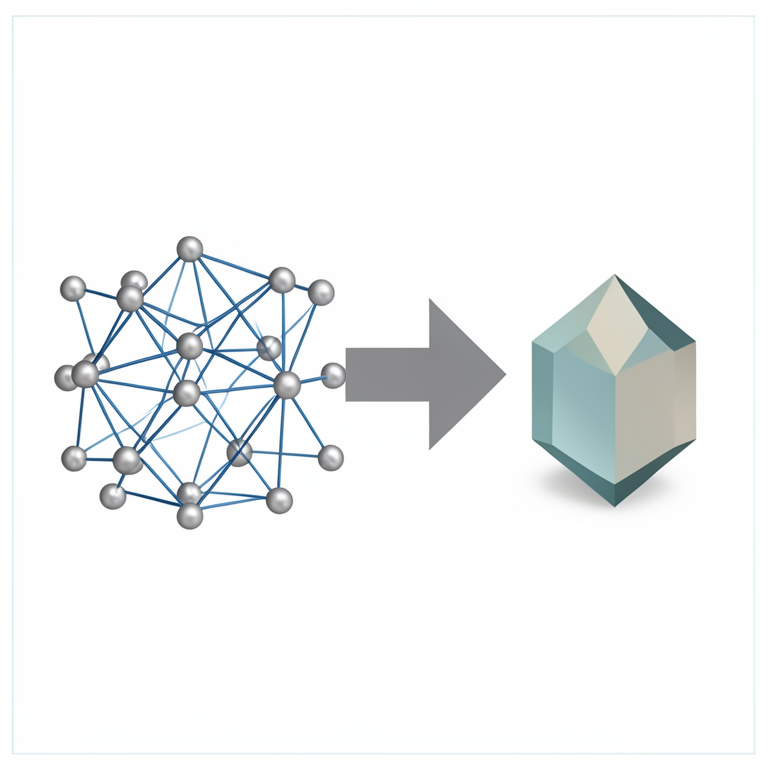
Conceptual Model of Topological Network Function
AI-generated conceptual illustration (A computer network topology consisting of interconnected server nodes and fiber-optic cables). It explains the idea and does not show study data.
View source evidence ↗Introduction
Topology is one of the mathematical branches which studies properties of the spaces that are invariant under any deformation. It is sometimes called "rubbersheet geometry" because of the objects can be stretched and contracted like rubber, but cannot be broken. For example, a square can be deformed into a circle without breaking it. Hence, a square is topologically equivalent to a circle. A topological space is a set endowed with a structure, called a topology, which allows defining continuous deformation of subspaces, and all kinds of continuity. Euclidean spaces and metric spaces are examples of a topological space. The deformations that are considered in topology are homeomorphisms. A property that is invariant under such deformations is a topological property. Basic examples of topological properties are: the dimension, compactness, connectedness and separation axioms. Topological concepts have been powerful method and useful tools to study computer science, information systems, rough multisets, rough topology (nano topology), soft topology, multi topology, etc.
Topological space
Let X be a non-empty set, T-Collection of subset of X Then following conditions satisfied: 1) ᴓ ∈T, X ∈ T 2) Intersection of finite number of members of T also ∈ T. G ∈ T, H ∈ T then G ∩ H ∈ T 3) Union of any number of member of T should also ∈ T. i.e. Gλ∈ T, λ ∈ A (A is arbitary element) ⋃:Gλ∈ T A set X where a topology has been specified in a Topological Space. The study of geometrical properties and spatial relations unaffected by the continuous change of shape or size of figures.
Network topology
Network topology is the arrangement of the elements (links, nodes, etc.) of a communication network. Network topology can be used to define or describe the arrangement of various types of telecommunication networks, including Command and Control Radio Networks, Industrial field busses and Computer Networks.
Topology
The path in which parts of something are organized, arrange or connected.
Types of topology Physical topology
• The physical topology is the way you physically lay out the network, like a map and the logical topology is the way in which the information flows on the network. Usually, the physical and logical topology is the same, but sometimes they can differ, such as in a physical star/logical ring topology.
Logical topology
• A logical topology is a concept in networking that defines the architecture of the communication mechanism for all nodes in a network. Using network equipment such as routers and switches, the logical topology of a network can be dynamically maintained and reconfigured.
Logical topology OSI model (open system interconnection)
• In the late 1970s, the International Organization for Standardization (ISO) conducted a program to develop general standards and methods of networking. A similar process evolved at the International Telegraph and Telephone Consultative Committee. Both bodies developed documents that defined similar networking models.
• The OSI model was first defined in raw form in Washington, DC in February 1978 by Hubert Zimmermann of France. • The Open Systems Interconnection model (OSI model) is a conceptual model that characterizes and standardizes the communication functions of a telecommunication or computing system without regard to its underlying internal structure and technology.
Graph discrimination by topological space
• Graphs are the basic subject studied by graph theory. The word "graph" was first used in this sense by James Joseph Sylvester in 1878. • In Mathematics and more specifically in graph theory, a graph is a structure amounting to a set of objects in which some pairs of the objects are in some sense "related". The objects correspond to mathematical abstractions called vertices (also called nodes or points) and each of the related pairs of vertices is called an edge (also called link or line). Typically, a graph is depicted in diagrammatic form as a set of dots or circles for the vertices, joined by lines or curves for the edges. Graphs are one of the objects of study in discrete mathematics. • The edges may be directed or undirected.
For example, If the vertices represent people at a party, and there is an edge between two people if they shake hands, then this graph is undirected because any person A can shake hands with a person B only if B also shakes hands with A. In contrast, if any edge from a person A to a person B corresponds to A admiring B, then this graph is directed, because admiration is not necessarily reciprocated. The former type of graph is called an undirected graph while the latter type of graph is called a directed graph.
One-way function
• A one-way function is a mathematical function that is significantly easier to compute in one direction than in the opposite direction. • Informally, a function f is a one-way function if 1. The description of f is publicly known and does not require any secret information for its operation. 2. IF x, it is easy to compute f(x). 3. IF y, in the range of f, it is hard to find an x such that f(x)=y.
More precisely, any efficient algorithm solving a P-problem succeeds in inverting f with negligible probability.
Definition [T1]:
A graph G is a pair (V, E) or (V(G), E(G)), where V is a non-empty set called vertices or nodes and E is 2-element subsets of V called edges or links. and G2=(V(G2), E(G2)), where V(G1) and V(G2) are disjoint, then their union G1 ∪ G2 is the graph with the vertex set V(G1) ∪ V(G2) and edge family E(G1) ∪ E(G2). • Result = accuracy at LAN, but for WAN sometimes error shows.
Definition [T2
Definition [T2
Conclusions
One-way Function which is apply on computer network by Mathematical modelling on topological space that easy to analyse a result without facing error.
References
9 in the original paper- Arrow KJ. Social Choice and Individual Values (Yale University Press), 1951.
- Black D. "On the Rationale of Group Decision Making", Journal of Political Economy, 1948.
- Brown D. "Aggregation of Preferences", Quarterly Journal of Economics, 1974.
- Chichilnisky G. "Manifolds of Preferences and Equilibria, 1976.
- Chartrand G, Lesniak L, Zhang P. Textbooks in Mathematics (Graphs and Digraphs), Taylor and Francis Group, LLC, 2016.
- Shokry M, Aly RE. Topological Properties on Graph VS Medical Application in Human Heart, International Journal of Applied Mathematics 2013;15.
- Harris M, Hirst JL, Mossinghoff MJ. Combinatorics and Graph Theory, Springer Science + Business Media, LLC, 2008.
- Chen J, Li J. An application of rough sets to graph theory. Information Sciences 2012;201.
- Harry F. Graph theory, Addison-Wesley, Reading, Mass, 1969.