
Research article · 2020 · Full text
International Journal of Veterinary Sciences and Animal HusbandryControling coccidiosis in broilers using Tumeric paste
Volume 5(4) · Pages 156–159
Research areasCoccidia and coccidiosis researchAnimal Nutrition and PhysiologyVeterinary medicine and infectious diseases
Abstract
Author-writtenTo reduce drug resistance and prevent outbreak of coccidiosis in broiler production, Tumeric paste (TP) was administered per os and used as an anticoccidial to raise broiler chickens. Coccidiosis is the bane of the poultry industry causing considerable economic loss. Eimeria species are protozoan parasites and the etiologic agent of coccidiosis causing morbidity and death in poultry. In addition to anticoccidial chemicals and vaccines, natural products are emerging as an alternative and complementary way to control avian coccidiosis. A study was carried out using 60 day old broilers which were randomly allocated into 3 groups: A, infected-treated with 0.5g/kg of turmeric paste, B, infected-treated with 1.0g/kg of turmeric paste and C, infected-untreated control). The groups received equal doses of 16000 sporulated coccidia oocysts orally at week three. Faecal coccidia oocysts counts were evaluated. There was significant difference (p< 0.05) in the means of faecal coccidia oocysts count in group B (0.00±0.00) compared to group A (1.66±0.33) and C (11.67±0.33), thus showing that turmeric paste has anticoccidial effects and works better at the dose of 1.0g/kg of body weight.
Summary
Source-checkedPlain-language reading of the full paper, prepared with AI and checked against the text. Each point links to the authors' own words.
Why it matters
- Coccidiosis is a major problem in the poultry industry that leads to significant economic losses. View evidence ↗
- While various drugs are used to treat coccidiosis, the emergence of resistant strains is a common problem. View evidence ↗
- Turmeric powder has poor absorption in the gastrointestinal tract, with 40-85% of an oral dose passing through unchanged. View evidence ↗
The question
- The study aimed to determine if using a turmeric paste could enhance the absorption of turmeric and increase its effectiveness against coccidiosis in broilers. View evidence ↗
What they did
- The experiment used 60 day-old broiler chicks, divided into three groups of 20 birds each. View evidence ↗
- The groups consisted of an untreated infected control (Group C), an infected group treated with 0.5g/kg of turmeric paste (Group A), and an infected group treated with 1.0g/kg of turmeric paste (Group B). View evidence ↗
- At the third week of rearing, all groups were orally administered 16,000 sporulated coccidia oocysts. View evidence ↗
- The turmeric paste was formulated using 60g of turmeric powder, 2 cups of water, 1-2 teaspoons of black pepper, and 70ml of extra virgin olive oil. View evidence ↗
What they found
- Only the untreated infected group exhibited clinical signs of coccidiosis, including bloody diarrhea, weight loss, and one death. View evidence ↗
- The group treated with 1g/kg of turmeric paste had a significantly lower mean faecal oocyst count (0.00±0.00) compared to the 0.5g/kg group (1.66±0.33) and the untreated group (11.67±0.33). View evidence ↗
- Two weeks post-treatment, the 1g/kg turmeric paste group showed a 100% reduction in coccidia oocysts, which was significantly higher than the reduction in the 0.5g/kg group. View evidence ↗
- The untreated infected group showed no reduction in faecal coccidia oocysts; instead, the count increased. View evidence ↗
What it means
- The authors state that the addition of piperine (black pepper) and fats (olive oil) in the paste was necessary to enhance the absorption and uptake of curcumin. View evidence ↗
Visual summary
1 visualsIllustrations explain the paper; they do not show study data.
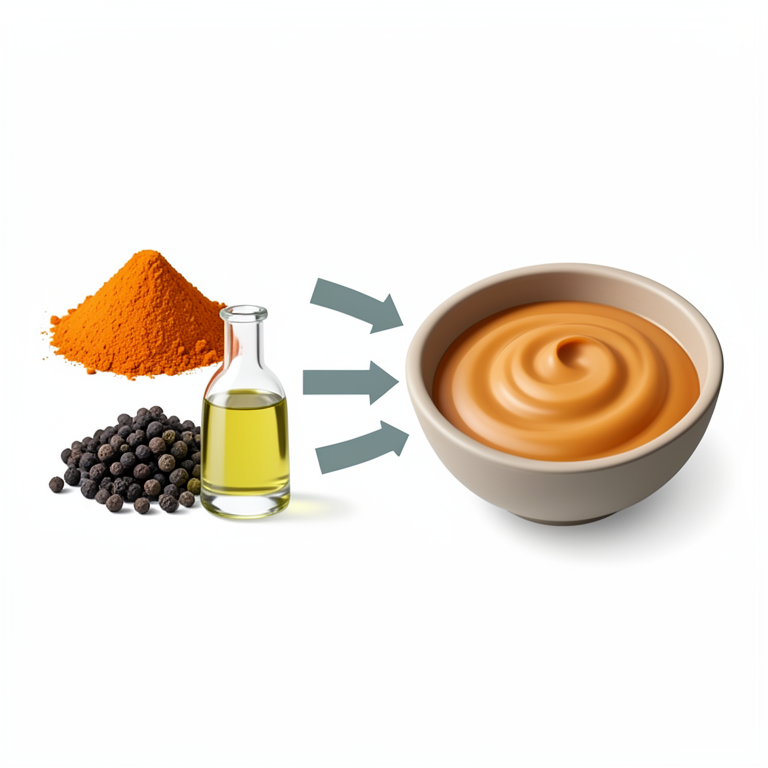
Turmeric Paste Composition
AI-generated conceptual illustration (turmeric powder, black pepper, and olive oil). It explains the idea and does not show study data.
View source evidence ↗Figures & tables
From the original paper Table 1
Introduction
The principle of poultry production is to achieve a high level of performance through efficient utilization of feed, keeping survivability as maximum as possible [1] . Poultry is one of the quickest and affordable means of meeting the protein (animal origin) requirement in human population. Adversely, poultry diseases are the main constraint in poultry industry in the world [2] . Among all the diseases which affect poultry is coccidiosis [3] . Coccidiosis is a protozoan disease of birds caused by virulent and pathogenic Eimeria species [4,5] . Eimeria species have a complex life cycle, consisting of three developmental stages (sporogony, schizogony/merogony, and gametogony). Oocysts excreted in poultry feces sporulate in a favourable environment with high humidity at 25-30 °C. Once sporulating oocysts are ingested by birds, physical and chemical agents in their digestive tracts are released and mature infectious sporozoites form sporocysts. The sporozoites enter epithelial cells in the gut, depending on the specific Eimeria species, and form trophozoites and, later, schizonts during schizogony/merogony [6] . Merozoites, released from the schizont, can penetrate into the epithelia and continue this merogony stage 2 to 3 times in order to increase the cell number of merozoites at the asexual stage of reproduction. Alternatively, merozoites may enter the sexual stage of reproduction by forming male microgametes, the equivalent of sperm, and female macrogametes, equivalent of oocytes, in host cells. Following fertilization, the zygotes develop into oocysts and are excreted into poultry stool. Eimeria species may require 4-7 days to complete their entire life cycles [7] , Thus, the asexual and sexual stages of reproduction in the Eimeria life cycle have been targeted by anticoccidial compounds [8] . There are various anticoccidial drugs 'that are used in rearing birds worldwide but the common problem with the drugs is the emergence of resistant strains [9] . When this occurs, it renders drugs ineffective hence newer drugs or other solutions must be provided in order to keep pace with the evolution of the organisms and their disease. Presence of drug residues in eggs and milk is also a point of concern associated with the anti coccidials, so there is need for specified withdrawal periods before slaughter. In an effort to combat drug resistance, Growth promoters also known as feed additives were propounded and used in poultry feeds. These are edible products that can be added to ration to obtain some special effects [10] .
Unfortunately, growth promoters have shown many disadvantages such as adverse effects on health of broilers, high cost and long residual properties and development of antibiotic resistance in microbes [11] . In order to abase drug resistance and outbreak of cocciodiosis in poultry industries, beneficial bioactive plant substances were used as an alternative to anticoccidial drugs and growth promoters. These bioactive plant substances yield useful effects in animal nutrition like stimulation of appetite and feed intake, improvement of endogenous digestive enzyme secretions, activation of immune responses, antibacterial, antiviral and antioxidant effects [12] . An example of such beneficial plant is Curcuma longa also known as turmeric. It is a tropical plant originated from southern and eastern Asia. The main yellow bioactive substances isolated from the rhizome of Curcuma longa are curcumin, demethoxycurcumin, bisdemethoxy-curcumin and tetrahydro curcuminoids 13,14] , These plant extracts were found to have antifungal effects [13] , and antioxidative value [14] . Turmeric (C. longa) has long been used as a spice and medicinal herb. One publication stated that C. longa showed anticoccidial activity [15,16] , Another reported that curcumin (diferuloylmethane), an active compound in C. longa, consistently destroyed sporozoites of E. tenella [17] Curcumin has also been studied extensively as a chemo-protective agent in several cancers [18] , Another study reported that curcumin possesses hepatoprotective, antiviral and anticoccidial effects [19] . However, pharmacokinetic studies of curcuma longa in animals revealed that about 40-85% of an oral dose of turmeric powder (curcumin) passes through the gastrointestinal tract unchanged [20,21] , Given the potential usefulness of curcumin but owing to its poor absorption in the gastrointestinal tract, this study was carried out to investigate the possibility of enhancing the absorption of turmeric thus increasing its anticoccidial effects in broilers by using Tumeric Paste. Turmeric paste is a mixture of turmeric powder (curcumin), black pepper (piperine) and oil in semi-solid form. Black Pepper is a flowering vine which belongs to family: Piperaeceae, genus: piper and specie: nigrum. It is rich in glutathione peroxidase and glucose-6-phosphate dehydrogenase [22] . Its antioxidant property has been documented [23] . It is traditionally considered to be a hot, pungent herb that stimulates digestive tract, by supporting the secretion of fluids and circulation of blood in the gastrointestinal tract thereby increases the absorption of selenium, vitamin B complex, curcmin (Tumeric), Beta carotene and other nutrients [24] , Black Pepper's most active constituent, Piperine, has been found to support the absorption of other herbs, specifically the Curcumins found in Turmeric. One study found that combining Turmeric and Black Pepper increased the bioavailability of Turmeric by 154% versus Turmeric alone [25] , Piperine appears to support the intercellular permeability and uptake of Curcumins [26] ,
Materials and Methods
Sixty hundred (60) day old broiler chicks vaccinated against Newcastle and Gumboro disease but no anticoccidial given were randomly assigned into three groups, each of 20 chicks and reared in deep litter system. The groups (A, and B) received turmeric paste treatment per os at 0.5g/kg, and 1g/kg body weight respectively from day two till the 5 th week of their lives while the other group (C) was not given turmeric paste. Also groups (A, B and C) were infected with 16000 sporulated coccidia oocysts per os at 3 rd week of rearing them. Clinical examination of birds, feacal samples collection and faecal coccidia oocysts counts were carried out from day four (4) to day seven (7) post infection. The observations made were recorded. The turmeric paste was prepared with freshly prepared turmeric powder, freshly ground black pepper, water and virgin olive oil at the ratio of 60g of turmeric: 2 cups of water: 1 to 2 teaspoon of black pepper:70mls of extra virgin olive oil [27] , With this measurement, the mixture of turmeric and water were cooked for 10minutes. Olive oil and black pepper were added at the end of the cooking. The golden paste was allowed to cool and appropriate dosages were calculated and given to the birds. It was stored in the refrigerator throughout the period of experiment. Eimeria strains used for the experiment were obtained as described by Ngongeh [2] . The ceca of birds clinically sick from coccidiosis were harvested at autopsy. The contents of ceca were emptied into sieves placed in bowls, crushed, washed out with water and allowed to sediment for 10 minutes. Later, the sediments were suspended in Teflons tubes containing 50mls of water. 20mls of the suspension was poured into five (5) petri dishes and about 2mls of potassium dichromate (sporulating agent) was added and the oocysts were left for 5 days to sporulate. After 5 days, the contents were washed and examined under the microscope to confirm that there was sporulation, identify specie of eimeria that is peculiar to sporulated oocysts and count the number of oocysts that sporulated. The sporulated oocysts were stored in the refrigerator until used for infection. Means of feacal coccidia oocysts counts for the different infected groups were compared for statistical differences by One-way Analysis of Variance (ANOVA). The means were separated using Post-hock Statistical tool and results were compared with the control using SPSS. All through the experiment, the birds were humanely treated according to ethical standards laid down in the 1964 Declaration of Helsinki, as, operational in Nigeria.
Results
Eimeria strains identified was Eimeria tenella. Of all the groups infected with sporulated coccidia oocysts, only the Infected-untreated group showed the following signs: Diarrhea containing blood, listlessness, off feeding, weight loss, droopy wings and one death was recorded. The birds in the other two groups (infected-treated) did not show any clinical signs but coccidia oocysts were found in their faecal samples. The mean faecal coccidia oocysts count of the group treated with 1g/kg of turmeric paste 0.00±0.00 was significantly (P< 0.01) lower than the mean faecal coccidia oocysts counts 1.66±0.33, of the group treated with 0.5g/kg of turmeric paste and 11.67±0.33 of the infected-untreated group. Also, the percentage reduction in coccidia oocysts count post treatment(2 weeks) of the group treated with 1g/kg of TP was 100% and this is significantly (P,0.01) higher than that of the group treated with 0.5g/kg of TP but the infecteduntreated group showed no reduction in faecal coccidia oocysts count instead it increased.
Discussion
Herbal remedies have been used since ancient times in medicine and have recently gained increasing popularity, especially because of the declining effectiveness of synthetic compounds and concerns of the general population about drug side effects and interactions [29] . In chicken coccidiosis, herbal extracts have been intensively studied in the recent years in the search for new alternatives to the traditional anticoccidial drugs [30] . The extensive use of anticoccidials in the poultry industry may lead to the occurrence of drug residues in meat and eggs [31] . As such, consumer interest in organic foods has been rapidly increasing in recent years. The organic requirements restrict the use of chemicals, so natural plant products may represent an effective solution for pathogen control in the organic poultry system [32] . There was statistical difference between the groups treated with TP and the control thus depicting that curcumin in TP has anticoccidial effects. This work agrees with the work done by Aranjo and Leon [33] and Kuchi et al. [34] . Also there was statistical difference between the two treated groups and this showed that increased dose of TP at 1g/kg gave better efficacy or effects than 0.5g/kg dose. The results showed that the group treated with 1g/kg of TP was able to combat coccidia infection and overcome it faster and completely within 2 weeks more than the group treated with 0.5g/kg of TP and this may be as a result of an increased dose of TP in that group. The mean faecal coccidia oocysts counts 2 weeks post infection and post treatment of the group treated with 1g/kg of TP was significantly lower than that of the other group treated with 0.5g/kg of TP. The group was completely cleared of the infection (coccidiosis) which is evidenced by zero faecal coccidia oocysts counts by 2 weeks after treatment while that of the infected-untreated group did not reduced but continued to increase showing that the group has no protection against coccidiosis. This effects agrees with the work of Allen et al., [35] that curcuma reduced oocyst shedding The bioactive compounds in Tumeric paste are curcumin (turmeric), piperine (black pepper) and fats (extra virgin olive oil). These three compounds worked together to yield the anticoccidial effects we observed in this work. Curcumin in turmeric powder alone will not be able to give this effect owing to its inability to be absorbed through the gastrointestinal tract [21] . For this reason, piperine and fats were used to prepare the paste to enhance inter-cellular permeability and uptake of Curcumins [26] . Curcumins has a direct effect on the parasites, by altering the process of oocyst wall formation and inhibiting the formation of sporocysts [36] , or by destroying the sporozoites [15] . Furthermore, there is a lower risk of developing resistance to these natural substances compared to anticoccidial drugs [37] . Furthermore, turmeric paste could improve recovery after coccidiosis [38] . Turmeric paste was effective in controlling coccidiosis in chickens more than the turmeric powder and can be used successfully as a natural anticoccidial and it gives better effects at 1g/kg body weight.
Figures and tables from the paper
References
35 in the original paper- Mondal B, Ramlal S, Lav PS, Murali HS, Batra HV. A combinatorial systematic evolution of ligands by exponential enrichment method for selection of aptamer against protein target. Appl. Microbiol, Biotechnol. 2015; 99:9791-9803.
- Halle PD, Umoh JU, Saidu L, Abdu. Diseases of poultry in Zaria, Nigeria: a ten year analysis of clinical records, Nigerian journal of Animal Production. 1998; 25:88-92.
- Adene DF, Oluleye OB. The Biology Diagnosis, Treatment and Control in poultry health and production, principle and practices. Adene, D.F. (Ed). StirlingHorden Publishers Ltd., Ibadan, Nigeria, 2004, 129-16.
- Nematollahi G, Moghaddam, Pourabad RF. Prevalence of Eimeria species among broiler chicks in Tabriz (Northwest of Iran, Munis Entomology and Zoology. 2009; 4:53-58.
- Ethinger SJ, Feldman, EC. Textbook of Veterinary Internal Medicine (Fourth edition). W.B. Sanders Company, 2005, 59-60.
- Blake DP, Tomley FM. Securing poultry production from the ever-present Eimeria challenge, Trends in Parasitology. 2014; 30(1):12-19. View at: Publisher Site | Google Scholar
- Hammond D. Life cycles and development of coccidia, The Coccidia, 1973, 45-79. View at: Google Scholar
- Chapman HD. Milestones in avian coccidiosis research: a review, Poultry Science. 2014; 93(3):501-511. View at: Publisher Site | Google Scholar
- Khan RU, Naz S, Jardani M, Nikoubefat Z, Jelvaggi M, Tufarell V et al. The use of tumeric in poultry feed. Worlds Poultry Science Journal. 2012; 68:97-103.
- Fetrow CW, Avila JR. Professional's Handbook of complementary and Alternative Medicine. Springhouse, PA, 1999.
- Raghdad A, Abd Al-Jaleel. Use of turmeric (Curcuma longa) on the performance and some physiological traits on the broiler diets. Iraqi J Vet. Med. 2012; 36(1):51-57.
- Kapoor ID. Handbook of Ayurvedic Medicinal Plants. Boca Raton, FL: CRC Press, 1990.
- Osawa T, Sugiyama Y, Inayoshi M, Kawaishi S. Antioxidative activity of tetrahydro curcuminoids. Bio. Sci. Biotechnol Biochem. 1995; 59:1609-12.
- Kim DK, Lillehoj HS, Lee SH, Jang SI, Lillehoj EP, Bravo D. Dietary Curcuma longa enhances resistance against Eimeria maxima and Eimeria tenella infections in chickens. Poult Sci. 2004; 92(10):2635-2643. View at: Publisher Site | Google Scholar. 2013; 92:2635-43.
- Brazilian Archives of Biology and Technology. 2010;
- 63-67. View at: Publisher Site | Google Scholar 17. Khalafalla, RE, Müller U, Shahiduzzaman M. Effects of curcumin (diferuloylmethane) on Eimeria tenella sporozoites in vitro, Parasitology Research. 2011; 108(4):879-886. View at: Publisher Site | Google Scholar 18. Duvonc AJ, Kuttan G, Babu KD. anti-tumour and antioxidant activity of natural curcuminoids. Cancer letter. 2005; 94:79-83.
- Polasa K, Sesikaran B, Krishna TP, Krishnaswamy K. Tumeric induced reduction in urinary mutagens. Food chem. Toxiocol. 1991; 29:699-706.
- Wahlström B, Blennow G. A study on the fate of curcumin in the rat. Acta Pharmacol Toxicol (Copenh). 1978; 43(2):86-92. doi:10.1111/j.16000773.1978.tb02240.x
- Ravindranath V, Chandrasekhara N. Metabolism of curcumin--studies with [3H]curcumin. Toxicology. 1981; 22(4):337-344. doi:10.1016/0300-483x(81)90027-5
- Akbarian A, Golian A, Kermanshahi H, Gilian A, Moradi S. Influence of Tumeric rhizome and black pepper on blood constituents and performance of broiler chickens. African J Biotechnol. 2012; 11:8606-8611.
- Gulcin AH, Shah AJ, Ghayur MN, Majeed K. Pharmacological Basis for the use of Turmeric in gastrointestinal and respiratory disorders. Life Sci. 2005; 76:3089-105. Pubmed: 15850601
- Al-Sultan SI, Gameel AA. Effects of black pepper (piper nigrum), turmeric powder (Curcuma longa) and Coriander seeds (Coriandrum sativum) and their combinations as feed additives on growth performance of broiler chickens. Int. J Poult. Sci. 2003; 5:332-338
- Blanchard K. What Turmeric Might Do For Animals. Emax Health. http://www.emaxhealth.com/1020/whatturmeric-might-do-animal-health 1 November, 2014. 26. Gaia herbs farm. https://www.gaiaherbs.com/blogs/herbs/black-pepper 2020.
- Healing With Turmeric Golden Paste For Dogs. [email protected] 2020.
- Ngongeh LA. Prevalence, characterization and pathogenicity of eimeria species in chickens reared in Nsukka area of Enugu State, Nigeria. (A fellowship thesis), College of Veterinary Surgeons Nigeria, Enugu, Nigeria, 2015.
- Kim DK, Lillehoj HS, Lee SH, Lillehoj EP, Bravo D. Improved resistance to Eimeria acervulina infection in chickens due to dietary supplementation with garlic metabolites. Br J Nutr. 2013; 109:76-88.
- Masood S, Abbas RZ, Iqbal Z, Mansoor MK, Sindhu ZUD, Zia MA et al. Role of natural antioxidants for the control of coccidiosis in poultry. Pak Vet J. 2013; 33:401-7.
- Clarke L, Fodey TL, Crooks SRH, Moloney M, O'Mahony J, Delahaut P et al. A review of coccidiostats and the analysis of their residues in meat and other food. Meat Sci. 2014; 97:358-74.
- Haug A, Thebo P, Mattsson JG. A simplified protocol for molecular identification of Eimeria species in field samples. Vet Parasitol. 2007; 146:35-45.
- Aranjo CA, Leon LL. Biological activities of curcuma longa. Memorias do Insituo Oswaldo Cruz. 2008; 96:723728.
- Kuichi F, Goto Y, Sugimoto N, Kondo K, Tsuda Y. Nematocidal activity of turmeric synergistic action curcuminoids. Chem. Pharm Bull. 1993; 41:1640-1643.
- Allen PD, Danforth HD, Augustine PC. Dietary modulation of avian coccidiosis, International Journal for Parasitology. 1998; 28(7):1131-1140.
- Fatemi A, Razavi MS, Asasi K, Goudarzi TM. Effects of Artemisia annua extracts on sporulation of Eimeria oocysts. Parasitol Res. 2015; 114:1207-11.
- Quiroz-Castaneda RE, Dantan-Gonzalez E. Control of avian coccidiosis: future and present natural alternatives. Biomed Res Int., 2015, 4306.
- Arczewska-Włosek A, Świątkiewicz S. The effect of a dietary herbal extract blend on the performance of broilers challenged with Eimeria oocysts. J Anim Feed Sci. 2012; 21:133-42.