
Research article · 2020 · Full text
International Journal of Veterinary Sciences and Animal HusbandryA complete review on: Methanogens methane producers of rumen and abatement strategies- biotechnology and microbiological strategies review
Volume 5(4) · Pages 11–17
Research areasRangeland Management and Livestock Ecology
Abstract
Author-writtenEmerging research focuses on ruminant methanogens due to their emission of methane globally. Methane emission with annual global contribution of 14.5 per cent. Livestock is one of the most important sources of greenhouse gases from agriculture, contributing more than 25% of global greenhouse gases emission. The trend and legal obligation of mitigating greenhouse gas emissions will likely to directly influence improved efficiency of livestock systems, including animal nutrition, productivity, handling and mangement. The development of mitigation strategies and the viability of their practical applications have been researched around the world. In the current review, Microbiology and biotechnological strategies such as emphasizing on animal breeding, genetic merit, unproductive animals, vaccination, immunisation and biological control, chemical defaunation that can be leads to decreasing methane production from ruminant and thereby improving animal production are discussed.
Summary
Source-checkedPlain-language reading of the full paper, prepared with AI and checked against the text. Each point links to the authors' own words.
Why it matters
- Livestock farming is a major contributor to agricultural greenhouse gas emissions, accounting for over 25% of the global total. View evidence ↗
- Methane is significantly more impactful than carbon dioxide, with a global warming potential 28 times higher. View evidence ↗
- Methane production is inefficient for the animal, as ruminants lose between 2% and 12% of their gross energy intake through these emissions. View evidence ↗
The question
- The review aims to provide background on methanogens and evaluate microbiological and biotechnological alternatives for reducing methane emissions in ruminants. View evidence ↗
What they did
- The authors categorize methane mitigation strategies into four main areas: management, nutrition, biotechnology, and microbiology. View evidence ↗
What they found
- Animal breeding is estimated to potentially reduce methane losses from dry matter during digestion by 10% to 20%. View evidence ↗
- Genetic selection programs could potentially achieve a methane mitigation of 11% to 26% over a 10-year period. View evidence ↗
- Vaccines VF3 and VF7, based on three and seven methanogen strains respectively, resulted in a 7.7% reduction in methane emissions per kg of dry matter in sheep. View evidence ↗
- Removing protozoa from the rumen (defaunation) can reduce methane production by 13% to 50%, depending on the diet. View evidence ↗
- High doses of monensin (24 to 35 ppm) can reduce methane production by up to 10%. View evidence ↗
- In vitro studies of the bacteriocin nisine showed that increasing concentrations from 5 to 30 μmol/L reduced methane production by 14% to 40%. View evidence ↗
- The HC5 bacteriocin from Streptococcus bovis has been shown to inhibit methanogenesis by up to 50% in vitro. View evidence ↗
What it means
- The authors conclude that integrating microbiology and biotechnology, including breeding, vaccination, biological control, and chemical defaunation, can effectively mitigate methane production. View evidence ↗
- Anti-methanogenic vaccines may only provide short-term reductions because host antibodies may not persist in the rumen due to proteolytic degradation. View evidence ↗
- Further in vivo studies are required to determine if bacteriocins are effective and adaptable as long-term feed additives. View evidence ↗
Visual summary
1 visualsIllustrations explain the paper; they do not show study data.
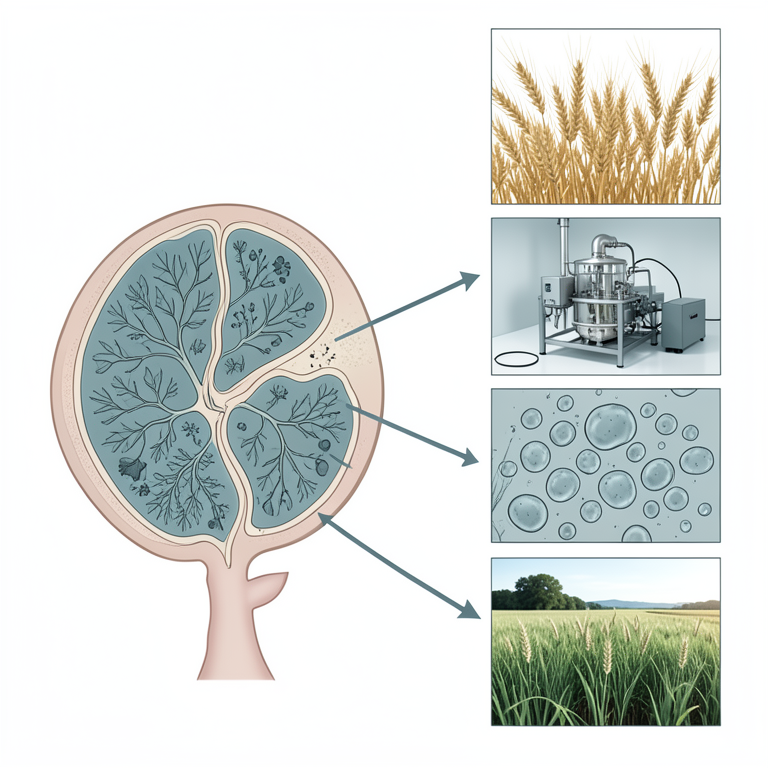
Methane Mitigation Strategy Map
AI-generated conceptual illustration (Bovine rumen). It explains the idea and does not show study data.
View source evidence ↗Figures & tables
From the original paper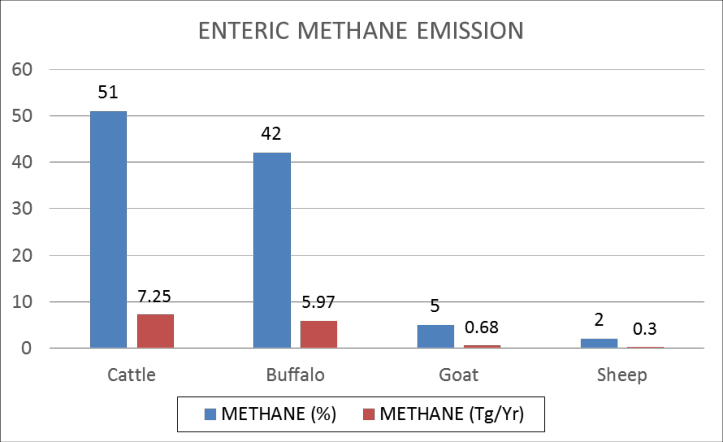 Figure 1
 Table 1
Introduction
Climate change is a subject of global environmental concern. Globally, the Livestock farming is one of the most prominent anthropogenic sources of greenhouse gases. The total global greenhouse gases emission from livestock is 7.1 gigatonnes CO 2 e year -1 , which accounts for 14.5% of all anthropogenic emissions (IPCC, 2014) [29] . India has the world's largest livestock population at 500 million heads, and this emits huge amounts of methane, a greenhouse gas responsible for global warming. Methane is a more potent greenhouse gas, having 28 folds greater global warming potential than carbon dioxide (Sirohi et al., 2013, IPCC 2013) [29,55] . The estimation of CH 4 emission from four different livestock categories, cattle, buffalo, goat, and sheep, in India are evaluated at districts, state, and national level. Ruminant animals (particularly cattle, buffalo, sheep, goat and camels) produce significant amounts of CH 4 under the anaerobic conditions of the digestive processes (Sejian et al., 2011) [54] . About 81 to 92 MT methane produce per annum globally (IPCC, 2007; Patra et al., 2012) [28,46] . India has livestock wealth of 192.49 million cattle, 109.85 million buffaloes, 74.26 million sheep and 148.8 million goats which produce large amounts of CH 4 (GOI, livestock census 2019) [20] . Ruminants typically lose 2-12% of their gross energy intake as emissions of methane (Kamra et al., 2008) [32] . Increased anthropogenic Greenhouse Gas (GHG) emissions have increased the global temperature the last 100 to 200 years (Mirzaei-Aghsaghali and Maheri-Sis 2011) [45] . Methane production in ruminants has received global attention in relation to its contribution to the greenhouse gas effect and global warming. Much research has been directed toward methane abatement strategies in ruminants. Mitigation strategies are often limited by the diet fed, the management conditions, physiological state and use of the animal. To this end, the aim of this paper we review to provide background on methane and methanogens, as well as alternatives to reduce CH 4 emissions from ruminants through Microbiology and biotechnology strategies.
Methane and Methanogen
Methanogens are the only group of microorganisms on earth producing significant amounts of methane. Cattle produce methane from enteric fermentation (85 to 90%) and fecal excretion. A total of 95% of rumen methane is excreted via eructation through mouth and from the intestines, and around 5% excreted via the anus (Murray et al., 1976) [46] . Methane from enteric fermentation represents 25% of anthropogenic methane emissions (Wuebbles and Hayhoe, 2002) [68] . Enteric methane, responsible for 15% of global warming, is directly related with rumen fermentation efficiency because of the loss of carbon and consequent loss of energy, which affects animal performance (Bell et al., 2011) [6] . Methanogens belong to the domain Archaea and the phylum Euryarchaeota. Unlike Bacteria, methanogens lack peptidoglycan in the cell wall, replaced by pseudomurein in Methanobrevibacter and Methanobacterium, heteropolysaccharide in Methanosarcina, and protein in Methanomicrobium (Balch et al., 1979) [4] . Methanogens are usually either coccoid (spherical) or bacilli (rod shaped) and required redox potential -250Mv to -450Mv. Methanoges are having 31 genera and 113 species (Liu and Whitman, 2008) [36] out of that seven species are culturable from the rumen (Janssen and Kirs, 2008) [30] [15, 27] , were added to the phylum Euryarchaeota. Methanogens are a relative diverse group of archaea and can be found in various anoxic habitats (Garcia et al., 2000) [18] . For example, they can be cultured from extreme environments such as hydrothermal vents or saline lakes, paddy fields. Extensive recent metagenomic analyses suggested that methanogens may no longer restrict to the Euryarchaeota. Two new phyla, namely the Bathyarchaeota (Evans et al., 2015) [17] and the Verstraetearchaeota (Vanwonterghem et al. 2016) [61] were postulated. Genome sequences from both phyla indicate a methylotrophic methane metabolism in these as of yet uncultivated-potential methanogens. Methanogenesis or biomethanation is the formation of methane by methanogens. Methanogenesis is in the form of anaerobic respiration. The terminal electron acceptor in methanogenesis is not oxygen, but carbon. Various substrates are used for methane formation such as acetate, formate, methanol etc. Methane formation from acetate, called aceticlastic methanogenesis, can be found only in the order Methanosarcinales. In contrast to that, methylotrophic methanogenesis, which is the methane formation from different methylated compounds such as methanol, methylamines or methylated thiols, is found in the orders Methanomassiliicoccales, Methanobacteriales and Methanosarcinale (Evans et al., 2015) [17] . Hydrogenotrophic methanogenesis from H 2 and CO 2 is found in almost all methanogenic orders with the exception of the Methanomassiliicoccales. Due to its broad distribution it is postulated that this type of methanogenesis is the ancestral form of methane production (Bapteste et al., 2005) [5] . Enteric methane responsible for 15% of global warming, is directly related with rumen fermentation efficiency because of the loss of carbon (Bell et al., 2011) [6] and consequently leads to loss of gross energy 2-12% (Kamra, 2008) [32] , which affects animal performance.
• CH 4 emission -Enteric fermentation is estimated to be 14.20 Tg/Yr. (livestock census, 2014) [20] Fig 1 : Development of mitigation strategies and their viability have been researched around the world (Thornton, 2010) [57] .
Strategies Involved in Methane Reduction
Methane mitigation strategies based on the relationship that methanogens have with other microorganisms present in the rumen. Methane mitigation is effective in one of two ways: either a direct effect on the methanogens caused by the impact of the strategy on substrate availability for methanogenesis, or an indirect effect, usually through an effect on the other microbes of the rumen. Methane mitigation strategies solutions can be discussed in four topics including: Management strategies, Nutritional strategies and Biotechnology and Microbiological strategies. In this paper we review alternatives to reduce CH 4 emissions from ruminants through Microbiology and biotechnology strategies.
Review alternatives to reduce CH4 emissions from ruminants through Microbiology and biotechnology strategies 3.1 Animal breeding
Animal breeding has focused on production traits, such as milk production and growth rate, since these are relatively easy to measure in the national herd or flock. One of the key challenges for the industry, and opportunities for bioscience, is the ability to incorporate a much wider range of traits into breeding indices. one study was existing on validations of the SF 6 technique and found SF 6 estimates were 93 to 95% of chamber-based measurements of methane emissions and showed that variation between days was attributable to animals (sheep or cattle fed forages) even though intakes and composition of each diet were relatively constant (Ulyatt et al. 1999) [59] . Robertson et al. 2002 [49] studied that Overseas genotypes produced 8-11% less methane, as a percentage of gross energy (GE) intake, compared to New Zealand genotypes and total mixed rations (TMR) resulted in similar energy losses to methane % of GE as pasture. Genotype differences had disappeared by day 240. The result of this experiment demonstrates a persistent high or low methanogenesis for some animals, but not all cows fed pasture. A similar variation between individuals was evident for total mixed ration diets fed to cows (Robertson and Waghorn 2002) [50] . Sheep with high CH 4 yields had larger rumen volumes, a slower passage outflow rate, higher fiber digestibility and longer retention times than sheep with low CH 4 per kg of dry matter intake. Methane yield is best predicted as a function of particulate fractional outflow rate, organic matter intake (g/ kg BW 0.75 ) and molar proportion of butyrate. A number of experiments have reported variation between animals in CH 4 emissions per unit of feed intake. Clark et al. 2005 [12] conducted a trial involving 302 grazing dairy cows showed that mean CH 4 emissions of 19.3 ±2.9 g/kg DMI were reported the 15% variance suggesting heritable differences in methanogenesis. Eckard et al. 2010 [16] reported similar study were in sheep on an unlimited pasture diet they reported that breeding for reduced methanogenesis is unlikely to be compatible with other competing breeding objectives. In contrast, breeding for improved feed conversion efficiency (lower net feed intake) should be compatible with existing breeding objectives and likely to both reduce CH 4 and the ratio of CH 4 per unit of product produced. Hegarty et al. 2007 [23] conducted a study showed that residual feed intake explained only a small proportion of the observed variation in methane production. A genotype with nutrition interaction can be anticipated, and the methane production ratio with residual feed intake that is (estimated breeding value) relationship will need to be defined over a range of diet types. Waghorn et al. 2006 [63] suggested that animal breeding could achieve a 10 to 20% reduction in CH 4 losses from DM during digestion. Pickering et al., 2015 [48] studied heritabilities of CH 4 production on an absolute emission basis (g CH 4 /day) are moderate and estimated at 0.29 and 0.40 in sheep and cattle, respectively, but much lower at 0.13 and 0.19, respectively, on a yield basis (g CH 4 /kg) dry matter intake. Lovendahl et al., 2018 [37] observed that incorporating CH 4 production in a genetic selection program represents a major challenge because of the difficulty of measuring CH 4 in a manner that reflects the longterm CH 4 phenotype of the animal. Some animal breeding programs use a 'sniffer' technique to measure breath CH 4 concentration at a feeder or during milking (source-sampling distance, air turbulence, cow's head movement; Wu et al., 2018) [67] , it has been shown to be correlated (r = 0.75) to flux methods when used by skilled researchers (Difford et al., 2019) [14] . Breider et al. (2019) [10] recently showed genetic correlations of 0.49 to 0.54 between CH 4 production and milk yield indicating that genetically selecting for lower CH 4 production may decrease productivity.
Genetic merits
Improving the genetic merit of dairy cows has escalated in the last decade with the import of Holstein genetic material on the native dairy breeds. As a result, average national yields have increased. Kirchgessner et al., 1995 [50] suggested that increasing milk production of dairy cows from 5000 to 10000 liters milk annually would only increase methane production by 5% (i.e. from 110 to 135 kg methane per year).
The key microbiota Archea is a very small population and it emits large portion of methane in rumen. Molecular analysis provided that methyl coenzyme-M reductase gene is a genetic marker common for the Methanogenic population (Martino et al., 2013) [70] . De Haas et al., 2011 [69] analyzed the association between cumulate enteric methane emission and Genome wide Single Nucleotide Polymorphism. Though SNP effect could be identified, no large regions were significantly associated. The cows with lower residual feed intake have lower predicted methane emission grams/day. Hence, it is possible to reduce methane emission. Genetic variation suggests that 11 to 26% methane mitigation in 10 years could be more in a genetic selection program.
Unproductive animals
Reducing the number of unproductive animals on farm has potential to both improve profitability and reduce CH 4 .
Trapnell and Malcolm 2006 [58] studied Methane mitigation strategies like lengthening lactation period in dairying, where cows calve every 18 months rather than annually, reduce herd energy demand by 10.4% and thus potentially reduce CH 4 emissions by a similar amount. Through earlier finishing of beef cattle in feedlots, slaughter weights are achieved at a younger age, with reduced lifetime emissions per animal and thus proportionately less animals producing CH 4 (Eckard et al 2010) [16] .
Immunization/vaccination
Two vaccines were developed, named VF3 (based on three methanogen strains) and VF7 (based on seven methanogen strains), produced a 7.7% reduction/kg DM in methane emissions from sheep despite only one antigen being effective against the methanogenic species in the sheep. The vaccine was much more effective than the seven methanogen mix tested previously and was able to increase saliva and plasma antibody titres by four to nine folds over the seven methanogen mixture. Vaccination against rumen methanogens has the potential to reduce methane emissions from livestock, which is a major contributor to agricultural greenhouse gases (Wright et al., 2004 [11,65,66] . Williams et al (2009) [65] studied methane output levels corrected for dry-matter intake for the control and treatment groups were not significantly different, and real-time PCR data also indicated that methanogen numbers were not significantly different for the two groups after the second vaccination. However, clone library data indicated that methanogen diversity was significantly greater in sheep receiving the antimethanogen vaccine and that the vaccine may have altered the composition of the methanogen population (Williams et al 2009) [65] . Passive immunization was also assayed using antibodies prepared from hen's eggs. Antibodies decreased methane production in vitro but the effect was short-lived (Cook et al 2008) [13] . An additional vaccine has recently been developed using sub cellular fractions of Methanobrevibacter ruminantiumM1. Twenty sheep were vaccinated and revaccinated three weeks later and the antisera was found to cause agglutination of methanogens and decrease growth and methane production in vitro (Wedlock et al., 2010) [64] . Subharat et al., 2015 [56] studied an experiment on sheep were vaccinated twice at a 3-week interval with a model methanogen antigen, recombinant glycosyl transferase protein (rGT2) formulated with one off our adjuvants: saponin, Montanide ISA61, a chitosan thermogel, or a lipid nano particle/cationic liposome adjuvant (n=6/formulation). A control group of sheep (n=6) was not vaccinated. The highest antigen-specific IgA and IgG responses in both saliva and serum were observed with Montanide ISA61, which promoted levels of salivary antibodies that were five-fold higher than the second most potent adjuvant saponin. ArGT2-specific IgG standard was used to determine the level of rGT2-specific IgG in serum and saliva. Vaccination with GT2/Montanide ISA61 produced a peak antibody concentration of 7×10 16 molecules of antigenspecific IgG per litre of saliva, and it was estimated that in the rumen there would be more than 10 4 molecules of antigenspecific IgG for each methanogen cell. Both IgG and IgA in saliva were shown to be relatively stable in the rumen. Researchers believe that anti-methanogenic vaccines will only yield the short term reductions in methanogens and/or methanogenesis, due to the possible proteolytic degradation and low persistence of host antibodies in rumen (Cook et al. 2008; Lascano and Cárdenas 2010) [13,33] .
Mechanism of action of vaccination on methane abetment
The concept is to induce salivary anti-methanogen antibodies which are delivered to the rumen and reduce the activity of methane-producing methanogens. Vaccinating sheep and cattle against the rumen dwelling organisms Streptococcus bovis and Lactobacillus species, the major etiological microbes responsible for acute ruminal acidosis, has shown that antibodies can translocate to the rumen via saliva and protect against lactic acidosis.
Phage therapy
The phages have lytic potential and their genes make them an important tool for methane mitigation strategies. In contrast to nearly 300 phage genomes (Ackermann and Kropinski2007) [1] , only six archaeal phages are sequenced and described, and just three of them are from methanogens: Methanobacterium phage psi M1, M2 and M100 (Pfister et al.,. 1998) [47] and Methanothermobacter phage psi M100 (Luo et al., 2001) [38] .
McAllister and Newbold (2008) [41] reported siphophages that can infect methanogens (Methanobacter, Methanobrevibacter and Methanococcus spp.), although these phages have not been isolated from the rumen. A metagenomic study on phage-bacterial relationships showed ≤0.1 % relative abundance of prophage in phylum Euryarchaeota (Berg Miller et al., 2012) [7] . An unanticipated outcome from sequencing the M. ruminantium genome was the discovery of prophage φ-mru having 69 phage-related proteins (Leahy et al. 2010) [34] . A gene encoding a putative lytic enzyme was identified, expressed and shown to lyse M. ruminantium. Such lytic enzyme is potentially very useful biocontrol agents for manipulating of rumen methanogenic populations (Leahy et al. 2010) [34] . The genome sequence of Methanobrevibacter AbM4 and Methanobrevibacter boviskoreani strain JH1 revealed the presence of prophage/phage-like elements in strain JH1, while AbM4 is lacking in gene encoding prophage (Lee et al. 2013; Leahy et al. 2013) [35] .
Mechanism of action of phage
Phages are host-and even strain-specific, so phage-based methane mitigation strategies could be developed without affecting other phylogenetically distinct microbes in the rumen. However, hosts and phages are also known to be involved in a rapid evolutionary race as the host changes to avoid infection and the phage changes to maintain infectivity. More methanogenic phages need to be identified, sequenced and characterized to identify and employ such phage-based strategies. Finally, either mixture of phages or structural components of phages may prove useful against the greater diversity of methanogens in rumen.
Chemical Defaunation
The removal of protozoa from the rumen (defaunation) has been shown to reduce CH 4 production by up to 13%-50% but the frequency of reduction varied with diet. The greatest reduction in methane production with defaunation was measured on a high-concentrate diet, likely because protozoa are the predominant source of hydrogen for methanogenesis on starch based diets (Hegarty et al., 1999) [24] . McAllister and Newbold 2008 [41] studied the effect of rumen protozoa on methane production and on methanogens have been investigated by molecular biology. The decrease in methane production of 26% per kg DM intake in protozoa-free lambs was related to a decrease in the proportion of methanogens in the total bacterial population of the whole ruminal content.
Mechanism of action
Rumen protozoa share a symbiotic relationship with methanogens, participating in interspecies hydrogen transfer, which provides methanogens with the hydrogen they require to reduce carbon dioxide to methane for this reason, treatments that decrease the protozoal population of the rumen, may also decrease the protozoa-associated methanogen population and therefore, decrease the methane production within the rumen (Machmuller et al., 2003; Newbold et al., 1995) [40] . Treatments that have been used include copper sulphate, acids, surface-active chemicals, triazine, lipids, tannins, ionophores, and saponins (Hobson et al., 1997) [25] . a study of ionophore supplementation by Guan et al., (2006) [22] studied ionophore supplementation in ruminants found that reductions in rumen methanogenesis were short-lived and hypothesized this was due to adaptation of ciliate protozoa. [25] . Ionophores monensin and lasalocid (Johnson and Johnson 1995) [31] . Defaunating agents manoxol, teric, alkanate 3SL3 and sulpho succinate (Mathison et al 1998) [25] .
Antibiotics
Streptomyces cinnamonens is secondary metabolite known as monensin. The effect of monensin on lowering CH 4 emission is dose-dependent: at lower doses (10 to 15 ppm), it results in the production of profitable milk, but has no effect on CH 4 (Grainger et al., 2008; Waghorn et al., 2008) [21,62] .; but at higher doses ( [43,53,60] . However, there have been unanswered questions over the perseverance of CH 4 suppression (Johnson and Johnson, 1995; Eckard et al 2010) [16,31] . Monensin selects for gram-negative microorganisms, which causes a shift towards propionate production in the rumen for this reason, it is hypothesized that monensin does not affect methane production by inhibiting methanogens, but instead inhibits the growth of the bacteria, and protozoa, providing a substrate for methanogenesis. This statement is strengthened by the fact that when rumen fluid was dosed with monensin in vitro, methane production decreased until a supply of hydrogen was given (Russell et al., 1989) [51] .
Nisin is thought to act indirectly, affecting hydrogen producing microbes in a similar way to that of the ionophore antibiotic monensin. Nisine, a bactoriocin produced by Lactococcus lactis, has been studied as a tool for mitigating methane. Sar et al., (2005) [71] evaluated the effects of different concentrations of nisine on methane production in vitro in a continuous culture system. As its concentration increased from 5 to 30 μmol/L, methane production was reduced from 14 to 40%. Cattle HC5 bacteriocin, produced by Streptococcus bovis, inhibited in vitro methanogenesis up to 50%.
Mechanism of action
Monensin inhibits the gram positive bacteria, which is responsible for supplying substrate to methanogens. Monensin acts on the cell wall of the gram positive bacteria. It interferes with ion flux and decreases the acetate: propionate ratio in the rumen thereby effectively decreasing CH 4 production.
Bacteriophages and bacteriocins
Biological control strategies, such as the use of bacteriophages and bacteriocins, can be effective to directly inhibit Archaea methanogens and redirect H 2 to reductive rumen bacteria that may be propiogenic or acetogenic et al., 2008) [41] . Bacteriophages are present in all biological ecosystems and have the ability to penetrate and consequently cause lysis in the host cell. This effect of bacteriophages and their genes can be a potential strategy to mitigate methane (Buddle et al., 2010) [11] . Bacteriophages are host-specific, which is another limiting factor for using this strategy to reduce methane due to the high number of methanogen species in the rumen (Janssen and Kirs, 2008; McAllister et al., 2008) [30,41] . Bacteriocins, bactericidal peptides produced by bacteria, could also be used (McAllister et al., 2011) [42] . However, there is scarce information on their effects on methanogenesis. Nisine, a bactoriocin produced by Lactococcus lactis, has been studied as a tool for mitigating methane. Identification of stable bacteriocins in the rumen environment and specific to methanogenic bacteria is an area for future research. In vivo studies are necessary to establish the lasting adaptability and effectiveness to use bacteriocins as a feed additive (Boadi et al., 2004; McAliister et al., 2008) [9,41] .
Conclusion
Livestock, produced throughout the world, are an important agricultural product in virtually every country. Methane is the most effective global warming greenhouse gas and methanogens are the key microbiota in methane emission. Ruminant animals (particularly cattle, buffalo, sheep, goat and camels) produce significant amounts of CH4 under the anaerobic conditions of the digestive processes. Various strategies have been implemented to mitigate methane such as by changing diet, especially by providing diet rich in oil seed or proteins rather than carbohydrates. It is notable that, other than nutritional and managemental related strategies, two important strategies including integral microbiology and biotechnology strategies in ruminant production such as animal breeding, genetic merit, unproductive animals, vaccination, immunization and biological control (bacteriophage, acetogenesis reductive), chemical defaunation; can be results in mitigating methane production.
Figures and tables from the paper
References
71 in the original paper- Ackermann HW, Kropinski AM Curated list of prokaryote viruses with fully sequenced genomes. Research in Microbiology. 2007; 158:555-566.
- Attwood G, McSweeney C. Methanogen genomics to discover targets for methane mitigation technologies and options for alternative H2 utilisation in the rumen. Animal Production Science. 2008; 48:28-37.
- Balch WE, Fox GE, Magrum LJ. Methanogens: reevaluation of a unique biological group Microbiological Reviews. 1979; 43 (2):260-296.
- Balch WE, Fox GE, Magrum LJ, Woese CR, Wolfe RS. Methanogens: reevaluation of a unique biological group. Microbiological Review. 1979; 43:260-29.
- Bapteste E, Brochier C, Boucher Y. Higher-level classification of the Archaea: evolution of methanogenesis and methanogens. Archaea. 2005; 1:353363.
- Bell MJ, Wall E, Simm G, Russel G. Effects of genetic line and feeding system on methane from dairy systems. Animal Feed Science Technology. 2011; 166-167:699707.
- Berg Miller ME, Yeoman CJ, Chia N, Tringe SG, Angly FE, Edwards RA et al. Phage-bacteria relationships and CRISPR elements revealed by a metagenomic survey of the rumen microbiome. Environ Microbiol. 2012; 14(1):207-227.
- Bergen WG, Bates DB. Ionophores: their effect on production efficiency and mode of action. Journal of Animal Science. 1984; 58(6):1465-1483.
- Boadi D, Benchaar C, Chiquette J, Massé D. Mitigation strategies to reduce enteric methane emissions from dairy cows: update review. Can Journal of Animal Science. 2004; 830:319-335.
- Breider IS, Mall E, Garnsworthy PC. Short communication: Heritability of methane production and genetic correlations with milk yield and body weight in Holstein-Friesian dairy cows. Journal of Dairy Science. 2019; 102:7277-7281.
- Buddle BM, Denis M, Attwood GT, Altermann E, Janssen PH, Ronimus RS et al. Strategies to reduce methane emissions from farmed ruminants grazing on pasture. Veterinary Journal. 2011; 188(1):11-7.
- Clark H, Pinares-Patiño CS, de Klein CAM. Methane and nitrous oxide emissions from grazed grasslands In: McGilloway DA (ed) Grassland: A Global Resource. Wageningen Academic, Wageningen, the Netherlands, 2005, 279-293.
- Cook S, Maiti P, Chaves A, Benchaar C, Beauchemin K, McAllister T. Avian (IgY) anti-methanogen antibodies for reducing ruminal methane production: in vitro assessment of their effects. Animal Production Science. 2008; 48:260-264.
- Difford GF, Olijhoek DW, Hellwing ALF, Lund P, Bjerring MA, de Haas Y et al. Ranking cows' methane emissions under commercial conditions with sniffers versus respiration chambers. Acta Agriculturae Scandinavica, Section A. Animal Science, 2019.
- Dridi B, Fardeau M-L, Ollivier B, Raoult D, Drancourt M. Methanomassiliicoccus luminyensis gen. nov., sp. nov., a methanogenic archaeon isolated from human faeces. International Journal of systematic and evolutionary Microbiology. 2012; 62:1902-1907.
- Eckard R, Grainger C, De Klein C. Options for the abatement of methane and nitrous oxide from ruminant production: a review. Livestock Science. 2010; 130:4756.
- Evans PN, Parks DH, Chadwick GL, Robbins SJ, Orphan VJ, Golding SD et al. Methane metabolism in the archaeal phylum Bathyarchaeota revealed by genomecentric metagenomics. Science. 2015; 350:6259:434-438.
- Garcia JL, Patel BK, Ollivier B. Taxonomic, phylogenetic, and ecological diversity of methanogenic Archaea. Anaerobe. 2000; 6:205-226.
- García-Martínez R, Ranilla MJ, Tejido ML, Carro MD. Effects of disodium fumarate on in vitro rumen microbial growth, methane production and fermentation of diets differing in their forage:concentrate ratio. Br. J Nutr. 2005; 94:71-77.
- Government of India. 19 th Livestock Census. New Delhi: Ministry of Agriculture, Govt. of India, Department of Animal Husbandry, Dairying and Fisheries, 2014.
- Grainger C, Clarke T, McGinn SM, Auldist MJ, Beauchemin KA, Hannah MC. Methane emissions from dairy cows measured using the sulfur hexafluoride (SF6) tracer and chamber techniques. Journal of Dairy Science. 2007; 90:27455-2766.
- Guan Wittenberg K, Ominski K, Krause D. Efficacy of ionophores in cattle diets for mitigation of enteric methane. J Animal Sci. 2006; 84:1896-1906.
- Hegarty R, Goopy J, Herd R, McCorkell B. Cattle selected for lower residual feed intake have reduced daily methane production. Journal of Animal Science. 2007; 85:1479-1486.
- Hegarty R. Reducing rumen methane emissions through elimination of rumen protozoa. Crop and Pasture Science. 1999; 50:13211328.
- Hobson PN, Stewart CN. The Rumen Microbial Ecosystem book, Chapman and Hall, London, UK, 1997.
- Hook SE, Wright A-DG, McBride BW. Methanogens: methane producers of the rumen and mitigation strategies. Archaea, 2010, 1-1.
- Iino T, Tamaki H, Tamazawa S, Ueno Y, Ohkuma M, Suzuki KI. Candidatus Methanogranum caenicola: a novel methanogen from the anaerobic digested sludge, and proposal of Methanomassiliicoccaceae fam. nov. and Methanomassiliicoccales ord. nov., for a methanogenic lineage of the class Thermoplasmata. Microbes and Environments. 2013; 28:244-250.
- IPCC. Intergovernmental Panel on Climate Change. Fourth Assessment Report (AR4): Mitigation of Climate Change. Cambridge, United Kingdom and New York, USA, 2007.
- IPCC. Climate Change. Mitigation of Climate Change. Contribution of Working Group III to the Fifth Assessment Report of the Intergovernmental Panel on Climate Change Cambridge University Press, Cambridge, United Kingdom and New York, 2014.
- Janssen PH, Kirs M. Structure of the archaeal community of the rumen. Applied and Environmental Microbiology. 2008; 74:3619-3625.
- Johnson KA, Johnson DE. Methane emissions from cattle. Journal of Animal Science. 1995; 73:2483-2492.
- Kamra DN, Patra AK, Chatterjee PN, Kumar R, Agarwal N, Chaudhary LC. Effect of plant extracts on methanogenesis and microbial profile of the rumen of buffalo: a brief overview. Australian Journal of Experimental Agriculture. 2008; 48:175-178.
- Lascano CE, Cardenas E. Alternatives for methane emission mitigation in livestock systems. Rev Bras Zootec. 2010; 39:175-178.
- Leahy SC, Kelly WJ, Altermann E, Ronimus RS, Yeoman CJ, Pacheco DM. The genome sequence of the rumen methanogen Methanobrevibacter ruminantium reveals new possibilities for controlling ruminant methane emissions. PLoS One. 2010; 5-1:e8926.
- Leahy SC, Kelly WJ, Li D, Altermann E, Lambie SC, Cox F et al. The complete genome sequence of Methanobrevibacter sp. AbM4. Stand Genomic Sci. 2013; 8:2.
- Liu Y, Whitman WB. Metabolic, phylogenetic, and ecological diversity of the methanogenic archaea. Annals New York Academy Science. 2008; 1125:171-189.
- Lovendahl P, Difford GF, Li B, Chagunda MGG, Huhtanen P, Lidauer MH et al. Review: Selecting for improved feed efficiency and reduced methane emissions in dairy cattle. Animal. 2018; 12:336-349.
- Luo G, Angelidaki I. Integrated biogas upgrading and hydrogen utiliza-tion in an anaerobic reactor containing enriched hydrogenotrophic methanogenic culture. Biotechnol Bioeng. 2012; 109:2729-2736.
- Luo G, Johansson S, Boe K, Xie L, Zhou Q, Angelidaki I. Simultaneous hydrogen utilization and in situ biogas upgrading in an anaerobic reac-tor. Biotechnol Bioeng. 2012; 109:1088-1094.
- Luo Y, Pfister P, Leisinger T, Wasserfallen A. Thegenomeofarchaeal prophage ψm100 encodes the lytic enzyme responsible for autolysis of Methanothermobacter wolfeii. J Bacteriol. 2001; 183:5788-579.
- Machmuller A, Soliva CR, Kreuzer M. Methanesuppressing effect of myristic acid in sheep as affected by dietary calcium and forage proportion. British Journal Nutrition. 2003; 90:529-540.
- McAllister TA, Newbold CJ. Redirecting rumen fermentation to reduce methanogenesis. Australian Journal of Experimental Agriculture. 2008; 48:7-13.
- McAllister TA. Greenhouse gases in animal agriculture - Finding a balance between food production and emissions. Animal Feed Science Technology. 2011; 166167:1-6.
- McGinn SM, Beauchemin KA, Coates T, Colombatto D. Methane emissions from beef cattle: effects of monensin, sunflower oil, enzymes, yeast, and fumaric acid. Journal of Animal Science. 2004; 82(11):3346-3356.
- Mirzaei-Aghsaghali A, Maheri-SN. Factors affecting mitigation of methane emission from ruminants I: Feeding strategies. Asian Journal of Animal and Veterinary Advances. 2011; 6:888-908.
- Murray RM, Bryant AM, Leng RA. Rates of production of methane in the rumen and large intestines of sheep. British Journal of Nutrition. 1976; 36:1-14.
- Patra AK. Enteric methane mitigation technologies for ruminant livestock: a synthesis of current research and future directions. Environ Monit Assess. 2012; 184(4):1929-52.
- Pfister P, Wasserfallen A, Stettler R, Leisinger T. Molecular analysis of Methanobacterium phage ΨM2. Mol Microbiol. 1998; 30:233-244.
- Pickering NK, Oddy VH, Basarab J, Cammack K, Hayes B, Hegarty RS et al. Animal board invited review: genetic possibilities to reduce enteric methane emissions from ruminants. Animal 9, 2015, 1431-1440.
- Robertson L, Waghorn G. Dairy industry perspectives o methane emissions and production from cattle fed pasture or total mixed rations in New Zealand. In: Proceedings - New Zealand Society of Animal Production. New Zealand Society of Animal Production. 2002; 62:213218.
- Russell JB, Strobel HJ. Effect of ionophoreson ruminal fermentation. Applied and Environmental Microbiology 1989; 55(1):1-6.
- Sakai S, Imachi H, Hanada S, Ohashi A, Harada H, Kamagata Y. Methanocella paludicola gen. nov., sp. nov., a methane-producing archaeon, the first isolate of the lineage "Rice Cluster I", and proposal of the new archaeal order Methanocellales ord. nov. International Journal of Systemic and Evolutionary Microbiology. 2008; 58:929-936.
- Sauer FD, Fellner V, Kinsman R, Kramer JKG, Jackson HA, Lee J. Methane output and lactation response in Holstein cattle with monensin or unsaturated fat added to the diet. Journal of Animal Science. 1998; 76(3):906-914.
- Sejian V, Rotz A, Lakritz J, Ezeji T, Lal R. Modeling of greenhouse gas emissions in dairy farms. Journal of Animal Science Advances. 2011; 1:12-20.
- Sirohi SK, Chaudhary PP, Singh N, Singh D, Puniya AK. The 16S rRNA and mcrA gene based comparative diversity of methanogens in cattle fed on high fibre based diet. Gene. 2013; 523:161-166.
- Subharat S, Shu DR, Zheng T, Buddle BM, Janssen PH, Luo DW. Vaccination of cattle with a methanogen protein produces specific antibodies in the saliva which are stable in the rumen. Veterinary Immunology and Immunopathology. 2015; 164(3-4):201-7.
- Thornton PK. Philos TR, Lond B. Livestock production: recent trends, future prospects. Biological Sciences. 2010; 36:2853-2867.
- Trapnell L, Malcolm B. Economic Analysis of Changing from a 300 Day Lactation to an Extended Lactation Dairy System. In: Proceedings of the Biennial Conference of the Australasian Farm Business Management Network, Marcus Oldham College, 2006, 8.
- Ulyatt M, Lassey K. Methane emissions from pastoral systems: the situation in New Zealand. Archivos Latinoamericanos del Produccion Animal. 2001; 9:118126.
- Van Vugt SJ, Waghorn GC, Clark DA, Woodward SL. Impact of monensin on methane production and performance of cows fed forage diets. Proceedings of the New Zealand Society of Animal Production. 2005; 65:362-366.
- Vanwonterghem I, Evans PN, Parks DH, Jensen PD, Woodcroft BJ, Hugenholtz P. Methylotrophic methanogenesis discovered in the archaeal phylum Verstraetearchaeota. Nature Microbiology. 2016; 1:16170.
- Waghorn GC, Clark H, Taufa V, Cavanagh A. Monensin controlled-release capsules for methane mitigation in pasture-fed dairy cows. Austr. J Exp. Agric. 2008; 48:6568.
- Waghorn GC, Woodward SL, Tavendale M, Clark DA. Inconsistencies in rumen methane production -effects of forage composition and animal genotype. International Congress Series. 2006; 1293:115-118.
- Wedlock DN, Pedersen G, Denis M, Dey D, Janssen PH, Buddle BM. Development of a vaccine to mitigate greenhouse gas emissions in agriculture: vaccination of sheep with methanogen fractions induces antibodies that block methane production in vitro. New Zealand Veterinary Journal. 2010; 58(1):29-36.
- Williams YJ, Popovski S, Rea SM, Skillman LC, Toovey AF, Northwood KS et al. A vaccine against rumen methanogens can alter the composition of archaeal populations. Applied and Environmental Microbiologys. 2009; 75(7):1860-6.
- Wright ADG, Kennedyb P, O Neillb CJ, Tooveya AF, Popovskia S, Rea SM. Reducing methane emissions in sheep by immunization against rumen methanogens. Vaccine. 2004; 22:3976-3985.
- Wu L, Groot Koerkamp PWG, Ogink N. Uncertainty assessment of the breath methane concentration method to determine methane production of dairy cows. Journal of Dairy Science. 2018; 101:1554-1564.
- Wuebbles DJ, Hayhoe K. Atmospheric methane and global change. Earth-Science Reviews. 2002; 57:177210.
- Y de Haas, Windig JJ, Calus MPL, Dijkstra JM, de Haan, Bannink A. Genetic parameters for predicted methane production and potential for reducing enteric emissions through genomic selection. Journal of Dairy Science. 2011; 94(12):6122-6134.
- Martin YC, Doreau M, Morgavi D, Champanelle F. Methane mitigation in ruminants: from rumen microbes to the animal. In: Livestock and global climate change. Proceedings of the International Conference on Livestock and Global Climate Change, 2008, 130-133.
- Sar YC, Mweny B, Morikawa R, Takaura K, Kobayashi T, Takahashi J. Effect of Nisin on Ruminal Methane Production and Nitrate/Nitrite Reduction Australian Journal of Agricultural Research. 2005; 56(8):803-810.
Cited by 5
From OpenAlex, OpenCitations and reference lists read by Scinovex
- Insights into the impact of polyethylene microplastics on methane recovery from wastewater via bioelectrochemical anaerobic digestion ↗
Song Wang, Xueting Wang, Mathias Fessler, Biao Jin, Yanyan Su, Yifeng Zhang · Water Research · 2022
Bioelectrochemical anaerobic digestion (BEAD) is a promising next-generation technology for simultaneous wastewater treatment and bioenergy recovery. While knowledge on the inhibitory effect of emerging pollutants, such as microplastics, on the conventional wastewater anaerobic digestion processes is increasing, the impact of microplastics on the BEAD process remains unknown. This study shows that methane production decreased by 30.71% when adding 10 mg/L…
❝ 96PDF - Ruminal Phages – A Review ↗
Richard Roberto Lobo, Antonio Pinheiro Faciola · Frontiers in Microbiology · 2021
The rumen ecosystem is a complex and dynamic environment, which hosts microorganisms including archaea, bacteria, protozoa, fungi, and viruses. These microorganisms interact with each other, altering the ruminal environment and substrates that will be available for the host digestion and metabolism. Viruses can infect the host and other microorganisms, which can drive changes in microorganisms' lysis rate, substrate availability, nutrient…
❝ 44PDF - Methanotrophy: A Biological Method to Mitigate Global Methane Emission ↗
Anju Rani, Aarushi Pundir, Medhashree Verma, Samiksha Joshi, Geeta Verma, Snežana Andjelković et al. · Microbiology Research · 2024
Methanotrophy is a biological process that effectively reduces global methane emissions by utilizing microorganisms that can utilize methane as a source of energy under both oxic and anoxic conditions, using a variety of different electron acceptors. Methanotrophic microbes, which utilize methane as their primary source of carbon and energy, are microorganisms found in various environments, such as soil, sediments, freshwater,…
❝ 30PDF - Mitigation strategies for methane emissions in ruminant livestock: a comprehensive review of current approaches and future perspectives ↗
Svetlana Malyugina, Simon Holik, Pavel Horký · Frontiers in Animal Science · 2025
Enteric methane emissions from ruminant livestock represent a major contributor to agricultural greenhouse gases and reflect an energetic inefficiency in ruminant metabolism. This review critically evaluates current mitigation strategies aimed at reducing CH 4 production in ruminants, with an emphasis on practical applicability, biological mechanisms, and integration into sustainable dairy production systems. Nutritional interventions—including tannins, saponins, essential oils, garlic compounds,…
❝ 21PDF - Climate-resilient technologies for sustainable goat production ↗
E. Binuni Rebez, Veerasamy Sejian, Mullakkalparambil Velayudhan Silpa, Duraisamy Thirunavukkarasu, Chinnasamy Devaraj, Gajendirane Kalaignazhal et al. · Elsevier eBooks · 2025
❝ 0