
Research article · 2021 · Full text
International Journal of Veterinary Sciences and Animal HusbandryHeavy metal levels in water, brown algae (Cystoseira barbata), and eelgrass (Zostera marina) from the Southern Black Sea coast of Bulgaria
Volume 6(1) · Pages 15–18 · DOI: 10.22271/veterinary.2021.v6.i1a.317 ↗
Research areasMarine and environmental studiesSoil and Environmental Studies
Abstract
Author-writtenThe heavy metals concentration in algae and marine water can be used as a bioindicator of an ecosystem pollution. In the present study, we determined the levels of the elements As, Pb, Cd, Hg, Mn, Zn, and Al in brown algae of the species Cystoseira barbata (Agardh, 1820), eelgrass Zostera marina (Linnaeus, 1753) and also in cooled seawater. The samples were collected during the summer period of 2020 from the region of the Southern Bulgarian Black Sea coast. Our results showed low levels of heavy metals in seawater and much higherin the studied plant species, especially of aluminum in brown algae.
Summary
Source-checkedPlain-language reading of the full paper, prepared with AI and checked against the text. Each point links to the authors' own words.
Why it matters
- Measuring heavy metal concentrations in marine water and algae serves as a way to indicate the level of pollution in an ecosystem. View evidence ↗
- Algae and seaweed are reliable indicators of chemical pollution because they have the ability to bioaccumulate heavy metals. View evidence ↗
- The Black Sea is regarded as one of the most polluted seas, which negatively impacts the tourism and fishing industries. View evidence ↗
The question
- The study aimed to measure the levels of seven heavy metals (As, Pb, Cd, Hg, Mn, Zn, and Al) in seawater, brown algae (Cystoseira barbata), and eelgrass (Zostera marina) from the Southern Black Sea region. View evidence ↗
What they did
- Samples of seawater and algae were collected from the Burgas region of the Southern Black Sea Coast during the summer of 2020. View evidence ↗
- Seawater was collected in 0.5-liter plastic bottles, refrigerated at 0 to 4 °C, and tested within 24 hours. View evidence ↗
- Algae samples were homogenized, digested using a microwave-assisted nitric acid procedure, and analyzed via inductively coupled plasma mass spectrometry (ICP-MS). View evidence ↗
- Statistical significance was determined using Student's t-test with a threshold of p < 0.05. View evidence ↗
What they found
- Heavy metal pollution levels were significantly lower in seawater than in the studied algae species. View evidence ↗
- Levels of cadmium, mercury, lead, zinc, and arsenic in seawater were below the maximum permissible concentrations defined by Ordinance № 8. View evidence ↗
- Aluminum was the most abundant heavy metal in both plant species, with concentrations of 574.36 ± 114.87 mg/kg in Cystoseira barbata and 85.15 ± 17.03 mg/kg in Zostera marina. View evidence ↗
- Cystoseira barbata generally accumulated more heavy metals than Zostera marina, except for manganese, which was 25.92% higher in the eelgrass. View evidence ↗
- Lead levels were similar between the two species, while mercury levels in both were below the detection limit of 0.05 mg/kg. View evidence ↗
What it means
- The authors state that this research can provide a foundation for future studies on heavy metal pollution across different levels of Black Sea ecosystems. View evidence ↗
Visual summary
3 visualsIllustrations explain the paper; charts are replotted from the paper's own table values.
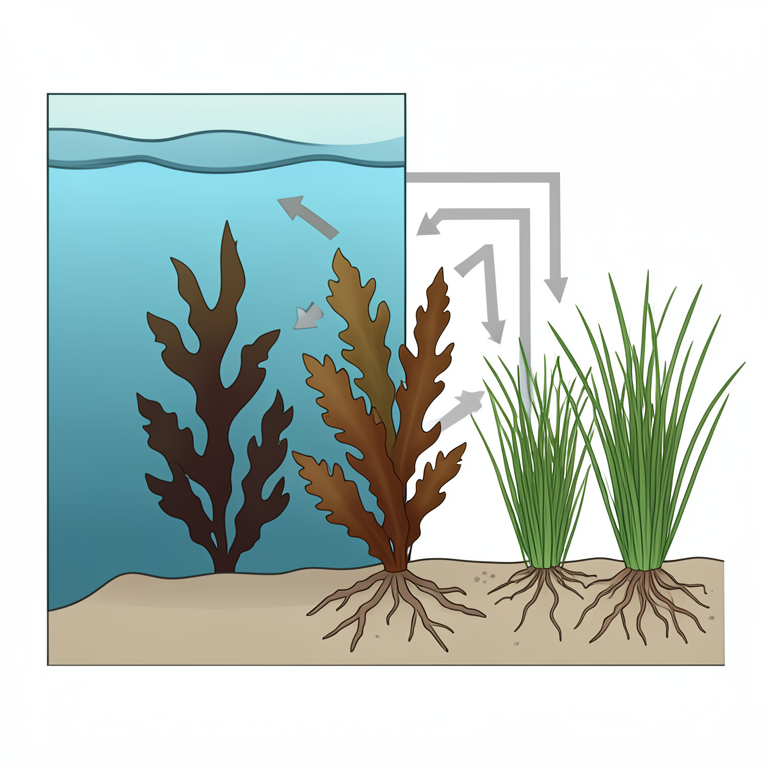
Bioaccumulation Comparison
AI-generated conceptual illustration (Brown algae (Cystoseira barbata) and eelgrass (Zostera marina) in seawater). It explains the idea and does not show study data.
View source evidence ↗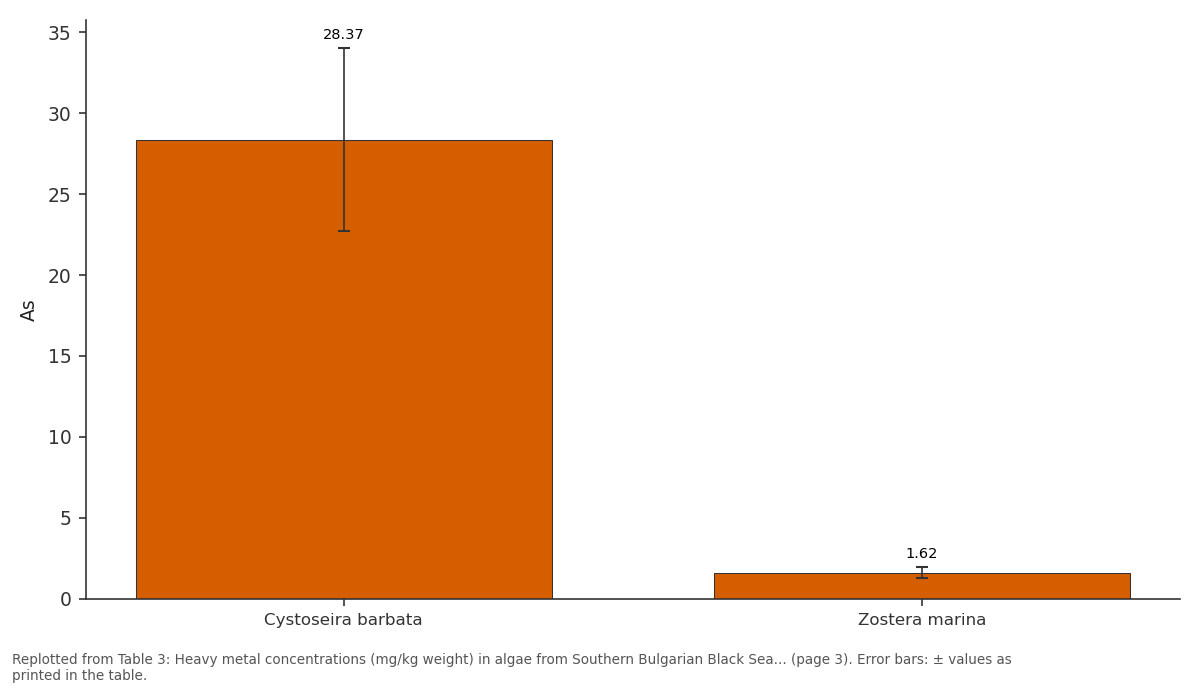
As: Cystoseira barbata vs Zostera marina
Replotted from Table 3 (page 3) of the original paper. Every bar is the paper's own table value.
View source evidence ↗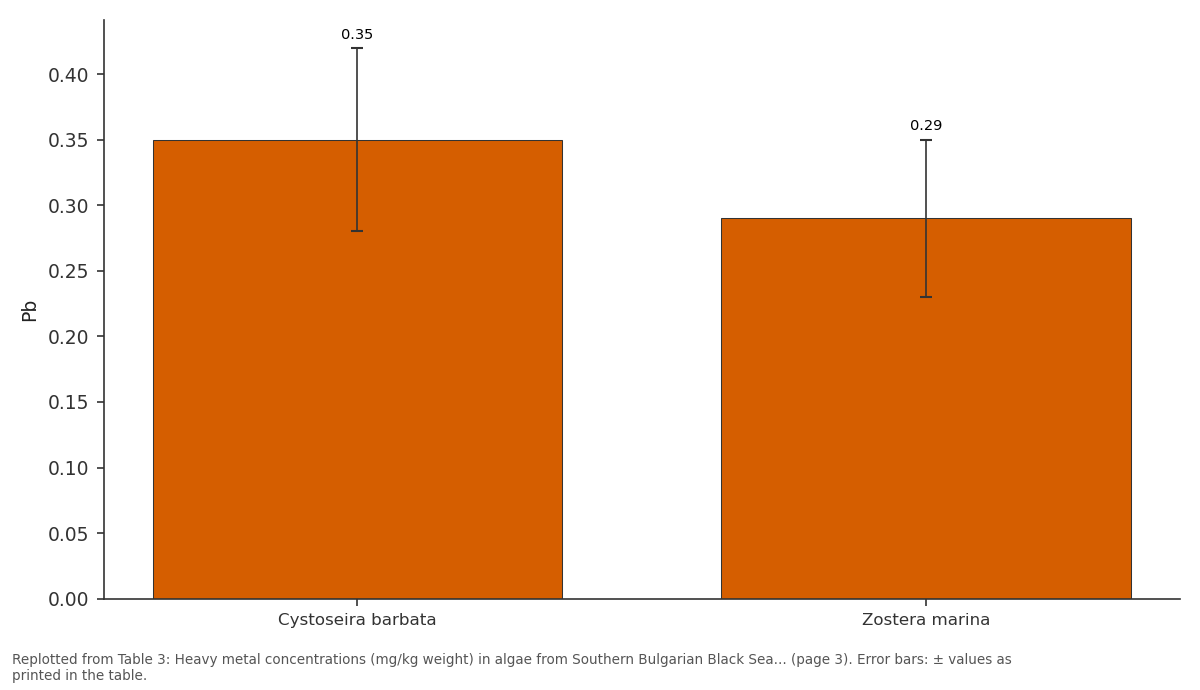
Pb: Cystoseira barbata vs Zostera marina
Replotted from Table 3 (page 3) of the original paper. Every bar is the paper's own table value.
View source evidence ↗Figures & tables
From the original paper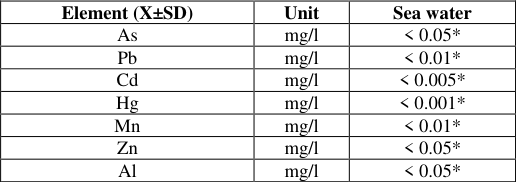 Table 1
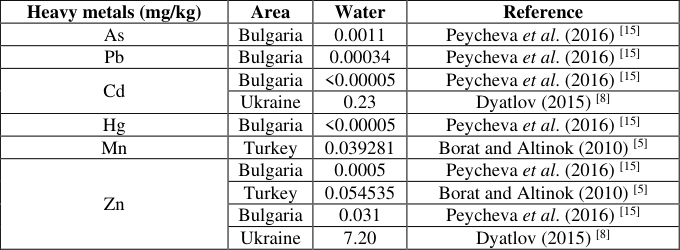 Table 2
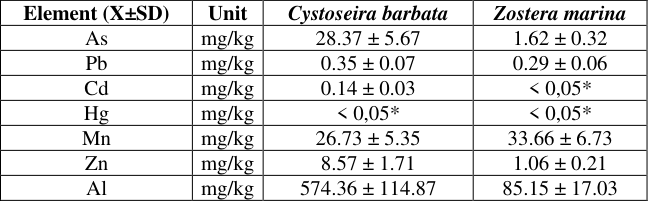 Table 3
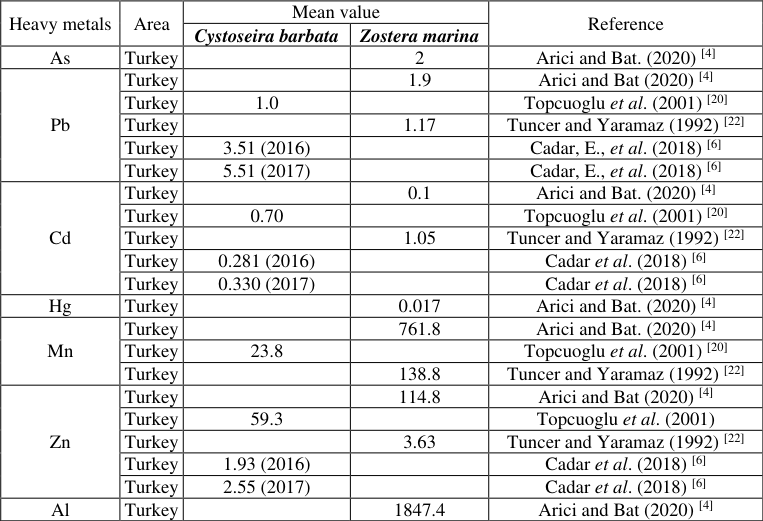 Table 4
Introduction
Determination of heavy metal levels in marine flora and fauna can be used in the monitoring of biome pollution (Topcuoglu et al., 2010) [21] . Marine algae belong to the group of primitive non-flowering photosynthetic macrophytes and their habitat are the seas and oceans. Algae and seaweed can be used as a reliable indicator of chemical pollution status due to their ability to bioaccumulate heavy metals (Jordanova et al. 1999 [1,2,3,7,18,19] . Lewis and Devereux (2008) [12] pointed to the eelgrass of the species Zostera marina as one of the most suitable species as a bioindicator of pollution. In addition, the same authors observed a characteristic periodicity and seasonality in the heavy metal level in algae. The element absorption by aquatic plants is a part of their biological cycle (Strezov and Nonova, 2005) [19] . According to Jordanova et al. (1999) [10] the content of chemical elements in seawater and in the aquatic inhabitants can severely vary. Significantly lower concentrations were observed in seawater compared to flora and fauna samples. The Black Sea is a semi-enclosed type of sea basin, well isolated from the waters of the World ocean, but in a connection with most of the major European rivers (Stoichev et al., 2007) [17] . Based to this Black Sea is considered one of the most polluted seas, which in turn leads to a decline in the fishing and tourism industry (Mirinchev et al., 1999; Stancheva et al., 2014) [13,16] . Jitar et al. (2013) [11] concluded that heavy metals are one of the main pollutants in the Black Sea. The aim of our study was to determine heavy metal levels (As, Pb, Cd, Hg, Mn, Zn and Al) in brown algae of the species Cystoseira barbata, eelgrass Zostera marina and seawater from the Southern Black Sea region.
Materials and Methods
Algae and seawater samples were collected from the Southern Black Sea Coast area (Burgas region) during the summer of 2020. Samples of Cystoseira barbata and Zostera marina were collected from the shallow part of the seabed and from the coastline, carefully rinsed with seawater, and packed in plastic bags. They were stored at -20 °C until analysis. Water samples were taken from the same area in 0.5-liter plastic bottles and stored in a refrigerated state at a temperature of 0 to 4 o C until the test, which was performed within 24 hours. The analysis of algae was carried out after homogenization (Vortex Homogenizer), followed by microwave assisted acid digestion procedure (ETHOS UP high-performance Microwave digestion system, Milestone Inc). After digestion with nitric acid an appropriate spectroscopy determination with inductively coupled plasma mass spectrometry (ICP-MS, Thermo Fisher TM) was performed. The summarized results of this study were presented as mean values (X) (mg/kg) weight-for algae and (mg/l) for water ± standard deviation (SD). The data were subjected to a statistical analysis with Student's-test to estimate the significance of values (p < 0.05).
Results and Discussion
The results of the tested metals in the seawater are presented in Table . 1 and of brown algae and seaweed are summarized in Table 3. The order of the levels of the heavy metal concentrations was Al = As = Zn > Pb = Mn >Cd > Hg for seawater, Al > As > Mn > Zn > Pb > Cd > Hg for Cystoseira barbata, Al > Mn > As > Zn > Pb > Cd = Hg for Zostera marina.
| Element (X±SD) | Unit | Cystoseira barbata | Zostera marina |
|---|---|---|---|
| As | mg/kg | 28.37 ± 5.67 | 1.62 ± 0.32 |
| Pb | mg/kg | 0.35 ± 0.07 | 0.29 ± 0.06 |
| Cd | mg/kg | 0.14 ± 0.03 | < 0,05* |
| Hg | mg/kg | < 0,05* | < 0,05* |
| Mn | mg/kg | 26.73 ± 5.35 | 33.66 ± 6.73 |
| Zn | mg/kg | 8.57 ± 1.71 | 1.06 ± 0.21 |
| Al | mg/kg | 574.36 ± 114.87 | 85.15 ± 17.03 |
Table text extracted from the original PDF; superscript letters are shown inline. The original table image is below.
View original table image
The data obtained in Tables 1 and3 showed that heavy metal pollution of seawater is significantly lower than that of algae. This fact could be explained by the property of living organisms to bioaccumulate, which was confirmed by the results of Jordanova et al. (1999) [10] . In general, our results for arsenic, zinc and aluminum levels in seawater were lower than 0.05 mg/l and they were below the limit of detection.
The values for manganese and lead were < 0,01 mg/l, and the lowest concentration was for the Hg (<0.001 mg/l). The seawater levels for arsenic, zinc, lead, mercury, and cadmium were below the maximum permissible concentrations for the quality of the coastal waters, specified in Ordinance № 8 of 25.01.2001 [14] . The results of Peycheva et al. (2016) [15] (Table 2) showed significantly lower values of the studied elements compared to those obtained in the present study. At the same time the cadmium and mercury concentrations of Ukrainian sea water samples were with higher levels compared to the Bulgarian region (Dyatlov, 2015) [8] . The published values of Boran and Altinok (2010) [5] from the Turkey coast were in accordance with the current data, with the exception for the higher levels of Mn (0.039281 mg/l). [15] Cd Bulgaria <0.00005 Peycheva et al. (2016) [15] Ukraine 0.23 Dyatlov (2015) [8] Hg Bulgaria <0.00005 Peycheva et al. (2016) [15] Mn Turkey 0.039281 Borat and Altinok (2010) [5] Zn Bulgaria 0.0005 Peycheva et al. (2016) [15] Turkey 0.054535 Borat and Altinok (2010) [5] Bulgaria 0.031 Peycheva et al. (2016) [15] Ukraine 7.20 Dyatlov (2015) [8] Heavy metal values in the table were recalculated from mcg/l. Table 3 showed the results for the studied flora species. For both algae, the highest content was for aluminum -in Cystoseira barbata and Zostera marina -574.36 ± 114.87 mg/kg and 85.15 ± 17.03 mg/kg respectively. We found high levels for both algae species in terms of Mn and As. We also obtained higher levels of zinc in brown algae compared to eelgrass. In both studied species the values for lead were similar, and those of mercury were below the detection limit <0.05 mg/kg. Data showed that Cystoseira barbata accumulated heavy metals in higher proportion compared to Zostera marina, with the exception of manganese, which was with 25.92% higher than in eelgrass. The present research for the Bulgarian region showed that brown algae bioaccumulated larger amounts of the studied chemical elements, with the exception of manganese, which makes them more sensitive pollution indicator than the sea water and seaweeds. As could be seen from Table 4 heavy metal levels in brown algae were lower than the data presented by other authors, with the exception of Mn. Also, the level of zinc for the Bulgarian region was lower compared to the levels obtained by Topcuoglu et al. (2001) [20] and higher than the data of Cadar et al. (2018) [6] . 2020) [4] Pb Turkey 1.9 Arici and Bat (2020) [4] Turkey 1.0 Topcuoglu et al. (2001) [20] Turkey 1.17 Tuncer and Yaramaz (1992) [22] [6] Cd Turkey 0.1 Arici and Bat. (2020) [4] [6] Hg Turkey 0.017 Arici and Bat. (2020) [4] Mn Turkey 761.8 Arici and Bat. (2020) [4] Turkey 23.8 Topcuoglu et al. (2001) [20] Turkey 138.8 Tuncer and Yaramaz (1992) [22] Zn Turkey 114.8 Arici and Bat (2020) [4] [6] Al Turkey 1847. 4 Arici and Bat (2020) [4] Heavy metal values in the table were recalculated from mcg/kg.
| Heavy metals | Area | Mean value | — | Reference |
|---|---|---|---|---|
| Cystoseira barbata | Zostera marina | |||
| As | Turkey | 2 | Arici and Bat. (2020) [4] | |
| Pb | Turkey | 1.9 | Arici and Bat (2020) [4] | |
| Turkey | 1.0 | Topcuoglu et al. (2001) [20] | ||
| Turkey | 1.17 | Tuncer and Yaramaz (1992) [22] | ||
| Turkey | 3.51 (2016) | Cadar, E., et al. (2018) [6] | ||
| Turkey | 5.51 (2017) | Cadar, E., et al. (2018) [6] | ||
| Cd | Turkey | 0.1 | Arici and Bat. (2020) [4] | |
| Turkey | 0.70 | Topcuoglu et al. (2001) [20] | ||
| Turkey | 1.05 | Tuncer and Yaramaz (1992) [22] | ||
| Turkey | 0.281 (2016) | Cadar et al. (2018) [6] | ||
| Turkey | 0.330 (2017) | Cadar et al. (2018) [6] | ||
| Hg | Turkey | 0.017 | Arici and Bat. (2020) [4] | |
| Mn | Turkey | 761.8 | Arici and Bat. (2020) [4] | |
| Turkey | 23.8 | Topcuoglu et al. (2001) [20] | ||
| Turkey | 138.8 | Tuncer and Yaramaz (1992) [22] | ||
| Zn | Turkey | 114.8 | Arici and Bat (2020) [4] | |
| Turkey | 59.3 | Topcuoglu et al. (2001) | ||
| Turkey | 3.63 | Tuncer and Yaramaz (1992) [22] | ||
| Turkey | 1.93 (2016) | Cadar et al. (2018) [6] | ||
| Turkey | 2.55 (2017) | Cadar et al. (2018) [6] | ||
| Al | Turkey | 1847.4 | Arici and Bat (2020) [4] |
Table text extracted from the original PDF; superscript letters are shown inline. The original table image is below.
View original table image
| Heavy metals (mg/kg) | Area | Water | Reference |
|---|---|---|---|
| As | Bulgaria | 0.0011 | Peycheva et al. (2016) [15] |
| Pb | Bulgaria | 0.00034 | Peycheva et al. (2016) [15] |
| Cd | Bulgaria | <0.00005 | Peycheva et al. (2016) [15] |
| Ukraine | 0.23 | Dyatlov (2015) [8] | |
| Hg | Bulgaria | <0.00005 | Peycheva et al. (2016) [15] |
| Mn | Turkey | 0.039281 | Borat and Altinok (2010) [5] |
| Zn | Bulgaria | 0.0005 | Peycheva et al. (2016) [15] |
| Turkey | 0.054535 | Borat and Altinok (2010) [5] | |
| Bulgaria | 0.031 | Peycheva et al. (2016) [15] | |
| Ukraine | 7.20 | Dyatlov (2015) [8] |
Table text extracted from the original PDF; superscript letters are shown inline. The original table image is below.
View original table image
The established heavy metals in the current survey in Zostera marina were in discrepancy with Tuncer and Yaramaz (1992) [22] and with Arici and Bat (2020) [4] which reported higher values. The high levels of aluminum in algae obtained in the present study and also by Arici and Bat (2020) [4] confirmed the claim of Gillmore (2014) [9] that this element is one of the main pollutants in marine ecosystems.
Conclusions
Based on the current results we can conclude that the level of heavy metals in the sampling area was lower in the living environment -seawater, compared to the bioaccumulation in living organisms -plant species Cystoseira barbata and Zostera marina. The heavy metal level was higher in brown algae compared to eelgrass (with the exception of manganese) which should be taken into account when assessing the bioindicative value of these species. The current study can serve as a basis for further investigations on heavy metal pollution in various levels of the Black sea ecosystems.
Acknowledgement
AcknowledgementsThe current study is a part of Scientific Project of University of Forestry "Heavy metals bioaccumulation in hydrobionts", grant number NIS-B 1076/2020.
Figures and tables from the paper
| Element (X±SD) | Unit | Sea water |
|---|---|---|
| As | mg/l | < 0.05* |
| Pb | mg/l | < 0.01* |
| Cd | mg/l | < 0.005* |
| Hg | mg/l | < 0.001* |
| Mn | mg/l | < 0.01* |
| Zn | mg/l | < 0.05* |
| Al | mg/l | < 0.05* |
Table text extracted from the original PDF; superscript letters are shown inline. The original table image is below.
View original table image
References
21 in the original paper- Abdallah AMA, Abdallah MA, Beltagy AI. Contents of heavy metals in marine seaweeds from the Egyptian coast of the Red Sea, Chemistry and Ecology 2005;21(5):399411, DOI: 10.1080/02757540500290222
- Ali AYA, Idris AM, Ebrahim AM, Eltayeb M. Brown algae (Phaeophyta) for monitoring heavy metals at the Sudanese Red Sea coast. Appl Water Sci 2017;7:38173824. https://doi.org/10.1007/s13201-017-0529-1
- Alkhalifa AH, Al-Homaidan A, Ibrahim SS. Brown macroalgae as bio-indicators for heavy metals pollution of Al-Jubail coastal area of Saudi Arabia. African Journal of Biotechnology 2012;11(92):15888-15895. doi: 10.5897/AJB12.2509.
- Arici E, Bat. Sediment-water interactions with eelgrass (Zostera spp.) from Sinop shores of the Black Sea. Caspian J. Environ. Sci 2020. 10.22124/CJES.2020.4039.
- Boran M, Altinok I. A Review of Heavy Metals in Water, Sediment and Living Organisms in the Black Sea. Turkish Journal of Fisheries and Aquatic Sciences 2010. 10. 565-572. 10.4194/trjfas.2010.0418.
- Cadar E, Mustafa A, Tomescu A, Cherim M. Studies regarding polluting agents in Black Sea algae. Journal of Science and Arts 2018;18(1):255-264, ISSN: 1844-9581
- Culha T, Kocbas F, Gundogdu A., Culha M. 2013. Heavy metal levels in marine algae from the Black Sea, Marmara Sea and Mediterranean Sea. 10.13140/2.1.1182.9123.
- Dyatlov S. 2015. Heavy Metals in Water and Bottom Sediments of Odessa Region of the Black Sea, Journal of Shipping and Ocean Engineering 2015;5:51-58, DOI:10.17265/2159-5879/2015.02.001
- Gillmore M. Theses: Toxicity of aluminium in seawater: diatom sensitivity. University of Wollongong. Research Online Faculty of Science, Medicine & Health -Honours Theses University of Wollongong Thesis Collections 2014.
- Jordanova A, Strezov A, Ayranov M, Petkov N, Stoilova T. Heavy metal assessment in algae, sediments and water from the Bulgarian Black Sea coast. Water Science and Technology -Water Sci Technol 1999;39:207-212. 10.1016/S0273-1223(99)00204-8.
- Jitar O, Teodosiu C, Nicoara M, Plavan G. Study of heavy metal pollution and bioaccumulation In the Black Sea living environment. Environmental Engineering and Management Journal., February 2013;12(2):271-276.
- Lewis M, Devereux R. Nonnutrient anthropogenic chemicals in seagrass ecosystems: Fate and effects. Environmental toxicology and chemistry / SETAC 2008. 28. 644-61. 10.1897/08-201.1.
- Mirinchev GA, Tzankov Tz V, Kostova IS, Mirincheva MG. Impact of Bulgarian rivers on heavy metal pollution of the black sea, Water Science and Technology 1999;39(8):9-12, ISSN 0273-1223, https://doi.org/10.1016/S0273-1223(99)00181-X.
- Peycheva K, Stancheva M, Georgieva S, Makedosnki L. Heavy metals in water, sediments and marine fishes from Bulgarian Black Sea // Materials of XXVI International Coastal Conference "Managing risks to coastal regions and communities in a changing world". Academus Publishing 2021, 1-1. https://doi.org/10.31519/conferencearticle_5b1b93d4d78 bb6.88545986.
- Stancheva M, Makedonski L, Peycheva K. Determination of heavy metal concentrations of most consumed fish species from Bulgarian Black Sea coast Bulgarian Chemical Communications 2014;46(1):195-203.
- Stoichev T, Makedonski L, Trifonova T, Stancheva M, Ribarova F. DDT in fish from the Bulgarian region of the Black Sea, Chemistry and Ecology 2007;23(3):191-2000.
- Strezov A, Nonova T. Monitoring of Fe, Mn, Cu, Pb and Cd levels in two brown macroalgae from the Bulgarian Black Sea coast. International Journal of Environmental Analytical Chemistry -Int J Environ Anal Chem 2003. 83. 1045-1054. 10.1080/03067310310001621042.
- Strezov A, Nonova T. Comparative analysis of heavy metal and radionuclide contaminants in Black Sea green and red macroalgae. Environmental Monitoring and Assessment July 2005. DOI: 10.1007/s10661-005-31583.
- Topcuoglu S, Guven K, Kirbasoglu C, Unlu S, Yilmaz Y. Heavy metals in marine algae from Sile in the Black Sea 2001, 1994-1997. Bulletin of environmental contamination and toxicology 67:288-94.
- Topcuoglu S, Kilic O, Belivermis M, Aytekin Ergul H, Kalayci G. Use of marine algae as biological indicator of heavy metal pollution in Turkish marine environment J. Black Sea/Mediterranean Environment 2010;16(1):43-52.
- Tuncer S, Yaramaz O. Heavy metals and other elements in Zostera marina L. on the Trabzon Coast Line (Black Sea; Turkey) Rapp. Comrn. Int. Mer Medit 1992; 33.
Cited by 6
From OpenAlex, OpenCitations and reference lists read by Scinovex
- Seaweed Superheroes: Cystoseira barbata-Incorporated Electrospun Fibers for Lead Ion Sequestration ↗
Fatma Rabia Karaduman, Saniye Türk Çulha, Nesrin Horzum · ACS Applied Bio Materials · 2024
The efficient removal of lead ions at low concentrations is paramount in combating the significant threat posed by water pollution resulting from industrial activities and population growth. In this study, electrospun C. barbata /PAN fibers were developed to efficiently remove lead(II) ions from water. The morphology, structure, and mechanical properties of the fibers were examined, highlighting that the augmentation of…
❝ 8 - Effects of Microplastics and Metal Pollution on Bivalves from the Bulgarian Black Sea Sublittoral, with Comments on their Adaptive Capacity ↗
Georgi Pramatarov, Elina R. Tsvetanova, Vladimir Ilinkin, Madlena Andreeva N., Albena Alexandrova V., Nesho Chipev H. · Acta zoologica bulgarica · 2025
The present study aimed to assess the effects of microplastics (MPs) and metal bioaccumulation on the bivalve species Donax trunculus Linnaeus, 1758, Cerastoderma edule (Linnaeus, 1758), Mya arenaria Linnaeus, 1758 and Mytilus galloprovincialis Lamarck, 1819 from the Bulgarian Black Sea coast and their adaptive capacity to pollution. The MPs accumulation in the bivalves was observed under a stereomicroscope after 10%…
❝ 5PDF - Responses of Aquatic Organisms to Marine Pollution by Drilling Fluids and Cuttings ↗
Irina Ivanovna Rudneva · Russian Journal of Marine Biology · 2025
Active oil and gas development on the continental shelf negatively affects marine organisms, degrading their habitat and reducing their viability. The effects of drilling fluids, cuttings, and their components on various marine organisms have been analyzed. The feasibility of using marine organisms as indicators of the ecological status of coastal waters at sites of intensive oil and gas extraction are…
❝ 2 - Evoluation of biological effects of drilling fluid on marine seagrass Nanozostera noltii Hornemann ↗
Irina Ivanovna Rudneva, V. G. Shaida, Maria V. Medyankina, Oleg Valentinovich Shaida · Issues of modern algology (Вопросы современной альгологии) · 2024
The development of oil-gas complex in shelf zone of the seas and ocean is connected with the application of the specific chemicals, used in the processes of drilling. These components contain various chemicals, several of which are toxic and influence negative both on aquatic organisms and health of the people, using seafood. Therefore, it is important to evaluate the toxicity…
❝ 1 - Integrative strategies and future perspectives to mitigate chemical toxicity in human and aquatic systems ↗
Aman Chaudhary, Gunjan Tyagi, Kumari Rashmi Singh, Ashok Behera · Discover Environment · 2026
Human exposure to hazardous chemicals occurs through multiple pathways, including inhalation, ingestion, dermal contact, and consumption of contaminated water, leading to adverse outcomes such as systemic toxicity, and chronic diseases. The release of these contaminants into aquatic ecosystems primarily from industrial discharge, agricultural runoff, and urban effluents has significant ecological ramifications. This review aims to synthesize recent findings on the…
❝ 0PDF - Preliminary Biological Assessments of Some Algae Basis Biomaterials ↗
Toader Marian, Nicoleta Radu, Mariana Voicescu, Cristina Lavinia Nistor, Lucia Camelia Pirvu, Mirela Antonela Mihaila et al. · Journal of Marine Science and Engineering · 2025
Four types of algae—Porphyra umbilicalis, Undaria pinnatifida, Cystoseira barbata, and Chlorella sp.—were used to obtain crude bioproducts enriched in polysaccharides (four bioproducts) and to create formulations enriched with gold cations (four bioproducts). The bioproducts obtained through aqueous extraction from Cystoseira barbata exhibited significant antioxidant activities and a total polyphenol content of (714.17 ± 1.26) mg GAE/L. In the bioproducts derived…
❝ 0PDF