
Research article · 2020 · Full text
International Journal of Veterinary Sciences and Animal HusbandryPrevalence, intensity and risk factors of tick infestation of cattle in N'djamena Chad
Volume 5(4) · Pages 139–146
Research areasVector-Borne Animal Diseases
Abstract
Author-writtenTicks induce huge production and economic losses in livestock industry by creating serious animal health problems. The study was carried out to characterize ticks species and determine the prevalence and risk factors tick infestation of cattle at the N'Djamena abattoir, Chad. A systematic random sampling technique was used to select 712 animals while questionnaire interview of 100 cattle farmers and observation of cattle and farm environments was carried out in the peri-urban areas of N'Djamena. The results showed that 260 (36.52%, 95% CI: 33.00 – 40.19) cattle were infested with ticks. Sex, age, breed, season and frequency of tick control had significant effects (ݑƒ< 0.05) on the prevalence and relative abundance of tick infestation of cattle. Hyalomma marginatum (33.73%), Hyalomma lusitanicum (21.65%), Boophilus annulatus (17.19%), Amblyomma variegatum (14.15) and Rhipicephalus turanicus (13.28%) were identified in the study. Overall the relative abundance was higher for male ticks (P
Summary
Source-checkedPlain-language reading of the full paper, prepared with AI and checked against the text. Each point links to the authors' own words.
Why it matters
- Ticks cause significant economic and production losses in the livestock industry by creating serious health issues for animals. View evidence ↗
- Tick infestations negatively impact cattle through reduced milk productivity, lower carcass yield and growth rates, pathogen transmission, and skin damage that reduces marketability. View evidence ↗
- In Chad, veterinary focus has primarily been on infectious and contagious diseases, often neglecting vector-borne diseases like those caused by ticks. View evidence ↗
The question
- The study aimed to determine the prevalence, intensity, and risk factors associated with tick infestation in cattle within N'djamena, Chad. View evidence ↗
What they did
- The research was conducted between August and October 2017 in N'Djamena, Chad. View evidence ↗
- The researchers used systematic random sampling to select 712 animals and conducted questionnaire interviews with 100 cattle farmers in peri-urban areas. View evidence ↗
- Ticks were harvested from specific body sites, including the anogenital region, udder, perineum, abdomen, armpit, and neck, via visual examination prior to slaughter. View evidence ↗
- Tick species were identified phenotypically using a binocular microscope and reference images. View evidence ↗
What they found
- Out of 712 cattle examined at the abattoir, 260 (36.52%) were found to be infested with ticks. View evidence ↗
- Among 1,838 collected ticks, five species were identified, with Hyalomma marginatum being the most common (33.73%) and Rhipicephalus turanicus the least (13.28%). View evidence ↗
- Infestation was significantly higher in Arab breed cattle, males, and cattle older than 6 years compared to Bokolodji breeds, females, and cattle under 3 years old. View evidence ↗
- Cattle with irregular or no ectoparasite control programs had significantly higher infestation rates than those with regular control. View evidence ↗
- The caudal fold region (ano-vulva) was the predominant site for tick attachment on the cattle. View evidence ↗
- Male ticks and the Hyalomma genus (55.39%) showed significantly higher relative abundance compared to female ticks and other species. View evidence ↗
- All surveyed farmers were aware of ticks, with the highest recognition rates for Boophilus spp (49%) and Hyalomma spp (34%). View evidence ↗
What it means
- The authors conclude that it is critical to enhance farmer awareness regarding the negative impacts of ticks on livestock productivity. View evidence ↗
Visual summary
1 visualsIllustrations explain the paper; they do not show study data.
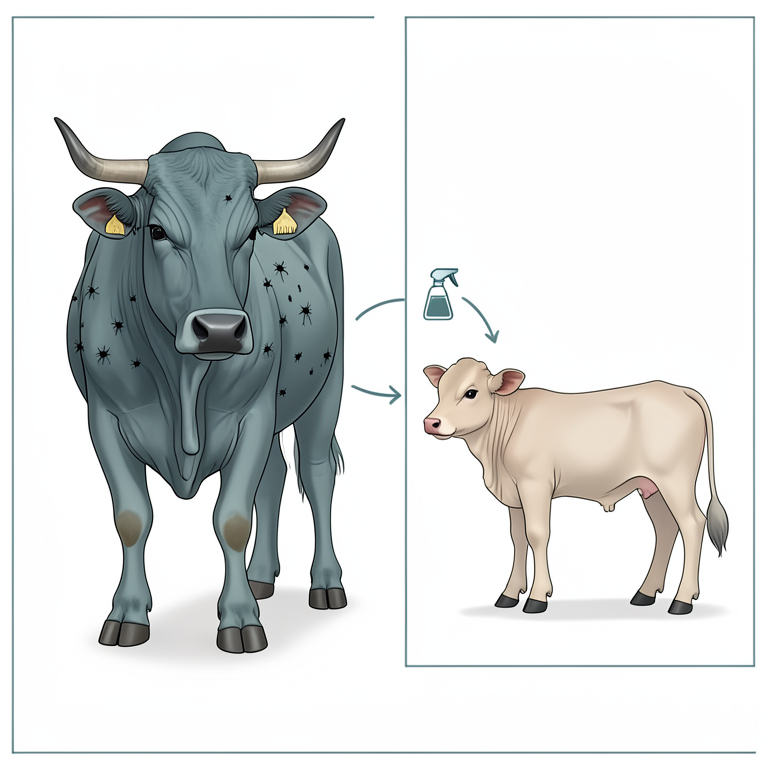
Risk Factors for Tick Infestation
AI-generated conceptual illustration (Zebu cattle (Arab and Bokolodji breeds)). It explains the idea and does not show study data.
View source evidence ↗Figures & tables
From the original paper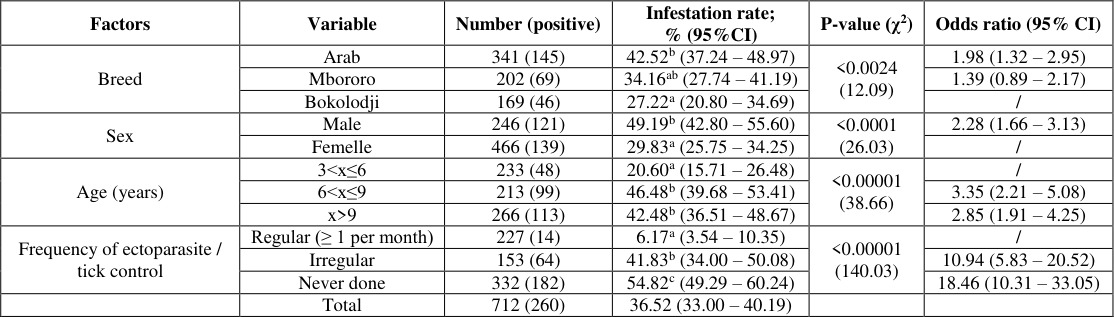 Table 1
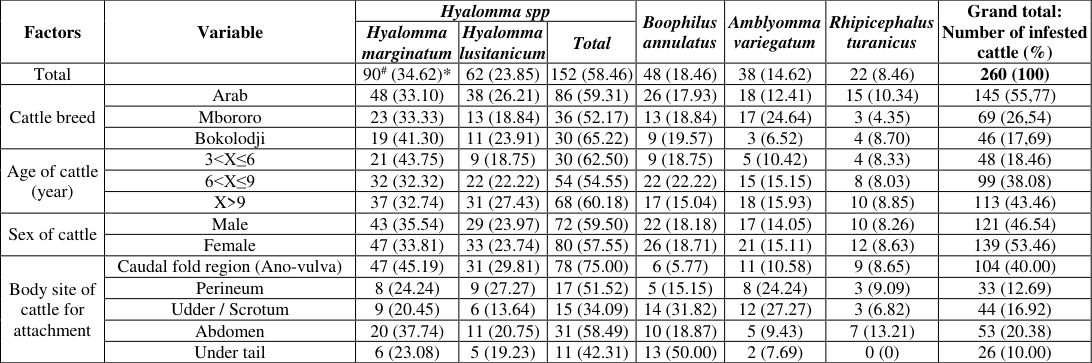 Table 2
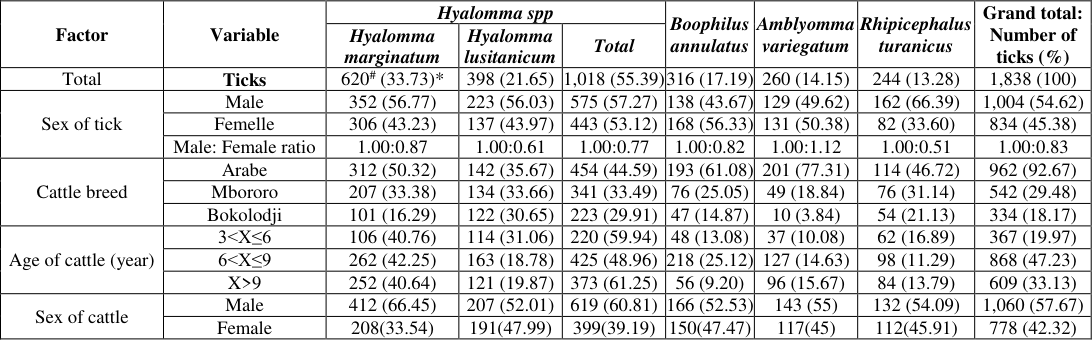 Table 3
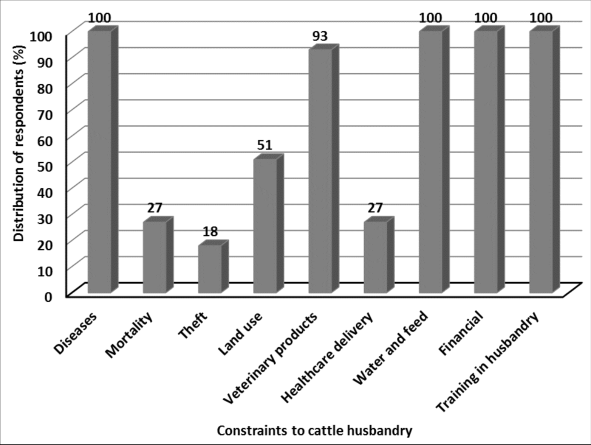 Figure 1
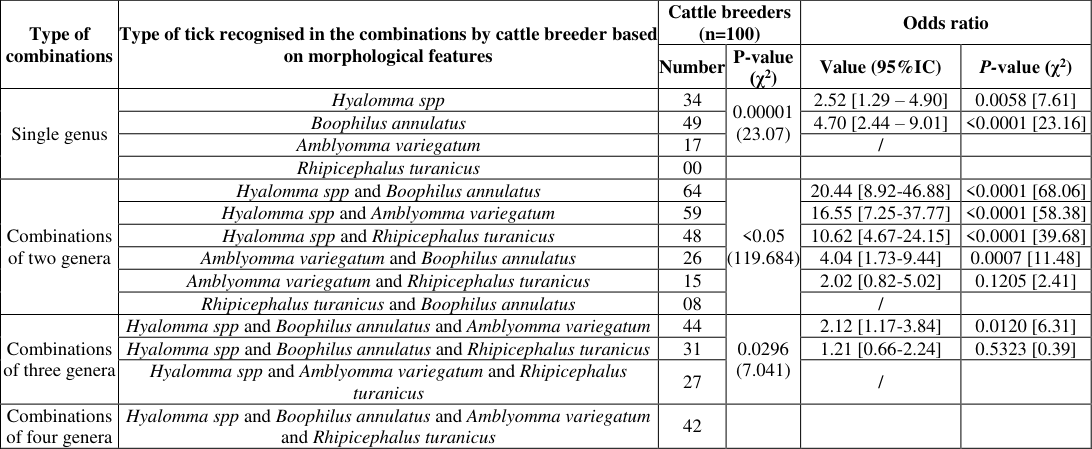 Table 1
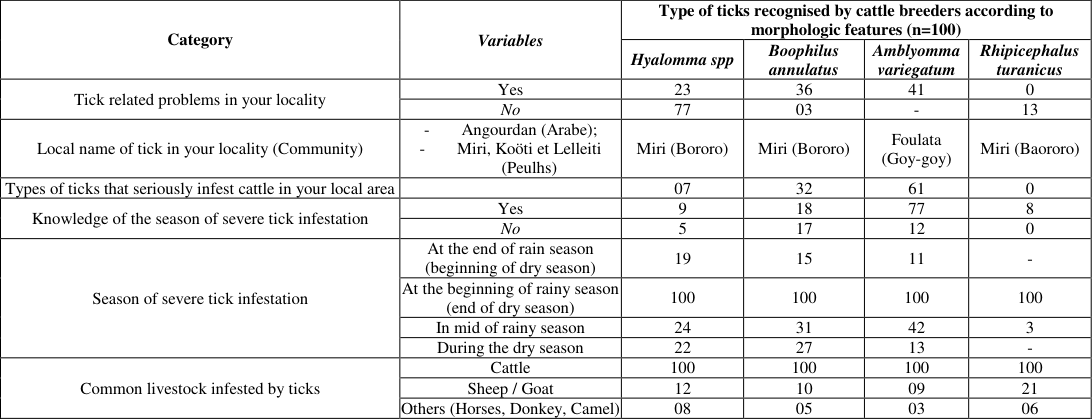 Table 2
Introduction
Livestock play a very important role in global food security providing about 12.9% calories and 27.9% protein through consumption of meat, milk, eggs and offal (FAO, 2011). It is vital to the economy and livelihood of agro-pastoral communities as well as contributes to the reduction of household poverty in most African countries [1,3] . Chad has about 24.8 million cattle and cattle rearing contributes greatly to the economical, socio-cultural and political character of the country [4,6] . Livestock represents 53% of the GDP of the primary sector and contributes 18 -20% to the national GDP. However, the potential of the livestock sector is under-exploited and its development is constrained by many environmental, feeding, healthcare delivery, social and technical problems [5,7,8] . Also, adaptation of modern husbandry systems is limited by animal diseases including parasitism which cause drop in animal production and economic losses of the cattle sector [9] . Significant economic losses due to 10 to 20% mortality of cattle associated to diseases have been reported in Chad [3,5] . Ectoparasites are the primary vectors of animal diseases and also cause serious problems to human health [10,11] . Tick-and tick-borne diseases are major health constraints in livestock farming in Africa [1,12] and economic losses of more than US $760 million have been estimated [12] . The direct and indirect impacts of tick infestations of cattle are numerous including decrease milk productivity and carcass yield, low growth rate, transmission of pathogens (eg hemoparasites), dermatitis which may become infected by bacteria, skin coat depreciation making it less marketable and increase cost of production due to tick control [1,10,12] . In Chad, attention has focused on infectious and contagious diseases of animals while neglecting the vector borne diseases especially tick-borne diseases [13] . Though there are increasing urban and peri-urban livestock production systems in most of Africa, there is dearth of information on the level of awareness cattle breeders on the hazards caused by ticks on husbandry systems and ectoparasite status of cattle in urban areas of Chad. In view of the medical and veterinary importance of ticks in the livestock sector, this study was carried out to determine the prevalence, intensity and risk factors of tick infestation cattle in N'djamena-Chad.
Materials and Methods
Materials and Methods
Study location and Management of animals
The study was carried out from August to October 2017 in the city of N'Djamena (12°8' -16° N and 15°2' -18°2' E) in Chad. Determination of the prevalence and intensity of tick infestation in cattle was done in the Farcha Refrigeration abattoir of N'Djamena. While the investigation on awareness level of breeders of the hazards caused by ticks on cattle husbandry systems was carried out in the peri-urban areas of N'Djamena. Selection of individual cattle at the N'Djamena abattoir during the study period was done using previously described systematic random sampling technique [14] . An individual prevalence rate of 63.4% [15] was used to estimate the sample size as described by Thrusfield [16] . Based on a calculated sampling fraction of five (every fifth animal was sampled) for daily use, the first animal was selected by picking one animal by random generation method of the first five animals on the slaughter chain. Thereafter, every fifth animal (adding 5 to previous picked number) was chosen till a total of 712 cattle were sampled. Prior to slaughter and following rigorous visual examination of tick on the preferred sites of the skin of the animals (anogenital, udder, perineum, abdomen, armpit and neck), all the ticks encountered on the animal's body was harvested, by gently tapping at the rostrum and traction using a pair of forceps. The harvested ticks were stored in individual 5ml labeled (identifying the sampled animal, anatomical region, date of harvest) tubes containing 70% ethanol and 30% glycerol for analysis within 5 -7 days in the parasitological laboratory of the Institute for Research on Livestock for Development (IRLD) in N'Djamena. Systemic phenotypic identification of the tick species was done using binocular microscope (Optika®) and guided by references tick images as previously described [17,18] . Information related to the breed, sex, age and body condition score of the sampled animals were noted. Estimation of ages was done by dental inspection and examination of horn rings for animals without teeth (especially old/adult females) while the breed of the animals was obtained as previously described [19][20][21][22] . The body condition score was done by assessing the general appearance and palpation of the lumbar region of the animal on a scale of 1 to 5 and further classed into 3 categories: 1-2 (poor), 3 (good) and 4-5 (very good) as previously described [23] .
Evaluation of socio-technical characterisitcs and cattle breeders' awareness of tick hazards in cattle husbandry systems
The survey of the zootechnical characteristics and awareness level of breeders on the hazards caused by ticks on cattle husbandry systems was done in six peri-urban areas of N'Djamena, Chad (Guinebor, Gewi, Diguel, Mandelia, Ambata and Boutalbagar). The information was obtained by questionnaire interview of 100 cattle farmers and observation of the cattle and farm environments. The questionnaires were structured to collect information on a range of variables including lifestyle and socio-demographic data of the cattle professionals; and zootechnical characteristics of animal husbandry in the study area. Reference photographs showing detail morphological feature of tick species reported in Africa [17, 18] were used to obtain data on the cattle breeders' knowledge, attitudes and practices regarding ticks and problems associated with tick infestation of cattle.
Ethical consideration
Risk assessments of the project were performed by the researchers to avoid hazards to all persons involved in the project. Permission for the study was obtained from the required authorities and Local Ethical Committees in N'Djamena, Chad including the Ministry of Livestock and Animal Husbandry, Modern Companies of Abattoirs and Institute for Research on Livestock for Development (IRLD) and the Faculty of Agronomy and Agricultural Sciences of the University of Dschang, Cameroon. The purpose of the study was explained (with the assistance of local community leaders and trusted intermediaries) to cattle professionals of the Farcha Refrigeration abattoir of and peri-urban areas of N'Djamena, Chad. Animals and farms were used in the study and interview questionnaire survey of the professionals done after informed consent was given by the owners.
Data analysis
The data were analysed using "R" software. Simple percentages were generated and Chi-square test was used to assess the association between factors and the odds-ratios determined for associated risk factors along 95% confidence intervals. The statistical significance was set at 𝑃<0.05.
Results
Results
Prevalence and intensity of tick infestation in cattle in N'djamena
In the present study, visual examination of 712 abattoir cattle revealed that 260 (36.52%, 95% CI: 33.00 -40. 19) animals were infested with ticks. Sex, age, breed and frequency of tick control had significant effects (𝑃< 0.05) on the prevalence of tick infestation of cattle in the study (Table 1). Tick infestation was significantly higher particularly in the Arab breed [OR = 1.98 (1.32 -2.95); χ 2 = 11.3; 𝑃<0.0008], male cattle [OR = 2.28 (1.66 -3.13); χ 2 = 26.03; 𝑃<0.0001], 6 -9 years old cattle [OR= 3.35 (2.21 -5.08); χ 2 = 33.72, 𝑃<0.0001] and > 9 years old cattle [OR = 2.85 (1.91 -4.25); χ 2 = 27.21, 𝑃>0.0001] compared to the Bokolodji breeds, female cattle and <3 years old cattle, respectively. Overall, infestation rate was significantly higher in > 6 years old animals (44.26% (39.77 -48.84); OR = 3.06 (2.12 -4.41); P<0.0001] compared to younger animals (20.60% (15.71 -26.48)). Also, tick infestation was significantly higher (P<0.0001) among animals on irregular or no ectoparasite control programs compared to animals on regular ectoparasite control. The rates were significantly higher among animals without ectoparasite control program [OR=1.69 (1.15 -2.49); χ 2 = 7.07; 𝑃<0.0078] compared to animals on irregular ectoparasite control programs (Table 1). The ticks were predominantly (P<0.05) located in the caudal fold region (ano-vulva) than other parts of the animals. The results showed that more (P<0.05) male cattle were infested and more ticks (P<0.05) were found on the body of male than the female cattle (Table 2). Also, tick infested cattle in the study showed significantly higher (P<0.05) proportions among the Arab breed, male cattle, > 6 years old cattle compared to the Bokolodji breeds, female cattle and <3 years old cattle, respectively (Table 2). Microscopic examination of 1,838 ticks collected from the sampled cattle revealed 4 genera (5 species) of ticks including Hyalomma marginatum (33.73%), Hyalomma lusitanicum (21.65%), Boophilus annulatus (17.19%), Amblyomma variegatum (14.15) and Rhipicephalus turanicus (13.28%) in the study (Tables 3). Overall the relative abundance was significantly higher for male ticks (P<0.05) and Hyalomma spp (55.39%) (P<0.00001) compared to the female ticks and other tick species, respectively. Among the tick infested cattle in the study, the proportion of infestation and relative abundance of ticks was significantly higher (P<0.05) in the male cattle, >6 years old and Arab cattle compared to the female cattle, < 3 years old and other cattle breeds, respectively. The result showed that the male to female sex ratio for tick species indicated higher number of males than females for all species of ticks except Amblyomma ticks (Table 3). All species of ticks had more than ten (10) male to five to nine (5 -9) female ratio with the highest being Rhipicephalus (10.0:5.1) and Amblyomma ticks (10.0:11.2) the lowest.
| Category | Variables | Type of ticks recognised by cattle breeders according to morphologic features (n=100) | — | — | — |
|---|---|---|---|---|---|
| Hyalomma spp | Boophilus annulatus | Amblyomma variegatum | Rhipicephalus turanicus | ||
| Tick related problems in your locality | Yes | 23 | 36 | 41 | 0 |
| No | 77 | 03 | - | 13 | |
| Local name of tick in your locality (Community) | - Angourdan (Arabe); - Miri, Koöti et Lelleiti (Peulhs) | Miri (Bororo) | Miri (Bororo) | Foulata (Goy-goy) | Miri (Baororo) |
| Types of ticks that seriously infest cattle in your local area | 07 | 32 | 61 | 0 | |
| Knowledge of the season of severe tick infestation | Yes | 9 | 18 | 77 | 8 |
| No | 5 | 17 | 12 | 0 | |
| Season of severe tick infestation | At the end of rain season (beginning of dry season) | 19 | 15 | 11 | - |
| At the beginning of rainy season (end of dry season) | 100 | 100 | 100 | 100 | |
| In mid of rainy season | 24 | 31 | 42 | 3 | |
| During the dry season | 22 | 27 | 13 | - | |
| Common livestock infested by ticks | Cattle | 100 | 100 | 100 | 100 |
| Sheep / Goat | 12 | 10 | 09 | 21 | |
| Others (Horses, Donkey, Camel) | 08 | 05 | 03 | 06 |
Table text extracted from the original PDF; superscript letters are shown inline. The original table image is below.
View original table image
| Type of combinations | Type of tick recognised in the combinations by cattle breeder based on morphological features | Cattle breeders (n=100) | — | Odds ratio | — |
|---|---|---|---|---|---|
| Number | P-value (χ2) | Value (95%IC) | P-value (χ2) | ||
| Single genus | Hyalomma spp | 34 | 0.00001 (23.07) | 2.52 [1.29 – 4.90] | 0.0058 [7.61] |
| Boophilus annulatus | 49 | 4.70 [2.44 – 9.01] | <0.0001 [23.16] | ||
| Amblyomma variegatum | 17 | / | |||
| Rhipicephalus turanicus | 00 | ||||
| Combinations of two genera | Hyalomma spp and Boophilus annulatus | 64 | <0.05 (119.684) | 20.44 [8.92-46.88] | <0.0001 [68.06] |
| Hyalomma spp and Amblyomma variegatum | 59 | 16.55 [7.25-37.77] | <0.0001 [58.38] | ||
| Hyalomma spp and Rhipicephalus turanicus | 48 | 10.62 [4.67-24.15] | <0.0001 [39.68] | ||
| Amblyomma variegatum and Boophilus annulatus | 26 | 4.04 [1.73-9.44] | 0.0007 [11.48] | ||
| Amblyomma variegatum and Rhipicephalus turanicus | 15 | 2.02 [0.82-5.02] | 0.1205 [2.41] | ||
| Rhipicephalus turanicus and Boophilus annulatus | 08 | / | |||
| Combinations of three genera | Hyalomma spp and Boophilus annulatus and Amblyomma variegatum | 44 | 0.0296 (7.041) | 2.12 [1.17-3.84] | 0.0120 [6.31] |
| Hyalomma spp and Boophilus annulatus and Rhipicephalus turanicus | 31 | 1.21 [0.66-2.24] | 0.5323 [0.39] | ||
| Hyalomma spp and Amblyomma variegatum and Rhipicephalus turanicus | 27 | / | |||
| Combinations of four genera | Hyalomma spp and Boophilus annulatus and Amblyomma variegatum and Rhipicephalus turanicus | 42 |
Table text extracted from the original PDF; superscript letters are shown inline. The original table image is below.
View original table image
| Factor | Variable | Hyalomma spp | — | — | Boophilus annulatus | Amblyomma variegatum | Rhipicephalus turanicus | Grand total: Number of ticks (%) |
|---|---|---|---|---|---|---|---|---|
| Hyalomma marginatum | Hyalomma lusitanicum | Total | ||||||
| Total | Ticks | 620# (33.73)* | 398 (21.65) | 1,018 (55.39) | 316 (17.19) | 260 (14.15) | 244 (13.28) | 1,838 (100) |
| Sex of tick | Male | 352 (56.77) | 223 (56.03) | 575 (57.27) | 138 (43.67) | 129 (49.62) | 162 (66.39) | 1,004 (54.62) |
| Femelle | 306 (43.23) | 137 (43.97) | 443 (53.12) | 168 (56.33) | 131 (50.38) | 82 (33.60) | 834 (45.38) | |
| Male: Female ratio | 1.00:0.87 | 1.00:0.61 | 1.00:0.77 | 1.00:0.82 | 1.00:1.12 | 1.00:0.51 | 1.00:0.83 | |
| Cattle breed | Arabe | 312 (50.32) | 142 (35.67) | 454 (44.59) | 193 (61.08) | 201 (77.31) | 114 (46.72) | 962 (92.67) |
| Mbororo | 207 (33.38) | 134 (33.66) | 341 (33.49) | 76 (25.05) | 49 (18.84) | 76 (31.14) | 542 (29.48) | |
| Bokolodji | 101 (16.29) | 122 (30.65) | 223 (29.91) | 47 (14.87) | 10 (3.84) | 54 (21.13) | 334 (18.17) | |
| Age of cattle (year) | 3<X≤6 | 106 (40.76) | 114 (31.06) | 220 (59.94) | 48 (13.08) | 37 (10.08) | 62 (16.89) | 367 (19.97) |
| 6<X≤9 | 262 (42.25) | 163 (18.78) | 425 (48.96) | 218 (25.12) | 127 (14.63) | 98 (11.29) | 868 (47.23) | |
| X>9 | 252 (40.64) | 121 (19.87) | 373 (61.25) | 56 (9.20) | 96 (15.67) | 84 (13.79) | 609 (33.13) | |
| Sex of cattle | Male | 412 (66.45) | 207 (52.01) | 619 (60.81) | 166 (52.53) | 143 (55) | 132 (54.09) | 1,060 (57.67) |
| Female | 208(33.54) | 191(47.99) | 399(39.19) | 150(47.47) | 117(45) | 112(45.91) | 778 (42.32) |
Table text extracted from the original PDF; superscript letters are shown inline. The original table image is below.
View original table image
| Factors | Variable | Hyalomma spp | — | — | Boophilus annulatus | Amblyomma variegatum | Rhipicephalus turanicus | Grand total: Number of infested cattle (%) |
|---|---|---|---|---|---|---|---|---|
| Hyalomma marginatum | Hyalomma lusitanicum | Total | ||||||
| Total | 90# (34.62)* | 62 (23.85) | 152 (58.46) | 48 (18.46) | 38 (14.62) | 22 (8.46) | 260 (100) | |
| Cattle breed | Arab | 48 (33.10) | 38 (26.21) | 86 (59.31) | 26 (17.93) | 18 (12.41) | 15 (10.34) | 145 (55,77) |
| Mbororo | 23 (33.33) | 13 (18.84) | 36 (52.17) | 13 (18.84) | 17 (24.64) | 3 (4.35) | 69 (26,54) | |
| Bokolodji | 19 (41.30) | 11 (23.91) | 30 (65.22) | 9 (19.57) | 3 (6.52) | 4 (8.70) | 46 (17,69) | |
| Age of cattle (year) | 3<X≤6 | 21 (43.75) | 9 (18.75) | 30 (62.50) | 9 (18.75) | 5 (10.42) | 4 (8.33) | 48 (18.46) |
| 6<X≤9 | 32 (32.32) | 22 (22.22) | 54 (54.55) | 22 (22.22) | 15 (15.15) | 8 (8.03) | 99 (38.08) | |
| X>9 | 37 (32.74) | 31 (27.43) | 68 (60.18) | 17 (15.04) | 18 (15.93) | 10 (8.85) | 113 (43.46) | |
| Sex of cattle | Male | 43 (35.54) | 29 (23.97) | 72 (59.50) | 22 (18.18) | 17 (14.05) | 10 (8.26) | 121 (46.54) |
| Female | 47 (33.81) | 33 (23.74) | 80 (57.55) | 26 (18.71) | 21 (15.11) | 12 (8.63) | 139 (53.46) | |
| Body site of cattle for attachment | Caudal fold region (Ano-vulva) | 47 (45.19) | 31 (29.81) | 78 (75.00) | 6 (5.77) | 11 (10.58) | 9 (8.65) | 104 (40.00) |
| Perineum | 8 (24.24) | 9 (27.27) | 17 (51.52) | 5 (15.15) | 8 (24.24) | 3 (9.09) | 33 (12.69) | |
| Udder / Scrotum | 9 (20.45) | 6 (13.64) | 15 (34.09) | 14 (31.82) | 12 (27.27) | 3 (6.82) | 44 (16.92) | |
| Abdomen | 20 (37.74) | 11 (20.75) | 31 (58.49) | 10 (18.87) | 5 (9.43) | 7 (13.21) | 53 (20.38) | |
| Under tail | 6 (23.08) | 5 (19.23) | 11 (42.31) | 13 (50.00) | 2 (7.69) | 0 (0) | 26 (10.00) |
Table text extracted from the original PDF; superscript letters are shown inline. The original table image is below.
View original table image
Socio-technical characterisitcs and cattle breeders' awareness of hazard and management ticks in cattle husbandry in the Periurban areas of N'djamena, Chad
The study showed that cattle husbandry was mostly carried out only by married (84% being polygamous), Muslim (94%) and illiterate (100%) men with the modal (55%) age group being 30 -50 years. More than 72% of the respondents were pastoralists who have been raising livestock for over 20 years while 21% of them were cattle traders and 7% agropastoralists. The workforce was mainly family members. Savings (73%), income generation (59%), social and autoconsumption (27%) were the main objectives for cattle husbandry reported by the farmers. The extensive system (92%) was the predominant husbandry method; composed of mix (60%) cattle and small ruminants (particularly sheep) and only cattle (32%). About 91% of respondents had herd sizes of at least 20 heads (71% of them owning at least 30 animals per herd). Over 87% of respondents did not provide lodging for their animals compared to housing including night enclosures (10%) and tethering (3%) provided by some respondents. The diets of the animals were supplemented (79%) with salt lick mixtures, urea, brewers waste and agricultural by-products. Overall, the major constraints to cattle husbandry reported by the respondent in the study (Figure 1) were lack of financial resources, veterinary products, husbandry training, water and feed as well as diseases and deaths associated to respiratory (100%), skin (59%), gastrointestinal (19%) and ectoparasitic (particularly ticks, tse tse fly) (22%) disorders.
Level of recognition of tick types by cattle professionals in peri-urban areas of N'djamena, Chad
The questionnaire survey revealed that cattle professionals in peri-urban areas of N'djamena knew or had heard about the ticks (Table 4). The cattle professionals reported Boophilus spp (49%), Hyalomma spp (34%), Amblyomma variegatum (17%) and Rhipicephalus (0%) tick infestations of their cattle based of recognition of the tick morphological features in the reference photographs. There was significant difference (P<0.05) in infestation rates of between tick types and within the detected tick combination categories. Based on the reports of the cattle professional there were more Boophilus spp (OR = 4.70, 95% CI [2.44 -9.01]; P<0.0001), Hyalomma spp (OR=2.52, 95% CI [1.29 -4.90]; p=0.0058) compared to Amblyomma variegatum infested cattle. For double / dual infestations, combinations of Hyalomma spp and Boophilus annulatus or Amblyomma variegatum or Rhipicephalus turanicus was significantly higher (P<0.05) than combinations of Amblyomma variegatum and Boophilus annulatus or Rhipicephalus turanicus. Co-infestations of 3 and 4 tick types were also widely reported (Table 4).
Cattle breeders' knowledge on the occurrence and hazards associated with tick infestation of cattle
Table 5 summarized the levels of awareness of the occurrence and hazards caused by ticks types on cattle in peri-urban areas of N'djamena, Chad. Data on tick related problems and degrees of severity of the tick types in the study, the local names of tick, livestock infested by ticks and season influence of tick infestation have been ranked in order of importance.
Discussion
Cattle destined for slaughter at the N'djamena abattoir, Chad are widely infested (36.52%) with different tick species. The overall infestation rate and relative abundance of tick species of cattle obtained is different from those reported in other parts of Africa. The infestation rate in the present study is similar to 32 -41% [24,25] but relatively higher than 14.5 -25.64 % [26,28] and lower than 59.5% -93.8% [25,29,34] tick prevalence rates in cattle reported in parts of Ethiopia. Four genera and five species of ticks were identified with the Hyalomma spp (55.39%) [Hyalomma marginatum (33.73%), Hyalomma lusitanicum (21.65%)] being the most abundant followed by Boophilus annulatus (17.19%), Amblyomma variegatum (14.15) and Rhipicephalus turanicus (13.28%). Also, the highest proportion of infested animals was due to Hyalomma spp (58.46%) followed by Boophilus spp (18.46%), Amblyomma spp (14.62%) and Rhipicephalus spp (8.46%). Similarly, cattle infested by different genera of ticks have been recorded in Ethiopia though the most prevalent tick genera was Amblyomma followed by Boophilus, Hyalomma and Rhipicephalus [33,37] . These difference rates could be due to the difference in the agro-climatic and agroecological conditions, since tick activity was influenced by rainfall, altitude and atmospheric relative humidity [32,33,38] and animal health practice in these study sites [33] .
H. marginatum was most abundant compared to H. lusitanicum in agreement with Kouassi et al. [39] who reported the predominance of these two-tick species in Burkina Faso which has similar arid climatic conditions as the study area. Similarly, Boulkaboul [40] and Rehman et al. [41] reported high prevalence rates of Hyalomma marginatum prevalence rates of 66% in Algeria and 79.3% Pakistan, respectively. The predominance of the Hyalomma ticks was associated with the environmental conditions, which is favorable to their survival and reproduction compared to the other tick genera. The most important environmental factors that influence the occurrence of ticks in a biotope are climate related such as temperature and relative humidity [33] . Though the same factor affects the survival of all tick species to varying degrees, each tick species has its particular threshold temperature and moisture during their life time. The survival of ticks also depends on the presence of hosts suitable for reproduction by the adults [17, 32, 33] .
The study revealed that breed, sex and age were major risk factors for tick infestation of cattle. Significantly higher rates were recorded among the Arab breed, male cattle and > 9 years old cattle compared to the Mbororo and the Bokolodji breeds, female cattle and younger animals, respectively. Also, tick infestations were higher among animals on irregular or no ectoparasite control programs compared to animals on regular ectoparasite control. The findings agree with Vial [42] who reported relative more zebu cattle reject ticks that cross / hybrids cattle and contrary to Rehman et al. [41] and Asefa et al., [36] who reported higher infestation rate in local breeds than cross / hybrids breed cattle in parts of Africa. Higher tick infestation rates have been reported in male and adult / ageing cattle in Nigeria [15,43] and Ethiopia [34] contrary to higher rates reported in female and adult / ageing cattle than male and young cattle in Ethiopia [32,33,44] . Also, Asefa et al., [36] recorded higher prevalence of tick infestation in adult cattle relative to young cattle and found no difference in rates due to sex of the cattle population. The study revealed that the proportion of infestation and relative abundance of ticks was higher in the male cattle, > 6 years old and Arab cattle compared to the female cattle, young cattle and other cattle breeds, respectively. In the study area, the female cattle were greater in number but seemed to be less exposed to ticks in comparison to the males. Overall, the number of male ticks was higher than the female ticks in all the tick genera identified. The male to female sex ratio of tick species determined in the study indicated higher number of males than females for all species of ticks except Amblyomma ticks. All species of ticks had more than ten (10) male to five to nine (5 -9) female ratio with the highest being Rhipicephalus (10.0:5.1) and Amblyomma ticks (10.0:11.2) the lowest. The finding agrees with similar results reported earlier [15,24,34,36,43] . The higher numbers male on cattle recorded in the study was associated with the fact that female ticks will be engorged and dropped off to the ground to lay eggs, while males tend to remain dependent on the host for several months to continue feed, moult and mate with other females on the host before dropping [34,45] . Similar to Kebede et al., [34] and Tessema et al., [46] female Boophilus ticks outnumbered the males due to the small size of males, compared to the females, which could be easily missed during examination and collection. The different tick genera had different predilections sites for attachment sites on the host body in this study. However, ticks were more or less found throughout the body with the most preferred attachment site being the caudal fold region followed by the abdomen, udder / Scrotum, perineum and under tail. Accordingly, the Hyalomma tick had strong preference for the caudal fold region (Ano-vulva) followed by Abdomen, perineum, under tail and udder / scrotum whereas Boophilus, Amblyomma and Rhipicephalus had higher preference for the region under the tail, udder / scrotum and abdomen, respectively. Different preferences for attachment and predilection sites of ticks on the body of cattle have been reported by several studies [28,32,43,47,34] . However, short hypostome ticks (eg Rhicephalus) have been observed to prefer upper body parts while long hypostome ticks (eg Ambyomma) attaches to lower parts of the animal body [28,47] which is also the case with the current study. The present questionnaire survey result revealed that cattle professionals in the environs of N'djamena, Chad know or had information about ticks. They described the seasonal occurrence of ticks and stated that there were tick infestation problems in livestock in their localities and correctly identified the common tick types in the study. Tick affect the performance and productivity of cattle in the study area such reducing milk production, growth, hide and skin, and birth rate. Similar to the findings of Jimma Zone [48] and in Borena pastoral area [49,50] in Ethiopia, the cattle professionals reported tick infestations throughout the year, but most of them confirmed that infestations were most favored the rainy season than the dry season.
In this study cattle pastoralists in the peri-urban areas of N'djamena in Chad are exclusively married men similar to the reports of Kouassi et al. [39] in Burkina-Faso and Mazimpaka, [51] in Rwanda but contrary to Soro et al. [52] in Côte d'Ivoire who reported over 14,8% of women are present in the domain. The difference in gender involve would be associated to the passion, life style, tradition, religion and socio-cultural activities of the breeders in these countries. Though cattle breeding were involve in other activities for livelihood, the low tick control measures reported by cattle farmers in Chad was link to high literacy rate amongst the respondents. Similar to the present study, cattle farmers in other parts of Africa have also been associated with trade activity (45.74%) and agriculture (50.6%) [39] and reported environmental, food, access to water, availability of veterinary products, social, technical and health care constraints [4,5,51,54] are factors that limit development of the cattle industries.
Acknowledgement
AcknowledgementThe authors are grateful to the staff of the Modern Companies of Abattoirs and Animal Health Research Division of the Institute for Research on Livestock for Development (IRLD) in N'Djamena in Chad for allowing the collection and analysis of ticks from abattoir cattle. The authors also appreciated the generous cooperation of the cattle professionals of the Farcha Refrigeration abattoir of N'Djamena and peri-urban areas of N'Djamena, Chad.
References
54 in the original paper- Nyamushamba GB, Mapiye C, Tada O, Halimani TE, Muchenje V. Conservation of indigenous cattle genetic resources in Southern Africa's smallholder areas: turning threats into opportunities -A review. Asian-Australas Journal of Animal Sciences, 2017, 00:1-19.
- Koussou MO. Dynamique des changements dans le secteur de l'élevage au Tchad: le cas de la filière laitière de N'djaména. Thèse de Doctorat. Institut des Sciences et Industries du Vivant et de l'Environnement (Agro Paris Tech), 2008, 242p.
- Alfaroukh IO, Nicoletta A, Grimaud P. La politique sectorielle du pastoralisme au Tchad Quelles orientations? In: Colloque national à N'djaména, Tchad, 2011; 2011:180.
- FAO. The state of world fisheries and aquaculture. In. Rome, Italie: FAO, 2012.
- UN. Profil de pays-Tchad. Commission économique pour l'Afrique, 44p. In, 2016.
- PAFIB. Renforcer les capacités des acteurs de la filière bovine au Tchad, In, 2013, 84.
- Koussou MO. Économie et fiscalité pastorale: quels obstacles au développement équitable de la filière bétail ? In. Colloque régional de N'djamena, Chad. 27-29 mai, 2013; 2013:6.
- Pacaud T, Cournut S. Modélisation des systèmes d'élevage: synthèse bibliographique, 2007, 66.
- Gérard D, Fontenille D, Vincent R. Entomologie médicale et vétérinaire, 2017.
- INRA. Tiques, maladie de Lyme et autres maladies à tiques. In. Conférence de presse Paris, vendredi 19 mai, 2017; 2017:28.
- Mebanga Sassa A, Agnem Etchike C, Gambo H, Njan Nloga A. Inventaire et prévalence des tiques du bétail dans les élevages de l'Adamaoua au Cameroun. Revue Africaine de Santé et de Productions Animales. 2016; 12(1).
- Maho A, Mopate YL. Dominantes pathologiques des ruminants et des monogastriques domestiques dans la zone soudanienne du Tchad. In. Actes du colloque, 27-31 mai 2007, Garoua.Cameroun, 2007, 5.
- Modupe CA, Akinseye V, Cadmus E, Awosanya E, Popoola OA, Akinyemi OO et al. Prevalence of bovine brucellosis in slaughtered cattle and barriers to better protection of abattoir workers in Ibadan, South-Western Nigeria. Pan African Medical Journal, 2017, 28:68
- Musa HIS, Jajere M, Adamu NB, Atsanda NN, Lawal JR, Adamu SG et al. Prevalence of tick infestation in different breeds of cattle in Maiduguri, Northeastern Nigeria. Review of veterinairy Medicine. 2014, 12(2):161-166.
- Thrusfield M. Veterinary epidemiology, 3rd edn. Oxford, UK: Blackwell Science Ltd, a Blackwell publishing company, 2007.
- Walker AA, Bouatour A, Camicasetal JL. Ticks of Domestic Animals in Africa: A Guide to Identiication of Species. In.: The University of Edinburgh, Edinburgh, UK, 2003, 2003.
- Meddour BK, Meddour A. Clés d'identification des Ixodina (Acarina) d'Algérie. Sciences et Technologies. 2006; 4:32-42.
- Blench R. Traditional livestock breeds: Geographical distribution and dynamics in relation to the ecology of West Africa. In., vol. Working Paper 122. London, UK: Overseas Development Institute, 1999, 67.
- Minepia. La stratégie sectoriel de l'élevage, des peches et industries animales. In: Cabinet Management 2000
- Minepia. In. Edited by Doufissa A. Yaounde, Cameroon: Ministry of Livestock, Fisheries and Animal Industries, Yaounde, 2002.
- Turton J. How to estimate the age of cattle Onderspoort, South Africa: National Department of Agriculture, ARCOnderspoort Veterinary Institute, 1999.
- Fassi FA. Collecte et maturation des ovocytes bovins: Effet de l'état nutritionnel sur le rendement et la qualité des ovocytes. Rabat, Maroc: Thèse de Doctorat d'Etat Es-Sciences Biologiques, Institut Agronomique et Vétérinaire Hassan II, 2006.
- Natumanya R, Owiny D, Kugonza R. The potential of Ankole cattle abattoir ovaries for in vitro embryo production. Asian J Ani Biomed Sci. 2008; 3:1819-4214.
- Bedaso M, Abebe B, Degefu H. Species composition, prevalence and seasonal variation of tick in and around Haramaya town, Ethiopia. Journal of Veterinary Medicine and Animal Health. 2014; 6(5):131-137.
- Tadesse B, Sultan A. Prevalence and distribution of tick infestation on cattle at Fitche Selale, North Shewa, Ethiopia. Livestock Research for Rural Development. 2014; 26(8).
- Abebe R, Fantahun T, Abera M, Bekele J. Survey of ticks (Acari: Ixodidae) infesting cattle in two districts of Somali Regional State, Ethiopia. Veterinary World. 2010; 3(12):539-543.
- Onu SH, Shiferaw TZ. Prevalence of ectoparasite infestations of cattle in Bench Maji zone, Southwest Ethiopia. Veterinary World. 2013; 6(6):291-294.
- Tikit B, Addis M: Distribution of Ixodid Ticks on Cattle in and Around Holeta Town, Ethiopia. Global Veterinaria. 2011; 7:527-531.
- Abdisa R. Prevalence of ixodid ticks on cattle in Welmera district, West-shoa zone of Ethiopia. DVM Thesis, Haramaya University, Collage of Veterinary Medicine, Haramaya, Ethiopia, 2012.
- Alemu G, Chanie M, Mengesha D, Bogale B. Prevalence of ixodid ticks on cattle in Northwest Ethiopia. Acta Parasitolica Globlis. 2014; 5(2):139-145.
- Gedilu M, Mohamed A, Kechero Y. Determination of the prevalence of ixodid ticks of cattle breeds, their predilection sites of variation and tick burden between different risk factors in Bahir Dar, Ethiopia. Global Veterinria. 2014; 13(4):520-529.
- Kemal J, Muktar Y, Alemu S. Distribution and prevalence of tick infestation in cattle in Babille district, eastern Ethiopia. Livestock Research for Rural Development. 2016; 28(12).
- Kemal J, Tamerat N, Tuluka T. Infestation and Identification of Ixodid Tick in Cattle: The Case of Arbegona District, Southern Ethiopia. Journal of Veterinary Medicine, 2016, 8.
- Kebede A, Lemmi E, Dugassa J. Kebede A, et al. Prevalence and Identification of Ixodide Ticks in Cattle in Lalo Assabi District, West Wollega Zone, West Oromia, Ethiopia. Vet Sci Res (Open Access Journal of Veterinary Science & Research). 2018; 3(3):000162.
- De Castro J. Sustainable tick and tick borne disease control in livestock improvement in developing countries. Vet Parasitol. 1997; 71(2-3):77-97.
- Asefa N, Dugassa J, Kebede A, Mohammed C. Prevalence and Identification of Bovine Ixodid Ticks in Horo Guduru Animal Breeding and Research Center, Horo Guduru Wollega Zone, Western Ethiopia. Vet Med Open J. 2017; 2(3):137-147.
- Pegram R, Indar L, Eddi C, George J. The Caribbean Amblyomma Program: some ecologic factors affecting its success. Ann NY Acad Sci. 2004; 1026:302-311.
- Pegram G, Hoogstraal H, Wassef HY. Ticks (AcariIxodidea) of Ethiopia distribution, ecology and host relationship of species infecting livestock. Bulletin Entomological Research. 1981; 71:339-359.
- Kouassi PY, Abel B, Amadou T, Alassane T, Sébastien Z, Delphine MH et al. Distribution des tiques du bétail dans cinq régions du Burkina Faso et évaluation de la connaissance de ces ectoparasites par les éleveurs: Nécessité de campagnes de sensibilisation. Science et technique, Sciences naturelles et agronomie. 2016; 2:20.
- Boulkaboul A. Parasitisme des tiques (Ixodidae) des bovins à Tiaret, Algérie. Revue d'élevage et de Médecine vétérinaire des Pays Tropicaux. 2003; 56(3-4):157-162.
- Rehman A, Nijhof Ard M, Carola S-L, Schauer B, Staubach C, Conraths FJ et al. Distribution of ticks infesting ruminants and risk factors associated with high tick prevalence in livestock farms in the semiarid and arid agro-ecological zones of Pakistan. Journal of Biomedecine central: parasites and vectors. 2017; 10:190.
- Vial L: Tiques et maladies transmises, In, 2009, 82.
- Ikpeze OO, Eneanya CI, Onyido AE. Burden, seasonality, sex ratio and preferred sites of ticks of public health importance on cattle found at Amansea, Anambra state Nigeria. International Journal of ResearchRanthaalayah. 2015; 3(12):11.
- Bossena F, Abdu M. Survey on the distribution of ticks' species in and around Assosa town, Ethiopia. Research Journal of Veterinary Sciences. 2012; 5(2):32-41.
- Solomon G, Nigistand M, Kassa B. Seasonal variation of ticks on calves at Sebeta in Western Shoa zone. Ethio Vet J. 2001; 7:17-30.
- Tessema T, Gashaw A. Prevalence of ticks on local and crossbreed cattle in and around Assela Town, South East, Ethiopia, Amber Animal Health Department, East Gojam, Ethiopia. Vet J. 2010; 14(2):79-89.
- Stachurski F. Invasion of West African cattle by the tick Amblyomma variegatum. Veterinary Entomology 2000; 14:391-399.
- Abebaw G. Seasonal dynamics and host preference of Boophilus decoloratus on naturally infested cattle in Jimma zone, south western Ethiopia. Ethiopian Veterinary Journal. 2004; 18(1):19-28.
- CARE-Ethiopia. Value Chain Analys is of Milk and Milk Products in Borana Pastoralist Area. In: Regional Resilience Enhancement against Drought Project, Yonas Business Promotion and Consultancy P LC, Addis Ababa, Ethiopia, 2009, 2009.
- Sori T. Ethno Veterinary Practice of Borana Pastoralist and their Possible Contribution to Livestock Production and Management. In. National Veterinary Institute (NVI), Debre Ziet, Ethiopia, 2004.
- Mazimpaka E. Characterization of Cattle Production Systems in Nyagatare District of Eastern Province, Rwanda. In.: School of Animal sciences and Veterinary Medicine, Nyagatare, Rwanda, 2017; 1:2.
- Soro B, Sokouri DP, Dayo GK, N'Guetta ASP, Yapi CVG. Caractérisation des bovins de race Baoulé dans le ''Pays Lobi" de Côte d'Ivoire: rôles socioéconomiques, modes d'élevage et contraintes de production. Revue Tropicultura. 2015; 33(2):111-124.
- Mera. Plan national de développement de l'élevage (2009-2016), N'djamena, 2009, 82.
- Reounodji F. Espaces, sociétés rurales et pratiques de gestion des ressources naturelles dans le sud-ouest du Tchad: vers une intégration agriculture élevage. Thèse de Doctorat de l'Université de Paris I, 2003, 406.
Cited by 5
From OpenAlex, OpenCitations and reference lists read by Scinovex
- Biological aspects of the lingual papillae of the Arab Zebu cattle: a new perspicuity of its chad ecological adaptations ↗
Mohamed M. A. Abumandour, Seham Haddad, Foad Ahmed Farrag, Ramadan Kandyel, Karam Roshdy, Diaa Massoud et al. · BMC Zoology · 2024
BACKGROUND: Our research is the first to explore the ultrastructural features of the lingual papillary system of Arab Zebu cattle, highlighting their Chadian environmental adaptations. RESULTS: There were two types of papillary systems: gustatory (fungiform and circumvallate) and mechanical (filiform, conical, and lentiform). The dorsal surface of the apex and rostral parts of the body had well-developed filiform papillae, whereas…
❝ 12PDF - Distribution of Rhipicephalus microplus and Hyalomma lusitanicum, and the pathogens they are carrying: A systematic review ↗
Afito Luciano, Binta J.J Jallow, Mandie Liu, Yuting Ma, Regina Daniel Miambo, Fanming Meng · Parasite Epidemiology and Control · 2025
Rhipicephalus microplus and Hyalomma lusitanicum are highly adaptable ectoparasites that feed on vertebrates, including people and both domestic and wild animals. This systematic review aims to identify, compile, and evaluate relevant articles published after January 1, 2000, until April 30, 2024, from several scientific databases documenting the distribution or prevalence of Rh . microplus and/or Hy . lusitanicum , as…
❝ 9PDF - One Health in practice: Multi-season survey of ixodid tick species collected from domestic dogs in Chad ↗
Christopher A. Cleveland, Morgan Friedman, Alec T. Thompson, Ellen K. Haynes, Sarah M. Coker, John A. Bryan et al. · bioRxiv (Cold Spring Harbor Laboratory) · 2024
Abstract Ticks are medically important vectors of pathogens, many of which are zoonotic or impact domestic animal and/or wildlife health. Climate change, landscape use, and increasing interactions between domestic animals, wildlife, and humans have resulted in changes in tick-host dynamics and the emergence of novel pathogens worldwide. Therefore, it is crucial to describe the host and geographic ranges of vector…
❝ 3PDF - Multi-season survey of ixodid tick species collected from domestic dogs in Chad, Africa ↗
Christopher A. Cleveland, Morgan Friedman, Alec T. Thompson, Ellen K. Haynes, Sarah M. Coker, John A. Bryan et al. · Veterinary Parasitology Regional Studies and Reports · 2024
❝ 3 - Résistances des tiques Rhipicephalus microplus en Côte d’Ivoire: Étude de synthèse ↗
Y. M. Kouassi · Journal of Applied Biosciences · 2023
Objectif : La présente étude a pour objectif de faire la synthèse des études réalisées sur la résistance des tiques Rhipicephalus (Boophilus) microplus en Côte d’Ivoire afin de proposer les nouvelles alternatives de luttes. Méthodologie et résultats : Depuis l’introduction de l’espèce de tique R. (B.) microplus en Côte d’Ivoire pour la toute première fois précisément dans le Sud, son…
❝ 0PDF