
Research article · 2026 · Full text
International Journal of Veterinary Sciences and Animal HusbandryConservation of livestock breeds for sustainable live stock production
Volume 11(8S) · Pages 216–222 · DOI: 10.22271/veterinary.2026.v11.i8sc.3731 ↗
Research areasGenetic and phenotypic traits in livestockLivestock Farming and ManagementLivestock and Poultry Management
Abstract
Author-writtenIndia possesses rich livestock genetic diversity, with numerous indigenous breeds adapted to diverse agro-ecological conditions. These breeds possess valuable traits such as heat tolerance, disease resistance, adaptability to harsh environments, and efficient production under low-input systems. However, indiscriminate crossbreeding, mechanization, changing production systems, climate change, and socio-economic factors are causing genetic erosion and threatening several indigenous breeds. Conservation of livestock genetic resources is therefore essential for sustainable livestock production and future breeding programmes. Both in situ conservation through maintenance of live populations and ex situ conservation through cryopreservation of semen, oocytes, embryos, and other genetic material are important. Effective conservation requires breed characterization, scientific breeding programmes, farmer participation, breeder organizations, genetic databases, reproductive technologies, and public awareness. Integrated conservation and sustainable utilization of indigenous breeds can help preserve valuable genetic resources while improving livestock productivity and resilience.
Summary
Source-checkedPlain-language reading of the full paper, prepared with AI and checked against the text. Each point links to the authors' own words.
Why it matters
- India has a high level of livestock genetic diversity, with indigenous breeds that are naturally adapted to harsh environments and possess traits like disease resistance and heat tolerance. View evidence ↗
- Indigenous breeds are currently threatened by genetic erosion caused by factors such as indiscriminate crossbreeding, agricultural mechanization, and climate change. View evidence ↗
- Global livestock diversity is under pressure, with FAO statistics indicating that 22% of the world's 8,000+ livestock breeds are at risk of extinction. View evidence ↗
The question
- The paper aims to address the necessity of conserving livestock genetic resources to ensure sustainable production and support future breeding programs. View evidence ↗
What they did
- The author discusses two primary conservation approaches: in situ (maintaining live populations) and ex situ (cryopreservation of genetic materials like semen and embryos). View evidence ↗
- The framework for conservation is based on economic, biological, scientific, historical, and cultural justifications. View evidence ↗
What they found
- Maintaining genetic diversity depends on population size: 25 animals per generation preserve 50% diversity over 50 generations, 50 animals preserve 75%, and 500 animals are needed for 100% diversity. View evidence ↗
- Genetic stability is compromised when effective population sizes drop, with heterozygosity declining below 100 animals and genetic drift increasing rapidly below 30 animals. View evidence ↗
- To keep the inbreeding coefficient at 0.2% per year in cattle, a minimum of 26 females and 10 males must be maintained, which the author notes is very costly. View evidence ↗
- Compared to in situ methods, ex situ conservation is described as more economical and convenient due to modern reproductive technologies. View evidence ↗
- A limitation of ex situ preservation using frozen semen is that it delays breed restoration, as it requires upgrading to bring the breed back. View evidence ↗
What it means
- The author concludes that in situ conservation is the preferred method, while ex situ methods should serve as a complementary strategy. View evidence ↗
- Due to high costs, the author recommends prioritizing the conservation of breeds that provide immediate utility to farmers. View evidence ↗
- The author notes a risk that breeds restored from cryogenic preservation may struggle to adapt to environmental changes, such as new germs or climate shifts, that occurred during storage. View evidence ↗
Visual summary
1 visualsIllustrations explain the paper; they do not show study data.
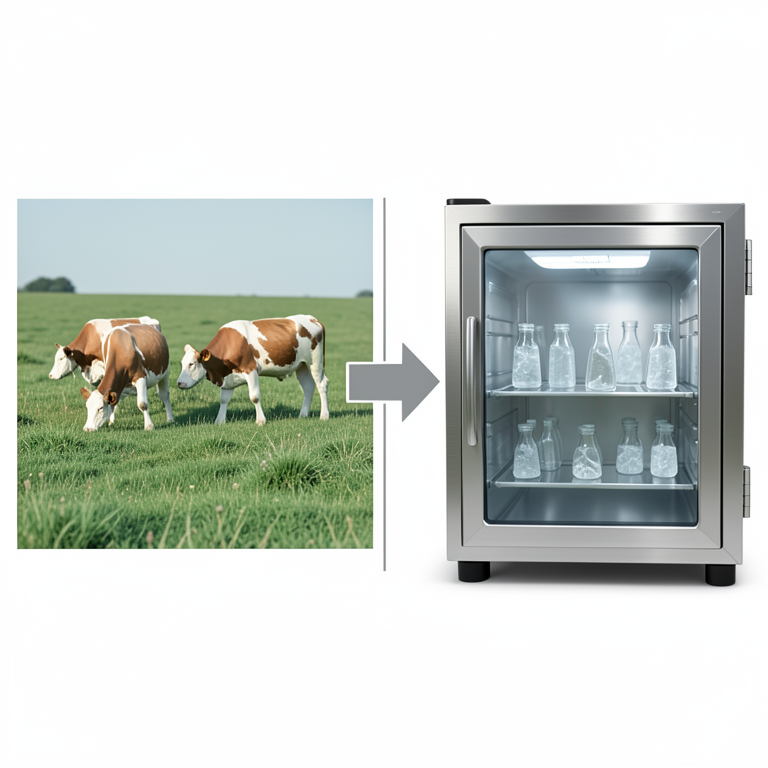
Comparison of Conservation Methods
AI-generated conceptual illustration (domestic cattle and cryopreservation vials). It explains the idea and does not show study data.
View source evidence ↗Introduction
India is the seventh largest country in the world and it is recognized as one of the 12 mega bio diversity centers of the world. Due to diverse agroecological regions and topographic conditions, India has vast repository of domestic animal biodiversity with a large number of breeds of all live stock and poultry. The diversity of domesticated live stock breeds was developed due to years of evolution adopted to specific ecological niche and local needs. There are thirty seven recognized breeds of cattle in India, in addition to large number of nondescript cattle. The share of India in terms of number of breeds is 7.75 percent of the total world cattle breeds. India hosts 37 cattle breeds of which Tamil Nadu has four recognized breeds named as Burgur, Kangayam, Umblachery and Pulikulam. Of the the 13 Indian Buffalo breeds, Tamil Nadu has one named as Toda buffalo. Tamil Nadu is the native of 8 sheep breeds named as Mecheri, Madras red, Ramnad white, Nilgiri, Coimbatore, trichy black, Vembur and Keezhakarisal and 3 goat breeds named as Kanni aadu, Kodi aadu and Salem black among 23 and 39 sheep and goat breeds of India respectively. Each breed should be regarded as collection of special genes designated to serve specific purposes in particular agroecological zones and a valuble genetic resource. The livestock is being endowed with unique qualities like tolerance to high heat and humidity, resistance to diseases and ability to survive under severe nutritional stress. According to FAO recent statistics, 22 percent of the world's more than 8000 livestock breeds are classified as at risk of extinction. A number of these breeds are subjected to fast genetic degradation and dilution because of indiscriminate breeding and introduction of exotic germplasm. Since last two decades the emphasis on draft abitily of cattle has reduced due to mechanization of agriculture and transport. Cross breeding of native cattle for increased milk production has been advocated as a breeding policy across the country. As a result, some indigenous breeds are getting endangered at an alarming rate while others are in the process of replacement by certain high producing strains. The need for parallel conservation of animal genetic resources as a raw material for future animal breeding programmes is also recognized as is becoming an important issue in international, national and regional Animal Husbandry Planning. Conservation of livestock is of particular concern in regions where rapid agricultural change takes place, where indigenous stocks and farming methods are replaced by climatic change and disease. Different reasons for conservation of animal genetic resources include.
Economic and biological reasons
Genetic variation both within and between breeds is the raw material with which the animal breeder works. Therefore, any loss of genetic variation will limit our capacity to respond to changes in economic forces for the exploitation of animal production in future.
Breeds with specific qualities like resistance, heat tolerance, ability to survive and produce under stress and low input conditions need to be preserved for future use. Future requirements of type and quality of animal produce (milk, draught power) may change and this requires conservation of animals better performance in specific production traits. Magnitude of heterosis depends upon the breeds crossed. For exploiting the heterosis in animal production it is necessary to maintain breeds which are complementary to each other and on crossing result in maximum heterosis.
Scientific reasons
Breeds with unique physiological (or) other traits are of great value as they provide missing links in the genetic history of a livestock species by the study of blood groups on polymorphic traits. To identity the DNA sequences causing the distinctive traits, preservation of breeds with unique traits will be essential for long term research in molecular engineering. To evaluate the magnitude of genetic change due to selection maintenance of a sample as control population is very much essential.
Historical and cultural reasons
Conservation of historically important, culturally interesting and visually unusual and attractive population is very important for education tourism etc. serve as research and teaching material in history and ethnography. Conservation of breeds will be preservation of population with diverse sizes colours and other morphological features for aesthetic reasons etc.
Identifying reasons for the loss of animal genetic diversity
There are several factors that place breeds at risk of extinction and threaten livestock diversity (FAO, 2007b; FAO, 2009b) [5,6] . In developed countries, the greatest cause of genetic erosion is, by far, the growing trend towards a global reliance on a very limited number of international transboundary breeds suited to the needs of high inputhigh output industrial agriculture. The effect of this trend is that many breeds have fallen out of use and disappeared without notice. In developing countries, genetic diversity is potentially threatened by a variety of influences. In the literature, there is broad agreement regarding the general trends and factors threatening animal genetic resources in developing countries, viz.
Mechanism of conserving cattle genetic resources
Once genetic resources have been identified and characterized, two basic conservation activities can be followed, i.e., in situ and ex situ.
In situ conservation
In situ conservation requires establishment of live animal breeding farms and their maintenance. The generation and loss of alleles is a dynamic process that should be maintained at close equilibrium through sound management. In situ conservation strategies emphasize wise use of indigenous cattle genetic resources by establishing and implementing breeding goals and strategies for animal sustainable production systems. In India, such efforts are limited to only six breeds of cattle, in a herd registration program organized by the Central Animal Husbandry Department (Balaine et al., 1987) [3] . Similar programs are required for the rest of the breeds and species as well. In any such program, the success depends upon the participation of the farmer for which he needs support and incentive. Therefore, it is difficult to organize the farmers for conserving the breeds which are no more economical to him. In the case of breeds which are no more economically viable, therefore, the only alternative is to bring them under government farms. In situ conservation is very costly if the entire population has to be retained for which at least 26 females and 10 males in cattle have to be maintained that would keep the inbreeding coefficient at 0.2 per cent per year (Smith, 1984). Therefore, this approach would have to be limited to those breeds which are highly endangered. Modalities for simplified animal recording, genetic development and dissemination are needed for each species for a range of national livestock structures in developing countries.
Major advantages of in-situ conservation:
1. Live animals can be evaluated and improved over the years. 2. Genetic defects can be detected and eliminated. 3. Live animals are always available for immediate use. 4. They are a gene bank for future use. 5. They are a constant reminder that the needs of posterity must be considered. 6. The herd may have some economic advantages (heat tolerance, disease resistance) which can be exploited and so render the enterprise economically viable. 7. The produce from live animals partly compensates the expenditure, if not entirely. 8. From aesthetic point of view, the live animals are, visible, a pleasure to look at, the people are delighted to see variety of animals and have some cultural value.
The major limitation of live animal conservation is the number of animals that could be maintained. While fixing the number for preservation of a breed, the cost of maintenance, availability of animals and rate of inbreeding should be taken into consideration. With small population size, the effective population size decreases and the genetic structure of the population is affected due to inbreeding and random drift. Many models are now available which reduce inbreeding to a minimum, but random drift over long periods may lead to a population very different in genetic composition from the initial one. In situ conservation involves a large infrastructure of land, buildings, feed and fodder resources, water supply, labour, technical and supervisory man-power, etc. Therefore, new establishments for in-situ conservation of farm cattle genetic resources are quite costly and even the maintenance of existing ones is cumbersome. The costs need to be estimated for each ecosystem. Smith (1984) recommended that the population size should be such that increase in inbreeding should not be more than 0.2% per annum for preserving the breed in situ. Turner (1987) recommended a flock/herd of 150 breeding females with 20 breeding males, the males being unrelated as far as possible, for preservation purposes. Brem (1990) [4] considered a maximum inbreeding level of 1% per generation as tolerable. He suggested that a herd size of 200 breeding animals in necessary to breed and selected successfully for a quantitative trait. Henson (1990) [8] observed that an effective number of 25 animals per generation will be able to preserve about 50 per cent of genetic diversity in a breed over 50 generations, while an effective number of 50 per generation will maintain 75 per cent of the diversity. To maintain 100 per cent genetic diversity an effective number of 500 animals per generation will be needed. Maijala (1990) [10] reported that heterozygosity starts declining at an accelerating rate after the effective population size falls below 100, while the genetic drift increases rapidly when the effective size is less that 30.
In case of preservation of small populations, to prevent undesirable effects of inbreeding and random drift, FAO suggested a mating ratio of 5 males and 25 females, but a ratio of 50-males and 250 females is recommended in case of traits with low heritability (Anon., 1987) [2] . When preservation is through cryogenic methods, semen from 25 unrelated males should be frozen and embryos from 35 different matings must be ensured for embryo freezing.
Ex-situ conservation
Ex-situ conservation includes cryogenic preservation. It is the storage of genetic resources, which the farmers are currently not interested in using. [12] .
Semen preservation
Semen cryopreservation and artificial insemination are important tools of animal improvement with vast scope of genetic improvement, conserving indigenous cattle resources because of their simplicity and relatively cheaper costs. Semen storage and distribution activities are being carried out in a few well-known indigenous milch cattle. Still, many breeds like Amrithmahal, Dangi, Gaolao, and Punganur lack such facilities. Spermatozoa may also be collected from the epidydimis.
Oocyte preservation
This method provides an opportunity for conserving females in the same way as sperm is conserved. The oocyte can be recovered by surgery, laparotomy or slaughtering of donor animals. The frozen thawed oocyte can be used for IVF successfully (Schellander et al, 1988) [13] . The immature and mature oocyte from slaughtered animals could be useful in near future for cryopreservation of genetic material of endangered breeds.
Embryo preservation
The main advantage of cryopreservation of embryo over that of sperm or oocyte is that it contains the complete genome.
The embryo transfer technique coupled with micro manipulation, embryo sexing and splitting are more useful and economical to carry out ex situ conservation of animal genetic resources. This technique is very useful in conservation of genetic resources by rapid multiplication of superior or rare germplasm. MOET can be used in resurrecting the endangered cattle breeds like Sahiwal, Punganur and Vechur.
Preserving of ovaries
The preservation of slices of ovaries in liquid nitrogen is a new technology which may be of great use in conservation of animal genetic resources. The ovary slices might be transferable into suitable recipients to obtain oocytes which can be fertilized.
Embryonic stem cell and nuclei
Preservation of embryonic stem cells could represent an important method of genome conservation and would be helpful in propagating animals from a single embryo of elite or rare animals belonging to endangered breed/species. Embryonic stem cells represent progressively growing cultures of embryonic cells which retain their pluripotential characteristics. They are derived by culturing blastocysts in vitro in such a way that the cells from the inner cell mass proliferate but do not differentiate. Embryonic stem cell lines can be isolated and then multiplied by continued culture. The importance of embryonic stem cell lines is that, if they are incorporated with normally developing embryos, they will participate in the formation of the inner cell mass and produce chimaeric animals, including germ line chimaeras which are fertile. A more direct route of regenerating animals from embryonic stem cells might be to use the nuclei from these for nuclear transplantation into enucleated oocyte and embryonic multiplication.
Chimaeras
Chimaeras mean the animals having body cell population with different karyotypes which have been formed from two or more zygotes with different karyotypes. Chimeric embryos have been frequently made by the aggregation of cells from two individual embryos or by injecting cells from one embryo into the blastocyst cavity of another embryo. So long as cells from both embryos are represented in the inner cell mass, the composite embryo will develop into a chimaeric animal. A more important aspect of chimaerism in genetic conservation is the potential use for inter-species embryo transfer. Using this technology sheep have been born to goat foster mother and vice versa. This would be especially important if it was a species rather than a breed of animal that was on the verge of extinction.
Production of embryos in vitro
This technology involves salvaging mature oocyte from ovaries of slaughtered animals and developing methods for their maturation, fertilization and in vitro culture for normal embryonic development. For conservation of rare breeds, such a method could provide an opportunity to salvage a few oocytes from the ovaries of rare and superior animals even after their normal reproductive life and to produce some blastocysts for conservation by deep freezing.
Embryo splitting
Embryo splitting is more advantageous in the circumstances where only few embryos of particular genotype or breed or species are available. This technique of manipulating embryos could be helpful in producing more number of animals from a few stored embryos of rare and endangered animals.
Transgenesis
Recent developments in molecular biology have enabled introduction of specific genes into the animal genome. A small amount of DNA is injected into the nucleus of an egg soon after fertilization. In some instances the DNA becomes integrated into the chromosomes and an embryo and fetus develops in which all the nuclei contain copies of the inserted gene. As any sequence can be spliced with any other (Anderson, 1986) [1] , transportation of genes across breeds and species is possible by recombinant DNA techniques. Successful microinjection of genes in mice embryo and their expression (Gordon et al., 1980; Palmiter et al., 1982,1983) [7,11] has made the creation of transgenic forms a possibility, and for the future a viable technique for improving animal production, and for conservation and capitalize on of important genes across breeds and species.
DNA libraries
Theoretically, an animal can be produced from its complete DNA complement. However, at present technical developments are limited to the identification and manipulation of only a few genes. But the direction in which technical advancements are taking place gives an indication that in future breeds/species can be reconstructed from their DNA complements. This gives the hope that if complete DNA complement is stored either in lyophilised form or as cryo preserved cells, reconstruction can be taken up when techniques are standardised. Advances in biotechnology are emerging in a big way and could be of great utility in near future for animal improvement and animal genetic resource conservation programmes. These techniques need to be standardized in a more simple and pragmatic way for conserving country's animal genetic resources. Applications to genetic conservation are very justified and future programmes should certainly be evolved in which all the opportunities emerging from new biotechnologies may be exploited. In situ and ex situ conservation schemes are complementary, not mutually exclusive, with their application for a particular animal genetic resource depending on farmers' current use of it and its comparative uniqueness. Furthermore, frozen germplasm can play an important role in the support of in situ breed develop schemes.
Species Specific Recommendations General
There is large genetic diversity in livestock as reflected in important domesticated species and a large number of known and lesser known breeds/strains. It is imperative that extensive surveys be undertaken in the home tracts of the known breeds for their description and evaluation and identifying the need and approach to their conservation and improvement. Where the numbers are extremely small, immediate efforts should be made to conserve those breeds, preferably in situ. Species-wise recommendations for breeds, which require priority attention for conservation, are as follows
Cattle
Cattle breeds such as Red Sindhi and Sahiwal which have their breeding tracts in Pakistan and Tharparkar, for which we share the breeding tract with Pakistan, are available with a few institutional herds and private breeders. They should be further improved and conserved. Similar attention should be given to Gir, Kankrej and Ongole breeds of Gujarat and Andhra Pradesh. These could be utilized in grading up of nondescript cattle under harsh environments. Lesser known breeds of cattle such as Punganur, Red Kandhari, Vechur, Bhagnari, Deoani, Lohani, Bengal, Chitagang Red, Nepalese Hill, Kachcha Siri, Tarai, Lulu, Sinhala, Umblacherry and Gangateri need to be studied as genetic resource and steps taken for their conservation and improvement. A number of new breeds such as Frieswal, Karan Swiss, Karan Fries, Sunandini are in various stages of development from a crossbred base. Their further improvement and conservation is necessary.
Buffalo
Murrah and Nili Ravi are two most important breeds of buffaloes. They need to be improved further. Other important buffalo breeds, viz. Surti, Jaffrabadi, Mehsana, Bhadawari, Nagpuri, Pandarpuri, need to be studied and improved through selection's Lesser known breeds such as, Kaziranga, Toda, Marathwadi, Sambalpuri, Kalahandi and Paralakhemandi would require extensive survey for their description and evaluation followed by improvement and their conservation if required.
Sheep
Of the 42 breeds of sheep, all the breeds of Jammu & Kashmir and other indigenous breeds like Pugal, Nilgiri and Garole need immediate steps for preservation.
Goat
Of the 20 breeds of goats, Jamnapari, Barbari, Beetal and Surti are threatened by extinction and would need steps for conservation. These breeds have played an important role in genetic improvement of goats. Other breeds of goats like Black Bengal and Osmanabadi also need to be studied and improved.
Camel
In addition to four important breeds of camel viz. Bikaneri, Jaiselmeri, Kuchchi and Mewati, there are lesser known breeds such as Marwadi, Mewadi, Sindhi, Shekawati. There is a need for proper description, evaluation, conservation and improvement of these breeds.
Horse
Little efforts for description and evaluation of indigenous breeds of horses and donkeys have been made. Breeds like Marwadi, Kathiawadi, Zanskari and Spiti are some important breeds which need immediate attention for conservation and improvement.
Donkey
Nothing is known of genetic variation in donkeys in spite of their large variation in phenotypic characters. There is a need for conducting surveys for description and evaluation of different types of donkeys available in the country.
Pig
There is a large variation in pigs as reflected in size, colour, performance, etc. There is a need for proper description and evaluation of these types and steps need to be taken for their conservation and improvement.
Yak
Little is known about the genetic resources of yaks. There are differences in size and reproduction performance of yaks located in different regions. These differences need to be studied and utilized in conservation.
Future strategies
The object in conservation and improvement should be considered not only on economic traits but also aimed at the reproductive and survivability in a given eco-system Policies for genetic conservation and those for genetic improvements (selection programs for commercial exploitation) have opposing objectives. Commercial livestock systems are likely to result in genetic uniformity, wherein further improvement is not possible. These two policies can be made compatible and genetic loss resulting from selection programs can be minimized. Conservation programs are applied in case of farm animals, through the medium of recognized breeds of livestock. The techniques advocated to maintain genetic variability include the use of high ratio of males to females breeding stock, and the application of random breeding system. These are intended to minimize genetic drift and inbreeding, which are the features of small, closed population and to prevent genetic change in populations subject to artificial selection pressures. Maintenance of the breeds in small numbers especially in the Government livestock farms, research institutes and with breeders at field level in the respective breeds tracts could be considered immediately. Since the number of cattle breeds and their variants are high, and the funds available is less, the conservation program should be initially restricted the more economic and presently used breeds of cattle. As more funds become available, the other breeds can be thought of to be conserved from the historic point as well as for posterity. Immediate strategies would involve the Survey, Conservation of Livestock Genetic Resources, Research on Conservation and Training in Conservation and Management. Serious efforts should be made to organizing conservation and evaluation strategies. Since the major emphasis in any system of conservation is the lack of information in gene resources, it is absolutely important that evaluation and conservation should go hand in hand and can be achieved by the following: 1. All universities, educational institutions, religious trusts and organizations associated or having interested in historical preservation should be aided by the Government and encourage to maintain small groups of animals in their natural habitat or intended management systems. These groups should be under a uniform recording system, in a computer readable format with the evaluation and documentation being done at the NBAGR. 2. All the developmental programs being taken up by the state governments should have a mandatory pre-requisite that breeds being used for crossbreeding or grading up should be maintained in nuclear herds in their natural habitat and subjected to continuous evaluation as described above.
Annexure I Recognized indigenous breeds of cattle
Annexure I Recognized indigenous breeds of cattle
Conclusion
The number of indigenous cattle population is decreasing constantly due to the overwhelming influence of mechanization of agriculture and crossbreeding programmes. Conservation of domestic cattle breeds of cattle is essential due to their potentiality for production or draught capability or high resistance to diseases and heat tolerance ability. All the available cattle genetic resources cannot be conserved due to the high cost involved, hence, conservation should be aimed at the those breeds which are immediately useful to the farmer. In situ conservation is the method of choice for conservation. However, ex situ methods of conservation such as frozen semen preservation can be complementary. Other ex situ methods can be utilized once they are standardized and are cost effective. NBAGR (National Bereau of Animal Genetic Resources) will be the national focal point in this programme while the regional focal points will be the state agricultural universities, educational institutions, religious trusts, other non-government organizations along with the farmers at the field level.
References
13 in the original paper- Anderson GB. Identification of sex in mammalian embryos. In: Evans JW, Hollander AH, editors. Genetic engineering of animals. 1986. p. 243-250.
- Anon. FAO Production and Health Paper. No. 66. 1987. p. VII-XV.
- Balaine DS, George M, Satish Kumar. Strategies for conservation of genetic resources of livestock in India. NBAGR/NIAG Information Bulletin. 1987;2:2-6.
- Brem G. Future biotechnological possibilities in preserving animal germplasm. FAO Production and Health Paper. 1990;80:59.
- Food and Agriculture Organization of the United Nations. The state of the world's animal genetic resources for food and agriculture. Rischkowsky B, Pilling D, editors. Rome: FAO; 2007.
- Food and Agriculture Organization of the United Nations. Threats to animal genetic resources: their relevance, importance and opportunities to decrease their impact. CGRFA Background Study Paper No. 50. Rome: FAO; 2009.
- Gordon JW, Scangos GA, Plotkin DJ, Barbosa JA, Ruddle FH. Genetic transformation of mouse embryos by macroinjection of purified DNA. Proceedings of the National Academy of Sciences of the United States of America. 1980;77:7380-7384.
- Henson EL. FAO Animal Production and Health Paper No. 80. 1990. p. 103-117.
- Hammond K, Leitch H. Towards better management of animal genetic resources. World Animal Review. 1995;84/85(3-4):48-53.
- Maijala K. FAO Animal Production and Health Paper No. 80. 1990. p. 167-184.
- Palmiter RD, Brinster RL, Hammer RE, Taumbauer ME, Rosenfeld MG, Birnberg NC, et al. Dramatic growth of mice that develop from eggs microinjected with metallothionein-growth hormone fusion genes. Nature. 1982;300:611-615.
- Polge C. Potential impact of advanced biotechnology on genetic conservation programmes. In: Alderson L, editor. Genetic conservation of domestic livestock. Wallingford, UK: CAB International; 1990.
- Schellander K, Brackett BG, Fuhrer F, Schleger W. Invitro fertilization of frozen thawed cattle oocytes. In: Proceedings of the 11th International Congress on Animal Reproduction and Artificial Insemination; Dublin; 1988.