
Research article · 2020 · Full text
International Journal of Advanced Biochemistry ResearchTo evaluate the presence of subclinical thyroid disorder in type 2 diabetes mellitus
Volume 4(2) · Pages 24–27 · DOI: 10.33545/26174693.2020.v4.i2a.52 ↗
Research areasThyroid Disorders and TreatmentsDiabetes and associated disorders
Abstract
Author-writtenObjectives: Our objective is to determine the prevalence of subclinical thyroid disorders in patients with type 2 diabetes mellitus (T2DM) and to analyze the clinical and metabolic profile of patients with this dual endocrine disorder. Methods and Results: Sixty consecutive type 2 diabetic patients without clinical manifestations of thyroid disorders were screened for SCH and subclinical hyperthyroidism using serum free T 3, free T 4 and thyroid stimulating hormone (TSH) levels. Individuals of subclinical thyroid disease were further screened for thyroperoxidase (TPO) antibodies. SCH was detected in 13% of type 2 diabetic patients and none had subclinical hyperthyroidism in our study. SCH was common among females with type 2 diabetes (84.6%). Elevated TPO antibody levels were present in 84.6% SCH patients. Diabetic retinopathy among SCH patients showed significant association with higher serum TSH levels. Left ventricular diastolic dysfunction was present in 30.8% of SCH patients. Conclusion: SCH is common among type 2 diabetic patients, especially in females. It is most commonly secondary to autoimmune thyroid disease. Microvascular complications are commonly observed in this group of patients with dual endocrinal disorder and treating physician should be aware of the impact and should routinely screen SCH to prevent complications.
Summary
Source-checkedPlain-language reading of the full paper, prepared with AI and checked against the text. Each point links to the authors' own words.
Why it matters
- Diabetes mellitus is a significant global health issue. View evidence ↗
- Patients with diabetes exhibit a higher prevalence of thyroid disorders than the general population, most commonly hypothyroidism. View evidence ↗
- Co-existing hypothyroidism may worsen micro-angiopathic diabetic complications, such as neuropathy and retinopathy, because of dyslipidemia. View evidence ↗
The question
- The study aimed to determine the prevalence of subclinical thyroid disorders in patients with type 2 diabetes mellitus (T2DM) and analyze their clinical and metabolic profiles. View evidence ↗
What they did
- The study included patients within the age range of 35 to 70 years. View evidence ↗
- Data were analyzed using Microsoft Excel 2010 and SPSS version 20, utilizing descriptive statistics such as means, standard deviations, and percentages. View evidence ↗
What they found
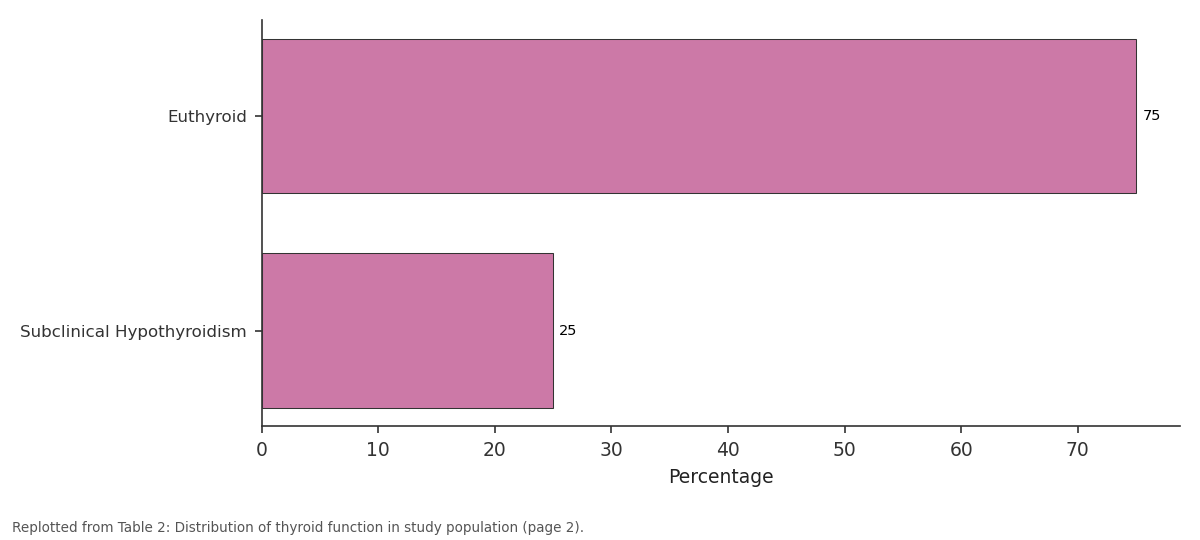
- The prevalence of thyroid dysfunction was 25% (15/60 patients), all of whom had subclinical hypothyroidism (SCH). View evidence ↗
- No patients in the study were found to have subclinical hyperthyroidism. View evidence ↗
- Thyroid dysfunction was more common in females (60%) than males (40%), though this difference was not statistically significant (p = 0.653). View evidence ↗
- The distribution of patients by age in relation to thyroid dysfunction was not statistically significant (p = 0.096). View evidence ↗
- There was no statistically significant difference in mean fasting blood sugar between patients with thyroid dysfunction (174.27 ± 14.129) and euthyroid patients (165.64 ± 39.724) (p = 0.416). View evidence ↗
- While 60% of thyroid dysfunction cases occurred in patients with diabetes for 4-6 years, the association between diabetes duration and thyroid dysfunction was not statistically significant (p = 0.171). View evidence ↗
What it means
- The authors recommend that TSH levels be evaluated in all Type 2 diabetic patients because subclinical hypothyroidism is the most prevalent thyroid disorder in this group. View evidence ↗
Visual summary
2 visualsIllustrations explain the paper; charts are replotted from the paper's own table values.
Percentage: Euthyroid vs Subclinical...
Replotted from Table 2 (page 2) of the original paper. Every bar is the paper's own table value.
View source evidence ↗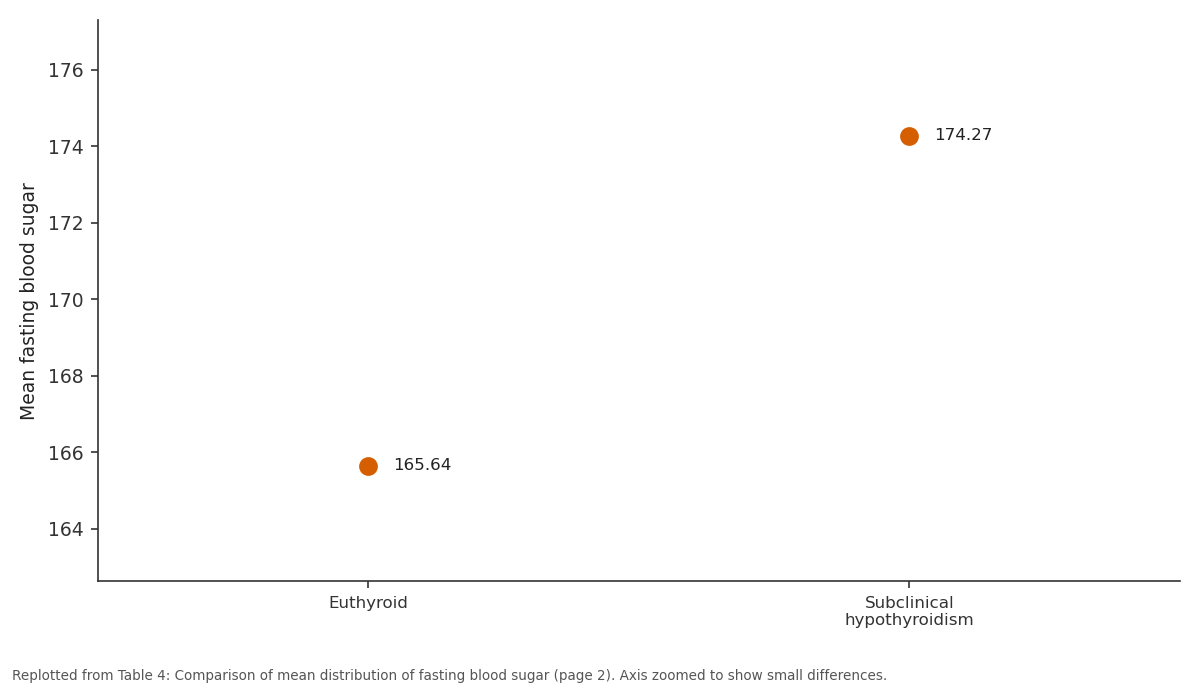
Mean: Euthyroid vs Subclinical...
Replotted from Table 4 (page 2) of the original paper. Every bar is the paper's own table value.
View source evidence ↗Figures & tables
From the original paper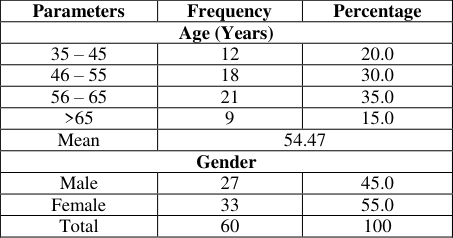 Table 1
 Table 2
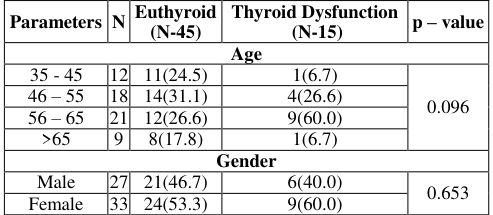 Table 3
 Table 4
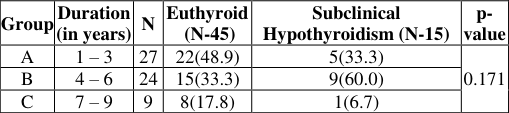 Table 5
Introduction
Diabetes mellitus is an important health problem affecting major populations in worldwide. It is characterized by absolute or relative deficiencies in insulin secretion and/or insulin action associated with chronic hyperglycemia and disturbances of carbohydrate, lipid, and protein metabolism [1] . Diabetic patients have higher prevalence of thyroid disorder when compared with the normal population, with hypothyroidism being the most common disorder [2] . Prevalence of thyroid dysfunction varied from 2.2%-17% in diabetics. Diabetic women are more frequently affected than men and hypothyroidism is more common than thyrotoxicosis [3] . DM often simply referred to as diabetes, is a group of common metabolic disorders that shares the phenotype of hyperglycemia, either because the body does not produce enough insulin or because the β-cells do not respond to insulin that is produced [4] . The metabolic deregulations associated with DM causes secondary pathophysiologic changes in multiple organ systems that impose a tremendous burden on the individual with diabetes and on the health care system. With an increasing incidence in worldwide, DM will be a leading cause of morbidity and mortality for the foreseeable future [5,6] . Thyroid disorders are also very common in the general population and it is second only to DM as the most common condition to affect the endocrine system. As a result it is common for an individual to be affected by both thyroid diseases and diabetes. The first report showing the association between diabetes and thyroid dysfunction was published in 1979 [7,8] . Since then a number of studies have estimated the prevalence of thyroid dysfunction among diabetes patients to be varying from 2.2 to 17 %, the most common disorder being subclinical hypothyroidism [9,10] . According to National Health and Nutrition Examination and Survey III (NHANES III USA), in last 8 years duration, the prevalence of hypothyroidism was 4.6% (0.3% clinical and 4.3% subclinical) and of hyperthyroidism was 1.3% (0.5% clinical and 0.8% subclinical) in population aged at least 12, showing age and Sex dependence i.e. prevalence showing positive correlation with increasing age and female sex [11] . Diabetic patients with sub-clinical hypothyroidism have been reported to be associated with an increased risk of nephropathy and cardiovascular disease [12,13] . Micro-angiopathic complications of diabetes like retinopathy and neuropathy can worsen in the presence of co-existing hypothyroidism due to dyslipidemia. Screening for thyroid abnormalities in diabetic patients will allow early treatment of sub-clinical and overt thyroid dysfunction. 14 This study was done to determine the prevalence of subclinical thyroid disorders in patients with type 2 diabetes mellitus (T2DM) and to analyze the clinical and metabolic profile of patients with this dual endocrine disorder.
Materials and Methods
Materials and Methods
Study Area
The present study will be undertaken in the Department of Biochemistry in collaboration with Department of Medicine, M.M Institute of Medical Sciences and Research, Mullana, Ambala.
Ethical approval and Informed consent
The study protocol was reviewed by the Ethical Committee of the Hospital and granted ethical clearance. Prior informed consent for this study was obtained from subjects, in writing both in English and Vernacular.
Inclusion
Inclusion
Patient selection
The present hospital based study is proposed to be undertaken with a total of 60 subjects in the age range of 35-70 years irrespective of sex from the OPD and wards of M.M Institute of Medical Sciences and Research, Mullana, Ambala. Detailed history of all the individuals was taken.
Collection and Processing of Blood Sample
5ml of venous blood sample was aseptically collected from ante-cubital vein and was poured in plain vaccutainer. These samples were then carried to the Department of Biochemistry. In each case precautions were taken to prevent hemolysis of RBC's present in the samples. Samples were centrifuged at 3000 rpm for 10 minutes and clot was formed. Serum was separated, was pipette out from the top and stored in refrigerator at 2-8 0 C for further investigations. The samples were analyzed within a week for estimation of serum T3, T4, and TSH hormone levels.
Statistical analysis
The recorded data was compiled entered in a spreadsheet computer program (Microsoft Excel 2010) and then exported to data editor page of SPSS version 20 (SPSS Inc., Chicago, Illinois, USA). Descriptive statistics included computation of percentages, means and standard deviations. The prevalence of thyroid dysfunction in our study was 25%. 75% of patients were euthyroid. Among the Type 2 diabetic had subclinical hypothyroidism, 25% (15/60) patients. None of the patients had subclinical hyperthyroidism. The prevalence of thyroid dysfunction in our study was 25%. Results are similar to study done by Singh P et al. [15] in which prevalence of thyroid dysfunction was 29%. In study by Celani MF et al. [16] prevalence of thyroid dysfunction was 31.4%. Babu K et al. [17] in their study found 28% prevalence of thyroid dysfunction. Udiong C.E.J et al. [18] in their study found 46.5% prevalence of thyroid dysfunction in diabetic patients.
Results
In this study 75% of patients were euthyroid. In a study by Singh P et al. [15] 71% of patients were euthyroid. Among the Type 2 diabetic patients with thyroid dysfunction 16% had subclinical hypothyroidism. Our study findings are similar to study done by Singh et al. 19 in which he found hypothyroidism in 23.75% (15% subclinical hypothyroidism and 8.75% primary hypothyroidism) and hyperthyroidism in 6.25% (all primary hyperthyroidism) of diabetic subjects. In this study 6% of patients had overt hypothyroidism similar to study by Saha et al. [20] Only 2% of patients had overt hyperthyroidism. None of the patient had subclinical hyperthyroidism.
Mean age of association with thyroid dysfunction was 58.46(+/-6.65) yrs. Mean age of euthyroid patient was 53.13 (+/-10.29) yrs. The mean age of the diabetics with thyroid dysfunction was higher than euthyroids but was not significant (p= 0.066). In the study by Kim B et al., [21] the mean age of euthyroid patients of Type Thyroid dysfunction was seen to be more prevalent in higher age group in comparison to euthyroid patients. But it was non-significant (p=0.096). In study done by Bhavthankar S et al. [22] maximum no. of patients (33.3%) were in age group 51-60 yrs. Out of total 45 euthyroid patients 46.7% (21/45) were males and 53.3% (24/45) were females. Whereas out of total 15 patients with thyroid dysfunction 40% (6/15) were males and 60% (9/15) were females. So females had thyroid dysfunction more common than male patients in our study. However it was statistically non-significant (p=0.653).
In our study 22.2% of female patients had subclinical hypothyroidism whereas 8.7% of male patients had subclinical hypothyroidism. Yang GR et al. [23] studied 371 diabetics, in which 83 subjects (22.4%) were diagnosed as SCH of whom 12.1% were males and 29.9% were females.
Most of the studies have shown that thyroid disorders are more common in females with Type 2 diabetes [15][16][17] .
According to duration of diabetes the cases were divided into three groups. Maximum no. of patients were in group A (1-3 yrs.) 45% and group B (4-6 yrs.) 40%. Only 15% of cases were in group C (7-9 yrs.). Maximum number of cases of thyroid dysfunction (60%) were in group B (4-6 yrs.). Association of duration of diabetes with thyroid dysfunction was statistically non-significant (p=0.171).
Which is similar to the study done by Diez JJ et al. 24 In study conducted by Kumar A et al., 25 29.5% of patients had duration of diabetes <5 years and significant correlation was found in duration of diabetes with thyroid dysfunction.
Conclusion
The prevalence of subclinical hypothyroidism disorder in our study was 25%. None of patient had subclinical hyperthyroidism. Subclinical hypothyroidism was most prevalent thyroid disorder in patients with Type 2 diabetes mellitus (15% in female patients and 10% in males). Thyroid disorder was more prevalent in females as compared to males. There was no correlation between age, gender, duration of diabetes between euthyroid patients and patients with thyroid disorder. Our study recommend the evaluation of TSH levels in all Type 2 diabetic patients, as subclinical hypothyroidism was most prevalent thyroid disorder in patients with Type 2 diabetes.
Figures and tables from the paper
| Parameters | Frequency | Percentage |
|---|---|---|
| Age (Years) | ||
| 35 – 45 | 12 | 20.0 |
| 46 – 55 | 18 | 30.0 |
| 56 – 65 | 21 | 35.0 |
| >65 | 9 | 15.0 |
| Mean | 54.47 | |
| Gender | ||
| Male | 27 | 45.0 |
| Female | 33 | 55.0 |
| Total | 60 | 100 |
Table text extracted from the original PDF; superscript letters are shown inline. The original table image is below.
View original table image
| Thyroid Function | Frequency | Percentage |
|---|---|---|
| Euthyroid | 45 | 75.0 |
| Subclinical Hypothyroidism | 15 | 25.0 |
| Total | 60 | 100 |
Table text extracted from the original PDF; superscript letters are shown inline. The original table image is below.
View original table image
| Parameters | N | Euthyroid (N-45) | Thyroid Dysfunction (N-15) | p – value |
|---|---|---|---|---|
| Age | ||||
| 35 - 45 | 12 | 11(24.5) | 1(6.7) | 0.096 |
| 46 – 55 | 18 | 14(31.1) | 4(26.6) | |
| 56 – 65 | 21 | 12(26.6) | 9(60.0) | |
| >65 | 9 | 8(17.8) | 1(6.7) | |
| Gender | ||||
| Male | 27 | 21(46.7) | 6(40.0) | 0.653 |
| Female | 33 | 24(53.3) | 9(60.0) |
Table text extracted from the original PDF; superscript letters are shown inline. The original table image is below.
View original table image
| Thyroid function | N | Mean | Std. deviation |
|---|---|---|---|
| Euthyroid | 45 | 165.64 | 39.724 |
| Subclinical hypothyroidism | 15 | 174.27 | 14.129 |
| t-value, p-value | 0.820, 0.416 |
Table text extracted from the original PDF; superscript letters are shown inline. The original table image is below.
View original table image
| Group | Duration (in years) | N | Euthyroid (N-45) | Subclinical Hypothyroidism (N-15) | p- value |
|---|---|---|---|---|---|
| A | 1 – 3 | 27 | 22(48.9) | 5(33.3) | 0.171 |
| B | 4 – 6 | 24 | 15(33.3) | 9(60.0) | |
| C | 7 – 9 | 9 | 8(17.8) | 1(6.7) |
Table text extracted from the original PDF; superscript letters are shown inline. The original table image is below.
View original table image
References
24 in the original paper- Tiwari AK, Roa JM. Diabetes mellitus and multiple therapeutic approaches of phytochemicals: Present status and future prospectus. Curr Sci 2002;83(1):3038.
- Wu P. Thyroid disease and diabetes. Clin diabetes 2000;18(1):1-10.
- Papazafiropoulou A, Sotiropoulos A, Kokolaki A, Kardara M, Stamataki P et al. Prevalence of thyroid dysfunction among Greek type 2 diabetic patients attending an outpatient clinic. J Clin Med Research 2010;2(2):75-78.
- Gardner DG, Shoback D. Greenspan's Basic and Clinical Endocrinology. New York: McGraw-Hill Medical 2011;9:724-50.
- Arner P. Insulin resistance in Type 2 diabetes: role of fatty acids. Diabetes Metab Res Rev 2002;18:5-9.
- Antuna-Puente B, Feve B, Fellahi S, Bastard J. Adipokines. The missing link between insulin resistance and obesity. Diabetes Metab 2008;34:2-11. International Journal of Advanced Biochemistry Research http://www.biochemjournal.com
- Perry IJ, Wannamethee SG, Shaper AG. Prospective study of serum gamma-lutamyl transferase and risk of NIDDM. Diabetes Care 1998;21:732-37.
- Wannamethee SG, Shaper AG, Lennon L, Whincup PH. Hepatic enzymes, the metabolic syndrome, and the risk of type 2diabetes in older men. Diabetes Care 2005;28:2913-18.
- Lewis GF, Carpentier A. Khosrow A, Giacc A: Disordered fat storage and mobilization in the pathogenesis of insulin resistance and type 2 diabetes. Endocr Rev 2002;23:201-29.
- Erbey JR, Silberman C, Lydick E. Prevalence of abnormal serum alanine aminotransferases levels in obese patients and patients with type 2 diabetes. Am J Med 2000;109:588-90.
- Hollowell JG, Stehling NW, Flanders D, Hannan WH, Gunter EW. Spencer CA at al. Serum TSH, T4 and thyroid antibodies in the United States population: National health and nutrition examination survey (NHANES III). Journal of clinical Endocrinology and metabolism 2002;87(2):489-499.
- Chen HS, Wu TE, Jap TS, Lu RA, Wang ML, Chen RL et al. Subclinical hypothyroidism is a risk factor for nephropathy and cardiovascular diseases in type 2 diabetic patients. Diabet Med 2007;24:1336-44.
- Walsh JP, Bremner AP, Bulsara MK, O'Leary P, Leedman PJ, Feddema P et al. Subclinical thyroid dysfunction as a risk factor for cardiovascular disease. Arch Intern Med 2005;165:2467-72.
- Perros P, McCrimmon RJ, Shaw G, Frier BM. Frequency of thyroid dysfunction in diabetic patients: Value of annual screening. Diabet Med 1995;12:622-7.
- Singh P, Khan S, Mittal RK. Evolution of thyroid dysfunction among type-2 diabetic mid and far western Nepalese population. Journal of coastal life medicine 2014;2(11):903-906.
- Babu K, Kakar A, Byotra SP. Prevalence of thyroid disorder in type 2 diabetes mellitus patients Journal Associated of Physicians India 2001;49:43.
- Udoing CEJA, Udoh E, Etukudoh ME. Evaluation of thyroid function in diabetes mellitus in Calabar, Nigeria, Indian J Clin. Biochem 2007;22:74-78.
- Singh G, Gupta V, Sharma AK, Gupta N. Evaluation of Thyroid dusfunction among Type I Diabetics Punjabi population. Advance in Bioresearch 2019;292:02-09.
- Saha HR, Sarkar BC, Khan SA, Sana NK, Choudhary S. A Comparative study of Thyroid Hormone and Lipid Status in Diabetic and Non Diabetic Adults. Open Journal of endocrine and metabolic disease 2013;3:113119.
- Kim B. Thyroid hormone as a determinant of energy expenditure and the basal metabolic rate. Thyroid 2000;18(2):141-144.
- Bhavthankar S, Madole M. Somwanshi S, Ganjewar V. Evaluation of thyroid hormones in patients with type 2 diabetes mellitus. Journal of medical education and research 2013;3(2):33-39.
- Yand JK, Liu W, Shi J, Li YB. An association between subclinical hypothyroidism and sight -threatening diabetic retinopathy in Type 2 diabetic patients. Diabetes Care 2010;33:1018-20.
- Diez JJ, Sanchez P, Iglesias P. Prevalence of thyroid dysfunction in patients with type 2 diabetes. Exp Clin Endocrinol Diabetes 2011;119-201-7.
- Kumar A, Narasimhesetty KR, Lalitha R, Shetty SB, Internationl Journal of Clinical cases and Investigations. 2014;5(6):93-100.