
Research article · 2018 · Full text
International Journal of Statistics and Applied MathematicsOn the property of properness in the extended triple-error-correcting BCH codes
Volume 3(2) · Pages 45–47 · DOI: 10.22271/maths.2018.v3.i2a.602 ↗
Research areasCoding theory and cryptographyAdvanced Wireless Communication TechniquesError Correcting Code Techniques
Abstract
Author-writtenThe undetected error probability Pu (€) for the primitive triple-error-correcting BCH codes of blocklength 2m - 1 on a BSC with cross-over probability € ≤ 1/2 has been widely studied. In this correspondence, extended triple-error-correcting BCH codes of blocklength 2m are studied and the results presented in are supported and strengthened but with a different approach i.e., it is proved that the extended triple-error-correcting BCH codes of blocklength 2m don’t satisfy the properties of proper codes for even m ≥ 6, m integer.
Summary
Source-checkedPlain-language reading of the full paper, prepared with AI and checked against the text. Each point links to the authors' own words.
Why it matters
- Proper codes are extensively studied because they provide good performance in error controlling. View evidence ↗
- A code is defined as 'proper' if its undetected error probability, denoted as 𝑝𝑢(𝜀), increases as the cross-over probability 𝜀 increases. View evidence ↗
- Undetected errors occur when transmission errors result in a received vector that is itself a valid codeword, making the error impossible to detect. View evidence ↗
The question
- The study aims to prove that extended triple-error-correcting BCH codes with blocklength 2𝑚 are not proper codes for even integers 𝑚 ≥ 6. View evidence ↗
What they did
- The undetected error probability 𝑝𝑢(𝜀) was calculated using the MacWilliams identity based on the weight distribution of the code's dual. View evidence ↗
- The analysis evaluated the undetected error probability for values of 𝑚 ranging from 6 to 16. View evidence ↗
- The researchers used the derivative of the undetected error probability with respect to 𝜀 (𝑑𝑝𝑢(𝜀)/𝑑𝜀) to determine if the function was monotonically increasing. View evidence ↗
What they found
- For 𝑚=6 and 𝜀=0.1, the derivative 𝑑𝑝𝑢(𝜀)/𝑑𝜀 was negative (-8.250700739498e-02), indicating the probability was not increasing. View evidence ↗
- The undetected error probability becomes constant for values of 𝑚 ≥ 10. View evidence ↗
- The bound 𝑝𝑢(𝜀𝑚𝑎𝑥) < 2−𝑝 is only satisfied for 𝑚=6; for 𝑚= 8, 10, 12, and 14, the bound is exactly equal to 𝑝𝑢(𝜀𝑚𝑎𝑥). View evidence ↗
What it means
- The authors conclude that extended primitive triple-error-correcting BCH codes of blocklength 2𝑚 are not proper for even integers 𝑚 ≥ 6. View evidence ↗
Visual summary
1 visualsIllustrations explain the paper; they do not show study data.
Concept of Properness
AI-generated conceptual illustration (Abstract mathematical functions represented as geometric curves on a coordinate plane). It explains the idea and does not show study data.
View source evidence ↗Figures & tables
From the original paper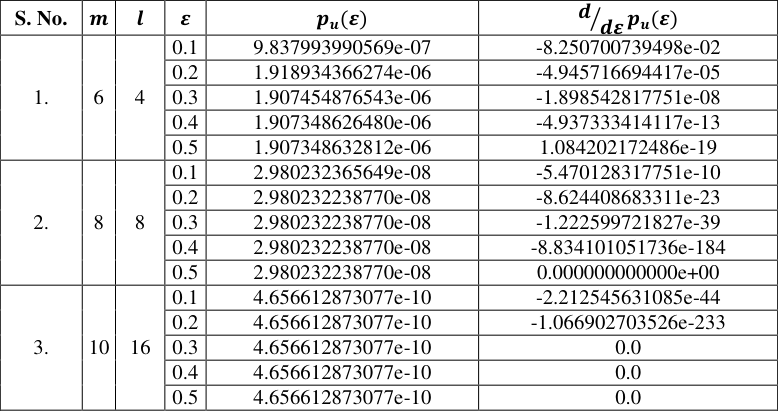 Table 1
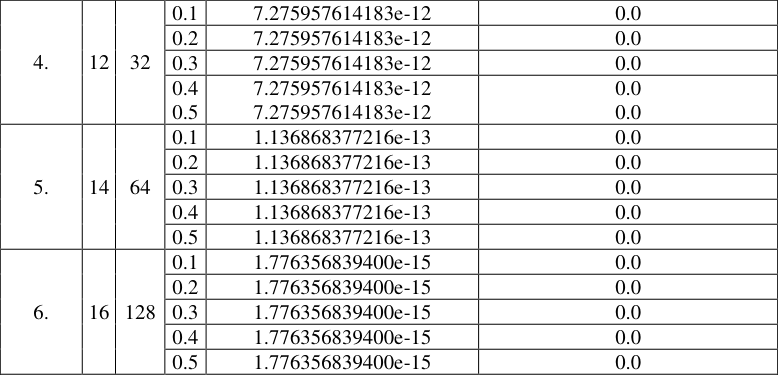 Table 2
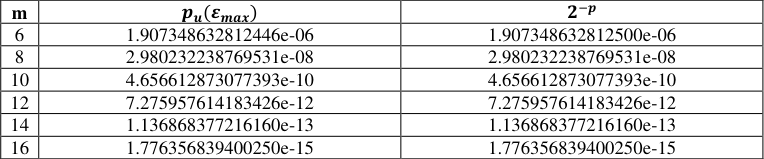 Table 2
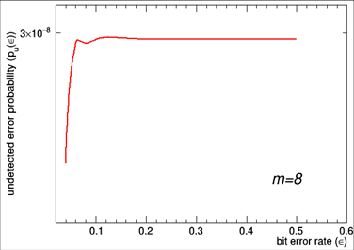 Figure 1
Introduction
Proper codes are studied extensively, specifically in [3]. Performance of proper codes is good in error controlling. A code is said to be proper if its undetected error probability 𝑝𝑢(𝜀) is an increasing function of 𝜀. Proper codes perform good in error control [4].
When a codeword from a code is transmitted over a channel and some error occurs during transmission and if the received vector is not a codeword then errors are detected. But it may also happen than errors are so combined that the received vector is also one of the codewords. In such a case there is no way to detect that received codeword is not the sent codeword and in this way there arises an undetected error. 2. Claim: The extended triple-error-correcting BCH codes of blocklength 2𝑚 are not proper for even 𝑚≥6, 𝑚 integer. 3.
Proof: For a code to be proper its undetected error probability 𝑝𝑢(𝜀) should increase as 𝜀 (Bit error rate) increases. Now 𝑝𝑢(𝜀) for an (n, k) code can be calculated from the weight distribution of its dual by using the MacWilliams identity and its expression is given by 𝑝𝑢(𝜀) = 2−(𝑛−𝑘) 𝐵(1 −2𝑝) −(1 −𝑝)𝑛, where (1 −2𝑝) = ∑ 𝐵𝑖(1 −2𝑝)𝑖 𝑛 𝑖=0 , 𝐵𝑖, 0 ≤𝑖≤𝑛, represents weight distribution of dual code, p is the transition probability of the BSC. Although, 𝑝𝑢(𝜀) can be calculated not only by the wright distribution of the dual of the code but also by the weight distribution of the code itself. So in this claim, 𝑝𝑢(𝜀) is calculated by using weight distribution of the dual of extended triple-error-correcting BCH codes of Blocklength 2𝑚.
The weight distribution [5] of the dual of the code is as follows: Weight i Number of Vectors Bi 0, 2𝑚 1 2𝑚−1 ± 2(𝑚+2)/2 2𝑚(2𝑚−1)(2𝑚−4)/960 2𝑚−1 ± 2𝑚/2 7. 2𝑚(2𝑚−1)/48 2𝑚−1 ± 2(𝑚−2)/2 2. 2𝑚(2𝑚−1)(3. 2𝑚+ 8)/15 Anita Pruthi PG Department of Mathematics, D.A.V. College, Abohar, Punjab, India http://www.mathsjournal.com 2𝑚−1 (2𝑚−1)(29. 22𝑚−4. 2𝑚+ 64)/32 Putting 𝑙= 2(𝑚−2)/2 and 𝑝= 3𝑚+ 1 we have (i) On differentiating 𝑝𝑢(𝜀) w.r.t., (iii) Using Equations (i) and (ii), we have the following table:- Table 1: Values of undetected error probability 𝑝𝑢(𝜀) for given 𝜀, for 6 ≤𝑚≤16. S. No. 𝒎 𝒍 𝜺 𝒑𝒖(𝜺) 𝒅𝒅𝜺 ⁄ 𝒑𝒖(𝜺) 1. 6 4 0.1 9.837993990569e-07 -8.250700739498e-02 0.2 1.918934366274e-06 -4.945716694417e-05 0.3 1.907454876543e-06 -1.898542817751e-08 0.4 1.907348626480e-06 -4.937333414117e-13 0.5 1.907348632812e-06 1.084202172486e-19 2. 8 8 0.1 2.980232365649e-08 -5.470128317751e-10 0.2 2.980232238770e-08 -8.624408683311e-23 0.3 2.980232238770e-08 -1.222599721827e-39 0.4 2.980232238770e-08 -8.834101051736e-184 0.5 2.980232238770e-08 0.000000000000e+00 3. 10 16 0.1 4.656612873077e-10 -2.212545631085e-44 0.2 4.656612873077e-10 -1.066902703526e-233 0.3 4.656612873077e-10 0.0 0.4 4.656612873077e-10 0.0 0.5 4.656612873077e-10 0.0 http://www.mathsjournal.com 4. 12 32 0.1 7.275957614183e-12 0.0 0.2 7.275957614183e-12 0.0 0.3 7.275957614183e-12 0.0 0.4 0.5 7.275957614183e-12 7.275957614183e-12 0.0 0.0 5. 14 64 0.1 1.136868377216e-13 0.0 0.2 1.136868377216e-13 0.0 0.3 1.136868377216e-13 0.0 0.4 1.136868377216e-13 0.0 0.5 1.136868377216e-13 0.0 6. 16 128 0.1 1.776356839400e-15 0.0 0.2 1.776356839400e-15 0.0 0.3 1.776356839400e-15 0.0 0.4 1.776356839400e-15 0.0 0.5 1.776356839400e-15 0.0 Table 2: Comparison of 𝑝𝑢(𝜀𝑚𝑎𝑥) and 2−𝑝 m 𝒑𝒖(𝜺𝒎𝒂𝒙) 𝟐−𝒑 6 1.907348632812446e-06 1.907348632812500e-06 8 2.980232238769531e-08 2.980232238769531e-08 10 4.656612873077393e-10 4.656612873077393e-10 12 7.275957614183426e-12 7.275957614183426e-12 14 1.136868377216160e-13 1.136868377216160e-13 16 1.776356839400250e-15 1.776356839400250e-15 linear codes, IEEE Trans.
| m | 𝒑 (𝜺 ) 𝒖 𝒎𝒂𝒙 | 𝟐−𝒑 |
|---|---|---|
| 6 | 1.907348632812446e-06 | 1.907348632812500e-06 |
| 8 | 2.980232238769531e-08 | 2.980232238769531e-08 |
| 10 | 4.656612873077393e-10 | 4.656612873077393e-10 |
| 12 | 7.275957614183426e-12 | 7.275957614183426e-12 |
| 14 | 1.136868377216160e-13 | 1.136868377216160e-13 |
| 16 | 1.776356839400250e-15 | 1.776356839400250e-15 |
Table text extracted from the original PDF; superscript letters are shown inline. The original table image is below.
View original table image
| 4. | 12 | 32 | 0.1 | 7.275957614183e-12 | 0.0 |
|---|---|---|---|---|---|
| 0.2 | 7.275957614183e-12 | 0.0 | |||
| 0.3 | 7.275957614183e-12 | 0.0 | |||
| 0.4 0.5 | 7.275957614183e-12 7.275957614183e-12 | 0.0 0.0 | |||
| 5. | 14 | 64 | 0.1 | 1.136868377216e-13 | 0.0 |
| 0.2 | 1.136868377216e-13 | 0.0 | |||
| 0.3 | 1.136868377216e-13 | 0.0 | |||
| 0.4 | 1.136868377216e-13 | 0.0 | |||
| 0.5 | 1.136868377216e-13 | 0.0 | |||
| 6. | 16 | 128 | 0.1 | 1.776356839400e-15 | 0.0 |
| 0.2 | 1.776356839400e-15 | 0.0 | |||
| 0.3 | 1.776356839400e-15 | 0.0 | |||
| 0.4 | 1.776356839400e-15 | 0.0 | |||
| 0.5 | 1.776356839400e-15 | 0.0 |
Table text extracted from the original PDF; superscript letters are shown inline. The original table image is below.
View original table image
| S. No. | 𝒎 | 𝒍 | 𝜺 | 𝒑 (𝜺) 𝒖 | 𝒅 ⁄ 𝒑 (𝜺) 𝒅𝜺 𝒖 |
|---|---|---|---|---|---|
| 1. | 6 | 4 | 0.1 | 9.837993990569e-07 | -8.250700739498e-02 |
| 0.2 | 1.918934366274e-06 | -4.945716694417e-05 | |||
| 0.3 | 1.907454876543e-06 | -1.898542817751e-08 | |||
| 0.4 | 1.907348626480e-06 | -4.937333414117e-13 | |||
| 0.5 | 1.907348632812e-06 | 1.084202172486e-19 | |||
| 2. | 8 | 8 | 0.1 | 2.980232365649e-08 | -5.470128317751e-10 |
| 0.2 | 2.980232238770e-08 | -8.624408683311e-23 | |||
| 0.3 | 2.980232238770e-08 | -1.222599721827e-39 | |||
| 0.4 | 2.980232238770e-08 | -8.834101051736e-184 | |||
| 0.5 | 2.980232238770e-08 | 0.000000000000e+00 | |||
| 3. | 10 | 16 | 0.1 | 4.656612873077e-10 | -2.212545631085e-44 |
| 0.2 | 4.656612873077e-10 | -1.066902703526e-233 | |||
| 0.3 | 4.656612873077e-10 | 0.0 | |||
| 0.4 | 4.656612873077e-10 | 0.0 | |||
| 0.5 | 4.656612873077e-10 | 0.0 |
Table text extracted from the original PDF; superscript letters are shown inline. The original table image is below.
View original table image
Inform. Theory 1979;25(1):110-112. 4. Dodunekova R, Dodunekov SM, Nikolova E, A survey on proper codes, Discrete Applied Mathematics 2008;156(9):1499-1509. 5. Mac Williams, Sloane NJA.
Theory of error correcting codes, North-Holland Publishing Company, New York 1977. Fig 1: Undetected error probability for 𝑚= 6, 8 and 10.
Conclusion
Table 2 shows that 𝑝𝑢(𝜀) doesn’t satisfies 𝑝𝑢(𝜀𝑚𝑎𝑥) < 2−𝑝 bound except for 𝑚= 6. For 𝑚= 8, 10, 12, 14, … .. the bound is exactly equal to 𝑝𝑢(𝜀𝑚𝑎𝑥). Also Figure 1 and Table 1 represents that the undetected error probability is not always monotonically increasing as required for proper code. Moreover, for 𝑚≥10, it becomes constant.
Also, on calculating 𝑑𝑝𝑢(𝜀)/𝑑𝜀 is not always found positive for given range of 𝜀 and different values of m as shown in Table 1. For𝑚≥12, as 𝑝𝑢(𝜀) attains constant value, 𝑑𝑝𝑢(𝜀)/ 𝑑𝜀 vanishes. Due to the above mentioned observations, the code doesn’t exhibit the property of properness. This completes the proof that the extended primitive triple-error- correcting BCH codes of Blocklength 2𝑚 are not proper for even 𝑚≥6, 𝑚 integer.
References
3 in the original paper- Ong CT, Leung C. On the undetected error probability of triple-error-correcting BCH codes, IEEE Trans. Inform. Theory 1991;37(3):673-678.
- Patrick Perry, Necessary condition for good error detection, IEEE Trans. Inform. Theory 1991;37(2):375- 378.
- Leung-Yan-Cheong SK, Barnes ER, Friedman DU. On some properties of the undetected error probability of