
Research article · 2020 · Full text
International Journal of Advanced Chemistry ResearchAntioxidant and acute toxicity of stem extracts of the Ficus iteophylla
Volume 2(1) · Pages 17–19 · DOI: 10.33545/26646781.2020.v2.i1a.18 ↗
Research areasPhytochemistry and biological activities of Ficus species
Abstract
Author-writtenThe aims of this Study is to evaluate the Antioxidant activity and acute toxicity of the extracts of Ficus iteophylla by reactions with 1, 1-diphenyl-2-picryhydrazyl radical (DPPH) and method developed by Lork 1983 respectively. Stem of Ficus iteophylla was collected, air dried, pulverized to fine powdered and sequentially extracted using acetone, methanol and water in order of increasing polarity. The result show strong radical scavenging activity against DPPH for all the extracts when compared with Vit. C. The LD50 of 316mg/kg was calculated for all the three extras and the values were found to be within the practically toxic range and therefore care should be taken when using the plants in traditional medicine.
Summary
Source-checkedPlain-language reading of the full paper, prepared with AI and checked against the text. Each point links to the authors' own words.
Why it matters
- Traditional medicine is widely used globally, with the World Health Organization estimating that 80% of the world's population relies on it for treating diseases. View evidence ↗
- While medicinal plants are often assumed to be safer than synthetic drugs, some studies have reported that they can possess toxic, mutagenic, or carcinogenic properties. View evidence ↗
- Reactive oxygen species are linked to several physiological processes and diseases, including cancer, diabetes, atherosclerosis, and aging. View evidence ↗
The question
- The study aimed to evaluate the antioxidant activity and acute toxicity of Ficus iteophylla stem extracts to determine if the plant is safe for public use. View evidence ↗
What they did
- Ficus iteophylla plant material was collected from the Gaffa area of the Hadejia Nguru wetland. View evidence ↗
- One hundred grams of powdered plant material were sequentially extracted for 48 hours using 1000ml each of acetone, methanol, and water. View evidence ↗
- The toxicity experiments were conducted using healthy Swiss albino mice of both sexes. View evidence ↗
- Antioxidant activity was measured using a modified DPPH free radical scavenging method. View evidence ↗
- Acute toxicity was assessed in two phases using a total of sixteen rats, following the method described by Lork (1983). View evidence ↗
What they found
- The acetone extract of Ficus iteophylla showed a DPPH scavenging activity of 89.1%. View evidence ↗
- The methanol extract of Ficus iteophylla showed a DPPH scavenging activity of 84.6%. View evidence ↗
- The standard, ascorbic acid, exhibited the highest scavenging activity at 91.8%. View evidence ↗
- In the first phase of toxicity testing, a dose of 1000 mg/kg resulted in the death of 2 out of 3 rats. View evidence ↗
- Based on Matsumura's classification, where 500-5000 mg/kg is considered slightly toxic, the calculated LD50 of 316.22 mg/kg indicates a higher level of toxicity. View evidence ↗
What it means
- The authors conclude that Ficus iteophylla is a good source of antioxidants and, despite the LD50 value, they state it can be used in traditional medicine. View evidence ↗
- The authors note that because the LD50 values fall within a practically toxic range, caution should be exercised when using the plant in traditional medicine. View evidence ↗
Visual summary
1 visualsIllustrations explain the paper; they do not show study data.
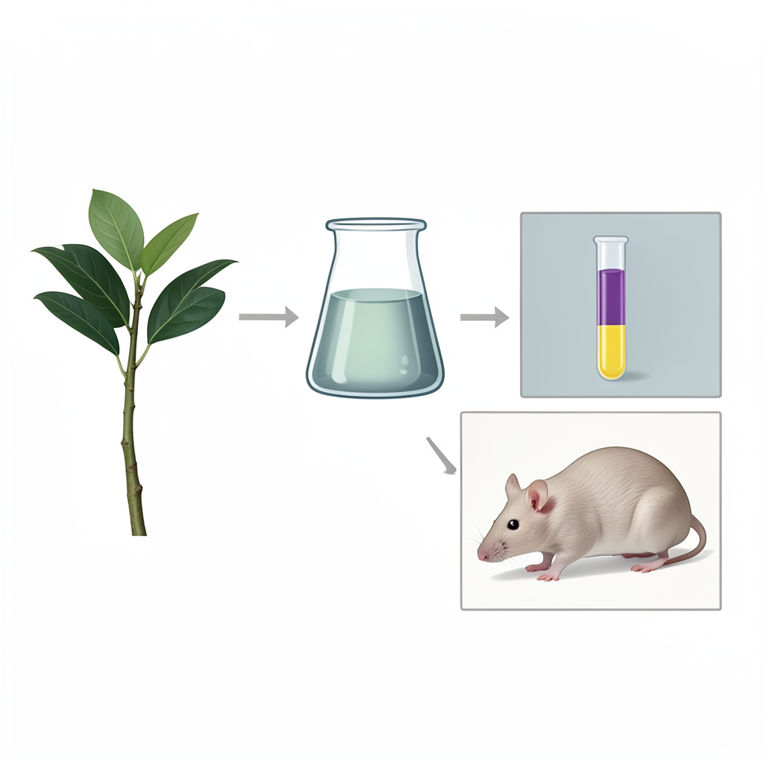
Experimental Workflow
AI-generated conceptual illustration (Ficus iteophylla stem extracts and laboratory rats). It explains the idea and does not show study data.
View source evidence ↗Figures & tables
From the original paper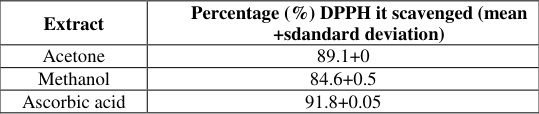 Table 1
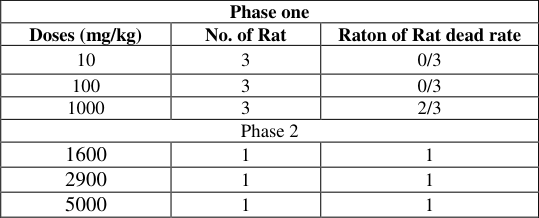 Table 2
Introduction
Medicinal plants have long being used by man for treatment of various illnesses. According to world health organization (2001), 80% of the world population uses traditional medicine for the treatment of diseases. The number of people using traditional medicine is much higher in developing countries. World health organization estimated that 90% of the people leaving in developing countries depend on trational medicine for their primary health care need (WHO, 2002) [16] . Medicinal plants are widely accepted because they are safer, cheaper readily available than synthetic drugs (Ayonde and Adebiyre 2008). Despite the general assumption that medicinal plants are safer than synthetic drugs, there are many stuties that reported mutagenic, Cercinogenic and Toxic properties of some medicinal plants (Deciga et al., 2007, Ferreira ICFS et al., 1999 and Mohd-Fuat AR et al., 2007) [3,5,13] . The term antioxidant refers to the activity of numerous vitamins, minerals, and other phytochemical to protect against the damage cause by reactive oxygen species (Dula 2018) [4] . The reactive oxygen spacies are involved in various physiological process diseases such as ageing, cancer, diabeties and atherosclerosis (Priyanka p, 2011) [15] . The antioxidant activities of medicinal plants are due to the presence of flavones, isoflavone, flavooids, anthocynin, catechin, isocatechin, phenolic compounds and tannins (Killedar 2013) [7] . Plants or drugs must be ensure to be safe before the can be uses as medicine. A key stage in ensuring the safety of drugs is to conduct a toxicity test in an appropriate animal. Acute toxicity studies is one of the procedure for toxicity test that are in use. The main aim of this study was to evaluate the antioxidant of the stem extract of Ficus iteophylla and also to evaluate it acute toxicity before it can be recommended for application that are important for public.
Material and Method Collection of Plant Material
Ficus iteophylla are available at Hadejia Nguru wet land and it was collected from Gaffa area of the wet land. The plant was identified by the taxonomist at the herbarium of Ahmadu Bello University Zaria and is deposited with voucher number 2504. It was wash thoroughly, air dried and grounded to fine powdered.
Extraction
100g of the fine grounded plants was successively extracted using Acetone (1000ml), methanol (1000ml) and water (1000ml) for 48 hours and evaporated to formed acetone extract, methanol extract and water extract.
Experimental Animal
Experiment was performed using healthy swiss albino mice of both sexes. They were purchase from the Department of Pharmacology Aminu Kano Teaching Hospital, Bayero University. Kano.
Antioxidant Assay
The antioxidant activity of the extracts and standards were measured on the basis of the radical scavenging effect of the stable 1, 1-diphenylpicryhydrazyl (DPPH) free radical activity method modified by Braca et al., 2002. The working solutions of the of the extracts were prepared in methanol, Ascorbic acids was used as a standard in 0.01g/ml. 0.004% of DPPH was prepared in methanol and 2 ml of the sample was mixed with 2 ml of this solution and standard solution separately. These solution mixtures were kept in dark for 30 minutes and optical activity was measured at 517nm using spectrophotometer.
International Journal of Advanced Chemistry Research
Methanol (2ml) with DPPH solution (0.004%, 2 ml) was used as blank. The optical density was recorded and the % inhibition was calculated using the formula given.
AA% = Ab -As x 100 Ab
Where AA% = Antioxidant activity (%) Ab = Absorbance of the blank As = Absorbance of the sample
Acute Toxicity
The acute toxicity study was conducted according to the method describe by Lork, 1983 [10] . The study was conducted in two phases using total of sixteen rats. In the first phases nine rats were divided in to three groups of thrice. Group 1, 2 and 3 were given 10, 100 and 1000ml/kg of body weight of the extract respectively.
In the second phases 1600, 2900 and 500mg/kg were giving to the three rats respectively to determine the correct LD50 values. All the treatments were given through interpretoneal. All animal were frequently observed on the day of treatment and surviving animal were further monitored daily for five days for the sing of acute toxicity.
Statistical analysis
The experiments were done in triplicate. The result are given as mean +_ standard deviation (SD).
Result
Result
Discussion
The uses of DPPH provided an easy and rapid way to evaluate antioxidant. The result of this investigation shows that the stem of Ficus iteophylla possess appreciable antioxidant activity agaist DPPH. The DPPH contains an odd electron which is responsible for purple color and the absorbance wavelength of 517nm (C. F. R. Ferreira. et al., 2007) [5] . Singh et al., 2011 [14] studied the antioxidant of properties of using DPPH assay and found that different phytochemicals in leaves are responsible for higher antioxidants. Various studies have reported the presence of flavonoids, tannins, terpene and alkaloids in the extracts of Ficus iteiphylla. The flavonoids have been shown to possess antimicrobial, and antioxidants activities in various studies (Lin et al., 2008, Lopez, 2004, Yoshidu et al., 2009 and Amoral et al., 2009) [18,3] . The presence of alkaloids also had shown an antioxidant activity (Maiza at al., 2007) [11] The presences of tannin in the extract may explain the antioxidant activity of the extracts as tannins are known to possess antioxidant properties (Zhang and Lin, 2008) [20] , The saponins have also shown antioxidant activity (Gulcin et al., 2004) The acute toxicity study of the methanolic stem extract reveal the LD50 value of 316.22 mg/kg suggested by Matsumura (1975) [12] who classified chemicals base on their LD50 values, and point out that LD50 of 500-5000 mg/kg as slightly toxic to the experimental model.
Weaknesses may be attributed to the phytochemicals constituents of the extract like tannins and saponins which are anti-nutritional factors (Umaru et al., 2007).
Conclusion
The present study show that the Ficus iteophylla is good source of antioxidant and the results of the acute toxicity show that the plant does not cause any problem to experimental animal. Therefore the plant can be uses in traditional medicine.
Figures and tables from the paper
| Extract | Percentage (%) DPPH it scavenged (mean +sdandard deviation) |
|---|---|
| Acetone | 89.1+0 |
| Methanol | 84.6+0.5 |
| Ascorbic acid | 91.8+0.05 |
Table text extracted from the original PDF; superscript letters are shown inline. The original table image is below.
View original table image
| Phase one | — | — |
|---|---|---|
| Doses (mg/kg) | No. of Rat | Raton of Rat dead rate |
| 10 | 3 | 0/3 |
| 100 | 3 | 0/3 |
| 1000 | 3 | 2/3 |
| Phase 2 | ||
| 1600 | 1 | 1 |
| 2900 | 1 | 1 |
| 5000 | 1 | 1 |
Table text extracted from the original PDF; superscript letters are shown inline. The original table image is below.
View original table image
References
20 in the original paper- Ayedele AA, Adebiyi AO. The Phytochemical Analysis and Antimicrobials Screening of Extracts of Oxaxsubs Conpiodea. African Journal Of Biotechnology, 2006; 7:868
- CFR Ferreira, Baptista P, Vilas-Boas M, Barros L. Freeradical scavenging capacity and reducing power of wild edible mushrooms from northeast Portugal: individual cap and stipe activity, Food Chemistry. 2007; 100(4):1511-1516.
- Deciga-Campos M, Rivero-Cruz I, Arriaga-Alba M, Castaneda-Corral G, Angeles-Lopez GE, Navarrete A, et al. Acute toxicity and mutagenic activity of Mexican plants used in traditional medicine. Journal of Ethnopharmacology. 2007; 110(2):334-342.
- Dula DE, Zelalem A. Antioxidant Activity Assessment of Calpurnia aurea Root Extract. Nat Prod Chem Res. 2018; 6:307. doi:
- Ferreira ICFS, Vargas VMF. Mutagenicity of medicinal plant extracts in Salmonella/ microsome assay. Phytotherapy Research. 1999; 13(5):397-400.
- Gulciu L, Oktay Kufrevioglu M, Aslan A. Determination of antioxidant activity of Lichen Cetraria islandica (L.) Ach. Journal of Ethanopharm. 2004; 79:325-329.
- Killedar S, More H, Shah G, Gaikwad S. Phytochemical Screening and In vitro Antioxidantactivity of Memecylon Umbellatum Rootb Extracts. World J Pharm Pharmaceut Sci. 2013; 2:5988-5996.
- Lin Y, Shi R, Wang X, Shen HM. Luteolin, a Flavonoids with potential for Cancer prevention and therapy. Curr. Cancer Drug target. 2008; 8:634-646.
- Lopez Lazaro M. Distribution and Biological activities of flavonoid. Luteolin Mini Rev. Med. Chem. 2009; 9:31-59.
- Lorke DA. A new approach to practical acute toxicity. Archives of Toxicology, 1983; 54:275
- Maiza Benadesselam F, Khentache S, Bougotta K, Chibane Y, Laurain Matta D. Antioxidant activity of alkaloids extract of two Algerian spacies of Fumariah capreolata and Fumariah basterdii. Record of Natural Product, 2007, p. 2835.
- Matsumura F. Toxicology of insecticides. Plenum press. York and London, 1975, Pp 24
- Mohd-Fuat AR, Kofi EA, Allan GG. Mutagenic and cytotoxic properties of three herbal plants from Southeast Asia. Tropical Biomedicine. 2007; 389(1):3-122.
- Singh P, Shrivastava R, Saxena RC, Sharma M, Karchuli MS, Tripathi J, et al. Phytochemical screening and evaluation of antioxidant activity of Parkinsonia aculeate L. (Family-Leguminoseae) leaves extract," International Journal of PharmTech Research. 2011; 3(4):1952-1957, 15.
- Priyanka P, Junaid N, Gagandeep C, Kalia AN. In vitro antioxidant potential of Jasminum mesnyi Hance (Leaves) extracts. RJPBCS, 2011; 2:351.
- WHO. Traditional medicine -growing needs and potentials. WHO policy perspective, 2002.
- WHO. Traditional medicine -growing needs and potentials. WHO policy perspective med, 2002.
- WHO. Legal status of traditional medicine and complementary and alternative medicine worldwide review, 2001, 1-3.
- Xiong Q, Kadota S, Tani T, Namba T. Antioxidative effect of Phenylethanoids from Crische deserticola. Bio/pharm. Bull, 1996, 1580-1585.
- Zhang LL, Lin YM. Tannin from Canarium album with potent antioxidant activity J Zhejiang Univ. Science B. 2008; 9:407-415.
Cited by 8
From OpenAlex, OpenCitations and reference lists read by Scinovex
- Assessment of toxicologic and radical scavenging potentials of methanol extract of ageratum conyzoides ↗
Chinenye Azuka Mere, Jonathan C. Ifemeje, Kizito Ifeanyi Amaefule, Andrew Chibuzo Nwaka · Journal of Medicinal Plants Studies · 2021
Aims: Ageratum conyzoides is an annual herbaceous plant commonly used in African traditional medicine as a purgative, antipyretic and wound dressing agent. The objective of this study was to investigate the free radical scavenging and toxicologic potentials of methanol extract of A.conzoides leaves in wistar rats. Methods: The ground plant leaves were macerated to prepare a methanol extract and the
- Acute toxicity of heavy metal, nickel and chromium on fresh water edible fishes ↗
M. Kumar, AK Srivastava · Acta Entomology and Zoology · 2020
Industrial effluent are the major sources of heavy metal pollution and it is released into fresh waterbodies. Catla catla and Clarias batrachus were exposed to Nickel and Chromium for 24, 48, 72 and 96 hrs. The median lethal concentration (LC50) of nickel to Catla catla and Clarias batrachus for 96 h of exposure were 5.77 mg/l and 7.595mg/l, respectively. The
- Toxicological and biochemical effects of selective and non-selective herbicides on non-target organisms - periwinkles (Tympanotonus Fuscatus) and earthworms (Lumbricus Terrestris) ↗
Doris Fovwe Ogeleka, Duke Okoro, Onome Oghenefejiro Udubrae · International Journal of Chemical and Biological Sciences · 2022
In this study Tympanotonus fuscatus and Lumbricus Terrestris were exposed to Cotchlor® and Gobara®, a selective and non-selective commonly used herbicides in order to determine the toxicological and biochemical effects. The acute toxicity of Cotchlor® and Gobara® were determined using the Organization for Economic Development and Cooperation (OECD) #218 and 207 protocol respectively. Similarly, the anti-defensive mechanisms [superoxide dismutase (SOD),
- Underlying mechanisms of acute toxicity in herbal stem extracts ↗
Nirav Patel, John Hamilton · International Journal of Pharmacy and Pharmaceutical Science · 2022
The use of herbal remedies and supplements has gained popularity in recent years due to their perceived natural and holistic benefits. However, there is a growing concern regarding the safety of herbal extracts, particularly in the context of acute toxicity. This research paper investigates the underlying mechanisms of acute toxicity associated with herbal stem extracts using a combination of in
- Antibacterial properties and phytochemical composition of Ficus iteophylla Linn leaves ↗
Tsague Marthe Valentine, Nyemb Nyunaï · International Journal of Chemical Research and Development · 2022
This study investigates the antibacterial properties and phytochemical composition of Ficus iteophylla Linn leaves, a plant traditionally used in herbal medicine. Employing methods such as Gas Chromatography-Mass Spectrometry (GC-MS) for phytochemical analysis and disk diffusion and broth dilution assays for antibacterial testing, the study aims to scientifically validate the medicinal claims associated with these leaves. The research focuses on identifying
- Toxicological evaluation of aqueous and methanol extracts of Dacryodes edulis stem bark ↗
PN Akunne, NEJ Orhue, PA Obarisiagbon · International Journal of Clinical Biology and Biochemistry · 2021
Aim: This study is aimed at evaluating the toxicological effect of aqueous and methanol extracts of Dacryodes edulis stem bark on Wistar Rats Methodology: The stem bark of Dacryodes edulis were locally sourced from a farmer in Ologbo area of Edo State, Nigeria and were identified by a botanist. The stem bark were chopped in pieces, air dried and ground
- Acute toxicity of Cadmium (Cd2+) to the developmental stages of freshwater fish, Clarias gariepinus (Burchell, 1822)
Jacob LT, J Auta, Habila JD, R Yerima · International Journal of Biology Sciences · 2021
Cadmium toxicity on the aquatic environment has negative impact to fresh water organisms including fish such as C. gariepinus. However, the study evaluated the impact of short-term exposure for 96 hours of the developmental stages of C. gariepinus to waterborne cadmium (Cd2+). The different stages of development of the fish were gotten through artificial reproduction of C. gariepinus carried out in the Fishery/Hydrobiology Laboratory, Department of Biology, Ahmadu Bello University, Zaria, Nigeria. For the acute bioassay, 420 embryos of 12 hours post fertilization (hpf) and 180 larvae of 24 hou
- Acute toxicity studies of tributyltin chloride on fresh water bivalve, lamellidens marginalis in summer season ↗
Jagtap Jt, K. B. Shejule · International journal of applied research · 2020
❝ 0Found by Scinovex