
Research article · 2019 · Full text
International Journal of Advanced Chemistry ResearchExtraction, nutrition and anti-nutritional analysis of oil from Terminalia Mantaly seed
Volume 1(2) · Pages 28–32 · DOI: 10.33545/26646781.2019.v1.i2a.13 ↗
Research areasFood Science and Nutritional Studies
Abstract
Author-writtenThe increase in demand and different applications of oils foster the search for vegetable and seed oils that are of high quality to meet up with the increasing rate of its demand worldwide. In this research, the extraction, nutritional and anti-nutritional. The seed oil of the plant was extracted using solvent (N-Hexane). Standard method was adopted to extract the seed oil of the plant. The parameters of seed oil determined includes anti nutritional values such as oxalate 1.66 mg/100g, phytic acid 0.55 mg/100g and hydrogen cyanide 1.46 mg/100g. And proximate analysis such as ash content 9%, crude protein 25%, lipid 37%, crude fibre 5%, moisture 3%, carbohydrate 27% and food energy 541 g/cal. Minerals such as sodium Na+ 20.31 mg/100g, Potassium K+ 120 mg/100g, Magnesium Mg2+17.16 mg/100g and Calcium Ca2+90.61 mg/100g.The consumption of this oil is may be encouraged due to its low level of anti-nutritional values.
Summary
Source-checkedPlain-language reading of the full paper, prepared with AI and checked against the text. Each point links to the authors' own words.
Why it matters
- There is a growing global demand for high-quality vegetable and seed oils due to their diverse applications. View evidence ↗
- Seed and fruit oils are of particular interest because they contain bioactive lipid components like phytosterols and polyunsaturated fatty acids that offer health benefits. View evidence ↗
- Lipid components from oils are widely utilized across several industries, including pharmaceuticals, cosmetics, and food. View evidence ↗
The question
- The study aimed to extract oil from Terminalia mantaly seeds and analyze its nutritional and anti-nutritional properties. View evidence ↗
What they did
- Fresh Terminalia mantaly seeds were collected from the Bauchi Local Government Area of Bauchi state. View evidence ↗
- Oil was extracted from 352.0 g of grounded seeds using N-Hexane in a soxhlet extractor over a period of 6 hours. View evidence ↗
- Proximate analysis for moisture, ash, protein, lipids, fibre, and carbohydrates was conducted following AOAC 1990 standard procedures. View evidence ↗
- Mineral element content was measured using a Buck Scientific VGP210 Atomic Absorption Spectrophotometer after wet acid digestion. View evidence ↗
What they found
- The seed oil yield of Terminalia mantaly was found to be 37±0.82%. View evidence ↗
- The crude protein content of the seeds was 25±0.13%. View evidence ↗
- The seeds provided a food energy value of 541±0.08 g/calories. View evidence ↗
- The ash content of the seeds was 3±0.25%. View evidence ↗
What it means
- The authors recommend the seeds for human consumption, animal feed, and as microbial media due to their suitable ash content. View evidence ↗
- Due to its high oil content, Terminalia mantaly is suggested as a potential commercial raw material for producing soap, glycerol, and biodiesel. View evidence ↗
Visual summary
3 visualsIllustrations explain the paper; charts are replotted from the paper's own table values.
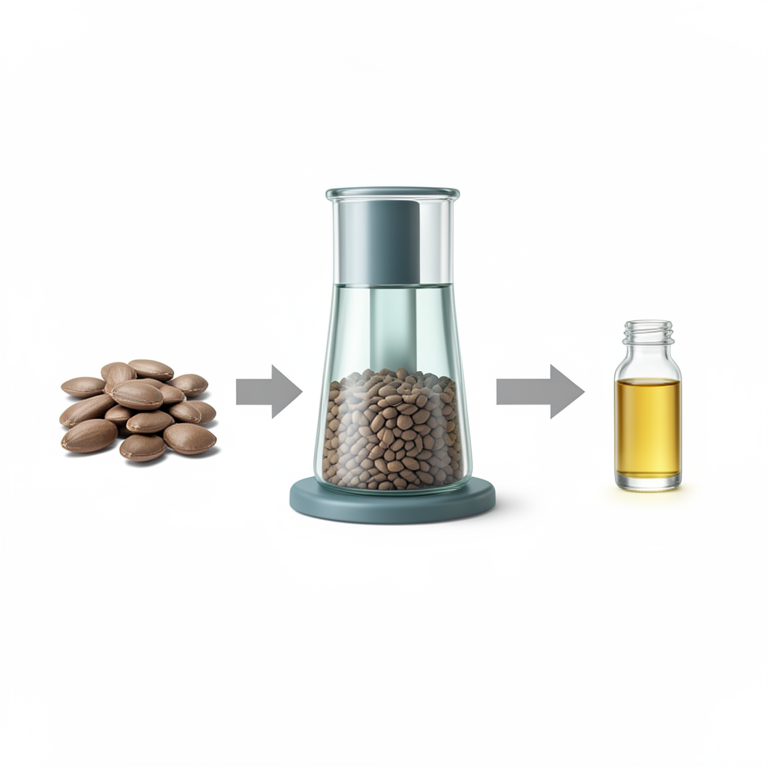
Research Workflow
AI-generated conceptual illustration (Terminalia mantaly seeds and a Soxhlet extraction apparatus). It explains the idea and does not show study data.
View source evidence ↗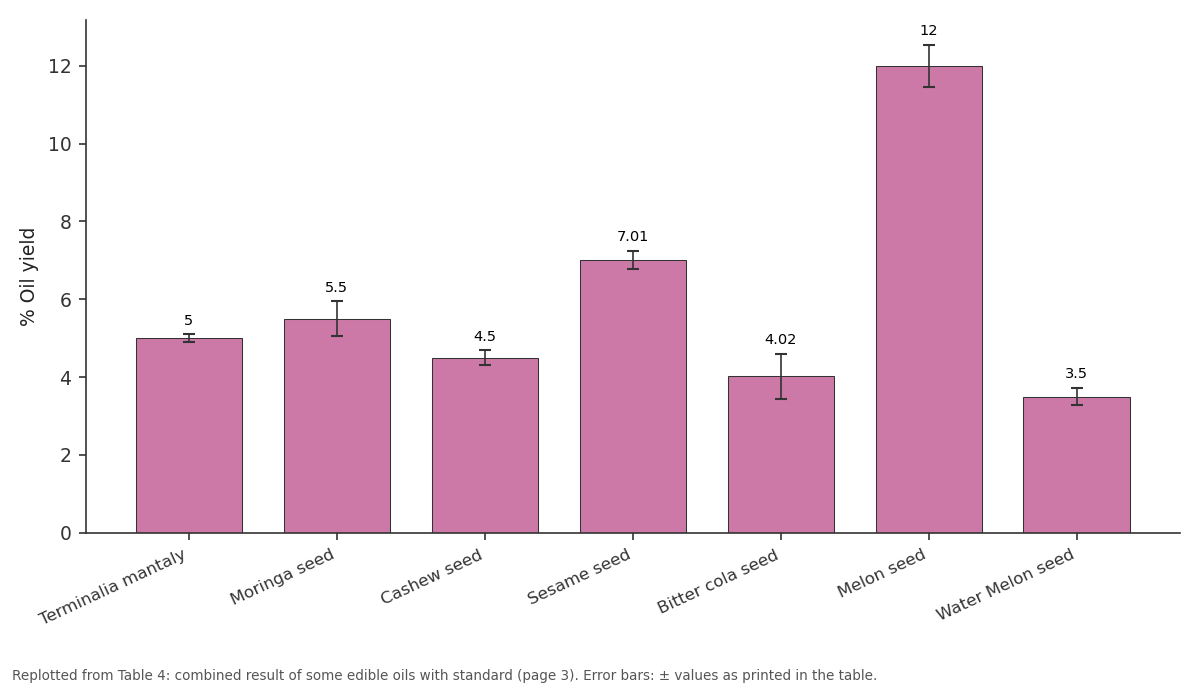
Crude fibre: Terminalia mantaly vs Moringa seed vs Cashew seed vs Sesame seed vs Bitter cola seed
Replotted from Table 4 (page 3) of the original paper. Every bar is the paper's own table value.
View source evidence ↗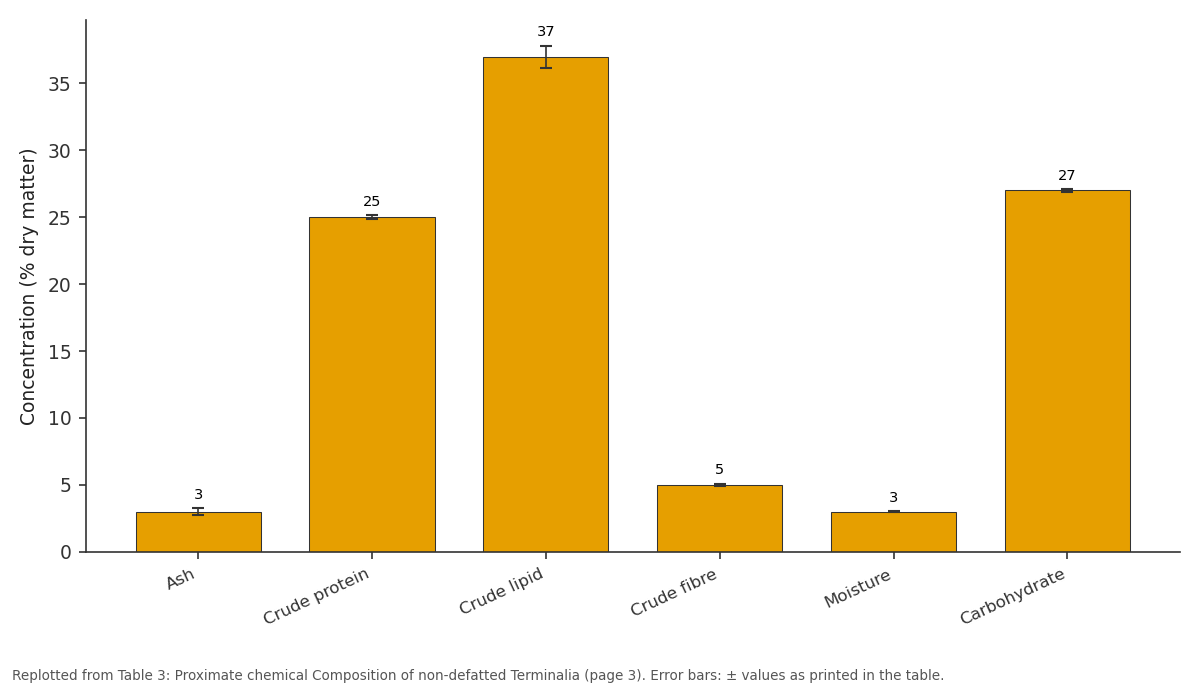
Concentration (% dry matter): Ash vs Crude protein vs Crude lipid vs Crude fibre vs Moisture
Replotted from Table 3 (page 3) of the original paper. Every bar is the paper's own table value.
View source evidence ↗Figures & tables
From the original paper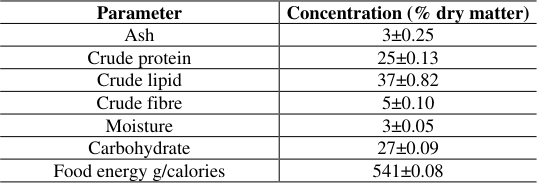 Table 3
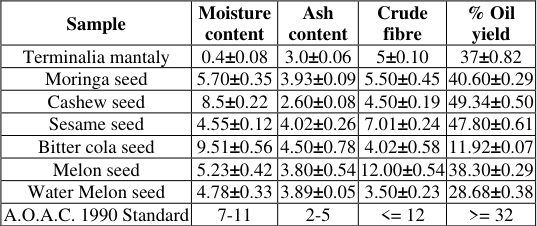 Table 4
 Table 1
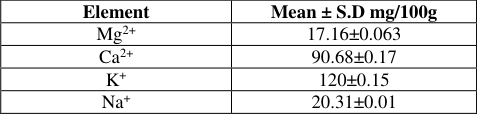 Table 2
Introduction
Since creation, man has used plant as source of food and drug (Rosmary and Donatus, 2012) [33] . The use of fats and oils by man dates back to antiquity (Emmanuel et al., 2009) [13] . Vegetable oils are widely consumed domestically in Nigeria (Kayode, 2015, Nkafamiya et al., 2010) [21] . The interest in vegetable oils with bioactive compounds, such as the ones extracted from fruit seeds, is growing. (Jorge et al., 2014) [19] . Almost every part of the tree; roots, trunk, bark, leaves, flowers, fruits and seeds, is known to have some uses. They could also contribute to the supply of nutrients to the soil via nitrogen fixation as leguminous does (Awadia et al., 2016, Bello and Abdu, 2011) [10,11] . Plants were used as a source of medicine in from the centuries ago and today the scientists and the general public recognize the value of plants as a source of new or complimentary medicinal products (Martin and Nazeema, 2015) [25] . Nuts oils, seed oil and oils of fruit and vegetables are receiving growing interest due to their high concentration of bioactive lipid components, such as polyunsaturated fatty acids and phytosterols, which have shown various health benefits. Fats and oils, and their several lipid components are extensively used in the food and also in cosmetics, pharmaceuticals, oleochemicals and other industries (Maria et al., 2012, Duman et al., 2011) [24] their chemical composition and specific properties have allowed them to find use as foods, fuels and lubricants. Their sources are numerous, encompassing vegetable, Animal, and marine sources (Emmanuel et al., 2009, Nwobi et al., 2006) [13] . Biodiesel is produced from vegetable oils and fats by a transesterification reaction with mono-or dialcohol (Jose et al., 2014, Openshaw, 2000) [30] . The vegetable oils are considered sources of these compounds, especially carotenoids, phenolic compounds, tocopherols, and phytosterols (Jorge et al., 2014, Malacrida et al., 2012) [19,23] . As it is with all matter, their usefulness to man is determined by their chemical nature; and all Fats and oils have certain characteristics in common. Fats and oils are Naturally occurring substances which consist predominantly of mixtures of fatty acid esters of the trihydroxy alcohol or glycerol (Emmanuel et al., 2009, Nwobi et al., 2006) [13] . Different fats and oils come about due to the fact that there are numerous fatty acids of various kinds and these can be combined in an infinite number of ways on the hydroxyl centers of glycerol. Moreover, the physical properties of fats and oils are dependent on the nature of fatty acids involved in the ester. Hence the traditional distinction of fats as solids and oils as liquids arises from the fact that due to the different chemical structures of the different fatty acids combined in the esters, the bonding forces in existence vary in strength resulting in different melting points. These differences are manifested in different chain lengths, the presence or otherwise of unsaturation as well as geometric conformations (Emmanuel et al., 2009) [13] .
Materials / Equipment
Smooth stones together with stainless steel and container were used, mortar & pestle were be provided then soxhlet extractor setup, rotary shaker (Bio Techno Lab Mumbai India)and retort stand were used, water bath HHW420 (B-scientific England), heating mantle, beaker, Terminalia mentaly seed and Reflux condenser were also provided.
Chemical and Reagent
Distilled water, Dam's reagent together with some important reagent such as carbon tetra chloride,(May and Baker limited Dangen Ham England) diethyl ether (Sigma Aldrich Germany) and ethanol(JHD China) were used, then sodium hydroxide(JHD China), potassium hydroxide (JHD China), starch solution, phenolphthalein indicator (Sigma Aldrich Germany) and glacial acetic acid, Ammonia, Hydrochloric acid, N-Hexane, sulphuric acid, (E. merck, Darmstadt Germany), Boric acid(BDH Chemicals limited poole England), Iron (iii) chloride, potassium iodide, ammonium thiocyanate, orthophosphoric acid, Silver nitrate (HEZEDATONG CHEMICAL CO., LTD Sandong-China) were also be provided, sodium thiosulphate, ethanoic potassium hydroxide were also used in this project work.
Sample Collection and Preparation
The fresh seeds of Terminalia mantaly were collected from Fadaman Mada, Bauchi Local Government Area of Bauchi state, and identified at the department of Biological Sciences, Abubakar Tafawa Balewa University (ATBU) Bauchi. Sample was then washed with distilled water 3 times, dried under shade and stored for further use.
Solvent extraction techniques
Terminalia Mantaly seeds were crack and the shells were carefully removed. The kernels thus obtained were used for oil extraction. The kernels were grounded using mechanical method (mortar and pestle). The oil was extracted using organic solvents N-hexane. 352.0 g of grounded seeds was placed in a cellulose paper cone and extracted using N-Hexane in a soxhlet extractor for 6 hours. The extracted lipid was obtained by different techniques such as filtration, centrifugation and separating funnel; in order to get rid of the solid from solvent before solvents was removed. Extracted seed oil was stored in freezer at -20°C for subsequent physicochemical analysis (petal et al, 2011) Soxhlet extraction The method described by Petal et al 2011 and Akbar et al. (2009) [3] with slight modification was used. The seed kernels (352 g) were grounded using a mechanical method and defatted in a soxhlet apparatus. The extraction was carried out by using organic solvents N-hexane. The process was continued for 6 h. Solvent were removed by vacuum evaporation and exposure to heat in a drying oven at 50°C. The amount of oil recovered was calculated as percentage of total oil present in Terminalia Mantaly seed kernels. Each extraction was run in triplicate and the final value is the average of all.
Proximate Analyses
The estimation of the various parameters namely; moisture content, total ash content, crude protein, crude lipids, crude fibre and total carbohydrate were carried out according to standard procedures. The recommended methods of the AOAC, 1990 were used.
Determination of Ash content
A 2 g of the powdered sample of Terminalia mantaly seed kernel was weighed (W 1 ) into a pre-weighed empty crucible (W 0 ) and placed into a furnace at 650 0 C for 3 hours. The ash was cooled in a desiccator and weighed (W 2 ). The weight of the ash was determined by the equation below: % Ash = wt.crucible and ash -wt of crucible wt crucible and sample-wt of crucible × 100
Where, W 0 = Weight of empty crucible (g). W 1 = Weight of crucible + powdered sample (g). W 2 = Weight of crucible + ash sample (g).
Determination of Crude Protein/ Nitrogen
The crude protein content was estimated using the macro kjeldahl method (AOAC, 1995). A 2 g of the powdered sample of Terminalia mantaly was introduced into the digestion flask, followed by the addition of 6 g of kjeldahl catalyst and 25ml of teraoxosulphate (VI) acid. The mixture was put into a digestion block and heated in a fume cupboard until it turns green. On cooling, the mixture was filtered into a 100ml volumetric flask and made to mark with distilled water. 15 ml of the mixture was poured into the distillation apparatus along with 25 ml of 40% NaOH solution. The content in the flask was heated to boil; the ammonia distillate was condensed and collected in a 10 cm 3 Boric acid, using a universal indicator. The digest in the indicator was titrated with 0.05 M H 2 SO 4 . The nitrogen content was calculated using; %Nitrogen= 0.014 X Titre value Xvol of Normality of acid wt of sample X vol of aliquot X 100----vii
The crude protein was calculated using % Crude Protein = % Nitrogen X 6.25 ----viii
Determination of Crude Fibre content
A 2 g moisture and fibre free sample of Terminalia mantaly was put into a 400 ml beaker with 200 ml of 1.25% H 2 SO 4 added to it and left to boil for 30 minutes. The solution was filtered and to the residue was added 200ml of 1.25% NaOH solution, and also left to boil for 30 minutes. On cooling, it was washed and filtered with 1% dilute HCl and the residue was transferred into a weighed crucible and dried to a constant weight at 100 0 C. After drying, it was ashed in a muffle furnace. The weight of the ash was then determined. The loss in weight due to ignition is equal to crude fibre.
Where M1 Weight of crucible with content before ashing, M2 Weight of crucible with contentafter ashing Mo sample weight
Where M1 Weight of crucible with content before ashing, M2 Weight of crucible with contentafter ashing Mo sample weight
Determination of Carbohydrate
The carbohydrate content was deduced using the formula below; Carbohydrate = 100 -(% Moisture + % Protein + % Lipid + % Ash + % Fibre). The gross food energy was estimated according to the method of Rosmary and Donatos (2012) by using the equation. FE = (% CP x 4) + (% CHO x 4) + (% Fat x 9). Where FE = Food energy (in g / cal) CP = Crude Protein CHO = Carbohydrates.
Determination of Anti nutritional Values 2.6.1 Oxalate Determination
The titration method as described by Agbaire, 2011 [1] was followed. 1 g of sample was weighed into 100 ml conical flask. 75 ml 3M H 2 SO 4 was added and stirred for 1 hr with a magnetic stirrer. This was filtered using a Whatmann No 1 filter paper. 25 ml of the filtrate was then taken and titrated while hot against 0.05 M KMnO 4 solution until a faint pink colour persisted for at least 30 sec. The oxalate content was then calculated by taking 1.0 ml of 0.05 ml KMnO 4 as equivalent to 2.2 mg oxalate (Agbaire, 2011, Chinma, & Igyor 2007) [1,12] .
Phytate determination
The phytate of the samples was determined through phytic acid Determination using the procedure described by Emmanual and Stella, 2014. This entails the weighing of 2 g of sample into 250 ml conical flask. 100 ml of 2% conc. HCl was used to soak the sample in the conical flask for 3 h and then filtered through a double layer filter paper 50 ml of the sample filtrate was placed in a 250 ml beaker and 107 ml of distilled water added to give/improve proper acidity. 10 ml of 0.3% ammonium thiocyanate solution was added to sample solution as indicator and titrated with standard iron chloride solution which contained 0.00195 g iron/ml and the end point was signified by brownishyellow colouration that persisted for 5 min. The percentage phytic acid was calculated.
Determination of Hydrogen Cyanide
The alkaline Titration procedure adopted by A.OA.C. 1995 was used. A 10 g of sample was soaked in a mixture of 200 cm 3 of distilled water and 10 cm 3 of orthophosphoric acid. The mixture was left overnight to release all bounded hydrocyanic acid. The mixture was distilled until 150 cm 3 of distillate was collected. 20 cm 3 of distillate was taken into a conical flask containing 40 cm 3 of distilled water. 8 cm 3 of 6 mol/dm 3 aqueous ammonia and 2 cm 3 of 2 % potassium iodide solution were added. The mixture was titrated with 0.02 mol/dm 3 silver nitrate to faint but permanent turbidity.
Determination of Nutritional Value Mineral Element Content
This was determined after wet acid digesting of samples using the Buck Scientific VGP210 model of Atomic Absorption Spectrophotometer with appropriate hollow cathode lamps.
Statistical Analysis Result / Discussion
Results were presented as simple means and standard Deviations.
Discussion
The results for the anti-nutritional and Minerals analysis of the extracted seed oil were given in tables 1 and 2 respectively while that of proximate chemical analysis was given in table 3.
| Parameter | Concentration (% dry matter) |
|---|---|
| Ash | 3±0.25 |
| Crude protein | 25±0.13 |
| Crude lipid | 37±0.82 |
| Crude fibre | 5±0.10 |
| Moisture | 3±0.05 |
| Carbohydrate | 27±0.09 |
| Food energy g/calories | 541±0.08 |
Table text extracted from the original PDF; superscript letters are shown inline. The original table image is below.
View original table image
The result of the anti-nutritional value was shown in table 1 above. The oxalate value of 1.66±0.01mg/100g is low as compared with oxalate value for ground nut oil and palm oil, 418 mg/100 g and495 mg/100 g respectively and is within the lethal dose of 2-5 mg/kg as suggested by Inuwa et al., 2011 [18] . Phytate had value of0.55±0.00 mg/100g, which is lower than phytate value for ground nut oil 418 mg/100 g and higher than that of palm oil 0.337 mg/100 g and is within the lethal dose of 50-60 mg/kg as suggested by Inuwa et al., 2011 [18] . The Hydrogen cyanide value of this study was1.46±0.01 mg/100g is within the lethal dose of 50-60 g/kg as suggested by Inuwa et al., 2011 [18] . The low level of anti-nutritional factors may not pose any serious nutritional problems when this oil is consumed. It is known that high content of these anti-nutrients exerts negative effects on the bioavailability of some mineral nutrients (Agbaire et al., 2011) [1] . The result of the mineral analysis is shown in table 2 above. The Magnesium had the value 17.16±0.06 mg/100g; Calcium had the value 90.68±0.17 mg/100g, Sodium had the value 20.31±0.01 mg/100g and Potassium had the value 120±0.15 mg/100g. Minerals are very important in human nutrition. It is well known that enzymatic activities as well as electrolyte balance of the blood fluid are related to adequacy of Na, K, Mg and Zn.
| Element | Mean ± S.D mg/100g |
|---|---|
| Mg2+ | 17.16±0.063 |
| Ca2+ | 90.68±0.17 |
| K+ | 120±0.15 |
| Na+ | 20.31±0.01 |
Table text extracted from the original PDF; superscript letters are shown inline. The original table image is below.
View original table image
| Anti-nutritional Factor | Mean standard deviation mg/100g |
|---|---|
| Oxalate | 1.66 ± 0.01 |
| Phytate | 0.55 ± 0.00 |
| Hydrogen cyanide | 1.46 ± 0.01 |
Table text extracted from the original PDF; superscript letters are shown inline. The original table image is below.
View original table image
Potassium is important in maintaining the body fluid volume and osmotic equilibrium. Metal deficiency syndrome like rickets and calcification of bones is caused by calcium deficiency (Agbaire et al., 2011) [1] . [6,22] , 48.1% pumpkinseed (Fagbemi and Oshodi, 1991) [16] , 48.9% conophornut, (Enujiugha, 2003) [14] 49.1% cashew nut, (Akinhamni et al., 2008) 50% castor seed, 50% sesame seed, Crambeabyssinicaoil seed, 45.4% (Massoura et al., 1996) [26] , 42% groundnut kernel, is in close agreement with the average value of 37% rapeseed, 36% palmkernel, 35% mustard, 32% sunflower, Moringa seed 40.60%, Cashew seed 49.34%, sesame seed 47.80%, melon seed 38.30% (Saeed and Shola, 2015) [34] and higher than that of palm fruit 20%, 13%cotton seed and 23.5% soybean, Bitter kola seed 11.92% water melon seed 28.68% as reported by (Saeed and Shola, 2015 [25] Andualem and Gassesse, 2014 [6] Paul and Southgate, 1980). And it falls within AOAC 1990 Standard of ≥ 32 %. The very high oil content suggests that Terminalia Mantaly can be used as potential source of raw material for commercial activities. In brief, it can serve as feedstock for production of biodiesel, glycerol, soap and economically important materials. This plant was found to be rich in calories, the seeds have the highest food energy 541 g cal -1 which is lower than Detarium senegalense Gmelin 616.0g/cal as reported by Rosmary and Donatus, 2012. [33] . The amount of crude protein in Terminalia mantaly seed was 25% the amount of Terminalia mantaly seed protein is less than that of bebra seed 29.7% (Andualem and Gassesse, 2014) [6] conophor nut, 29.1% (Enujiugha, 2003) [14] , jack bean, 30 1980). And equals to that of Crambe abyssinica, 25.1%, and cashew nut, 25.5%. This high quantity of protein can serve as media for microorganisms, fed for animals and even can serve as human food after detailed investigation (Andualem and Gassesse, 2014) [6] . On the other hand, the value obtained for carbohydrate was 27% which is higher than that of Bebra (14.32%) in this study is comparable with an acceptable range of values of legumes, 20-60% of dry weight. This result thus gave us indication that the energy source is largely oil and in some extent protein (through domination) (Andualem and Gassesse, 2014) [6] . The moisture value of Terminalia Mantaly in this study which was 6% is somehow intermediate when compared with the value of moisture of legumes ranging between 5.0% and 11% reported in the literatures (Andualem and Gassesse, 2014 [6] [25] . It has been recommended that the ash contents of seeds and tubers should be in the range 1.5-3.5% in order to be suitable for animal feeds. In this case, the ash content of this study falls within this range hence it can be recommended for animal feeds and human consumption as well as it can serve as microbial media without mineral supplement (Andualem and Gassesse, 2014) [6] .
Conclusion
It can be shown that from the result of the analysis, the seed of Terminalia mantaly has higher nutrient composition compared to some legumes most especially in terms of crude oil, Carbohydrate and protein. The amount of protein and carbohydrate in the seed are high in comparison with that of most carbohydrate and protein rich crops. With respect to anti-nutritional studies, the antinutritional content of the Terminalia mantaly seed is not out of the range value of different crops reported by other works. The percentage oil content of almond seed was found to be 37%. The oil obtained in this research was analyzed for specific gravity at 20°C, viscosity at room temperature.
Figures and tables from the paper
| Sample | Moisture content | Ash content | Crude fibre | % Oil yield |
|---|---|---|---|---|
| Terminalia mantaly | 0.4±0.08 | 3.0±0.06 | 5±0.10 | 37±0.82 |
| Moringa seed | 5.70±0.35 | 3.93±0.09 | 5.50±0.45 | 40.60±0.29 |
| Cashew seed | 8.5±0.22 | 2.60±0.08 | 4.50±0.19 | 49.34±0.50 |
| Sesame seed | 4.55±0.12 | 4.02±0.26 | 7.01±0.24 | 47.80±0.61 |
| Bitter cola seed | 9.51±0.56 | 4.50±0.78 | 4.02±0.58 | 11.92±0.07 |
| Melon seed | 5.23±0.42 | 3.80±0.54 | 12.00±0.54 | 38.30±0.29 |
| Water Melon seed | 4.78±0.33 | 3.89±0.05 | 3.50±0.23 | 28.68±0.38 |
| A.O.A.C. 1990 Standard | 7-11 | 2-5 | <= 12 | >= 32 |
Table text extracted from the original PDF; superscript letters are shown inline. The original table image is below.
View original table image
References
38 in the original paper- Agbaire PO. Nutritional and Anti-nutrition levelsof some local vegetables (vernonmia anyadalira, Mohinot esculenta, Teiferia Occidentalis, Talinum triangulare Amaranthus spinosus). Journal of Appliedb Science and environmental Management. 2011; 15(4):625-628.
- Association of Official Analytical Chemist, (1995). Official methods of Analysis 13 th edit., A.O.A.C., Washington D.C.
- Akbar, E., Yaakob, Z., Kamarudin S, Ismail M. Characteristics and Composition of Jatroph curcas oil seed from Malaysia and its potential as Biodiesel Feedstock. European Journal of scientific Research. 2009; 29:396-403.
- Akinhanmi TF, Atasie VN, Akintokun PO. Chemical Composition and Physicochemical Properties of Cashew nut (Anacardium occidentale) Oil and Cashew nut Shell Liquid. Journal of Agriculture Food & Environmental Science. 2008; 2(1):1-10.
- Aletor VA, Aladetimi OO. Compositional evaluation of some cowpea varieties and some under-utilized edible legumes in Nigeria. Die Nahrung. 1989; 33(10):999-1007.
- Andualem B, Gassesse A. Proximate composition mineral content and antinutritional factors of Bebra (Milletiaferruginea) seed flour as well as physicochemical characterization of its seed oil. A springa open journal. 2014; 3(298):1-10.
- Anonymous. Tropical Legumes: Resources Future. National Academy of Science Washington, DC, Washington, 1972, p 24.
- Aremu MO, lonisakin O, Bako DA, Madu PC. Compositional studies and physicochemical characteristics of cashew nut (Anarcadium occidentale) flour. Pakistan Journal of Nutrition. 2006; 5(4):328-333.
- Aremu MO, Olaofe O, Akintayo ET. Chemical Composition and Physicochemical Characteristics of two Varieties of Bambara Groundnut (Vigna subterrenea) flours. Journal of Applied Sciences. 2006a; 6(9):1900-1903.
- Seed Crude Oil. International journal of research and development Organisation. 2016; 2(4):22-35.
- Bello A, Abdu I. Nutrient and mineral elements levels in four indigenous tree seeds in Sokoto State, Nigeria. Journal of Plant Breeding and Crop Science. 2011; 3(15):396-400.
- Chinma CE, Igyor MA. Micronutrients and anti-nutritional contents of selected tropical vegetables grown in South east, Nigeria. Nigerian Food Journal. 2007; 25(1); 111-116.
- Emmanuel OA, Kessington OO, Mudiakeoghene O. Biodegradation of vegetable oils. Scientific Research and Essay. 2009; 4(6):543-548.
- Enujiugha VN. Chemical and functional characteristics of conophor Nut. Pakistan Journal of Nutrition. 2003; 2(6):335338.
- Emmanual EE, Stella MA. Phytochemical and anti-nutrients evaluation of some wild fruiting polypore macro fungi. Journal of chemical and pharmaceutical research. 2014; 6(12):792-796.
- Fagbemi TN, Oshodi AA. Chemical composition and functional properties of full fat fluted pumpkin seed flour. Nigerian Food Journal. 1991; 9:26-32.
- Food and Agriculture Organization. Food Composition Table for use in Africa Development of Health Education and Welfare. Rome Health Science and FAO Nutrition Division, Rome, 1982. p 32.
- Inuwa HM, Aina VO, Baba G, Aimola I, Amao T. Comparative Determination of Antinutritional Factors in Groundnut Oil and Palm Oil. Advance Journal of Food Science and Technology. 2011; 3(4):275-279.
- Jorge N, Ana CS, Caroline PMA. Antioxidant activity of oils extracted from orange (Citrus sinensis) seeds. Anais da Academia Brasileira de Ciências. 2016; 88(2):951-958.
- José MRd, Mateus DN, Sirlaine AP, Denise PT, Maria C, Megumi K. Bio-detoxification of Jatropha curcasseed cake by Pleurotusostreatus. African journal of microbiologyresearch. 2014; 8(11):1148-1156.
- Kayode ES. Extraction and physicochemical characterisation of the oil extract from the seed of umbrella tree (terminalia mentalis). International Journal of Scientific & Engineering Research. 2015; 6(10):144-147.
- Lge MN, Ogunsua O, Okon OL. Functional properties of the protein of some Nigeria oil seeds. Casophor seeds and three varieties of some Nigeria oil seeds. Food Chemistry. 1984; 32:822-825.
- Malacrida CR, Kimura M, Jorge N. Phytochemicals and antioxidant activity of citrus seed oils. Food Science Technology Research. 2012; 18:399-404.
- Maria CS, Francesco S, Raffaele C, Francesco LC, Maria GV. Extraction and Characterization of Vegetable Oils from Cherry Seed by Different Extraction Processes. Chemical engineering transactions. 2012; 27:391-396.
- Martin MI, Nazeema TH. Detoxification of trypsin inhibitors in the kernel cake of jatropha curcas by regulating its inhibitory activity and its effect on common carp fishes. International journal of life science and pharma Research. 2015; 5(3):49-57.
- Massoura E, Vereijken JM, Kolster P, Derksen JTP. Isolation and Functional Properties of Proteins from Crambe Abyssinica oil Seeds. In Janick Journal (ed) Progress in new Crops. ASHS Press, Alexandria, VA, 1996, pp 322-327.
- Messina M. Soyfoods: Their Role in Disease Prevention and Treatment. In: Liu K (ed) Soybeans: Chemistry, Technology, and Utilization. Chapman & Hall, New York, NY, 1997, pp 443-477.
- Mohammed MA, El Gasim AA, Yagoub AE. Furundu, from fermented/ sprouted Roselle (Hibiscus sabdariffa L.) seed: investigation on chemical composition, antinutritional factors, HCl-extractability of minerals, amino acids composition, In vitro protein digestibility and microbial growth. Research Journal of Agric and Biological Science. 2007; 3(6):876-885.
- Nwob BE, Ofoegbu O, Adesina OB. Extraction and Qualitative Assessment of African Sweet Orange Seed Oil. African Journal of Food, Agriculture, Nutrition& Development, 2006, 6(2).
- Openshaw KA. A review of Jatropha curcas: an oil plant of unfilled promise. Biomass & Bioenergy journal. 2000; 19:115.
- Patel S, Patel K, Nilkanth F, Vasudev TRB Shubramanian, RBL. Extraction and analysis of Jatropha curcasL. Seed oil. Bc` African Journal of Biotechnology. 2011; 10(79):1821018213.
- Perez-Hidalgo M, Guerra-Hernandez E, Garcia VB. Determination of insoluble dietary fiber compounds: cellulose, hemicellulose and lignin in legumes. Ars Pharma. 1997; 38(4):357-364.
- Rosemary IU, Donatus EO. An Evaluation of the Phytochemical and Nutrient Composition of the Seeds and Stem Bark of Detarium senegalense Gmelin. Joural of Natural Science Research. 2012; 2(5):107-112.
- Saeed MD, Shola EA. Extraction and physico chemical properties of some edible seed oils sampled in kano metropolis, kano state. Bayero journal of pure and applied sciences. 2015; 8(2):239-244.
- Seena S, Sridhar KR. Nutritional and microbiological features of little known legumes. Canavalia catharticaThouars and C. maritimaThouars of the southwest coast of India. Current Science. 2006; 90(12):1638-1650.
- Suliman MA, El Tinay AH, Elkhalifa AEO, Babiker EE, Elkhalil EAI. Solubility as Influenced by pH and NaCl Concentration and Functional Properties of Lentil Proteins Isolate. Pakistan Journal of Nutrition. 2006; 5(6):589-593.
- Sumner AK, Nielsen MA, Youngs CG. Production and Evaluation of Pea Protein Isolate. Presented at the 40th Annual Meeting of the Institute of Food Technologist, New Orleans, La, 1980, 8-11.
- Yusuf AA, Mofio BM, Ahmed AB. Nutrient contents of pride of Barbados (Caesalpiniapulcherrima Linn) seeds. Pakistan Journal of Nutrition. 2007; 6(2):117-121
Cited by 2
From OpenAlex, OpenCitations and reference lists read by Scinovex
- Evaluating Nudaurelia dione (Saturniidae), an Edible Insect, for Sustainable Nutrition: Composition, Benefits, and Antinutritional Insights ↗
Adjoua Christiane Eunice Boko, Sika Hortense Blei, Casimir Anauma Koko, Djédoux Maxime Angaman · Journal of Food Biochemistry · 2024
Increasingly, insects are heralded as a sustainable and efficacious solution to global challenges of malnutrition and protein scarcity. The Food and Agriculture Organization (FAO) advocates for the use of insects as a sustainable substitute for conventional animal‐based proteins, in response to the escalating pressures on natural resources and the environment. This study focuses on Nudaurelia dione, exploring its nutritional and…
❝ 3PDF - Physicochemical Properties of Oil Derived from Cucumeropsis mannii (Egusi) and Citrullus lanatus (Watermelon) seeds ↗
Hajara Oyiza YUSUF, Anita Charlotte JITE, Safiya MUHAMMED, Simpa John SALAWU, Faiza Mustapha IBRAHIM · Journal of Biochemistry and molecular biology · 2024
In this work, physicochemical characteristics of the oils extracted from Cucumeropsis manni (Egusi) and Citrullus lanatus (Watermelon) seeds were determined, and the output for both vegetable oils was compared. Unshelled seeds of both C. mannii and C. lanatus were purchased from modern market, in Lafia local government area of Nasarawa state, Nigeria. Following dehulling, oil was extracted from both seed…
❝ 1PDF