
Research article · 2025 · Full text
International Journal of Research in AgronomyEffect of seed priming on germination and seedling growth in Amlook (Diospyros lotus L.)
Volume 8(3) · Pages 593–596 · DOI: 10.33545/2618060x.2025.v8.i3h.2702 ↗
Research areasFlowering Plant Growth and CultivationPlant Growth Enhancement TechniquesSeed Germination and Physiology
Abstract
Author-writtenTo investigate the effect of seed priming on enhancement of germination and seedling growth in amlook (Diospyros lotus L.) was done at Department of Seed Science and Technology, Dr YS Parmar UHF, Nauni, Solan during the year 2019-20. Under field conditions, there were eleven different seed priming treatments i.e. GA3 (250, 500, 750 ppm), Thiourea (2500, 5000, 7500 ppm), KNO3 (2500, 5000, 7500 ppm), hydro-priming and control. Among all treatments GA3 @ 500 ppm significantly enhanced the seed germination, seedling height, seedling diameter, number of leaves per seedling, leaf area, leaf chlorophyll content, fresh weight of shoots and roots, dry weight of shoots and roots, total root length, biomass of seedlings, SVI-I, SVI-II, survival rate and number of graftable seedlings. This treatment also significantly increased the days taken to germination. Therefore, seed primed with GA3 @ 500 ppm could be recommended for improving the germination and seedling growth in amlook.
Summary
Source-checkedPlain-language reading of the full paper, prepared with AI and checked against the text. Each point links to the authors' own words.
Why it matters
- Amlook (Diospyros lotus L.) is a valuable rootstock for cultivated persimmon due to its drought resistance, tolerance to low winter temperatures, and high grafting affinity. View evidence ↗
- Persimmon seeds are difficult to germinate because their hard seed coats mechanically restrict embryo growth and inhibit germination, necessitating treatments to break dormancy. View evidence ↗
- Seed priming and stratification are needed to overcome low germination rates and increase the production of high-quality persimmon seedlings for use as rootstocks. View evidence ↗
The question
- The study aimed to evaluate how seed priming with GA3, Thiourea, and KNO3 affects the germination, growth, and quality parameters of amlook seedlings. View evidence ↗
What they did
- The research was carried out during 2019-20 at the Department of Seed Science and Technology, Dr YS Parmar UHF, Nauni, Solan (H.P.). View evidence ↗
- The experiment tested eleven treatments: three concentrations of GA3 (250, 500, 750 ppm), three of Thiourea (2500, 5000, 7500 ppm), three of KNO3 (2500, 5000, 7500 ppm), hydro-priming, and a non-primed control. View evidence ↗
- Seeds were stratified in sand for 45 days in a refrigerator, soaked in the respective priming solutions for 24 hours, and shade-dried for two hours before sowing. View evidence ↗
- Measurements included seedling height, diameter, leaf area (using a LI-COR Model-3100), dry weight (dried at 65±5 °C), and total root length (using a Comair Root Length Scanner). View evidence ↗
What they found
- GA3 at 500 ppm (T2) produced the best growth results, including the maximum height (29.10 cm), diameter (6.27 mm), leaf area (86.04 cm²), and total root length (1.45 m). View evidence ↗
- The control group (T11) showed the lowest growth across all parameters, with a minimum height of 23.50 cm and total root length of 0.76 m. View evidence ↗
- Seed priming with GA3 at 500 ppm resulted in the highest survival percentage and the greatest number of graftable seedlings. View evidence ↗
What it means
- The authors conclude that priming amlook seeds with GA3 at 500 ppm for 24 hours is the superior treatment and recommend it for improving germination and seedling growth. View evidence ↗
Visual summary
3 visualsIllustrations explain the paper; charts are replotted from the paper's own table values.
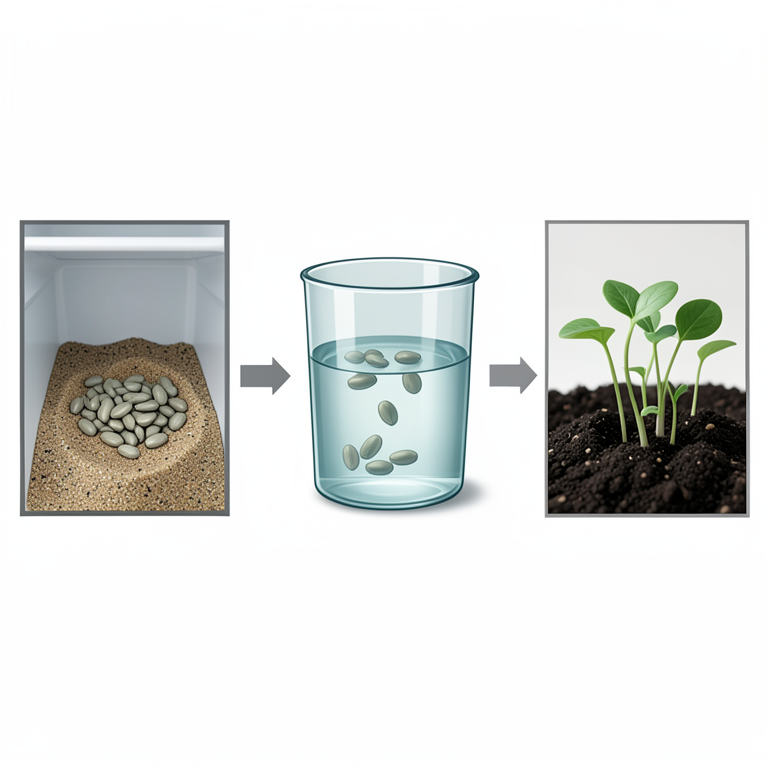
Seed Priming Workflow
AI-generated conceptual illustration (Amlook (Diospyros lotus L.) seeds and seedlings). It explains the idea and does not show study data.
View source evidence ↗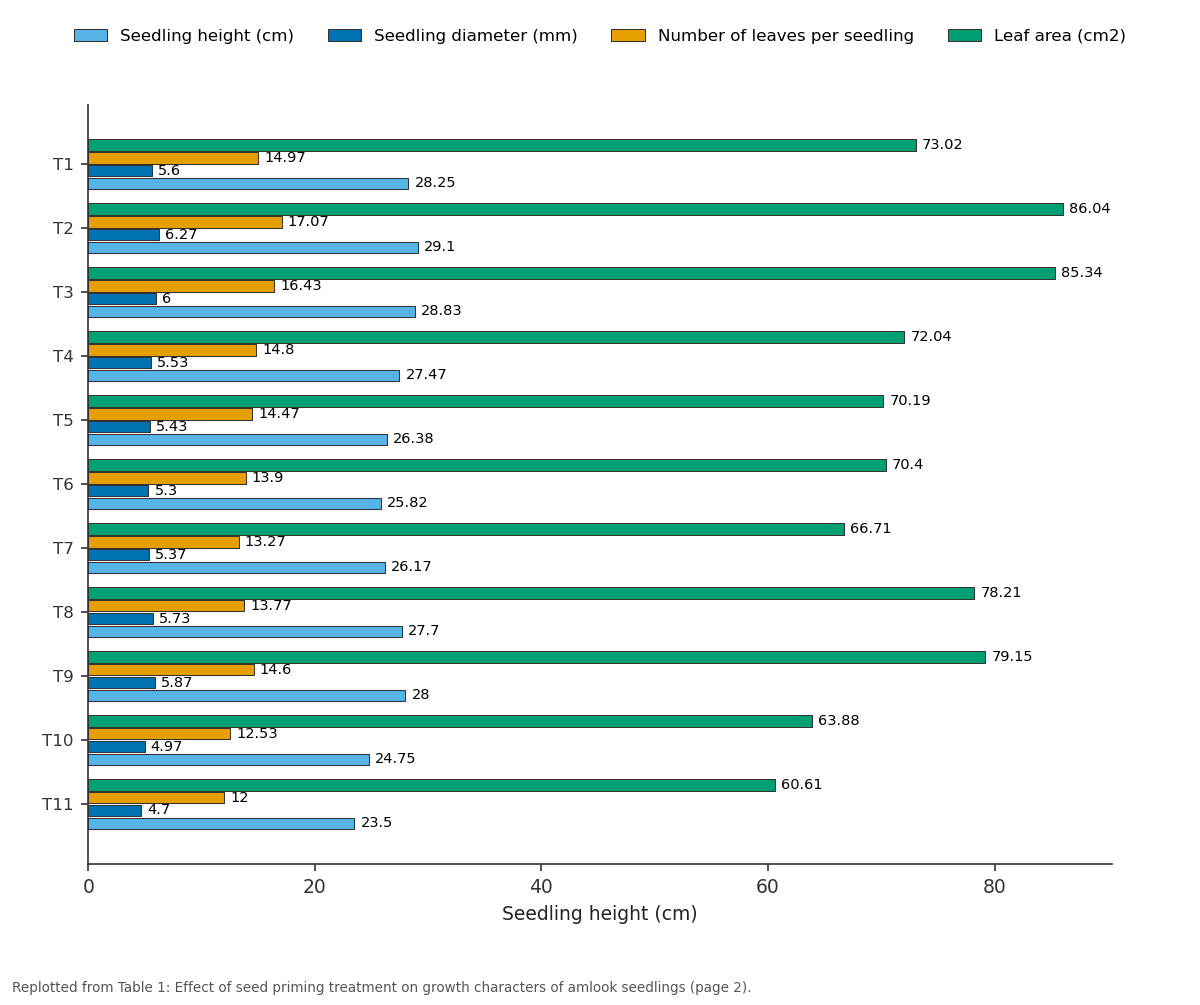
Seedling height (cm) and Seedling diameter (mm) and more: T1 vs T2 vs T3 vs T4 vs T5
Replotted from Table 1 (page 2) of the original paper. Every bar is the paper's own table value.
View source evidence ↗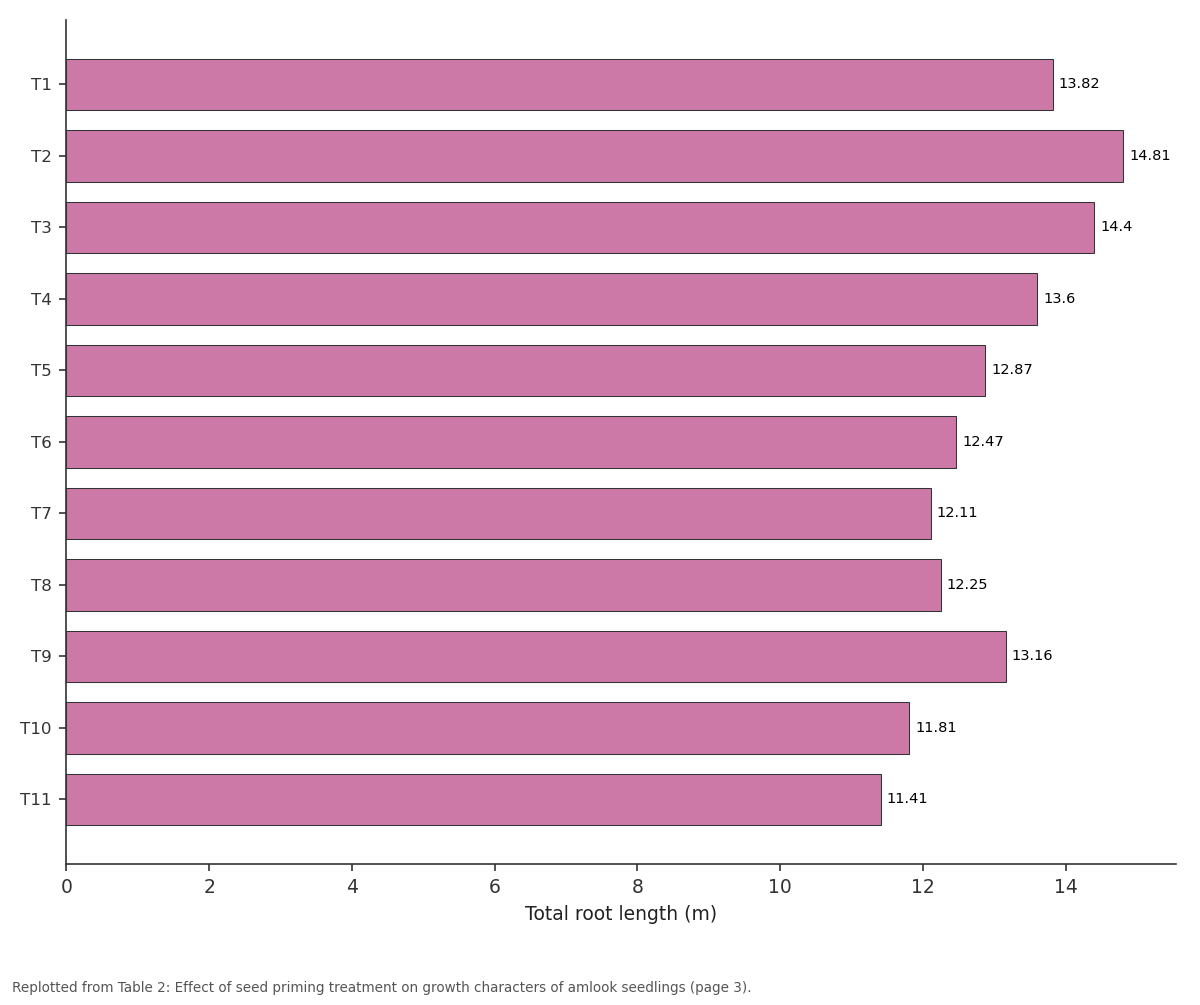
Biomass of seedlings (g): T1 vs T2 vs T3 vs T4 vs T5
Replotted from Table 2 (page 3) of the original paper. Every bar is the paper's own table value.
View source evidence ↗Figures & tables
From the original paper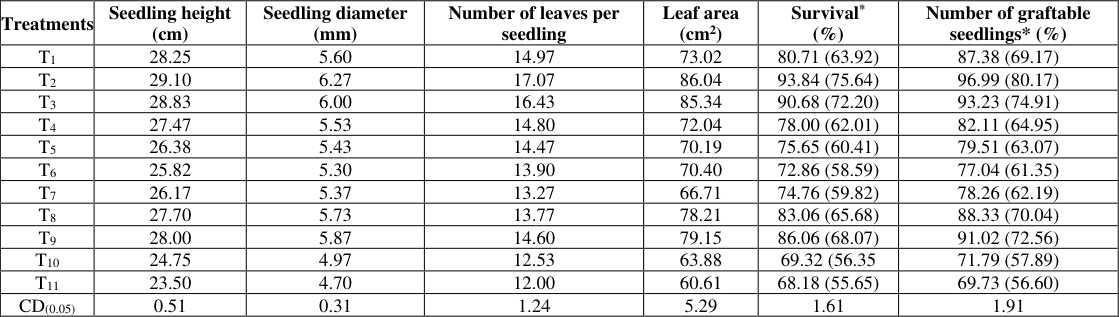 Table 1
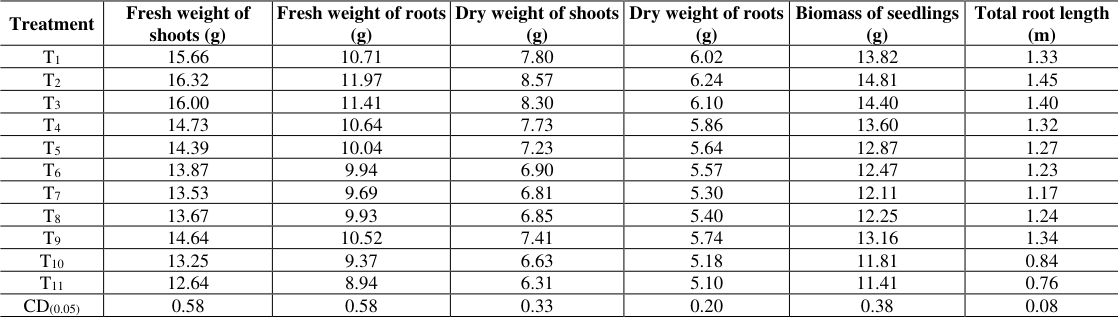 Table 2
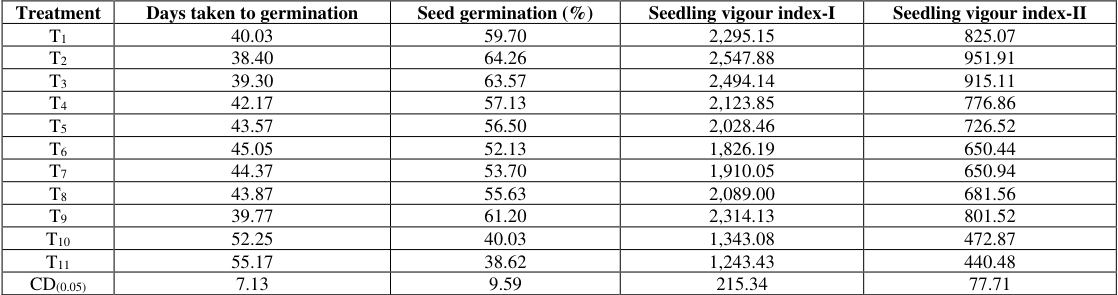 Table 3
Introduction
Amlook (Diospyros lotus L.) is commonly used as a rootstock for raising cultivated persimmon because of its high grafting affinity and strong resistance to drought and low winter temperatures. Persimmon, a member of the Ebenaceae family, is the most economic species of the genus Diospyros. In India, persimmon is locally called Japaniphal or the Japanese fruit and is grown on a semi-commercial scale in the states like Himachal Pradesh, Jammu and Kashmir, Uttarakhand and Tamil Nadu and as a scattered plantation in some parts of North East and Nilgiri Hills in South India. The total area under persimmon cultivation in Himachal Pradesh was 523 ha with a production of 877 MT (Anonymous 2019) [4] . Persimmon is commercially propagated by grafting the desired variety on seedling rootstocks. Hard seed coat affects seed germination through inhibiting and mechanically restricting the embryo growth (Taha 1987) [23] . Therefore, persimmon seeds are hard to germinate and need additional treatments to break dormancy. Such germinated seeds are used as rootstocks for grafting with suitable variety. Due to low germination of seeds, there is a need to enhance the germination through stratification and treatment of the seeds with certain chemicals i.e. seed priming so as to increase the production of quality seedlings of persimmon for rootstock purpose (Peche et al., 2016) [18] . During seed germination, embryonic gibberellic acid is released that triggers the weakness of seed cover by stimulating gene expression involved in cell expansion (Finkelstein et al., 2008) [7] . Gibberellins represent a natural regulator of the processes involved in seed germination to stimulate the production of hydrolytic enzymes i.e. α-amylase in the aleurone layer of germinating seed grains. Gibberellic acid has been reported to increase cell division (Sachs et al., 1959) [20] and cell enlargement (Haber and Leopold 1960; Haber et al., 1969) [9,10] . Gibberellins stimulate cell elongation by altering the rheological properties of the cell wall. As a consequence, the water potential of the cell wall is lowered allowing for water uptake and therefore an increase in cell volume (Jones and Kaufman 1983) [13] . Certain chemicals like thiourea and potassium nitrate are widely used to break seed dormanacy (Agrawal and Dadlani 1995) [3] . Thiourea overcomes certain types of dormancy, such as the seed-coat inhibiting effect of deep embryo-dormant seeds (Hartmann et al., 1997) [11] . Thiourea improve the germination as it has a strong neutralizing effect on inhibitors present in seed or may be due to variation in characteristic of thiourea (Hore and Sen 1994) [12] . Potassium nitrate has also been known as suitable chemical approach for promoting germination in various plant species and generally as a halo-priming agent for germination (Shim et al., 2008) [22] . The present investigation aimed to study the effect of seed priming with GA 3, Thiourea and KNO 3 on seed germination, seedling growth and quality parameters in amlook.
Material and Methods
The study was conducted at the Experimental Farm and laboratory of Department of Seed Science and Technology, Dr YS Parmar UHF, Nauni, Solan (H.P.) during the year 2019-20. In field trial, there were eleven different seed priming treatments viz. T 1 : Priming with GA 3 @ 250 ppm, T 2 : Priming with GA 3 @ 500 ppm, T 3 : Priming with GA 3 @ 750 ppm, T 4 : Priming with Thiourea @ 2500 ppm, T 5 : Priming with Thiourea @ 5000 ppm T 6 : Priming with Thiourea @ 7500 ppm, T 7 : Priming with KNO 3 @ 2500 ppm, T 8 : Priming with KNO 3 @ 5000 ppm, T 9 : Priming with KNO 3 @ 7500 ppm, T 10 : Hydro-priming, T 11 : No priming (control). Amlook seeds were stratified for 45 days in the alternate layers of sand in a wooden box and kept at the lower chamber of refrigerator during the month of January. The seeds were soaked in given concentrations of GA 3 , Thiourea and KNO 3 solutions for 24 hours and then shade dried for two hours before sowing in nursery beds. Seeds were sown in these beds in the first week of March, 2019. Observations on different parameters were performed as per the standard procedures. The height and diameter of the seedlings was measured with a measuring tape and digital Vernier Calipers, respectively, at the end of the season. For leaf area, five randomly selected leaves from each replication were measured with the help of Leaf Area Meter (LI-COR Model-3100). At the end of growing season, survival percentage of each treatment was recorded During December, seedlings having diameter of 5 mm or above were considered as graftable seedlings and was calculated on percentage basis. To determine the fresh weight of shoots and roots, after uprooting the seedlings at the end of season, shoot and root portion was separated and cut into small pieces. The fresh weight of shoot and root segments was then recorded separately on electronic balance. To record the dry weight, the root and shoot segments were dried at 65+5 °C in an oven until a constant weight was obtained. Total root length was measured with the help of root length scanner (Comair Root Length Scanner). Total biomass of seedlings was obtained by adding the dry weight of shoots and roots. For computation of germination percentage, the germination was recorded from the emergence of seedlings after sowing till the emergence has stopped.
Seedling vigour index-I and II was calculated (Abdul-Baki and Anderson 1973) [1] Seedling vigour index-I = Germination percentage (%) × Seedling length (cm) Seedling vigour index-II = Germination percentage (%) × Seedling dry weight (mg) Statistical analysis: Data generated from the experiment were subjected to statistical analysis with the standard procedure as suggested by Gomez and Gomez (1984) [8] . The level of significance was tested at 5% value of significance using computer software OP Stat.
Results and Discussion
Plant growth: The growth of amlook seedlings was significantly affected by the different seed priming treatments (Table 1 and2). The growth of seedlings with application of GA 3 was significantly higher as compared to control. The maximum seedling height (29.10 cm), seedling diameter (6.27 mm), number of leaves per seedlings (17.07), leaf area (86.04 cm 2 ), fresh weight of shoots and roots (16.32 g and 11.97 g), dry weight of shoots and roots (8.57 g and 6.24 g), biomass of seedlings (14.81 g) and total root length (1.45 m) was recorded in seeds primed with T 2 i.e., GA 3 @ 500 ppm. The highest survival percentage and number of graftable seedlings was also recorded when seeds were primed with GA 3 @ 500 ppm. Whereas, the minimum seedling height (23.50 cm), seedling diameter (4.70 mm), number of leaves per seedlings (12.00), leaf area (60.61 cm 2 ), fresh weight of shoots and roots (12.64 g and 8.94 g), dry weight of shoots and roots (6.31 g and 5.10 g), biomass of seedlings (11.41 g) and total root length (0.76 m) was observed with T 11 . The minimum survival percentage and number of graftable seedlings was also recorded in T 11 . The increase in height of seedling with application of GA 3 treatment might be due to early germination, cell division and quick cell elongation (Shanmugavalli et al. 2007) [21] . Our findings are in consonance with the investigations of Kumar and Shahnaz (2013) [14] , who also recorded the maximum seedling length with seed treatment of 500 ppm GA 3 , in an experiment on the effect of growth regulators in wild apricot. More number of leaves may also be due to more height of seedling and faster rate of cell multiplication and cell elongation as suggested by Agha et al. (1990) [2] in sour orange and citrange. The higher leaf area with the GA 3 treatments may be due to its contribution in cell division, elongation and multiplication (Mane et al. 2018) [15] . The increase in the seedling diameter by the treatment of gibberellins may be due to the fact that it caused the stimulation of cambium cells and immediate cell progeny by cell multiplication process (Dhankhar and Singh 1996) [6] . The increase in seedling height and diameter along with well developed root system in the seed treatment of GA 3 may be the possible reason for higher number of graftable seedlings. The highest survival rate of seedlings resulted from GA 3 treated seeds may be due to the earlier and faster root initiation, which resulted into vigorous and sturdy seedlings (Palepad et al. 2017) [17] .
| Treatments | Seedling height (cm) | Seedling diameter (mm) | Number of leaves per seedling | Leaf area (cm2) | Survival* (%) | Number of graftable seedlings* (%) |
|---|---|---|---|---|---|---|
| T1 | 28.25 | 5.60 | 14.97 | 73.02 | 80.71 (63.92) | 87.38 (69.17) |
| T2 | 29.10 | 6.27 | 17.07 | 86.04 | 93.84 (75.64) | 96.99 (80.17) |
| T3 | 28.83 | 6.00 | 16.43 | 85.34 | 90.68 (72.20) | 93.23 (74.91) |
| T4 | 27.47 | 5.53 | 14.80 | 72.04 | 78.00 (62.01) | 82.11 (64.95) |
| T5 | 26.38 | 5.43 | 14.47 | 70.19 | 75.65 (60.41) | 79.51 (63.07) |
| T6 | 25.82 | 5.30 | 13.90 | 70.40 | 72.86 (58.59) | 77.04 (61.35) |
| T7 | 26.17 | 5.37 | 13.27 | 66.71 | 74.76 (59.82) | 78.26 (62.19) |
| T8 | 27.70 | 5.73 | 13.77 | 78.21 | 83.06 (65.68) | 88.33 (70.04) |
| T9 | 28.00 | 5.87 | 14.60 | 79.15 | 86.06 (68.07) | 91.02 (72.56) |
| T10 | 24.75 | 4.97 | 12.53 | 63.88 | 69.32 (56.35 | 71.79 (57.89) |
| T11 | 23.50 | 4.70 | 12.00 | 60.61 | 68.18 (55.65) | 69.73 (56.60) |
| CD(0.05) | 0.51 | 0.31 | 1.24 | 5.29 | 1.61 | 1.91 |
Table text extracted from the original PDF; superscript letters are shown inline. The original table image is below.
View original table image
The increased fresh weight of shoots with GA 3 application may be due to the early and increased vegetative growth. The higher shoot dry weight with GA 3 priming treatment may be attributed to the overall seedling growth and an increased photosynthetic rate, ultimately lead to the overall assimilation and distribution of photosynthates in the seedlings. These findings are in agreement with the studies of Kumar and Shahnaz (2013) [14] , who observed the maximum dry weight of shoots with the seed treatment of GA 3 (500 ppm) in wild apricot.
The more fresh weight of roots by GA 3 treatment in our investigations may be attributed to the fact that gibberellins plays an important role in cell division, cell elongation, auxin metabolism, cell wall plasticity and cell membrane permeability ultimately leading to increased vegetative growth (Rai et al.
2018) [19] . The increase dry weight of roots with GA 3 treatment in our studies may be due to the fact that higher seedling growth synthesized more photosynthetic assimilates and translocated them to the roots. The increased vegetative growth due to the faster rate of cell division, cell elongation and more synthesis and accumulation of photosynthates could be the possible reason for the improved seedling biomass and increase in total root length with the seed priming treatment of GA 3 . The higher total root length in our findings through seed priming with GA 3 may be due to the fact that gibberellins increased the physiological processes in the plants, which is essential for cell division and cell enlargement (Vishwakarma 2013) [24] . taking 52.25 days and 55.17 days, respectively. The early germination with chemical priming may be attributed to their effect on enzymatic activities and various physiological processes inside the seeds. Lesser days taken to seed germination by GA 3 treatments might be due to the fact that gibberellins have antagonistic effect on germination inhibitors (Brian and Hemming 1958, Wareing and Foda 2006) [5,26] and endogenous gibberellins were reported to increase due to soaking (Mathur et al. 1971) [16] . The higher germination in amlook seed by different chemical priming treatments might be due to their effect to bring about a favourable internal condition (breaking of seed dormancy) for maximum germination. According to Wagh et al. (1998) [25] , the application of GA 3 , might have triggered the activity of specific enzymes that promoted early germination, such as α-amylase, which have brought an increase in availability of starch assimilation. The more vigorous seedlings with GA 3 treatment in our studies may be due to the earlier seed germination, more number of leaves, higher shoot and root length, which lead to more assimilation and distribution of food material to the whole plant (Brian and Hemming 1958) [5] .
Conclusion
Seed priming with GA 3 @ 500 ppm for 24 hours was found superior among all the treatments in terms of germination and growth parameters. Therefore, could be recommended for improving the germination and seedling growth in amlook.
Figures and tables from the paper
| Treatment | Days taken to germination | Seed germination (%) | Seedling vigour index-I | Seedling vigour index-II |
|---|---|---|---|---|
| T1 | 40.03 | 59.70 | 2,295.15 | 825.07 |
| T2 | 38.40 | 64.26 | 2,547.88 | 951.91 |
| T3 | 39.30 | 63.57 | 2,494.14 | 915.11 |
| T4 | 42.17 | 57.13 | 2,123.85 | 776.86 |
| T5 | 43.57 | 56.50 | 2,028.46 | 726.52 |
| T6 | 45.05 | 52.13 | 1,826.19 | 650.44 |
| T7 | 44.37 | 53.70 | 1,910.05 | 650.94 |
| T8 | 43.87 | 55.63 | 2,089.00 | 681.56 |
| T9 | 39.77 | 61.20 | 2,314.13 | 801.52 |
| T10 | 52.25 | 40.03 | 1,343.08 | 472.87 |
| T11 | 55.17 | 38.62 | 1,243.43 | 440.48 |
| CD(0.05) | 7.13 | 9.59 | 215.34 | 77.71 |
Table text extracted from the original PDF; superscript letters are shown inline. The original table image is below.
View original table image
References
26 in the original paper- Abdul-Baki AA, Anderson JE. Vigour determination in soybean seed by multiple criteria. Crop Sci. 1973;13(6):630-635.
- Agha JT, Nasir RF, Mohmad ARS. Effect of stratification and GA3 on seed germination of sour orange and citrange rootstock. Mesopotamian J Agric. 1990;22(2):35-43.
- Agrawal PK, Dadlani M. Techniques in Seed Science and Technology. 2nd ed. New Delhi: South Asian Publishers, International Book Company Absecon Highlands; 1995. p. 109-113.
- Anonymous. Horticulture development in Himachal Pradesh at a glance. 2019. Available from: hpagrisnet.gov.in
- Brian PW, Hemming HG. Complementary action of gibberellic acid and auxin in pea internode extension. Ann Bot. 1958;22(85):1-17.
- Dhankhar GS, Singh M. Seed germination and seedling growth in aonla (Phyllanthus emblica L.) as influenced by gibberellic acid and thiourea. Crop Res. 1996;12(3):363366.
- Finkelstein R, Reeves W, Ariizumi T, Steber C. Molecular aspects of seed dormancy. Annu Rev Plant Biol. 2008;59:387-415.
- Gomez KA, Gomez AA. Statistical Procedures for Agricultural Research. New York: USA; 1984.
- Haber AH, Leopold HJ. Effect of gibberellins on gamma irradiated wheat. Am J Bot. 1960;47(2):140-144.
- Haber AH, Ford DE, Perdue U. Action of GA and abscisic acid on lettuce seed germination without acting as nucleus DNA synthesis. Plant Physiol. 1969;44(3):463-467.
- Hartmann HT, Kester DE, Davies FJr, Geneve RL. Plant Propagation: Principles and Practices. 6th ed. New Jersey: Prentice Hall; 1997. p. 770.
- Hore JK, Sen SK. Role of pre-sowing seed treatment on germination, seedling growth, and longevity of ber (Zizyphus mauritiana) seeds. Indian J Agric Res. 1994;28(4):285-289.
- Jones RL, Kaufman PB. Role of gibberellins in plant cell elongation. Crit Rev Plant Sci. 1983;1(1):23-47.
- Kumar A, Shahnaz E. Effect of growth regulating substances on stratification of wild apricot (Prunus armeniaca L.) kernels under Kashmir conditions. Indian J Agric Sci. 2013;83(11):1253-1256.
- Mane SB, Naglot UM, Parse RN. Effect of different presowing treatments on shoot growth of custard apple (Annona squamosa L.). J Pharm Phytochem. 2018;7(5):1945-1947.
- Mathur DD, Couvillon GA, Vines HM, Hendershott CH. Stratification effects on endogenous gibberellic acid (GA) in peach seeds. HortScience. 1971;6(6):538-539.
- Palepad KB, Bharad SG, Bansode GS. Effect of seed treatments on germination, seedling vigour and growth rate of custard apple (Annona squamosa). J Pharm Phytochem. 2017;6(5):20-23.
- Peche PM, Barbosa CMA, Pio R, Sousa PHA, Valle MH. Seed stratification, gibberellic acid and temperature in obtaining rootstock in the persimmon. Rev Cienc Agron. 2016;47(2):387-392.
- Rai R, Samir M, Srivastava R, Uniyal S. Improving seed germination and seedling traits by pre-sowing treatments in khirni (Manilkara hexandra). Bull Environ Pharmacol Life Sci. 2018;7(10):77-81.
- Sachs KM, Bretz C, Lang A. Cell division and gibberellic acid. Exp Cell Rev. 1959;230-244.
- Shanmugavalli M, Ranganayaki PR, Menaka C. Seed dormancy and germination improvement treatments in mandarian. SAT e-journal.icrisat.org. 2007;13-22.
- Shim SI, Moon JC, Jang CS, Raymer P, Kim W. Effect of potassium nitrate priming on seed germination of seashore paspalum. HortScience. 2008;43(7):2259-2262.
- Taha FA. Effect of plant growth regulators on seed germination and seedling characters of persimmon rootstock (Diospyros kaki). Egypt J Hortic. 1987;14:15-20.
- Vishwakarma D. Effect of growing media and GA3 on seed germination, growth and survival of acid lime (Citrus aurantifolia Swingle.) var. Kagzi. M. Sc. Thesis. Department of Horticulture, College of Agriculture, Jawaharlal Nehru Krishi Vishwa Vidyalaya, Jabalpur, M.P.; 2013.
- Wagh AP, Choudhary MH, Kulwal LV, Jadhav BJ, Joshi PS. Effect of seed treatment on germination of seed and initial growth of aonla seedling in polybag. PKV Res J. 1998;22(2):176-177.
- Wareing PF, Foda HA. Growth inhibitors and dormancy in Xanthium seed. Physiol Plant. 2006;10(2):266-280.