
Research article · 2019 · Full text
International Journal of Geography Geology and EnvironmentThe rocks of the geological ages
Volume 1(1) · Pages 66–71
Research areasGeochemistry and Geologic MappingHydrocarbon exploration and reservoir analysisGeological Studies and Exploration
Abstract
Author-writtenMany geological features of rocks have been identified. The rock geology is a vast subject, and provides an extensive information and knowledge of millions of years of rock formation. The review paper investigates the formation of rock strata, their composition, texture, structure, the age of fossils and rocks, Geological Time Scale and Rock Cycle by exploring and researching the data available on the rocks of several geological ages.
Summary
Source-checkedPlain-language reading of the full paper, prepared with AI and checked against the text. Each point links to the authors' own words.
Why it matters
- Rock geology is a broad field that offers extensive knowledge regarding the formation of rocks over millions of years. View evidence ↗
- To determine the origin of a rock, geologists rely on two critical characteristics: its texture and mineral composition. View evidence ↗
- Naturally occurring rocks are composed of a combination of minerals, rock fragments, and organic matter. View evidence ↗
The question
- This review aims to investigate the Rock Cycle, the Geological Time Scale, the age of rocks and fossils, and the composition, structure, and formation of rock strata. View evidence ↗
What they did
- The authors conducted this study by researching and exploring existing data regarding rocks from various geological ages. View evidence ↗
- Geologists use relative dating techniques to establish relationships between rocks found in different geographical regions. View evidence ↗
- The biostratigraphic correlation method relates rocks from different regions based on the collective assemblages of fossils they contain. View evidence ↗
What they found
- The Earth's rock layers, measured chronologically through eons such as the Hadean, Archean, and Proterozoic, formed approximately 4.58 billion years ago. View evidence ↗
- Global data indicates that the Cretaceous era began approximately 148 million years ago and ended 66 million years ago. View evidence ↗
- Updated dating of Rhyolite suggests the Cambrian-Precambrian boundary occurred around 554 million years ago, correcting previous estimates of 580 million years ago. View evidence ↗
- The Mississippian Era is identified as a geological interval occurring approximately 360 million years ago. View evidence ↗
- Igneous rocks are formed through a specific chronological sequence: melting, followed by cooling, and then crystallization. View evidence ↗
- Metamorphic rocks form when mineral composition and rock texture change due to exposure to various pressures, temperatures, or blistering fluids. View evidence ↗
- The formation of sedimentary rocks involves a sequence of weathering, erosion, deposition, burial, and finally lithification. View evidence ↗
- Volcanic obsidian is an igneous rock with a disordered internal atomic arrangement that shows no crystal formation regardless of magnification. View evidence ↗
What it means
- The authors conclude that limestones (calcium carbonate rocks) are common sedimentary rocks that provide significant data on ancient climates and environmental deposition. View evidence ↗
- The authors state that analyzing the crystal formation and chemical composition of igneous rocks allows for the evaluation of past volcanic locations and intrusive actions at plate boundaries. View evidence ↗
Visual summary
1 visualsIllustrations explain the paper; they do not show study data.
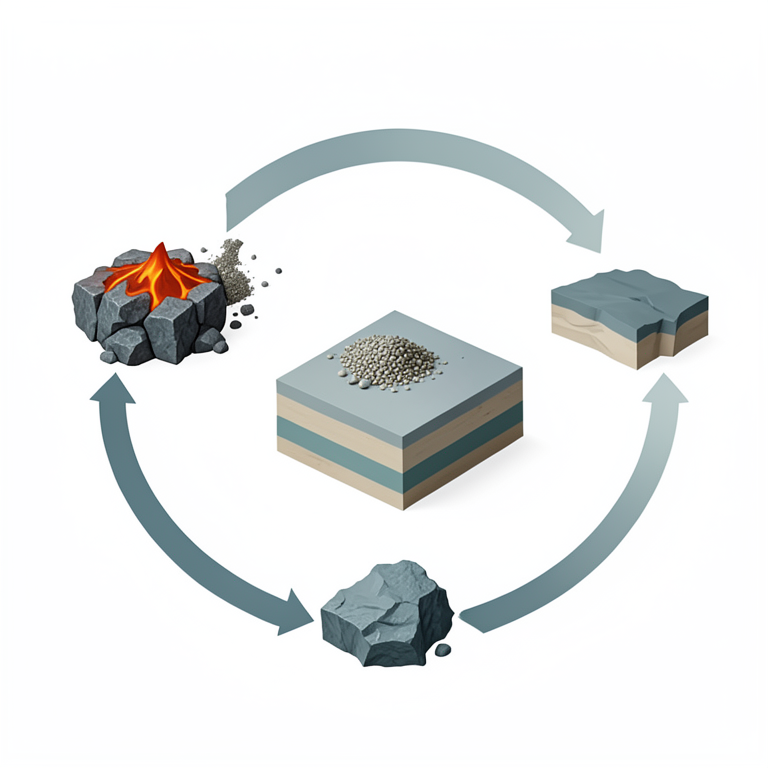
The Rock Cycle Process
AI-generated conceptual illustration (igneous, sedimentary, and metamorphic rocks). It explains the idea and does not show study data.
View source evidence ↗Figures & tables
From the original paper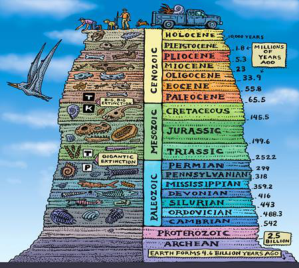 Figure 1
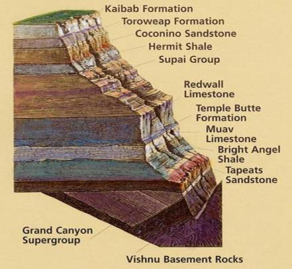 Figure 1
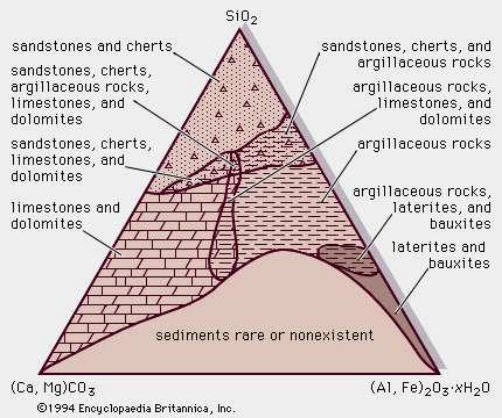 Figure 2
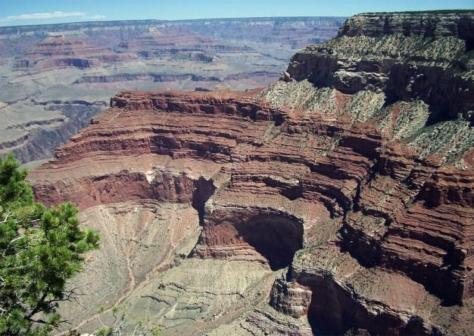 Figure 3
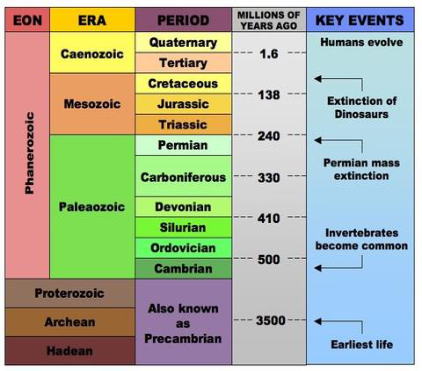 Figure 5
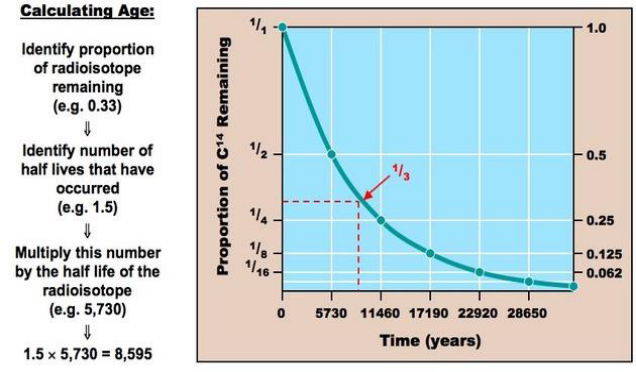 Figure 5
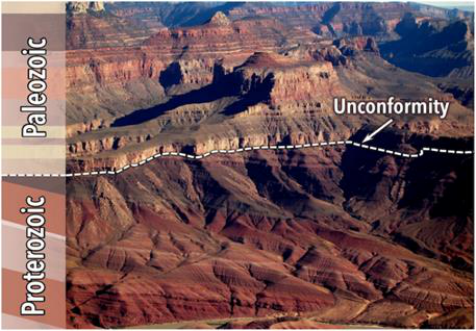 Figure 4
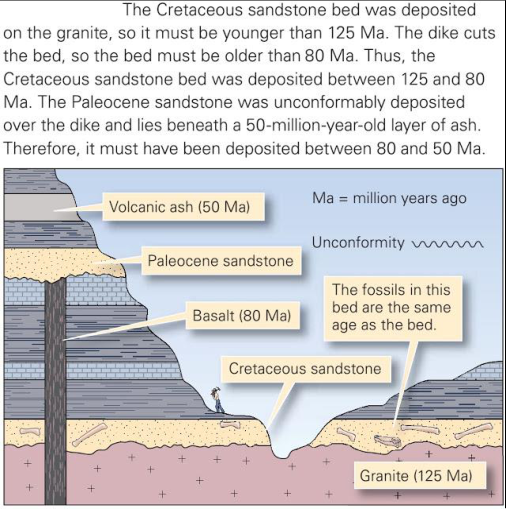 Figure 6
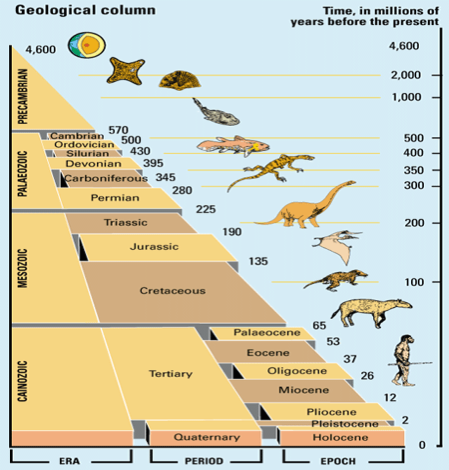 Figure 7
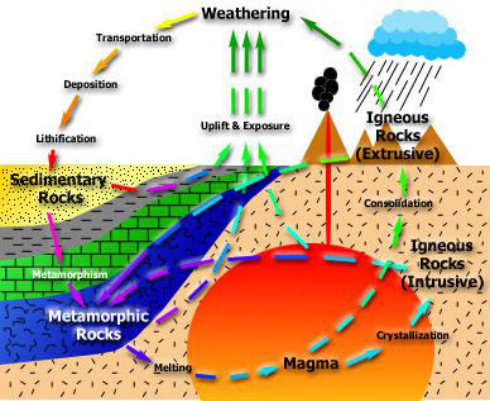 Figure 8
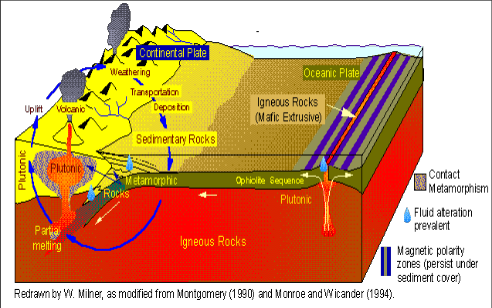 Figure 9
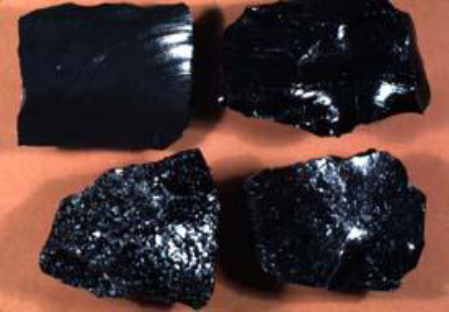 Figure 9
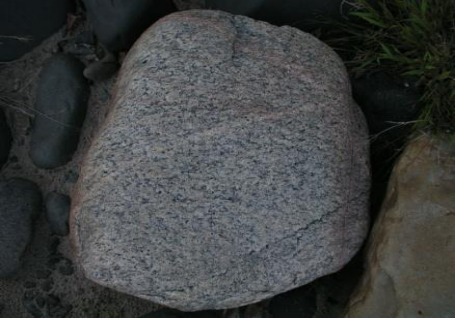 Figure 10
 Figure 11
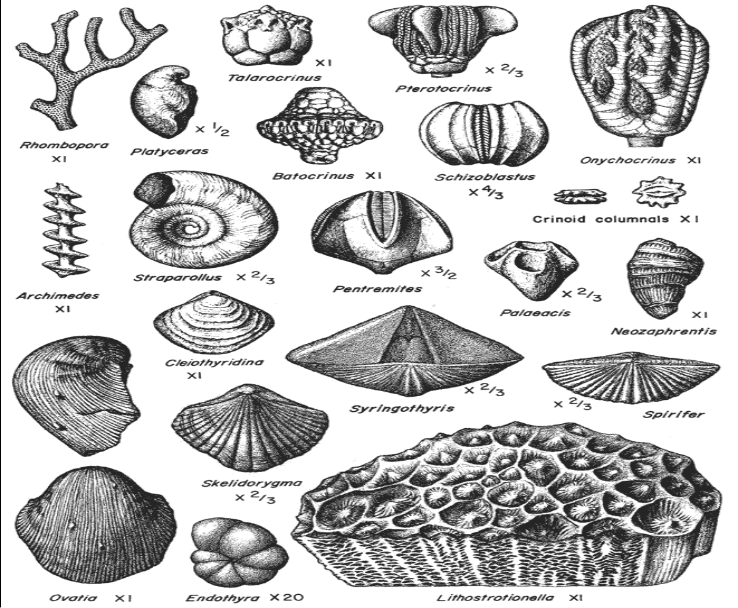 Figure 12
Introduction Rock Identification
In many cases, how the rocks are formed can be visually observed. Hence, it becomes essential to depend on a rock distinctive feature to infer its origin. The mineral composition and texture are two vital characteristics to help confirm the rock origin.
The Composition suggests mineral grains, color, crystals, chemical constituents, fragments of fossils of rocks that directly to its composition.
Texture suggests shapes, sizes, grains, component minerals and rock's collective arrangement. It is a skilled task to identify and classify rocks requiring a broad geological understanding and substantial experience (HK Geology, 2019) [5] .
The Rocks
The naturally occurring Rocks are summative combination of organic matters, rock fragments and minerals. The rock composition, shape, appearance, and arrangement of its grains, crystals, texture are specific characteristics to reveal its formation process, and based on that, rocks are classified as Igneous, Metamorphic and Sedimentary (HK Geology, 2019) [5] .
Geological history of Rocks
The Earth's geological history explains the prime events in the past on the basis of the geologic time scale, a chronological measurement system of planet's Stratigraphy, the rock strata and stratification, layering, primarily the layered volcanic rocks and sedimentary (Duncan Lake, 2019) [3] . Index of fossils is widely distributed and are helpful to explain the relative ages of every rock layer in which they occurred. Layers of Rock in the Grand Canyon grow deeper, when the older rocks are identified as Vishnu Basement Rocks. The newly formed rocks at the peak of the canyon called Kiabab Formation, and this formation demonstrate the nature's law of superposition (Ray Troll, 2019) [10] .
Fig 1:
Grand Canyon Formation, Every layer is younger than the rock beneath it. The geologic ages of rocks in all their glory and splendor, older rock are at the bottom (Ray Troll, 2019; Duncan Lake, 2019) [10,3] .
After Precambrian Time shows the geologic time scale to understand the fossils and rocks, relative dating and timeline as eras, periods, and epochs, which are further divided into three eons as, the Hadean, Archean, Proterozoic, in a chronological order of measurement system of the Earth's rock layers formed around 4.58 billion years ago (Duncan Lake, 2019) [3] . The Earth's process of rock formation helps measure geologic time of mountain building, erosion, and glacier movements, the way environmental conditions made changes.
Rocks and Minerals are the Geosphere crucial building blocks. Even though there exist more than 3,000 mineral species, only a small number of them, like amphibole, quartz, mica, feldspar, Olivine Pyroxene, calcite, appears normally as rock-structuring minerals. Over geological period of time, rocks get transformed from one category to another variety, what is known as the Rock Cycle. Hence, the rock origin can be traced after a careful evaluation of its internal structure, features, composition, texture that shape the basis of rock classification and identification (HK Geology, 2019) [5] .
Global Geological Framework of rocks
Sedimentary rocks areformed near the surface of Earth by sediment or Detrital rocks Lithification and accumulation due to precipitation from normal surface temperatures of chemical rocks. All the Geologic materials including rocks, undergo a cycle chain due to weathering through several forms (Keith Crook, 2010) [6] .
Fig 2:
Sedimentary rock, Chemical composition (Keith Crook, 2010) [6] Sedimentary rock is very common rock cover a meager earth crustconstituent, dominated by metamorphic and igneous rocks, and produced due to preexisting rock weathering and the subsequent deposition, transportation and weathering effects, by chemical decomposition and physical disintegration that occur because of the atmospheric effects rainfall and hydrosphere. This produces loose detritus of rock components and soil dissolved in groundwater. Erosion and weathering process dissolved components, to be left as sediment. This is due to material constituent deposition of grains, moving water bodies and winds, and also glacial ice melting, from the slumping and sliding down slope of soil masses and rock by gravity, and by dissolving product precipitation, weathering under low pressure and temperature conditions that prevail near the Earth's surface (Keith Crook, 2010) [6] .
Objectives
1. To explore the steps needed to generate a scientific inquiry on the rocks of the geological ages 2. To apply technology to analyze data appropriately and communicate the results of scientific inquiries 3. History of Dating Rocks, Fossilsusing Geological Methods TED-Total-evidence dating permits evolutionary biologists to integrate several dating information to unify statistical analysis. Further, TED requires a specific evidence of character coding to specify fossil affinity. In such cases, Geologists deploy techniques of relative age related dating to associate and show a relationship of rocks between various regions. The easiest technique is to link the type of rock, its Lithology, known as lithostratigraphy connect. By such methods, particular type of rocks are obtained and they are linked with respect to their regions. In case a rock sequence at one specific site is of a sandstone structure overlain by means of limestone element, then a shale unit, along with the precise rock sequence, limestone, sandstone, shale transpire at the adjoining site, while Lithostratigraphic association indicates the assumption of rocks at the either sites belong to the identical rocks (Karla Panchuk, 2018) [7] .
There are several sequences of Earth's evolution to determine rock's relative ages. The Biostratigraphic correlation technique is based on fossil contents, uses fossilsof various organisms and assemblages that occur collectively to relate rocks of different regions. Also, Chronostratigraphic correlation technique relates to rocks that are Diachronous, that means, the formation of all the sedimentary rock is of similar nature, but differs in age, and place deposited. Hence, the tracesof rock change appreciably (Karla Panchuk, 2018) [7] .
If the lake level increases, the water, mud on the deeper side will gradually migrate towards the land side and wrap to encompass certain shallow parts of water sands. The entire sequence provides a clear Walther's Lawexample, which specifies that the sedimentary rocks we observe on top of one another in the rock format are in reality the formation of adjacent layers above each other at the time frame and sequence of deposition. To correlate and specify the units of rock in the course of time, there is a need to target indicator beds, which formed instantaneously (Karla Panchuk, 2018) [7] .
Determining the age of fossils and rocks by Relative dating
Using radiometric and relative methods of dating, geologists can appropriately answer the related questions as to find the fossil age; by understanding the interconnected fossil species, age and that can helpscientists and geologists to integrate them to obtain the evolutionary chronicles of anyorganism group. This brings forth three usual sequences, specifically to understand the age of rocks and fossil. 1. The fossil or rock relative age can be assessed. Such relative dating drive geological events to put them in chronological sequence without the need of a particular assigned numerical age for every event. This kind of relative dating can help establish the age of fossils and rocks, which are constantly exposed covering the Grand Canyon walls as shown in the below Figure . There are numerous horizontal layers, known as strata, and its study is known as Stratigraphy. By applying certain basic principles, the relative age of any rock can be worked out (Peppe & Deino, 2013) [19] . The Grand Canyon Angular Unconformity of rock orientations (Karla Panchuk, 2018) [7] 1. It is also feasible to assess the numerical age of fossils, rocks, earth, minerals and materials. Numerical age helps to estimate the geological event date and can occasionally disclose and divulge precisely, in which era and time the fossil species and rocks existed. 2. The magnetic property of rocks can be utilized to assess and obtain estimates the fossil site age. The method employs the Earth orientation of magnetic field, which has considerably distorted and altered through time, and that determinesthe rock and fossil's age (Peppe & Deino, 2013) [19] .
The Unconformity
It is a process interruption of sediment deposition, and it recognizes the Unconformities, which are crucial to understanding the sedimentary sequence, time relationship. An Unconformity is clearly noticeable in the Grand Canyon as shown as dashed white line in Figure 4, above the tilted Proterozoic rocks, eroded to form a flat surface before the deposition of the later formed Paleozoic rocks (Karla Panchuk, 2018) [7] .
The Geological Time Scale
Geologists have been searching the world to identify different localities and settings where they can be familiar with the crosscutting lineage of igneous datable rocks with sedimentary rocks and otherwise, to categorize datable layers of volcanic rocks interlinked and inter-bedded to form sedimentary rocks. By Isotopically distinct, having chemical elements of rocks with same atomic numbers, and identical nuclear protons, but dissimilar atomic mass, igneous dating of rocks, that can provide numerical age by ascertaining the boundaries of all geologic stages. For instance, the global work shows the Cretaceous era started around 148 million years back and finished after 66 million years back. Hence, the sandstone of Cretaceous bed in the initial below figure was accumulated in the middle period of the Cretaceous, and not during the beginning or final stages
Structural placements and Geology of Rocks
Faults and Folds Formation of rocks and fossils are the eventual results of tectonic activityplates and of those geological structures, which result from the rock response to tectonic strains induced due to plate change and movements.
A fault can be observed as a break in many rocks, which form the earth's crust. Structural geologyis the threedimensional rock unit and strata distribution showing its deformation history and it relates to the analysis and description of rock structural features ranging from the macroscopic and microscopicscales. Such study knowledge helps to understand the deformation chronicles of the rock region to be interpreted and deciphered. By seismic monitoring, combining with earthquake results and assessment, the rock strata deformation record can provide the Seismotectonic potential hazards in that region (HK Geology, 2019) [5] .
Geological Time Scale
Rocks observed near the surface of the Earth are generally hard and they perform to show the brittle behavior. When these brittle state of rocks becomes a subject matter of tectonic forces, they can crack and break along the fault line. The fracturing of rock creates an earthquake. All the boundaries of Plate remain as the most frequent earthquake site, because the formation of rocks in these regions isfrequently subjected to the maximum tectonic forces. In the middle or beyond plates and plate boundaries, formation of an earthquake is not very common (HK Geology, 2019) [5] . The numerical age term is favored number chosen more than absolute age because it helps discover the new data that can result in numbers and that is why to define the boundaries of change of periods. In reality, near about 1998, new dates on Rhyolite, the volcanic rock, igneous, of Felsic composition, silica-rich and ash layers below and above the boundary of Cambrian-Precambrian indicates that the real boundary transpired around 554 million years back, otherwise previously stated by less definite and assured studies, which positioned the boundary at 580 million years back. The above figure indicates the prevailing acceptable numerical ages of those eras and periods in the geologic structure of the column as of 2019. This dated structure of the column is known as Geologic Time Scale. The conceptual model known as Rock Cycle gives an explanation of how the geological processes perform on the three major rock formations: Igneous, Metamorphic and Sedimentary and they also alter one type of rock to another in the era of geological time. The Plate tectonics is the theory to explain the earth's crust structure and several related phenomena resulting out of the rigid and strong Lithospheric plate interaction, which move gradually over the primary principal mantle. The Plate tectonics act as the prime driving force to structure the Rock Cycle and to understand the behavior of the Rock Cycle, it becomes necessary to understand the process of rock-formation. The forming process of Igneous rock involves melting process, cooling and thereafter, crystallization in that chronological order; The forming process of Metamorphic rock involves rock texture changes and composition of minerals under various temperatures, pressures or blistering fluid condition; The forming process of Sedimentary rockinvolves weathering process, erosion condition, dispersed deposition, underneath burial and finally Lithification. The Rock Cycle commences through any of the three kinds of rocks. It becomes crucial to understand that all the rocks may not necessarily go through the processes involved in the Rock Cycle starting from igneous, towards sedimentary, and thereafter, towards metamorphic, going back to the formation of igneous rock once more. For instance, the igneous rock also can turn out to be a metamorphic rock avoiding going towards the surface of the Earth, and that also, without turning to become a sedimentary rock. Further, any kind of rock can turn out to be another new rock of similar kind (Lou Maher & Osborne, 2014) [8] . [8] Fig 9 : The volcanic igneous rocks are eroded, weathered and transported by wind and water to be deposited as sediments (Lou Maher & Osborne, 2014) [8]
Minerals and Rocks
Almost all forms of rocks are composed of mineral configurations, naturally constructed, crystalline, inorganic substances with distinct chemical composition. These crystalline matters are recognized by the systematically ordered atom compositions that construct them. The mineral types that effect from a specific magma are based on the magma chemical composition, pressures and temperature magma experiences when it cools. The crystal of a specific mineral depends highly on how slowly and quickly magma cools.
The process of slow cooling permits enough time for atoms to spread and into visible, largercrystals. Cooling near the surface area requires minimum time for the atoms to structure into larger crystals. Therefore, several rocks of volcanic igneous developvery small crystals, which can be observed with a microscope or magnifying glass. Magmas erupted and discharged into the space have no time for crystal formation because they chill down very quickly to form glassy materials instead. The volcanic obsidian igneous rockhas aninternal atomic disordered arrangement, reveals no crystal formation at any magnification level. Obsidian generates a similar chemical composition like different volcanic rocks with a clear crystalline structure. Their texture difference is due to parent magma cooling rates (Lou Maher & Osborne, 2014) [8] .
The series of Bowen's Reaction is given by typical crystallize minerals of the magma body with a well founded sequence. Minerals, with high melting temperatures normally crystallize prior to those of less melting temperatures, even though the real procedure is fairly complicated (Lou Maher & Osborne, 2014) [8] .
Conclusion and discussion
Calcium Carbonate Rocks, whether originally inorganic or organicare generically known as limestones, which are very common sedimentary rocks, which provide enormous information regarding the environmental deposition and ancient climate. They areclassified as inorganic, biochemical depending on the precipitation happened by inorganically or by organism. Understanding and learning various kinds of Rocks and minerals can provide satisfying experience, while Geoscientists are specifically inclined to typically learn and garner from rocks conditions and formation. Similarly, the mineral fabrics observed in metamorphic rocks are applied to distinguish previous deformation stages of various periods, linked to plate movements. The chemical composition of Igneous rocks and their crystal formation help to evaluate the previous volcanic locations and other intrusive igneous actions of the volcanic activities happened along the boundary of the divergent and convergentplate (Lou Maher & Osborne, 2014) [8] .
Figures and tables from the paper
References
10 in the original paper- Atherton E, Collinson C, Lineback JA. Mississippian System, in H.B. Willman et al., Handbook of Illinois Stratigraphy: Illinois State Geological Survey Bulletin. 1975; 95:123-163.
- Howard RH. Hydrocarbon reservoir distribution in the Illinois Basin, in Leighton MW, Kolata DR, Oltz DF, Eidel JJ, editors, Interior Cratonic Basins: American Association of Petroleum Geologists Memoir. 1991; 51:299-327.
- Duncan Lake. Geologic Timeline, Formation of the Grand Canyon, 2019. http://dlms6thgradescience.weebly.com/geologictimelinerelative-rock-layers.html
- Geological time scale. Biology Resources, 2019. http://www.vce.bioninja.com.au/aos-4-change-overtime/evolution/geological-time-scale.html
- Geology HK. Hong Kong Geology, Minerals and Rocks -Geological Building Blocks, Hong Kong Geological Survey, Civil Engineering and Development Department, 2019. https://hkss.cedd.gov.hk/hkss/eng/education/GS/eng/hk g/chapter1.htm?tab=2
- Keith AW, Crook. Sedimentary rock, Earth sciences, 2010. https://www.britannica.com/science/sedimentaryrock
- Karla Panchuk. Relative Dating Principals and Methods, Physical Geology, 2018. https://openpress.usask.ca/physicalgeology/chapter/192-relative-dating-methods-2/
- Lou Maher, Thomas F, Osborne. Rocks and the Rock Cycle, 2014. http://geoscience.wisc.edu/~chuck/Classes/Mtn_and_Pl ates/rock_cycle.html
- Peppe DJ, Deino AL. Dating Rocks and Fossils Using Geologic Methods. Nature Education Knowledge. 2013; 4(10):1.
- Ray Troll. Ages of rock fine art posters, The geologic ages in all their splendor and glory, 2019. https://www.trollart.com/product/ages-of-rock-artposter