
Research article · 2019 · Full text
International Journal of Statistics and Applied MathematicsCombined effect of surface tension and hydromagnetics on the Kelvin-Helmholtz instability of superposed viscous fluids saturating porous medium
Volume 4(5) · Pages 134–139
Research areasNavier-Stokes equation solutionsSolar and Space Plasma DynamicsFluid Dynamics and Turbulent Flows
Abstract
Author-writtenThis paper deals with the effects of square of the Alfve n velocity, surface tension and the medium porosity on the instability of superposed viscous fluids in hydromagnetics saturating porous medium. Graphs are plotted by giving permissible numerical value to the non-dimensional parameters. The growth rate of the perturbations decreases slightly with the increase in medium porosity has very slight stabilizing effect on the system. The square of Alfve n velocity in imaginary growth rates of the perturbations the Kelvin-Helmholtz instability has stabilizing effect on the system. Surface tension has large enough stabilizing effect on the system. The effect of surface tension dissipates the energy of any disturbance more than that carried out by the magnetic field. In other words, the role of the square of Alfve n velocity can help the surface tension to find more stability on the Kelvin-Helmholtz instability problem, while the surface tension plays the fundamental role to generate the complete stability.
Summary
Source-checkedPlain-language reading of the full paper, prepared with AI and checked against the text. Each point links to the authors' own words.
Why it matters
- The Kelvin-Helmholtz instability is used to study various atmospheric phenomena, including stratospheric gravity wave responses and the extent of turbulence caused by gravity wave breaking. View evidence ↗
- In the solar atmosphere, this instability contributes to energy transfer mechanisms and the creation of solar activities through magnetic field interactions and reconnection processes. View evidence ↗
The question
- The study aims to numerically investigate how surface tension affects the instability of three-dimensional, electrically conducting, viscous fluids that are streaming and superposed within a porous medium. View evidence ↗
What they did
- The researchers used Mathematica version-5.2 to perform numerical simulations of the fluid system. View evidence ↗
- The model assumes an incompressible, infinitely conducting viscous fluid streaming horizontally through a homogeneous and isotropic porous medium characterized by porosity and permeability. View evidence ↗
- The system is subjected to a uniform horizontal magnetic field and the acceleration of gravity. View evidence ↗
What they found
- Increasing the medium porosity (𝜀) leads to a slight decrease in the growth rate of perturbations, indicating that porosity has a very small stabilizing effect. View evidence ↗
- At a square Alfvén velocity of 100, the maximum wavenumber (𝑘𝑚𝑎𝑥) is 1.2, suggesting that the magnetic field has a complete stabilizing effect on the system. View evidence ↗
- The combination of a magnetic field and surface tension is highly effective at suppressing instability, with surface tension providing a significant stabilizing effect. View evidence ↗
What it means
- The authors conclude that surface tension is the primary driver for achieving complete stability because it dissipates disturbance energy more effectively than the magnetic field. View evidence ↗
- The authors note that a full understanding of the instability's role in reconnection requires the study of fully three-dimensional flows. View evidence ↗
Visual summary
1 visualsIllustrations explain the paper; they do not show study data.
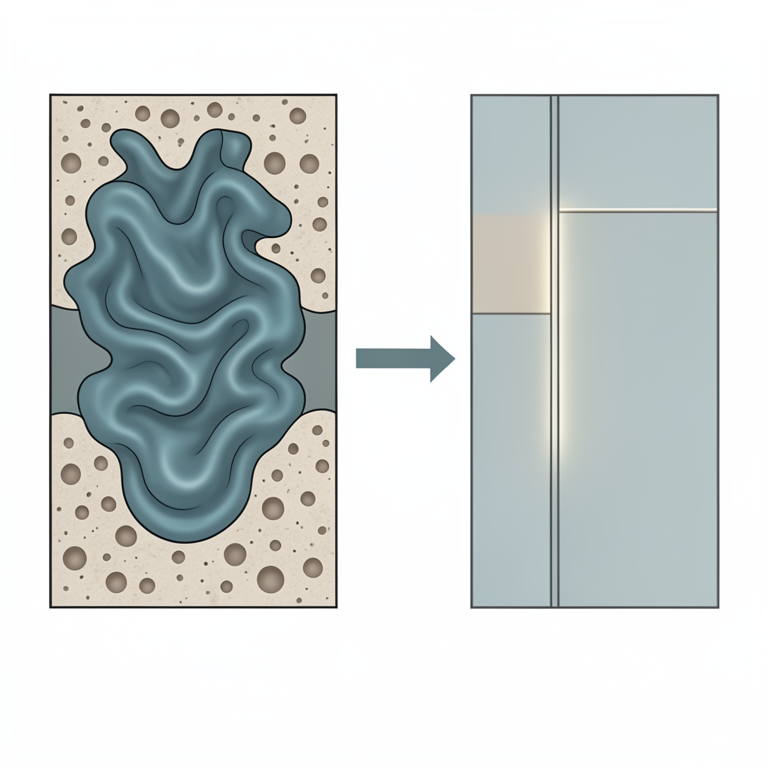
Comparison of Stabilizing Effects
AI-generated conceptual illustration (two superposed viscous fluids saturating a porous medium). It explains the idea and does not show study data.
View source evidence ↗Figures & tables
From the original paper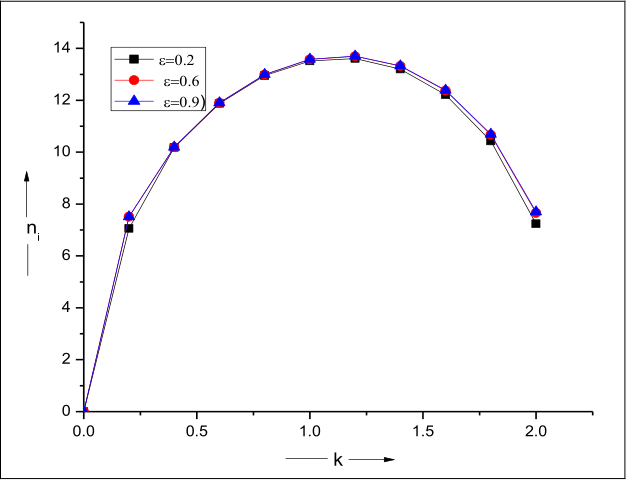 Figure 1
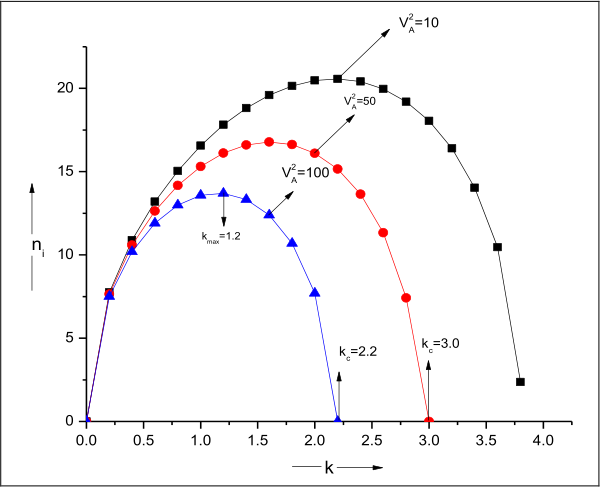 Figure 2
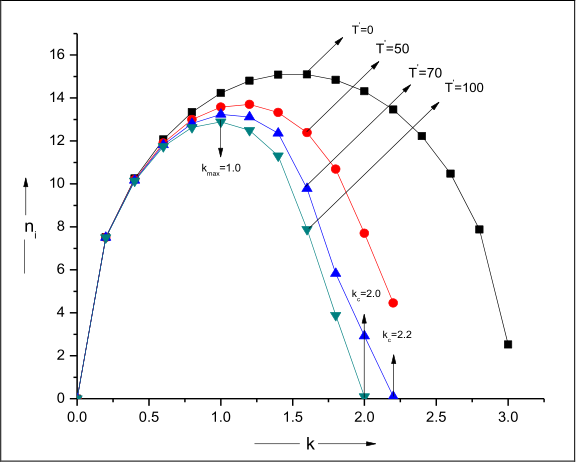 Figure 3
Introduction
The instability of the plane interface separating two uniform superposed streaming fluids under varying assumptions of hydrodynamics and hydromagnetics in the presence of surface tension has been discussed in the monograph of Chandrasekhar [1] . There are diverse applications of the Kelvin-Helmholtz instability like to examine the horizontal and temporal variability of the out-of-cloud vertical velocity, the stratospheric gravity wave response to the convection to determine the vertical and spatial extent of turbulence due to gravity wave breaking, to provide a more realistic evolving background flow and convective initiation. Alterman [2] has studied the effect of surface tension to the Kelvin-Helmholtz instability of two rotating fluids. Reid [3] studied the effect of surface tension and viscosity on the stability of two superposed fluids. Bellman and Pennington [4] further investigated in detail illustrating the combined effects of viscosity and surface tension. Sharma and Kumari [5] have studied hydromagnetic instability of streaming fluids in porous medium theoretically including surface tension and have found that the magnetic field and surface tension have stabilizing effect and completely suppress the Kelvin-Helmholtz instability for small wavelengths. The medium porosity reduces the stability range given in terms of a difference in streaming velocities and the Alfv𝑒ń velocity. Some solar activities in the solar atmosphere are created by Kelvin-Helmholtz instability in the presence of magnetic field and subsequent reconnection processes and Kelvin-Helmholtz instability plays an important role in energy transfer mechanism in the solar atmosphere. The effect of the Kelvin-Helmholtz instability is shown to convert shear flow in compression flow that derives reconnection. Khalil Elcoot [6] has studied the new analytical approximation forms for nonlinear instability of electric porous media. Asthana et al. [7] have been studied Kelvin-Helmholtz instability of two viscous fluids in porous medium for two dimensional flow. Rudraiah et al. [8] have studied the study of surface instability of Kelvin-Helmholtz type in a fluid layer bounded above by a porous layer and below by a rigid surface. The effect of porosity in astrophysical context and the plasma outflow occur in regions which are created by the Kelvin-Helmholtz vortices.
We believe that the mechanism presented here opens promising possibilities of further investigation. However a clear understanding of the role of the Kelvin-Helmholtz instability in reconnection requires fully three-dimensional flows. Keeping in mind the fact that effect of surface tension in streaming and superposed fluids is of scientific importance mentioned above, the present paper is therefore to investigate the effects of the surface tension on the instability of electrically conducting, streaming superposed viscous three dimensional fluids saturating porous medium numerically using the software Mathematica version-5.2.
Materials and Methods
The initial state whose stability we wish to examine is that of an incompressible, electrically infinitely conducting viscous fluid in which there is a horizontal streaming in the 𝑥 -direction with a velocity 𝑞 through a homogeneous and isotropic porous medium of medium porosity 𝜀 and medium permeability 𝑘 1 . A uniform horizontal magnetic field 𝐻 and acceleration due to gravity 𝑔(0, 0, 𝑔) pervade the system. Suppose that at some prescribed level 𝑧 𝑠 , the density may change discontinuously and bring into play effect due to effective interfacial tension 𝑇 𝑠 , 𝑛 𝑠 denote normal to the interface and a subscript 𝑠 distinguishes the value of the quantity at 𝑧 = 𝑧 𝑠 . Then the equations of motion, continuity, incompressibility for the viscous fluid and the Maxwell's equations saturating porous media relevant to the problem are
Where 𝑞 (𝑈(𝑧), 0, 0), 𝑝, 𝜌, 𝑔, 𝜇 and 𝐻(𝐻, 0, 0) denote, respectively, the fluid velocity, fluid pressure, fluid density, acceleration due to gravity, viscosity and magnetic field. 𝛿(𝑧 -𝑧 𝑠 ) denotes Dirac's delta function and the magnetic permeability is assumed to be unity.
The initial stationary state solution is given by 𝑞 = (𝑈(𝑧), 0,0), 𝜌 = 𝜌(𝑧), 𝑝 = 𝑝(𝑧), 𝐻 (𝐻, 0, 0).
This initial state is given a small disturbance. As a consequence of this, let 𝑞 (𝑢, 𝑣, 𝑤), ℎ(ℎ 𝑥 , ℎ 𝑦 , ℎ 𝑧 ), 𝛿𝑝, 𝛿𝜌 and 𝛿𝑧 𝑠 (𝑥, 𝑦, 𝑡), denote, the perturbations in fluid velocity 𝑞 (𝑈(𝑧), 0, 0), magnetic field 𝐻, pressure 𝑝, density 𝜌 and surface of separation 𝑧 𝑠 , respectively.
Using the initial stationary state solutions given by ( 6) and the linear theory (i.e neglecting the product perturbations and higher order perturbations), the equations ( 1)-( 5
In equation ( 9), 𝛿𝑧 𝑠 can be expressed in terms of the normal component of the velocity 𝑤 𝑠 and 𝑧 𝑠 since
The disturbances are analyzed into normal modes by seeking solutions of the above equations, whose dependence on 𝑥, 𝑦 and 𝑡 is of the form exp 𝑖(𝑘 𝑥 𝑥 + 𝑘 𝑦 𝑦 + 𝑛𝑡),
Using (17), equations ( 7)-( 16) become
Two uniform streaming fluids separated by a horizontal boundary
Let two uniform fluids of densities 𝜌 1 and 𝜌 2 be separated by a horizontal boundary at 𝑧 = 0 and the density 𝜌 2 of the upper fluid be less than the density 𝜌 1 of the lower fluid so that, in the absence of streaming, the configuration is stable one. Let the two fluids be streaming with velocities 𝑈 1 and 𝑈 2 . Then in each region of constant 𝜌, 𝜈, 𝑇 , where 𝑇 , is the surface tension on the plane interface separating two fluids and 𝑈, equation (29) reduces to
The boundary conditions to be satisfied are (i) 𝑤 must be bounded both when 𝑧 → +∞ (in the upper fluid) and 𝑧 → -∞ (in the lower fluid).
(ii) Since 𝑈 is discontinuous at 𝑧 = 𝑧 𝑠 , the uniqueness of the normal displacement of any point on the interface implies, according to (16), that ),
where ∆ 𝑠 (𝑓) = 𝑓(𝑧 𝑠 + 0) -𝑓(𝑧 𝑠 -0)is the jump which a quantity experiences at the interface 𝑧 = 𝑧 𝑠 and the subscript 𝑠distinguishes the value, a quantity known to be continuous at an interface, takes at 𝑧 = 𝑧 𝑠 . Since
𝑤 (𝜀𝑛+𝑘 𝑥 𝑈)
must be continuous on the surface 𝑧 = 0 and 𝑤 cannot increase exponentially on either side of the surface, the solutions appropriate for the two regions are
where 𝐴 is a constant. Applying the boundary condition (32) to the solutions (34) and ( 35), we obtain the characteristic equation
where 𝜈 1 (= 𝜇 1 𝜌 1 ⁄ ) and 𝜈 2 (= 𝜇 2 𝜌 2 ⁄ ) are the kinematic viscosities of fluids 1 and 2, respectively.
is the square of Alfv𝑒ń velocity. Now the special case in which the lower and upper fluids are streaming with velocities 𝑈(= 𝑈 1 ) and -𝑈 (= 𝑈 2 ), respectively is considered for the sake of convenience. Then the equation (36) reduces to
which is in the good agreement with the earlier results by Sharma and Kumari [5]. In the absence of surface tension i.e. 𝑇 ′ = 0, equation (37) reduces to the equation (36) of In order to solve equation (37) numerically by putting 𝑛 = 𝑛 𝑟 + 𝑖𝑛 𝑖 and equating the real and imaginary we obtain
On solving equations ( 38) and (39), we get
Results and Discussions
The real growth rates of the unstable mode have been examined numerically satisfying equations (41). In figure 1, the growth rate 𝑛 𝑖 has been plotted versus wavenumber 𝑘 for fixed permissible values of the parameters 𝑘 1 = 2, 𝑔 = 980 𝑐𝑚 𝑠𝑒𝑐 2 , 𝜌 1 ⁄ = 0.95, 𝜌 2 = 1.8, 𝜀 = 0.9, 𝜈 2 = 2, 𝑈 = 1 𝑘𝑚/𝑠𝑒𝑐, 𝛼 1 = 0.35, 𝛼 2 = 0.65, 𝑘 𝑥 = 𝑘 √2 ⁄ for three different values of the medium porosity 𝜀 = 0.2, 0.6, 0.9, respectively. It is clear from the graph that growth rate 𝑛 𝑖 decreases slightly as with the increase in 𝜀, showing thereby very little stabilizing effect of medium porosity on the system for a fixed wavenumber. Figure 2 show that the four different values of the square of Alfv𝑒ń velocity (accounting for magnetic field) 𝑉 𝐴 2 = 10, 50, 100 respectively. It is clear from the graph that 𝑘 𝑐 takes different values of the critical wavenumber 𝑘 𝑐 → 3.0,2.2 at 𝑉 𝐴 2 = 50,100, respectively, while the value of 𝑘 𝑚𝑎𝑥 at 𝑉 𝐴 2 = 100 is 1.2 approaching complete stability (or neutral stability). The graphs show that the square of Alfv𝑒ń velocity has complete stabilizing effect on the system.
Conclusions
A study has been made to investigate numerically the simultaneous effect of the square of the Alfv𝑒ń velocity, surface tension and the medium porosity on the instability of superposed viscous fluids in hydromagnetics saturating porous medium. The principal conclusions drawn are as follows: i) The growth rate of the perturbations decreases slightly with the increase in medium porosity has very slight stabilizing effect on the system. ii) The square of Alfv𝑒ń velocity in imaginary growth rates of the perturbations the Kelvin-Helmholtz instability has stabilizing effect on the system. iii) Surface tension has large enough stabilizing effect on the system. The effect of surface tension dissipates the energy of any disturbance more than that carried out by the magnetic field. In other words, the role of the square of Alfv𝑒ń velocity can help the surface tension to find more stability on the Kelvin-Helmholtz instability problem, while the surface tension plays the fundamental role to generate the complete stability.
Figures and tables from the paper
References
8 in the original paper- Chandrasekhar S. Hydrodynamic and hydromagnetic stability. Dover Publication, New York, 1961.
- Alterman Z, Reid WH. Effect of surface tension to the Kelvin-Helmholtz instability of two rotating fluids. Nat. Acad. Sci., U.S.A. 1961; 47(2):224-227.
- Reid WH. The effects of surface tension and viscosity on the stability of two superposed fluids. Proc Camb. Phil. Soc. 1961; 57:415.
- Bellman R, Pennington RH. Effect of surface tension and viscosity on Taylor instability. Quart. Appl. Math. 1954; 12:151162.
- Sharma RC, Kumari V. Stability of stratified fluid in porous medium in the presence of suspended particles and variable magnetic field. Czechoslovak Journal of Physics. 1991; 41(5):450-458.
- Khalil Elcoot AE. New analytical approximstion forms of non-linear instability of electric porous media. International Journal of non-linear mechanics. 2010; 54(1):1-11.
- Asthana R, Awasthi MK, Agarwal GS. Kelvin -Helmholtz instability of two viscus fluids in porous medium. Int. Jour. of Appl. Math. 2012; 8(4):1-13.
- Rudraiah N, Chavaraddi KB, Shiv Kumara IS, Shankar BM. Study of surface instability of porous layer below by a rigid surface. World Journal of Mechanics. 2011; 1:267-274.
Cited by 1
From OpenAlex, OpenCitations and reference lists read by Scinovex
- Effect of inertia force on the interface stability of a tangential-velocity discontinuity in porous media ↗
Thi Thai Le, Thorsten Koch · International Journal of Multiphase Flow · 2023
❝ 5PDF